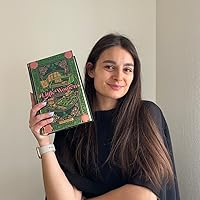
I originally discovered this book on the Chirp app after reading Bridget’s book “Ensnared”. I joined the author’s private Facebook group, where she explained that she is a Christian author and that some of the foundational worldbuilding ideas in this series were inspired by Old Testament concepts—particularly the idea that humans once lived for hundreds of years before the days of Noah. That context helped immensely, because without it, some of the themes and choices in the story can feel confusing or ambiguous on first read.
Knowing this background actually made me appreciate the book more. It clarified that the long lifespans, moral frameworks, and subtle worldview choices were intentional and rooted in a specific philosophical and theological lens, not just random fantasy logic.
Worldbuilding & Age Mechanics (Deep Dive)
One of the most fascinating—and slightly confusing—parts of this story is how aging works in the world of the Birthright series. At first glance, it might seem like characters who live 900+ years would spend decades as children, but that doesn’t appear to be the case here. The characters seem to age normally through childhood and young adulthood, then slow dramatically later on.
For example, Chancery is physically and chronologically 17 and behaves like a normal 17-year-old. Eden’s timeline suggests he is around 26, based on references to events from his youth. This makes age-gap discussions interesting, because while immortal characters may view relationships differently, human characters react with modern norms.
I found this tension intriguing but occasionally confusing—especially when human characters make “old man” jokes about Eden, when he’s actually only in his mid-20s. It highlights a disconnect between immortal and mortal perspectives, but the narrative mostly handles it well.
Themes, Tone, and Style
This book definitely has a clean romance tone, which I really appreciated (as do all of Bridget’s books). There’s no graphic or explicit content, and the relationships feel emotionally driven rather than physically driven. That’s refreshing, especially in a genre where explicit content is often the default.
What makes “Displaced” especially compelling are the layers of social, philosophical, and biblical-inspired themes. The story flips traditional Old Testament patriarchal structures into a matriarchal dystopia, highlighting that power—whether held by men or women—can become oppressive if concentrated and unchecked. Through Chancery’s perspective, the narrative critiques the system rather than glorifying it.
Chancery herself is a fascinating protagonist—very Esther-like in her courage and reformer-queen role, and even Christ-like at times in her sacrificial compassion. She recognizes that boys and men are mistreated in her society and doesn’t dismiss their suffering, which makes her arc feel like a genuine attempt to create balance rather than simply invert the hierarchy.
I also noticed literary and genre parallels that added richness to the story. The worldbuilding and critique of authoritarian systems reminded me of “The Hunger Games”, while the mythological scaffolding and character archetypes felt reminiscent of “Percy Jackson” in terms of using biblical or mythic inspiration without requiring the reader to treat it as literal theology.
The story also touches on themes of modern feminism and “fatherless behavior” through the consequences of absent, safe, strong male guidance. Chancery’s worldview reflects an effort to restore balance, highlighting mercy and justice as complementary forces rather than mutually exclusive. While forgiveness and compassion are central, the narrative emphasizes that accountability and consequences are important, which is a nuanced exploration of moral responsibility in a speculative setting.
Overall Thoughts
I was genuinely excited to read “Displaced”, and it lived up to that excitement. I also loved another book by this author, and this one solidified my interest in continuing the series. Even when I had questions or critiques about certain narrative choices, they made me more interested in digging deeper, not less.
I really respect that the author is open about her inspirations and worldview, and I think readers will enjoy this book even more if they understand that it’s written through a Christian-influenced speculative lens.
Audiobook / Deal Note
If you’re a new Chirp user, I’ve added this audiobook to my book-deal links (see my bio) so you can try it for around $2. I don’t earn anything from this—I just loved it so much I wanted more people to discover it.
I also organize Chirp books on my shelves (“Chirp Unread” and “Chirp Finished”) if you want to see what I’ve picked up, including some free deals.
Highly recommend checking this one out.