Somerset Maugham was one of the most celebrated writers and playwrights of the 20th century.
His novel "Of Human Bondage" is widely considered a masterpiece, and his magnificent short stories have earned him a reputation as one of the greatest storytellers of all time. If you're looking for an introduction to his work, I highly recommend his short story "Rain." It's a haunting and unforgettable tale that showcases his incredible talent for character development and his keen sense of atmosphere and setting.
According to his own opinion, Maugham didn't consider himself proficient in imagination or in possession of powers of invention. Perhaps that was true, but for sure, he was a powerful keen observer and he studied people, situations, and places, and used them to create his stories with minimal alteration or disguise. He sought, in all his works, to skillfully narrate a story that would resonate with readers and provide a glimpse into the complexities of life. He strived to convey his message with simplicity and elegance. Additionally, he endeavoured to captivate and delight his readers with his acute observations of human nature and the intricacies of character.
He was considered by many, to be the most popular and successful English fiction writer of the 20th century.
A critic defended that; Bestsellers that appeal to the mass reader are seldom good literature, but there are exceptions. Maugham was one of those exceptions.
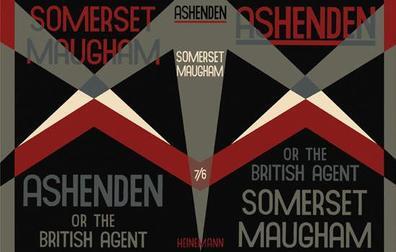
This book," Ashenden: Or the British Agent", being far from the mainstream spy book genre, (and for the best works of SM) influenced writers like Raymond Chandler, Ian Fleming, Georges Simenon, John le Carré and others.
"Ashenden" stories are a collection based on the writer’s brief career as a spy during the First World War at the service of the British Intelligence Service. It is a novelized semi-autobiographic account of his experiences when recruited by the SIS as a British spy during WWI, operating in Switzerland and France.
When first published, the stories seemed so authentic in their account, that, according to legend, Winston Churchill, a friend of Maugham's, warned him that his stories might be considered a breach of the "British Official Secrets Act". Consequently, the author burned 14 unpublished "Ashenden" stories and kept only the ones published in this book.
When you think "spies", it immediately comes to mind James Bond, glamorous half-naked girls and lots of shotguns, fast cars, fancy gadgets and drinks at sunset, right? According to Maugham, wrong... Spying is so boring that to manage to write interesting stories about the business he had to pull on his imagination and invent. "Ashenden" (Maugham) soon discovered, after being recruited, that spying is just data collection: His life, he complains, is as orderly and monotonous as a city clerk. The work of an agent in the Intelligence Department is, on the whole, extremely monotonous. A lot of it is uncommonly useless. Mostly his job was to watch, listen and report back.
In spite of W. Somerset Maugham's insistence that his work is a product of his imagination and not based on actual events or facts, I strongly believe that Winston Churchill's warning or threat, if true, was not just a mere joke but had a significant reason behind it. While the exact nature of Churchill's warning remains a mystery, it is plausible that he had a valid reason to issue such a warning, given his reputation as a shrewd and insightful mind and statesman. Therefore, it is worth considering the possibility that there was more to Churchill's warning than meets the eye and that Maugham's fictional portrayal of the events may have been closer to real-life circumstances than Maugham wanted us to believe.
Anyway, in "Ashenden", espionage seems more like an excuse for Maugham's literary activity than vice versa.
As usual with Maugham, the book reads easily with his light, sometimes ironic or cynical prose. In certain moments he shows the existential ennui he experienced with general human stupidity and pretentiousness; Usually a deadly combination as it is shown in some moments. Maugham excelled in human analysis and in depicting characters under the strain of either ordinary or stressful situations.
Mr Harrington, in the final story, is a wonderful tragic/comic character with righteous indignation but naive to the point of stupidity. One almost despairs, reading his story, not knowing what to do, cheer or kill him.
This is very far from the glamour of 007 or the acrobatics of Hollywood's demented imagination, but is an interesting insightful reading.