

What do you think?

Gapienie się czyli o tym jak patrzymy i jak pokazujemy siebie innym
Rosemarie Garland-Thomson jest prekursorką kulturoznawczych studiów o niepełnosprawności i jedna z najważniejszych badaczek podejmujących namysł nad niepełnosprawnością jako forma ludzkiej różnorodności. Nie bez powodu więc jej dwie książki: „Niezwykłe ciała. Przedstawienia niepełnosprawności fizycznej w amerykańskiej kulturze i literaturze” oraz „Gapienie się, czyli o tym, jak patrzymy i jak pokazujemy siebie innym”, wyznaczające ważne kierunki w tej dziedzinie, napisane z niezwykłym rozmachem i wpisujące niepełnosprawność w szerszy namysł nad kulturą, relacjami społecznymi i sposobami ich kształtowania, inaugurują zaplanowaną przez nas serię publikacji. Seria „Odzyskiwanie obecności”, w ramach której będziemy wydawać kolejne, kluczowe pozycje poszerzające namysł nad niepełnosprawnością w jej wymiarze społecznym, politycznym, performatywno-teatralnym czy estetycznym, pomyślana jest - w duchu Rosemarie Garland-Thomson - jako konfiguracja rozmaitych ujęć skłaniających do myślenia o różnorodności jako wartości.
Ewelina Godlewska-Byliniak i Justyna Lipko-Konieczna
Ewelina Godlewska-Byliniak i Justyna Lipko-Konieczna
312 pages, Paperback
First published March 20, 2009
Ratings & Reviews
Friends & Following
Create a free account to discover what your friends think of this book!
Community Reviews
Displaying 1 - 12 of 12 reviews
September 2, 2018
Omission of blind people
Wish she had talked more about the experience of people who are blind. How are blind people affected by their lack of ability to stare or three people there? Wish we could investigate this further…
Wish she had talked more about the experience of people who are blind. How are blind people affected by their lack of ability to stare or three people there? Wish we could investigate this further…
March 2, 2012
Currently using for 200-level English course--it's a very accessible introduction to disability studies and to the ethics of visuality in general. Will be interested to see how accessible the students find. Garland-Thomson suggests that we go against what our parents always told us ("Don't stare!"), and she suggests that staring can be productive, a first step in a process of knowledge gathering. She distinguishes between "staring" and "the gaze." The gaze seeks to dominate and/or stigmatize. Certain types of staring encounters, she argues, can lead to recognizing and empathizing with others.

June 23, 2022
A paradigm shifting work on the ethics of staring, and the constructive possibilities that visual encounters with people with non-typical bodies might induce. While the focus is primarily on disabled bodies, this work is essential for anyone interested in interpersonal encounters of any sort. Can’t recommend highly enough.

February 11, 2020
Never would I have thought someone could write what is essentially a 200-page essay on the seemingly insignificant act of staring, but Garland- Thomson managed to do just that in a way that was at times uncomfortably informative. She does a thorough job of explaining the cultural, biological, and historical components that go into staring and how they affect our feelings towards the action even today.
This book was definitely an eyeopener, and from a rhetorical standpoint consisted of well-developed arguments with sufficient evidence to back them up. It is rather dense, however, so it takes a while to get through.
Overall, I'd say "Staring: How We Look" is an interesting read, though it isn't one I see myself going back to reread.
This book was definitely an eyeopener, and from a rhetorical standpoint consisted of well-developed arguments with sufficient evidence to back them up. It is rather dense, however, so it takes a while to get through.
Overall, I'd say "Staring: How We Look" is an interesting read, though it isn't one I see myself going back to reread.
May 15, 2023
it is rare that a book extends grace, justice, and empowerment all at once. as always, garland-thomson’s work is personally illuminating and academically excellent. it is the only book i know of that synthesizes multiple academic disciplines on this topic. also stunned at how the author challenged my understanding of The Stare as it shapes my own disabled body, and provided her readers (disabled and non-disabled alike) with multiple ways of thinking about and engaging in staring.

July 9, 2022
Brilliant history of the freak show and its impact for disabled people today - how we are stared at, and how we stare back.
August 31, 2022
Must read...

December 10, 2024
Consideration of how and why of staring
Read the book for a specific application but will likely reference it regularly. I wish it considered children more thoroughly.
Read the book for a specific application but will likely reference it regularly. I wish it considered children more thoroughly.
January 8, 2015
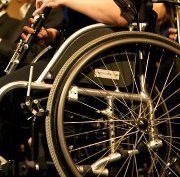
"The starees we have looked at together in this book show us how to look by showing us how they look. It is all a fine spectacle to behold."
An introduction to the lived experience of disability theory, and also a remarkably accessible read for the general reader who is interested on the ethics of staring. The issue, as she explains, is not whether staring should occur (because it will, and perhaps must), but how it should occur. I felt she was on more certain ground when it came to the scenes of staring at faces, hands, breasts, bodies, but a little less cohesive and succinct in the earlier analysis of the act of staring. Nevertheless, it is time well-invested to gain insights into how we stare and be stared at.
An introduction to the lived experience of disability theory, and also a remarkably accessible read for the general reader who is interested on the ethics of staring. The issue, as she explains, is not whether staring should occur (because it will, and perhaps must), but how it should occur. I felt she was on more certain ground when it came to the scenes of staring at faces, hands, breasts, bodies, but a little less cohesive and succinct in the earlier analysis of the act of staring. Nevertheless, it is time well-invested to gain insights into how we stare and be stared at.

January 21, 2017
The butler did it.
This is a very engaging, often very phenomenological discussion of staring as relational, emphasizing not just the starer but the staree and the ways that staring can be turned toward ethical ends -- recognition, understanding, resistance to the "social pressure to visual conformity" (196).
I can imagine using it as a text in undergrad courses, in philosophy, gender studies, disability studies, or any course that does a lot with vision and ethics or politics.
This is a very engaging, often very phenomenological discussion of staring as relational, emphasizing not just the starer but the staree and the ways that staring can be turned toward ethical ends -- recognition, understanding, resistance to the "social pressure to visual conformity" (196).
I can imagine using it as a text in undergrad courses, in philosophy, gender studies, disability studies, or any course that does a lot with vision and ethics or politics.
Currently Reading
July 2, 2009Currently reading is a bit strong. Really, I need to go back to the beginning. I got distracted by something else in the middle.
August 22, 2015
A horrible book. The author clearly set out to bring awareness in how we look at people who are "different", but serves only to perpetuate the societal standard of what is "good" and "worthy."
Displaying 1 - 12 of 12 reviews