Prem Kumar Patel ist entsetzt. Zum Studium hat er seinen Sohn Babo nach London geschickt - sicher nicht, damit er sich dort verliebt, und erst recht nicht in eine Engländerin! Jetzt ist Entschiedenheit gefragt. Prem Kumar zwingt Babo zur sofortigen Rückkehr, nimmt ihm den Pass ab und stellt ein Ultimatum: Sollten sechs Monate Trennung das Paar nicht zur Vernunft bringen, kann die Hochzeit stattfinden - allerdings in Indien. Und selbstverständlich werden Babo Patel und Siân Jones die folgenden zwei Jahre im Haus der Familie Patel verbringen. Doch Babo und Siân kann das nicht erschüttern, und so beginnt die Geschichte der Familie Patel-Jones. Eine Geschichte vom Zusammenwachsen und Zusammengehören, vom Einander- Fremdwerden und Sich-Wiederfinden.
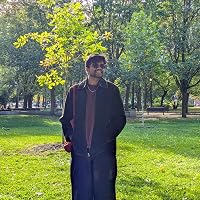
Tishani Doshi (born 1975) is an Indian poet, journalist and dancer based in Chennai. Born in Madras, India, to a Welsh mother and Gujarati father, she received an Eric Gregory Award in 2001. Her first poetry collection, Countries of the Body, won the 2006 Forward Poetry Prize for best first collection.[1] She has been invited to the poetry galas of the Guardian-sponsored Hay Festival of 2006 and the Cartagena Hay Festival of 2007. Her first novel, The Pleasure Seekers, was published by Bloomsbury in 2010 and was long-listed for the Orange Prize in 2011,[2] and shortlisted for The Hindu Best Fiction Award in 2010.
She writes a blog titled "Hit or Miss" on Cricinfo,[3] a cricket-related website. In the blog which she started writing in April 2009, Tishani Doshi makes observations and commentaries as a television viewer of the second season of the Indian Premier League. She is also collaborating with cricketer Muttiah Muralitharan on his biography, to be published when he retires.[4]
She works as a freelance writer and worked with choreographer Chandralekha until the latter's death in December 2006.[5] She graduated with a Masters degree in creative writing from the Johns Hopkins University.
Countries of the Body was launched in 2006 at the Hay-on-Wye festival on a platform with Seamus Heaney, Margaret Atwood, and others. The opening poem, The Day we went to the Sea, won the 2005 British Council supported All India Poetry Competition; she was also a finalist in the Outlook-Picador Non-Fiction Competition.
Her short story Lady Cassandra, Spartacus and the dancing man was published in its entirety in the journal The Drawbridge in 2007.[6]
Her most recent book of poetry, Everything Begins Elsewhere[7] was published by Copper Canyon Press in 2013.
Her newest book, The Adulterous Citizen – poems stories essays (2015) was launched at the 13th annual St. Martin Book Fair by House of Nehesi Publishers, making Tishani Doshi the first important author from India to be published in the Caribbean.
This was such a wonderful story set across India and London, following the same family over a few decades, finding out about their lives and who they are and what made them them. It made me crave stories that discuss identity, human nature, and coming-of-age stories in general. There’s something about that theme, about people that search for their identity and establish their independence in their own world. There was a fine thread running through the families that weaved through their lives, binding them all, though they were all different and followed different paths. Yet, everything connected on a larger scale. The characters were fleshed out, their lives nuanced. There was meat to the story that didn’t even need to be written out and weren’t, but were alluded to and were points of reflections for myself which enhanced my reading experience.
I definitely want to pick up more books but Tishani Doshi now.
I was charmed by this book, charmed by the lovely characters who I felt invested in. For the last two days as I was floating through the BEAUTY-fully crafted pages, I wanted to know more and more about everyone involved, and when the book was finally over I was sad to have not been given a chance to know yet more about them. This is an immediate emotion. It may change after few days. But this is the most sensuous narrative I have come across in a long long time.
The book succeeds in recreating the story of a cross-continental love affair, surrounded by a bumbling Gujju family. It also succeeds in telling a tale spanning three generations with enormous ease. The setting is Chennai, Anjar, and Wales. The tale effortlessly moves between these three places with smooth jump cuts that position the camera into the past or future as Tishani pleases, but a great coherence is achieved which seems almost alchemical. In an interview she said that it took her eight years to write the book and because it is inspired from her own family, the real challenge must have been "what to eliminate" rather than "how to gather a plot". Eight years was the time it took her to even out the rough edges, to fill the novel with greater concerns than just the off beat love story, to provide an impossible but believable spiritual center in the character of Ba, to provide gorgeous and troubling snapshots of the family, the people who bring us into existence, who come running for us when we are trapped in earthquake ridden villages... who when they leave for good leave behind a space that we are supposed to fill with more love, and how difficult that is. For me, The Pleasure Seekers is a very successful family narrative. And because it comes from lived experience, and because the writer is a poet, the joy of reading it is enormous.
Having grown up in a joint family, I think about "family novel" a lot, maybe because it is the oldest literary genre, and because it is the story a writer can know intimately, probably the only story, because you can smell and touch your characters, you know their best jokes, you know what pisses them off, you know when they will throw tantrums and when they will act wise, because you have spent a thousand years with them and have a lot of events ready in your head - you can even take small bites from those events when you are alone and hungry to savor their many flavors. If a writer has talent the family is a fodder for a masterpiece. One Hundred Years of Solitude, Buddenbrooks, and Corrections to name a few. Tishani Doshi's book should count among them. More so because it is intriguing to see that a book about emotionally successful people is very much possible, while the urge to slip into the dysfunction is ever so tempting. She achieves beauty here by metaphorical semblance of the two.
Doshi's novel begins as an endearing tale of the realities faced by well-to-do children from India who are left to the cutural and meteorological turbulence of London when they want to pursue furthre studies there. The ensuing story of 'Babo' meeting and falling in love with the Welsh beauty 'Sian', and the cultural accomodation with must take place in order for things to work out, are well thought out and written. But the mystique and interest of the book ended there. Doshi, it seems, wanted to write an epic love story, encompassing many generations of Welsh and Indian families, the thoughts, dreams and fears of 'hybrid' children, the society they grow up in, and the political happenings that went on around them.
I feel that Doshi completely failed. The stories of family life and everyday happenings resonated, but were completely rushed and jumbled. Doshi often (too often) decided to explain the rather esoteric feelings that the characters were going through, and drowned the reader in meaningless methaphors. For instance, when a baby is being brought to his grandmother for her naming ceremony, the latter smells the baby from afar as 'her mother at the grinding stone, mixing chilli, turmeric and jeera ....lolly ice, sweet and synthetic on a summers day, the sharpness of river water, brass, sex, blood'. I got very fed up of this kind of metaphor after a while, and decided to read the book for the stories and the ending.
I was dissapointed there as well, as the end simply peters out. It is a whole paragraph of methaphor which for me was pointless. Sorry, Tishani, I either did not understand your book, or I did and did not enjoy it.
Isn’t it one of the great joys of reading that via our imaginations we can become immersed in a new culture with all its sights and smells and sounds, its food and music, its beliefs and attitudes….without leaving home? We have spoken before on this program about the recent emergence of novels in English from the once “Asia Minor ”. The Middle Eastern writers have long been around as have authors from equally-exotic Anglophone places such as Nova Scotia and Newfoundland. Thanks to Salman Rushdie, Vikram Seth and Rohinton Mistry, we have lately come to enjoy the life of contemporary India. Today’s novel again takes us in to the life of a family in the subcontinent.
Here we follow the life of Babo Patel from Madras in Tamil Nadhu, from 1968 until 2001, quite a history when one plots in the events that affected India so dramatically in those decades. The cover blurb accurately observes that this book by first-time New Delhi-based novelist Dashi is about “the quirks and calamities of an unusual clan in a story of identity, family and belonging”. Social observers remind us the Australian family is in the midst of change of a pace never before seen, and so Dashi takes us on the journey of change of this aspiring middle-class Indian family….not all that different in many ways to some of ours!
In the first half of the novel, young adult Babo is off to London for work and study. Raised a Jain [ non-smoking, vegetarian, non-drinking, pacifist, celibate,etc.:] he is quickly captivated by the wiles of a still-swinging London, and before long falls in love [ for life, as it turns out:] with a Welsh girl, the lively Sian. In spite of the sly manipulations of his parents back home, he marries Sian – but only on condition the newlyweds agree to live back in India for two years where Babo will learn his father’s business. Once in Madras Sian proves quick [and amazingly tolerant :] to immerse herself into the local way of life. She and Babo, however, still manage to maintain an almost independent, ‘nuclear’ family life with their two daughters. What seems to keep Babo in balance is his continued query: “ Is that all there is?”
In the second half, Dashi focuses even more sharply on Babo’s family though inevitably his hapless brother, Chotu, takes on bigger role. While our attention is always on these interesting and very human characters, Dasi never lets the reader forget the social milieu in which they move – or the historic events [assassinations,etc. :] that are constantly plaguing India. It is this subtle blending of these dimensions that create the novel’s lasting impact: this is a narrative of “ Mother India” at the end of the millennium.
What about the title – “ The Pleasure Seekers”? Dashi dedicated her first book to her parents ….” The first pleasure seekers”. Now, Babo and Sian are ‘in love ‘throughout the novel, and generally there is great joy in their love-making. But this is not about HEDONISM, pleasure for its own sake. The REAL “pleasure “ derived by these characters is usually OTHER-centred. The only really miserable character is Babo’s father, Prem, who is a caricature of the work-obsessed patriarch. By contrast, I must mention the wonderful Ba, the grandmother, the de facto matriarch, to whom though she lives miles away all turn when in trouble. She is a saintly, perhaps mystical figure, helping all and surviving every disaster. She is the loving heart of the Patel clan……but I have probably given too much away.
I find anything to do with India quite enthralling, but this is a gem of a novel: beautifully polished, not a word wasted and written in the most fluent of prose.
Als der Inder Babo Indien verlässt, um in London zu studieren, ahnt er noch nicht, dass ihm in Gestalt der Waliserin Sian die Liebe seines Lebens begegnet. Eine Liebe, die so wohl in seiner, als auch in ihrer Welt, nicht gerade mit Begeisterung gesehen wird.
Dieses Buch ist eine Liebeserklärung an die Liebe und eine sehr schöne Familiengeschichte. Das Buch beginnt im Jahr 1968 als Babo nach London abreist und endet 2001. Es gibt einen sehr schönen Einblick in das Leben in Indien und in eine Zeit, wo Twitter & WhatsApp noch eine ferne Utopie waren, die man sich noch nicht wirklich vorstellen konnte. Die Liebe von Sian und Babo wird Prüfungen bestehen, Unterschiede zwischen den Kulturen, Religionen und große Entfernungen überwinden und reifen müssen. Was bewegt einen Menschen dazu die ‚zivilisierte‘ Welt Londons gegen das Leben in einem indischen Dorf zu tauschen? Dieses Buch hat vielleicht keinen besonderen Spannungsbogen, aber darum geht es hier ja auch nicht. Es handelt von erfüllten und zerplatzten Wünschen, dem Leben im Ausland und dem Loslassen von anderen Menschen.
Mir hat dieses Buch sehr gut gefallen, es hat mir Einblicke in das Leben Indiens gewährt, fern ab von der Glitzerwelt Bollywoods. Ein Buch, das eher ruhig daher kommt und von Geschichten erzählt, die in jeder Familie vorkommen können.
A story of love and family dramas that spans two cultures, The Pleasure Seekers is a fictionalised/reinvented account of the authors parents known in the book as Siân (Jones) and Babo.
Beautifully written, poetic and yet not what I'd describe as overly flowery.The narrative is wonderfully lyrical even if the use of phrases such as 'sha-bing, sha-bang' and 'ba-ba-boom, ba-ba-boom, ba-ba-boom-boom-boom' though charming at first did become a bit tiresome. The use euphemisms such as Mr Whatsit and Ms Sunshine (used to describe male and female genitalia) increasingly juvenile sounding.
Ultimately not a book that managed to hold my imagination throughout. Whilst it began well by about half way through my attention began to wander, the story never quite coming together for me. Sadly The Pleasure Seekers wasn't quite the multi-generational saga I was expecting.
This book was very pleasant and pleasantly written, and the family situation depicted is certainly interesting. But, but, but. It's too pleasant! The narrative thread is too gentle, with very little dramatic suspense (only the last 5 pages or so) or real character development. There are also too many grandiloquent statements (Love is X. Love is Y. Fill the empty spaces in your life with Love!) that lack real emotional sense or content. There are a few too many characters -- we end up wanting to know more about everyone except the (autobiographical?) younger sister who ends up hogging the story, despite intriguing tidbits dropped about many other family members and friends. Nonetheless, I might read a 2nd novel, to see how she develops because the eye for detail and every day life is charming and overall well done.
What a beautiful, delightful generation spanning novel. It has been on my TBR since it's release and it holds up in 2025. Although I'm sad to see it wasn’t more widely read.
Excellent character development. I am sad to leave these characters. It has a lightness while not shying away from the difficulty of life.
Quotes: He wanted to be light and free like they'd been in London, skipping down to the cinema if they felt like it or spending all afternoon in a sha-bing sha-bang haze. Mostly, he didn't want his life to slip by him. He didn't want someone telling him how he should live. He wanted a life that would be like lightning, striking the surface of water - joyous and ethereal. He wrote pages and pages like this. 60
'It's a burning, Ba,' Babo whispered, before falling asleep. 'Love is definitely a burning.' As Babo slept, Ba stroked his curls and thought of her husband, who had died early of a disease they had no names for then, and her son, who seemed to have entered the world with a set of values and a consciousness she'd played no part in shaping. These were men she should have loved, but in reality, their absence or presence had played such a peripheral role in her life. This grandson, though, with all his desires - he stood at the centre of her world, and she wanted him to be released. She wanted his love for the Welsh girl to unfold like a lotus and gleam. It would happen. The girl would come. But until she did, Babo would have to wait, and Ba would wait with him; standing, breathing, knock knock knocking beside him. 63
Bryn had seen it coming. For years he'd seen it coming. He hated the idea of Siân going off just as much as anyone, especially to London - a city he imagined to be full of sin and lost souls. He'd wished differently for her, of course, what father wouldn't have wished for his only daughter to remain in the village and fall in love with one of the local boys - a quarry worker like himself, or even one of those modern men with office jobs who commuted to Mold every day. He'd hoped that she'd get married in the chapel, buy a house nearby and raise children who'd come running to sit in his lap like sunbeams. But it wasn't going to be that way with Siân, was it? And part of him understood that it had nothing to do with her free will; that it was a grace calling to her. 70
Babo told her how he'd become a Scrabble champ during his YMCA days in London, when he and the other young men played till four in the morning because it was a time in their lives when they were more in need of friendship than sleep. 101
Ba, waiting on the front steps, could smell them long before they arrived. There was Babo's rain cloud and bakul smell, which was the strongest, most intoxicating smell she knew. There was the smell of his Welsh wife - acres and acres of fresh cut grass. There was her great-granddaughter Mayuri, who smelled of roots in mud-a potent, stubborn smell as hard as rubies. And there was the new smell, so nostalgic and varied, it brought tears to Ba's creamy, diabetic eyes because it rose from the ashes of her own childhood. It was the smell of spices -her mother at the grinding stone, mixing chilli, turmeric and jeera for the entire year's cooking; the smell of lolly ice - sweet and synthetic on a summer day; the sharpness of river water, brass, sex, blood. 117
"You should take some rest after this,' Ba advised Siân. 'I think I will, There isn't much age difference between these two as it is.' 'No,' said Ba. 'I mean, you will need to take some rest after this one. Perhaps you should stop. You see there are only three kinds of women in the world: earth, water and fire. Mayuri is going to sink her roots deep. She will know what she is and what she wants, always. But this one, this Beena, she will change from earth to water to fire, again and again. She will want to move like water, forever taking a different shape, but she will also long to stay still. And she will have a temper. Oh yes, you will have to do something to reduce the fire in her. No doubt about it, this one will keep your hands full." Bean, who seemed to be listening intently, enthralled by Ba's diaphanous hair, chuckled. Her first proper laugh. 117
For all his apparent irreverence, nobody doubted Ignatius's loyalty to Ba. She had saved his life when others had been happy to let him wither up and die. At the age of fourteen, when Ignatius ran away from the Catholic orphanage in Mundra where his parents had dumped him as a baby, he had been rescued by Ba, who found him half-starved and mute with fear at the bus station. She had brought him to her house and taught him how to make the hair fall away from his legs and arms; how to smooth turmeric and rosewater on his skin to soften it; how to pick the bristles off his beard without leaving any scars. And when the breasts wouldn't grow and the blood between the legs wouldn't come, it was Ba who comforted the disconsolate Ignatius and told him that a swan could never swim away from its own whiteness, meaning to say that he was what he was, and we are what we are, and because Ignatius was unable to bring life into this world either as man or woman, he was enabled with other powers that ordinary people couldn't have, and these powers had to do with preservation that second most important principle of the universe. 164
The Pleasure Seekers is a ballad of love, the kind that hits you like a deluge and threatens to sweep you away from everything you were and knew before, into blissful oblivion. It is also an ode to family, to the loved ones that are at the core of your existence, and who matter most in the end. And finally, it is the quest of many who are seeking themselves within and without, a quest that will take them to their predestined future. The book strongly reminded me of Another Gulmohar Tree (see my review here). There are many distinct differences though, of which the most important is that Doshi's book is based on a true story; the love story of her Gujarati father and Welsh mother. Being of mixed heritage herself, it may have been easier for the author to imbue her characters with pangs of displacement and soul-searching. Another difference is the story's focus. Unlike Hussein's book, The Pleasure Seekers encompasses no less than four generations, following them on their cross-boundary search for love, happiness, and reasons to live. In a way, the tale is told by Ba, grandmother of Babo, who can foretell destinies by reading the winds, rains, and scents around her. That would explain the casual (though fatalistic) referrals to future events, embedded in earlier parts of the story. The saga begins with Babo, who leaves the Patel nest only to return as a changed man. His wife, Siân, who has already said her goodbyes to her childhood home when she left for London, does it a second time, traveling even further now. Yet, where Hussein's Lydia and Usman had their obvious difficulties, it appears that Babo's and Siân's love for each other manages to hold them together in good times and in bad. In fact, their love affair has set the standard, and those witness to their relationship will not settle for less. Poor Chotu (Babo's younger brother Tejas) first rejects the notion of love, and when he is ready to take the plunge, he is terribly betrayed by it. Babo's daughters Mayuri and Bean (nickname for Beena) also pine for the whirlwind romance of their parents. Bean, I believe, suffers the most in the end, but also comes out of it the wisest and most grounded of them all. This breathtaking novel truly captured my heart, made me cry bitter tears and lifted me up high into the sky. I was utterly swept away, absorbed into the Technicolor world of The Pleasure Seekers. How recognizable the universal search for love, and the feeling of displacement and alienation that has become widespread in our day.
This book is a must-read by this Indian poet-turned-author for every Indian-born who went abroad to study and/or married a Westerner. You’ll find it infinitely relatable and full of laugh-out-loud childhood nostalgia from being left out of an elder sibling’s play-time with classmates to reading the Hardy Boys and Enid Blyton.
The story centers around the eldest son of a Gujarati Jain family settled in Madras going abroad to study and work. Once there, he falls in love with a Welsh girl whom he marries and settles back in Madras with. The only flaw I’d mention is that Babo and Sian’s relationship seems untainted with conflict, tension or disagreement. But, there was enough tension in the lives of other family members to keep this reader’s nose firmly in the book from start to finish. A taster,
“On their first night together as husband and wife, on cotton mattresses in Ba’s back room, Sian couldn’t get certain things out of her head – her mother and father, her two brothers, her aunts and uncles, Ronnie and Gwen and Dee. Where were they now? Could they feel her thinking of them? Was this how it was going to be from now on? One foot in, the other foot out. Would it always feel like you never belonged no matter where you went, who you found to love? And Babo, lying next to his wife, felt all this. Felt her blue-green veins fill up with a certain kind of sorrow that hadn’t been there before. It was something to do with time and distance, love and separation. It spread through her transparent skin and shone through her like snow.”
This was a really pleasurable read and I was tempted to read the whole thing in one go but staggered it over a few days to make sure that the pleasure of reading it would last longer. Anyone who left an Indian home to study in the West will be able to relate to many of the experiences described in the opening pages: weather-shock, culture-shock, horrible British cuisine, the shock of calling teachers by their first name and many other instances. The author’s poetic side surfaces often throughout the book. Most enjoyable of all are the slip-ins of words I often heard in my childhood: nakras, liar-liar and Styoopid-Eedyot, were my favourites.
Tishani Doshi re-invents her parents' story in a novel spanning four generations. It is set in Madras of 1960s, and Madras it remains throughout the novel.
Tishani takes a page out of her parents' heritage - a Welsh mother and Gujrati Jain father whose family has always lived in Madras. Babo, the Gujju Jain son goes to study in England (that cliche racism never figures, btw) and meets Sian - a office girl. They fall in love and despite disapproval of their families they marry. Sian leaves and England and comes to live with Babo in India. It is hard until she falls into daily pattern of life and has 2 daughters Mayuri and Bean. The second and third part of the book traces the trajectory of the lives of daughters, especially the imaginative, forlorn and love-sick Bean. Bean is perhaps most closest to her creator.
At the helm of the family remains Babo's grandmother Ba who lives alone in Gujrat and has been created as a wise, ethereal and intuitive character. Someone to whom everyone in family reaches out in trouble.
Writing is a sort of dreamy crawl, I read several other books alongside. Words weave an intriguing story, sometime are sonorous as writer often loves to use words in repetition as ba-ba-boom, ba-ba-boom, or ka-chink, ka-chink, sha bing sha bang to effective use. ;) Classic lierary device to track timeline in a novel is to connect it with a political/social event. Trishala's cancer coincides with Indira Gandhi's assassination, Bean's pregnancy with earthquake in Bhuj and so on.
There is identity-crisis (one foot in India, one foot out of Welsh), there is compromise, love and sex - all in this 4-generation family saga. Looking for author, I found her TEDx Palermo talk: http://www.youtube.com/watch?v=7SxRvo... - about luxury of slowness - this book too was written in 5 years. Other two books by Tishani are poetry collections. But, here is one interview of hers worth reading in Guardian:http://www.guardian.co.uk/books/2010/...
There is no denying that this book is well written. The prose is beautiful. The line between detail and concision is well tread. That the book was written in English, published in New York, but written by someone living in India and unapologetically uses Indian terms without explanation adds to its charm. However, I failed to find be captivated by the story. In any high school English class we are told that a good story has a conflict, rising action, climax, and usually resolution. This story is a series of mini conflicts, but there is no over-arching plot. It simply follows a family through a couple of generations (hallelujah for its concision!). Because it flits back and forth among the family members, there is no main protagonist, except perhaps Bean, but she is not a major character till the final third of the novel. I suppose the book can be compared to One Hundred Years of Solitude. And as with that book, it requires a second or third reading to really grasp its beauty and point, so too The Pleasure Seekers may benefit from deeper study to be truly appreciated. I hope Doshi keeps writing.
It is set mostly in Madras, India and spans about thirty years. A young Gujerati man studying abroad in England meets a Welsh girl. They fall deeply in love. How they keep their love strong and stay happy in spite of the odds against them, how they inspire family members with a desire for a similar love, how they do their best to raise their daughters to be happy. Mostly about real family life with its sadness, happiness, and challenges. I really liked it.One of the things I liked best is that in spite of their unique challenge, a mixed marriage, their lives felt familiar. Their struggles are not unique to them, they are the struggles of every family in every country. A quote that sums up the book very well for me is from Babo, on the eve of his eldest daughter's wedding.
"It's not what you think. It's not that I don't want them to go away from home and find love, live their lives as fully as they possibly can. It's not even that I want them to remain eternally innocent. But what I want, what I really want to know is what I'm supposed to do with the space they leave behind? What am I supposed to fill it with?" "You fill it with love," Ba murmured. "Like you have always filled it. With love and more love."
I'd like to give this book 2 1/2 stars. It was a fairly fast and painless read, but not highly enjoyable. This is the first book I've gotten for free from Goodreads' "first-reads" program; I was thrilled to have it arrive in the mail a few weeks ago - it looked fresh and beautiful and ready to dive into, as new paperback books always do.
Anyway, I thought I would enjoy this story because of my personal background; my mother is an American and my father is from India, so I'm a "hybrid," exactly like some of Tishani Doshi's characters. There were a few things I could identify with, sure, but nothing that really moved me or made me think "wow, I'm so glad to be reading this book." It seemed very similar to Jhumpa Lahiri's The Namesake.
Is Doshi a good writer? Yeah, I think so, especially considering that this is her first novel ever. Would I read another one of her books? Not sure. I can't see myself ever picking this one up again to reread it - and being willing/able to reread a book is usually a marker of its quality for me.
I feel like giving this 2 but I'll give 3 stars. Perhaps I'm being a bit too harsh because I'm sure a lot of people will love this book.
It is beautifully written. Paragraphs and sentences unfold with wonderful comparisons and metaphors. It's very poetic and Doshi's history as a poet shows clearly. I was fortunate enough to very briefly meet her and I would say her writing mirrors her perfectly.
However I didn't feel a connection from one passage to the next. The flow is not smooth, it's intermittent from one vantage to the next. I felt a little more grounding would've balanced out the book as the almost purely emotional narrative feels almost fantastical.
I don't regret reading this book at all. I only wish there was a little more to the book, rather than a little less
I would have rated it higher if it hadn't been for some very misogynistic language in between. It is not okay to talk about "mighty-shouldered mustachioed he-women", for example. Pity, because it was otherwise very well-written. 3.5 stars
Cosa mi è piaciuto: il racconto corale di questi personaggi indiani, la diaspora inevitabile che la comunità indiana vive da secoli, l'avvicinamento e il confronto tra la situazione post-coloniale indiana e quella gallese, l'inserimento di una galleria vasta e variegata di personaggi, il rispetto e l'interesse dedicato alle tradizioni, agli aspetti identificativi e identitari delle due comunità rappresentate.
Ma ho trovato il libro davvero calante. Dopo una prima parte interessante e incalzante, la parte centrale è stata fiacca e un pò ripetitiva. Si è ripresa sul finale, soprattutto a livello di ritmo narrativo, meno per quanto riguarda la trama. In un romanzo come questo, dove gran parte del lavoro viene svolto proprio dalla linea di trama problemi come questi risultano rilevanti e non da sottovalutare.
I can tell already that this is just not going to be for me - even with the Welsh connection...
Poet, journalist and dancer, Tishani Doshi, has a Welsh mother and a Gujurati father. This twin inheritance is at the heart of her comic, lyrical and tenderly written first novel about four generations of the Patel-Joneses, who live in a little house with orange and black gates next door to the Punjab Women's Association in Madras. It's an epic story full of vividly drawn characters, whose private lives are played out against the backdrop of the public events of the twentieth century, as the family wrestles with what it means to call somewhere home.
This first episode begins in August 1968 when Babo, eldest son of Prem Kumar, becomes the first member of the Patel family to leave Madras and fly to London to further his education. On the night before the flight his father has a terrible premonition of trouble, in the form of a dream in which all his family is lost. Babo's mother, meanwhile, has more practical worries on her mind and gives strict instructions to her son about his obligations as a vegan and a follower of the Jain religion. Babo must resist the temptations of meat, alcohol and, most importantly, women.
How shocked his parents would be, then, to see their son, four months later, drinking Peppermint Schnapps, eating poached eggs and making love to Sian Jones, a cream-skinned girl from Wales, with whom Babo falls head over heels in love with, from the moment he sees the twirl of red ribbon in her hair.
The reader is Indira Varma, who appeared recently in the 6 part BBC drama Luther. Indira's previous television and film roles include Kama Sutra: A Tale of Love in 1997, and Bride and Prejudice in 2004. In 2006 she played Suzie Costello in Torchwood.
Abridged and Directed by Nigel Lewis
Broadcast on: BBC Radio 4, 10:45pm Monday 26th July 2010 Duration: 15 minutes
Where to begin with this one? This book was GORGEOUS. The story, the prose, the characters -- they all combined to make an absolutely beautiful narrative of a family. Even though this novel spans many different tales and weaves together many stories, it is, at the heart of itself, a book about family, and the power of familial love. It shows the glorious days of when family does get along, and we do love each other; and those hardships that all families experience - the deaths of loved ones, people growing apart, bad decisions, being adrift from everyone. This book tackled those issues perfectly, and showed exactly how family life is. I loved all the characters - from Babo, Sian, Mayuri, and Bean, to Ba, Trishala, Prem Kumar, Meenal, Dolly, and Chotu, all of their stories were interesting, which is good in a book with multiple viewpoints, when sometimes, you can get tired of some of the character's voices. This book also painted India as a lush, beautiful paradise, but also detailed its gritty underbelly, which I appreciate - no country is perfect, far from it. This book engrossed me from the beginning to end, and thoroughly surprised me with how good it was; I hope that Doshi will write more enthralling stories like this one. 4.75 stars.
In the parts of this book where Tishani Doshi the poet comes through, it shines. The prose is beautifully woven, and its affect compelling. In some chapters, Doshi captures a character's emotional register in poignant and precise prose. But for most of this book, where Doshi the novelist attempts to weave a compelling story - a family's cycle of life, at that - she falters more than she succeeds. I would've much preferred a story of the Patel-Joneses living in London/Ireland (those early and middle chapters that did narrate those intersections were some of the best, to me); as it is, the book falls into the banal, done-to-death tropes of upper class, upper caste postcolonial English literature. Identity crises ad nauseum. And with the overarching theme of a return to India (for several family members), the descriptions of place fall into cliche too often - as someone from Chennai/Madras, the city barely felt like a sketch. It's a shame, really - Doshi obviously has a fine pen (her poetry can be stunning), but as a teller of stories, she doesn't go far at all
"There is no such thing as home. Once you have forsaken it and stepped outside of the circle, you can't ever re-enter and claim anything as yours."
This is a quote from the book that captures one essential truth -- that stepping outside of one's home boundaries has great consequences for everyone.
This book explores the lives of a family whose cultures combine in the amazing prosaic story woven by Tishani Doshi. The lives of each of these characters touches so many.
As someone who has forsaken and stepped outside of her circle, I embrace the story with all of its beauty and tragedy. I wholeheartedly recommend this book. It is a wonderful story that is well told.
The only note I can add is that I could see the stories told in greater detail in a number of books. There is so much more that is waiting to be unleashed in pages of other stories yet untold.
From BBc Radio 4 - Book at Bedtime: Poet, journalist and dancer, Tishani Doshi, has a Welsh mother and a Gujurati father. This twin inheritance is at the heart of her comic, lyrical and tenderly written first novel about four generations of the Patel-Joneses, who live in a little house with orange and black gates next door to the Punjab Women's Association in Madras. It's an epic story full of vividly drawn characters, whose private lives are played out against the backdrop of the public events of the twentieth century, as the family wrestles with what it means to call somewhere home.
I thoroughly enjoyed 90% of this book, which was extremely charming...but the end, whilst dramatic and emotional, was also rather woolly. Given the gentle clarity of the rest of the book, I felt this rather let it down.
2.5 rounded up. An enjoyable enough read that whizzed by, but still left much to be desired. I saw after I had read the book that Tishani Doshi was a poet, and that definitely makes sense to me. This book is heavy with metaphors, it is almost filled to the brim with them and while i definitely love my literary devices, the adjectives felt repetitive after a while, like they were stacked atop one another simply for the sake of being there. The story itself, started out strong, played with the tension and ease, hit many of the classic Indian story notes that I was expecting, and was a generally a pleasant read but it never went beyond that. Towards the end especially, the tale felt aimless, like there was no thread looping the events together and we just got snapshots after snapshots of events, adorned with descriptors, yet nothing beyond it.
It discusses themes of love, loss, home, boundaries, and so on. I think where this novel stands strongest is in its discussion of the feeling of displacement, of never really feeling like youre at home that comes with existing across borders and cultures. At one point, one of our main female protagonists talks about how in every space she inhabits, she merely feels like a visitor, devoid of any sense of belonging, and that really resonated with me. Similarly home is a concept that is lightly grazed by in this work as well, but not as much as I have liked.
Overall, an extremely readable book that just didn't culminate into anything. If the author went into this with just a little bit more purpose and tried to reign in on all the different thread lines she was weaving, I think it really could have been much more impactful. I did enjoy her writing though and seeing as I've never heard of her before, will definitely check out what is to come from her.
L'amore tra Sian e Babo, che sta alla base di tutta la narrazione, mi è sembrato poco spiegato: il desiderio e la mancanza reciproca quando sono lontani sono chiari, mi sarei soffermata di più sull'inizio del sentimento; ecco perché tutto il resto mi sembra un po' zoppo. E' stato anche molto ingiusto far vivere Mayuri e Bean all'ombra del grande amore dei genitori,
"Aveva nel cuore un forziere che teneva ben chiuso, pieno di ricordi come quello, che rimanevano come ferite aperte sulla superficie del suo corpo." pag. 17
"Come erano pragmatiche le vie della morte, pensò Babo, aspirando il fumo delle sue Gold Flakes. Dopotutto, per quanto terribile fosse la situazione, qualcuno doveva comunque pensare alle ultime volontà, a pagare le fatture d'ospedale, a mandare il necrologio al giornale, a far preparare il certificato di decesso. Qualcuno doveva fare tutte queste cose e riuscire lo stesso, nonostante la disumanizzazione della morte, a vivere il lutto." pag. 253-54
I could barely put the book down. When I saw how close I was to finishing it, I tried my very best to only read a couple pages per night… a little bit like a good Netflix series you enjoy so much but know there are only a few episodes, so you take your time with it. It’s simply put the story of a family, starting in the 50s, spanning over a couple of generations and ending in the early 2000s. A story spread between India and England. Written like poetry, a sweet caress to the soul. Reading it was the most relaxing and soothing part of my day. Some moments are heartbreaking. Some others make your heart feel like it’s about to burst with joy. I picked up this book on my mom’s shelf completely randomly last week, and now I’m not sure who I am anymore. I love this feeling. Truly a book that changed me a little. One that I’ll remember for a long long time, and will make everyone around me read it.
Why is India so magical? People who can smell the future. Lizards that drop red skin. People who love like the ocean, infinite (finite).
That's what irritates me most about Indian writing. That it seldom is real. Authors constantly give to the Western world a reaffirmation of the idea of India they carry. And it's true. There's not one single idea of India. India is and will continue to be many ideas all at once.
Tishani Doshi's writing was really good all through. But I'm exhausted at people loving so abundantly. Could be my cynical years when I'm reading and now writing this review. But this is who I am when I read the book and I haven't seen or heard of a love that overwhelms in a sustainable fashion.