Spanning the breadth of the twentieth century and into the post-9/11 wars and their legacy, Correspondents is a powerful novel that centers on Rita Khoury, an Irish-Lebanese woman whose life and family history mirrors the story of America. Both sides of Rita's family came to the United States in the golden years of immigra-tion, which we see beautifully rendered in the first part of the novel, and in her home north of Boston Rita grows into a stubborn, perfectionist, and relentlessly bright young woman. She studies Arabic at university and moves to cosmopolitan Beirut to work as a journalist, and is then posted to Iraq after the American invasion in 2003. In Baghdad, she finds for the first time in her life that her safety depends on someone else, her talented interpreter Nabil al-Jumaili, an equally driven young man from a middle-class Baghdad family who is hiding a secret about his sexuality. As Na-bil's identity threatens to put him in jeopardy and Rita's position becomes more precarious as the war intensifies, their worlds start to unravel, forcing them out of the country and into an uncertain future. Epic in scope, by turns funny and poignant, and moving from New England to the Middle East, Correspondents is a powerful story about the legacy of immigration, the present-day world of refugeehood, the violence that America causes both abroad and at home, and the power of the individual and the family to bring good into a world that is often brutal.
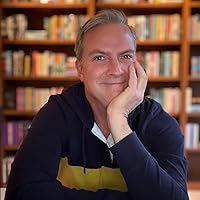
Tim Murphy is the author of the novels "Correspondents" and "Christodora," both published by Grove Atlantic. "Christodora" was longlisted for the Andrew Carnegie Medal. Under the name Timothy Murphy, he is also the author of the 1990s novels "Getting Off Clean" and "The Breeders Box." He has been for nearly 20 years a journalist focusing mostly on HIV/AIDS and LGBTQ issues, for publications including the New York Times, New York magazine, Out magazine, the Nation, POZ magazine, and for the magazines of the ACLU and Lambda Legal.
Correspondents requires patience, but I found it well worth the read. The story spans a couple of generations, ultimately focusing on Rita and Nabil. Rita is the daughter of a Lebanese father and an Irish mother, growing up in the US and becoming a war correspondent. Nabil is an Iraqi translator, who works with Rita when she is stationed in Iraq. The story builds slowly, spanning the US, Lebanon and Iraq. At times, it felt a bit too slow and a bit aimless, but eventually it comes together powerfully. Correspondents is both personal and political, which worked well for me and reminded me of what I liked about Tim Murphy’s previous book, Christadora. Without lacking subtlety, Murphy delves into the complexity of the US’s role in Iraq, while reflecting on the effects of anti immigration movements in the US. But the politics don’t overwhelm the story. This is still very much the story of Rita and Nabil — strong characters struggling with impossible situations. I didn’t love it as much as Christadora, but I thought it was well worth reading. And I will definitely read Murphy’s next book. Thanks to Netgalley and the publisher for an opportunity to read an advance copy.
If you decide to take my advice on only one thing for the rest of your life - please make it this: Please read this book. This book is truly something special.
I've had this book on my Netgalley TBR since December 2018. Little did I know what I had sitting there waiting for me. There is no perfect book, but this book is as good as it gets and impacted me in such a way that I was left in tears.
Rita Khoury has an Irish mother and a Lebanese father. She is raised with both cultures present and for that has a unique perspective on things. She is incredibly bright and when she graduates from Harvard she takes a position as a foreign correspondent for The American Standard in Iraq, right after the US led invasion in 2003. Her interpreter, Nabil al-Jumaili, is a young man who has his own wants and dreams. Coming from a middle class family with a degree from University, he too sees beyond the war torn country of his birth and wants a better life for himself and his family. This is the story of their lives and how their work together deeply impacts not only each other, but the world around them.
I'm being deliberately vague on my summary of the plot because I truly do not want to ruin anything for anyone. The writing is so nuanced in its back and forth between each character as they live their lives before and after the invasion. It truly has something for everyone. Unbelievable family dynamics, a coming of age story, great book club discussions, and my personal favorites - political/current affairs topics with a heavy dose of learning on the history and culture of a very important part of the Middle East. The pacing is a little slow, but it is well worth it in the end.
I haven't seen much marketing on this novel, but please help me in spreading the word. Amazon Books Editors named this a "Best Book of the Month for May 2019". It is absolutely deserving of this and much, much more. I absolutely intend to continue reading work from Tim Murphy as long as he produces it.
Thank you to Netgalley, Grove Atlantic and Tim Murphy for the opportunity to read and provide an honest review of this book.
This is a story of ambition and love and of family history. It’s also about war and loss and what it means to be displaced. Rita Khoury is a Bostonian with Irish-Arab parents. She’s long wished for the opportunity to be a news reporter writing about the big events of the day and her wish is finally granted when she is deployed to Bagdad, just ahead of the 2003 war. She’s employed by a prestigious American newspaper and is desperate to make the most of this opportunity. There she meets Nabil, a local interpreter with whom she is to become close. He is a local boy and is using this job to further his own ambitions but also because it pays much better than any other job he could possibly secure in this city.
But before we arrive at this point there’s a good deal of family history to absorb. It takes a while to work through a couple of generation of background and if I’m honest I found all of this slow and pretty hard going. Also, in retrospect, I’m not sure that this section really gave me anything to significantly enrich the story that followed. By half way through the book I’d finally met Rita and decided I didn’t much like her: too pushy, too moody and way too self-possessed for my tastes. Nabil was still a fairly blank canvas, though it was clear that he was withholding a significant truth from his family. But once the second half began and the two were brought together in war torn Bagdad the story certainly came to life. The flow was better and the number of characters boiled down to the few cooped up in a secure building inside the city.
The descriptions of life in Bagdad in the build up to the war and then during the war itself are brilliantly drawn. I felt that I was there with this small group of reporters and their staff. I began to become much more engaged in the lives - and personal safety – of Rita and Nabil, in fact of the whole team. As the tension mounted I kept dreading a violent act that would impact the group directly. Then it came. By this point in the book I was feeling quite emotional and though I still wasn’t sure I actually liked Rita I was certainly pulling for her.
The story was closed down in a clever and impactful way from this point and the structure suddenly made sense – though I do still feel that way too much time was spent on the back story. By the end I’d re-appraised my thoughts on the piece. For me this is a book that required a bit of patience, I needed to work through the leaden first half to reach the sections that made the effort worthwhile. I’d really enjoyed the author’s first book, Christodora, and for me it took some time for this one to live up the the promise of its predecessor, but it got there in the end.
My sincere thanks to Grove Atlantic and NetGalley for providing a copy of this book in exchange for an honest review.
You have the Bermuda triangle, Roswell's alien, the JFK Shooting, the lost city of Atlantis and now for the second time in a row you have the mystery of why oh why Tim Murphy's novels do not win any prizes, get translated (except for his debut in French) or get at least nominated for the Goodreads awards. Only 537 ratings on GR?! I can not find a single reason. Is it a lack of promo? No idea.
Reading more than 100 novels a year, it is not that easy to get totally attached to or devoured by a novel. I already feel lucky when I get to fully know one or maybe two characters and have my empathy focused upon them. In Correspondents were at least four of them, while the rest of the cast was also so damn real! I saw them sitting between my students while teaching or walking the curb while biking.
I'm not gonna get into the story itself, except to tell you that it's all narrative. Don't expect something experimental nor phrases you want to copy in your notebook. Just say welcome to one of the most engaging, compelling, humane and politically, historically interesting and sound stories of the last few years.
The funny thing is that I had a similar feeling about his debut. So let me finish by copying my review for Murphy's Correspondents.
Dear Mr Murphy,
I bet a lot of your friends and family told you that you wrote a powerfull, brilliant novel. I also bet you and your close ones don't really understand why Christadora wasn't nominated for any award, has less than 500 ratings on Goodreads and didn't really escape City on fire's shadow. I also bet that you regard yourself and your close ones as highly biased. Maybe you even started doubting about how good you thought it was.
Well, I'm sure they are biased, but the're also 100% right in their opinion on your novel. It is -together with The Nix- my favorite work of fiction read in 2016. I have no idea why this isn't shortlisted or widely applauded. I'm sorry for the majority of my fellow readers who skipped or missed it.
I'll recommend this gem everywhere I go and tell readers that it is not that challenging, that the jumping structure is not confusing and gives even more strength to the novel, that the people in it are real real real, that it is heavenly compelling. I would also advice future readers to read this at a fast pace.
Kind regards and so looking forward to your next publication,
I thought this book took too long to get to its heart, and buried a compelling story under a lot of extraneous details. Rita is an American journalist of Irish/Lebanese heritage who is sent to Baghdad to cover Bush’s war against Saddam Hussein. Nabil, a young Iraqi who speaks excellent English, is assigned to work as her interpreter. The story of life in Baghdad during the war and of refugees in Syria and America was interesting. So was the story of Nabil’s coming to terms with his homosexuality in an Arab country.
Unfortunately, the book starts off with a prologue that telegraphs a tragedy that will occur in 2008 near the end of the book. Then the book skips back to 1912 to tell the history of the two strains of Rita’s family up to the 1980s. This took up 20% of the book and I found it completely unnecessary. It even included a totally gratuitous incidence of child abuse by a Catholic priest that was never referred to again in the book. The book then goes to 2002 where Rita is living in Beirut, hanging around with a bunch of journalists, and having an affair with a rich, Palestinian playboy. The book doesn’t actually get to the war, and chasing stories as war correspondents, until almost the 50% point. I would have preferred it if Rita had been only a secondary character in the book and the focus had stayed on Nabil, his family and the war. I thought the book was too meandering, so it was just ok for me.
One note about the audio book. There were at least three instances where sentences were repeated. I suspect that the narrator redid a sentence but the first attempt was not edited out. I’ve never encountered that problem before and it should be fixed.
I received a free copy of this book from the publisher.
There is no good violence, it is always bad, whether done by Saddam, the Americans, the Taliban. Murphy's is a novel of perspectives, giving us different views but also showing how closeness, interest, openness to others creates empathy. I think our imagination needs the initial idea, spark to start working then we can start to imagine ourselves in another's place, try to imagine the joy, the pain, to emphatise.
Tim Murphy, a journalist himself, does not hesitate to take a look at the media and how it works, what is left out, to suit what agenda.
Whilst reading of the Iraqi debacle and the refuge found in Syria, I felt sorrow, sorrow that Iraq was not enough, now it's Syria's turn. Why? That is such a difficult question to answer, just like Murphy shows in his book. So many interests meet up in making a war and just so many interests have to meet up to make peace.
If you look at just the story you might say that it's too much, too many threads, but at the same time Murphy has a very deft way with his threads, a lot happens yes but the result is that he picks up people and shows us their world through their eyes and that is what we need. We do not get just the smiley American can do view, but also where that comes from, the ability to turn your eyes from pain and go shopping, that is something that people who have the illusion of being safe can do. But hey is there really safety.......
If you're interested in politics, modern history and fiction, LGBT themes, extraordinary writing and fantastically developed characters...DON'T MISS THIS BOOK.
My rescue from a book hangover. And... a reason for my next book hangover.
I'd personally describe this book as an EUROPEAN one, but I'd be happy to know that this book has the same effect on the American readers very HUMAN. The characters that you won't forget.
A poignant novel based on highly relevant issues of our times. This is a moving story of love and loss that never loses sight of hope even in times of war. Mr. Murphy always manages to keep true to the refrain that there’s a brighter day out there - somewhere.
I enjoy good fiction but most of the novels I read turn out to be only so much twaddle, quickly forgotten as soon as I've finished the book. Correspondents is not one of those novels. I just finished and my head is still in a fog, lost in the lives of the individuals that populate this world. This saga connects multiple narratives and takes place primarily in the run-up to and early years of the Iraq war. The author does an excellent job of describing the multiple worlds and lives these characters inhabit. I love that he made me care about the people in this novel. I love that I had so much empathy for all the characters. I love this book!
With Correspondents, Tim Murphy proves he is not a one-hit wonder, but a novelist of talent and empathy. His first novel, Christadora, in which he presents the AIDS crisis of the '80's, was filled with such well rounded characters, it is impossible to believe he didn't experience it first hand, and the same goes for Correspondents. Spanning the early years of the Iraqi war, he focuses on reporters sent to cover that war, their iraqi contacts, spinning lives with richness and compassion, complexity and pathos. He's become one of my favorite go-to's on the basis of these two books.
Wow! Wow! Wow! Wow! Wow! Thank you Stephen McCauley for making me aware of this book. Correspondents, in this case, are journalists. The story starts with family history of one who is American, but she can count on one hand how many generations ago came to the U.S. She gets sent to Iraq where she meets a young man who works as her interpreter. What happens to them both together and alone make up the rest of the book that I don't want to give away. On page 312, I got upset at the misuse of an oft said phrase and on page 361 I caught a typo, but mostly I talked to the book because of my fears about what was going to happen next. Now I want to go find Murphy's first book.
A special read for me-my father was Lebanese and my mother was Irish-so this storyline took on an ancestry memory lane...from the food eaten, tons of relatives, the history of wars-past and current in the Middle East, to love, family, language, and immigration. The author, Tim Murray, captured it ALL for me.
"She held him close, like an intimate part of her own self." (412)
I finally picked up Tim Murphy's follow-up to the gorgeous, tear-jerking Christodora, and I'm pretty shocked that this book has so few reviews. Like Christodora, Correspondents makes us care about its characters in deep ways. It's almost criminal how under-read and reviewed Murphy's books are.
For readers who love stories with strong narratives and lovely, endearing characters, you can't go wrong with Correspondents. As with his prior novel, Murphy also does a fantastic job of educating readers about a certain place and time without getting preachy. In this novel, Murphy takes us to the early 21st century and the perils of the Iraq War. He uses a striking shifting narration—I guarantee you will love the main two narrators with all your heart!—and honest to God, Murphy writes such wonderful female and gay male characters.
This novel is not as perfect as its predecessor. There are a few narrative strands that are beautifully composed but not ever fully picked back up again. Christodora doesn't have those minor loose ends. I listened to this one on audiobook, and the audiobook readers are hands down some of the best I've ever listened to.
After finishing this I’m beyond baffled how it hasn’t made every year end list out there. @timmurphynycwriter who penned the exceptional 2017 novel, “Christodora”, about the AIDS epidemic returns with an arguably even more ambitious novel in scope. The majority is set mostly in war torn Baghdad following the Americans invasion, and the fall of Saddam Hussein. Here Rita Khoury, a driven American journalist of Irish/Lebanese descent, is paired with Nabil al-Jumaili, a bright inquisitive local interpreter who is searching for more beyond his rapidly deteriorating city. We chart these two characters before they meet, her meteoric rise through Harvard and a brief stint in Beirut, while Nabil, dutifully works to support his family while harboring and hiding desires that would have him put to death. What happens to both of them and the reverberations because of circumstances makes for a remarkable story. I was so moved by both these characters and what they went through, but in addition to them, Murphy moves beyond the war in the Middle East and the after effects once back on the American homeland. It’s relevance and importance with everything that’s happening in the U.S. now can’t be understated, from immigration, to white nationalism to gun control, sexual identity and journalism. It’s a novel with big set pieces that always feels incredibly intimate. And it’s certainly one of the best of the year.
There is no other rating I could give this book, other than a perfect 10! OMG! Tim Murphy has done it again! I read Christodora when it came out in 2016, and loved it so much! This offering was actually a titch better, surprisingly! This novel was amazing! Murphy’s scope of storytelling, the research he put into this was just stellar. This story has such a wide array of topics that it covers others pale in comparison to this wonderful, yet heartbreaking narrative. Tim Murphy allows the reader into the world of our main characters, Rita and Nabil. You will feel for them, you will be touched by their pain and their wrenching experiences they witness throughout. I highly recommend this book!! You will not be disappointed!
I think this is the closest I came to seeing myself represented in a book. Tim Murphy, thank you for writing this one.
4.75 stars.
As someone who was born in Iraq and left it at an early age because my parents were escaping Saddam, I've always struggled with my identity and nationality and who and what I am as a person and what my role is to do in this world.
This was an amazing, character-driven, heart-wrenching and beautifully written story of people coping with situations they cannot control.
Rita and Nabil, oh, you two. I wanted to read about you forever and ever.
I am once again pressed for time, but want to get a review posted; I apologize for not doing this book justice.
It is actually more like 4.5 stars; I found the characters compelling and the nuanced details both educational and entertaining. This is not a happy book, it is raw and true. Murphy tells the story of a priviledged 2nd generation Iraqi immigrant who goes to Harvard to become a journalist and is then stationed in Iraq. Rita is in the unique position of emphathizing with the locals, while also being fully Americanized herself.
Murphy uses the platform both to criticize the war and to emphasize the need for slow withdrawl and support; I was amazed when reading to compare/think about the ways that we just did the exact same thing to Afghanastan. In particular, near the end, when they are interviewing the woman who helps Iraqi refugees in CA get settled, I was reminded of many discussions last year about how to help settle Afgahnis in WI: "the people in our community here, especially when they first arrive, they need help with everything. Where to sign up for health care services, how to get their kids in school, what is and isn't legal here compared with Iraq, how to get your license for the ones who need to drive, how to drive American-style. I mean there is so much to adjust to."
I was also struck throughout with the fact that Syria was the stable, haven; I did not know that "back in the day" and certainly now Syria is no longer such. The entire region has been decimated over the past 30-60 years (depending on which country we focus on) while we (average American) pretend that there is not a war happening: "Americna, he soon noted, has the lightest and brightest look in their eyes, the look of never having seen injury or untimely death occur, of never fearing that their state would not keep them safe." Colonial America at its worst.
Murphy also gives a lot of good press to mental health: he explains trauma fairly well (and the ways that it is not always predictible) and is generous to the "shooter" character (yes, BD is bipolar, but he also has an aunt that loves him and has suffered himself).
He also touches on immigrant work ethic, domestic relationships, as well as LGBTQIA issues, gender, and cultural constraints on one's individuality.
Overall I really enjoyed it, but it is certainly not for the faint of heart; this is not a happy story, it is the struggle of suffering individuals who have experienced a lot of terrible things.
Rita Khoury is half Irish and half Lebanese, from two large clan north of Boston. Her father is a doctor and his Lebanese family is comfortably upper middle class. They are Maronite Christians who are part of the Eastern Rite Orthodox Catholics. The Irish American branch of her family is Roman Catholic and lower middle class. Rita, always a driven being, goes to Harvard, but instead of medicine, she majors in Middle Eastern Studies. She also builds on her childhood knowledge of Arabic to prepare her for work in the region.
Rita gets a job with a fictional high-powered newspaper, going first to Beirut and later to Baghdad in 2003, at the beginning of the American-led invasion. In Beirut, she has a relationship with a wealthy Palestinian man. In Baghdad, she learns the Iraqi Arabic dialect and jumps into relentless coverage of the war. Rita wasn't always likeable. Her pursuit of her story in the midst of devastation and grief begs the question of whether this kind of journalism is worth it. This novel describes multiple negative aspects of the job. These include : intruding on the grief of victims, collusion with the American propaganda structure by "playing neutral" and hiding important truths, and doing all this at the expense of the local population, particularly by endangering the lives of locals (and their families) who hired to work as translators.
Overall this was a satisfying read. Being a New Englander who lived in Boston for 20 years, I was interested in the setting of the novel. The author, however, changed the names of the towns where the characters lived. The Boston area has a large Armenian population (second after Southern California), but I was not aware of an Arab American community, such as the one described in this novel. Looking for information on this, it appears that the community is diverse in origen and the majority live in Eastern Massachusetts (https://d3n8a8pro7vhmx.cloudfront.net... ). My conclusion is that the community described in the story is fictional with some grounding in fact.
I listened to the audiobook. While I felt the narration of the parts of the book set in the Middle East and the American Iraqi community was very good, including the use of Arabic, I did not find the Massachusetts-based narration satisfying. One of the narrators horribly mispronounced names of some towns such as Haverhill (pronounced Hay-vril) which was pronounced as Have-her-hill. Though people generally refer to a "Boston accent", the truth is there is tremendous variety in the Eastern Massachusetts accents. These accents are notoriously difficult for non-natives to imitate. The female narrator did an "OK" job but made the mistake of having all characters from working class to upper middle class speak exactly the same. I realize that my critique of the Massachusetts accents are relevant only to listeners who know them. It is likely that the Iraqi Arabic segments could be critiqued by listeners who know that language.
Overall, this is a story of ambition (sometimes blind), and for me, raised questions about the relationship between Americans working in conflict zones, and the local population. It portrays Arab protagonists as fully rounded characters, and at the end I was liked the character of Nabeel more than Robin.
Clearly Tim Gilbert is a gifted writer. I appreciate most of what Correspondents provided, especially the story and the depth of consideration for the non-popular perspective on the Iraq invasion and protracted occupation. The pacing of this book requires patience.
4.5 stars, and rounding up because this story was refreshingly different and really kept my interest. At various points the Iraq war is in the foreground or background. The two main characters are very sympathetic. Some of the scenes are achingly intimate or traumatic.
I am forced to note to self - you tried this before and abandoned and have now made same mistake again in a new year. Done! It's the description that sounds good, but I guess someone else wrote that.
I was not looking forward to reading a book about the Iraq war, because I have only thought about it in abstract political terms — costly, unnecessary, a waste. However this book brings the war into a clear personal perspective. It focuses on a foreign correspondent, her interpreter, driver, and a close knit group of like-minded news people. The reader gets to know their families, lovers and friends. In 2004, the Iraqi people are trying to understand how the Americans have enough money and power to stop the looting, killings, and kidnappings, and keep the power on, however, they stand by and watch... no wonder the people were happier with Saddam, since a strong man could keep the country running. In 2009, it was reported that “after six years of American presence in the country, more than $650 billion spent, and more than four thousand American lives lost.” Not focused on was the report that “the current figure on Iraqi lives lost is slightly over one hundred thousand.” Several bloody deaths in Iraq and Massachusetts put the entire war into focus for the star correspondent and her interpreter. And of course the reader sees on a very personal level how lives can be affected by this war. Riveting and well written.
Wow. A haunting story of human connection, perseverance, loss and hope. I found it informative as to the American involvement into the Iraq war without being a book about the politics of the war. While also broadening my understanding on the ever changing situation in the Middle East.
I think I would have struggled to stay engaged had I not had the time to read it all in a few days due to the heaviness / ambling parts of the book. All in all, another incredible book by Tim Murphy.
This is an affecting, powerful and empathetic novel of family and war. Central is Rita Khoury, the second daughter of a doctor of Christian Lebanese descent and a mother of Irish stock. She studies Arabic in high school and college and becomes a reporter for The Standard just as the war begins in Iraq - where she goes. Her translator is Nabil, a young Iraqi, a college graduate, with a secret that could him killed. His family and neighbors, of course, are hugely affected by the war. The author traces both families' histories and cultures and that mix of heritages in the characters is part of what makes this novel so fascinating. None of us is any one thing. Actual media coverage of the Iraqi war simplified everything and this novel shows the complications. It opens with Rita taking her Jewish boyfriend Jonah to a festive maharajan of food and dance to introduce him to her Irish-Lebanese family. That afternoon will change everything, but we don't know what changes or what happens for several hundred pages. Tricky to pull off, but it works because we are immersed in the lives of members of these two families for those hundreds of pages, as well as what it is like to be reporting during a war. I was intrigued and completely caught up in that section, where Rita, her fellow Standard reporters, Nabil and his cousin Aasma, who is also a translator for the Americans, are working and the reporters are living in a fortified villa. In this highly researched novel, the reader has an opportunity to learn how the US invasion in Iraq affected ordinary Iraqis. I learned more about the war in this book than I did reading the media coverage.
You will never read or hear anything related to Tim Murphy being a man of few words. If you’ve read Christodora and/or plan on reading this novel you will be in for an excellent story in which there will be times you’ll be completely engrossed with each storyline and each character’s unique personality and their role in the story. There will also most likely be times in which you’ll think to yourself, “Ok, let's get this going. Is this truly needed to further the story?”. Could an author be too elaborate? I’ll let you be the judge of that question.
Correspondents is a story that will transport you to the Middle East in the early 2000’s along side a young, ambitious Arab Bostonian journalist who is driven by passion in every aspect of her life. Whether it’s her work, her private life, or her family, you can feel her strong emotional ties. Follow her thirst for life from Boston to Beirut. From Beirut to Iraq. And back to the US. See and hear how the ups and downs of life at home as well as abroad shape and influence her life.
This book is an expansive and epic story that realistically shows characters who integrate cultures during war and conflict over the last half century. The bulk of the narrative is over the early 21st century, talking about the war in Iraq, gun violence in the US and terrorist attacks. The characters are sympathetic and realistic. The varying voices in the narrative show the variety of perspectives and pain in all the conflict.
Thank you NetGalley and Grove Press for an Advanced Reader’s Copy of this book. I just loved Christadora so much, I could not wait to get my hands on this book. This book covers many topics and to me falls into the category of epic, due to the number of characters, the locations this book takes place and the span of time. The story center around Rita who is half Lebanese/half Irish growing up in Massachusetts. After finishing college at Harvard she goes to work in the Middle East as a journalist o pay her dues. What is ensues is so great and you go on this grand journey with her.
I did personally find when the book left Rita at times to discuss other important characters, I did get a little bored at times, but Rita always brought this one back and was the reason I could not stoop reading this and and pushed though. This is another grand book from Murphy. I would read anything that he writes.