A compendium celebrating the art of hell and its minions
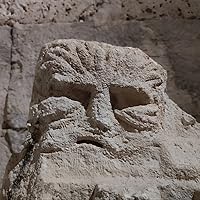
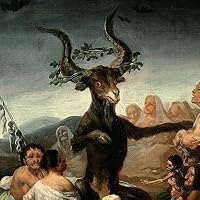
Pandemonium: A Visual History of Demonology presents—for the first time—Satan’s family tree, providing a history and analysis of his fellow fallen angels from Asmodeus to Ziminiar. Throughout the book, there are short entries on individual demons, but Pandemonium is more than just a visual encyclopedia. It also focuses on the influence of figures like Beelzebub, Azazel, Lilith, and Moloch on Western religion, literature, and art. Ranging from the earliest scriptural references to demons through the contemporary era, when the devils took on a subtler form, Pandemonium functions as a compendium of Lucifer’s subjects, from Dante’s The Divine Comedy to John Milton’s Paradise Lost, and all the points in between. Containing rarely seen illustrations of very old treatises on demonology, as well as more well-known works by the great masters of Western painting, this book celebrates the art of hell like never before.
What a fun book! The text is a partial historical analysis/partial encyclopedia on the beliefs of demons through antiquity to present-day pop culture.
What makes the book truly special, however, is the liberal use of art that sprinkles through half the book. The reader is introduced to all kinds of diabolical imagery from essentially the beginning of known archaeological history to the present day. The book is produced on archival-quality paper that makes it an ideal coffee table book; the attention to production details allows the images to really arrest the eyes of the reader and put one under the various artists' visual spells.
The book focuses on ancient Levant beliefs and how they spill into Europe and eventually post-conquest North America. This is probably my only real criticism of the book; I wish it could have added more global material as Sanskrit Profesor David Gordon White has shown in, 'Daemons Are Forever: Contacts and Exchanges in the Eurasian Pandemonium,' that there has been a long overlapping pan-Eurasian belief system of the diabolical in our shared histories, and more of those connections in visual form would have been incredible.
That being said this is already a beefy book so it's hard to be too critical; as is, this will probably end up being one of my favorite books that I have read for this year.
Са аутором заратих на крв и нож већ на првим маргинама – презирем теисте који ми (под плаштом агностицизма) постулирају трансцендентну/онострану стварност. Срећом, ово није верска књига, већ лагана енциклопедија-сликовница, а грозоморно-маестрална слика Жђислава Бексињског отворила је не само књигу, већ и моје милосрђе (бонус поени за Мунков аутопортрет и портрет Ничеа). Да рекапитулирамо, па да допунимо Мушамблада.
Демонологија је у средњем веку била јерес, у ренесанси нужност (инквизиције), а касније симболичка и текстуална пракса, профана забава или окултно оруђе. Како су монотеистичке религије инкорпорирале многобожачке, прве ликовне представе ђавола до VI в. јесу у виду божанстава. Један страшни Пазузу или сукуба Лилит, окрилаћена и са ногама кукувије, која ждере новорођенчад, били су дивинизовани у страхопоштовању, док их црква није ођаволила, па чак и порекла (прва адамова жена је у апокрифима). Тако ни цртеж тзв. Рогатог бога из горњег палеолита није претеча сотоне. Одиста, хришћанство је забарушено паганство, од канибалистичко-жртвене сублимације причести до удешавања црквеног календара по (словенско-)митолошко-обичајном. Сходно смрдљивој антропоцентричности, нечастиви су често анимализовани; но, неретко су ми та хибридна створења симпатично осликана. Сотона од IX до XII века изгледа као сатир или дивљак, од XII до XV века воли да носи канџе, рогове и реп, са пернатим или шишмишастим крилима, док се касније по изгледу пали анђели изједначавају са вознетим и блаженим дупеувлацима бога (читај: гологузи бодибилдер стил осликавања, пореклом из антике). Каже се да је управо Милтон повампирио наратив о палим анђелима читајући књигу енохову. Стенли Фиш каже да је читалац “пао” на Милтонову реторику којом је наведен да симпатише Луцифера. Одавде видимо да је паметно бирати забавне књиге за штребере када су из пера првоступника књижевности.
“Critic Meyer H. Abrams explains in his influential study The Mirror and the Lamp: Romantic Theory and the Critical Tradition that in discussion of the purpose of art, the metaphor of the “mimetic mirror [is] familiar in older aesthetic theory,” but by the nineteenth century such an understanding of poetry merely reflecting an objective world was replaced by the metaphor of the lamp, where the artist sees the world as being “bathed in an emotional light he has himself projected.” Suddenly poets are practicing not just prosody, but theurgy; for the Romantic, versifying was conjuration and mere atheism doesn’t mean the extinction of the demonic, for artists would now be able to also create ex nihilo. From Frankenstein to Shelley’s Prometheus Unbound and Lord Byron’s closet-drama Caine, an archetype of poet as genius creator—as magus, wizard, and necromancer—permeates the literature of the period, lending itself to a mad and vibrant diabolism.”
Ђус са ђавлом: • Испосник Херман, легенда каже, огрешио се о завете и био принуђен да се искупи писањем књиге изузетне каквоће, у чему му помаже Лучоноша лично, запоседајући странице. У питању је импозантни (да не кажем уклети) Gigas Codex из XIII века. • Први таксономски водич кроз ђаволе стиже 1054. године: On the Operation of Demons by Michael Psellos. Johann Weyer 1577, у књизи Pseudomonarchia Daemonum, пише да су прогоњене вештице индивидуе са психичким поремећајима. Средином XVII века, од ранијих текстова, саставља се још важнији гримоар, Ars Goetia. 1856. Елифас Леви, “полимата дилетант”, пише Догму и ритуал високе магије, стварајући легендарну илустрацију Бафомета. Бизарно-фарсичне, порнографске илустрације прави Eugene Lepottevin: Les Diables Litographis. • Кристофер Марлоу, важан поета и драматург елизабетанског периода, познат је као содомит, јеретик и богохулник, а ако трачеви о припадности Ноћној школи, атеистичком братству, нису тачни, неоспорно је да безбожништвом одишу његове драме. • Отац Urbanus Granderius бива оклеветан од стране главне опатице једног француског самостана да је склопио пакт са ђаволом, након што јој је дао корпу. Изводи се масовни егзорцизам како би се опатице опасуљиле од наводних силних оргија на које их је навео нечастиви, а после суђења на коме је као сведочанство коришћен лажирани пакт са ђаволом, Urbanus је спаљен наживо, 1634. • Инсекти наводно настали спонтаном генерацијом као ђавољи накот фино су упоређени Левенхуковим цртежом муве и илустрацијом Белзебуба Луја Бретона из Пакленог речника Колина де Плансија (1818). • Hell-Fire Clubs – злогласни кружоци моћника који су практиковали црне мисе (Френсис Дешвуд, Хорас Волпол, Бенџамин Френклин). • Лапласов демон је измишљени ентитет способан да предвиди позиције свих честица у сваком тренутку. Да ли се хладним калкулисањем поништава слобода избора? • Шарлатан, наркоман, фашиста и плагијатор Алистер Кроули – религија телема. Са викторијанским окултизмом се доводе у везу и Т.С. Елиот, Езра Паунд, Фернандо Песоа, Јитс, Брем Стокер, Артур Конан Дојл, Артур Макен… • Шарлатан Антон Шандор Лавеј – атеистички сатаниста, соц-дарвиниста, самољубив и екоцидан (Црква Сотоне дужна је да казни онога ко нарушава економски раст). • “Секуларни демонолог/научни окултиста” Лавкрафт: инфантилне представе унижавају космички песимизам и нихилизам (ово тврдим лично јер ми је његов постмодернистички гримоар Некрономикон у 19. години деловао незрело и коматозно). • Зачетник сатанистичке панике је дискредитована књига Мишел памти. • Обдукција од стране ванземаљаца је метаморфоза наратива о запоседнутости ђаволом.
With it's six main chapters leading you through different time periods and their idea of demons / way of figurating evil, you get a pretty good summarized glance over the visual history of demonology. While also partially talking about specific literature or refering to specific treatises that deepen particular topics, you also get a lot of inspiration for further knowledge enhancing. Also, the visuals in the book are just amazing and really interesting, so you can't really get bored and can imagine the written elaborations better.
According to Ed Simon: "Of course, I don’t think that demons are actually real,” is the expected response and the one that I give. “I’m a modern, secular, educated, liberal, agnostic man. I don’t believe in demons and devils, goblins and ghouls, imps, vampires, werewolves, ghosts, or poltergeists either." But the problem his reference from vampires, werewolves, from "Walt Disney characters" are the weak points! And he claimed that modern? Or ignorant in spiritual wisdom? And he claimed Educated? maybe from fiction and Walt Disney world! And Prof Ed Simon never realised that the words of Devils, and Demons there are various origin and references from Biblical Scholar, but Ed Simon never put the references from Biblical references from Ancient Bible Jewish Scholar. And Ed Simon ignore the spirit is invisible matter of fact that from scientific research on the Natural Wonder of Nature and Billions Galaxies, and Ed Simon never realised there are invisible matter existence in myriad galaxies, maybe possibility Ed Simon never believe in air is invisible, radiation invisible matter, sound is invisible, and Ed Simon never realised that the importance of spiritual wisdom and understanding the Satan deep things, I believe Ed Simon making a blasphemous things that his conviction of twisted story from apostate reference with his theory contradict from reality. Possibility Ed Simon favour of unscientific covid vaccine experimental and despite million died from Dr Fauci Satan is not real? Maybe Ed Simon obsessed with Fauci Unscientific Approach" and Facebook policies are favor to Fake News! Why! British Medical Journal complained this suppression the data. And maybe Ed Simon cannot comprehend the mortal Man and Invisible person's Satan Inspiring the flesh perversion and tolerability of being freedom of liberal progressive? How about war in Ukraine and Russia? Is that a myth? Well, common sense is not common in the Worldly Wisdom and contradiction in the spiritual wisdom of the Holy Bible. The whole contexts in "A History of Demonology is a History of the World" And Ed Simon is personal decision on the author himself and not in universal discussion from universities manner of open mind instead showings a Worldly Wisdom with reference human philosophical versus Spiritual Wisdoms with biblical reference and text. The problem with Ed Simon more on blah blah blah without biblical text and explaination.) And take note "Must we have great intelligence or be highly educated in order to receive godly wisdom? No. YHWH-(Jehovah) is willing to share his wisdom with us regardless of our background and education. (1 Corinthians 1:26-29) But we must take the initiative, for the Bible urges us to “acquire wisdom.” (Proverbs 4:7) How can we do so? ( New International Version First Corinthians 1:26-29--: 26 Brothers and sisters, think of what you were when you were called. Not many of you were wise by human standards; not many were influential; not many were of noble birth. 27 But God chose the foolish things of the world to shame the wise; God chose the weak things of the world to shame the strong. 28 God chose the lowly things of this world and the despised things—and the things that are not—to nullify the things that are, 29 so that no one may boast before him. https://lithub.com/a-history-of-demon... 🌈And we can advise to Ed Simon and here's another link of Invisible dark matter existence-- And hope Ed Simon need more study in the "A Universe Full of Surprises and Invisible Existence in the Billion Billion Galaxies!
JUST a century ago, scientists believed that the entire universe was contained within our galaxy, the Milky Way. During the 20th century, however, major advances in astronomy, physics, and technology revealed the breathtaking scale of the cosmos. Some of the discoveries have also been humbling. For example, in recent decades astronomers have come to the realization that they do not know what makes up over 90 percent of the universe. What is more, the discoveries that led to that conclusion have caused scientists to question their understanding of the fundamentals of physics itself. Of course, such questions are nothing new.
For instance, toward the end of the 19th century, physicists observed something odd about the speed of light. They found that relative to an observer, light always traveled at the same speed no matter how fast the observer was moving. But that seemed to defy common sense! The problem was addressed in 1905 in Albert Einstein’s special theory of relativity, which showed that distance (length), time, and mass are not absolutes. Then, in 1907, after a flash of intuition that he termed “the happiest thought of my life,” Einstein began to develop his general theory of relativity, which he published in 1916. In this revolutionary work, Einstein wove gravity, space, and time together and refined the physics of Isaac Newton.
The Expanding Universe
Based on the evidence of the day, Einstein believed that the universe is static—neither expanding nor contracting. However, American astronomer Edwin Hubble, in 1929, presented evidence indicating that the universe is expanding.
Hubble also cleared up a long-standing mystery about certain fuzzy, luminous patches in the night sky, which were named nebulae because they appeared to be clouds of gas. But were all these nebulae within our galaxy, or were they outside it, as British astronomer Sir William Herschel (1738-1822) suggested over a century earlier?
When Hubble first estimated the distance to one of these entities, the Great Nebula in the constellation Andromeda, he concluded that the nebula was actually a galaxy a million light years away. That put it well beyond the Milky Way, which has a diameter of a “mere” 100,000 light years. As Hubble charted the distances to other nebulae, he began to unveil the enormous scale of the cosmos and triggered a revolution in astronomy and cosmology. *
It was soon thereafter that Hubble observed that the universe is expanding, for he saw that distant galaxies were receding from us. He also noticed that the farther away the galaxy, the faster the recession. Those observations imply that the universe of yesterday was smaller than that of today. When Hubble published his groundbreaking work in 1929, he paved the way for the development of the big bang theory of the origin of the universe, which indicates that the universe originated in a cosmic explosion approximately 13 billion years ago. But the picture is still incomplete.
How Fast Is the Expansion?
Since the time of Hubble, astronomers have been trying to measure as accurately as possible the rate of expansion, referred to as the “Hubble constant.” Why is this measurement so important? If astronomers could calculate how fast the universe is expanding, they could use that calculation to estimate its age. Moreover, the rate of expansion might have serious implications for the future. How so? It is reasoned that if, for instance, the universe is expanding too slowly, gravity might ultimately win out and cause everything to collapse in a final “big crunch”! But if the expansion is too rapid, the universe might expand forever and dissipate entirely.
While more precise measurements have provided answers to some questions, other questions have been raised—questions that cast doubt on our present understanding of matter and the fundamental forces of nature.
Dark Energy and Dark Matter
In 1998, researchers analyzing light from a special kind of supernova, or exploding star, found evidence that the expansion of the universe is actually accelerating! * At first, the scientists were skeptical, but evidence soon mounted. Naturally, they wanted to know what form of energy was causing the accelerating expansion. For one thing, it seemed to be working in opposition to gravity; and for another, it was not predicted by present theories. Appropriately, this mysterious form of energy has been named dark energy, and it may make up nearly 75 percent of the universe!
Dark energy, however, is not the only “dark” oddity discovered in recent times. Another was confirmed in the 1980’s when astronomers examined various galaxies. These galaxies, as well as our own, appeared to be spinning too fast to hold together. Evidently, then, some form of matter must be giving them the necessary gravitational cohesion. But what kind of matter? Because scientists have no idea, they have called the stuff dark matter, since it does not absorb, emit, or reflect detectable amounts of radiation. * How much dark matter is out there? Calculations indicate that it could make up 22 percent or more of the mass of the universe.
Consider this: According to current estimates, normal matter accounts for about 4 percent of the mass of the universe. The two big unknowns—dark matter and dark energy—appear to make up the balance. Thus, about 95 percent of the universe remains a complete mystery! *
A Never-Ending Quest
Science is in search of answers, but all too often one set of answers leads to another layer of puzzles. This fact calls to mind a profound statement recorded in the Bible at Ecclesiastes 3:11. It reads: “Everything [God] has made pretty in its time. Even time indefinite he has put in their heart, that mankind may never find out the work that the true God has made from the start to the finish.”
Of course, at present we can absorb only limited amounts of knowledge because of our short life span, and much of that knowledge is speculative, subject to change. But that situation is temporary, for God has purposed to grant faithful humans endless life in Paradise on earth, where they can examine his handiwork for an eternity and thus gain true knowledge.—Psalm 37:11, 29; Luke 23:43.
Therefore, we need not fear doomsday speculations about the universe. After all, science has only scratched the surface of reality, whereas the Creator knows all.—Revelation 4:11.
[Footnotes]
^ par. 7 Astronomy is the study of extraterrestrial objects and matter. Cosmology, a branch of astronomy, “is the study of the structure and development of the universe and the forces that work on it,” says The World Book Encyclopedia. “Cosmologists try to explain how the universe formed, what has happened to it since, and what might happen to it in the future.”
^ par. 13 The exploding stars are called type 1a supernovas, and they may shine as brightly as a billion suns for a short time. Astronomers use these supernovas as a standard for measurement.
^ par. 14 Dark matter was postulated in the 1930’s and confirmed in the 1980’s. Today astronomers measure how much dark matter a cluster of galaxies may have by observing how the cluster bends light from more distant objects.
^ par. 15 The year 2009 has been designated the “International Year of Astronomy,” and it marks the 400th anniversary of the first use of an astronomical telescope by Galileo Galilei.
[Box on page 17]
LOOK UP AND BE HUMBLE
When an ancient servant of God looked up at the clear, unpolluted night sky, he felt reverential awe, which he put to verse. Psalm 8:3, 4, reads: “When I see your heavens, the works of your fingers, the moon and the stars that you have prepared, what is mortal man that you keep him in mind, and the son of earthling man that you take care of him?” Yet, the psalmist had no telescopes or special cameras. How much more, then, should we feel in awe!
A history of demonology that explores the different eras of humanity through the imageries (painting, writing, film, etc.) opposing good and evil. Great introduction book but don't expect it to be a guide about Satanism for example.
This work was amazing and covered so much demonic history throughout humanity’s culture. It gives great analysis of art and cultural moments, notable people, and movements and how the idea of evil and of demons changes alongside humanity’s changes. Some weird editing mistakes, but was phenomenal.
There are books that behave like arguments and books that behave like atmospheres. “Pandemonium: A Visual History of Demonology” belongs decisively to the latter category. It is not a straight road so much as a lantern carried through a long corridor of images, where every few steps another door opens and the reader is invited to look in. Ed Simon’s subject is demonology, but his deeper fascination is with the way cultures give evil a face, and then keep repainting that face so it can survive centuries of disbelief and fascination alike.
The premise is concrete enough to be disarming. Demons are not only theological propositions; they are design problems. They are narrative solutions. They are social technologies. A demon is what you get when something feels present yet refuses ordinary explanation, when suffering demands a culprit, when desire requires a mask, when power wants a mythic alibi, when a community needs a villain whose punishment can be imagined as moral hygiene. Simon makes this case less by declaring it than by staging it. His “visual history” is not a decorative subtitle. The book thinks in pictures, in artifacts, in the stubborn fact that belief is rarely pure thought. Belief is embodied, illustrated, circulated, copied, recopied, and finally mistaken for “tradition” simply because the image has been seen so many times it begins to feel inevitable.
The opening chapters are strong precisely because they begin with objects that feel almost embarrassingly practical. The incantation bowl, inscribed with spiraling script and a rough central figure, is not treated as a quaint relic from a credulous past. It is treated as a domestic instrument, built for the same reason people install locks, keep a light on in an empty apartment, or whisper a private plea when the elevator jolts. Whatever the demonic was, it was close enough to the home to be managed like a pest. That intimacy matters. It keeps demonology from floating off into abstraction. It reminds the reader that, long before the devil became a grand villain of stained glass and stagecraft, “the demon” was a way of naming what made milk sour, what stole sleep, what turned a body against itself.
From there, the narrative widens into the scriptural and late antique worlds where monotheism tries to map a universe that still feels crowded. One of Simon’s most suggestive throughlines is that demonology often functions as a repository for leftovers. Older gods, rival spirits, inherited names, local powers that refuse to vanish when a new theology arrives: they are frequently demoted rather than erased. A divinity becomes a demon; a protective figure becomes a tempter; a myth becomes a warning label. The effect is that demonology becomes, unintentionally, a historical archive. Even when a culture insists it has purified itself of competing forces, the competing forces linger in names, in etymologies, in the uneasy sense that the cosmos is still busy.
When the book reaches early Christianity, it underscores something modern readers often overlook: exorcism is not a fringe spectacle in the gospels; it is a central theater of authority. To cast out demons is to demonstrate that a new power has entered the world and can reorganize it. Possession narratives are revealing because they treat evil as invasive and plural. The demon’s name is often less a personal identity than a crowd. “Legion,” the famous response, carries a political echo that Simon is right to emphasize. The possessed body becomes a contested territory, and spiritual warfare begins to resemble imperial occupation. In that moment, demonology is not only metaphysics. It is social description.
If the early sections establish demonology as inheritance, the medieval chapters show it becoming a craft. Here the devil acquires a visual grammar that proves astonishingly durable: the horned brow, the bestial limb, the hybrid body that looks like nature’s rules being broken on purpose. Yet Simon is attentive to how medieval devils can be both terrifying and ridiculous, and how that doubleness is functional. The grotesque invites laughter, and laughter becomes a way to metabolize dread. A figure that can be mocked can be endured. Images like “The Ladder of Divine Ascent,” with demons tugging monks from their precarious rungs, are not only warnings. They are diagrams of anxiety. They are the visible form of a private fear: that one slip is all it takes, that the moral life is an ascent without guardrails.
The book grows most volatile when it reaches the Renaissance and Reformation, when Europe’s spiritual map is redrawn by polemic and persecution. Here Simon’s argument is not merely that people believed in demons; it is that demonology becomes useful. Once the enemy can be described as diabolically deceived, ordinary conflict is elevated into a holy emergency, and violence can be reframed as purification. In this period the devil becomes propaganda, and the line between demonology and politics thins to tissue. Simon’s emphasis on the era’s obsession with Antichrist makes sense in that context: the fear is not only that evil exists, but that evil can pass as good, that corruption can wear the costume of holiness.
His discussion of grimoires and conjuration is especially careful about a point that modern pop culture tends to flatten. The conjurer is not always the caricatured worshipper of Satan. Often, the conjurer imagines himself as a technician, attempting to compel demons through divine authority, Solomon-style, as if the spiritual world were a system that could be coerced with the right passwords. That distinction matters, not to sanitize the practice, but to restore the internal logic of the historical actor. There is a difference between devotion and control, and the frightening thing is how easily the latter can borrow the language of the former. In those pages, demonology begins to resemble a science of the invisible, complete with procedures, hierarchies, and the promise that the right method will produce a result.
One of the book’s sharpest pivots is its refusal to keep demonology confined to religion. When Simon turns to Descartes’s “evil demon,” the reader feels a sudden chill of recognition. The demon becomes the thought experiment that threatens not the soul but the senses. What if perception itself is compromised? What if the world is a convincing counterfeit? In that philosophical form, demonology migrates into modernity as doubt. The horned creature at the edge of the village becomes the invisible saboteur in the mind’s own machinery. The infernal is no longer merely down below; it is inside the conditions of knowing.
The Enlightenment chapter could have been written as a triumphalist narrative of disenchantment. Simon is too skeptical a guide for that. Instead, he shows demonology relocating. In elite circles, witches and possessions increasingly become “superstition,” a word that functions less as description than as boundary: what respectable people are not supposed to believe. But the devil does not disappear. He is repackaged through print culture. Cheap pamphlets, mass-produced grimoires, and satirical prints make infernal imagery newly portable, newly purchasable, newly available for private consumption. Hell becomes, in a sense, a commodity. The culture that claims to have outgrown demons also learns how to sell them.
This is where the “visual history” approach pays off most visibly. Simon treats images as engines of continuity. An icon, a woodcut, an engraving, a satirical print: each becomes a relay, carrying forward a set of features audiences learn to recognize. The devil’s face is one of the West’s most successful logos, endlessly revised yet always legible. The nineteenth century intensifies this logic by turning the infernal into an encyclopedia. In an era devoted to classification, demons line up to be indexed. Works like “Dictionnaire Infernal” are not only curiosities; they are expressions of a modern impulse to catalog everything, including terror, as if naming and sorting could reduce danger to information.
And yet the nineteenth century introduces a new kind of glamour, and “Pandemonium” does not pretend otherwise. Infernal imagery becomes, in Romantic and Symbolist hands, a vocabulary for transgression, alienation, and forbidden desire. The devil is repulsive and fascinating at once, a figure onto which the modern self can project rebellion without having to invent a new myth from scratch. Simon is particularly good at tracing how a single icon can become culturally dominant. Lévi’s Baphomet, originally embedded in a specific esoteric argument, becomes a free-floating emblem, detached from its author and remade by every subsequent subculture that needs a ready-made symbol for inversion.
Art, in Simon’s telling, does not merely illustrate demonology; it helps generate it. A painting like “The Nightmare” is not a footnote to belief. It is belief’s emotional equivalent, the incubus rendered as atmosphere, the demonic relocated into the pressure of sleep and the body’s helplessness. Later, the devil becomes a figure who can be mocked by a satirist and adored by a decadent poet in the same century, which is another way of saying that demonology, once it escapes strict doctrine, becomes extremely flexible. It can be moral instruction, entertainment, critique, ornament, provocation.
By the time the narrative reaches the twentieth century, demonology has fully entered mass media. Cinema becomes one of the modern world’s most powerful occult machines: it conjures presences on command, gives them voices, gives them bodies, distributes them to millions. Simon’s discussion of films like “Rosemary’s Baby,” “The Exorcist,” and “The Omen” reads not as a nostalgia trip but as cultural diagnosis. The demonic on screen becomes a way to stage anxieties about family, authority, the body, and the suspicion that modern life has not banished metaphysical terror so much as provided it with better lighting and sound.
His treatment of modern Satanism, from Crowley’s flamboyant self-mythmaking to LaVey’s American showmanship, is measured and lucid. He refuses sensationalism. He acknowledges performance without reducing everything to theater. Ritual can be play and seriousness at once, and identity can be forged through symbols even when those symbols are borrowed, inverted, or deliberately scandalous. In that light, the demonic becomes a kind of aesthetic citizenship for outsiders, and also a mirror held up to a culture that constantly sells rebellion as style.
One of the most sobering notes arrives when Simon invokes the “banality of evil.” This is where the book risks stretching its category, because bureaucracy and genocide do not require devils to be horrifying. Yet the risk is also the point. Demonology, at its most honest, is not only about the spectacular monster. It is also about the temptation to make evil spectacular, thereby missing the ordinary ways it moves. The demonic can be the clerk who stamps the form, the administrator who follows procedure, the person who insists there is no alternative. If earlier centuries imagined evil as possession, the modern century often discovers evil as workflow.
Late in the book, Simon’s curiosity about contemporary folklore feels timely rather than trendy. The internet does not eliminate demon-making; it accelerates it. Stories like “Slenderman” show how a figure assembled from fragments can gain traction, evolve collaboratively, and leak into real life with disturbing consequences. Demonology returns, here, to its oldest function: giving shape to ambient dread. Only the workshop has changed. Instead of monks copying manuscripts, we have forums and feeds. Instead of a single author, we have iterative crowds, revising the monster until it fits the moment.
As a piece of writing, “Pandemonium” aims for a tone that is both essayistic and incantatory. Simon loves the snap of an allusion and the weight of a well chosen adjective, but he also writes with the clarity of someone who knows a reader can get lost in a gallery. The chapter structure allows for quick turns that are often exhilarating. Occasionally, the same velocity becomes a weakness. The sheer number of references can create a montage effect, and the reader may wish for more sustained dwelling in certain scenes, more time inside a single image before the next door opens. The book’s pleasures are, at times, the pleasures of abundance, and abundance can blur edges.
There is also the question of boundaries. Demonology is not only a Western story, and while Simon gestures beyond Europe and the Near East, the book’s center of gravity remains largely within that lineage, with later American excursions. That choice is defensible, but the book sometimes treats its frame as if it were the whole wall. A little more explicit acknowledgment of what is excluded, and why, would have strengthened the project’s candor. Even so, within its chosen tradition, the range is impressive, and the guiding intelligence rarely falters into mere list-making. When Simon inventories, he is usually doing it to show how an image migrates, how a name persists, how a fear adapts.
What remains after the last page is not a single thesis but a sharpened question: why do we keep needing to give evil a face? Simon’s answer, implied more than declared, is that faces are actionable. A faceless anxiety is hard to fight. A named demon can be cast out, mocked, catalogued, filmed, reimagined. The demonic persists not because it is true in any one register, but because it is useful in many. It can be household pest, cosmic enemy, philosophical doubt, political accusation, aesthetic thrill, consumer commodity, cinematic spectacle, internet folklore.
If I were to place “Pandemonium: A Visual History of Demonology” on the shelf with a single verdict, I would call it a 76 out of 100: smart, stylish, and richly curated, occasionally breathless in its sweep, but consistently alive to the strange fact that even in ages that claim to have outgrown demons, we keep finding new ways to draw them.
This was so much more than I expected when I placed a hold at the public library. "Visual History" -- I was expecting a picture book with blurbs about the various depictions of demons throughout (primarily European) history. And there is that. But there is also lengthy small-print text that gives the history of demonology from Antiquity and Scripture (c. 500 BCE-800 CE), Medieval (c. 800 -1500), Renaissance and Reformation (c. 1500-1650), the Age of Reason (c. 1650-1800), the Nineteenth Century (c. 1800-1900), and the Modern Age (c. 1900-2000).
The text is highly intellectual, with references to scholarly works, some of which I've read and some of which I haven't yet. The author is an expert on the Renaissance and Reformation and actually does a bit of a smack down on the supposed Age of Enlightenment, reminding us that the so-called Dark Ages actually had a lot of scholarly work going on, while the witch trials and taking of slaves from freedom in Africa to the Americas came later. It was not a time of intellectual liberty for everyone, and many of the ideals expressed were not reached.
This filled some gaps in my education. The way the history was brought together really impressed me. I didn't realize that Voltaire (1694-1778) and John Wesley (1703-1791) were contemporaries -- I certainly didn't learn about them at the same time in my educational experience. Or how Romanticism arose as a reaction to some of the faults of the Enlightenment. The introduction and conclusion bring it back to the present. We have a long history of belief in demons and an equally long habit of demonizing our opponents, but a difficult time talking about evil. How do we talk about the Holocaust, or school shootings, or our current political divide?
Warning: The images contained within range from comical to beautiful to deeply disturbing and even masochistic.
Some faults: a few small typos and at least one missing photo (the caption is there, but not the picture described). The captions are all over the place, sometimes under the picture or beside it, or on the previous or next page, or, occasionally, no caption as it is addressed in the text. There is also no final list of references, so I keep having to flip back through to remember an author/book title I want to look up. Makes sense, since at 400 pages it is a hefty volume with no room for more.
From the hardback binding, to the beautifully sought pictures and the researched topics that Ed Simon covers in each chapter. If you’re looking for a book covering the history of demonology, this is it. It covers from the very beginning to the present. This is a good way for anyone interested in the subject to find a period of time that interests them the most and research further into that - although there is an immense amount of information, there is only so much that can be covered in one book. And to anyone buying this book expecting any and all demons to be included and learn about them in this book - it’s not the book for you. It’s a history book of demonology not an encyclopaedia. The only reason this book didn’t get a five star review from me is because, oddly enough, I found two spelling errors and one instance of a title stated twice in one paragraph, but the second time it was missing italics at the start. The only time I recorded a mistake was page 309, a demon introduced as “Mathilda” and then in the next sentence was “Matilda”. A quick google search confirmed it to be Matilda. A small mistake really, but it occurred too many times for a published book of high quality such as this. Edit: Possibly another editing issue, I found certain subjects would abruptly end and jump to another. It would really bring you out of the narrative in that moment. A slight downer that this happened at the very end of the book too, it felt like the ending was somehow cut off, so when I turned the page I was surprised to see that was it!
Beautiful, if not disturbing and morbid, colour pictures of the primary sources that Ed Simon uses to illustrate his lively prose and analysis of all things demonology, from the Ancient period through to the devils (& Satanists) of today. I learned a lot from this book on the genesis, history, and evolution of demonology and more importantly the humans - twisted, religious, and/or otherwise - who drove the discipline and myths. The sections on the Renaissance, Reformation. and Enlightenment eras were particularly strong, which is clearly Simon's area of expertise. A worthwhile, engaging, illuminating, and wholeheartedly unsettling read. This hardcover edition is a sharp looking book in its style and layout.
This book is a beauty and a wonder. It's visual (duh), and it's historical (also duh), but that isn't giving it what's properly due. The visual elements here are stunning and selected to match the historical accounting of demons. The history takes center stage. If you're a cultural historian, or an amateur like me, you'll want to POSSESS this book (for real, no pun intended) as well as to read it. It's a big `ol doorstop of beauty and glossy perfection.
Wasn't what I was expecting when I initially ordered it. Didn't expect art history. I'll have to re-read when I'm in a better head-space for this kinda thing. The layout of the images and text left a lot to be desired, in my opinion. But it was informative!
An interesting and well researched book that traces human civilization, art and it's relationship with the many faced entities we call demons to paraphrase Clive Baker "Angels to some Demons to others"