When Julie Hilden's mother became ill her daughter didn't do what was expected of her. Julie chose to abandon her mother and make her own life. As a child, she used books to escape her mother's silent retreats and bewildering rages. When Harvard's acceptance letter came, she fled. She blamed no one for her sad childhood, and she never asked for forgiveness. THE BAD DAUGHTER is Hilden's haunting, intelligent story of how she began discarding all traces of her former life. In the course of the story, however, Hilden discovers that she can never fully escape her past. Each new relationship she forms is influenced by her betrayal of her mother. And in a final, chilling irony, Hilden learns there is a good chance she carries the very same gene for early-onset Alzheimer's that brought on her mother's terrifying fate. "It's hard to decide what is more remarkable about Julie Hilden's THE BAD DAUGHTER: her unusual courage and frankness or her remarkable gifts as a writer. This is an absorbing book and an impressive debut."--Alison Lurie.
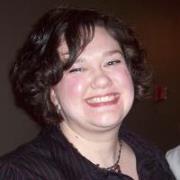
some sad news. this past spring, Julie Cope Hilden passed away. she was just 49.
she was my friend. she was my mentor. and more than that, she was a tireless advocate for the defenseless: animal rights, First Amendment, and the experiences of writers in an uncaring world. at this stage of my life, as I encounter peers who are just starting their literary careers, the promise of a bright future for my friends enlivens my day. but the premature death of one of the shiniest stars in the artist constellation reminds me of the mortality we all share, and how the day will inevitably arrive when more of these shining points of light will flicker out.
The Bad Daughter is Hilden's debut work. it captures, in its memoir format, Hilden's tortuous relationship with her mother, who was suffering from dementia related to early-onset Alzheimer's. as a confession, it took courage in every page. moreover, the book lends truth to the old adage, "there's at least one book in every person." Bad Daughter can't help but be obsessed with its topic. and the betrayals committed in the shadow of the first, primary relationship are all there as promised by the book's back cover ad copy.
if you have the time, take a chance on a small (200+ page) book. with a good ear for prose, Bad Daughter displays a professional terseness and thus moves quickly to relate the passage of years. it's worth a look.
As you could infer also from its subtitle, “Betrayal and Confession”, this memoir is not cheery. It’s not long. Though competently written, it has a lot of flatly delivered factual reporting and little lyricism.
The betrayal is by both mother and daughter, early and late. The daughter’s betrayal seems almost minor: busy, emotionally estranged daughter does not visit Mom in nursing home great distance away til almost the last moment of Mom’s final two years of life. The narcissistic mother’s seems major: did not adequately nurture and support child.
Maybe one of the book’s purposes, which is achieved without the author ever mentioning it, is to convince readers both betrayals are entirely forgivable. Much clearer is the author’s hope her “confession” will allay and resolve her feelings of guilt and unhappiness.
This is a good read if you have ever been around someone diagnosed with this condition. It's a brutal disease that can leave the caregiver/family scarred. The details of the adult intimacy really did nothing to improve this book.
I really have a hard time negatively reviewing stories when authors have shared their stories. I want to honor their courage for coming forward with hard stuff, especially hard personal stuff.
Reading this felt like reading a laundry list of boring facts. The only thing missing was bullet points. But for such a painful story: daughter leaves home to basically never return- even after her mother is diagnosed with Alzheimer's and enters a nursing home then ultimately dies- the telling was as dry as toast.
It read like 200 pages of petulance. Dry, boring petulance. I truly could not have cared less about Julie Hidden or her mother. I have had more intense reactions to Kleenex commercials.
Julie left. Obviously never got therapy. Went to an Ivy. Became a lawyer. Never went to see her mother (except once). Her mother died.
Pretty much you just read the story.
Julie alludes to her mother being a narcissist, but -for a lack of any other evidence in the book- her mom just sounded like a seriously depressed woman who was lost, divorced and hurt with minimal skills to pull herself from the emotional wash she found herself in.
Most adult children with a few years of therapy and an Ivy education (as we are reminded of many many many times) could have found their way through to at least being a vaguely interested in their mom's health kind of daughter.
This was beyond Julie Hilden, so instead she wrote a very long book that makes her look like a very well- educated asshole.
I didn't dislike this book because it was about a daughter who- for no apparent reason- abandoned her mother. Some adult children need to protect themselves with geography and sometimes outright disconnect. That is wise.
I disliked this book because it was written like a legal brief: boring, and there was utterly no evidence for the authors over the top reaction to what seems to be a pretty benign childhood and the ensuing need to tell us all about it it written form.
I find it hard to identify with this book since my mother and I are so close and I can never imagine our relationship becoming something like this. It did however incite a discussion with my future husband about what either of us would do about having children if we had a predisposition or knowledge of a potentially fatal disease that could be passed on through one of us. It was thought provoking and worth reading the book if only to have had that discussion.
Hilden shows herself to be a selfish young lady who found out ironically finds herself alone. This memoir also reveals a side of life marred by Alzheimer's--how the early mental and emotional signs of the disease can affect a family.
She is a true picture of humanity in that neither she nor her life is neatly tied up nor resolved. Her honesty and explicit description left me slightly uncomfortable yet intrigued to read on.
This book is beautifully-written, if a bit too detached. It feels like this is just the beginning of a longer story, one that would give the mother more of a voice. But I admire Hilden's honesty--she may be unlikeable, but she tells a compelling story that many in her shoes would be afraid to tell.
I think this book deserves 2.5, but Goodreads won't let me. It is a confessional novel that put some off, but worth a look at. Alzheimer's is a disease that baffles the minds of those without the disease; I cannot imagine what it does to those whose minds are darkened with such a genetic ailment.
This book was very relatable to me. I've gone through health issues with my family during my college years and this book actually made me feel a little better knowing someone else had gone through a similar situation, and it gave me a glimpse of how they've handled it.
Another story of a bad mother getting a bad daughter. Just more gossip I guess. Helps remind me of how lucky I was to have a mother who loved and cared for me.