

What do you think?

The Fair Botanists
It's the summer of 1822 and Edinburgh is abuzz with rumours of King George IV's impending visit. In botanical circles, however, a different kind of excitement has gripped the city. In the newly-installed Botanic Garden, the Agave Americana plant looks set to flower - an event which only occurs once in several decades.
When newly widowed Elizabeth arrives in Edinburgh to live with her late husband's aunt Clementina, she's determined to put her unhappy past in London behind her. As she settles into her new home, she becomes fascinated by the beautiful Botanic Garden which border the grand house and offers her services as an artist to record the rare plant's impending bloom. In this pursuit, she meets Belle Brodie, a vivacious young woman with a passion for botany and the lucrative, dark art of perfume creation. Belle is determined to keep both her real identity and the reason for her interest the Garden secret from her new friend. But as Elizabeth and Belle are about to discover, secrets don't last long in this Enlightenment city. And when they are revealed, they can carry the greatest of consequences . . .
When newly widowed Elizabeth arrives in Edinburgh to live with her late husband's aunt Clementina, she's determined to put her unhappy past in London behind her. As she settles into her new home, she becomes fascinated by the beautiful Botanic Garden which border the grand house and offers her services as an artist to record the rare plant's impending bloom. In this pursuit, she meets Belle Brodie, a vivacious young woman with a passion for botany and the lucrative, dark art of perfume creation. Belle is determined to keep both her real identity and the reason for her interest the Garden secret from her new friend. But as Elizabeth and Belle are about to discover, secrets don't last long in this Enlightenment city. And when they are revealed, they can carry the greatest of consequences . . .
384 pages, Paperback
First published August 5, 2021
About the author
Sara Sheridan
46 books453 followersBorn in Edinburgh. I'm a complete swot - love books always have! Currently obsessed with late Georgian/ early Victorian culture, the subject of several of my novels, and with 1950s Britain for my Mirabelle Bevan murder mystery series set across the UK - and even one in Paris. Occasionally write tie-in books for historical dramas on TV, children's picture books and short stories, mostly for charitable causes.
Ratings & Reviews
Friends & Following
Create a free account to discover what your friends think of this book!
Community Reviews
Displaying 1 - 30 of 564 reviews

November 18, 2024
I loved the first half of this book, and especially its descriptions of the Botanic Gardens and its staff. In the second half, however, the focus shifted from the working class to the well-to-do characters, who were, for the most part, as conceited, as self-interested and, ultimately, as boring as you'd expect.
My biggest problem, however, was with Belle, who, despite stealing the sacred flowers of an extremely rare plant to meet her own entirely selfish needs, was nevertheless portrayed as a kick-ass feminist and one of the novel's real heroes.
My biggest problem, however, was with Belle, who, despite stealing the sacred flowers of an extremely rare plant to meet her own entirely selfish needs, was nevertheless portrayed as a kick-ass feminist and one of the novel's real heroes.

September 1, 2022
I came across this in my local library. I was intrigued that the subject matter, although historical fiction, was set in 1822 and encompassed botany, mystery, women [as central characters] and real characters from history, especially those local to the Edinburgh area.
The story centres around a young newly widowed, Elizabeth Rocheid, and Isobel "Belle" Brodie, the half-sister of Joseph Brodie, a gentlemen of reasonable wealth and stature. These two women have interest in botany and it is this that brings them together. What develops from here is a tale of identity (plants and people), status, money, plans and love, death, theft and passions, alongside a visit to Edinburgh from the king, George IV.
There are many other characters, both real and fictional, who play parts in this story centering around the Royal Botanical Gardens Edinburgh (RBGE) and the environs of Georgian Edinburgh. The detail Sara Sheridan the author provides of this period through her description of people, places and life in a capital city of wealth and poverty is superb. This lends itself to making the story of Belle and Elizabeth believable, fun, enjoyable and a little risque (in its 18th century setting).
The author provides a very interesting historical note at the end that allows the reader to see that not only are some characters real but also houses, sites, and events large & small are too. Moreover, the descriptions of weather, the clothes of rich, manual worker and the poor, their household items, perfumery and ingredients make this realistic as does the spattering of Georgian Scots dialect.
Overall, a engrossing and rewarding read of an Edinburgh that was visited by George IV in the Summer of 1822.
The story centres around a young newly widowed, Elizabeth Rocheid, and Isobel "Belle" Brodie, the half-sister of Joseph Brodie, a gentlemen of reasonable wealth and stature. These two women have interest in botany and it is this that brings them together. What develops from here is a tale of identity (plants and people), status, money, plans and love, death, theft and passions, alongside a visit to Edinburgh from the king, George IV.
There are many other characters, both real and fictional, who play parts in this story centering around the Royal Botanical Gardens Edinburgh (RBGE) and the environs of Georgian Edinburgh. The detail Sara Sheridan the author provides of this period through her description of people, places and life in a capital city of wealth and poverty is superb. This lends itself to making the story of Belle and Elizabeth believable, fun, enjoyable and a little risque (in its 18th century setting).
The author provides a very interesting historical note at the end that allows the reader to see that not only are some characters real but also houses, sites, and events large & small are too. Moreover, the descriptions of weather, the clothes of rich, manual worker and the poor, their household items, perfumery and ingredients make this realistic as does the spattering of Georgian Scots dialect.
Overall, a engrossing and rewarding read of an Edinburgh that was visited by George IV in the Summer of 1822.

August 28, 2021
The Fair Botanists is Sara Sheridan’s combined tribute to the legacy of women’s history and Edinburgh and takes readers back to the tail end of the Enlightenment in the city. Taking inspiration from King George IV’s much anticipated visit to Edinburgh in the summer of 1822 and merging fiction with real life characters (including head gardener of the Royal Botanic Gardens, William McNab and writer, Sir Walter Scott), the novel primarily revolves about the imminent flowering of the exotic Agave americana plant and the numerous interested parties.
The novel opens with newly widowed Elizabeth Rocheid arriving in Edinburgh to live with her late husband’s aunt Clementina at Inverleith House. Left impoverished following a miserable marriage Elizabeth is heartened to find that the relocated Royal Botanic Gardens border her new home. Having sketched for the head gardener at Kew when she was in London, kindly Elizabeth is pleased to make the acquaintance of head gardener, William McNab, who seems keen for her to resume her botanical art, and find a friend in eccentric Clementina. It soon becomes clear that much of the mounting interest in the resituated gardens stems from the fervour around the imminent blooming of the prize Agave americana plant and not all of that concern is entirely altruistic. One of the interested parties is courtesan Belle Brodie, an independent and unashamedly spirited woman out to make her own fortune and putting her interest in botany to use making potions for a London apothecary. When Elizabeth crosses paths with Belle in the weeks leading up to the plants flowering they strike up an unlikely friendship whilst the city itself is gripped by the frenzy surrounding the King’s visit being organised by envoy Johann von Streitz. As head gardener William McNab, Regis Keeper Robert Graham, seed merchant Mrs Dickson, eminent botanist Lady Liston and Belle Brodie all await the flowering with bated breath it makes for a brilliantly complicated affair of hidden motives, blackmail and secret shenanigans.
The story gets off to a fairly slow start I suspect due to the extensive cast and their context requiring introduction, and whilst I was fascinated by all the jockeying for seeds and build-up to flowering, I felt the novel was bogged down with extraneous details. At times it felt like the author was introducing another strong independent woman at the expense of moving the actual story forward or fleshing out the central characters and this frustrated me. I found the friendship between Elizabeth and Belle a little forced possibly because it happens rather hastily and Elizabeth is far more muted and indistinct than go-getting Belle. Although I enjoyed the book and appreciated the atmosphere of anticipation it never completely hooked me, despite my interest in the central protagonists of Elizabeth and Belle, because I only ever felt superficially involved with their dilemmas. If I had been fully invested in the book then the overly simplistic ending, which ties up every loose end rather too neatly, would certainly have aggrieved me more. However I cannot fault the atmosphere, originality of the setting or Sara Sheridan’s bustling portrait of Edinburgh as a city of possibility.
The novel opens with newly widowed Elizabeth Rocheid arriving in Edinburgh to live with her late husband’s aunt Clementina at Inverleith House. Left impoverished following a miserable marriage Elizabeth is heartened to find that the relocated Royal Botanic Gardens border her new home. Having sketched for the head gardener at Kew when she was in London, kindly Elizabeth is pleased to make the acquaintance of head gardener, William McNab, who seems keen for her to resume her botanical art, and find a friend in eccentric Clementina. It soon becomes clear that much of the mounting interest in the resituated gardens stems from the fervour around the imminent blooming of the prize Agave americana plant and not all of that concern is entirely altruistic. One of the interested parties is courtesan Belle Brodie, an independent and unashamedly spirited woman out to make her own fortune and putting her interest in botany to use making potions for a London apothecary. When Elizabeth crosses paths with Belle in the weeks leading up to the plants flowering they strike up an unlikely friendship whilst the city itself is gripped by the frenzy surrounding the King’s visit being organised by envoy Johann von Streitz. As head gardener William McNab, Regis Keeper Robert Graham, seed merchant Mrs Dickson, eminent botanist Lady Liston and Belle Brodie all await the flowering with bated breath it makes for a brilliantly complicated affair of hidden motives, blackmail and secret shenanigans.
The story gets off to a fairly slow start I suspect due to the extensive cast and their context requiring introduction, and whilst I was fascinated by all the jockeying for seeds and build-up to flowering, I felt the novel was bogged down with extraneous details. At times it felt like the author was introducing another strong independent woman at the expense of moving the actual story forward or fleshing out the central characters and this frustrated me. I found the friendship between Elizabeth and Belle a little forced possibly because it happens rather hastily and Elizabeth is far more muted and indistinct than go-getting Belle. Although I enjoyed the book and appreciated the atmosphere of anticipation it never completely hooked me, despite my interest in the central protagonists of Elizabeth and Belle, because I only ever felt superficially involved with their dilemmas. If I had been fully invested in the book then the overly simplistic ending, which ties up every loose end rather too neatly, would certainly have aggrieved me more. However I cannot fault the atmosphere, originality of the setting or Sara Sheridan’s bustling portrait of Edinburgh as a city of possibility.

August 5, 2021
The Fair Botanists is a captivating and intoxicating historical epic set in 1822 Edinburgh. The story surrounds the pomp and intrigue in Scotland’s Enlightenment City centred around the Royal Botanic Garden in the run-up to the visit of King George IV. In the spring and summer of 1822, the citizens of Edinburgh – and some amazed visitors – were assailed by an extraordinary spectacle, passing through the north of the city; the sight of parades of full-grown trees, mounted in barrels on slow-moving horse-drawn carts, being moved with extraordinary care from one location – the old Botanical Garden in Leith Walk – to another, the garden’s new home on the slopes below Inverleith House. It’s around this extraordinary moment in Edinburgh history – and the historic visit of George IV to the city later that summer, which led to what became known as the “Daft Days” of runaway royalist enthusiasm. Georgian Edinburgh’s botanical circles are gripped by the high excitement of the imminent blooming of the exotic and incredibly rare Agave Americana plant – an event which only occurs once in several decades – in the Botanic Garden Glasshouse. Observing this unfolding spectacle is newly widowed Elizabeth Rocheid who arrives in the city to live with her late husband’s aunt and start to build a new solitary life. She meets the enigmatic Belle Brodie, a vivacious young woman with a passion for the lucrative, dark art of perfume creation.
The two women bond over their shared interest in botany, although Belle is determined to keep both her real identity and the reason for her interest in the garden secret from her new friend. Yet as Elizabeth and Belle are about to discover, secrets don’t last long in this Enlightenment city, and when they are revealed, they can carry the greatest of consequences. Around this, a rich cast of characters assemble, each with their own personal motive for wanting to be close to this once-in-a-lifetime flower. And when the flower is stolen, secrets will be revealed in pursuit of the truth. What is the secret behind Belle’s fascination with the flowering Agave? This is a riveting, alluring and spellbinding historical novel packed with entertaining scandal and intrigue. With a gorgeous eye for detail, vividly realised characters and a masterfully crafted plot set within the grounds of the Botanic Garden, she seamlessly weaves fiction with history to enchanting and fascinating results. It's lush and evocative with rich descriptions and an even richer atmosphere that creates a stunning time capsule into 1822 Edinburgh. A seductive and sensual romp that intrigues with every page and reflects the hearty and exciting decade that drew the Enlightenment to a close with all its rambunctious pleasures and intellectual vigour. A truly dazzling, unique read peopled with wonderfully painted female characters that leaves you lost in a hazy dream world. Highly recommended.
The two women bond over their shared interest in botany, although Belle is determined to keep both her real identity and the reason for her interest in the garden secret from her new friend. Yet as Elizabeth and Belle are about to discover, secrets don’t last long in this Enlightenment city, and when they are revealed, they can carry the greatest of consequences. Around this, a rich cast of characters assemble, each with their own personal motive for wanting to be close to this once-in-a-lifetime flower. And when the flower is stolen, secrets will be revealed in pursuit of the truth. What is the secret behind Belle’s fascination with the flowering Agave? This is a riveting, alluring and spellbinding historical novel packed with entertaining scandal and intrigue. With a gorgeous eye for detail, vividly realised characters and a masterfully crafted plot set within the grounds of the Botanic Garden, she seamlessly weaves fiction with history to enchanting and fascinating results. It's lush and evocative with rich descriptions and an even richer atmosphere that creates a stunning time capsule into 1822 Edinburgh. A seductive and sensual romp that intrigues with every page and reflects the hearty and exciting decade that drew the Enlightenment to a close with all its rambunctious pleasures and intellectual vigour. A truly dazzling, unique read peopled with wonderfully painted female characters that leaves you lost in a hazy dream world. Highly recommended.

July 19, 2022
This was an almost perfect read! It was so refreshing to read a book set in Edinburgh for a start. The characters were a wonderful mixture, not just the MCs but the secondary characters as well. It was fascinating to be witness to the progress of botanical science and the mechanics of setting up a gardens and possible competition between Kew and Edinburgh. This book was just what I needed. Many thanks to Netgalley for an arc of this book.

Read
February 9, 2024“Há algum tempo que não lia um romance histórico passado tão atrás no tempo e, embora não me tenha custado assim tanto a entrar na história, a meio da leitura senti alguma dificuldade com o ritmo mais lento que a autora escolheu para desenvolver o enredo. A escrita é bastante atual, tem apenas um ou outro apontamento de inglês mais arcaico — não tanto para aproximar o livro da época, mas mais para nos ajudar a situar a história. Apesar disso, posso considerar que foi uma leitura positiva e que gostei de conhecer estas personagens. Tenho a certeza de que não mudou a minha vida, mas foi um tempo bem passado e levou-me a explorar um género que não tenho por hábito ler.”
A review completa está aqui: https://ritadanova.blogs.sapo.pt/the-....
A review completa está aqui: https://ritadanova.blogs.sapo.pt/the-....

August 5, 2021
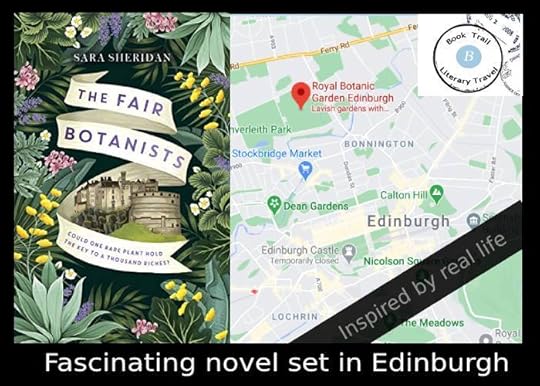
Visit the locations in the novel The Fair Botanists
Travel to the Botanic Gardens of Edinburgh
This is a great book. An immersive read and a heartfelt, human story of science and botany. That’s no small feat for an author to achieve but it’s a wonderful world that Sara has created here. A mix of fact and fiction too which always makes my heart sing. Real characters walk across the pages with fictional ones or those created from the two. There’s a skill in bringing this all together and this book has it.
What a fascinating world that of botany is! This is the early days of the Botanic Gardens in Edinburgh and various people are interested in the flowers and plants for various reasons. True history lingers in the background as the King is paying a visit to the city so it really come to life. The garden brings together a cast of characters whose life will all intersect in dramatic fashion. The trees and plants are to be oved from Leith to the new place. There’s a plant, an Agave Americana that is set to flower and may people are interested in the seeds. This plant flowers but once in a lifetime. I never thought I would get so excited about a flower, but this is a serious and fascinating time and it completely enchanted me!
The two female leads in the novel, Belle and Elizabeth – I wish I knew both in real life! Belle Brodie, is a courtesan. She just does her own thing and seeks pleasure where she can despite what society might dictate. Elizabeth has just suffered a bereavement and so is seeking new adventures. /having worked at Kew Gardens, she is keen to work in the new Edinburgh gardens.
Sara has taken women from history, some real and others reimagined, and given them a voice. Seeing fictional characters walking side by side with real historical figures was magical and it created a wonderful picture of Edinburgh society at that time.
In BookTrail terms, the wonderful thing is that you can pretty much go to Edinburgh today and you barely have to squint to see the scenes and buildings that Sara recreates here. The cobbles, the narrow alleys, the gothic overtones and the Botanic gardens are very much there. The present day might have rubbed off the edges and introduced more modern landmarks but this is an Edinburgh stuck in time. I was fascinated to be back in the city when Princes Street Gardens were being drained from the loch. The story behind Constitution Walk in Leith was an eye opener!
A wonderful story and an ode to Edinburgh, the Botanic gardens and all those who worked in this world, especially the women.

August 15, 2021
Today is my stop on the blog tour for 𝗧𝗛𝗘 𝗙𝗔𝗜𝗥 𝗕𝗢𝗧𝗔𝗡𝗜𝗦𝗧𝗦 by Sara Sheridan. Thank you to Steven Cooper at Hodder Books for sending me a copy of this gorgeous historical fiction book, and for having me along on the tour 🌿🌻🌺
-
𝗜𝗻 𝘁𝗵𝗲 𝗕𝗼𝘁𝗮𝗻𝗶𝗰 𝗚𝗮𝗿𝗱𝗲𝗻𝘀 𝗮𝗹𝗹 𝗶𝘀 𝘀𝘁𝗶𝗹𝗹. 𝗔 𝗳𝗼𝘅 𝗮𝗻𝗱 𝗵𝗲𝗿 𝘁𝗵𝗿𝗲𝗲 𝗰𝘂𝗯𝘀 𝗰𝘂𝘁 𝗮𝗰𝗿𝗼𝘀𝘀 𝘁𝗵𝗲 𝗮𝗿𝗯𝗼𝗿𝗲𝘁𝘂𝗺 𝗮𝗻𝗱 𝗱𝗶𝘀𝗮𝗽𝗽𝗲𝗮𝗿 𝗶𝗻𝘁𝗼 𝘁𝗵𝗲 𝗯𝘂𝘀𝗵𝗲𝘀. 𝗧𝗼𝗻𝗶𝗴𝗵𝘁, 𝘁𝗵𝗲𝘀𝗲 𝗵𝗮𝘃𝗲 𝘁𝗵𝗲 𝗮𝗶𝗿 𝗼𝗳 𝗺𝗼𝗻𝘂𝗺𝗲𝗻𝘁𝗮𝗹 𝗴𝗿𝗮𝘃𝗲𝘀𝘁𝗼𝗻𝗲𝘀. 𝗧𝗵𝗲 𝗴𝗿𝗲𝗲𝗻𝗲𝗿𝘆 𝗶𝘀 𝗿𝗲𝗮𝗱𝘆 𝗳𝗼𝗿 𝗽𝗹𝗮𝗻𝘁𝗶𝗻𝗴 𝗹𝗶𝗸𝗲 𝗮 𝗴𝗵𝗼𝘀𝘁𝗹𝘆 𝗿𝗲𝗴𝗶𝗺𝗲𝗻𝘁 𝗰𝗮𝗺𝗽𝗲𝗱 𝗶𝗻 𝘄𝗮𝗶𝘁𝗶𝗻𝗴, 𝗰𝗮𝘀𝘁𝗶𝗻𝗴 𝘀𝘁𝗿𝗮𝗻𝗴𝗲, 𝗶𝗻𝗸𝘆 𝘀𝗵𝗮𝗱𝗼𝘄𝘀 𝗶𝗻𝘁𝗼 𝘁𝗵𝗲 𝘀𝗼𝗶𝗹.
-
I loved The Fair Botanists. The main plot is centred around King George IV's potential visit to Edinburgh, while the Botanical Garden is being established. However, there is so much more to the story, and the monarch's visit feels almost like a minor plot point in comparison.
-
𝗦𝗵𝗲 𝗶𝘀 𝗳𝘂𝗹𝗹𝘆 𝗮𝘄𝗮𝗿𝗲, 𝗳𝗹𝗶𝗿𝘁𝗶𝗻𝗴 𝗮𝘀𝗶𝗱𝗲, 𝘁𝗵𝗮𝘁 𝗵𝗲𝗿 𝗯𝗿𝗮𝗶𝗻 𝗶𝘀 𝗵𝗲𝗿 𝗴𝗿𝗲𝗮𝘁𝗲𝘀𝘁 𝗮𝘀𝘀𝗲𝘁 𝗮𝗻𝗱, 𝗮𝘀 𝘀𝗵𝗲 𝗴𝗿𝗼𝘄𝘀 𝗼𝗹𝗱𝗲𝗿, 𝘀𝗵𝗲 𝗸𝗻𝗼𝘄𝘀 𝘁𝗵𝗶𝘀 𝗼𝗿𝗴𝗮𝗻 𝘄𝗶𝗹𝗹 𝗱𝗲𝘁𝗲𝗿𝗺𝗶𝗻𝗲 𝗵𝗲𝗿 𝗽𝗿𝗼𝘀𝗽𝗲𝗰𝘁𝘀 𝗳𝗮𝗿 𝗺𝗼𝗿𝗲 𝘁𝗵𝗮𝗻 𝗵𝗲𝗿 𝗽𝗿𝗲𝘁𝘁𝘆 𝗲𝘆𝗲𝘀 𝗼𝗿 𝘀𝗹𝗶𝗺 𝗮𝗻𝗸𝗹𝗲𝘀.
-
The characters in The Fair Botanists are brilliant, especially the characters of Belle and Elizabeth.
They are both very different, but great feminist characters. They've both faced adversity in their lives, yet they are able to use their circumstances to the best of their ability, and to overcome the difficult situations they've found themselves in.
Both Belle and Elizabeth have great character arcs, and their friendship helps them both develop as individuals.
-
𝗧𝗵𝗲 𝗽𝗲𝗼𝗽𝗹𝗲 𝘄𝗵𝗼 𝗺𝗮𝘁𝘁𝗲𝗿 𝗮𝗿𝗲 𝘁𝗵𝗲 𝗽𝗲𝗼𝗽𝗹𝗲 𝘄𝗵𝗼 𝗻𝗼𝘁𝗶𝗰𝗲. 𝗪𝗵𝗼 𝗹𝗶𝘀𝘁𝗲𝗻. 𝗧𝗵𝗲 𝗴𝗼𝘄𝗻𝘀 𝗱𝗼 𝗻𝗼𝘁 𝗺𝗮𝘁𝘁𝗲𝗿. 𝗧𝗵𝗲 𝘁𝗶𝘁𝗹𝗲𝘀 𝗻𝗲𝗶𝘁𝗵𝗲𝗿. 𝗧𝗵𝗲 𝗼𝗽𝗶𝗻𝗶𝗼𝗻 𝗼𝗳 𝘀𝗼𝗰𝗶𝗲𝘁𝘆. 𝗜𝘁 𝗶𝘀 𝗻𝗼𝘁𝗵𝗶𝗻𝗴. 𝗡𝗼𝘁𝗵𝗶𝗻𝗴 𝗮𝘁 𝗮𝗹𝗹.
-
There is some really interesting biology throughout the story, both in terms of the plants depicted, and their properties.
The agave americana plant, which only flowers every few decades, is a new edition to the botanical gardens, and is set to flower.
Unfortunately it doesn't produce many seeds, yet everyone seems to want a piece of the plant for their own.
Could one rare plant hold the key to a thousand riches?
-
𝗗𝗼 𝘆𝗼𝘂 𝗸𝗻𝗼𝘄 𝗮𝘁 𝗞𝗲𝘄 𝘀𝗼𝗺𝗲 𝗼𝗳 𝘁𝗵𝗲 𝗴𝗹𝗮𝘇𝗶𝗻𝗴 𝗶𝘀 𝗴𝗿𝗲𝗲𝗻? 𝗦𝗶𝗿 𝗝𝗼𝘀𝗲𝗽𝗵 𝗕𝗮𝗻𝗸𝘀 𝘄𝗮𝘀 𝗼𝗳 𝘁𝗵𝗲 𝗼𝗽𝗶𝗻𝗶𝗼𝗻 𝗶𝘁 𝗶𝘀 𝗯𝗲𝘁𝘁𝗲𝗿 𝗳𝗼𝗿 𝘁𝗵𝗲 𝗽𝗹𝗮𝗻𝘁𝘀, 𝗶𝗺𝗶𝘁𝗮𝘁𝗶𝗻𝗴 𝘁𝗵𝗲 𝘀𝘂𝗻𝗹𝗶𝗴𝗵𝘁 𝘁𝗵𝗿𝗼𝘂𝗴𝗵 𝘁𝗵𝗲 𝗰𝗮𝗻𝗼𝗽𝘆 𝗼𝗳 𝗮 𝘁𝗿𝗼𝗽𝗶𝗰𝗮𝗹 𝗳𝗼𝗿𝗲𝘀𝘁
-
The cyclical nature of the plants and the seasons mirror the characters well, as they too evolve and change throughout the story.
From death and decay comes new life.
Both Belle and Elizabeth are able to make big changes in their lives, and I loved that the ending of the story depicted their fresh starts.
-
𝗔𝘀 𝘁𝗵𝗲𝘆 𝗺𝗮𝗸𝗲 𝘁𝗵𝗲𝗶𝗿 𝘄𝗮𝘆 𝗱𝗼𝘄𝗻 𝘁𝗵𝗲 𝗹𝗼𝗮𝗻, 𝗘𝗹𝗶𝘇𝗮𝗯𝗲𝘁𝗵 𝗿𝗲𝗮𝗹𝗶𝘇𝗲𝘀 𝘁𝗵𝗮𝘁 𝘀𝗵𝗲 𝗶𝘀 𝗻𝗼 𝗹𝗼𝗻𝗴𝗲𝗿 𝗮𝗳𝗿𝗮𝗶𝗱. 𝗧𝗵𝗶𝘀 𝗶𝘀 𝗮𝗻 𝗲𝘅𝘁𝗿𝗮𝗼𝗿𝗱𝗶𝗻𝗮𝗿𝘆 𝗽𝗹𝗮𝗰𝗲. 𝗦𝗵𝗲 𝗶𝘀 𝗲𝘅𝗰𝗶𝘁𝗲𝗱 𝘁𝗼 𝗵𝗮𝘃𝗲 𝗮𝗿𝗿𝗶𝘃𝗲𝗱.
-
The story also covers some really interesting elements of Edinburgh's history. I visited myself a few years ago, and before visiting I had not known that there was a dormant volcano in Edinburgh that people regularly climb.
I also enjoyed the feminist history that was woven through the story, and how the story depicted that over time more opportunities have been opened up to women.
Still not enough, of course, but nice to acknowledge nontheless.
-
𝗧𝗵𝗲 𝗺𝗶𝘀𝘁𝗿𝗲𝘀𝘀 𝘁𝗿𝘂𝘀𝘁𝘀 𝗠𝗼𝗿𝘁𝗼𝗻, 𝘄𝗵𝗼 𝗱𝗼𝗲𝘀 𝗻𝗼𝘁 𝗷𝘂𝗱𝗴𝗲 𝗵𝗲𝗿 𝗮𝗰𝘁𝗶𝘃𝗶𝘁𝗶𝗲𝘀. 𝗛𝗲'𝘀 𝗸𝗻𝗼𝘄𝗻 𝗳𝗼𝗿 𝗯𝗲𝗶𝗻𝗴 𝗴𝗼𝗼𝗱 𝘄𝗶𝘁𝗵 𝘄𝗼𝗺𝗲𝗻, 𝗻𝗲𝘃𝗲𝗿 𝗰𝗵𝗲𝗰𝗸𝗶𝗻𝗴 𝘄𝗶𝘁𝗵 𝗮 𝗵𝘂𝘀𝗯𝗮𝗻𝗱 𝘄𝗵𝗲𝘁𝗵𝗲𝗿 𝗵𝗲'𝗱 𝗽𝗿𝗲𝗳𝗲𝗿 𝗵𝗶𝘀 𝘄𝗶𝗳𝗲 𝗼𝗿 𝗵𝗶𝘀 𝗰𝗵𝗶𝗹𝗱 𝘁𝗼 𝘀𝘂𝗿𝘃𝗶𝘃𝗲 𝗮 𝗯𝗶𝗿𝘁𝗵. 𝗡𝗼𝘁 𝗵𝗮𝗹𝗳 𝗮 𝗰𝗲𝗻𝘁𝘂𝗿𝘆 𝗳𝗿𝗼𝗺 𝗻𝗼𝘄 𝘁𝗵𝗲 𝗨𝗻𝗶𝘃𝗲𝗿𝘀𝗶𝘁𝘆 𝗼𝗳 𝗘𝗱𝗶𝗻𝗯𝘂𝗿𝗴𝗵 𝘄𝗶𝗹𝗹 𝗮𝗱𝗺𝗶𝘁 𝗳𝗲𝗺𝗮𝗹𝗲 𝘀𝘁𝘂𝗱𝗲𝗻𝘁𝘀 𝘁𝗼 𝗶𝘁𝘀 𝗺𝗲𝗱𝗶𝗰𝗮𝗹 𝘀𝗰𝗵𝗼𝗼𝗹, 𝗮 𝗺𝗼𝘃𝗲 𝘁𝗵𝗲 𝘄𝗶𝗹𝗹 𝘀𝗽𝗹𝗶𝘁 𝗼𝗽𝗶𝗻𝗶𝗼𝗻 𝗳𝗼𝗿 𝘁𝗵𝗿𝗲𝗲 𝗱𝗲𝗰𝗮𝗱𝗲𝘀 𝗮𝗻𝗱 𝗰𝗮𝘂𝘀𝗲 𝗮𝘁 𝗹𝗲𝗮𝘀𝘁 𝗼𝗻𝗲 𝗿𝗶𝗼𝘁.
-
One final thing I want to mention is how beautiful the writing was. Sheridan's descriptions are so vivid, and her portrayals of the scenery are stunning.
This really added to the feel of the story and made me feel much more immersed and absorbed while reading.
-
𝗔𝘀 𝘁𝗵𝗲 𝘀𝘂𝗻 𝘀𝗲𝘁𝘀 𝗹𝗶𝗸𝗲 𝗮 𝗽𝗼𝗼𝗹 𝗼𝗳 𝗺𝗲𝗹𝘁𝗲𝗱 𝘁𝗼𝗳𝗳𝗲𝗲, 𝘁𝗵𝗲 𝗴𝗮𝗿𝗱𝗲𝗻𝗲𝗿𝘀 𝗹𝗲𝗮𝘃𝗲 𝗼𝗻𝗲 𝗯𝘆 𝗼𝗻𝗲 𝗮𝗻𝗱 𝗠𝗰𝗡𝗮𝗯 𝗹𝗼𝗶𝘁𝗲𝗿𝘀 𝗶𝗻 𝘁𝗵𝗲 𝘀𝗵𝗲𝗱, 𝗰𝗼𝗻𝘀𝗶𝗱𝗲𝗿𝗶𝗻𝗴 𝘁𝗵𝗲 𝗺𝗲𝗮𝘀𝘂𝗿𝗲𝘀 𝗵𝗲 𝗺𝘂𝘀𝘁 𝘁𝗮𝗸𝗲 𝗳𝗼𝗿 𝘁𝗵𝗲 𝗰𝗼𝗺𝗶𝗻𝗴 𝗼𝗳 𝘁𝗵𝗲 𝘀𝘁𝗼𝗿𝗺.
-
I'd highly recommend The Fair Botanists for any fans of historical fiction, for readers interested in nature, and for readers who enjoy stories depicting strong female characters.
I would definitely read more by Sara Sheridan in the future.
-
𝗜𝗻 𝘁𝗵𝗲 𝗕𝗼𝘁𝗮𝗻𝗶𝗰 𝗚𝗮𝗿𝗱𝗲𝗻𝘀 𝗮𝗹𝗹 𝗶𝘀 𝘀𝘁𝗶𝗹𝗹. 𝗔 𝗳𝗼𝘅 𝗮𝗻𝗱 𝗵𝗲𝗿 𝘁𝗵𝗿𝗲𝗲 𝗰𝘂𝗯𝘀 𝗰𝘂𝘁 𝗮𝗰𝗿𝗼𝘀𝘀 𝘁𝗵𝗲 𝗮𝗿𝗯𝗼𝗿𝗲𝘁𝘂𝗺 𝗮𝗻𝗱 𝗱𝗶𝘀𝗮𝗽𝗽𝗲𝗮𝗿 𝗶𝗻𝘁𝗼 𝘁𝗵𝗲 𝗯𝘂𝘀𝗵𝗲𝘀. 𝗧𝗼𝗻𝗶𝗴𝗵𝘁, 𝘁𝗵𝗲𝘀𝗲 𝗵𝗮𝘃𝗲 𝘁𝗵𝗲 𝗮𝗶𝗿 𝗼𝗳 𝗺𝗼𝗻𝘂𝗺𝗲𝗻𝘁𝗮𝗹 𝗴𝗿𝗮𝘃𝗲𝘀𝘁𝗼𝗻𝗲𝘀. 𝗧𝗵𝗲 𝗴𝗿𝗲𝗲𝗻𝗲𝗿𝘆 𝗶𝘀 𝗿𝗲𝗮𝗱𝘆 𝗳𝗼𝗿 𝗽𝗹𝗮𝗻𝘁𝗶𝗻𝗴 𝗹𝗶𝗸𝗲 𝗮 𝗴𝗵𝗼𝘀𝘁𝗹𝘆 𝗿𝗲𝗴𝗶𝗺𝗲𝗻𝘁 𝗰𝗮𝗺𝗽𝗲𝗱 𝗶𝗻 𝘄𝗮𝗶𝘁𝗶𝗻𝗴, 𝗰𝗮𝘀𝘁𝗶𝗻𝗴 𝘀𝘁𝗿𝗮𝗻𝗴𝗲, 𝗶𝗻𝗸𝘆 𝘀𝗵𝗮𝗱𝗼𝘄𝘀 𝗶𝗻𝘁𝗼 𝘁𝗵𝗲 𝘀𝗼𝗶𝗹.
-
I loved The Fair Botanists. The main plot is centred around King George IV's potential visit to Edinburgh, while the Botanical Garden is being established. However, there is so much more to the story, and the monarch's visit feels almost like a minor plot point in comparison.
-
𝗦𝗵𝗲 𝗶𝘀 𝗳𝘂𝗹𝗹𝘆 𝗮𝘄𝗮𝗿𝗲, 𝗳𝗹𝗶𝗿𝘁𝗶𝗻𝗴 𝗮𝘀𝗶𝗱𝗲, 𝘁𝗵𝗮𝘁 𝗵𝗲𝗿 𝗯𝗿𝗮𝗶𝗻 𝗶𝘀 𝗵𝗲𝗿 𝗴𝗿𝗲𝗮𝘁𝗲𝘀𝘁 𝗮𝘀𝘀𝗲𝘁 𝗮𝗻𝗱, 𝗮𝘀 𝘀𝗵𝗲 𝗴𝗿𝗼𝘄𝘀 𝗼𝗹𝗱𝗲𝗿, 𝘀𝗵𝗲 𝗸𝗻𝗼𝘄𝘀 𝘁𝗵𝗶𝘀 𝗼𝗿𝗴𝗮𝗻 𝘄𝗶𝗹𝗹 𝗱𝗲𝘁𝗲𝗿𝗺𝗶𝗻𝗲 𝗵𝗲𝗿 𝗽𝗿𝗼𝘀𝗽𝗲𝗰𝘁𝘀 𝗳𝗮𝗿 𝗺𝗼𝗿𝗲 𝘁𝗵𝗮𝗻 𝗵𝗲𝗿 𝗽𝗿𝗲𝘁𝘁𝘆 𝗲𝘆𝗲𝘀 𝗼𝗿 𝘀𝗹𝗶𝗺 𝗮𝗻𝗸𝗹𝗲𝘀.
-
The characters in The Fair Botanists are brilliant, especially the characters of Belle and Elizabeth.
They are both very different, but great feminist characters. They've both faced adversity in their lives, yet they are able to use their circumstances to the best of their ability, and to overcome the difficult situations they've found themselves in.
Both Belle and Elizabeth have great character arcs, and their friendship helps them both develop as individuals.
-
𝗧𝗵𝗲 𝗽𝗲𝗼𝗽𝗹𝗲 𝘄𝗵𝗼 𝗺𝗮𝘁𝘁𝗲𝗿 𝗮𝗿𝗲 𝘁𝗵𝗲 𝗽𝗲𝗼𝗽𝗹𝗲 𝘄𝗵𝗼 𝗻𝗼𝘁𝗶𝗰𝗲. 𝗪𝗵𝗼 𝗹𝗶𝘀𝘁𝗲𝗻. 𝗧𝗵𝗲 𝗴𝗼𝘄𝗻𝘀 𝗱𝗼 𝗻𝗼𝘁 𝗺𝗮𝘁𝘁𝗲𝗿. 𝗧𝗵𝗲 𝘁𝗶𝘁𝗹𝗲𝘀 𝗻𝗲𝗶𝘁𝗵𝗲𝗿. 𝗧𝗵𝗲 𝗼𝗽𝗶𝗻𝗶𝗼𝗻 𝗼𝗳 𝘀𝗼𝗰𝗶𝗲𝘁𝘆. 𝗜𝘁 𝗶𝘀 𝗻𝗼𝘁𝗵𝗶𝗻𝗴. 𝗡𝗼𝘁𝗵𝗶𝗻𝗴 𝗮𝘁 𝗮𝗹𝗹.
-
There is some really interesting biology throughout the story, both in terms of the plants depicted, and their properties.
The agave americana plant, which only flowers every few decades, is a new edition to the botanical gardens, and is set to flower.
Unfortunately it doesn't produce many seeds, yet everyone seems to want a piece of the plant for their own.
Could one rare plant hold the key to a thousand riches?
-
𝗗𝗼 𝘆𝗼𝘂 𝗸𝗻𝗼𝘄 𝗮𝘁 𝗞𝗲𝘄 𝘀𝗼𝗺𝗲 𝗼𝗳 𝘁𝗵𝗲 𝗴𝗹𝗮𝘇𝗶𝗻𝗴 𝗶𝘀 𝗴𝗿𝗲𝗲𝗻? 𝗦𝗶𝗿 𝗝𝗼𝘀𝗲𝗽𝗵 𝗕𝗮𝗻𝗸𝘀 𝘄𝗮𝘀 𝗼𝗳 𝘁𝗵𝗲 𝗼𝗽𝗶𝗻𝗶𝗼𝗻 𝗶𝘁 𝗶𝘀 𝗯𝗲𝘁𝘁𝗲𝗿 𝗳𝗼𝗿 𝘁𝗵𝗲 𝗽𝗹𝗮𝗻𝘁𝘀, 𝗶𝗺𝗶𝘁𝗮𝘁𝗶𝗻𝗴 𝘁𝗵𝗲 𝘀𝘂𝗻𝗹𝗶𝗴𝗵𝘁 𝘁𝗵𝗿𝗼𝘂𝗴𝗵 𝘁𝗵𝗲 𝗰𝗮𝗻𝗼𝗽𝘆 𝗼𝗳 𝗮 𝘁𝗿𝗼𝗽𝗶𝗰𝗮𝗹 𝗳𝗼𝗿𝗲𝘀𝘁
-
The cyclical nature of the plants and the seasons mirror the characters well, as they too evolve and change throughout the story.
From death and decay comes new life.
Both Belle and Elizabeth are able to make big changes in their lives, and I loved that the ending of the story depicted their fresh starts.
-
𝗔𝘀 𝘁𝗵𝗲𝘆 𝗺𝗮𝗸𝗲 𝘁𝗵𝗲𝗶𝗿 𝘄𝗮𝘆 𝗱𝗼𝘄𝗻 𝘁𝗵𝗲 𝗹𝗼𝗮𝗻, 𝗘𝗹𝗶𝘇𝗮𝗯𝗲𝘁𝗵 𝗿𝗲𝗮𝗹𝗶𝘇𝗲𝘀 𝘁𝗵𝗮𝘁 𝘀𝗵𝗲 𝗶𝘀 𝗻𝗼 𝗹𝗼𝗻𝗴𝗲𝗿 𝗮𝗳𝗿𝗮𝗶𝗱. 𝗧𝗵𝗶𝘀 𝗶𝘀 𝗮𝗻 𝗲𝘅𝘁𝗿𝗮𝗼𝗿𝗱𝗶𝗻𝗮𝗿𝘆 𝗽𝗹𝗮𝗰𝗲. 𝗦𝗵𝗲 𝗶𝘀 𝗲𝘅𝗰𝗶𝘁𝗲𝗱 𝘁𝗼 𝗵𝗮𝘃𝗲 𝗮𝗿𝗿𝗶𝘃𝗲𝗱.
-
The story also covers some really interesting elements of Edinburgh's history. I visited myself a few years ago, and before visiting I had not known that there was a dormant volcano in Edinburgh that people regularly climb.
I also enjoyed the feminist history that was woven through the story, and how the story depicted that over time more opportunities have been opened up to women.
Still not enough, of course, but nice to acknowledge nontheless.
-
𝗧𝗵𝗲 𝗺𝗶𝘀𝘁𝗿𝗲𝘀𝘀 𝘁𝗿𝘂𝘀𝘁𝘀 𝗠𝗼𝗿𝘁𝗼𝗻, 𝘄𝗵𝗼 𝗱𝗼𝗲𝘀 𝗻𝗼𝘁 𝗷𝘂𝗱𝗴𝗲 𝗵𝗲𝗿 𝗮𝗰𝘁𝗶𝘃𝗶𝘁𝗶𝗲𝘀. 𝗛𝗲'𝘀 𝗸𝗻𝗼𝘄𝗻 𝗳𝗼𝗿 𝗯𝗲𝗶𝗻𝗴 𝗴𝗼𝗼𝗱 𝘄𝗶𝘁𝗵 𝘄𝗼𝗺𝗲𝗻, 𝗻𝗲𝘃𝗲𝗿 𝗰𝗵𝗲𝗰𝗸𝗶𝗻𝗴 𝘄𝗶𝘁𝗵 𝗮 𝗵𝘂𝘀𝗯𝗮𝗻𝗱 𝘄𝗵𝗲𝘁𝗵𝗲𝗿 𝗵𝗲'𝗱 𝗽𝗿𝗲𝗳𝗲𝗿 𝗵𝗶𝘀 𝘄𝗶𝗳𝗲 𝗼𝗿 𝗵𝗶𝘀 𝗰𝗵𝗶𝗹𝗱 𝘁𝗼 𝘀𝘂𝗿𝘃𝗶𝘃𝗲 𝗮 𝗯𝗶𝗿𝘁𝗵. 𝗡𝗼𝘁 𝗵𝗮𝗹𝗳 𝗮 𝗰𝗲𝗻𝘁𝘂𝗿𝘆 𝗳𝗿𝗼𝗺 𝗻𝗼𝘄 𝘁𝗵𝗲 𝗨𝗻𝗶𝘃𝗲𝗿𝘀𝗶𝘁𝘆 𝗼𝗳 𝗘𝗱𝗶𝗻𝗯𝘂𝗿𝗴𝗵 𝘄𝗶𝗹𝗹 𝗮𝗱𝗺𝗶𝘁 𝗳𝗲𝗺𝗮𝗹𝗲 𝘀𝘁𝘂𝗱𝗲𝗻𝘁𝘀 𝘁𝗼 𝗶𝘁𝘀 𝗺𝗲𝗱𝗶𝗰𝗮𝗹 𝘀𝗰𝗵𝗼𝗼𝗹, 𝗮 𝗺𝗼𝘃𝗲 𝘁𝗵𝗲 𝘄𝗶𝗹𝗹 𝘀𝗽𝗹𝗶𝘁 𝗼𝗽𝗶𝗻𝗶𝗼𝗻 𝗳𝗼𝗿 𝘁𝗵𝗿𝗲𝗲 𝗱𝗲𝗰𝗮𝗱𝗲𝘀 𝗮𝗻𝗱 𝗰𝗮𝘂𝘀𝗲 𝗮𝘁 𝗹𝗲𝗮𝘀𝘁 𝗼𝗻𝗲 𝗿𝗶𝗼𝘁.
-
One final thing I want to mention is how beautiful the writing was. Sheridan's descriptions are so vivid, and her portrayals of the scenery are stunning.
This really added to the feel of the story and made me feel much more immersed and absorbed while reading.
-
𝗔𝘀 𝘁𝗵𝗲 𝘀𝘂𝗻 𝘀𝗲𝘁𝘀 𝗹𝗶𝗸𝗲 𝗮 𝗽𝗼𝗼𝗹 𝗼𝗳 𝗺𝗲𝗹𝘁𝗲𝗱 𝘁𝗼𝗳𝗳𝗲𝗲, 𝘁𝗵𝗲 𝗴𝗮𝗿𝗱𝗲𝗻𝗲𝗿𝘀 𝗹𝗲𝗮𝘃𝗲 𝗼𝗻𝗲 𝗯𝘆 𝗼𝗻𝗲 𝗮𝗻𝗱 𝗠𝗰𝗡𝗮𝗯 𝗹𝗼𝗶𝘁𝗲𝗿𝘀 𝗶𝗻 𝘁𝗵𝗲 𝘀𝗵𝗲𝗱, 𝗰𝗼𝗻𝘀𝗶𝗱𝗲𝗿𝗶𝗻𝗴 𝘁𝗵𝗲 𝗺𝗲𝗮𝘀𝘂𝗿𝗲𝘀 𝗵𝗲 𝗺𝘂𝘀𝘁 𝘁𝗮𝗸𝗲 𝗳𝗼𝗿 𝘁𝗵𝗲 𝗰𝗼𝗺𝗶𝗻𝗴 𝗼𝗳 𝘁𝗵𝗲 𝘀𝘁𝗼𝗿𝗺.
-
I'd highly recommend The Fair Botanists for any fans of historical fiction, for readers interested in nature, and for readers who enjoy stories depicting strong female characters.
I would definitely read more by Sara Sheridan in the future.

July 4, 2021
Reading The Fair Botanists has been my latest fascinating journey back in time. I’m grateful I had the chance to fling away to Edinburgh back then, in 1822, at a time of cultural brilliancy and great change.
As I am fond of Scotland, the 19th century, historical fiction and - why not? - flowers and perfumes, how could I not enjoy Sara Sheridan’s latest novel?
I love when you smell, touch and clearly see in your inward eye – quoting one of my favourite Romantic poets, Wordsworth - what the words narrate and describe. Well, it practically means I love when a story is very well written. I appreciate even more when I can recognize research, accuracy and respect behind the good story-telling. You find all that in The Fair Botanists.
The cast of compelling characters is led by two charming heroines, Elizabeth and Belle, and include illustrious historical figures you’ll be delighted to meet in Sheridan’s lively portrayals. Just one name for them all, Sir Walter Scott.
But you’ll also be intrigued by less famous real-life characters like William McNab and Robert Graham, whose well-documented stories have been interwoven with the fictional lives of many of the characters, obtaining an interesting, multi-layered, lively picture.
I was hooked by the mystery and the secrets, engaged by the historical references and the social issues hinted at, charmed by the flowers and the perfumes, entertained by the lively style, titillated by the romantic liaisons.
I’m sure you’ll love Elizabeth and Belle and their adventures. I hope they’ll stay with you, in Sara Sheridan’s words, “as an echo of our foremothers and the lives they might have lived, for history is endlessly complicated and full of secrets, and in my view is as much herstory as his one”.
( Read the rest of my post on my blog https://flyhigh-by-learnonline.blogsp... )
As I am fond of Scotland, the 19th century, historical fiction and - why not? - flowers and perfumes, how could I not enjoy Sara Sheridan’s latest novel?
I love when you smell, touch and clearly see in your inward eye – quoting one of my favourite Romantic poets, Wordsworth - what the words narrate and describe. Well, it practically means I love when a story is very well written. I appreciate even more when I can recognize research, accuracy and respect behind the good story-telling. You find all that in The Fair Botanists.
The cast of compelling characters is led by two charming heroines, Elizabeth and Belle, and include illustrious historical figures you’ll be delighted to meet in Sheridan’s lively portrayals. Just one name for them all, Sir Walter Scott.
But you’ll also be intrigued by less famous real-life characters like William McNab and Robert Graham, whose well-documented stories have been interwoven with the fictional lives of many of the characters, obtaining an interesting, multi-layered, lively picture.
I was hooked by the mystery and the secrets, engaged by the historical references and the social issues hinted at, charmed by the flowers and the perfumes, entertained by the lively style, titillated by the romantic liaisons.
I’m sure you’ll love Elizabeth and Belle and their adventures. I hope they’ll stay with you, in Sara Sheridan’s words, “as an echo of our foremothers and the lives they might have lived, for history is endlessly complicated and full of secrets, and in my view is as much herstory as his one”.
( Read the rest of my post on my blog https://flyhigh-by-learnonline.blogsp... )

Read
January 19, 2023DNF at 34%
I tried so hard to read to halfway in this book, and I couldn't even do that.
The characters were bland and boring. They either had such a farfetched backstory or a completely illogical one, and I had no interest in what was happening to them, how they felt, or what they cared about. They just completely bored me, and there were so many characters introduced rapidly that not even one of them sparked an interest in me is really saying a lot.
The plot was nonexistent. Well, not completely nonexistent I suppose, but the whole plot seemed to be about this centennial plant that was about to flower and everyone trying to barter for the limited amount of seeds it would produce when it did flower. That was all I could find that would constitute a plot in the third of the book I managed to read.
I would start every chapter hoping (praying) that this chapter would be different, something would happen to grab my interest and pull me in, but this never happened, I would be bored again after one sentence.
The chapters seemed to just be built up around pointless dialogue that had nothing to do with anything else you had read, except from a reference to this damn plant that plagues every page. Or else there was all this research thrown in to try and convince you that the book was worth it because the author obviously researched into every little thing she mentions, including things that didn't need to be researched but she throws them in to try and make it feel like there is a plot after all (looking at the references to real historic people within the story when I say this).
In my opinion, from what I did read, the book is basically a cry from the author of "I did this research for the book and that should be enough to replace the fact there is no plot and my characters have no substance to them".
I tried so hard to read to halfway in this book, and I couldn't even do that.
The characters were bland and boring. They either had such a farfetched backstory or a completely illogical one, and I had no interest in what was happening to them, how they felt, or what they cared about. They just completely bored me, and there were so many characters introduced rapidly that not even one of them sparked an interest in me is really saying a lot.
The plot was nonexistent. Well, not completely nonexistent I suppose, but the whole plot seemed to be about this centennial plant that was about to flower and everyone trying to barter for the limited amount of seeds it would produce when it did flower. That was all I could find that would constitute a plot in the third of the book I managed to read.
I would start every chapter hoping (praying) that this chapter would be different, something would happen to grab my interest and pull me in, but this never happened, I would be bored again after one sentence.
The chapters seemed to just be built up around pointless dialogue that had nothing to do with anything else you had read, except from a reference to this damn plant that plagues every page. Or else there was all this research thrown in to try and convince you that the book was worth it because the author obviously researched into every little thing she mentions, including things that didn't need to be researched but she throws them in to try and make it feel like there is a plot after all (looking at the references to real historic people within the story when I say this).
In my opinion, from what I did read, the book is basically a cry from the author of "I did this research for the book and that should be enough to replace the fact there is no plot and my characters have no substance to them".

February 29, 2024
I really enjoyed this book. I listened to it on Audible and the narrator - Cathleen McCarron - was just superb. The book is reach in details and I especially loved the botanic garden as the backdrop. The conclusion did feel a bit rushed, though.

August 2, 2021
The Fair Botanists transports the reader to 19th century Edinburgh, a city divided into rich and poor areas, and undergoing rapid development with new housing springing up on land formerly given over to farming.
Of the main protagonists, Belle Brodie was my favourite character. Independent minded and ambitious, she is prepared to pursue a life of pleasure without concern for social conventions. Using the knowledge she possesses that others would not want made public, she determinedly pursues her aim of developing a scent that she hopes many will pay a fortune to possess.
Initially Elizabeth comes across as quite a passive character, although the more I learned of her past experiences the more sympathy I felt towards her. I found her kindness towards her late husband’s cousin, the eccentric Lady Clementina, very touching.
Alongside the fictional characters there are references to, or appearances by, real life figures. Some of these are fleeting, such as Lady Henrietta Liston who over afternoon tea with Belle and Elizabeth christens the three of them the fair botanists of the title. Famous author, Sir Walter Scott, has more of the spotlight, entrusted with organizing the itinerary for the King’s visit to Edinburgh. The author’s detailed historical note explains more about the mix of fictional and real characters, and the background to their inclusion in the story.
The book is clearly the product of extensive research but, at times, it felt as if the author wanted to cram in everything, with multiple storylines and an extensive cast of characters. As a result, although The Fair Botanists had some fascinating elements, the book didn’t quite capture my imagination in the way I’d hoped. However, I am sure others will adore it.
Of the main protagonists, Belle Brodie was my favourite character. Independent minded and ambitious, she is prepared to pursue a life of pleasure without concern for social conventions. Using the knowledge she possesses that others would not want made public, she determinedly pursues her aim of developing a scent that she hopes many will pay a fortune to possess.
Initially Elizabeth comes across as quite a passive character, although the more I learned of her past experiences the more sympathy I felt towards her. I found her kindness towards her late husband’s cousin, the eccentric Lady Clementina, very touching.
Alongside the fictional characters there are references to, or appearances by, real life figures. Some of these are fleeting, such as Lady Henrietta Liston who over afternoon tea with Belle and Elizabeth christens the three of them the fair botanists of the title. Famous author, Sir Walter Scott, has more of the spotlight, entrusted with organizing the itinerary for the King’s visit to Edinburgh. The author’s detailed historical note explains more about the mix of fictional and real characters, and the background to their inclusion in the story.
The book is clearly the product of extensive research but, at times, it felt as if the author wanted to cram in everything, with multiple storylines and an extensive cast of characters. As a result, although The Fair Botanists had some fascinating elements, the book didn’t quite capture my imagination in the way I’d hoped. However, I am sure others will adore it.
July 4, 2021
Sara Sheridan writes the books I love to read. A bland statement, perhaps, but let me list the ways in which I love her writing.
Characters - her characters are fascinating, flawed, and fully-rounded. Her women (her speciality) are heroines, protagonists who act with authority and agency but never anachronistically. I can’t stress how important this is for a writer of historical fiction; we feminists know that women’s lives were (are) constrained and writers do us no favours by trying to construct unbelievable scenarios in previous centuries.
Plot - some writers of historical fiction just ramble; it’s as if the depth and breadth of their research is slapped on the page willy-nilly, and we, the reader, are expected to swoon at their great knowledge even if *nothing really happens* in a crinoline. Not Sara Sheridan. Her research is exemplary - and drives the narrative but, crucially, there *is* a narrative and it takes you with it at a clip. I suspect her ‘other’ life as an accomplished writer of (historical) crime fiction helps…
Mise-en-scéne: yes we get fashion, and food, and period detail and, in this book, a truly brilliant amount of information about early 19th century perfumery, plantswomanship (if that’s a word!), and the visit of George IV to Edinburgh. But it never for a second intrudes on the sheer bravado of the storytelling and imagery. I, for one, will forever remember her image of trees swaying along the streets of Edinburgh in carts…
I can’t recommend this book highly enough. Run and buy it, and treat yourself to some excellent writing, learn something about botanic gardens and scent-making, and just live for a while in Sara Sheridan’s perfectly created world.
Thanks to @NetGalley for an advance copy - although I’ve bought my own now as well - this book’s a keeper!
Characters - her characters are fascinating, flawed, and fully-rounded. Her women (her speciality) are heroines, protagonists who act with authority and agency but never anachronistically. I can’t stress how important this is for a writer of historical fiction; we feminists know that women’s lives were (are) constrained and writers do us no favours by trying to construct unbelievable scenarios in previous centuries.
Plot - some writers of historical fiction just ramble; it’s as if the depth and breadth of their research is slapped on the page willy-nilly, and we, the reader, are expected to swoon at their great knowledge even if *nothing really happens* in a crinoline. Not Sara Sheridan. Her research is exemplary - and drives the narrative but, crucially, there *is* a narrative and it takes you with it at a clip. I suspect her ‘other’ life as an accomplished writer of (historical) crime fiction helps…
Mise-en-scéne: yes we get fashion, and food, and period detail and, in this book, a truly brilliant amount of information about early 19th century perfumery, plantswomanship (if that’s a word!), and the visit of George IV to Edinburgh. But it never for a second intrudes on the sheer bravado of the storytelling and imagery. I, for one, will forever remember her image of trees swaying along the streets of Edinburgh in carts…
I can’t recommend this book highly enough. Run and buy it, and treat yourself to some excellent writing, learn something about botanic gardens and scent-making, and just live for a while in Sara Sheridan’s perfectly created world.
Thanks to @NetGalley for an advance copy - although I’ve bought my own now as well - this book’s a keeper!

November 17, 2021
An intriguing start to the book as the author introduces Belle and Elizabeth. For the first hundred or so pages I was fairly engaged, but as new characters are introduced and the sheer volume of detail begins to mount I began to lose interest, I’m afraid I just found the story quite dull, in fact there wasn’t really a great deal of story. There were hints that things were going to happen further into the book, but my patience ran out about halfway through.

March 7, 2021
What a lovely wee novel!
Based in Edinburgh, Scotland, this pacey historical fiction brings together a number of characters all with one thing in common – their love of, or interest in, botany.
The book unfolds with much adventure and the character development is excellent.
The book itself centres around a rare plant that flowers only once in its life – and let’s just say that many of the characters have their own needs and vested interests when it comes to flowers, seeds and the like!
We begin the book with Belle – a character I loved! Independent, slightly racy and driven in the directions of pleasure and desire rather than in the direction that society dictates she should go. She is bracing, fiery, independent and able to hold her own. She reminds me a little of the main protagonist in Elizabeth Gilbert’s ‘City of Girls’ – confident and unashamed in her pursuit of pleasure. Yes please – we need more characters like this, especially in historical fiction! We have Elizabeth, arrived recently from London following her husband’s death. Demure and at times slightly naïve, but with a heart of gold. Unsure of what awaits her, she is pleasantly surprised and we get to share the joy she experiences as she discovers a Botanic Garden right on her doorstep – and all the adventure that awaits. The friendship that develops between Belle and Elizabeth is really lovely to see – despite its challenges at times!
Now, that’s not to say that Belle or Elizabeth outshine the rest of the cast of characters. All of the characters, including Mr McNab (the head gardener), his son James, Clementina our ageing gossip and the King’s right hand man, Johann, are all brilliantly developed. Most of them have common interests but are all incredibly unique in their own ways with wonderful personalities which enable connections to be made – some more intimate than others!
The pace of this book is excellent and held well throughout the book – even with the more exciting goings on that occur later on. It’s doesn’t trample on ahead at a rate of knots so you get lost in the plot, but equally it isn’t slow and difficult to get through. It didn’t take very long for the paths of the characters to cross – which is something I like in a book where there are many characters and stories. I always find them much richer when they are integrated and play out together, rather than being read separately and eventually coming together towards the end.
My only difficulty with this book was getting used to the writing style which at the start felt rather choppy and at times abrupt, possibly an attempt to write in a more historical style – but which felt a little alienating to me as a reader. There were occasions where I was reading a sentence and felt that I was lacking context – but that would then come later on and eventually filled in the gaps. Once I got into the flow, and the style – I devoured the book in a couple of days.
Overall, this story has plenty of adventure, heart and pace – with some close final edits to pick up on some of the typo’s and other errors in the book – this novel promises to be a fantastic addition to Sheridan's building repertoire!
Find my full review over on my blog
Please note: I was provided with an advanced reader copy of this book in exchange for an honest review. All thoughts and opinions about this book are my own.
Based in Edinburgh, Scotland, this pacey historical fiction brings together a number of characters all with one thing in common – their love of, or interest in, botany.
The book unfolds with much adventure and the character development is excellent.
The book itself centres around a rare plant that flowers only once in its life – and let’s just say that many of the characters have their own needs and vested interests when it comes to flowers, seeds and the like!
We begin the book with Belle – a character I loved! Independent, slightly racy and driven in the directions of pleasure and desire rather than in the direction that society dictates she should go. She is bracing, fiery, independent and able to hold her own. She reminds me a little of the main protagonist in Elizabeth Gilbert’s ‘City of Girls’ – confident and unashamed in her pursuit of pleasure. Yes please – we need more characters like this, especially in historical fiction! We have Elizabeth, arrived recently from London following her husband’s death. Demure and at times slightly naïve, but with a heart of gold. Unsure of what awaits her, she is pleasantly surprised and we get to share the joy she experiences as she discovers a Botanic Garden right on her doorstep – and all the adventure that awaits. The friendship that develops between Belle and Elizabeth is really lovely to see – despite its challenges at times!
Now, that’s not to say that Belle or Elizabeth outshine the rest of the cast of characters. All of the characters, including Mr McNab (the head gardener), his son James, Clementina our ageing gossip and the King’s right hand man, Johann, are all brilliantly developed. Most of them have common interests but are all incredibly unique in their own ways with wonderful personalities which enable connections to be made – some more intimate than others!
The pace of this book is excellent and held well throughout the book – even with the more exciting goings on that occur later on. It’s doesn’t trample on ahead at a rate of knots so you get lost in the plot, but equally it isn’t slow and difficult to get through. It didn’t take very long for the paths of the characters to cross – which is something I like in a book where there are many characters and stories. I always find them much richer when they are integrated and play out together, rather than being read separately and eventually coming together towards the end.
My only difficulty with this book was getting used to the writing style which at the start felt rather choppy and at times abrupt, possibly an attempt to write in a more historical style – but which felt a little alienating to me as a reader. There were occasions where I was reading a sentence and felt that I was lacking context – but that would then come later on and eventually filled in the gaps. Once I got into the flow, and the style – I devoured the book in a couple of days.
Overall, this story has plenty of adventure, heart and pace – with some close final edits to pick up on some of the typo’s and other errors in the book – this novel promises to be a fantastic addition to Sheridan's building repertoire!
Find my full review over on my blog
Please note: I was provided with an advanced reader copy of this book in exchange for an honest review. All thoughts and opinions about this book are my own.

April 28, 2023
What an absolute delight of a book!
Mind that this review might be much more subjective than usual as I picked up The Fair Botanists during my vacation in Scotland and it echoes how much admiration I have for this country since my recent visit. This emotion was ignited by our fantastic free walking tour guide Rory (if you happen to be in Edinburgh, do book a free walking tour with City Explorers) who managed to introduce us to Scotland's and Edinburgh's rich history and the mentality of their people within two hours while also being entertaining, funny and at the same time mindful of the not-so-shiny-parts such as involvement in the slave trade, Highland Clearances or neglected female history.
When we went to the Waterstones nearby to treat ourselves to some bookish eye candy, this book caught my attention with its gorgeous cover - and once I found out it has two female MCs trying to lead independent lives, botany and Edinburgh right before king George IV's visit in 1822 about which Rory the tour guide told us many entertaining stories, I knew I couldn't leave it there and proceeded right to the checkout, lol.
And it surpassed my expectations. The heroines are no-nonsense and although they want independent lives for themselves, they understand they must do so within what is possible at that time and place. I liked the representation and the author's overall attention to the characters in the story as she made sure even the side characters had their own intetions, desires and developments, which made the ensemble and the story itself feel realistic but modern at the same time. Description of the Enlightenment city and what was life back then made me picture it all in vivid colours and I was happy to recognize the historical figures, events and places our guide told us about, as well as to learn new facts about Edinburgh's botanic garden which I saved in my bucket list for the next visit to Scotland. The bloom of the agave serves as the plot's centerpoint and I thought it gave the story great momentum with what each character planned in relation with the plant. And of course, I greatly enjoyed reading about botany and Elizabeth's artistic and Belle's perfumer interests as all of these are my own, too. Truly a delightful, enchanting read I know I will love to return to from time to time again.
Mind that this review might be much more subjective than usual as I picked up The Fair Botanists during my vacation in Scotland and it echoes how much admiration I have for this country since my recent visit. This emotion was ignited by our fantastic free walking tour guide Rory (if you happen to be in Edinburgh, do book a free walking tour with City Explorers) who managed to introduce us to Scotland's and Edinburgh's rich history and the mentality of their people within two hours while also being entertaining, funny and at the same time mindful of the not-so-shiny-parts such as involvement in the slave trade, Highland Clearances or neglected female history.
When we went to the Waterstones nearby to treat ourselves to some bookish eye candy, this book caught my attention with its gorgeous cover - and once I found out it has two female MCs trying to lead independent lives, botany and Edinburgh right before king George IV's visit in 1822 about which Rory the tour guide told us many entertaining stories, I knew I couldn't leave it there and proceeded right to the checkout, lol.
And it surpassed my expectations. The heroines are no-nonsense and although they want independent lives for themselves, they understand they must do so within what is possible at that time and place. I liked the representation and the author's overall attention to the characters in the story as she made sure even the side characters had their own intetions, desires and developments, which made the ensemble and the story itself feel realistic but modern at the same time. Description of the Enlightenment city and what was life back then made me picture it all in vivid colours and I was happy to recognize the historical figures, events and places our guide told us about, as well as to learn new facts about Edinburgh's botanic garden which I saved in my bucket list for the next visit to Scotland. The bloom of the agave serves as the plot's centerpoint and I thought it gave the story great momentum with what each character planned in relation with the plant. And of course, I greatly enjoyed reading about botany and Elizabeth's artistic and Belle's perfumer interests as all of these are my own, too. Truly a delightful, enchanting read I know I will love to return to from time to time again.

August 18, 2021
Sara Sheridan is a veritable font of fascinating historical facts. With "The Fair Botanists" she has created the most glorious Scottish historical fiction. Set in Georgian Edinburgh, the book explores botany, women and the restrictions placed on them by society, plus the empowering effect of female friendship. I loved Sheridan's descriptive prose which brought to life the food, fashions and decor of the era. The text is further enriched by a scattering of Scots words and phrases throughout. I particularly enjoyed the copious references to women throughout history and Sheridan's expert melding of fact with fiction. The Author's Historical Note at the end was an added bonus. "The Fair Botanists" is, at its heart, a story of empowered women who make their own rules, at a time when such behaviour was not deemed seemly. A beautifully engaging read!

September 13, 2022
What this book should have been called 'Perfume meets Austen'.
Could one rare plant hold the secret to a thousand riches? No. That plant sucks. I thought there would be so much more about botany when really it was about whores and perfume.
I didn't not enjoy this book, but there wasn't a lot that was memorable.
Could one rare plant hold the secret to a thousand riches? No. That plant sucks. I thought there would be so much more about botany when really it was about whores and perfume.
I didn't not enjoy this book, but there wasn't a lot that was memorable.

February 8, 2023
A very strong 4.5 stars.

January 28, 2024
Lovely intricate novel. Like walking in 19th century Edinburgh and experiencing society.

July 13, 2021
I absolutely enjoyed this book, it is a mix of historical fiction, romance and botany. It is set in 1822 in Edinburgh as the Botanical Gardens are being moved. There is excitement in the city as large trees and plants of various sorts are gradually moved to their new home. I did actually look this up on the internet and there is some really good reading regarding this move.
Clementina is a newcomer to the city, she is to live with her inlaws after the death of her husband. She is an artist and has an interest in plants, flowers and trees. She is a reserved woman, a little shy and has lived in the shadow of her deceased husband. Bella is the exact opposite, she also has a botanical interest and one that she hopes will make her fortune.
This was such a brilliant book to sit and read, I found a fabulous story that does have historical facts and of course there is the botanical part of the story. I thought this made fascinating reading as did the section at the end where the author gives more details as to her characters. Those who were real and for these, she did give a little more detail.
This is a historical fiction story, it has some romance, and also some mystery as there are things that occur. I really enjoyed how the author brought her characters together and there is a good mix of them and also different ages. It is a time when Enlightenment is in force, a time when peoples ideas are changing, people are becoming more vociferous. They are challenging ideals, society rules and etiquette and of course, there are those who will not abide by any change from the norm.
As the story progressed I found myself being drawn more and more into the story of the characters, they are, as I mentioned a wonderful. Just the right amount and they were easy to remember. Mentions of various historical figures were great and it helped keep me well and truly in the time and setting of the story.
This is a wonderful read and is one that I thoroughly enjoyed. One for those who like good historical fiction and romance, and one I would definitely recommend.
Clementina is a newcomer to the city, she is to live with her inlaws after the death of her husband. She is an artist and has an interest in plants, flowers and trees. She is a reserved woman, a little shy and has lived in the shadow of her deceased husband. Bella is the exact opposite, she also has a botanical interest and one that she hopes will make her fortune.
This was such a brilliant book to sit and read, I found a fabulous story that does have historical facts and of course there is the botanical part of the story. I thought this made fascinating reading as did the section at the end where the author gives more details as to her characters. Those who were real and for these, she did give a little more detail.
This is a historical fiction story, it has some romance, and also some mystery as there are things that occur. I really enjoyed how the author brought her characters together and there is a good mix of them and also different ages. It is a time when Enlightenment is in force, a time when peoples ideas are changing, people are becoming more vociferous. They are challenging ideals, society rules and etiquette and of course, there are those who will not abide by any change from the norm.
As the story progressed I found myself being drawn more and more into the story of the characters, they are, as I mentioned a wonderful. Just the right amount and they were easy to remember. Mentions of various historical figures were great and it helped keep me well and truly in the time and setting of the story.
This is a wonderful read and is one that I thoroughly enjoyed. One for those who like good historical fiction and romance, and one I would definitely recommend.

March 13, 2021
I absolutely loved The Fair Botanists. Set in 19th century Edinburgh when the New Town is being built, the city is preparing for a Royal visit from King George IV, and botanists are getting excited about the imminent flowering of the Agave Americana. This plant is known as the century plant and flowers only once every few decades. It's much sought after by many for varied reasons and many of the characters in this book have reason to want to get a hold of its valuable flowers and seeds.
Sara Sheridan is passionate about writing women back into history and commemorating their achievements. So it's hardly surprising that she creates fantastic female characters in this book, from courtesan Belle Brodie who is passionate about the use of plants in perfumery (or perhaps I should say potions), to recently widowed botanical artist Elizabeth Rocheid relying on the kindness of her late husband's relatives, to blind Mhairi MacDonald who works for an Edinburgh whisky distiller. Belle was my favourite and I admired her determination to live life on her own terms regardless of what anyone else thought. Despite being the great grand-daughter of a duke, her circumstances meant that her life was far from that of nobility and, particularly as a woman, her life choices were limited. I enjoyed the mix of fictional characters alongside many real and notable Edinburgh citizens of the time.
I absolutely loved the 19th Century Edinburgh setting which is brought vividly to life by Sara Sheridan's vibrant descriptive writing. It's an Edinburgh which is recognisable to me and yet a growing Edinburgh with so many landmarks not yet part of the cityscape. Princes Street Gardens are still being developed from the recently drained Nor Loch, the National Monument on Calton Hill is in the planning stage and the Botanic Garden is completing its move from its original site in Leith Walk to its current location at Inverleith. I was really interested to learn that Constitution Street in Leith was built as a route to town which would bypass Leith Kirkgate as it was considered too dirty and beyond cleaning!
In my opinion, The Fair Botanists is Sara Sheridan's finest novel to date. It's a book that's clearly well researched and is so richly detailed. If you are a fan of historical fiction then don't miss this one. It's a beautifully written historical adventure, with feisty and memorable characters, secrets, a dash of romance, plenty drama and is such a satisfying read.
Sara Sheridan is passionate about writing women back into history and commemorating their achievements. So it's hardly surprising that she creates fantastic female characters in this book, from courtesan Belle Brodie who is passionate about the use of plants in perfumery (or perhaps I should say potions), to recently widowed botanical artist Elizabeth Rocheid relying on the kindness of her late husband's relatives, to blind Mhairi MacDonald who works for an Edinburgh whisky distiller. Belle was my favourite and I admired her determination to live life on her own terms regardless of what anyone else thought. Despite being the great grand-daughter of a duke, her circumstances meant that her life was far from that of nobility and, particularly as a woman, her life choices were limited. I enjoyed the mix of fictional characters alongside many real and notable Edinburgh citizens of the time.
I absolutely loved the 19th Century Edinburgh setting which is brought vividly to life by Sara Sheridan's vibrant descriptive writing. It's an Edinburgh which is recognisable to me and yet a growing Edinburgh with so many landmarks not yet part of the cityscape. Princes Street Gardens are still being developed from the recently drained Nor Loch, the National Monument on Calton Hill is in the planning stage and the Botanic Garden is completing its move from its original site in Leith Walk to its current location at Inverleith. I was really interested to learn that Constitution Street in Leith was built as a route to town which would bypass Leith Kirkgate as it was considered too dirty and beyond cleaning!
In my opinion, The Fair Botanists is Sara Sheridan's finest novel to date. It's a book that's clearly well researched and is so richly detailed. If you are a fan of historical fiction then don't miss this one. It's a beautifully written historical adventure, with feisty and memorable characters, secrets, a dash of romance, plenty drama and is such a satisfying read.

June 29, 2023
It took me two attempts to read this book and for a few reasons. The first was the way it is written in present tense. It's so jarring and to me, it just doesn't flow well. There's too much information on one action and it left me sitting thinking "wait.. what's happening?"
The next big thing was that it felt like everything was so spelled out to the reader.. I get that she's done her research, and the author is allowed to show exactly what she envisions her characters and world being like and why they are doing everything.. but a back story for every tiny detail and half a page of repetition to describe what someone looks like just made me get into the habit of glossing over chunks of pages where I saw she was doing it again.
The last thing and actually one of the most important things to me and perhaps not important to others is for all her deep research I to things she seems to have forgotten to remember the cycles of nature in Scotland? I first gave up on the book when she described an entire chapter set in the pitch black of night with only candles and lanterns etc ...when it's only around 9pm in June in Scotland? ..when it doesn't get dark till 11.30pm? Just really took me out of the story.. as did a while in she describes a path covered with blackthorn blossom when that shrub flowers in march-april and is a non descript bush the rest of the summer.... I suppose these are personal nitpicks but when I was already struggling with too much info and pretty boring characters it just really irritated me.
Anyway 2 stars I liked the perfume bits
The next big thing was that it felt like everything was so spelled out to the reader.. I get that she's done her research, and the author is allowed to show exactly what she envisions her characters and world being like and why they are doing everything.. but a back story for every tiny detail and half a page of repetition to describe what someone looks like just made me get into the habit of glossing over chunks of pages where I saw she was doing it again.
The last thing and actually one of the most important things to me and perhaps not important to others is for all her deep research I to things she seems to have forgotten to remember the cycles of nature in Scotland? I first gave up on the book when she described an entire chapter set in the pitch black of night with only candles and lanterns etc ...when it's only around 9pm in June in Scotland? ..when it doesn't get dark till 11.30pm? Just really took me out of the story.. as did a while in she describes a path covered with blackthorn blossom when that shrub flowers in march-april and is a non descript bush the rest of the summer.... I suppose these are personal nitpicks but when I was already struggling with too much info and pretty boring characters it just really irritated me.
Anyway 2 stars I liked the perfume bits
June 20, 2023
My mum bought me this book so I felt like I had to persevere. I’ve never read a book where actually nothing happens? I’m so confused at the point of it? Only reason this isn’t 1 star is because it was set in old Edinburgh and the history aspect was semi interesting

October 11, 2022
3.5 stars
I am a big fan of Sara Sheridan's Mirabelle Beven books, I love her sense of time and place and her really strong but conflicted and often quite bloody minded protagonists - something that is really difficult to do, but that she does very well. The fact that this story is set in Edinburgh (one of my favourite cities) during the visit of King George IV - a setting I've written myself in A FORBIDDEN LIAISON WITH MISS GRANT - made me even more inclined to like it. And I did.
There are three very strong women in this story. Elizabeth, who is newly widowed (and somewhat relieved to be), who has come to Edinburgh to make a new life dependent upon a relative. Clementina is her dead husband's aunt, an outlandish (I love that word) woman who her nephew wishes to keep hidden away, outspoken and overtly political. And then there's Belle, a sex worker of noble birth who uses her profession to fund her ambition to make a love potion. Each become bound together by a rare agave that is about to flower for the first and only time in thirty years, in the newly-formed Botanic Gardens - at least the location is new.
I love Edinburgh and know it really well, and Sara Sheriden created a city that I lost myself in. It made me want to go back (again!) and look anew at the locations, and I have no doubt that's exactly what I will do very soon. I loved the story too, and the way the king's visit was interwoven into it, fact seamlessly interleaved with fiction, to give a great ambiance. You are rooting for the women's various ambitions, even when you question their approaches - Belle's in particular. In fact I liked Belle better than any of the other characters simply because the author does something so very different in creating a driven, hard-headed sex worker that you can really empathise with. Belle is single-minded, selfish, she tramples on those who get in her way (especially if they are men) and yet she has her own very strong moral code.
However...
I found that Elizabeth became a bit tedious. I wanted her to learn more from Belle in terms of being single minded and independent - which I know is not necessarily right for me, because as a gentle-woman of the time, she ought to have run a mile from Belle (as she very nearly does) and she certainly wouldn't have imitated her. I don't mean I wanted her to take up Belle's profession, but I wanted her to have a bit more of Belle's gumption. She'd had a horrible past, but I felt her ending was just a little bit too dependent on being saved rather than having her save herself. Again, I know that's not necessarily true to the era, so maybe I'm being unfair - but I find the more I like a book the more I am enjoying the characters, the more harshly I judge them. Now that is highly unfair, so let me say again here, I really like Sara Sheridan's female protagonists and I did enjoy this book very much.
My main issue was with the ending. It felt very rushed, and it felt like there was suddenly way too much history woven into the story for the word count. More words or less plot for me would have worked better. However, this was a very different story, and I'd happily recommend it.
I am a big fan of Sara Sheridan's Mirabelle Beven books, I love her sense of time and place and her really strong but conflicted and often quite bloody minded protagonists - something that is really difficult to do, but that she does very well. The fact that this story is set in Edinburgh (one of my favourite cities) during the visit of King George IV - a setting I've written myself in A FORBIDDEN LIAISON WITH MISS GRANT - made me even more inclined to like it. And I did.
There are three very strong women in this story. Elizabeth, who is newly widowed (and somewhat relieved to be), who has come to Edinburgh to make a new life dependent upon a relative. Clementina is her dead husband's aunt, an outlandish (I love that word) woman who her nephew wishes to keep hidden away, outspoken and overtly political. And then there's Belle, a sex worker of noble birth who uses her profession to fund her ambition to make a love potion. Each become bound together by a rare agave that is about to flower for the first and only time in thirty years, in the newly-formed Botanic Gardens - at least the location is new.
I love Edinburgh and know it really well, and Sara Sheriden created a city that I lost myself in. It made me want to go back (again!) and look anew at the locations, and I have no doubt that's exactly what I will do very soon. I loved the story too, and the way the king's visit was interwoven into it, fact seamlessly interleaved with fiction, to give a great ambiance. You are rooting for the women's various ambitions, even when you question their approaches - Belle's in particular. In fact I liked Belle better than any of the other characters simply because the author does something so very different in creating a driven, hard-headed sex worker that you can really empathise with. Belle is single-minded, selfish, she tramples on those who get in her way (especially if they are men) and yet she has her own very strong moral code.
However...
I found that Elizabeth became a bit tedious. I wanted her to learn more from Belle in terms of being single minded and independent - which I know is not necessarily right for me, because as a gentle-woman of the time, she ought to have run a mile from Belle (as she very nearly does) and she certainly wouldn't have imitated her. I don't mean I wanted her to take up Belle's profession, but I wanted her to have a bit more of Belle's gumption. She'd had a horrible past, but I felt her ending was just a little bit too dependent on being saved rather than having her save herself. Again, I know that's not necessarily true to the era, so maybe I'm being unfair - but I find the more I like a book the more I am enjoying the characters, the more harshly I judge them. Now that is highly unfair, so let me say again here, I really like Sara Sheridan's female protagonists and I did enjoy this book very much.
My main issue was with the ending. It felt very rushed, and it felt like there was suddenly way too much history woven into the story for the word count. More words or less plot for me would have worked better. However, this was a very different story, and I'd happily recommend it.

July 11, 2025
This is SO not my kind of book. I don't like the cover. The blurb leaves me cold. However, my favourite booktuber recommended it, along with A Perfect Relationship by Douglas Kennedy, as 'could not put down'. She nailed it with that one, so I took her at her word.
What a strange and yet wonderful book. In some ways, it isn't real. The author creates a stage (Edinburgh in the early 19th century), carefully places her characters upon this stage and then allows them to go through their carefully scripted actions to make her various points. Normally, I would have hated this. Breaking the fourth wall is jarring. Switching povs on the same page is also distracting. Sometimes the author breaks right through and we get something like, 'but she couldn't know that in a few years time women would be allowed into the medical school and women's health in Scotland improved much after this' (not a direct quote, but close enough). Weird, right in the middle of a novel. There are very odd spelling errors too. Recipe is spelt receipt all the way through. Sofa is sopha. I'll stand corrected if this was normal in Regency Scotland, but I doubt it. How did receipt for recipe (written hundreds of times because the author is talking about both perfume making and baking) not get picked up by an editor?
So, given all the above, why five stars? I honestly could give no less. I could not put this down, as was promised. I loved every minute of it. I entered this dreamscape, this strange little play, and was there body and soul as I read.
Very highly recommended.
What a strange and yet wonderful book. In some ways, it isn't real. The author creates a stage (Edinburgh in the early 19th century), carefully places her characters upon this stage and then allows them to go through their carefully scripted actions to make her various points. Normally, I would have hated this. Breaking the fourth wall is jarring. Switching povs on the same page is also distracting. Sometimes the author breaks right through and we get something like, 'but she couldn't know that in a few years time women would be allowed into the medical school and women's health in Scotland improved much after this' (not a direct quote, but close enough). Weird, right in the middle of a novel. There are very odd spelling errors too. Recipe is spelt receipt all the way through. Sofa is sopha. I'll stand corrected if this was normal in Regency Scotland, but I doubt it. How did receipt for recipe (written hundreds of times because the author is talking about both perfume making and baking) not get picked up by an editor?
So, given all the above, why five stars? I honestly could give no less. I could not put this down, as was promised. I loved every minute of it. I entered this dreamscape, this strange little play, and was there body and soul as I read.
Very highly recommended.
April 1, 2026
The Fair Botanists by Sara Sheridan - Good
February's challenge from The Mundane Library Book Group was to read something with a gardening themed title. I may have stretched it a bit, but this was my choice.
Set in Edinburgh in 1822. The old botanic garden is being replaced by a new site just north of the New Town, the book opens with the sight of trees being transported from old to new. It must have been an incredible thing to witness (even now but especially then) and I can see how that must have sparked the author's imagination. At the same time, in the new glass house, the rare Agave Americana is about to flower, this happens once every few decades and there is much excitement about this specimen. Everyone has an interest, some want the seeds, others the flowers, what will they do to secure their own interests?
The story itself revolves around Elizabeth, newly widowed and taking up residence with her husband's family in Inverleith House (now an exhibition space and cafe within the Botanic Gardens) and Belle Brodie, a courtesan who is trying to assure her future by creating exceptional perfumes. They are drawn into the excitement around the gardens and the flower and as their paths cross, friendships are made and tested.
The backdrop to all of this is the visit of George IV to Edinburgh and Sir Walter Scott's efforts and preparations.
Lots going on and a good page turner, the author has done a lot of background work and the vision of Edinburgh as the New Town is built and the city expands is as much a character as the people.
Thoroughly enjoyable.
#review
February's challenge from The Mundane Library Book Group was to read something with a gardening themed title. I may have stretched it a bit, but this was my choice.
Set in Edinburgh in 1822. The old botanic garden is being replaced by a new site just north of the New Town, the book opens with the sight of trees being transported from old to new. It must have been an incredible thing to witness (even now but especially then) and I can see how that must have sparked the author's imagination. At the same time, in the new glass house, the rare Agave Americana is about to flower, this happens once every few decades and there is much excitement about this specimen. Everyone has an interest, some want the seeds, others the flowers, what will they do to secure their own interests?
The story itself revolves around Elizabeth, newly widowed and taking up residence with her husband's family in Inverleith House (now an exhibition space and cafe within the Botanic Gardens) and Belle Brodie, a courtesan who is trying to assure her future by creating exceptional perfumes. They are drawn into the excitement around the gardens and the flower and as their paths cross, friendships are made and tested.
The backdrop to all of this is the visit of George IV to Edinburgh and Sir Walter Scott's efforts and preparations.
Lots going on and a good page turner, the author has done a lot of background work and the vision of Edinburgh as the New Town is built and the city expands is as much a character as the people.
Thoroughly enjoyable.
#review
May 25, 2026
I want to start off that I was without a doubt biased while reading this book. I bought it in a small, cute local book store in Edinburgh after visiting the Botanical Gardens on a beautiful sunny day last October. This book brought me right back and it was so much fun to read about the places I visited. In addition to that this book is so fun for nature lovers with the focus on botany and its different reasons and shapes it takes.
Okay, so the book itself. I love reading about woman of science, especially in the space where they aren’t the norm. But nobody is hating on these main characters in the story and they are appreciated in their own way.
I subtracted a star for a few small reasons: 1. The plot of the story starts off strong but somewhere past half of the storyline it blurs a bit and although I was still interested in learning what happened to all the characters I started to care less. 2. The chapters are mostly written from one point of view, but then all of a sudden we get information from different characters and it continues on their view and thought. It broke my reading and was a bit confusing at times.
Okay, so the book itself. I love reading about woman of science, especially in the space where they aren’t the norm. But nobody is hating on these main characters in the story and they are appreciated in their own way.
I subtracted a star for a few small reasons: 1. The plot of the story starts off strong but somewhere past half of the storyline it blurs a bit and although I was still interested in learning what happened to all the characters I started to care less. 2. The chapters are mostly written from one point of view, but then all of a sudden we get information from different characters and it continues on their view and thought. It broke my reading and was a bit confusing at times.
December 20, 2022
This book combines fact about the history of the Edinburgh Botanic Garden, and many of the people who worked in and around it, with fictional elements and characters to create a good story surrounding the move of location of the gardens in 1822 and the flowering of the rare 'century plant'. Whilst I did enjoy it, especially the plant descriptions and the incorporation of real historical characters, it was quite slow and I felt I was left with some loose ends when I finished the book. Overall, not what I expected, but still a good read.
Displaying 1 - 30 of 564 reviews