Welp, that's a morning I won't get back.
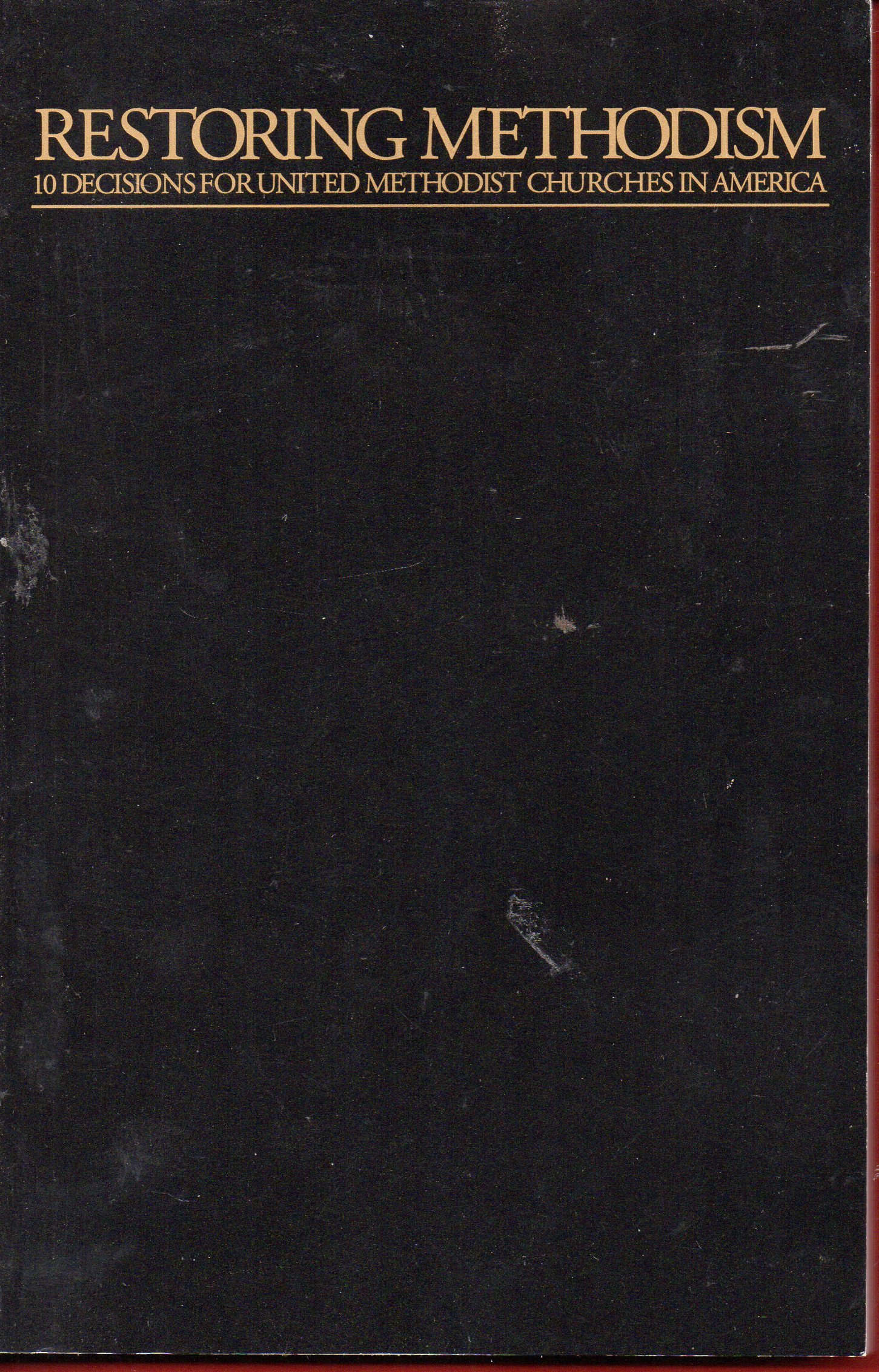
If this is how folks think they can restore The United Methodist Church, our denomination will be dead in 20 years. This is lacking in practical application and has a serious jones for bygone eras that romanticizes the past to perfection. This book also falls hard into Thomas Carlyle's Great Man Theory; while the Scotts do make a point of differentiating Wesley from Jesus, Scripture verses and Wesleyan writings are presented with about equal weight. The Trinity here becomes the Holy Spirit (a doctrine formed way after Paul wrote his letters, so the way the Scotts read a modern understanding of the Holy Spirit backwards into Paul is historically irresponsible at best), John Wesley, and Albert Outler. These are the authorities for all things, which is irksome. What about Charles Wesley? Jarena Lee? George Whitefield? Richard Allen? Francis Asbury (who gets mentioned, but only in a weird way that tries to insist he was still a layman when he was a bishop which is not how that works)? Anne Lutton? Tex Sample? James Cone? These are all incredibly important figures to the Methodist movement who shaped what the UMC has become, but no, the Scotts have Wesley and Outler and are content to build the entire idea of restoration on their backs.
The viewpoint of this is laughably out-of-step with who the UMC is and what its makeup is, as well; I kept having to remind myself this was published in 2006 because it feels like it's from 1983 or so. There is no recognition of the population shift of Methodism from the US to the global South and zero engagement with what the Central Conferences are doing in their restoration of Methodism. There are many, many hints at the divisiveness that's now (in 2019) splitting the Church at its seams but there's never any overt naming of the fact that we are struggling with what faithfulness even means. (One of the major issues I have with this book is that it tosses platitudes at the reader without grounding them in any definition or application.) The closest this gets is a section on love of strict discipline, which means rules, which probably translates into upholding the Book of Discipline no matter what, which is not what Wesley meant when he talked about discipline. Accountability is not necessarily equal to legalism.
However, I wouldn't know what the Scotts are really trying to get at with their chapter on discipline because there is no mention ever of the social holiness aspect of Methodism. This entire book is about personal piety and working on one's relationship with the Spirit and getting into fellowship and what not, and that's important, but for Wesley it was only half of a faithful life. There has to be engagement with the world in which one lives; there's a reason that the Social Gospel movement of the early 20th century was primarily Methodist (although that time period is when the Scotts think Methodism "took the wrong path," so perhaps that's exactly why the Social Gospel and Methodist efforts for justice are never mentioned).
There's such an entrenched mindset of going back; at one point, the Scotts write that, "Restoration is the answer because it is unthinkable that God would abandon the institutionalized churches in America" (31). It is unthinkable? Really? You're going to tell God what to do because we humans have banded together? That is just beyond arrogant, and also foolish because God regularly does the unthinkable; that's kind of where God hangs out. Further, the institutionalized churches are relatively new, at least in the way we think of them. The world is changing and new generations distrust institutions, so that may not be a viable way to go. But this book glorifies the past so much that it's constantly talking about how we have to go back to the early Church or to Wesley's meeting groups--as though both of those didn't have huge problems of their own. That kind of nostalgia is dangerously ignorant in the context of denominational revitalization because it strips us of the assurance that the Church is always changing. There were fights among the early Christians just as there are now (albeit over different things), but the Church got started nonetheless. Wesley and Whitefield were constantly challenging each other, but the Methodist movement started nonetheless.
Is the UMC in trouble? Yes. But is this book in any way at all helpful to aiding it in that trouble? Emphatically no, and folks like this who are looking backwards with such determination are going to trip over something and take half the denomination down with them. I'm down with healing Methodism, but you can't step in the same river twice. Come cast visions forward with those of us who are trying to become something for our own time.