

What do you think?

Los cruzados: La épica historia de las guerras por Tierra Santa
El vibrante relato de las guerras que marcaron el destino de Occidente
«Emprended el camino para obtener la remisión de vuestros pecados, seguros en la indestructible gloria del Sagrado Reino». Estas fueron las célebres palabras que dieron inicio a uno de los acontecimientos más importantes de la historia de Europa. Era el 1095: Jerusalén llevaba cientos de años en manos musulmanas y los cristianos de Oriente eran vilipendiados por los seguidores de Mahoma. Tras siglos de dominación islámica, la prédica de Urbano II marcó el comienzo de las guerras religiosas por los Santos Lugares: las cruzadas.
El fervor desatado en Clermont y la promesa de la salvación llevó a miles de príncipes y monarcas de Occidente, pero también a piadosos cristianos corrientes e incluso a familias enteras a tomar la cruz y participar en las sangrientas luchas contra los enemigos de Cristo que se prolongarían durante dos siglos y abarcarían tres continentes. En Los cruzados, Dan Jones, uno de los historiadores que mejor conoce el periodo, nos ofrece el apasionante relato de las guerras medievales cuyos efectos se dejan sentir todavía hoy. Por estas páginas desfilan hombres y mujeres, cristianos de Oriente y de Occidente, sunníes, chiítas, árabes, judíos, bereberes, mongoles e incluso vikingos que, de un modo u otro, fueron protagonistas de estos conflictos.
Nunca antes se ha retratado la época de las cruzadas de una manera tan vívida, erudita y detallada.
«Emprended el camino para obtener la remisión de vuestros pecados, seguros en la indestructible gloria del Sagrado Reino». Estas fueron las célebres palabras que dieron inicio a uno de los acontecimientos más importantes de la historia de Europa. Era el 1095: Jerusalén llevaba cientos de años en manos musulmanas y los cristianos de Oriente eran vilipendiados por los seguidores de Mahoma. Tras siglos de dominación islámica, la prédica de Urbano II marcó el comienzo de las guerras religiosas por los Santos Lugares: las cruzadas.
El fervor desatado en Clermont y la promesa de la salvación llevó a miles de príncipes y monarcas de Occidente, pero también a piadosos cristianos corrientes e incluso a familias enteras a tomar la cruz y participar en las sangrientas luchas contra los enemigos de Cristo que se prolongarían durante dos siglos y abarcarían tres continentes. En Los cruzados, Dan Jones, uno de los historiadores que mejor conoce el periodo, nos ofrece el apasionante relato de las guerras medievales cuyos efectos se dejan sentir todavía hoy. Por estas páginas desfilan hombres y mujeres, cristianos de Oriente y de Occidente, sunníes, chiítas, árabes, judíos, bereberes, mongoles e incluso vikingos que, de un modo u otro, fueron protagonistas de estos conflictos.
Nunca antes se ha retratado la época de las cruzadas de una manera tan vívida, erudita y detallada.
560 pages, Hardcover
First published October 1, 2019
About the author
Dan Jones
81 books6,088 followersDan Jones is a NYT bestselling author and broadcaster. His books, which include The Templars, Henry V, The Plantagenets and Powers & Thrones, have sold more than 2 million copies and are published in 23 languages. He is the author of the Essex Dogs novel trilogy. Dan writes and hosts the popular weekly Sony Music Entertainment podcast This Is History. He has presented dozens of television documentaries, including the popular Netflix series Secrets of Great British Castles, and has executive produced and consulted on a number of films and television shows including Anne Boleyn (Channel 5/Sony Pictures Television) and Knightfall (A+E/History). His journalism has appeared in the New York Times, Wall Street Journal and Washington Post; for a decade he was a columnist for the London Evening Standard. He is a Fellow of the Royal Historical Society and in 2025 was appointed to the Board of Trustees of Historic Royal Palaces.
Ratings & Reviews
Friends & Following
Create a free account to discover what your friends think of this book!
Community Reviews
Displaying 1 - 30 of 591 reviews

March 16, 2026
“For a long time during the Middle Ages there was no single word to describe ‘the crusades’ as we have today come to think of them since: a series of eight or nine major expeditions from Western Europe to the Holy Land, supplemented by a series of other, tangentially connected wars fought from the sunbaked cities of the North African coast to the frozen forests of the Baltic region. Yet from the earliest days of the phenomenon there certainly was a word for those who participated. The men and women who took part in these penitential wars in the hope of spiritual salvation were known in Latin as crucesignati – those who signed with the cross. In that sense, then, the idea of the crusader preceded the idea of the crusades…”
- Dan Jones, Crusaders: The Epic History of the Wars for the Holy Lands
The Crusades is one of those huge historical subjects that everyone knows at least a little something about. However, the enormity of the subject makes it hard to grasp in its entirety. It spanned centuries, involved an ever-rotating cast of characters, and lacks a neat storytelling arc. It is not simply a showdown of Christianity-versus-Islam – and may the best creator win – though it is often portrayed as such. At times, Christians fought other Christians, or slaughtered Jewish communities. On other occasions, Christians and Muslims found themselves in local alliances. Periodically, the Mongols would show up to take all comers.
Even historians have trouble with the subject, arguing other the exact number of crusades.
In Crusaders, Dan Jones does great job tying this unwieldly mass together by focusing on the personalities that helped shape it. This is not a comprehensive look at the period – such a thing being impossible in a book less than four-hundred pages in length – but an eminently accessible overview. It is popular history as it should be: learned but exciting; filled with spectacular details; and briskly paced.
If you just want a sampling of the Crusades, Crusaders is made to order. But it also provides a wonderful starting point for further exploration.
***
As is typical for a book by Dan Jones – at least in my experience – Crusaders is really well-organized, breaking things down to its most essential elements. The book is divided into three sections.
The first part covers the buildup to the crusader movement, including the motivations underlying Pope Urban II’s speech at the Council of Claremont. These words helped lead to the surprisingly successful First Crusade, which captured Jerusalem in 1099.
The second part deals with the development of the crusader states in Syria and Palestine, the wars between Christians and Muslims in Spain, and the fall of Jerusalem to Saladin in 1187, sparking the Third Crusade.
In the final section, Jones details the efforts to win back Jerusalem, the decline of the crusader states, the rise of the Mongol and Mamluk empires, and the end of the Reconquista.
***
As this mile-high summary indicates, there is a lot of occurrences packed into a relatively small volume. Jones approaches it in a chronological fashion that focuses on specific episodes and the people involved in them. To that end, there is an extensive cast list of kings, popes, warriors, chroniclers, heroes, rogues, and criminals. For instance, Jones profiles Anna Komene, writer of a famed history of the Byzantines; Imad al-Din Zengi and Nur al-Din, a father-son combination who fiercely battled the crusaders; Frederick II Hohenstaufen, a powerful leader who was excommunicated four times; Sigurd I of Norway, a Viking king who visited the Holy Lands; and Richard the Lionheart and Saladin, whose faceoff has drifted into the realm of myth.
Within these pages are there are epic battles, twists of fate, cruel betrayals, numerous atrocities, and gruesome deaths aplenty. Between the novelistic set-pieces, Jones impressively stitches together the overall context.
***
As Jones notes in the epilogue, the Crusades still elicits strong emotions, despite its advanced age. Nevertheless, he does not make any kind of argument that where we are now is because of what happened way back then. While there are certainly echoes and callbacks, there is no straight line stretching from the Crusades to the Age of Terror and the current war in the Middle East.
If there is any relevant theme, it is that certain people never miss the opportunity to reveal their worst selves, especially given a spiritual excuse. During the span of the Crusades, the roles of victim and perpetrators shifted constantly. Purportedly driven by differing concepts of god, those involved often acted in a manner unbefitting of humanity. For the sake of a power they did not know – but for whom they claimed to act – they sacked cities, murdered the innocent, committed sexual assaults, sold the vanquished into slavery, and looted and plundered till their pockets bulged. To paraphrase Tacitus: they made a hellscape and called it heaven.
***
In general, I am a fan of the big, pug-sized epic. I love a six-hundred pound doorstopper that has the space to meditate on every aspect of an event. I like a book so large that it is physically uncomfortable to read.
With that said, I really enjoyed Crusaders. Beginning in the early eleventh century, with Count Roger of Sicily lifting his leg to fart, it concludes in 1492, with Christopher Columbus ready to make his epoch-altering voyage across the sea. This is a vast swathe of history that Jones delineates masterfully. It obviously does not include all the particulars, put it provides an excellent, memorable, and thoroughly dispiriting synopsis.
- Dan Jones, Crusaders: The Epic History of the Wars for the Holy Lands
The Crusades is one of those huge historical subjects that everyone knows at least a little something about. However, the enormity of the subject makes it hard to grasp in its entirety. It spanned centuries, involved an ever-rotating cast of characters, and lacks a neat storytelling arc. It is not simply a showdown of Christianity-versus-Islam – and may the best creator win – though it is often portrayed as such. At times, Christians fought other Christians, or slaughtered Jewish communities. On other occasions, Christians and Muslims found themselves in local alliances. Periodically, the Mongols would show up to take all comers.
Even historians have trouble with the subject, arguing other the exact number of crusades.
In Crusaders, Dan Jones does great job tying this unwieldly mass together by focusing on the personalities that helped shape it. This is not a comprehensive look at the period – such a thing being impossible in a book less than four-hundred pages in length – but an eminently accessible overview. It is popular history as it should be: learned but exciting; filled with spectacular details; and briskly paced.
If you just want a sampling of the Crusades, Crusaders is made to order. But it also provides a wonderful starting point for further exploration.
***
As is typical for a book by Dan Jones – at least in my experience – Crusaders is really well-organized, breaking things down to its most essential elements. The book is divided into three sections.
The first part covers the buildup to the crusader movement, including the motivations underlying Pope Urban II’s speech at the Council of Claremont. These words helped lead to the surprisingly successful First Crusade, which captured Jerusalem in 1099.
The second part deals with the development of the crusader states in Syria and Palestine, the wars between Christians and Muslims in Spain, and the fall of Jerusalem to Saladin in 1187, sparking the Third Crusade.
In the final section, Jones details the efforts to win back Jerusalem, the decline of the crusader states, the rise of the Mongol and Mamluk empires, and the end of the Reconquista.
***
As this mile-high summary indicates, there is a lot of occurrences packed into a relatively small volume. Jones approaches it in a chronological fashion that focuses on specific episodes and the people involved in them. To that end, there is an extensive cast list of kings, popes, warriors, chroniclers, heroes, rogues, and criminals. For instance, Jones profiles Anna Komene, writer of a famed history of the Byzantines; Imad al-Din Zengi and Nur al-Din, a father-son combination who fiercely battled the crusaders; Frederick II Hohenstaufen, a powerful leader who was excommunicated four times; Sigurd I of Norway, a Viking king who visited the Holy Lands; and Richard the Lionheart and Saladin, whose faceoff has drifted into the realm of myth.
Within these pages are there are epic battles, twists of fate, cruel betrayals, numerous atrocities, and gruesome deaths aplenty. Between the novelistic set-pieces, Jones impressively stitches together the overall context.
***
As Jones notes in the epilogue, the Crusades still elicits strong emotions, despite its advanced age. Nevertheless, he does not make any kind of argument that where we are now is because of what happened way back then. While there are certainly echoes and callbacks, there is no straight line stretching from the Crusades to the Age of Terror and the current war in the Middle East.
If there is any relevant theme, it is that certain people never miss the opportunity to reveal their worst selves, especially given a spiritual excuse. During the span of the Crusades, the roles of victim and perpetrators shifted constantly. Purportedly driven by differing concepts of god, those involved often acted in a manner unbefitting of humanity. For the sake of a power they did not know – but for whom they claimed to act – they sacked cities, murdered the innocent, committed sexual assaults, sold the vanquished into slavery, and looted and plundered till their pockets bulged. To paraphrase Tacitus: they made a hellscape and called it heaven.
***
In general, I am a fan of the big, pug-sized epic. I love a six-hundred pound doorstopper that has the space to meditate on every aspect of an event. I like a book so large that it is physically uncomfortable to read.
With that said, I really enjoyed Crusaders. Beginning in the early eleventh century, with Count Roger of Sicily lifting his leg to fart, it concludes in 1492, with Christopher Columbus ready to make his epoch-altering voyage across the sea. This is a vast swathe of history that Jones delineates masterfully. It obviously does not include all the particulars, put it provides an excellent, memorable, and thoroughly dispiriting synopsis.

September 9, 2019
”Christ may have abhorred violence, but warfare, killing, bloodshed and even genocide nevertheless remained familiar parts of Christian exegesis.”
In 1095, Pope Urban II received a summons from Byzantine Emperor Alexios I Komnenos, asking for help with removing Muslim Seljuk Turks from his lands. In a speech later that year at the Council of Clermont, he demanded the Christians of the West to wrest the Holy Land from the barbarian Turks. The volunteer response to his request was good, but it sure became more fervent when the Pope added further enticement by saying that an oath to take the cross and go to the Holy Land to fight would also include a remission of sins.
As it turned out, there were a lot of people in need of sin forgiveness, in fact, too many. People who would not be much use to fight were showing up in droves. Helen of Troy may have had the face that launched a thousand ships, but Pope Urban, not nearly as beautiful, certainly launched a thousand feet.
The first crusade was wildly successful, and each crusade that followed, oh yes there were many more, found a much stiffer response to their invasion of the Holy Lands. I do think that the Turks and the Arabs, who stood in the way of the Frankish armies, were progressively better prepared to fight. Eventually, it all came to an end with the fall of Acre in 1291.
What Dan Jones will do is take you through the crusades one by one and introduce you to the movers and shakers on both sides of the conflict in each period. You will have moments where you will feel like you are at a cocktail party full of strangers, and someone is taking you around to introduce you in lightning fashion to what feels like hundreds of people. Never fear, unlike the cocktail party, Jones supplies you with crib sheets at the beginning of the book that lists all the characters and a quick synopsis of why they are important.
I’ve never been a big fan of the Crusades, though I have, over the years, read quite a bit about them. I think of them as an incredible waste of lives and resources, and the fact that they are spurred by religious zealtry is not a big selling point for me either. The church, as time went on, used the Crusade banner to eliminate problems in the west as well, like the Cathars in France. For those who read Kate Mosse’s book Labyrinth, you already have a working knowledge of the insidious motivations behind that massacre. There were kings and counts who did not want to go to the Holy Land, where it was likely they might die or return terminally ill or, worse, experience an embarrassing defeat, who jumped at the chance to fulfill their duty to the cross somewhere closer to home.
Despite my misgivings about the subject matter, this is Dan Jones we are talking about. I’ve enjoyed his other books on the Plantagenets and the Templars. I’ve also relished his TV specials, especially The Secrets of the British Castles which became a Sunday morning event. With Jones at the tiller, I found myself getting caught up in the actions of the Crusaders. There were many moments where his descriptive powers had me enthralled.
When the Crusaders tried to invade Egypt, they ran into a Moses-parting-the-Red-Sea type situation. Not the first part where the Jews escaped between the towering walls of water, but the second part where the water descended upon the chasing Egyptian army. The Egyptians might have learned more from the Bible than the Christians.
”On that night, sluice gates, canals and irrigation ditches along the river, designed to regulate the floodwaters, were all thrown open and the land on which the crusader army stood simply disappeared, turned in a matter of hours from rock-hard, sunbaked soil into a deep, sucking, swamp. Those of the rank and file who were drunk or simply asleep drowned in their tents. Panicked pilgrims and infantry who woke and tried to scramble aboard boats overloaded them so they sank. Camels and mules carrying weapons, treasure and food were swept away.”
Can you imagine? I would have more sympathy for the Crusaders except they had tried this same thing a few years before with similar results. If you are going to invade Egypt, you need to pick a very, very dry year.
There were complete bonehead situations, like the Egyptian campaign, but there were also ingenious moments as well. I particularly enjoyed the story of Sigurd of Norway fighting pirates who have holed up behind piled stone in front of caves. He had his men haul two small boats up the side of the mountain and then lowered them down, full of men, who promptly dispatched the pirates from above. Seriously? Talk about thinking out of the box. What is most impressive is that Sigurd was around 18 when he dreamed up this plan.
How about when the Muslim assassin snuck into the tent of the crusader King Edward the First, and Edward not only fought him off but killed him? It reminded me of when Andrew Jackson used a cane to beat a would be assassin to the ground. Edward was, without a doubt, everything someone would want in a king. He was tall, even referred to as Longshanks. He was intelligent. He was ruthless. He was a winner.
Jones did not forget about the women. There was Melisende, queen of Jerusalem, who rose to power through opportunity, but also through great ability. There was Eleanor of Aquitaine, who actually went on crusade with her husband Louis VII. It proved to be the end of her marriage. She split the sheets with Louis and promptly hopped into bed with the English king Henry II. If you haven’t read much on Eleanor, you are missing out. She was a remarkable, self-confident woman who soon bedeviled Henry even more than she did Louis. One of my favorites was Anna Komnene, who wrote a book called Alexiad that celebrated the life of her father Alexios, but in the course of telling her father’s story, she also captured many important moments during the crusades. She was, in some cases, an eye witness to these events.
In later chapters, the Mongols appeared on the scene in the 1240s. ”Over that time many people had tried to stand in the Mongols’ way, and plenty more had simply held their hands up and surrendered. Anyone foolhardy enough to resist usually ended up like the Christian army that now lay earless on the Silesian soil: defeated, dead and humbled; left to rot as a warning of the consequences of resisting the most fearsome military machine the world had ever known.”
This would have been a good time, if you were a western king who was sworn to the cross, to come down with a lung rumbling cough that would delay your travels to the East.
368 pages to cover nearly 200 years of bloody history. Jones has a good eye for what a reader will find most interesting, and he doesn’t overload us with dates and names to the point that we feel we are mired in the flooded plains of Egypt. We see incompetence, bravery, grandstanding, squabbling allies, and the emergence of some very competent leadership on both sides. Chaos creates opportunity for some and complete disaster for others. I think I will always be haunted by the thought of those women and children left on the docks of Acre in 1291 as they watched the last loaded boats depart as the castle burns behind them.
I am writing this review on September 11th, and I can’t help but think of a similar disastrous moment as we had to watch people jump from burning buildings in New York because we could do nothing to save them.
If you wish to see more of my most recent book and movie reviews, visit http://www.jeffreykeeten.com
I also have a Facebook blogger page at:https://www.facebook.com/JeffreyKeeten
In 1095, Pope Urban II received a summons from Byzantine Emperor Alexios I Komnenos, asking for help with removing Muslim Seljuk Turks from his lands. In a speech later that year at the Council of Clermont, he demanded the Christians of the West to wrest the Holy Land from the barbarian Turks. The volunteer response to his request was good, but it sure became more fervent when the Pope added further enticement by saying that an oath to take the cross and go to the Holy Land to fight would also include a remission of sins.
As it turned out, there were a lot of people in need of sin forgiveness, in fact, too many. People who would not be much use to fight were showing up in droves. Helen of Troy may have had the face that launched a thousand ships, but Pope Urban, not nearly as beautiful, certainly launched a thousand feet.
The first crusade was wildly successful, and each crusade that followed, oh yes there were many more, found a much stiffer response to their invasion of the Holy Lands. I do think that the Turks and the Arabs, who stood in the way of the Frankish armies, were progressively better prepared to fight. Eventually, it all came to an end with the fall of Acre in 1291.
What Dan Jones will do is take you through the crusades one by one and introduce you to the movers and shakers on both sides of the conflict in each period. You will have moments where you will feel like you are at a cocktail party full of strangers, and someone is taking you around to introduce you in lightning fashion to what feels like hundreds of people. Never fear, unlike the cocktail party, Jones supplies you with crib sheets at the beginning of the book that lists all the characters and a quick synopsis of why they are important.
I’ve never been a big fan of the Crusades, though I have, over the years, read quite a bit about them. I think of them as an incredible waste of lives and resources, and the fact that they are spurred by religious zealtry is not a big selling point for me either. The church, as time went on, used the Crusade banner to eliminate problems in the west as well, like the Cathars in France. For those who read Kate Mosse’s book Labyrinth, you already have a working knowledge of the insidious motivations behind that massacre. There were kings and counts who did not want to go to the Holy Land, where it was likely they might die or return terminally ill or, worse, experience an embarrassing defeat, who jumped at the chance to fulfill their duty to the cross somewhere closer to home.
Despite my misgivings about the subject matter, this is Dan Jones we are talking about. I’ve enjoyed his other books on the Plantagenets and the Templars. I’ve also relished his TV specials, especially The Secrets of the British Castles which became a Sunday morning event. With Jones at the tiller, I found myself getting caught up in the actions of the Crusaders. There were many moments where his descriptive powers had me enthralled.
When the Crusaders tried to invade Egypt, they ran into a Moses-parting-the-Red-Sea type situation. Not the first part where the Jews escaped between the towering walls of water, but the second part where the water descended upon the chasing Egyptian army. The Egyptians might have learned more from the Bible than the Christians.
”On that night, sluice gates, canals and irrigation ditches along the river, designed to regulate the floodwaters, were all thrown open and the land on which the crusader army stood simply disappeared, turned in a matter of hours from rock-hard, sunbaked soil into a deep, sucking, swamp. Those of the rank and file who were drunk or simply asleep drowned in their tents. Panicked pilgrims and infantry who woke and tried to scramble aboard boats overloaded them so they sank. Camels and mules carrying weapons, treasure and food were swept away.”
Can you imagine? I would have more sympathy for the Crusaders except they had tried this same thing a few years before with similar results. If you are going to invade Egypt, you need to pick a very, very dry year.
There were complete bonehead situations, like the Egyptian campaign, but there were also ingenious moments as well. I particularly enjoyed the story of Sigurd of Norway fighting pirates who have holed up behind piled stone in front of caves. He had his men haul two small boats up the side of the mountain and then lowered them down, full of men, who promptly dispatched the pirates from above. Seriously? Talk about thinking out of the box. What is most impressive is that Sigurd was around 18 when he dreamed up this plan.
How about when the Muslim assassin snuck into the tent of the crusader King Edward the First, and Edward not only fought him off but killed him? It reminded me of when Andrew Jackson used a cane to beat a would be assassin to the ground. Edward was, without a doubt, everything someone would want in a king. He was tall, even referred to as Longshanks. He was intelligent. He was ruthless. He was a winner.
Jones did not forget about the women. There was Melisende, queen of Jerusalem, who rose to power through opportunity, but also through great ability. There was Eleanor of Aquitaine, who actually went on crusade with her husband Louis VII. It proved to be the end of her marriage. She split the sheets with Louis and promptly hopped into bed with the English king Henry II. If you haven’t read much on Eleanor, you are missing out. She was a remarkable, self-confident woman who soon bedeviled Henry even more than she did Louis. One of my favorites was Anna Komnene, who wrote a book called Alexiad that celebrated the life of her father Alexios, but in the course of telling her father’s story, she also captured many important moments during the crusades. She was, in some cases, an eye witness to these events.
In later chapters, the Mongols appeared on the scene in the 1240s. ”Over that time many people had tried to stand in the Mongols’ way, and plenty more had simply held their hands up and surrendered. Anyone foolhardy enough to resist usually ended up like the Christian army that now lay earless on the Silesian soil: defeated, dead and humbled; left to rot as a warning of the consequences of resisting the most fearsome military machine the world had ever known.”
This would have been a good time, if you were a western king who was sworn to the cross, to come down with a lung rumbling cough that would delay your travels to the East.
368 pages to cover nearly 200 years of bloody history. Jones has a good eye for what a reader will find most interesting, and he doesn’t overload us with dates and names to the point that we feel we are mired in the flooded plains of Egypt. We see incompetence, bravery, grandstanding, squabbling allies, and the emergence of some very competent leadership on both sides. Chaos creates opportunity for some and complete disaster for others. I think I will always be haunted by the thought of those women and children left on the docks of Acre in 1291 as they watched the last loaded boats depart as the castle burns behind them.
I am writing this review on September 11th, and I can’t help but think of a similar disastrous moment as we had to watch people jump from burning buildings in New York because we could do nothing to save them.
If you wish to see more of my most recent book and movie reviews, visit http://www.jeffreykeeten.com
I also have a Facebook blogger page at:https://www.facebook.com/JeffreyKeeten

September 12, 2021
Dan Jones has written some good history books. Thus, when I saw this volume I snatched it up. It is a very well done "meta-history" of the Crusades and the Crusaders.
This book takes a look at the Crusaders who participated in the "Crusades". Most people associate that term to mean a series, eight or nine, major expeditions from Western Europe to the "Holy Land". Yet it is so much more. In fact, those more commonly known adventures are only part of a conflict that spanned both religions and were fought from a variety of places, ranging from the Holy Land to cities in North Africa to the frozen forests of the Baltics.
This volume is a collection of episodes featuring a variety of people involved in the Crusades. From men and women, to Christians of the East and West churches, Sunni and Shi'a Muslims, Arabs, Jews, Turks, Kurds, Syrians, Egyptians, Berbers, and Mongols. There are people from countries as varied as England,, Wales, France, Scandinavia, Germany, Italy, Sicily, Portugal, Spain, the Balkans and North Africa.
Thus instead of focusing on the establishment, survival, and collapse of the Crusaders states. Instead it shows Crusading as a whole from the Christian and Muslim sides. Nothing in history is ever cut and dried. Muslims fought Muslims, joined with Crusaders, just as Christians fought Christian and joined with Muslims- the entire conflict and its grand scope are on display.
The book is broken into three sections. The first looks at the development of Crusading and covers from 1060's to 1099 when Jerusalem falls.
The second part looks at the growth and development of the Crusader states in the start of the Twelfth Century, as well as the growth of Islamic power in Spain and the Crusading in the Baltics.
The third section covers the attempts by the Western Church, during the 1st half of the Thirteenth Century, to reverse the decline and fall of those same states. It also introduces the Mongols and the Mamluk Empires.
A truly great survey book. It gives you a great idea of the major thoughts, players and coflicts. Then the reader, if interested, can find other books to read that will shed light on any particular part they are interested in. Great book.
This book takes a look at the Crusaders who participated in the "Crusades". Most people associate that term to mean a series, eight or nine, major expeditions from Western Europe to the "Holy Land". Yet it is so much more. In fact, those more commonly known adventures are only part of a conflict that spanned both religions and were fought from a variety of places, ranging from the Holy Land to cities in North Africa to the frozen forests of the Baltics.
This volume is a collection of episodes featuring a variety of people involved in the Crusades. From men and women, to Christians of the East and West churches, Sunni and Shi'a Muslims, Arabs, Jews, Turks, Kurds, Syrians, Egyptians, Berbers, and Mongols. There are people from countries as varied as England,, Wales, France, Scandinavia, Germany, Italy, Sicily, Portugal, Spain, the Balkans and North Africa.
Thus instead of focusing on the establishment, survival, and collapse of the Crusaders states. Instead it shows Crusading as a whole from the Christian and Muslim sides. Nothing in history is ever cut and dried. Muslims fought Muslims, joined with Crusaders, just as Christians fought Christian and joined with Muslims- the entire conflict and its grand scope are on display.
The book is broken into three sections. The first looks at the development of Crusading and covers from 1060's to 1099 when Jerusalem falls.
The second part looks at the growth and development of the Crusader states in the start of the Twelfth Century, as well as the growth of Islamic power in Spain and the Crusading in the Baltics.
The third section covers the attempts by the Western Church, during the 1st half of the Thirteenth Century, to reverse the decline and fall of those same states. It also introduces the Mongols and the Mamluk Empires.
A truly great survey book. It gives you a great idea of the major thoughts, players and coflicts. Then the reader, if interested, can find other books to read that will shed light on any particular part they are interested in. Great book.
September 22, 2024
"... Crusading, a bastard hybrid of religion and violence, adopted as a vehicle of papal ambition, but eventually allowed to run when it pleased, where it pleased and against whom it pleased, was one of the Middle Ages' most successful and enduringly poisonous ideas." Dan Jones, Powers & Thrones
THIS!
***
"... Already it seemed fighting in the name of the Lord was proving to be a profitable business."
"(...) This violent and bigoted response to the Crusades* was, if horrifying, nonetheless in keeping with the times.
Aggression, hatred and orgiastic displays of personal and public cruelty attached every bit as easily
as piety to the crusading muster."
At the outset, my strongest reactions were sheer horror and disbelief. The atrocities committed by the Crusaders in the name of Christ—against Muslims, Jews, Orthodox Christians, and even each other—are almost beyond comprehension in their vileness, brutality, and cruelty.
And yet, what stunned me just as much was the question: How did these unprepared, disorganized, barbaric, and often clueless bands of people actually manage to conquer vast territories from the Seljuk Turks and Arabs, including Jerusalem itself during the First Crusade, aka the People's Crusade
Of course, Dan Jones has the answers—not just to this question, but to many others. This isn’t just a history of the Crusades in the Holy Land; it’s a sweeping account that includes the wars fought in Spain, Portugal, and the Baltic regions. We are offered the whole set of dominos and get to see/read about the whole process as the pieces start to fall unstoppably and set things in motion with far-reaching consequences across geography and centuries. It's both terrifying and fascinating.
A well-balanced, unbiased and thoroughly intriguing read. After having read The Crusades Through Arab Eyes by Amin Maalouf, I was glad to note how Dan Jones also used the same sources, namely contemporary Arab historians and writers of the time as well as the Christian ones (and many others).
I also loved how Jones acknowledged the role of women from different geographic and social backgrounds, like Anna Komnene, the Byzantine princess and historian, and Margaret of Beverley, a pilgrim who fought during the siege of Jerusalem in 1187.
And then there's the strange and brilliant interlude that was Frederick II, Holy Roman Emperor, and his relationship with the Ayyubid Sultan Al-Kamil. Their unlikely diplomacy—which resulted in Jerusalem changing hands without bloodshed—was a breath of fresh air amid the carnage. It also maddened everyone around them. Jerusalem reclaimed through negotiation? Without slaughter, torture, or holy fire? Radical.
Dan Jones delivers not just history, but humanity—at its best, worst, and most complex.
He narrates the audiobook himself and does a great job.
*forced baptism and brutal killing of Jews in Europe
THIS!
***
"... Already it seemed fighting in the name of the Lord was proving to be a profitable business."
"(...) This violent and bigoted response to the Crusades* was, if horrifying, nonetheless in keeping with the times.
Aggression, hatred and orgiastic displays of personal and public cruelty attached every bit as easily
as piety to the crusading muster."
At the outset, my strongest reactions were sheer horror and disbelief. The atrocities committed by the Crusaders in the name of Christ—against Muslims, Jews, Orthodox Christians, and even each other—are almost beyond comprehension in their vileness, brutality, and cruelty.
And yet, what stunned me just as much was the question: How did these unprepared, disorganized, barbaric, and often clueless bands of people actually manage to conquer vast territories from the Seljuk Turks and Arabs, including Jerusalem itself during the First Crusade, aka the People's Crusade
Of course, Dan Jones has the answers—not just to this question, but to many others. This isn’t just a history of the Crusades in the Holy Land; it’s a sweeping account that includes the wars fought in Spain, Portugal, and the Baltic regions. We are offered the whole set of dominos and get to see/read about the whole process as the pieces start to fall unstoppably and set things in motion with far-reaching consequences across geography and centuries. It's both terrifying and fascinating.
A well-balanced, unbiased and thoroughly intriguing read. After having read The Crusades Through Arab Eyes by Amin Maalouf, I was glad to note how Dan Jones also used the same sources, namely contemporary Arab historians and writers of the time as well as the Christian ones (and many others).
I also loved how Jones acknowledged the role of women from different geographic and social backgrounds, like Anna Komnene, the Byzantine princess and historian, and Margaret of Beverley, a pilgrim who fought during the siege of Jerusalem in 1187.
And then there's the strange and brilliant interlude that was Frederick II, Holy Roman Emperor, and his relationship with the Ayyubid Sultan Al-Kamil. Their unlikely diplomacy—which resulted in Jerusalem changing hands without bloodshed—was a breath of fresh air amid the carnage. It also maddened everyone around them. Jerusalem reclaimed through negotiation? Without slaughter, torture, or holy fire? Radical.
Dan Jones delivers not just history, but humanity—at its best, worst, and most complex.
He narrates the audiobook himself and does a great job.
*forced baptism and brutal killing of Jews in Europe

Read
January 4, 2023One of my 2023 reading goals is to get into some more non-fiction, so how better than to kick that off with some Dan Jones non-fiction. This is about the crusades, as you may be able to guess from the title...
Very interesting overview of the crusades, looking at the conflicts and the political machinations and providing different options for the many elements we have little to no sources for. Great overview for those wanting to get to grips with the period as a whole.
Very interesting overview of the crusades, looking at the conflicts and the political machinations and providing different options for the many elements we have little to no sources for. Great overview for those wanting to get to grips with the period as a whole.

September 1, 2026
Actual rating 3.5 stars
Dan Jones draws on the accounts of chroniclers, both Christian and Muslim. He notes that this information should be viewed critically. Chroniclers of that time often greatly exaggerated. The book recounts events in chronological order, beginning with the First Crusade, proclaimed by Pope Urban II at the end of the 11th century, and ending with the fall of the Crusaders’ last strongholds in Palestine. The First Crusade was a response to a request from the Byzantine Emperor Alexios Komnenos.
People in the West “took up the cross” and set out for the Holy Lands for various reasons. The main motivations were religious zeal and the desire to make a name for themselves, but many crusaders were not immune to greed. Religious feelings and economic reality, ambition and idealism, faith and business were all intertwined in their minds.
Overall, this was a decent summary of the Crusades. Given the scope of this book, many events were inevitably left out. The account feels somewhat superficial, not going into detail, but I think it works well as an introduction to the subject.
Dan Jones draws on the accounts of chroniclers, both Christian and Muslim. He notes that this information should be viewed critically. Chroniclers of that time often greatly exaggerated. The book recounts events in chronological order, beginning with the First Crusade, proclaimed by Pope Urban II at the end of the 11th century, and ending with the fall of the Crusaders’ last strongholds in Palestine. The First Crusade was a response to a request from the Byzantine Emperor Alexios Komnenos.
People in the West “took up the cross” and set out for the Holy Lands for various reasons. The main motivations were religious zeal and the desire to make a name for themselves, but many crusaders were not immune to greed. Religious feelings and economic reality, ambition and idealism, faith and business were all intertwined in their minds.
Overall, this was a decent summary of the Crusades. Given the scope of this book, many events were inevitably left out. The account feels somewhat superficial, not going into detail, but I think it works well as an introduction to the subject.

Read
November 1, 2021A history book that tells the story of the Crusades by focusing on an individual in each chapter. This gives a much stronger sense of crusading as a Europe-wide affair, involving Norwegians and Spaniards as well as the usual suspects. In general it helps make it much wider and deeper than the Franks Vs Muslims narrative and shows the multiplicity of views and behaviours: Arab rulers who sided with the crusaders, Frankish monarchs who refused to do so, people who set up cosy trading relationships and friendships over the years. We actually get chapters centring women (!) and even a lower class woman (!!!).
What's really important I think is how the book broadens the crusading concept. Obviously there were the continual invasions of the Middle East, but crusading aka politically motivated violence in the guise of fighting for Christ and winning personal salvation was also actively and explicitly targeted against many groups of Jews, a pagan German sect, the Cathars, Venice , the Hohenstaufens, Byzantium. Even Columbus was specifically sailing off on waves of crusade rhetoric.
This probably isn't the first book to read to learn about the Crusader states/wars but it's a fascinating and deepening read once you've acquainted yourself with the basics (eg The Crusades: The Authoritative History of the War for the Holy Land).
What's really important I think is how the book broadens the crusading concept. Obviously there were the continual invasions of the Middle East, but crusading aka politically motivated violence in the guise of fighting for Christ and winning personal salvation was also actively and explicitly targeted against many groups of Jews, a pagan German sect, the Cathars, Venice , the Hohenstaufens, Byzantium. Even Columbus was specifically sailing off on waves of crusade rhetoric.
This probably isn't the first book to read to learn about the Crusader states/wars but it's a fascinating and deepening read once you've acquainted yourself with the basics (eg The Crusades: The Authoritative History of the War for the Holy Land).

October 25, 2022
A very readable book about a period of our history that was ruled by religion, power-hungry people and pure greed. It is the history of our catholic church that wants to remain in charge and remain important that manages to send millions of people to the middle East to occupy the "rightfull ownership of the birthplace of Christian faith.
In the mean time a lot of crusading was also done within Europe against Muslim, Christians and pagans. The catholic church was not very endeared to any competition to their market on faith.
An easy and sometimes surprising book for those new on the Subject of Crusades. Different is perhaps the approach taken by showing the crusades through the eyes and writings about of scribes of those times be it Christian or Muslim.
I would easily advise reading this book for those new with the subject.
I would like to state that this book was read during my stay in Sicily October 2022, a place that has it place in the tales about the crusades and is mentioned within the first four words of this book.
Well written and advised to be read for those with an interest in history.
In the mean time a lot of crusading was also done within Europe against Muslim, Christians and pagans. The catholic church was not very endeared to any competition to their market on faith.
An easy and sometimes surprising book for those new on the Subject of Crusades. Different is perhaps the approach taken by showing the crusades through the eyes and writings about of scribes of those times be it Christian or Muslim.
I would easily advise reading this book for those new with the subject.
I would like to state that this book was read during my stay in Sicily October 2022, a place that has it place in the tales about the crusades and is mentioned within the first four words of this book.
Well written and advised to be read for those with an interest in history.

January 7, 2020
With Crusaders, Mr. Jones once again proves why he is one of the best people currently writing medieval history for the general market. With this narrative, he gives the reader a good overview of roughly 400 yrs of the crusading movement (1095-1492) with a short postscript of how they are still affecting us today more than 900 yrs after the Byzantine Emperor Alexios I Komnenios first asked the Catholic Pope Urban II for help in fending off the encroaching Turks and recovering his territory.
Due to the relatively short length, this is not an in-depth look at those 400 yrs. That said, Mr. Jones does an admirable job of telling the stories of the main characters, Byzantine, Franks (to use the common term for the Crusaders from Western Europe) and last but not least, their Turkish/Islamic foes.
Starting with the first Crusade, the author gives the reader a good grasp of the political situation both in the Christian west and the Islamic East. During the previous couple of hundred yrs, the armies of Islam had gradually overran much of what had been Byzantine territory, including the Holy Land and Egypt. When Emperor Alexios asked for Western help, he wanted a few thousand western professional soldiers to help him retake Anatolia. What Urban provided was two different groups intent on reclaiming the Holy Land in general and Jerusalem in particular and not returning them to Byzantine control
Some of more tragic tales Mr. Jones relates of the Crusades are not the battles and out-in-out slaughter in what became the States of the Outremer, but just what the religious fervor of the Crusaders did to Jewish populations in the western lands, particularly Germany. In addition to the Crusaders treatment of Jews, the author looks at just what they did to Byzantium culminating with the Crusaders taking Constantinople, deposing the Orthodox Emperor and putting one of their own on the throne, during the Forth Crusade.
In telling the stories of the 8 Crusades to the Outremer, the author looks at just what motivated men to travel months to a place that was so different from home. In many cases it took far more than a year for Crusading Armies to reach the Outremer. In an age where religion was paramount, Religion was an obvious driving factor. Many of the most gifted and idolized figures in the Church preached Crusading - including St. Bernard of Clarvoux. Indulgences were also promised. To the hard bitten soldiers and knights, that promise that their sins would be forgiven if they "Took the Cross" cannot be discounted as a motivating factor. Also Crusading provided an outlet for the younger sons of the aristocracy to gain lands and glory.
Mr. Jones looks at the divisions in both the Christian states and the Islamic ones during teh 200 yrs of the Outremer. Early in the Crusading era divisions in the Islamic world allowed much Crusader success. However, the infighting between the Frankish Lords gave many opportunities to the Islamic leaders to defeat the Franks and reconquer their lost lands. This culminated at Acre in 1291 when united Islamic forces defeated the Christians and finally drove them from the Outremer
In addition to the events in the Holy Land, Mr. Jones looks at how the Crusading movement grew to encompass more than just the Middle East. The author spends some time on the Reconquista of Spain and the Iberian Peninsula. This effort was also declared a Crusade and Spanish Christian Knights were urged to stay in Spain and drive the Islamic invaders out rather than travel to the Outremer. This effort was ultimately a success, when the forces of Isabella and Ferdinand finally conquered Cordoba, the last Islamic state on the Iberian Peninsula.
Some other Crusades the author covers include to efforts of the Teutonic Knights in what is now Poland and the Baltic States to convert the Pagan inhabitants, either by the sword or the bible - it really didn't matter. The Crusade against the Cather’s in Southern France is also covered.
In addition to events, Mr. Jones does a good job of telling the personalities. Included are Richard the Lion Heart, Saladin, Elinore of Aquitaine, various French Kings, Norman usurpers who became major players in the Outremer. The rise of the Warrior Orders, ie the Templars, Hospitallers, the Teutonic Knights as well as several less well known orders in Spain, is also covered.
Mr. Jones ends the main narrative with the fall of Cordoba, but in the post script he gives a personal story of just how the Crusades are affecting events even now. In a very real since the Crusades did not end in 1492 or 1291, depending on the historian, but are still going on today.
This is definite 4+ star read for me and I highly recommend it.
Due to the relatively short length, this is not an in-depth look at those 400 yrs. That said, Mr. Jones does an admirable job of telling the stories of the main characters, Byzantine, Franks (to use the common term for the Crusaders from Western Europe) and last but not least, their Turkish/Islamic foes.
Starting with the first Crusade, the author gives the reader a good grasp of the political situation both in the Christian west and the Islamic East. During the previous couple of hundred yrs, the armies of Islam had gradually overran much of what had been Byzantine territory, including the Holy Land and Egypt. When Emperor Alexios asked for Western help, he wanted a few thousand western professional soldiers to help him retake Anatolia. What Urban provided was two different groups intent on reclaiming the Holy Land in general and Jerusalem in particular and not returning them to Byzantine control
Some of more tragic tales Mr. Jones relates of the Crusades are not the battles and out-in-out slaughter in what became the States of the Outremer, but just what the religious fervor of the Crusaders did to Jewish populations in the western lands, particularly Germany. In addition to the Crusaders treatment of Jews, the author looks at just what they did to Byzantium culminating with the Crusaders taking Constantinople, deposing the Orthodox Emperor and putting one of their own on the throne, during the Forth Crusade.
In telling the stories of the 8 Crusades to the Outremer, the author looks at just what motivated men to travel months to a place that was so different from home. In many cases it took far more than a year for Crusading Armies to reach the Outremer. In an age where religion was paramount, Religion was an obvious driving factor. Many of the most gifted and idolized figures in the Church preached Crusading - including St. Bernard of Clarvoux. Indulgences were also promised. To the hard bitten soldiers and knights, that promise that their sins would be forgiven if they "Took the Cross" cannot be discounted as a motivating factor. Also Crusading provided an outlet for the younger sons of the aristocracy to gain lands and glory.
Mr. Jones looks at the divisions in both the Christian states and the Islamic ones during teh 200 yrs of the Outremer. Early in the Crusading era divisions in the Islamic world allowed much Crusader success. However, the infighting between the Frankish Lords gave many opportunities to the Islamic leaders to defeat the Franks and reconquer their lost lands. This culminated at Acre in 1291 when united Islamic forces defeated the Christians and finally drove them from the Outremer
In addition to the events in the Holy Land, Mr. Jones looks at how the Crusading movement grew to encompass more than just the Middle East. The author spends some time on the Reconquista of Spain and the Iberian Peninsula. This effort was also declared a Crusade and Spanish Christian Knights were urged to stay in Spain and drive the Islamic invaders out rather than travel to the Outremer. This effort was ultimately a success, when the forces of Isabella and Ferdinand finally conquered Cordoba, the last Islamic state on the Iberian Peninsula.
Some other Crusades the author covers include to efforts of the Teutonic Knights in what is now Poland and the Baltic States to convert the Pagan inhabitants, either by the sword or the bible - it really didn't matter. The Crusade against the Cather’s in Southern France is also covered.
In addition to events, Mr. Jones does a good job of telling the personalities. Included are Richard the Lion Heart, Saladin, Elinore of Aquitaine, various French Kings, Norman usurpers who became major players in the Outremer. The rise of the Warrior Orders, ie the Templars, Hospitallers, the Teutonic Knights as well as several less well known orders in Spain, is also covered.
Mr. Jones ends the main narrative with the fall of Cordoba, but in the post script he gives a personal story of just how the Crusades are affecting events even now. In a very real since the Crusades did not end in 1492 or 1291, depending on the historian, but are still going on today.
This is definite 4+ star read for me and I highly recommend it.

May 28, 2021
Ladies and gentlemen, I apologise for being absent for so long. I had to write an article, and it has held me back longer than I expected, and if Providence wants it I will try to write more reviews if you wish. In this case I have to take out the Hyde vein. I like the publisher that has edited this book Attic of Books that has published very good things. I think of one of my favorite novels "Sea and Poison" by Shusaku Endo (novel after which I had been behind for many years) https://www.goodreads.com/book/show/1... or "When He Whistled" also by Shusaku Endo himself (it's a shame that no more Endo books have been published, but Quaterni told me that it was Edhasa who held the rights to Shusaku Endo's novels) https://www.goodreads.com/book/show/1... https://www.goodreads.com/author/show... . Also Attic of the books edited the adaptation that inspired a wonderful film, which although much inferior to the film I also liked very much. I'm referring to William Goldman's "The Princess Bride" https://www.goodreads.com/book/show/2... https://www.goodreads.com/author/show... (by the way I promised okusama Eustacia Tan https://www.goodreads.com/author/show... for me one of the best reviews goodreads has writing a review on "The Princess Bride"), he also edited the delightful book by Cary Elwes https://www.goodreads.com/book/show/2... https://www.goodreads.com/author/show... about how the princess bride was brought to the big screen. Also guides and essays on cities like London. Paul Johnson's delightful "Comedians" https://www.goodreads.com/book/show/9... . In short, the Barcelona publishing house is very competent, and also takes the trouble to edit history books. Something that as a historian I must praise you, however, the history books I have read you have not liked. John Julius de Norwich's book displeased me for its bias and Hispanophobia https://www.goodreads.com/book/show/3... https://www.goodreads.com/author/show... . Of all the kings of whom the late John Julius of Norwich spoke, guess who was the worst off? Exactly Charles I of Spain, and V of Germany. Prize for the lady and the gentleman. I bought Dan Jones' book, because I'm a crusade lover, and I love to read about it, and I'd heard very well about Dan Jones. But unfortunately again I have come out scalded, due to the hostility that the author shows for the Crusades. Something he tries to explain to us in the final chapter. Why are crusades in your view negative and the West should be ashamed of them? I recognize that the author has very good ideas for example I admit that it is a very good idea to consider Roger of Sicily as a precursor, or accidental inventor, or unwanted. It is also another undeniable success to compare the crusades, and even consider as crusades the Spanish reconquest, and the Baltic crusades. Also as a lover of the Byzantine world I like the author's predilection for Byzantium, especially for Anna Komnenos' "Alexiada" https://www.goodreads.com/book/show/4... that although it is a book hostile to the Crusaders, as a Byzantine i would like to read it. After all, I am a great admirer of Alexios I Komnenos. What people surely won't know is that when I studied History in History there was no subject studying the history of Byzantium. There were many dedicated to Rome, Greece, Maya, Aztecs, and Incas, religion and myth of India, even the Islamic world, but there were none dedicated to one of my favorite subjects except in Classical Philology. So what it does by risking me a lot as much as the Crusaders was to follow my own heart, and put my good record at risk and choose the subject of Classical Philology Byzantine Monographic Course, and I did not regret it was one of my favorite subjects of the degree. This is for you to see the enormous ascendany that the Byzantine Empire has had in my heart. I remember when it was the turn of Professor Juan Signes Codoñer to talk about the fall of Byzantium, that is, its conquest by the Turks. I said NOOOOOOOOOOOOOOOOOOOOOOOOOOOOOOOOo With a palpable sadness, and desolation, because I had come to empathize and feel the Byzantines as if they were my people. I don't know if many people will know, but one of my favorite novels is the wonderful novel "The Dark Angel" or "The Siege of Constantinople" by Mika Waltari https://www.goodreads.com/book/show/2... https://www.goodreads.com/author/show... This theme has also been addressed by Lew Wallace in "The Prince of India, or why Constantinople fell" but there was one thing I didn't like apart from that mysterious and wandering prince of India, and that was the fact that Wallace will portray Mehmet II so kindly, in fact it reminded us of Walter Scott's Saladin. A kind of Muslim walking knight, almost more Christian than Christians. In fact another of Dan Jones' very few successes is to show us that Saladin is not that magnanimous leader, who lost many battles, who fought against other Muslims1 is, and who was not the walking knight that Sir Walter Scott told us in "The Talisman" https://www.goodreads.com/book/show/5... which came to excite Kaiser Wilhelm II, who when he bought the Church of Gallu Canti said from one king to another. But this image is out of touch with reality, offering us a more truthful image both Henry Rider Haggard (in what at the moment is my favorite novel of the Crusades and for me the best "The Brethren" https://www.goodreads.com/book/show/1... or fasting I did not like the portrait that the novelist Cecelia Holland of Saladin drew in "Jerusalem" was more than accurate https://www.goodreads.com/book/show/4... ). Also another undeniable success Jones and is to end the crusades not in 1291 with the fall of San Juan de Acre that marks the end of the crusaders in the Holy Land, but in 1492 with the capture of Granada. However, from here on I'm not going to say anything good about this book, or almost nothing, because it's been a sincere, brutal disappointment. It reminded me when I was in the race, and they talked to me about very violent crusaders, and very evil and beatifiable, tolerant and wonderful Muslims. True, the graduation of the author is different for him Christians are very evil and stupid and stupid. One reads this book, and one has the feeling that it is a miracle that the Crusaders endured almost 200 years in the Holy Land. Muslims are bad, but better than crusaders, and as Dan Jones himself acknowledges that the story of the crusaders he liked the most was that of Steven Runciman whom he takes as a model https://www.goodreads.com/series/1342... therefore the Byzantines have a better image of this book. In particular Anna Komnenos. Dan Jones' approach is characterized by several things a revisionist approach, very critical of the West and its history very much in the line of Marxist, or anti-colonialist, historiography. I think of Edward W. Said https://www.goodreads.com/author/show... or Derrida https://www.goodreads.com/author/show... I would not dare to say that Dan Jones' approach is Marxist, which I believe it is not, but it does obey, and it is noticeable that it is a materialist and postmodern approach to history with a certainly secularist tone, and of rejection by religions. I would not dare to say that Dan Jones' approach is Marxist, which I believe it is not, but it does obey, and it shows that it is a materialist and postmodern approach to history with a certainly secularist tone, and of rejection by religions. Christianity in particular. In my opinion the book has a very fat flaw and that is that it looks at the events of the Middle Ages with the mentality of a twenty-first century man. You also see something else and that is that Jones is British and you can see the Catholic-phobia that the British feel for Catholics especially for the papacy, and this is noticeable in the reading of the book that we have here. The view of the Popes and the Church is very hostile, and negative. The author of course highlights the brutality, and cruelty of the crusaders. Nothing they will do will be favorable. They will always be ambitious, greedy, selfish, and violent people almost a wolf to man. The portrait that is offered of Bohemond is the one that Anna Komnenos has, that is to say a Machiavellian politician, and unscrupulous treacherous. A kind of modern Machiavelli https://www.goodreads.com/author/show... If the Crusaders win the author blames them that they are violent and bloodthirsty. The brutality of the Crusaders and the Muslims is certainly not condemned in the same way. One thing must also be told and it is the approach Dan Jones begins the story in the eleventh century with Roger of Sicily, and the crusade or protocruzada of Barbastro of Alexander II, and legitimizes the crusades in a letter from Emperor Alexios I that he says is rigged, only several hundred pages later he will talk about Sultan Hakim Mr President, ladies and full well, I should like to begin by thanking Mrs Hakim and your attempt to desecrate the Holy Sepulchre in Jerusalem, but in the first few chapters you already have the image that the Crusaders are going with rigged evidence, and with very dubious legitimacy. He even goes so far as to consider it a tactical mistake for Alexios I to ask for his help. I suppose Jones thought it was better to hasten the fall of the Byzantine empire and for the Turks to conquer Constantinople first. Although Alexios had repeated the exploits of Heraclius with the Persians and Misers, of Constantine IV Pagonatos, or of Leo III the Isauric to Byzantium would not have left him more than two hundred years of life. This is not reflected by the author, and it is not reflected in slogan. Another crazy issue are the texts that the author gives, to legitimize the crusade assuming, that it would not be valid because it makes use of violence, and because it has to be killed. He quotes St. Paul, certain Fathers of the Church. First, why Christians have to justify the crusades. We never asked Muhammad to justify the extermination of the polytheistic merchants of Mecca, to force the Jews to dig their own graves, and to attack Christian Arab princes allied with Byzantium. Nor that Caliph Omar, already attacked Byzantium, taking advantage of the betrayal of dissident Christians, and the illness of the emperor. Nor does Mr. Jones tell how the Muslims exterminated the Persians, and subjugated the peoples around them as Armenians and Georgians. as they re-spread the slave trade and opened other routes. How they wiped out the Nubian Christians. As they subjugated India with brutality and violence being one of the most brutal wars https://www.goodreads.com/book/show/5... . Henri Pirenne himself acknowledged that Muslims impoverished Europe because they ended Mediterranean trade https://www.goodreads.com/book/show/5... Nor does the author speak of other aggressions prior to the Muslim crusades against Christians https://www.outono.net/elentir/2016/0... Nor does it mention that much of the material prosperity of the Muslims was due to what was done by the Roman Empire and Byzantium, the Persians, and the Christian communities Nibisis, Edessa, and Gnisijapur. Nor did Jones say that nothing remained of that civilization and that Muslims had fought bloody civil wars against themselves. In some cases they were an obstacle to science as Gilbert Sinoue recounts in "Avicenna and the Route of Ispahan" https://www.goodreads.com/book/show/6... Therefore even if alexios Komnenos' letter had been invented the crusaders had all the authority to defend their brothers of faith, and to rescue territories that were wickedly killed by violence, crime, and treason. One of the lessons Jones must learn is that the story must be told from the beginning not when he really wants to. As Mr. Follet does in "Column of Fire" https://www.goodreads.com/book/show/3... by the way. It is true that I can only express my rejection of the massacre of Jews, of other Christians, and the struggles against the Byzantines. But the truth is that the coming of the crusaders gave a respite to Byzantium. Without the arrival of the Crusaders it would certainly have fallen much earlier. Certain that there were tensions, bad faith, and distrust on both sides, and that it is not edifying for Christians to contemplate it. But despite marginal aggressions there is not an attack by Christians on Byzantium until the year 1204. How long did it take the Almoravids, and the Almohads, to scramble against their Sunni brethren? Is it not also true that there was already a war between Sunnis and Shiites between the Fatimids of Egypt and the Turks? There were divisions on both sides not just on one. As for the biblical texts I add the expulsion of the merchants from the temple, and that St. John the Baptist he did not tell the soldiers not to kill, but "be content with your pay" Therefore the soldiers and the war were not in question. It was also announced that we would have many wars between us. When a person is attacked they must defend themselves so Jones' arguments fall under their own weight. I also cannot agree to see these expeditions as a product of the greed and rapacity of westerners. In fact very few came back rich from the crusades and it was a company of very high risk, as Pablo Martín Prieto says and brilliantly points out in his book of "The Crusades" https://www.goodreads.com/review/show... It does not cease to be crude his approach the author after the cross victory, only speaks of a conquest that of Ascalon that allows the passage to Egypt. The rest only tells us about defeats, to show how stupid it is to go on crusades. There is no Latin monarch of Jerusalem that I spoke well of, and of the Crusaders only speaks well attention of Richard the Lionheart, because the work is chauvinistic. The only thing that censures Ricardo is the killing of prisoners that he said would have amounted to a crime against humanity. I would like to say once again that I do not think it is right to draw parallels between the twenty-first century and the Middle Ages, because we may not fare well. The other kings of whom he speaks well are Edward I although he tells the anecdote of the Assassin who tried to kill him on the orders of Baybars. What would have happened if the murderer had been hired by christians, because although there are indications there is not even evidence that Richard hired them to kill Conrad of Monferrat. The other non-English crusader leader who is praised is Frederick II, because according to him he got Jerusalem for diplomacy. What does not count is that the attitudes of Frederick II hiozo to offend and that his goal was to destroy the Church, and it has to defend itself from an aggression so it is not a perversion of the crusades to eliminate it, nor to resort to force to end the cataros. I would like to remind Mr Jones that there were two reasons for going against them firstly not to break the unity of Christendom, and secondly that even though the Attack Church was not a peaceful movement the bogomen had caused many problems for Byzantium, the papal vicar was murdered and if there were cataros today we would consider them a self-destructive sect of those that induce suicide. Most heresies of that time were violent and used violence to achieve their ends. They were apocalyptic heresies, millenarian. It is because if the Cataros had triumphed, France would not exist, and perhaps none of us would be here discussing whether the violence against the Cataros was legitimate or not. Because according to them sex was sin, and having children was very bad. So it is indefensible that the author defends Raymond of Tolosa and Trencavel, and also did wrong Pedro II of Aragon to go against them. Not to mention that the author's contempt for St. Francis of Assyes, one of the most beloved saints today, is repugnant. Implying that he was lucky to have saved his head. It is sad that Al Kamil shows more respect for a saint than a twenty-first century urbanite. Even though Jones tells us about the brutality of Muslims and their dose of violence. It is not condemned in the same terms as one another. In the case of Baybars he is the bloodiest leader of all the crusades. He even almost applauds him for having killed the Crusaders. After the crusades the author analyzes certain initiatives to recover the Holy Places mocking all the plans, and goes so far as to say that the crusades lost interest. Which is false because Charles V his plans were always to unite Christendom to recover Constantinople and Jerusalem and only the Protestant schism, and the war with France prevented it. Charles VIII also wanted to make a crusade, and there were individuals who tried it like Jacques Coeur. (continues)
September 29, 2019
This book worked hard for it's five stars, and they were well earned. This is the third book by Dan Jones that I have read and he never fails to impress. He has taken the Crusades, with its long history, tangled politics and sometimes larger than life characters and presented it in a format that is easy to read and easy to understand for the average person.
I am not really one for long reviews, so I will leave you with this-- the book is well written, obviously well researched, the presentation is excellent. It is informative, thought provoking and entertaining. The epilogue is also brilliant- giving context to how the Crusades of 1095 to the mid fifteenth century still effect us today.
I am not really one for long reviews, so I will leave you with this-- the book is well written, obviously well researched, the presentation is excellent. It is informative, thought provoking and entertaining. The epilogue is also brilliant- giving context to how the Crusades of 1095 to the mid fifteenth century still effect us today.
March 28, 2023
[Esp/Eng]
Una épica escrita con sangre...
No es un libro muy dado a citas pero esta frase con la que empieza el prólogo no puede ser más acertada
Hace ya un par de añitos que vi este libro en una preview de novedades, y como las cruzadas siempre ha sido un tema del que he querido saber más, me interesó desde el principio. Pero hasta ahora, como categoría de un reto de lectura, no me había acercado a él.
Este libro, como dice el autor en el prólogo, es un repaso a la historia de las cruzadas, de una manera somera y breve. Y ya el que quiera saber más de cosas en particular puede buscar después. Para mí, que conocía lo básico y no mucho, me ha servido bastante para saber por qué se dieron, cuál fue el desarrollo desde la primera hasta la ¿última? y las consecuencias que cada cuál tuvo.
La estructura no es inicio, desarrollo y fin. Dan Jones empieza a relatar desde años antes de la primera cruzada para ponernos en situación de cómo estaba entonces el teatro de operaciones en Europa, Asia y África. Después ya sí entra a la formación de la primera cruzada, y sigue así hasta acabar en la toma de Granada en 1492, cerrando allí esta época. Aunque en una actualización hay un pequeño añadido para explicarnos que lo que parecía finiquitado hace siglos por desgracia hoy día sigue teniendo repercusiones negativas.
El libro en sí tiene muchos añadidos, puesto que incluye mapas (B/N) al inicio y en algunos capítulos donde son importantes, una serie de páginas centrales a todo color con imágenes que también son representativas de aquello, una lista de reyes de Jerusalén, emperadores de Bizancio y papas de toda la época, notas al texto, lista de personajes y bibliografía. En este sentido, no tiene nada malo.
La forma de escribir del autor está muy bien, y es muy claro en la exposición y narración de los hechos. Pero no es muy ameno, algunas veces puede hacerse algo tedioso, sobre todo cuando aparecen varios nombres o lugares seguidos, ahí pierde una estrella. Y la otra porque me parece que se ceba demasiado en los cruzados. En la edad media había otra forma de vivir, y con ello no quiero defenderlo. Pero me parece que se exaltan demasiado algunos hechos negativos en los cruzados que luego no tienen su réplica en los turcos, mongoles o selyucidas por poner unos cuantos. Todos, y me refiero a todos, los pueblos guerreros de aquella época (y posteriores también) han cometido actos barbáricos en las conquistas, pero aquí no me da la sensación de que eso quede claro.
En resumen, sirve para entrar a este tema de una manera muy resumida, y el valor didáctico que tiene es muy interesante. Pero si el tema ya se tiene un poquito trillado, quizá no aporte nada nuevo.
-------------
An epic written in blood...
It is not a book very given to quotes but this sentence with which the prologue begins could not be more accurate
It's been a couple of years since I saw this book in a news preview, and since the crusades have always been a subject I've wanted to know more about, I was interested from the beginning. But until now, as a category of a reading challenge, I hadn't come close to it.
This book, as the author says in the prologue, is a review of the history of the crusades, in a superficial and brief way. And those who want to know more about things in particular can search later. For me, who knew the basics and not much, it has helped me a lot to know why they occurred, what was the development from the first to the last? and the consequences that each one had.
The structure is not beginning, development and end. Dan Jones begins to narrate from years before the first crusade to put us in a situation of how the theater of operations was then in Europe, Asia and Africa. Later he started with the formation of the first crusade, and he continued like this until ending with the capture of Granada in 1492, closing this period there. Although in an update there is a small addition to explain that what seemed settled centuries ago unfortunately continues to have negative repercussions today.
The book itself has many additions, since it includes maps (b/w) at the beginning and in some chapters where they are important, a series of central pages in full color with images that are also representative of that, a list of kings of Jerusalem , Byzantium emperors and popes of all times, notes to the text, list of characters and bibliography. In this sense, there is nothing wrong with it.
The author's way of writing is very good, and he is very clear in the exposition and narration of the facts. But it is not very pleasant, sometimes it can be somewhat tedious, especially when several names or places appear in a row, there it loses a star. And the other because it seems to me that he is too preoccupied with the crusaders. In the Middle Ages there was another way of living, and with that I do not want to defend it. But it seems to me that some negative events in the crusaders are exalted too much that later do not have their replica in the Turks, Mongols or Seljuks to name a few. All, and I mean all, the warlike peoples of that time (and later ones as well) have committed barbaric acts in their conquests, but here I don't get the feeling that this is clear.
In summary, it serves to enter this subject in a very summarized way, and the didactic value it has is very interesting. But if the topic is already a bit hackneyed, it may not contribute anything new.
Una épica escrita con sangre...
No es un libro muy dado a citas pero esta frase con la que empieza el prólogo no puede ser más acertada
Hace ya un par de añitos que vi este libro en una preview de novedades, y como las cruzadas siempre ha sido un tema del que he querido saber más, me interesó desde el principio. Pero hasta ahora, como categoría de un reto de lectura, no me había acercado a él.
Este libro, como dice el autor en el prólogo, es un repaso a la historia de las cruzadas, de una manera somera y breve. Y ya el que quiera saber más de cosas en particular puede buscar después. Para mí, que conocía lo básico y no mucho, me ha servido bastante para saber por qué se dieron, cuál fue el desarrollo desde la primera hasta la ¿última? y las consecuencias que cada cuál tuvo.
La estructura no es inicio, desarrollo y fin. Dan Jones empieza a relatar desde años antes de la primera cruzada para ponernos en situación de cómo estaba entonces el teatro de operaciones en Europa, Asia y África. Después ya sí entra a la formación de la primera cruzada, y sigue así hasta acabar en la toma de Granada en 1492, cerrando allí esta época. Aunque en una actualización hay un pequeño añadido para explicarnos que lo que parecía finiquitado hace siglos por desgracia hoy día sigue teniendo repercusiones negativas.
El libro en sí tiene muchos añadidos, puesto que incluye mapas (B/N) al inicio y en algunos capítulos donde son importantes, una serie de páginas centrales a todo color con imágenes que también son representativas de aquello, una lista de reyes de Jerusalén, emperadores de Bizancio y papas de toda la época, notas al texto, lista de personajes y bibliografía. En este sentido, no tiene nada malo.
La forma de escribir del autor está muy bien, y es muy claro en la exposición y narración de los hechos. Pero no es muy ameno, algunas veces puede hacerse algo tedioso, sobre todo cuando aparecen varios nombres o lugares seguidos, ahí pierde una estrella. Y la otra porque me parece que se ceba demasiado en los cruzados. En la edad media había otra forma de vivir, y con ello no quiero defenderlo. Pero me parece que se exaltan demasiado algunos hechos negativos en los cruzados que luego no tienen su réplica en los turcos, mongoles o selyucidas por poner unos cuantos. Todos, y me refiero a todos, los pueblos guerreros de aquella época (y posteriores también) han cometido actos barbáricos en las conquistas, pero aquí no me da la sensación de que eso quede claro.
En resumen, sirve para entrar a este tema de una manera muy resumida, y el valor didáctico que tiene es muy interesante. Pero si el tema ya se tiene un poquito trillado, quizá no aporte nada nuevo.
-------------
An epic written in blood...
It is not a book very given to quotes but this sentence with which the prologue begins could not be more accurate
It's been a couple of years since I saw this book in a news preview, and since the crusades have always been a subject I've wanted to know more about, I was interested from the beginning. But until now, as a category of a reading challenge, I hadn't come close to it.
This book, as the author says in the prologue, is a review of the history of the crusades, in a superficial and brief way. And those who want to know more about things in particular can search later. For me, who knew the basics and not much, it has helped me a lot to know why they occurred, what was the development from the first to the last? and the consequences that each one had.
The structure is not beginning, development and end. Dan Jones begins to narrate from years before the first crusade to put us in a situation of how the theater of operations was then in Europe, Asia and Africa. Later he started with the formation of the first crusade, and he continued like this until ending with the capture of Granada in 1492, closing this period there. Although in an update there is a small addition to explain that what seemed settled centuries ago unfortunately continues to have negative repercussions today.
The book itself has many additions, since it includes maps (b/w) at the beginning and in some chapters where they are important, a series of central pages in full color with images that are also representative of that, a list of kings of Jerusalem , Byzantium emperors and popes of all times, notes to the text, list of characters and bibliography. In this sense, there is nothing wrong with it.
The author's way of writing is very good, and he is very clear in the exposition and narration of the facts. But it is not very pleasant, sometimes it can be somewhat tedious, especially when several names or places appear in a row, there it loses a star. And the other because it seems to me that he is too preoccupied with the crusaders. In the Middle Ages there was another way of living, and with that I do not want to defend it. But it seems to me that some negative events in the crusaders are exalted too much that later do not have their replica in the Turks, Mongols or Seljuks to name a few. All, and I mean all, the warlike peoples of that time (and later ones as well) have committed barbaric acts in their conquests, but here I don't get the feeling that this is clear.
In summary, it serves to enter this subject in a very summarized way, and the didactic value it has is very interesting. But if the topic is already a bit hackneyed, it may not contribute anything new.

February 23, 2020
I have read several of Dan Jones' books and liked them all. His area is English history which is a favorite of mine. English history has everything you could ask for from history, action, adventure, intrigue, violence, scandal, betrayal, revenge, ambition, greed, you name it and it's there. Of course in the hands of a dedicated academic with no sensitivity to the tastes of the reading public such a history can be rendered mind numbingly dull. Dan Jones is clearly a dedicated academic but he definitely knows both his history and what will be palatable to the reading public and he delivers. What I enjoy most about this author is his sense of humor. Jones is not above a snide footnote about the gruesome fate of some villainous historical character when appropriate or the comical nature of other events. History can be funny as well as informative if placed in the right hands and Jones has those hands.
In this book the Introduction informs the reader of the approach Jones intends to take with this book. In his words Jones states that the history of the Crusades is too expansive to be treated in a conventional manner. The Crusades spans far too much time and geography so he has decided to take a different approach. This book is about the crusaders and not the Crusades or so he says. His approach is to write about the people that experienced the crusades and to write about them in a chronological order. The people he has selected are key figures in the events depicted but also minor persons with no real historic significance other than that they lived through the events. This revelation had me scratching my head. I imagined a history that wasn't about the events but instead talked about the people that lived through them. I imagined a history of WWII written through biographical sketches of the generals that fought this war and some of the soldiers that experienced the hard fighting. I couldn't imagine how such a history could give the reader a true picture of that war and its significance. I had my doubts about how successful Jones' approach would be but I started reading the book.
I have read some history of the Crusades or at least the Third Crusade involving England's Richard the Lionheart and the life of Saladin. Beyond that my knowledge is rather limited. After finishing this book I was amazed at the clarity the book gave me to understanding the entire Crusade history. This is a great book to start an exploration of Crusade history. The book through the stories of the various figures of that history gives the reader a good chronological structure of the Crusades. After reading this book further study can be used to flesh out the details of the various crusades, their times, and their locations. I never realized how geographically encompassing the crusade history really is. Besides the Holy Land crusade history includes Spain, Portugal, Northern Africa, Egypt, Asia Minor, and virtually all of Eastern Europe. Depending on what authority you want to rely on the history can span a couple of centuries or go all the way to 1492 and the discovery of the New World and the sudden shift of European interest from East to West.
Jones' book is not by any means a definitive history of the Crusades but is more of a guide or an overview of this history and all its facets. When taken in that light it is a very useful work and well worth reading if you have an interest in this particular history and Jones is a very good guide. Enjoy.
In this book the Introduction informs the reader of the approach Jones intends to take with this book. In his words Jones states that the history of the Crusades is too expansive to be treated in a conventional manner. The Crusades spans far too much time and geography so he has decided to take a different approach. This book is about the crusaders and not the Crusades or so he says. His approach is to write about the people that experienced the crusades and to write about them in a chronological order. The people he has selected are key figures in the events depicted but also minor persons with no real historic significance other than that they lived through the events. This revelation had me scratching my head. I imagined a history that wasn't about the events but instead talked about the people that lived through them. I imagined a history of WWII written through biographical sketches of the generals that fought this war and some of the soldiers that experienced the hard fighting. I couldn't imagine how such a history could give the reader a true picture of that war and its significance. I had my doubts about how successful Jones' approach would be but I started reading the book.
I have read some history of the Crusades or at least the Third Crusade involving England's Richard the Lionheart and the life of Saladin. Beyond that my knowledge is rather limited. After finishing this book I was amazed at the clarity the book gave me to understanding the entire Crusade history. This is a great book to start an exploration of Crusade history. The book through the stories of the various figures of that history gives the reader a good chronological structure of the Crusades. After reading this book further study can be used to flesh out the details of the various crusades, their times, and their locations. I never realized how geographically encompassing the crusade history really is. Besides the Holy Land crusade history includes Spain, Portugal, Northern Africa, Egypt, Asia Minor, and virtually all of Eastern Europe. Depending on what authority you want to rely on the history can span a couple of centuries or go all the way to 1492 and the discovery of the New World and the sudden shift of European interest from East to West.
Jones' book is not by any means a definitive history of the Crusades but is more of a guide or an overview of this history and all its facets. When taken in that light it is a very useful work and well worth reading if you have an interest in this particular history and Jones is a very good guide. Enjoy.

August 14, 2024
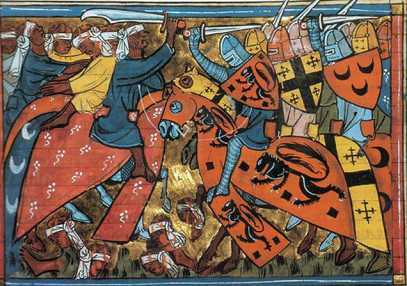
Igazából ennek a kötetnek a legnagyobb tanulsága, hogy a mélyen átélt vallásosság és a könyörtelen agresszió nem hogy nem zárják ki, de kiválóan kiegészítik egymást. Akik fölvették a keresztet, hogy Jeruzsálem kapui alatt ontsák a maguk (de elsősorban a mások) vérét, persze számtalan indok alapján dönthettek így. Bizonyára voltak közöttük olyanok, akiket a Krisztus iránt érzett őszinte szeretet motivált, sokan meg egyszerűen úgy vélték, megcsinálhatják a szerencséjüket, és kihasíthatnak egy darabot a Közel-Keletből, amit egyfajta senkiföldjének tekintettek, hisz "csak" muzulmánok (meg egyéb gyanús népek) laktak ott. Akadtak, akik bocsánatot reméltek nyerni bűneikre, mások tartozásaik és a kínzó robot elől akartak elmenekülni. De kevesen tudták (vagy akarták) kivonni magukat abból az erőszakspirálból, amelybe ezen döntés miatt kerültek. Mert a keresztes vállalkozás egyik kulcsmomentuma az volt, hogy világosan kijelölte, kik vagyunk mi, és kik azok az "ők". Mi ugye Jézus pajtásai vagyunk, a Mennyek Katonái, következésképpen jó emberek akkor is, ha nem. Az "ők" meg mindazok, akik nem keresztények, vagy nem úgy keresztények, vagy egyszerűen: útban vannak. Ez a kettéválasztás legitimált minden bűncselekményt. Vérszomjas fegyveresek ezreinek adott biankó bűnbocsánati csekket kábé mindenre, ami csak elképzelhető. Nem csoda, ha az erőszakorgia már otthon elkezdődött: a keresztes "seregek" rendszerint a "saját" zsidóik felkoncolásával melegítettek, és nem különösebben remegett meg a szívük akkor sem, amikor a keresztény államokon áthaladva raboltak és fosztogattak. Most képzeljük el, mennyire engedték el magukat, amikor végül megérkeztek a Szentföldre.
Ezt a fajta gonosz energiát a mindenkori hatalom (elsősorban a pápaság intézménye) lelkiismeretfurdalás nélkül használta fel bárhol és bárki ellen. Mert a keresztes háborúk története nem korlátozódik a Közel-Keletre - a pápák mozgósították ezt a fajta erőt Spanyolországban a mórok ellen, a Baltikumban a pogányok ellen, de még Európa kellős közepén is, ahol az eretnek mozgalmak bizonyultak optimális célpontnak. A végén aztán a keresztes háború mint hívószó totálisan elkorcsosult, Konstantinápoly felprédálásakor éppúgy be lehetett dobni, mint a renitens (de amúgy egyértelműen keresztény) európai uralkodók megregulázásakor. Ennek köszönhetően a Szentföld-eszme egy idő után óhatatlanul kiüresedett. Hiába arattak az európaiak az első keresztes háború idején meglepő sikereket, és hiába voltak olyan elhivatott katonai rendjeik, mint a templomosok vagy az ispotályosok, ha a Nyugatot egy idő után már marhára nem érdekelték az Akkonhoz vagy Jaffához hasonló egykor egzotikus úticélok. Miért is vállalta volna az egyszeri lovag a tengeribetegséget meg a távoli halál eshetőségét, ha harcolhatott az albigens parasztok ellen is a szomszéd megyében? Ráadásul amíg Európa megunta kissé az ügyet, addig a mohamedán államok megtalálták benne azt a közös célt, ami addig hiányzott: az agresszív Nyugat nem is olyan hamis mítoszát. Tulajdonképpen csoda, hogy jó kétszáz évig tartották magukat a latin államok a Közel-Keleten, de végül elbuktak mind, a nagyszabású vállalkozás eredménye csak egy rakás csontváz lett, ami ott porlad a homok alatt. No meg a "keresztes háború" mint retorikai fordulat, amit azóta is elővesznek hol a kereszténység, hol az iszlám egyes képviselői - és ilyenkor mindig lehet sejteni, hogy agyon akarnak ütni valakit.

October 15, 2024
Pentru Don Jones, cruciadele nu reprezintă niște evenimente care pot ridica întrebări, ci doar un prilej de a povesti destinele și faptele unor personaje. Discuția istorică este minimă. Autorul nu spune precis ce înțelege prin „cruciadă”. Dimpotrivă, folosește termenul într-un sens foarte larg. Alături de cruciadele propriu-zise (cele care au dus la întemeierea regatelor creștine în Orient), Dan Jones așază și misiunile de creștinare din nordul Europei sau Reconquista. Pentru acest motiv, istoria lui epică sfîrșește abia în 1492, odată cu eliberarea Spaniei.
Cruciadele au fost o cheltuială enormă (și inutilă) de energie, un amestec de jaf, cruzime, violență extremă și nesăbuință. Au fost o scenă pe care s-au desfășurat spectacole imposibil de înțeles rațional, o dezlănțuire de pasiuni oarbe, scăpate din frîu: credință, lăcomie, dorință pură de a ucide, uri bezmetice etc. Drumul spre Țara Sfîntă e presărat mereu cu jertfe inutile: în drumul lor prin Germania, Ungaria și Balcani, cruciații distrug sinagogi, ucid comunități de evrei (în Köln, Speyer, Mainz) sau atacă și jefuiesc fără nici o noimă orașe creștine (Zara, pe coasta Dalmației). În aprilie 1204, jefuiesc Constantinopolul, o acțiune care contrazice tot ceea ce au predicat papii (Urban al II-lea, Inocentiu al III-lea) și au clamat mesagerii în chemarea lor la luptă. În drumul spre Orașul Sfînt, oamenii nu mai au nimic sfînt. În loc să vădească măreția omului, arată doar josnicia lui. În loc să fie „manifestări ale căinței”, au fost, în realitate, manifestări ale trufiei și orbirii colective.
Pentru Jacques Le Goff, cruciadele au fost o „aberație istorică”. Scopul lor explicit nu a putut fi niciodată atins, cel mai adesea a fost uitat. Au divizat mai degrabă decît să-i unească pe creștini. Ruptura dintre Occident și Bizanț s-a adîncit. Bizanțul s-a destrămat, Occidentul și-a descoperit alte preocupări și obsesii.
Dan Jones povestește întîmplări din viețile unor oameni obișnuiți (Margareta de Beverley, Petru Eremitul, Gautier de Sans-Avoir) sau ale mărimilor (Ludovic al VII-lea, Richard Inimă de Leu, Enrico Dandolo, Saladin = Salah al-Din Yusuf ibn Ayyub, sultanul kurd al Egiptului și Siriei). (6.09.26.d).
Cruciadele au fost o cheltuială enormă (și inutilă) de energie, un amestec de jaf, cruzime, violență extremă și nesăbuință. Au fost o scenă pe care s-au desfășurat spectacole imposibil de înțeles rațional, o dezlănțuire de pasiuni oarbe, scăpate din frîu: credință, lăcomie, dorință pură de a ucide, uri bezmetice etc. Drumul spre Țara Sfîntă e presărat mereu cu jertfe inutile: în drumul lor prin Germania, Ungaria și Balcani, cruciații distrug sinagogi, ucid comunități de evrei (în Köln, Speyer, Mainz) sau atacă și jefuiesc fără nici o noimă orașe creștine (Zara, pe coasta Dalmației). În aprilie 1204, jefuiesc Constantinopolul, o acțiune care contrazice tot ceea ce au predicat papii (Urban al II-lea, Inocentiu al III-lea) și au clamat mesagerii în chemarea lor la luptă. În drumul spre Orașul Sfînt, oamenii nu mai au nimic sfînt. În loc să vădească măreția omului, arată doar josnicia lui. În loc să fie „manifestări ale căinței”, au fost, în realitate, manifestări ale trufiei și orbirii colective.
Pentru Jacques Le Goff, cruciadele au fost o „aberație istorică”. Scopul lor explicit nu a putut fi niciodată atins, cel mai adesea a fost uitat. Au divizat mai degrabă decît să-i unească pe creștini. Ruptura dintre Occident și Bizanț s-a adîncit. Bizanțul s-a destrămat, Occidentul și-a descoperit alte preocupări și obsesii.
Dan Jones povestește întîmplări din viețile unor oameni obișnuiți (Margareta de Beverley, Petru Eremitul, Gautier de Sans-Avoir) sau ale mărimilor (Ludovic al VII-lea, Richard Inimă de Leu, Enrico Dandolo, Saladin = Salah al-Din Yusuf ibn Ayyub, sultanul kurd al Egiptului și Siriei). (6.09.26.d).

October 18, 2019
What is there new to say about one of the most frequently written about events in human history? To his credit Dan Jones makes no grandiose claims about a fresh interpretation, but instead approaches the story from the standpoint of some of the key individuals involved: men and women who played a role in the various military campaigns and the Christian kingdoms they spawned. An accomplished writer with a gift for identifying the engaging detail, Jones writes about their lives in an entertaining narrative that makes for a good read.

July 28, 2025
A marvellous overview that links its tableaux such as Urban's Deus Vult speech, the march to Jerusalem, Saladin's victory at Hattin, the aborted crusades in the Nile Delta, the fall of Acre, the "sideshows" in Iberia and the Baltic.... into a coherent whole. Crusading basically withered once an ambitious noble knight could advance himself against infidels closer to home than Outremer. As long as the Pope OK'd it.

January 1, 2021
This is a well researched and well written book. I have read a handful of books on individual crusades but not one on all of them. If you are interested in a good survey on the Crusades, this book would be worth your while.
June 7, 2021
This is a great narrative summary that, in less than 400 pages for the main text, spans the entire history of the Crusades, including not just the major events in the Holy Land and nearby places, but also lesser-known crusades such as in Spain, the Baltics, and the Albigensian Crusade in southern France. It shifts masterfully between the big picture of major historical forces such as the rise of Islam in the Near East, and detailed portrayals of the principal actors and events. It even fits in final reflections on how the historical institution of crusading has echoed down the following centuries, right up to the present day.
The depictions seem to be on firm historical grounds: there are extensive quotes from primary sources (both Christian and Islamic), and the book is thoroughly footnoted, with a huge bibliography of primary and secondary sources. The portrayals of contending Christian and Islamic factions seem very even-handed, neither romanticizing nor demonizing either side. It focuses more on the Crusaders, but still devotes substantial space to Islamic factions and characters.
It’s pretty well illustrated with maps and a thoughtful selection of color pictures, mostly of related medieval art and manuscripts. Even better, it’s extremely well-written: elucidating yet never dry, engaging and even frequently entertaining. Overall, it’s a rare and superb sort of book: an enjoyable popular history that is at the same time easily rigorous and comprehensive enough to serve as an introductory college textbook on medieval history.
Here is an hour-long BBC History podcast interview with the author, which brought the book to my attention and convinced me to give it a read:
https://www.historyextra.com/period/m...
The depictions seem to be on firm historical grounds: there are extensive quotes from primary sources (both Christian and Islamic), and the book is thoroughly footnoted, with a huge bibliography of primary and secondary sources. The portrayals of contending Christian and Islamic factions seem very even-handed, neither romanticizing nor demonizing either side. It focuses more on the Crusaders, but still devotes substantial space to Islamic factions and characters.
It’s pretty well illustrated with maps and a thoughtful selection of color pictures, mostly of related medieval art and manuscripts. Even better, it’s extremely well-written: elucidating yet never dry, engaging and even frequently entertaining. Overall, it’s a rare and superb sort of book: an enjoyable popular history that is at the same time easily rigorous and comprehensive enough to serve as an introductory college textbook on medieval history.
Here is an hour-long BBC History podcast interview with the author, which brought the book to my attention and convinced me to give it a read:
https://www.historyextra.com/period/m...

October 6, 2019
Well researched and very interesting!

September 2, 2024
Dan Jones has delivered a highly readable book about the Crusades and the struggle for the Holy Land. He gives voice to the historians of that time and portrays the events from the perspective of the participants. Hence "Crusaders" instead of "Crusades."
It is fascinating to read how the concept of "crusade" was used and, especially, misused for religious and political purposes.
As a reader, Dan Jones takes you from the 11th century to the 15th century. He offers you a broad overview of the history, concluding with an interesting glimpse into current extremism and terrorism. It is a very accessible book for anyone who wants to learn more about this period, particularly the Crusades. It can serve as a springboard for further exploration of this topic, if you wish.
It is fascinating to read how the concept of "crusade" was used and, especially, misused for religious and political purposes.
As a reader, Dan Jones takes you from the 11th century to the 15th century. He offers you a broad overview of the history, concluding with an interesting glimpse into current extremism and terrorism. It is a very accessible book for anyone who wants to learn more about this period, particularly the Crusades. It can serve as a springboard for further exploration of this topic, if you wish.

March 8, 2020
My daughter is studying the Crusades so I thought it would be helpful to gen up. I wanted a readable account of this period and I identified Crusaders: An Epic History Of The Wars For The Holy Lands. This is the first book I have read by Dan Jones, but not the last.
I was ignorant about much of what had taken place during nearly 200 years of very bloody history - and what a fascinating period it is. Crusaders: An Epic History Of The Wars For The Holy Lands provides a perfect whistlestop tour and is also, somewhat suprisingly, quite the page turner.
From Pope Urban's initial call to defend Christians in Constantinople, I was amazed to discover how broad the geographical and religious definition became of what constituted a crusade. Anyone could purge their sins by spilling the blood of anyone identified as others, even fellow Christians or those not paying their tithes.
Crusaders: An Epic History Of The Wars For The Holy Lands is clearly impeccably researched and yet the scholarship does not slow down a thoroughly entertaining account peopled by colourful historical characters of all genders and faiths.
4/5

I was ignorant about much of what had taken place during nearly 200 years of very bloody history - and what a fascinating period it is. Crusaders: An Epic History Of The Wars For The Holy Lands provides a perfect whistlestop tour and is also, somewhat suprisingly, quite the page turner.
From Pope Urban's initial call to defend Christians in Constantinople, I was amazed to discover how broad the geographical and religious definition became of what constituted a crusade. Anyone could purge their sins by spilling the blood of anyone identified as others, even fellow Christians or those not paying their tithes.
Crusaders: An Epic History Of The Wars For The Holy Lands is clearly impeccably researched and yet the scholarship does not slow down a thoroughly entertaining account peopled by colourful historical characters of all genders and faiths.
4/5

July 9, 2022
In the Qatar World Cup, some England fans wore the costumes of the crusaders. They got banned later on because the costumes are offensive to Muslims. If we forget the offense for a moment, they are dressing quite appropriately. The fans/crusaders are both a rowdy bunch, they both traveled to Middle East largely on their own dime, both believe they will achieve glory and both will be bitterly disillusioned once they get there. (Well, some crusaders did get the bragging right of capturing Jerusalem, but then again *some* England fans can brag about the World Cup they won back in the Middle Ages. In fact they are still bragging today. I should know. I am one of them.)
The real crusades are mostly ludicrous affairs. Some dude saw in the cloud the form of a Jesus. That alone is enough to stoke up the religious fervor for the 5th crusade. (Today, to stoke up that kind of fervor, you have to buy a lot of red caps printed with make something great again or something and throw them to the crowd.) France promised to raise 30,000 men and the shrewd businessmen in Venice agreed to spend their entire GDP to build an armada to transport them. In the end, only a third showed up and France doesn’t have enough to pay for the contract. The legendary Saladin fought Muslims as often as Christians; won as often as lost; and his empire disintegrated 2decades after he died. His image as anti-crusaders ne plus ultra is just that, an image.
In all ages, there will be men (and I mean men) riled up to go somewhere far from their home wearing crusaders costumes and carry out some destructive things. Making them focus on the football (and the shop window after their team lost) is — I would argue — an evolutionary win for humanity.
The real crusades are mostly ludicrous affairs. Some dude saw in the cloud the form of a Jesus. That alone is enough to stoke up the religious fervor for the 5th crusade. (Today, to stoke up that kind of fervor, you have to buy a lot of red caps printed with make something great again or something and throw them to the crowd.) France promised to raise 30,000 men and the shrewd businessmen in Venice agreed to spend their entire GDP to build an armada to transport them. In the end, only a third showed up and France doesn’t have enough to pay for the contract. The legendary Saladin fought Muslims as often as Christians; won as often as lost; and his empire disintegrated 2decades after he died. His image as anti-crusaders ne plus ultra is just that, an image.
In all ages, there will be men (and I mean men) riled up to go somewhere far from their home wearing crusaders costumes and carry out some destructive things. Making them focus on the football (and the shop window after their team lost) is — I would argue — an evolutionary win for humanity.

January 10, 2020
A balanced, well-written and nuanced history of the Crusades.
Jones does a great job describing the Crusades’ origins and in telling the story from perspectives that many books on the subject overlook. Jones’ work is mostly focused on the people (especially lesser-known ones), although it does do a good job covering the battles. He also covers the other crusades in Spain and the Baltic.
The narrative is accessible and Jones’ coverage of the people involved is vivid, although they might be hard to keep track of at times. Jones doesn’t try to cover every single battle, or the origins and impact of every single Crusade, but the book should be a good introduction. At one point Jones writes of Conrad of Montferrat being present during the Fourth Crusade (he must mean Boniface)
A vivid and well-researched work.
Jones does a great job describing the Crusades’ origins and in telling the story from perspectives that many books on the subject overlook. Jones’ work is mostly focused on the people (especially lesser-known ones), although it does do a good job covering the battles. He also covers the other crusades in Spain and the Baltic.
The narrative is accessible and Jones’ coverage of the people involved is vivid, although they might be hard to keep track of at times. Jones doesn’t try to cover every single battle, or the origins and impact of every single Crusade, but the book should be a good introduction. At one point Jones writes of Conrad of Montferrat being present during the Fourth Crusade (he must mean Boniface)
A vivid and well-researched work.

February 10, 2020
Very informative book that deals with the time before and after the crusades, the one thing I liked about this book is that it doesn’t focus in just one crusade (usually the second and the first) but that it covers all the crusading times and the effects all of them had on the land. Last chapters were interesting as they explore the future of The crusader states and the crusading orders.

December 18, 2025
une lecture pas si facile mais passionnante.

Read
May 30, 2025An expansive recap from a Western, secular viewpoint. Nothing unexpected here, but it was a good general refresher.
I am especially interested in this period of history from an Orthodox perspective, but this kind of literature is less readily accessible, especially in audio format. Recommendations welcome!
I am especially interested in this period of history from an Orthodox perspective, but this kind of literature is less readily accessible, especially in audio format. Recommendations welcome!

July 16, 2019
(Note: I received an ARC of this book through NetGalley)
“Crusaders” is definitely an ambitious take on a subject that has already had so much written about it. Dan Jones goes well beyond the Levant and Egypt to also include the Reconquista in the Iberian Peninsula, the oft-forgotten Baltic Crusades, Sicily, and elsewhere throughout three different continents. Despite the hefty reach over both its geographic and chronological range, it successfully avoids turning into a bog of place names, names of rulers, and dates. The finely crafted historical narrative keeps its path intact all the way from start to finish.
The only mild complaint is that there definitely were points where I felt the coverage of certain items felt a bit thin. But then again, trade offs will be inevitable in the construction of a history that will be both accessible and expansive. And considering all that it needs to encompass, “Crusaders” does the best job that it can possibly do striking that balance between accessibility and and detailed depth. Overall, Dan Jones has pulled together a history that is quite impressive in its simultaneously intimate yet sweeping review of the religious wars whose influence continues to reach out to the present day.
“Crusaders” is definitely an ambitious take on a subject that has already had so much written about it. Dan Jones goes well beyond the Levant and Egypt to also include the Reconquista in the Iberian Peninsula, the oft-forgotten Baltic Crusades, Sicily, and elsewhere throughout three different continents. Despite the hefty reach over both its geographic and chronological range, it successfully avoids turning into a bog of place names, names of rulers, and dates. The finely crafted historical narrative keeps its path intact all the way from start to finish.
The only mild complaint is that there definitely were points where I felt the coverage of certain items felt a bit thin. But then again, trade offs will be inevitable in the construction of a history that will be both accessible and expansive. And considering all that it needs to encompass, “Crusaders” does the best job that it can possibly do striking that balance between accessibility and and detailed depth. Overall, Dan Jones has pulled together a history that is quite impressive in its simultaneously intimate yet sweeping review of the religious wars whose influence continues to reach out to the present day.
November 13, 2020
Whew, I finished it! I like Dan Jones' approach to writing history for the general readership, this was such an epic venture it could easily have become dry and dusty. He avoided this by presenting the events of centuries of crusading through various people of note in each period. What a motley lot, the good, the bad and the downright mad. Many moons ago at school I was taught a bit about the crusades, mainly Richard the Lionheart's involvement, it was quite an eye opener to discover just how wide ranging crusader activity was. The whew at the beginning was because of the book's length, I had to take a couple of breaks and read other things just for a change. Well researched and on the whole a balanced account of a very interesting period of history.

February 14, 2021
Trochę żałuję, że już skończyłem. Ale Dan Jones ponownie (po "Plantagenetach" i programach telewizyjnych) udowodnił, że o historii potrafi opowiadać zajmująco.
To było moje drugie podejście do historii krucjat. Pierwsze, Asbridge'a było w porządku, ale czułem niedosyt. Chyba było zbyt sztywne. Dan Jones ubarwia swoją opowieść faktami historycznymi, które być może pomijają naukowcy. W "Krzyżowcach" na przykład przedstawia fascynujące kobiety, które czynnie kształtowały dzieje krucjat (królowa Melisande), lub je opisywały (Anna Komnena, córka cesarza Bizancjum). Czy nawet walczyły (przebrane za mężczyzn). Przedstawia portrety fascynujących bohaterów - jak cyniczny i przebiegł Beomund, czy światły cesarz wolnomyśliciel Fryderyk II Hohenstauf (który odzyskał Jerozolimę bardzo tanio, za co spotkała go kara od... chrześcijan). I tak dalej. Historyczna narracja w jego wykonaniu naprawdę porywa. Trochę żałuję, że kupiłem e-book zamiast papierowej książki.
Sama historia krucjat może wychodziła od szczytnej idei, ale niemal od razu idea ta była na każdym kroku plugawiona. Już pierwsza krucjata zaczęła się od rzezi - Żydów, ulubionego sportu chrześcijan aż po XX wiek. Kulminacją była czwarta krucjata, która skupiła się na walce z chrześcijanami. Najpierw na zlecenie Wenecji zdobyto Zadar (dziś w Chorwacji), który sam dołożył się do krucjaty, a skończyła się złupieniem chrześcijańskiego Konstantynopola. A w trakcie drugiej - rzeź niewinnej ludności cywilnej Jerozolimy.
Naprawdę zaskakuje mnie to, że dziś hasła krucjat wśród chrześcijan potrafią wybrzmieć. Choć powinny być raczej powodem wstydu. Ale, oczywiście, nieuk powie, że "pedagogikę wstydu" odrzuca.
Zdarzyło mi się podróżować po Izraelu szlakiem pozostałości po państwie krucjatowym. Historia była bezwzględna. W zasadzie tylko tzw. podziemne miasto krzyżowców w Akce (cena biletów była okrutna) i kilka świątyń w Jerozolimie, to widome znaki tego dziedzictwa. Najbardziej żałosne były ruiny w Atlicie, których widok wymaga sporej wyobraźni, aby "zobaczyć" czym kiedyś była twierdza krzyżowców w tym dziś zapomnianym zakątku wybrzeża.
Mimo to Dan Jones i tak sprawił, że historia krucjat odżyła w wyobraźni. Może bez ideałów, bo i zawsze były tylko narzędziem władzy a nie celem.
To było moje drugie podejście do historii krucjat. Pierwsze, Asbridge'a było w porządku, ale czułem niedosyt. Chyba było zbyt sztywne. Dan Jones ubarwia swoją opowieść faktami historycznymi, które być może pomijają naukowcy. W "Krzyżowcach" na przykład przedstawia fascynujące kobiety, które czynnie kształtowały dzieje krucjat (królowa Melisande), lub je opisywały (Anna Komnena, córka cesarza Bizancjum). Czy nawet walczyły (przebrane za mężczyzn). Przedstawia portrety fascynujących bohaterów - jak cyniczny i przebiegł Beomund, czy światły cesarz wolnomyśliciel Fryderyk II Hohenstauf (który odzyskał Jerozolimę bardzo tanio, za co spotkała go kara od... chrześcijan). I tak dalej. Historyczna narracja w jego wykonaniu naprawdę porywa. Trochę żałuję, że kupiłem e-book zamiast papierowej książki.
Sama historia krucjat może wychodziła od szczytnej idei, ale niemal od razu idea ta była na każdym kroku plugawiona. Już pierwsza krucjata zaczęła się od rzezi - Żydów, ulubionego sportu chrześcijan aż po XX wiek. Kulminacją była czwarta krucjata, która skupiła się na walce z chrześcijanami. Najpierw na zlecenie Wenecji zdobyto Zadar (dziś w Chorwacji), który sam dołożył się do krucjaty, a skończyła się złupieniem chrześcijańskiego Konstantynopola. A w trakcie drugiej - rzeź niewinnej ludności cywilnej Jerozolimy.
Naprawdę zaskakuje mnie to, że dziś hasła krucjat wśród chrześcijan potrafią wybrzmieć. Choć powinny być raczej powodem wstydu. Ale, oczywiście, nieuk powie, że "pedagogikę wstydu" odrzuca.
Zdarzyło mi się podróżować po Izraelu szlakiem pozostałości po państwie krucjatowym. Historia była bezwzględna. W zasadzie tylko tzw. podziemne miasto krzyżowców w Akce (cena biletów była okrutna) i kilka świątyń w Jerozolimie, to widome znaki tego dziedzictwa. Najbardziej żałosne były ruiny w Atlicie, których widok wymaga sporej wyobraźni, aby "zobaczyć" czym kiedyś była twierdza krzyżowców w tym dziś zapomnianym zakątku wybrzeża.
Mimo to Dan Jones i tak sprawił, że historia krucjat odżyła w wyobraźni. Może bez ideałów, bo i zawsze były tylko narzędziem władzy a nie celem.
Displaying 1 - 30 of 591 reviews