

What do you think?

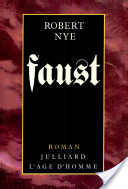
Faust
Faust fut pour limagination populaire lincarnation de lesprit aventurier de lépoque, à cheval sur le Moyen Âge et les Temps modernes. Dans son ouvrage, Robert Nye utilise des documents historiques qui attestent lexistence de Faust en jetant quelque lumière sur sa personnalité, en y mêlant les éléments dune fiction romanesque hilarante. Louvrage se présente comme le journal de Christophe Wagner, le jeune disciple?de l'alchimiste, qui nous entraîne dans un ébouriffant pèlerinage à Rome à la suite dun Faust inattendu, ivrogne invétéré, chevalier dindustrie débauché et vicieux. Sont aussi du voyage Hélène de Troie, maîtresse du mage, emmerdeuse moche, mythomane et mystique, ainsi que sept ravissantes jeunes filles pratiquant chacune une spécialité érotique différente au bénéfice de ce jeune paillard de Wagner. Traversent également le récit Henri VIII, Luther, Marguerite de Navarre, Calvin, etc. Passionnant comme un polar, joyeusement obscène comme un Rabelais contemporain, le Faust de Robert Nye est lun de ces ouvrages de la lecture duquel on sort avec limpression dêtre plus intelligent.
256 pages, Hardcover
First published January 1, 1980
About the author
Robert Nye
66 books48 followersRobert Nye was an English writer, playwright and poet.
Nye started writing stories for children to entertain his three young sons. Nye published his first adult novel, Doubtfire, in 1967.
Nye's next publication after Doubtfire was a return to children's literature, a freewheeling version of Beowulf which has remained in print in many editions since 1968. In 1970, he published another children's book, Wishing Gold, and received the James Kennaway Memorial Award for his collection of short stories, Tales I Told My Mother (1969).
During the early 1970s Nye wrote several plays for BBC radio including “A Bloody Stupit Hole” (1970), “Reynolds, Reynolds” (1971), and a version of Penthesilea by Heinrich von Kleist (1971). He was also commissioned by Covent Garden to write an unpublished libretto for Harrison Birtwistle's opera, Kronia (1970). Nye held the position of writer in residence at the University of Edinburgh, 1976-1977, during which time he received the Guardian fiction prize, followed by the 1976 Hawthornden Prize for his novel Falstaff.
He continued to write poetry, publishing Darker Ends (1969) and Divisions on a Ground (1976), and to prepare editions of other poets with whose work he felt an affinity: Sir Walter Ralegh, William Barnes, and Laura Riding. His own Collected Poems appeared in 1995. His selected poems, entitled The Rain and The Glass, published in 2005, won the Cholmondeley Award. From 1977 he lived in County Cork, Ireland. Although his novels have won prizes and been translated into many languages, it is as a poet that he would probably have preferred to be remembered. The critic Gabriel Josipovici described him as "one of the most interesting poets writing today, with a voice unlike that of any of his contemporaries."
Nye started writing stories for children to entertain his three young sons. Nye published his first adult novel, Doubtfire, in 1967.
Nye's next publication after Doubtfire was a return to children's literature, a freewheeling version of Beowulf which has remained in print in many editions since 1968. In 1970, he published another children's book, Wishing Gold, and received the James Kennaway Memorial Award for his collection of short stories, Tales I Told My Mother (1969).
During the early 1970s Nye wrote several plays for BBC radio including “A Bloody Stupit Hole” (1970), “Reynolds, Reynolds” (1971), and a version of Penthesilea by Heinrich von Kleist (1971). He was also commissioned by Covent Garden to write an unpublished libretto for Harrison Birtwistle's opera, Kronia (1970). Nye held the position of writer in residence at the University of Edinburgh, 1976-1977, during which time he received the Guardian fiction prize, followed by the 1976 Hawthornden Prize for his novel Falstaff.
He continued to write poetry, publishing Darker Ends (1969) and Divisions on a Ground (1976), and to prepare editions of other poets with whose work he felt an affinity: Sir Walter Ralegh, William Barnes, and Laura Riding. His own Collected Poems appeared in 1995. His selected poems, entitled The Rain and The Glass, published in 2005, won the Cholmondeley Award. From 1977 he lived in County Cork, Ireland. Although his novels have won prizes and been translated into many languages, it is as a poet that he would probably have preferred to be remembered. The critic Gabriel Josipovici described him as "one of the most interesting poets writing today, with a voice unlike that of any of his contemporaries."
Ratings & Reviews
Friends & Following
Create a free account to discover what your friends think of this book!
Community Reviews
Displaying 1 - 16 of 16 reviews

February 24, 2026
What is so special about Faust? He sold his soul to the Devil… He is damned… The last time he’d taken his bath was seven years ago…
“I stink. Therefore I am.” This is his motto…
The story begins miraculously… It is Christmas Eve and Faust works a miracle… He resurrects a dead girl…
The narrator of the story is Wagner… He is a kind of Faust’s page boy… They depart for Rome on a secret pilgrimage…
Road adventurers and mishaps… Erotic mischief… A revelation of Sophia… Now they’re in Rome… It’s Holy Week…
In history, tragedies tend to repeat as farce.
Facts about Faust.
1: He’s got long black toenails and fingernails. There’s this boil on his snout.
2: He smears butter on the boil, and candlegrease.
3: Sex and candlegrease. That’s what the Herr Doktor smells of.
“I stink. Therefore I am.” This is his motto…
The story begins miraculously… It is Christmas Eve and Faust works a miracle… He resurrects a dead girl…
The narrator of the story is Wagner… He is a kind of Faust’s page boy… They depart for Rome on a secret pilgrimage…
I felt sick. I could see Faust was in a foul mood. As yet, he had hardly begun his day’s drinking. He had these three flasks hanging round his waist from a belt. There were another three flasks attached to the mane of his horse. His horse was a black horse, of course. Black as pitch. Dip-backed and gone in the tooth. Faust was wearing his usual black cloak.
Road adventurers and mishaps… Erotic mischief… A revelation of Sophia… Now they’re in Rome… It’s Holy Week…
It strikes me that we must have looked absurdly conspicuous even in that huge motley crowd of pilgrims already thronging the dirty narrow streets of Rome for the first day of Holy Week.
A gangling drunk German.
A black dog.
A boy with a monkey.
It was plain we were up to no good.
In history, tragedies tend to repeat as farce.

October 16, 2010
This book has a similar quality to John Barth's CHIMERA, but Nye's novel is a much easier, faster read, more coherent, and oddly compelling despite it's sometimes heavy-handed post-modernism and late 70's yen for excessive sex and body fluid references. The characters are all bizarre and grotesque, like a Goya or Dali painting come to life, the plot of virtually non-existant, and the narrator- not Faust but Wagner, his assistant, is fairly unlikable, but Nye's style, his wit, and little moments of wisdom and human poignancy keep you turning the page till the final enigmatic ending. A worthwhile read if you're into the Faust legend and/or enjoy experimental fiction.

April 25, 2014
Robert Nye's Faust, the 1982 Penguin Books paperback edition from 1982, was the first book I read in English, 40+ years ago. I remember having enjoyed it very much (and then tackling Anthony Burgess' Earthly Powers). I revisited my decently preserved copy these past days and, regrettably, this time I found it lacking. There's lots of wit, erudition and religious depth, to be sure, mixed with doses of bawdy humor and ample pornography, but all in all, it was not half as compelling as the reading 4 decades ago, even if pleasurable and interesting enough.
(1/7) The first of the many Luther jokes in the book, some very good (the gist being that Luther wasn't graced by God with the sharpest of intellects of the time, or any time)...
« By the way, I'm not an anti-Lutheran. As long as he doesn't shit in my can, I don't care what he does. After all, I owe the guy my education. Up to a point. Or an enema.
Nice story about Martin Luther.
He was invited once, at Wittenberg, to sit in with one of the few remaining Papists just to refresh his memory on the subject of confession. Luther wanted to know the going rate for sins these days. "Oh, we try to be fair," says the priest. A woman comes in and confesses the usual stuff with her lover. "How many times did you sin, my child?" says the priest. "Three times," says the woman. "That's three Hail Marys and three Our Fathers for penance," says the priest, "and ten pfennigs in the bag." A man comes in to the confessional. Sex with his mistress. "How many times ?" says the priest. "Three times," says the man. "Three Hail Marys, three Our Fathers," says the priest, "and ten pfennigs in the bag." Just then the priest is called away to give the last rites to a dying banker. "You pop in the box," he says to Luther. "After all, you used to be an Augustinian, and I'm broad-minded. No one never needs to know. Business is brisk tonight. Just be sure to get the ten pfennigs in the bag, right?" Luther sits in the box. A girl comes in. "Sex with my lover, father," she confesses. "Three times?" says Luther. "Just the one, actually," says the girl. "Sure it wasn't three?" says Luther. "No father, it was one time only." Luther thinks hard. Then he says: "Well, I'l tell you what, my child. You just say three Hail Marys and three Our Fathers and put ten pfennigs in the bag -- and the Church will owe you two fucks." »
(2.4) This is the best phrase of the book: « Nadja likes nothing better in this god-forsaken abortion of a world than to sit on a man and to wank him. » It is preceded by:
« Tonight Nadja came to me in my bed at this inn.
Nadja's thing is wanking.
She won't let me touch her. She's as cold as an icicle. She detests if I lay a hand on her. She likes to lay her hands on me.
Nadja loves to sit astride me, stark naked, her hair round her shoulders like a harvest, and to play with my cock till I come.
Nadja's got these strong hands, long fingers.
The hands of a Russian princess. »
(2.6) An example of the book's ample affirmations of religious erudition (in the case, an excerpt of a Calvin sermon):
« "What does Scripture teach?" Calvin demanded. "Brothers and sisters, I'll tell you. Scripture call Satan the god (II Corinthians 4, 4) and prince (John 12, 31) of this world. Scripture speaks of Satan as a mighty armed man (Luke 11, 21), the spirit who holds power over the air (Ephesians 2, 2), a roaring lion (I Peter 5, 8). And what does this means, my friends? Watch it! That's what Scripture tells us. To watch it! Watch out for the Devil. He's after you!" »
(2.7) At the same time, in the same church, during the sermon, this was happening:
« Nadja slipped her left hand out of her muff. Her fingers crept under my cloak. She groped for my prick and she found it. She started to tug it and rub it, slowly and gently at first, through the stuff of my doublet. Then she moved a bit closer. I felt her furs tickle my cheek. Hand still concealed under the cloak, she unpicked my doublet. She fumbled, but not very much. Nadja's expert. She knows what men like, and she loves it.
Well, Nadja slips out my prick and starts stroking it.
Up and above us, Calvin snorting on through his asthma about the Devil and his cohorts being not thoughts but actualities.
Down here, Nadja with a handful.
(...)
What about Salome?
I'll tell you about Salome.
Salome's a Zoroastrian. That makes Salome intuitive, so she says. Well, it doesn't take the intuition of a sybil for a girl on one side of you to realise if the girl on the other side is tossing you off. Salome looked down. She saw the bulge of Nadja's hand going to and from and up and down under my cloak. She knew what was happening. She drew her breath a bit sharpish.
I knew then that I'd made a mistake.
(...)
Salome needed it now.
Salome was determined to get it.
So she wriggles right down in the pew.
(...)
Now you're not supposed to kneel in John Calvin's church. They stand up to say their prayers, facing him. Kneeling is Papist, they reckon.
(...)
Just then Calvin opens his eyes!
He consider us. »
(3.39) « Moral: It's a great life if you don't weaken. It's a great death if you don't waken. »
(3.44) On the Sistine Chapel, reviewing modern art:
« If it was Michelangelo, he should shoot himself.
I don't like modern art.
This was awful. »
( Read and reread on a Penguin paperback)
(1/7) The first of the many Luther jokes in the book, some very good (the gist being that Luther wasn't graced by God with the sharpest of intellects of the time, or any time)...
« By the way, I'm not an anti-Lutheran. As long as he doesn't shit in my can, I don't care what he does. After all, I owe the guy my education. Up to a point. Or an enema.
Nice story about Martin Luther.
He was invited once, at Wittenberg, to sit in with one of the few remaining Papists just to refresh his memory on the subject of confession. Luther wanted to know the going rate for sins these days. "Oh, we try to be fair," says the priest. A woman comes in and confesses the usual stuff with her lover. "How many times did you sin, my child?" says the priest. "Three times," says the woman. "That's three Hail Marys and three Our Fathers for penance," says the priest, "and ten pfennigs in the bag." A man comes in to the confessional. Sex with his mistress. "How many times ?" says the priest. "Three times," says the man. "Three Hail Marys, three Our Fathers," says the priest, "and ten pfennigs in the bag." Just then the priest is called away to give the last rites to a dying banker. "You pop in the box," he says to Luther. "After all, you used to be an Augustinian, and I'm broad-minded. No one never needs to know. Business is brisk tonight. Just be sure to get the ten pfennigs in the bag, right?" Luther sits in the box. A girl comes in. "Sex with my lover, father," she confesses. "Three times?" says Luther. "Just the one, actually," says the girl. "Sure it wasn't three?" says Luther. "No father, it was one time only." Luther thinks hard. Then he says: "Well, I'l tell you what, my child. You just say three Hail Marys and three Our Fathers and put ten pfennigs in the bag -- and the Church will owe you two fucks." »
(2.4) This is the best phrase of the book: « Nadja likes nothing better in this god-forsaken abortion of a world than to sit on a man and to wank him. » It is preceded by:
« Tonight Nadja came to me in my bed at this inn.
Nadja's thing is wanking.
She won't let me touch her. She's as cold as an icicle. She detests if I lay a hand on her. She likes to lay her hands on me.
Nadja loves to sit astride me, stark naked, her hair round her shoulders like a harvest, and to play with my cock till I come.
Nadja's got these strong hands, long fingers.
The hands of a Russian princess. »
(2.6) An example of the book's ample affirmations of religious erudition (in the case, an excerpt of a Calvin sermon):
« "What does Scripture teach?" Calvin demanded. "Brothers and sisters, I'll tell you. Scripture call Satan the god (II Corinthians 4, 4) and prince (John 12, 31) of this world. Scripture speaks of Satan as a mighty armed man (Luke 11, 21), the spirit who holds power over the air (Ephesians 2, 2), a roaring lion (I Peter 5, 8). And what does this means, my friends? Watch it! That's what Scripture tells us. To watch it! Watch out for the Devil. He's after you!" »
(2.7) At the same time, in the same church, during the sermon, this was happening:
« Nadja slipped her left hand out of her muff. Her fingers crept under my cloak. She groped for my prick and she found it. She started to tug it and rub it, slowly and gently at first, through the stuff of my doublet. Then she moved a bit closer. I felt her furs tickle my cheek. Hand still concealed under the cloak, she unpicked my doublet. She fumbled, but not very much. Nadja's expert. She knows what men like, and she loves it.
Well, Nadja slips out my prick and starts stroking it.
Up and above us, Calvin snorting on through his asthma about the Devil and his cohorts being not thoughts but actualities.
Down here, Nadja with a handful.
(...)
What about Salome?
I'll tell you about Salome.
Salome's a Zoroastrian. That makes Salome intuitive, so she says. Well, it doesn't take the intuition of a sybil for a girl on one side of you to realise if the girl on the other side is tossing you off. Salome looked down. She saw the bulge of Nadja's hand going to and from and up and down under my cloak. She knew what was happening. She drew her breath a bit sharpish.
I knew then that I'd made a mistake.
(...)
Salome needed it now.
Salome was determined to get it.
So she wriggles right down in the pew.
(...)
Now you're not supposed to kneel in John Calvin's church. They stand up to say their prayers, facing him. Kneeling is Papist, they reckon.
(...)
Just then Calvin opens his eyes!
He consider us. »
(3.39) « Moral: It's a great life if you don't weaken. It's a great death if you don't waken. »
(3.44) On the Sistine Chapel, reviewing modern art:
« If it was Michelangelo, he should shoot himself.
I don't like modern art.
This was awful. »
( Read and reread on a Penguin paperback)

Read
August 17, 2019within spitting distance of being a masterpiece. detailed, witty, all that good stuff, plus you got the question to chew on of whether faust or kit is the truly faustian figure, plus there's the matter of whether kit is choosing to write the book or just being puppeteered by faust, which vibes nicely w/ the whole is there such thing as free will / any difference b/w salvation & damnation thing. unfortunately as in falstaff the idea is seemingly put forth that flouting the age of consent is rakish/naughty rather than morally wrong, which tarnishes the enjoyment & which, having popped up in >1 novel, makes one wonder what the novelist's deal is. i guess choosing to read this is something of a faustian bargain *rimshot*
September 19, 2008
Akercocke is nice, really, really nice...
September 17, 2010
The best book ever!

February 16, 2012
A cracking good read, great fun and oddly compelling.

June 28, 2012
Fun read. Dug this gold at a book sale by accident. Never regretted every cent of it. Highly recommended.
Read
February 10, 2014Did not finish this book, I did not like it.

April 13, 2021
I've long been meaning to read Nye's Faust, but not just because from a literary perspective its focus on the occult fits firmly into my sphere of interest. As a long-time fan of UK extreme metal act Akercocke, I'd been aware for some time of the fact that this novel gave them both their name, and also the thematic thrust of their debut album. As I'm currently working through a retrospective of their career on my music blog, it seemed an apposite moment to accompany this with a reading of this re-telling of the Faust story, a cornerstone of European culture for several centuries.
I have to confess to being relatively unfamiliar with the various versions of Faust, having not read Goethe or Marlowe's Faust, nor the many other works that take the core idea of Faust exchanging his soul with the devil in return for enlightenment as the starting point for their own tale, so I suspect that I'm losing a certain amount in lacking an understanding of the undoubtedly numerous references in Nye's Faust to some of its predecessors. However, this does enable me to evaluate Nye's novel more or less at face value, and there is a lot to like.
Nye's version of Faust is presented as a personal history of John Faust (Herr Doktor), written by his assistant / unwilling sometime lover / general lackey Kit Wagner. This style is somewhat self-consciously post-modern, with Wagner making frequent reference to the fact that he is actively writing the book as we work our way through the prose, and offering frequent ironic and knowing asides to the reader.
Written in three parts, we get to know Wagner, Faust and a motley cast of other characters, including Akercocke the monkey, Helen of Troy, and Wagner's seven strong harem of (very) young ladies in the first section, before the group take an ultimately doomed trip to Rome during part two, ostensibly for Faust to make his payment to the devil in part three, in the form of a papal assassination.
Faust is a brilliant combination of genuinely funny, irreverent (in the true sense) humour, filthy and depraved sexual encounters (some of which might struggle to get published in 2021), and erudite and literate counterfactual version of the Faust story, which ultimately reveals Faust to be little more than an insane old man, with Wagner a figment of his imagination made manifest. Faust also achieves the difficult task of telling a superficially silly tale, which hides a truly thought-provoking centre, which very much forces the reader to confront the Christian duality of of salvation versus damnation, which ultimately look like the same thing by the end of Faust. In this way, it reminds strongly of the writing of Douglas Adams, which is a high compliment indeed.
Something of a forgotten text these days, having not been reprinted for some time, Nye's Faust is well worth re-discovery, and I'm very pleased to have been pointed in its direction.
I have to confess to being relatively unfamiliar with the various versions of Faust, having not read Goethe or Marlowe's Faust, nor the many other works that take the core idea of Faust exchanging his soul with the devil in return for enlightenment as the starting point for their own tale, so I suspect that I'm losing a certain amount in lacking an understanding of the undoubtedly numerous references in Nye's Faust to some of its predecessors. However, this does enable me to evaluate Nye's novel more or less at face value, and there is a lot to like.
Nye's version of Faust is presented as a personal history of John Faust (Herr Doktor), written by his assistant / unwilling sometime lover / general lackey Kit Wagner. This style is somewhat self-consciously post-modern, with Wagner making frequent reference to the fact that he is actively writing the book as we work our way through the prose, and offering frequent ironic and knowing asides to the reader.
Written in three parts, we get to know Wagner, Faust and a motley cast of other characters, including Akercocke the monkey, Helen of Troy, and Wagner's seven strong harem of (very) young ladies in the first section, before the group take an ultimately doomed trip to Rome during part two, ostensibly for Faust to make his payment to the devil in part three, in the form of a papal assassination.
Faust is a brilliant combination of genuinely funny, irreverent (in the true sense) humour, filthy and depraved sexual encounters (some of which might struggle to get published in 2021), and erudite and literate counterfactual version of the Faust story, which ultimately reveals Faust to be little more than an insane old man, with Wagner a figment of his imagination made manifest. Faust also achieves the difficult task of telling a superficially silly tale, which hides a truly thought-provoking centre, which very much forces the reader to confront the Christian duality of of salvation versus damnation, which ultimately look like the same thing by the end of Faust. In this way, it reminds strongly of the writing of Douglas Adams, which is a high compliment indeed.
Something of a forgotten text these days, having not been reprinted for some time, Nye's Faust is well worth re-discovery, and I'm very pleased to have been pointed in its direction.
This entire review has been hidden because of spoilers.

April 6, 2026
This is my third Robert Nye book, and I have to sadly conclude that Falstaff was a fluke as Faust feels like a re-run of Merlin, a fun tone, a few good (and disgusting) jokes, and a weak wishy-washy conclusion that reveals it to be little more than that.
A retelling of the Faust story from the point of view of servant Wagner, it includes characters like Helen of Troy and also Marguerite/Gretchen - in this version a pair of twins. A lot is made of the book occurring during the beginning of the reformation, with Wagner being fond of Luther jokes and the gang going to hear Calvin preach. Luther is described as the constipator, and many of the jokes are about his obsession with his own bowel movements, an element of the story which was true.
Wagner is an interesting character initially. He was a theological student with an interest in angels, who goes from scholasticism to materialism. He thinks Faust either a loony or a con-artist and his very doubtful about his talk of selling his soul to the devil and the demon Mephistopheles, who he never sees. Faust’s relationship with Helen of Troy is a sham, as she is really just some Helen (and possibly a man in drag?). Faust gets Wagner a number of concubines with different preferences and skills, and these seem supernatural, are they succubi? Whatever they are, their numbers fall as the group make a journey to Rome to kill the Pope with a poisoned wafer. There’s also a monkey called Akercocke, he may learn to speak.
It’s almost a Heart of Darkness kind of affair, this darkness being Rome, with things getting stranger and more irrational as they travel. The oddest part is when they stay in a monastery full of paintings of men in drag having sex, painted by an artist known as ‘the sodomite’. This monastery, it’s pictures, and the artist all existed - but here it’s like one of those castles in an Arthurian myth where nothing is certain. It’s here Faust and Helen marry, she is stripped and seen to have a cock, and is then never seen again. I think that perhaps Wagner was also Helen but didn’t realise it, in a kind of Fight Club, shadow personality way.
Faust has an out in this story. If he kills the Pope, he gets another 24 years. He tells Wagner, that he is the physical representation of the deal. When the Pope fails to die (and we don’t know why), Wagner kills Faust in disappointment, thus making the deadline happen. We’re left with the samw watery ending of Merlin, that people are complicated, silly and have lusts and bodies. It’s fine, an enjoyable read at the time, but Falstaff was more than that. Reviewers describe Nye as Rabelaisian, but Rabelais’s vision was not just of sex and appetite, it was of bigness, of magnanimity - to answer all of life’s questions with a full-throated ‘yes’, and Faust doesn’t manage to do that.
A retelling of the Faust story from the point of view of servant Wagner, it includes characters like Helen of Troy and also Marguerite/Gretchen - in this version a pair of twins. A lot is made of the book occurring during the beginning of the reformation, with Wagner being fond of Luther jokes and the gang going to hear Calvin preach. Luther is described as the constipator, and many of the jokes are about his obsession with his own bowel movements, an element of the story which was true.
Wagner is an interesting character initially. He was a theological student with an interest in angels, who goes from scholasticism to materialism. He thinks Faust either a loony or a con-artist and his very doubtful about his talk of selling his soul to the devil and the demon Mephistopheles, who he never sees. Faust’s relationship with Helen of Troy is a sham, as she is really just some Helen (and possibly a man in drag?). Faust gets Wagner a number of concubines with different preferences and skills, and these seem supernatural, are they succubi? Whatever they are, their numbers fall as the group make a journey to Rome to kill the Pope with a poisoned wafer. There’s also a monkey called Akercocke, he may learn to speak.
It’s almost a Heart of Darkness kind of affair, this darkness being Rome, with things getting stranger and more irrational as they travel. The oddest part is when they stay in a monastery full of paintings of men in drag having sex, painted by an artist known as ‘the sodomite’. This monastery, it’s pictures, and the artist all existed - but here it’s like one of those castles in an Arthurian myth where nothing is certain. It’s here Faust and Helen marry, she is stripped and seen to have a cock, and is then never seen again. I think that perhaps Wagner was also Helen but didn’t realise it, in a kind of Fight Club, shadow personality way.
Faust has an out in this story. If he kills the Pope, he gets another 24 years. He tells Wagner, that he is the physical representation of the deal. When the Pope fails to die (and we don’t know why), Wagner kills Faust in disappointment, thus making the deadline happen. We’re left with the samw watery ending of Merlin, that people are complicated, silly and have lusts and bodies. It’s fine, an enjoyable read at the time, but Falstaff was more than that. Reviewers describe Nye as Rabelaisian, but Rabelais’s vision was not just of sex and appetite, it was of bigness, of magnanimity - to answer all of life’s questions with a full-throated ‘yes’, and Faust doesn’t manage to do that.
December 10, 2022
Originally read this decades ago when I was reading up on the legend of Faust - most likely at the time Recommended Records were planning on doing a book on the legend in the early to mid 1980's (and probably a tie-in with the group of the same name) which, unfortunately, I believe never appeared - at least I didn't see it - and was curious to learn more. Recently I decided to give it another read through as an antidote to some of the other things I've been reading and was was not disappointed. This is a bawdy, humorous, near-the-knuckle retelling of the story of Faust - a man of dubious morality, allergic to sobriety, and who, apparently, sold his soul to the Devil - as told by his apprentice. A very easy read, but not for the easily offended or puritanical of mind. Note to self: Must find the time to read more by Robert Nye!

January 21, 2025
Kind of 2.5 stars. This genuinely has some good points— it’s insanely well-researched and the narrative structure is great, as is Wagner’s narrative voice. It’s dragged way down by being 40% porn featuring Wagner and his 7 weed smoking girlfriends (Robert Nye seems to have had a thing for his protagonists having lots of sex with very young girls) and 1970s homophobia. To its credit, it has a really strong ending that surprised me.
Not a necessary part of the Faustian canon, but kind of fun if you can get past the porn literally no one asked for.
Not a necessary part of the Faustian canon, but kind of fun if you can get past the porn literally no one asked for.

January 27, 2023
Well that was disgusting and I don't think it often.
December 10, 2025
Faust by Robert Nye was a book I absolutely should not have been reading as someone in their early teens. I remember being fascinated by the sex scenes mostly, as it was the first time I had read anything like that in a book. Several years later, my interest in Faust was reignited when my interest in metal music led me down the rabbit hole to the British black/death metal band Akercocke, whose name I instantly recognised as the demonic character from this very book. A lot of that band's "lore" and early songwriting was based on this work, as well as far more esoteric forms of Satanism, and a revisit to Faust was very much on the cards.
I think I have read Faust cover to cover three or four times. It is snappy, vivid and incredibly grounded for what is a very supernatural / otherworldly piece of work. It is told from the perspective of Kit Wagner, Faust's assistant / page boy / live-in rent boy, and it follows Faust and his desire to go on a pilgrimage to Rome. I think saying any more than that would probably spoil it, and its definitely best to go into this thing with little to no expectations.
Faust is sexually explicit, violent, blasphemous and most importantly, a page turner that really captures the darker and perhaps more excessive side of life.
Note to self: buy more candlegrease.
I think I have read Faust cover to cover three or four times. It is snappy, vivid and incredibly grounded for what is a very supernatural / otherworldly piece of work. It is told from the perspective of Kit Wagner, Faust's assistant / page boy / live-in rent boy, and it follows Faust and his desire to go on a pilgrimage to Rome. I think saying any more than that would probably spoil it, and its definitely best to go into this thing with little to no expectations.
Faust is sexually explicit, violent, blasphemous and most importantly, a page turner that really captures the darker and perhaps more excessive side of life.
Note to self: buy more candlegrease.

June 17, 2013
Best new (to me) author I've found in a long time. Inventive and hilarious. How have I not heard of him before now...
Displaying 1 - 16 of 16 reviews