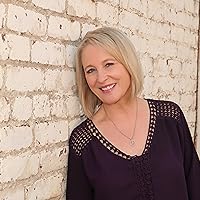
Cynthia Rylant is an American author, poet, and librarian whose deeply felt books for children and young adults have made her one of the most beloved voices in contemporary literature. Writing across picture books, novels, short stories, nonfiction, and poetry, she has published more than one hundred works, many of them rooted in memory, family, solitude, and the emotional landscapes of ordinary life. Her fiction often draws from her upbringing in West Virginia and reflects the textures of Appalachian life with unusual tenderness and clarity.
Raised in modest circumstances, Rylant spent much of her childhood with her grandparents in a rural setting that later became central to her imagination as a writer. Those early years, marked by hardship as well as warmth, shaped the emotional honesty and quiet resilience that define her work. She later studied English and library science, and after working as a waitress, librarian, and teacher, she began publishing books inspired by the world she had known so intimately.
Among her most acclaimed works are Missing May, which received the Newbery Medal, and A Fine White Dust, a Newbery Honor Book. She also earned Caldecott Honors for When I Was Young in the Mountains and The Relatives Came. For younger readers, she became especially well known through the enduring Henry and Mudge series, as well as other popular books and series that combine gentleness, humor, and emotional depth.
Rylant's writing is distinguished by its compassion for lonely, searching, or overlooked characters, and by its reverence for animals, nature, and small human connections. Whether writing about grief, wonder, childhood, or belonging, she brings a lyrical simplicity that resonates across generations. Her books continue to offer comfort, recognition, and beauty to readers of all ages. She remains a singular literary presence in children's literature and beyond today.
A story about the 12 names that the Native Americans gave to the moon - a different name for each month. This was a lovely book with beautiful illustrations. I wish I had it when I was teaching. It would tie perfectly into Native Studies!
Pretty book, but I wish they specified from which American indigenous culture the names of the moon come, rather than acting like all Native Americans had a singular culture.
Long Night Moon Cynthia Ryland and illustrated by Mark Siegel is a picture book story about the different names of the moon. Each month the Native Americans named the full moon and each name was like a story about what that season was going to bring. A beautifully illustrated book that is written in poetry. It needs to be read slowly so that the reader can fully grasp the meaning of each of the 12 moons names. This would be a good book to read to any age level and can be used in many different contexts i.e. Moon Phases, seasons, months, Indians of North America, poetry, illustrations.
A celebration of the moon through the months of the year. Rylant's words and Siegel's images are a wonderful symbiotic relationship that celebrates Native American culture. Would work well in a unit on Oral Tradition.
First off, this is a gorgeous book. The art is evocative and dark and lovely. The prose is poetic. If this were just a creative book about the moon, my review would be stellar. However, it purports to be about what Native Americans called the full moons. There is no specificity about tribes, as if all indigenous people have the same beliefs. It is also inaccurate. Some native tribes have names for the different moons. They are not these names. They do not coincide with the January-December calendar. I’m not sure why Rylant felt the need to try to relate this, erroneously, to Native Americans.
Long Night Moon is a beautifully illustrated book on the moon throughout the year. The moon has a name for every month in this story, and these names correspond with th different seasons. This children's book has the ability to be used in a classroom on multiple levels and for multiple age groups. You could utilize this story to inspire deep conversations, as well as have older students analyze why the author chose the words she did, when she did. Honestly, this story did not disappoint, and I would be happy to read it again in the future.
A set of poems about and for the moon. Or in the reverse, this is a book about the moon introducing itself from ancient time to the modern readers. This is the first time a mother showing her new-born baby the moon night. It is quiet, but far from silent. For every creature hiding in the bushes listening to the song of the moon.
The illustrations in long night moon did a fantastic job of conveying the Hazy yet stunning view of the night. Learning that each months full moon was named by Native Americans was a new and interesting piece of information that I was unaware of. Highlighting the name of the moon each month was an interesting way to emphasize the importance on how the name impacted the story.
Cynthia Rylant sets a dreamy quiet night scene on each page and the illustrations contribute to the peace found in this picture book. I started to call it a children's book, but really these wonderful works of art are for everyone.
I really liked the cultural part of this book. Great for learning about Native American culture, the moon, and the months of the year. I also enjoyed the illustrations. Great addition to the classroom nonfiction library.
Native American culture is not a monolith; the many tribes do not all share the same customs and language. So which tribe(s)' tradition is this book relating? Which language's names for the moon are translated in this book? We don't know. There's no information provided, just "Native Americans."
Nice introduction to the moon months of some Native American cultures. Easy words that might be hard for beginning readers due to cursive font. Good moon pictures.
Another book of of beautiful language by Cynthia Rylant. She takes the names, given to the monthly moon, by the Native Americans and describes each in flowing tender language.
At first glance, this book seemed like a simple storybook about a moonlit eve with pictures drawn or painted in some sort of black and white media. However, as I paid closer attention, I realized that this seemingly simple text actually consisted of finely chosen words developed into loving poetry as odes to each full moon of the year. The words on the page flow like moonlight through the pages as the month and Native American name for that moon are mentioned. So, too, do the pictures flow, each two-page spread containing not only illuminated text in a gentle cursive-type font, but illustrations of the shadowed evening scenes done in soft charcoal, pencil, and pastels. The illustrator noted on the copyright page toward the back of the book that he chose charcoal for its ability to capture “that velvety mysterious light that softens everything, bathing nature in a dreamy luminosity.” The illustrations and text work together, effortlessly revealing what that place on earth must look like under the glow of that month’s full moon.
This book would be wonderful to use to encourage students to use carefully chosen descriptive words in their writing. For example, instead of the author saying that the weather is stormy in July, she says the following: (Please imagine that the periods are not there. This system will not let me set up the indentations and spaces between the words as I would have liked to.)
...............In July ..........the Thunder Moon trembles, .................shudders, .....................and disappears ..........in a thick......black......sky.
..........It listens to the ..........clouds ..........beat their drums.
Thus not only the idea of a stormy evening is communicated, but the emotions of the author’s experience, as well. This would be a way, also, to show how emotion is conveyed through the spacing and physical set-up of words and phrases in poetry. The effect is different than if the author had chosen to write all of this as two sentences in a typical linear fashion:
“In July the Thunder Moon trembles, shudders, and disappears in a thick black sky. It listens to the clouds beat their drums.”
Looking at all of these elements together, I now can fully appreciate this story as not just text, but as poetry singing of the glorious wonders beheld in the glow of the moon. I highly recommend reading this book again and again.
Long Night Moon by Cynthia Rylant was recommended to me by the children’s librarian at the library where I work. I was immediately drawn to the cover and as I flipped through it to see if I might like it, I was drawn to the artwork inside as well. So I checked it out, and I’m so glad I did. I was mesmerized for a straight 10 minutes by this book. Long Night Moon is a magical story, quite similar to the oral storytelling tradition of the past. Its prose was poetic at times, just beautiful. The synopsis on the book says: Have you ever stopped to consider what might be revealed in one spot over one year by twelve unique and exquisite full moons? Each spread of the book discusses the twelve moons of the year, January – December. I wish I could include pictures, because some of my favorites were April, July, and November. The book seems pretty simple at first, but once you read several moons into the story, you realize that each page is written in adoration of each full moon of the year. It’s enchanting. The words flow like moonlight through the trees: gentle, soft, sweet. The words themselves have been carefully chosen, just as their placement on the page has been. If you look at the November page again, you’ll see that the last three words (“might just sleep”) have been place so that you emulate a pause, a sleepiness to the words as you read. I thought this was wonderful. I love how lovingly this book was planned. The illustrations are just beautiful as well. The illustrator explains that he chose to use charcoal because it can capture “that velvety mysterious light that softens everything, bathing nature in a dreamy luminosity.” That is exactly what came across in the illustrations. They are just gorgeous. Absolutely soft and smooth. Rylant’s words are not only beautiful but they are emotive as well. The mixture of her words and the illustrations transport you to the month and you are able to feel as if you are actually there experiencing that moon. This book perfectly shows how words and their spacing on the page can convey emotions. This book comes across not only as a beautiful story, but as poetry, as song. I would definitely recommend reading this book, not only if you have children, but if you love beautiful stories and books.
Inspired by the Native American tradition of naming each month's full moon, Rylant (Newbery winner for Missing May) explores the year's lunar cycle, celebrating the beauty of every season along the way. The text is beautifully complimented by Siegel's charcoal illustrations. Although the book features a distinct rural setting, even urban natives will recognize the comfort that each season brings in its turn. With its unique take on the year's seasons, this book is recommended for purchase in public libraries. Moon can be appreciated as either an intimate bedtime story or a group read-aloud.
This was an interesting story to read to our girls. While this book would've made a lot of sense to me growing up as I did in New England, our girls have only lived in Okinawa and Hawaii, so the idea of different moons based on the season didn't really make a lot of sense to them.
But it gave me an opportunity to talk about the phases of the moon, how a new moon only comes around about once a month, and how it appears differently at various times of the year and signifies a new change of the weather and/or seasons. It was a good, quiet book to read aloud at bedtime.
To begin, Cynthia Rylant has a way with words, with descriptions, that no other living writer has. She is simple and heartfelt and her words always ring deep and true. When you add the incredible art to the book, you end up with an incredible treasure; a children's book for adults to treasure. At first you just love the book and think the illustrations are terrific. As the book continues, you realize what the artist has accomplished and you want nothing so much as to shake his hand and kiss his cheek. This book is wonderous. Magical. I'm in love.
The author presents 12 poems giving the Native American names of the moon: January the Stormy Moon; May the Flower Moon; November the Frosty Moon; December the Long Night Moon. This is a nice story told in poems with nice pictures, However, ALL of the Native Americans I know have 13 moons and the names presented were not of any particular tribe that I could discern (but I could have missed something presented outside of the story). I did not read this book in storytime, it was too lengthy for both Toddlers & Preschoolers.
"Long ago Native Americans gave names to the full moons they watched throuhout the year. Each month had a moon. And each moon had its name..." Begins this beautifully written picture book by Cynthia Rylant. Children and adults will learn all about the twelve unique full moons. My favorte moon is March, "In March a Sap Moon rises over melting ponds, sleepy bears, small green trees. It tells a promise and a hope." The illustrations are equally lovely!
Native Americans have names for each of the twelve moons that occur in a year. This is a beautiful text and illustration about each of those twelve moons. As one reads this one can fully connect with the name of the moon and what is going on in the natural world in that month. For example the "sap moon" occurs in March when the sap is rising in the trees. In December it is the "long night moon" when there is less daylight than darkness in a twenty-four hour interval.
I really wanted to love this book but the illustrations were so dark and objects were not discernible, so much so that my daughter just never wanted to finish the book. It would be good practice for the months of the year if your child is not bothered by the lack of real plot. As an adult I appreciated the introduction of what the moons are called in this culture but it just didn't translate for my daughter with the choices that were made here.