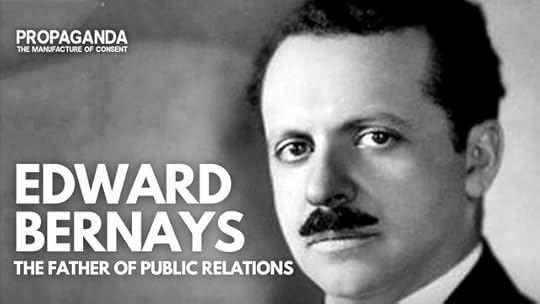
1923. Bernays, regarded by many as the father of public relations, has tried to set down in this book the broad principles that govern the new profession of public relations counsel. Part I-Scope and The Scope of the Public Relations Counsel; The Public Relations Counsel; the Increased and Increasing Importance of the Profession; and The Function of a Special Pleader. Part II-The Group and the What Constitutes Public Opinion?; Is Public Opinion Stubborn or Malleable; The Interaction of Public Opinion with the Forces that Help Make It; The Power of Interacting Forces that Go to Make Up Public Opinion; An Understanding of the Fundamentals of Public Motivation is Necessary to the Work of the Public Relations Counsel; The Group and Herd are the Basic Mechanisms of Public Change; and The Application of These Principles. Part III-Technique and The Public Can Be Reached Only Through Established Mediums of Communication; The Interlapping Group Formations of Society, the Continuous Shifting of Groups, Changing Conditions and the Flexibility of Human Nature are all Aids to the Counsel on Public Relations; and An Outline of Methods Practicable in Modifying the Point of View of a Group. Part IV-Ethical A Consideration of the Press and Other Mediums of Communication in Their Relation to the Public Relations Counsel; and His Obligations to the Public as a Special Pleader. See other titles by this author available from Kessinger Publishing.
Edward L. Bernays was an Austrian-American pioneer in the field of public relations and propaganda, referred to in his obituary as "the father of public relations".
I have read, in quick succession, both this book and Bernays’ Propaganda. Really, you can safely read one or the other – since reading both is probably over-kill, despite them both being rather short. Of the two, I would suggest you read this one, if mostly for the introduction by Stuart Ewen. In fact, something happens in the introduction to this book that does as much to help explain Bernays and his ideas as anything else in the book.
Ewen explains that he had assumed Bernays was dead – but then finds out that not only is he not dead, but he is alive and well and living within relatively easy access. Admittedly, Bernays was nearly 100 at the time, so Ewen assuming he was dead wasn’t entirely unreasonable. But the fact of him being alive was not the thing I found particularly interesting in the introduction. While Ewen and Bernays were chatting about how public relations works, Ewen tried to turn the conversation to something practical, you know, a kind of worked example. Ewen had given Bernays a copy of a book he had written on PR, and so Bernays talks to him about how a public relations person might go about encouraging more readers to pick up such a book. Bernays outlines a scheme to get the American Consumer League to invite Ewen to discuss the merits of his book, since it so closely reflects the interests of the ACLs members. Bernays makes it clear that in his role as a public relations person much of this would be done quietly and without fanfare. Basically, faceless men chatting with powerful people behind the scenes making sure a good idea was put in the way of these powerful people who would be made aware of the benefit of that good idea both to themselves and therefore balls would start rolling. This would be all done by people with power, but without glory.
Ewen is flattered by watching this example play out – but then, a couple of weeks later, the theoretical example starts literally coming to life. Ewen is contacted by the president of the Consumer Federation of America asking if he would like to be a keynote speaker … and so on. Although it seems improbable that Bernays was not involved in getting Ewen this invitation, there is, in fact, never any evidence that he did. Well, other than the sheer insane improbability that this series of events, completely matching Bernays’ hypothetical discussion, could really have happened as a coincidence.
There is a very strong, anti-democratic theme to Bernays’ theories. They run like this: we live in a very complicated world. In fact, it is so complicated we should, if we were honest with ourselves, hardly be certain about anything. How many of us really understand the complexities of free trade or of abortion or of the intricacies of virology? And yet, if you ask person on the street their opinion on any of these things topics they are not only likely to have an opinion, but they are likely to hold that opinion for grim death as if their lives literally depended upon it. In fact, the more seemingly divorced from their actual life a topic might be, the more apparently certain they will be of their opinions in relation to that topic.
And how does the person on the street settle on these opinions? Certainly not by following some logical process – Bernays makes it clear that ‘experts’ are much less certain than the person on the street. Mostly, the hoi polloi become so certain because they think in images and stereotypes, rather than in logic. They are much more likely to believe things on the basis of what they hear from thought-leaders they trust.
There is, of course, something to this. We certainly can’t all be experts on all things. Sometimes we do feel we need to have an opinion on things we barely understand – how many people on either side of the Creationism/Evolution debate could really provide a coherent explanation of modification via natural selection, for example? But if you can’t do that, on either side of the debate, what sort of opinion do you really have?
His distaste of democracy is based on this, and the fact that since the ideas of the mass of people are based on such tenuous foundations, it is relatively easy to shift these ideas, as long as the shift takes into consideration the ‘moral’ considerations that are likely to be at the base of these opinions held by the person on the street. That is, if you want to shift people’s ideas, you are probably wasting your time using ‘reason’ with them, rather you need to appeal to the concerns that such a person might find most compelling. These concerns are likely to differ for different people, that is, differ according to their place in society, to the role they play, to the kinds of groups and associations they belong to, and so on.
This book made me think of Bourdieu’s fields, capitals and his theory of habitus. That is, a person is likely to interpret the world according to the position they play in the game. Bernays could certainly be called a ‘relativist’ – but only in much the same way that Foucault can be called a relativist. In both cases, despite this being a kind of swear-word in certain circles, essentially all that is being argued is, at least what seems to me, the obvious fact that people understand the world according to how they experience it, and that few people experience the world in the same way. Bernays says that understanding how people understand the world is the best way to understand how you might shape their opinions and actions.
Bernays does not see the manipulation he proposes as part of his model of public relations as being negative. Rather, he believes democracy is a kind of evil that we are stuck with, that there is no going back to a form of society where the castes are clearly defined and people know their place. And so, since we need to ensure we are ruled by an aristocracy – in so far as these rulers are ‘the best’ among us – people then need to have their opinions and preferences shaped so as to ensure they meet the needs of these otherwise natural leaders.
The problem is that there is no certainty that people will follow the best leaders. There is also no certainty that the best leaders will know the best ways to encourage people to think in the right way. And so, this is the role of the public relations expert.
Bauman says somewhere that the point of marketing is not to advertise a product so much, as to encourage a series of questions to be increasingly asked in society to which the inevitable answer is the product. Again, this is an idea Bernays would agree with.
A few years ago, I read the most remarkable thing – it was that there are now more people working in public relations than there are journalists. I’ve never been able to find the article were I read that, but the author also said (again, something Bernays says here) that the skill set for a journalist is very much the same as that of a public relations expert. The article I read also pointed out that people working in public relations are paid much more than journalists, and probably graduated from the same course. The difference between the two occupations should be quite clear. The point of journalism, at least in theory, is a kind of dogged seeking after the truth. The point of public relations is to display something in the best of all possible lights. The death of journalism and the rise of public relations really ought to be something to deeply concerns us. That is what I say, at least, it that is not something Bernays would agree with.
One of Bernays’ greatest victories as a master in public relations was to make it acceptable for women to smoke in public. I’ve started reading his autobiography, so there may be another review of this man coming – that said, I have to say this was a fascinating book. I didn’t agree with a lot of it, and it made me feel uncomfortable while I read it, but it opened my eyes to problems with democracy that, if we are to defend it (and I certainly think we must) need to be considered. I certainly do not agree that democracy is something we should get around – but it is hard to argue with the notion that people can be manipulated into actively undermining their own best interests. Even if Bernays would argue that since most people don’t know their own best interests, it is best they are ‘crystalised’ towards the best.
Simply a fascinating read – not only educational but reflective of an America new to radio and the newspaper industry that was still evolving, this book was published in 1923 and the copyright was renewed in 1951. The book here is only different from the 1923 original in that Stuart Ewen provides an introduction that is a lengthy description of his professional endurance to speak with Mr. Bernays. He is able to do so in the early 1990’s before Mr. Bernays passes away at the age of 103 in 1995 8 months’ shy of his 104th birthday. Mr. Bernays we learn in the introduction by Mr. Ewen was the nephew to Sigmund Freud; his mother was the sister to the renowned psychologist and his father was the brother to Sigmund Freud’s wife. Thus, making him a double nephew to one household biologically speaking. This was merely an interesting side point to the greater topic of Public Relations Counsel (PRC). He has had his critics over the years – but this book in my opinion is simply critically well and very relevant today in the computer age.
Mr. Bernays touches upon public opinion in association with the newspaper industry of 1923; the radio was still relatively new at this point in time and he touches upon the PRC and the medium that has yet to have been tapped into for this consumer need. Unlike the websites that profess he assisted the acceptability of women smoking in the late 1920’s; he actually had women doing this during suffrage marches in the late second decade of the 20th century – most seem to report this point as an occurrence 10 years after the fact. Effectively Mr. Bernays breaks down the PRC need by societal needs. He reflects historically and accurately at how during the time of the American Revolution pamphlets were all that was needed to express an opinion locally – but matters change with the influx of immigration from all corners of Europe during the late 1800’s. Mr. Bernays spends a great deal of effort in reinforcing the fact that the press has an ethical obligation and so too the persons later to become PRC professionals. Today of course the PRC is simply known as “PR”. After reading this educational book on the matter it is apparent to the times that both the newspapers and PR types have left a lot of ethical decisions behind – that point too could be argued by some in that the evolution of PR and newspapers to radio to television to computer to cell phone apps has simply placed the news at the need of the PR and vice versa – after all it is society as a whole that has also forced this matter of “news feeds” and “public opinion” to be told (at least in part) what they want to hear.
One must be willing however to take a deeper dive as well. One person’s “advertisement” is another person’s “propaganda”. Mr. Bernays stated “The conscious and intelligent manipulation of the organized habits and opinions of the masses is an important element in democratic society. Those who manipulate this unseen mechanism of society constitute an invisible government which is the true ruling power of our country. We are governed, our minds are molded, our tastes formed, and our ideas suggested, largely by men we have never heard of…. It is they who pull the wires that control the public mind.” The question I am left with is whether there is a moral compass here – the goal seems to be making money and nothing more; regardless of whether the item is “good” or “bad”. In the late 1920’s as he was continuing the smoking acceptability for women he forced his own wife to quit smoking – this before 1930. In this manner observation can lend credence to the point that “money” was the goal. Maybe I am off base but this is what it “feels like” to me. Making things “necessary” for public consumption by mere association. Ivory Soap sculpting became popular by this point in time as well in order to get children to bathe regularly. But Public Relations Counsel or Public Relations never became an institution to which persons had to become certified as say a Doctor, Lawyer, or Police Officer for that matter. Hence, any person could and still can become a PR Person with no credentials other than the ability to show they helped someone or some other company “make money”.
Early on the evolution of this process became a part of the political machine. The political machines of many countries and leaders – the unfortunate thing is the link between Nazism and Bernays’ processes – Bernays would write in the 1960’s how disgusted he became as a result of discovering this point later. Either way there are two sides to this coin of “public opinion”. Increasingly I for one am sick of public opinion polls – in one sense they are necessary to gain a “gauge” on the issues and products of the day – on the other hand it feels as though these processes by many who are merely talking heads, beat the public opinion polls to death and many more are unable to “explain” what they mean. This is where in “my opinion” important to me only that PR people and “public opinion polls” are irrelevant. The “herd” however seems to follow the person in front of them, taking one step in front of the other – the true counter culture today are independent thinkers and doers in “my opinion”.
This book is an important read for every independent thinker; it is good to consider how the masses are swayed; this book is as relevant today as it was in 1923 – the evolution of technology may have changed but the basic mechanisms remain. This is why I give this book 5 stars.
"A new phrase has come into the language—counsel on public relations. What does it mean?"
Crystallizing Public Opinion contained some interesting info, but I didn't enjoy the book as much as his more notable book: Propaganda
Author Edward Louis Bernays was an American pioneer in the field of public relations and propaganda, and referred to in his obituary as "the father of public relations". His best-known campaigns include a 1929 effort to promote female smoking by branding cigarettes as feminist "Torches of Freedom", and his work for the United Fruit Company in the 1950s, connected with the CIA-orchestrated overthrow of the democratically elected Guatemalan government in 1954.
Edward L. Bernays:
Unfortunately, I did not find the writing here as engaging and lively as it was in Propaganda. The tone of this book is more like an academic paper, or other factual diatribe. This one is missing all the flow and panache of Propaganda.
Although it is a shorter book, the audio version I have had a boggling 52-minute introduction. Way too long...
The average member of organized society thinks that they are the authors of their own opinions and beliefs. Unfortunately, this is (mostly) not the case. People are a deeply tribal animal, with an inborn tendency to follow the herd. Early influencers realized this, and the field of "public relations" was born. With a successful public relations campaign, societal norms and taboos can be shaped, created, or destroyed.
Mankind's inborn pro-social wiring is both his greatest trait, as well as his Achilles heel. If society is aimed towards noble goals and endeavours, then it can accomplish incredible feats. However, if the established groupthink of the crowd becomes disordered, the herd can go off in a bad direction, often right off the cliff. History is replete with many examples of this maladaptive behaviour.
So, influencing the direction of the herd has become a top priority for those in positions of power; the upper echelons of the economic, political, and academic classes - to name but a few. This is how propaganda spreads. For it to be effective, it is disseminated in a top-down fashion. In a clever "hack" of our evolutionary biology, people look up to those seen to have high social status. People in this position are able to shape the thoughts and behaviours of their followers.
Add to this the fact that people typically do not examine an issue objectively and look at its pluses and minuses to determine what is "true." People are cognitive misers, and reluctant to expend any more mental energy on thinking than is absolutely necessary. To navigate the complex world, evolution has created a "shortcut" of sorts to help people assess complicated issues. Typically, they look to the group they most identify with, and adopt the same beliefs and opinions as that group. In evolutionary psychology, this is called "social proof."
Personally speaking, I've always found it fascinating (from a scientific standpoint), and terrifying (from a realistic standpoint) - that most people get their entire worldview via osmosis from the crowd. People are the strangest creature, which is why I enjoy reading about social psychology so much.
******************
Crystallizing Public Opinion fields some incredibly interesting and rich subject matter. Sadly, something here about the writing style just did not land with me. 2.5 stars.
Good, solid book. Funny, how most of what we think are our opinions is actually based on someone's else view, be it a book, article, movie....or "news".
Biggest idea: don't pass on news, make news. i.e. create events that get covered - do things! Do things out of the normal routine to get coverage. Do things that will be covered in a way that reflects your goals.
A few nugget from the book that could have been pulled from 2016 election coverage:
"axiomatic that men who know little are often intolerant of a point of view that is contrary to their own."
"the printing press a wonderfully effective means for perpetuating crowd-movements and keeping great masses of people constantly under the sway of certain crowd-ideas."
“Nothing so easily catches general attention and grips a crowd as a contest of any kind,”
"Republican platform contains a declaration of principle, no matter how vague, which awakens profound emotional response in us, or because our neighbor whom we do not like happens to be a Democrat."
"Man is never so much at home as when on the band wagon."
"When real news is scarce, semi-news returns to the front page."
"opposition is generally characterized by a high degree of disunity."
"opposition is generally characterized by a high degree of disunity."
"interlapping group formation of society;...the continuous shifting of groups"
"A debate will draw a larger crowd than a lecture."
"difference between “propaganda” and “education,” really, is in the point of view."
"truth is rather more relative in Washington than anywhere else."
Doesn't build any new ideas out from Walter Lippmann's similarly-titled book. Instead, the book itself acts as a kind of PR campaign for the existence of the PR industry.
There is little doubt that Bernays and much of what he stands for is pretty appalling, a man so privileged and deluded that he never had to learn to drive as his wealthy family had 17 chauffeurs to call upon to drive them anywhere they wanted to go. At one point in the introduction, we get a telling insight into the mindset of the man with the story of Dumb Jack, which does not reflect well on Bernays at all, but I have to say the introduction is at least as enjoyable if not more so than the main body of the book, so well done Stuart Ewen.
The story of Lithuania was one of the more memorable ones, the country, which was wanted by both Poland and Russia but was largely ignored and unknown by most of the rest of the world, until a PR expert was hired this led to a greater exposure throughout the world, and played a crucial role, so we are told anyway, in leading to its independence.
There are some interesting stories/cases in here, though Bernays may have been a master manipulator when it came to PR but when it comes to writing he is mediocre at best, and 100 years on, some blatant typos remain in this text, which seems a bit amateurish, but nevertheless this is a worthwhile read, from a dark and delusional mind.
As the founder of public relations counsel, Edward Bernays speaks of the increasing significance of the public relations counsel both as a profession and a new field of interest. His visionary ideas foresaw the role public relations would play in a democratic society at that time and in the future. I found particularly compelling his views on the "herd instinct" explaining how mass perception works, how marginal their sense of reality is, and how the public mind needs to be managed by an educated elite. However, he underlines the ethical necessities that would prevent the public from being taken advantage of. Walter Lipmann's views are also highly visible through the writing. His ideas on "creating consent among the governed" stand out. Also, of equal significance I would rate Bernays' undertaking on stereotypes, susceptibility to suggestion, preconceptions characteristic to the public mind. Without doubt, Bernays' principles can be successfully applied to the present day reality (with obvious implicit considerations to technological advancements that transformed the scene of advertising marketing even more). Credit should be given to Stuart Ewen for writing such a good fitting introduction to the book: critical, historical, and at the same time personal.
Favorite quote: "It is axiomatic that men who know little are often intolerant of a point of view that is contrary to their own (...)"
The long introduction, added after the first addition, discusses the history of public relations. The rest of the book, published in 1923, is about the need for public relations, some of its techniques, and its ethics.
This book was hard to rate for me because it was both fascinating and surprising, but also kind of boring. I think it's because there was quite a bit of repetition. Edward Bernays is known as "the father of public relations" so this book, written in 1923, was really one of the earliest descriptions of the relatively new job of "public relations counsel." We are way more exposed to PR in today's world than they were in 1923 so that's probably why I found some of the material repetitive and boring.
When I first heard about this book I thought it was going to be more about the dark side of PR, such as using propaganda and sneaky tactics to brainwash people into thinking what you want them to. Bernays does have a book called "Propaganda" which I haven't read, but this book wasn't at all what I initially thought it would be. Bernays' main point, at least it seemed to me, was the idea that the PR professional needs to "create news" to get people talking about whatever it is his client wants to sell or promote. He describes two theories about how people think. One is that people are stubborn and can't have their minds changed. The other theory is that people are malleable and can be made to think whatever you want them to. He says that the truth lies between the two theories and that the PR professional's main value to his client is to figure out how to make the message appealing to all types of people.
Bernays' uncle was Sigmund Freud so he mixes in quite a bit about human psychology, especially about our tendency to form "herds" and "bandwagons." He says that most people's opinions are formed by looking to a leader that they trust such as a politician, a religious leader, a professor, etc. People don't have time or the drive to research every single opinion so it's easier to find someone they trust and then fall in line with their leader's opinions. From the book and also the long introduction at the beginning it sounds like Bernays was very high and mighty as he essentially sorts people into the smart people and the stupid people. It's the smart people, of which there are very few, who have the responsibility of keeping things running and molding peoples' minds to go along with the program. Here is a quote from the introduction about Bernays:
"He expressed little respect for the average person's ability to think out, understand, or act upon the world in which they live...Bernays then sketched a picture of the public relations expert as a member of the 'intellegent few' who advises clients on how to 'deal with the masses...just by applying psychology.'"
Here are some other parts of the book that I found interesting/funny:
"The job of a public relations counsel is to instruct a client on how to take actions that 'just interrupt the continuity of life in some way to bring about the media response.'"
"A good public relations man advises his client to carry out an overt act interrupting the continuity of life in some way to bring about a response."
"The exercise of discretion cannot be left to the reporter. It is safer to hire a press agent who stands between the group and the newspapers."
"The mental equipment of the average individual consists of a mass of judgements on most of the subjects which touch his daily physical or mental life. These judgments are the tools of his daily being and yet they are his judgments, not on a basis of research and logical deduction, but for the most part dogmatic expressions accepted on the authority of his parents, his teachers, his church, and of his social, his economic, and other leaders."
"The bulk of such opinions must necessarily be without rational basis, since many of them are concerned with problems admitted by the expert to be still unsolved, while as to the rest it is clear that the training and experience of no average man can qualify him to have any opinion upon them at all. The rational method adequately used would have told him that on the great majority of these questions there could be for him but one attitude - that of suspended judgement. The reader will recall from his own experience an almost infinite number of instances in which the amateur has been fully prepared to deliver expert advice and to give final judgment in matters upon which his ignorance is patent to every one except himself."
"It is seldom effective to call names or to attempt to discredit the beliefs themselves."
"Mayor Gaynor's comments shortly after his election in 1909 'led up to the conclusion that in our common sense generation nobody cares what the newspapers say.'"
"H.L. Mencken, writing in the same magazine for March, 1914, declares that 'one of the principal marks of an educated man, indeed, is the fact that he does not take his opinions from newspapers - not, at any rate, from the militant, crusading newspapers. On the contrary, his attitude toward them is almost always one of frank cynicism, with indifference as its mildest form and contempt as its commonest. He knows that they are constantly falling into false reasoning about the things within his personal knowledge, - that is, within the narrow circle of his special education, - and so he assumes that they make the same, or even worse, errors about other things, whether intellectual or moral. This assumption, it may be said, is quite justified by the facts.'"
"A middle ground exists between the hypothesis that the public is stubborn and the hypothesis that it is malleable...the truth of the matter, as I have pointed out, lies somewhere between these two extreme positions."
"...it is so tremendously difficult to affect or change stereotypes or to attempt to substitute one set of stereotypes for another."
"It is here, says Mr. Trotter, that we find 'the ineradicable impulse mankind has always displayed towards segregation into classes. Each one of us in his opinions and conduct, in matters of amusement, religion, and politics, is compelled to obtain the support of a class, of a herd within the herd."
"That the press is so frequently unable to achieve a result on which its combined members are unanimously set makes it evident that the press itself is working in a medium which it cannot entirely control."
"Which you prefer is a matter of taste, but not entirely a matter of the editor's taste. It is a matter of his judgment as to what will absorb the half hour's attention a certain set of readers will give to his newspaper."
"The development of the United States to its present size and diversification has intensified the difficulty of creating a common will on any subject because it has heightened the natural tendency of men to separate into crowds opposed to one another in point of view. This difficulty is further emphasized by the fact that often these crowds live in different traditional, moral and spiritual worlds."
"Domination today is not a product of armies or navies or wealth or policies. It is a domination based on the one hand upon accomplished unity, and on the other hand upon the fact that opposition is generally characterized by a high degree of disunity."
"More specifically, why is it that the two national parties, Republican and Democrat, have maintained themselves as the dominant force for so many years? Only the leadership of Theodore Roosevelt seemed for a time to supersede them; and events since then have shown that it was Roosevelt and not his party who succeeded. The Farmer-Labor Party, the Socialist Party despite years of campaigning have failed to become even strongly recognizable opponents to the established groups. The disunity of forces which seek to overthrow dominant groups is illustrated every day in every phase of our lives."
"Nothing so easily catches general attention and creates a crowd as a contest of any kind. The crowd unconsciously identifies its members with one or the other competitor. Success enables the winning crowd to 'crow' over the losers. Such an occasion becomes symbolic and is utilized by the ego to enhance its feelings of importance."
"The only difference between 'propaganda' and 'education,' really, is in the point of view. The advocacy of what we believe in is education. The advocacy of what we don't believe in is propaganda."
"'The relativity of truth,' says Mr. Elmer Davis, 'is the commonplace to any newspaper man, even to one who has never studied epistemology; and, if the phrase is permissible, truth is rather more relative in Washington than anywhere else.'"
"There is a different set of facts on every subject for each man."
"The duty of the higher strata of society - the cultivated, the learned, the expert, the intellectual - is therefore clear. They must inject moral and spiritual motives into public opinion. Public opinion must become public conscience."
In the beginning, I experienced a level of disapproval and disgust over how calmly the author advocated for and supported the work of a "public relations counsel," which was just a metal shorthand for propaganda for me. It was a bit unsettling and I found that other readers felt the same. However, by the end of the book, I've been won over on the necessity and importance of such a counsel/service in some respects. It's important to bring useful and public services to people that wouldn't know of them without a PRC, but a PRC is a tool that could be used by anyone for wrong. The PRC is a new profession which is as integral to our daily lives as the smartphone. It is present everywhere, and the ethical use of it is another question entirely.
I found the book had a lot of introspective value. The concepts in this book are what drive today's media which we're consuming all the time. Every social medium is colored by someone's agenda and it really is controlling our minds in ways we don't realize, and it's happening all the time. We hold strong opinions on things we barely understand, and the media takes advantage of these instincts. For me, this is the main reason everyone should read this book.
The author discuss the psychology and nature of public opinion, herd mentality, social psychology of crowds, and the relationship between institutions with the public and how they control each other. The book covers the fundamentals and is a lesson on PR by the father of public relations himself. I give the book a five stars on the fact alone that many things in this book I didn't think so deeply about before and it opened a glimpse into a new dimension. Edward pushes for everyone to recognize PRC as a real profession but I think it's just a clever person that can feed people news and influence the public to further his client's agenda. There is little technical skill involved. I found myself wishing that the author did an in-depth case study instead of only giving small examples throughout the book. The author talks in concepts for most of the book so I still find my grasp on the subject a bit weak. The concepts make sense but I want to see more of their application.
Apart from Edward L. Bernays is the introduction given by Stuart Ewen. It was interesting but I felt the tone and his discussion about Edward was almost entirely different from the content of the book itself. Perhaps it's because Stuart provides a larger view of how Edward really is than what he appears to be in this book. Afterall, Edward had many large corporations as his clients, some of which were not the most ethically or morally sound.
The book was a hard read. Perhaps it had harder vocabular, or the language was difficult, but every page took a long time to complete compared to the usual book's.
A foundational work in understanding how modern news and propaganda works as well as marketing and advertising, but feels more dated because of the lack of anticipation for the Internet - not that Bernays could have known. If anything the real value is in Stuart Ewen's introduction that does a fantastic job summarizing and presenting Bernays' work and value. The heartfelt appreciation for the work that was done decades ago is felt here as is Ewen's own sharp perception of how this book applies to us in contemporary settings.
Interesting points, but quite hard to read. Typical American writing with lots of lots of arguments. It is somehow hard to follow but then again, the book was written over a 100 years ago. The intro to the book is great.
A hundred years ago this book would have been 5/5, but nowadays almost everything inside is widely known hence my rating of 2.5. I’ve read it as a part of a research for a book I’m writing. If you are not into writing or PR yourself - you may want to invest your time elsewhere.
(The English review is placed beneath the Russian one)
Эта уже вторая книга этого автора, которую я читаю, и второй раз я задаю себе вопрос: почему его книги считаются золотой классикой PR? У книг Эдварда Бернейса есть одно неприятное свойство – они говорят о самоочевидном. Возможно в то время, когда большинство людей получало информацию из книг и газет, его книги были актуальны, особенно для специалистов по маркетингу, PR и рекламе, но сегодня в его книгах большой надобности нет. Всё то ценное, что можно найти в этой книге, читатель либо уже знает из классических университетских учебников по маркетингу либо может догадаться с помощью простого наблюдения (смекалки). Поэтому на кого сегодня ориентированы книги Эдварда Бернейса, сказать трудно. Лично я считаю, что его книги не обязательны ни для студентов, изучающие соответствующие учебные предметы ни даже обычной публики т.к. в его книгах они точно не найдут никакого секрета «манипулирования массами». Всё что пишет автор, очень самоочевидно.
Вторая проблема этой книги в том, что 80% всего текста, это примеры того как с помощью СМИ старались изменить общественное мнение. Читать про это довольно скучно, так как для сегодняшнего дня эти примеры не актуальны, а в качестве исторической справки, как менялось общественное мнение в те годы, приведённые примеры довольно частные и поэтому будут интересны лишь небольшой группе людей. Однако пара интересных моментов в книге всё же есть. Во-первых, это важность понимания той части общества, с которой работает специалист по PR. Чтобы внедрить какую-то идею нужно очень хорошо изучить те группы людей, чьё мнение специалист собирается изменить.
Прежде всего, специалист по связям с общественностью — исследователь, и поле его исследований — общественное сознание. Его учебники — реальные жизненные факты, газетные и журнальные статьи, рекламные объявления в СМИ, рекламные щиты вдоль дорог, железнодорожных путей и скоростных трасс, речи законодателей, выступления с высоких трибун, анекдоты, рассказываемые в курилках, сплетни с Уолл-стрит, болтовня в театральных антрактах и беседы с людьми, которые, подобно ему самому, в своем толковании происходящего должны прислушиваться к малейшим изменениям общественного настроения. <…> Научиться чутко воспринимать настроения в обществе довольно сложно. Кто угодно может более или менее точно поделиться с вами собственными соображениями по какому-либо конкретному поводу. Но мало кто обладает временем, интересом или соответствующей подготовкой, позволяющими развить в себе способность тонко чувствовать настроение других людей по этому же поводу. Любой опытный специалист располагает достаточной смекалкой и интуицией во всем, что касается его профессии. Юрист в состоянии предсказать, какой аргумент вызовет отклик у судей или присяжных. Торговец знает, к чему именно нужно привлечь интерес потенциальных покупателей. Политик умеет расставить правильные акценты в обращении к своей аудитории, однако способность оценить реакции больших групп людей в целом, весьма различных как географически, так и психологически, — это особое профессиональное умение, которое требуется развивать, постоянно занимаясь жесткой самокритикой и так же постоянно полагаясь на опыт, как это делают в своей работе врачи или хирурги.
Во-вторых, автор правильно замечает, что изменить давно укоренённые в обществе взгляды довольно сложно и зачастую имеет взаимозависимость или, вернее, взаимное влияние двух сил – общества, с одной стороны, и общественных институтов, СМИ и пр., с другой.
Влияние любой силы, которая пытается изменить общественное мнение, зависит от того, насколько успешно она перекликается с общепринятыми воззрениями. Общественность не сопротивляется ей и не спешит уступить: истина находится где-то посередине. В значительной степени пресса, школа, церковь, кино, реклама, радио и выступления перед аудиторией подчиняются требованиям общественности. Но в неменьшей степени сама общественность откликается на все эти средства воздействия.
В-третьих, в книге можно найти основные идеи клиентоориентированного маркетинга, что говорит нам о том, что уже в то время специалисты предлагали думать как клиенты – маркетинговая концепция, которую сегодня некоторые специалисты стараются изобразить как нечто новое. Как показывает эта книга, такие вещи практиковали ещё в начале XX века. Впрочем, многие сотрудники отдела маркетинга продолжают отказываться ставить себя в положение клиента и думать «как клиенты».
Допустим, перед специалистом по связям с общественностью стоит весьма специфическая задача: каким-либо образом изменить или повлиять на мнение общественности по поводу нового закона о тарифах. Любой закон о тарифах — это, в первую очередь, результат приложения постулатов теоретической экономики к конкретной ситуации в промышленности. Специалисту по связям с общественностью при анализе данной проблемы необходимо вообразить себя в различных ролях — представителей весьма многочисленной и разнородной аудитории, к которой он собирается обращаться. Он должен увидеть себя на месте производственника, розничного торговца, импортера, работодателя, рабочего, финансиста, политика.
Об этом ещё Траут с Райсом писали, говоря, что CEO крупных автомобильных гигантов следует отказаться от своих лимузинов и пересесть на собственное производство, чтобы понять, что думает клиент об их автомобилях. Как видим, совет был дан ещё раньше Райса и Траута, но, похоже, им до сих пор мало кто воспользовался.
В четвёртых, автор правильно указывает на то, что специалист по связям с общественность это человек, чья задача создавать новости. Многие об этом забывают, считая порой, что они занимаются скорее рекламой, а не созданием новостей.
Поэтому специалист по связям с общественностью — это творец новостей, вне зависимости от того, какое средство воздействия он выбирает, для того чтобы донести их до аудитории. Его обязанность состоит в том, чтобы создавать новости, независимо от того, какие идеи он собирается распространять и какова его целевая общественная группа. Именно с помощью новостей он способен «отпустить в мир» любые суждения и добиться нужной реакции, пробуждая те инстинкты, к которым обращается. <…> Специалисту по связям с общественностью нужно найти в теме, с которой он работает, нечто такое, что позволило бы превратить ее в потрясающую сенсацию, и в таком виде представить ее публике. Ему следует выделить отдельные идеи и развить их в события, чтобы они стали проще для понимания: так они, став новостями, быстрее привлекут внимание аудитории.
Как мне кажется, это всё довольно очевидно, но порой мне кажется, что сегодняшние специалисты по PR и маркетингу забыли те основы, что были заложены в те далёкие годы и поэтому современные PR акции чаще походят на рекламу.
This is the second book by this author that I have read, and for the second time, I ask myself: Why are his books considered golden classics of PR? Edward Bernays' books have one unpleasant feature—they state the obvious. Perhaps at a time when most people got their information from books and newspapers, his books were relevant, especially for marketing, PR, and advertising professionals, but today there is little need for his books. Everything valuable that can be found in this book is either already known to the reader from classic university textbooks on marketing or can be guessed through simple observation (common sense). Therefore, it is difficult to say who Edward Bernays' books are aimed at today. Personally, I believe that his books are not essential reading for students studying relevant subjects or even for the general public, as they will certainly not find any secrets of “manipulating the masses” in his books. Everything the author writes is very self-evident.
The second problem with this book is that 80% of the text consists of examples of how the media tried to change public opinion. Reading about this is rather boring, as these examples are not relevant today, and as historical references showing how public opinion changed in those years, the examples given are rather specific and will therefore only be of interest to a small group of people. However, there are a couple of interesting points in the book. First, it is important to understand the part of society with which a PR specialist works. In order to implement an idea, it is necessary to study very well the groups of people whose opinion the specialist intends to change.
First and foremost, a public relations specialist is a researcher, and the field of his research is public consciousness. His textbooks are real-life facts, newspaper and magazine articles, advertisements in the media, billboards along roads, railways, and highways, speeches by legislators, speeches from high tribunes, anecdotes told in smoking rooms, gossip from Wall Street, chatter during theater intermissions, and conversations with people who, like themselves, must listen to the slightest changes in public sentiment in order to interpret what is happening. <...> Learning to be sensitive to the mood of society is quite difficult. Anyone can more or less accurately share their own thoughts on a particular issue with you. But few people have the time, interest, or relevant training to develop the ability to subtly sense other people's moods on the same issue. Any experienced professional has sufficient wit and intuition in everything related to their profession. A lawyer can predict which argument will resonate with judges or jurors. A salesperson knows exactly what to focus on to attract the interest of potential buyers. Politicians know how to strike the right note when addressing their audience, but the ability to assess the reactions of large groups of people who are very different both geographically and psychologically is a special professional skill that needs to be developed through constant self-criticism and reliance on experience, just as doctors and surgeons do in their work.
Secondly, the author correctly notes that it is quite difficult to change long-established views in society and that this often involves the interdependence or, rather, mutual influence of two forces: society on the one hand, and public institutions, the media, etc., on the other.
The influence of any force that attempts to change public opinion depends on how successfully it resonates with commonly held views. The public does not resist it or rush to concede: the truth lies somewhere in between. To a large extent, the press, schools, churches, cinema, advertising, radio, and public speaking are subject to the demands of the public. But to no lesser extent, the public itself responds to all these means of influence.
Thirdly, the book outlines the basic ideas of customer-oriented marketing, which tells us that even back then, experts were suggesting that we should think like customers – a marketing concept that some experts today try to portray as something new. As this book shows, such practices were already in use at the beginning of the 20th century. However, many marketing department employees continue to refuse to put themselves in the customer's shoes and think “like customers.”
Let's say a public relations specialist is faced with a very specific task: to somehow change or influence public opinion about a new tariff law. Any tariff law is, first and foremost, the result of applying theoretical economic principles to a specific situation in industry. When analyzing this problem, the public relations specialist must imagine himself in various roles — a representative of a very large and diverse audience to whom he intends to address. He must see himself in the shoes of a manufacturer, retailer, importer, employer, worker, financier, and politician.
Jack Trout and Al Ries wrote about this, saying that CEOs of large automotive giants should give up their limousines and switch to their own production in order to understand what customers think about their cars. As we can see, this advice was given even before Trout and Ries, but it seems that few people have taken advantage of it so far.
Fourth, the author correctly points out that a public relations specialist is someone whose job is to create news. Many people forget this, sometimes thinking that they are more involved in advertising than in creating news.
Therefore, a public relations specialist is a creator of news, regardless of the means of influence they choose to convey it to the audience. Their responsibility is to create news, regardless of the ideas they intend to disseminate and their target audience. It is through the news that they are able to “release” any judgments into the world and achieve the desired reaction, awakening the instincts they appeal to. <...> A public relations specialist needs to find something in the topic they are working on that would allow them to turn it into a sensational story and present it to the public in this form. They should highlight individual ideas and develop them into events so that they become easier to understand: this way, when they become news, they will attract the audience's attention more quickly.
It seems to me that this is all quite obvious, but sometimes I feel that today's PR and marketing specialists have forgotten the fundamentals that were laid down in those distant years, and that is why modern PR campaigns often resemble advertising.
3.5 stars, actually. First, the rather flowery and annoying phrase "public relations council" is evidently implemented to avoid the term "propagandist," which may be inserted wherever it occurs.
Two quotes:
"[Public opinions of truth] are accepted and intolerantly maintained once they have been determined. In the struggle among ideas, the only test is the one which Justice Holmes of the Supreme Court pointed out—the power of thought to get itself accepted in the open competition of the market."
That was the old way and the only humane way. The American way. The honorable culture in which Bernays found himself, undergirded by Christian assumptions. Not so much now. Most now agree that force is the "better way" and truth is determined by a cadre of experts before which "inferiors" must remain forever silent.
'“The future of public opinion,” says Professor Tonnies, “is the future of civilization. It is certain that the power of public opinion is constantly increasing and will keep on increasing. It is equally certain that it is more and more being influenced, changed, stirred by impulses from below. The danger which this development contains for a progressive ennobling of human society and a progressive heightening of human culture is apparent. The duty of the higher strata of society—the cultivated, the learned, the expert, the intellectual—is therefore clear. They must inject moral and spiritual motives into public opinion.'
This statement can be read in two ways. One, that arbitrary state commands must become the adopted moral and spiritual faith of the people -- the way many now read it, in fact.
Or two, that the only legitimate basis for state authority is God's objective standard of truth and virtue -- the way I read it.
This is a fairly horrifying manifesto, penned by the "father of public relations" who in the early- to mid-20th century took the theories of (his uncle) Sigmund Freud and married them to both rhetoric and the logic of capitalism to invent a whole new occupation. Bernays gives an overview of the mentality of the "herd," talking about the emotions and primal drives for which the herd has an affinity. It's a bit like reading Aristotle's Rhetoric because the emphasis is on taxonomy. Lists of emotions, drives, facets of this thing called the subconscious. Bernays uses this taxonomy to instruct the new "p.r. counsel" on how to succeed. Tremendously interesting. Bernays is often put on lists of the most influential people of the 20th century. Without him, no advertisements that associate products with abstractions, no media events, no celebrity endorsements, etc.
"Кристаллизация общественного мнения" Бернейса меня давно отпугивала своей научностью, а зря. Один из создателей индустрии и автор термина "консультант по связям с общественностью", племянник Фрейда Едвард Бернейс написал книгу в далеком 1923 году, но принципы и примеры, которые он приводит, актуальны и сейчас. Бернейс четко разграничивает роли и задачи "пресс-агента" и "специалиста по паблисити" по сравнению с консультантом по связям с общественностью, задачи которого - не описывать, а создавать новости, исходя из глубинного понимания стереотипов, мнений, ценностей и желаний разных группы общества. Скажу лишь, что в процессе чтения книги я несколько раз откладывал ее и брался за тетрадь, чтобы набросать идеи для клиентов.
It's almost like he's daring "the masses" to read his book. To Bernays, this is impossible because there are no individuals in "the masses."
I've long watched the wealthy wage class warfare on the poor. This book seems to be yet more proof of this. It also makes Noam Chomsky look terribly unoriginal.
A good starter book for understanding the work of the so-called "compliance professionals" (read: propagandists, marketers, pollsters, salespeople, political advocates, etc.). If you are already familiar with this ecosystem and possible channels, then this is not a book for you. The language was also a bit hard to swallow for a non-native English speaker, but overall I enjoyed the book.
The first half of the book is fire. The second half drags until it picks up again near the end. The takeaway for modern pros is that PR creates. As so much of the profession devolves into storytelling, everyone needs a reminder PR is a primary creative force. It's not the last link of a chain that's already been forged.
I have 5 stars because it was direct and to the point. The book is about directing public opinion in a positive way using the means available. Newspaper, radio, movies, theater but not TV having not been invented yet. It was written in 1923.
Extremely relevant even after almost one hundred years. This book and Lippman's "Public Opinion" are must-read's for anyone interested in sociology, political science, education, marketing, etc. Also see Bernays' 1928 book, "Propaganda" .
Useful observations, but could have been summarized in a few pages. Written a long time ago, not in the efficient, engaging style popular today, so pretty tough to slog through for the gold nuggets.