

What do you think?

The Memoir Trilogy #1
La Lengua Absuelta
Na Het Martyrium, het beste boek dat ik dit jaar heb gelezen, wilde ik dolgraag meer lezen van deze wonderbaarlijke schrijver. Het meest voor de hand liggend was zijn volgende meesterwerk Massa en Macht, maar ik voelde me nog niet klaar voor deze imponerende studie waar 20 jaar aan gewerkt is en waarmee de Nobelprijs voor de Literatuur grotendeels is verdiend. Ik kwam daardoor uit bij zijn hoog aangeschreven biografie, daar Elias Canetti geen andere romans meer heeft geschreven na zijn eerste. Dit is het eerste deel van die autobiografie: De Behouden Tong.
De enige biografie die ik ooit eerder las is van Carl Lewis, de atletiek legende, die mijn grote held was op de basisschool. Ik was toen 11 jaar, en dat betekent dat ik er nu dus niet helemaal zeker meer van was of dit genre wel iets voor mij zou zijn. Wat bleek: deze autobiografie is bijna magisch. En of dat nou ligt aan de schrijfstijl van Elias Canetti en de wijze waarop hij alleen de meest belangrijke momenten uit zijn leven tot leven brengt, of iets aan autobiografieën in het algemeen, ik kan het nu niet zeggen, maar mijn eigen persoonlijkheid bepalende herinneringen keerde achter elkaar terug in mijn gedachtes. Wat mooi vond ik dat. Het was net zoals bij het Martyrium, waar ik ook na het lezen nog vaak met de materie in mijn hoofd aan het wegdromen was in het verleden.
Dit eerste deel van de autobiografie vertelt over de eerste 16 levensjaren van de schrijver. Terwijl voor mij een verhuizing binnen mijn eigen dorp al een apocalyptische ramp geweest zou zijn geweest in mijn jeugd, doet hij zowel Bulgarije, Engeland, Oostenrijk als Zwitserland aan als opgroeiplekken. Omringt door vele culturen en talen ontwikkelt kleine Elias al snel een liefde voor woorden en zinnen. Hij wordt daarbij aangemoedigd door zijn vader die van jongs af aan veel boeken voor hem meeneemt en hem verder stimuleert door elke avond te vragen wat hij gelezen heeft. Na de plotselinge dood van zijn vader neemt zijn moeder deze rol van hem over en onder haar invloed groeit hij uit tot een belezen jongeman die werkelijk overal geïnteresseerd in is. In deze jaren neemt de relatie met zijn moeder een grote rol in zijn leven in, maar ook de invloed die familieleden, schoolkameraden, docenten, schrijvers en verhalen op hem hebben gehad komen uitgebreid aan bod. De meest fascinerende momenten waren voor mij echter de ervaringen met individuen of groepen die hun macht lieten gelden en daardoor als beginnende inspiratie dienden voor zijn eerder genoemde meesterwerken. Het zorgde ervoor dat ik meteen bij hoofdstuk 1 werd gegrepen.
De enige biografie die ik ooit eerder las is van Carl Lewis, de atletiek legende, die mijn grote held was op de basisschool. Ik was toen 11 jaar, en dat betekent dat ik er nu dus niet helemaal zeker meer van was of dit genre wel iets voor mij zou zijn. Wat bleek: deze autobiografie is bijna magisch. En of dat nou ligt aan de schrijfstijl van Elias Canetti en de wijze waarop hij alleen de meest belangrijke momenten uit zijn leven tot leven brengt, of iets aan autobiografieën in het algemeen, ik kan het nu niet zeggen, maar mijn eigen persoonlijkheid bepalende herinneringen keerde achter elkaar terug in mijn gedachtes. Wat mooi vond ik dat. Het was net zoals bij het Martyrium, waar ik ook na het lezen nog vaak met de materie in mijn hoofd aan het wegdromen was in het verleden.
Dit eerste deel van de autobiografie vertelt over de eerste 16 levensjaren van de schrijver. Terwijl voor mij een verhuizing binnen mijn eigen dorp al een apocalyptische ramp geweest zou zijn geweest in mijn jeugd, doet hij zowel Bulgarije, Engeland, Oostenrijk als Zwitserland aan als opgroeiplekken. Omringt door vele culturen en talen ontwikkelt kleine Elias al snel een liefde voor woorden en zinnen. Hij wordt daarbij aangemoedigd door zijn vader die van jongs af aan veel boeken voor hem meeneemt en hem verder stimuleert door elke avond te vragen wat hij gelezen heeft. Na de plotselinge dood van zijn vader neemt zijn moeder deze rol van hem over en onder haar invloed groeit hij uit tot een belezen jongeman die werkelijk overal geïnteresseerd in is. In deze jaren neemt de relatie met zijn moeder een grote rol in zijn leven in, maar ook de invloed die familieleden, schoolkameraden, docenten, schrijvers en verhalen op hem hebben gehad komen uitgebreid aan bod. De meest fascinerende momenten waren voor mij echter de ervaringen met individuen of groepen die hun macht lieten gelden en daardoor als beginnende inspiratie dienden voor zijn eerder genoemde meesterwerken. Het zorgde ervoor dat ik meteen bij hoofdstuk 1 werd gegrepen.
Paperback
First published January 1, 1977
About the author
Elias Canetti
127 books711 followersAwarded the 1981 Nobel Prize in Literature "for writings marked by a broad outlook, a wealth of ideas and artistic power."
He studied in Vienna. Before World War II he moved with his wife Veza to England and stayed there for long time. Since late 1960s he lived in London and Zurich. In late 1980s he started to live in Zurich permanently. He died in 1994 in Zurich.
Author of Auto-da-Fé, Party in the Blitz, Crowds and Power, and The Voices of Marrakesh: A Record of a Visit
He studied in Vienna. Before World War II he moved with his wife Veza to England and stayed there for long time. Since late 1960s he lived in London and Zurich. In late 1980s he started to live in Zurich permanently. He died in 1994 in Zurich.
Author of Auto-da-Fé, Party in the Blitz, Crowds and Power, and The Voices of Marrakesh: A Record of a Visit
Ratings & Reviews
Friends & Following
Create a free account to discover what your friends think of this book!
Community Reviews
Displaying 1 - 30 of 209 reviews

July 29, 2022
Primul volum din trilogia autobiografică a lui Canetti. Celelalte se numesc: Facla în ureche și Jocul privirilor. Le-am citit pe toate la vremea lor dintr-un motiv simplu. Elias Canetti (1905 - 1994) tocmai primise premiul Nobel, era la Zenit, și notorietatea lui bruscă m-a făcut curios. Am și tradus din cărțile lui.
Din păcate, literatura lui subțire (piesele de teatru n-au avut succes) se sprijină pe un singur roman important: Orbirea (1935). Canetti n-a mai apucat să scrie altul (e greu de spus din ce pricină) și s-a îndreptat cu toate forțele spre un eseu filosofic foarte ambițios, Masele și puterea (1960), care n-a convins pe nimeni. În opinia mea, asta arată o proastă cunoaștere de sine. Elias Canetti a refuzat să se privească cu maximă franchețe și nu a cîntărit niciodată corect relația dintre „ce pot” și „ce vreau”. Nu este un caz izolat, dar e probabil cel mai uimitor.
În al doilea rînd, omul Elias Canetti n-a fost un sfînt. Nu i-a cerut nimeni asta. Dar ar fi trebuit să respecte discreția. Invidiile și resentimentele se mărturisesc pe întuneric, în pivniță. Orice s-ar spune, pamfletul dedicat lui T.S. Eliot e un document lamentabil. A fost admirat și iubit de femei, nici el nu s-a lăsat mai prejos. Nimeni nu-i face vreo vină. Dar nu a fost un gentleman. Publicul nu iartă niciodată astfel de păcate. Corespondența lui cu pictorița Marie-Louise von Motesiczky a pus gaz pe foc. Arogant, încrezut, mitoman: portretul lui Canetti nu prezintă însușiri lăudabile.
Limba salvată acoperă primii 16 ani din viața scriitorului. S-a născut la Rusciuc, în Bulgaria, într-o familie foarte bogată de evrei sefarzi (id est proveniți din Spania). Doica a fost o tînără din România. Prima limbă pe care a învățat-o a fost spaniola sefardită (numită și Ladino). Părinții lui vorbeau între ei în germană. Cînd avea 6 ani, familia a emigrat în Manchester. Aici Elias învață engleza. În 1912, tatăl lui are un atac de apoplexie: moare la 31 de ani. Mama lui, Mathilde, o femeie cultivată, cu un temperament despotic, visase să trăiască la Viena. Părăsesc Anglia și fac o călătorie pe la rudele din Franța și Elveția. În Lausanne, Mathilde îl constrînge pe Elias să învețe germana. Folosește o metodă bizară. Nu-i dă cărți, nu-l lasă să se uite printr-un manual. Îi dictează în fiecare zi un număr de propoziții nemțești și traducerea în engleză. Copilul trebuie să le țină minte pe toate și să i le recite întocmai a doua zi. Cînd greșește, Mathilde exclamă necruțătoare: „Fiul meu e un idiot!” (p.72). Teroarea poate lua și această formă:
Cît durează Primul Război Mondial, învață în Zürich. Audiază profesori de tot felul, și mai buni, și mai răi. Îl impresionează erudiția profesorului de istorie Eugen Müller, care-i prezintă arta Renașterii, Michelangelo (pp.238-242):
În 1921, familia (mama și trei băieți) se mută în Viena.
Din păcate, literatura lui subțire (piesele de teatru n-au avut succes) se sprijină pe un singur roman important: Orbirea (1935). Canetti n-a mai apucat să scrie altul (e greu de spus din ce pricină) și s-a îndreptat cu toate forțele spre un eseu filosofic foarte ambițios, Masele și puterea (1960), care n-a convins pe nimeni. În opinia mea, asta arată o proastă cunoaștere de sine. Elias Canetti a refuzat să se privească cu maximă franchețe și nu a cîntărit niciodată corect relația dintre „ce pot” și „ce vreau”. Nu este un caz izolat, dar e probabil cel mai uimitor.
În al doilea rînd, omul Elias Canetti n-a fost un sfînt. Nu i-a cerut nimeni asta. Dar ar fi trebuit să respecte discreția. Invidiile și resentimentele se mărturisesc pe întuneric, în pivniță. Orice s-ar spune, pamfletul dedicat lui T.S. Eliot e un document lamentabil. A fost admirat și iubit de femei, nici el nu s-a lăsat mai prejos. Nimeni nu-i face vreo vină. Dar nu a fost un gentleman. Publicul nu iartă niciodată astfel de păcate. Corespondența lui cu pictorița Marie-Louise von Motesiczky a pus gaz pe foc. Arogant, încrezut, mitoman: portretul lui Canetti nu prezintă însușiri lăudabile.
Limba salvată acoperă primii 16 ani din viața scriitorului. S-a născut la Rusciuc, în Bulgaria, într-o familie foarte bogată de evrei sefarzi (id est proveniți din Spania). Doica a fost o tînără din România. Prima limbă pe care a învățat-o a fost spaniola sefardită (numită și Ladino). Părinții lui vorbeau între ei în germană. Cînd avea 6 ani, familia a emigrat în Manchester. Aici Elias învață engleza. În 1912, tatăl lui are un atac de apoplexie: moare la 31 de ani. Mama lui, Mathilde, o femeie cultivată, cu un temperament despotic, visase să trăiască la Viena. Părăsesc Anglia și fac o călătorie pe la rudele din Franța și Elveția. În Lausanne, Mathilde îl constrînge pe Elias să învețe germana. Folosește o metodă bizară. Nu-i dă cărți, nu-l lasă să se uite printr-un manual. Îi dictează în fiecare zi un număr de propoziții nemțești și traducerea în engleză. Copilul trebuie să le țină minte pe toate și să i le recite întocmai a doua zi. Cînd greșește, Mathilde exclamă necruțătoare: „Fiul meu e un idiot!” (p.72). Teroarea poate lua și această formă:
„Trăiam cu teama disprețului ei și-mi repetam peste zi propozițiile oriunde eram. În plimbările cu guvernanta, eram monosilabic și posomorît. Nu mai simțeam vîntul, nu mai eram atent la muzică, aveam permanent în minte propozițiile nemțești și sensul lor în engleză. Cînd puteam, mă furișam și le exersam cu voce tare... N-aveam nici o carte după care să mă controlez, mi s-a refuzat cu încăpățînare și fără milă... Dar ea era de părere că nimic nu se învață ușor; că, pentru limbi, cărțile nu-s bune; că trebuie să le înveți oral. N-a observat că de necaz mîncam puțin. Teroarea în care trăiam o considera pedagogică” (p.72).
Cît durează Primul Război Mondial, învață în Zürich. Audiază profesori de tot felul, și mai buni, și mai răi. Îl impresionează erudiția profesorului de istorie Eugen Müller, care-i prezintă arta Renașterii, Michelangelo (pp.238-242):
„Nimic n-a fost mai hotărîtor pentru mine ca tavanul Sixtinei. Am învățat de aici cît de creatoare poate deveni încăpățînarea, atunci cînd se asociază cu răbdarea. Opt ani a lucrat la
Judecata de apoi” (p.240).
În 1921, familia (mama și trei băieți) se mută în Viena.

November 3, 2017
Αυτός ο συγγραφέας έχει έναν πολύ ιδιαίτερο τρόπο να διηγείται τη ζωή του. Θα ήθελα να μάθαινα περισσότερα για τη μέθοδό του. Δεν είναι απλώς ξερές αναμνήσεις, αναπλάθει λογοτεχνικά - μυθιστορηματικά - όλες τις βιωμένες καταστάσεις, τις αναλύει συχνά και τις ερμηνεύει και μέσα από αυτές αυτοσυστήνεται και αυτοαποκαλύπτεται. Δεν αποκρύπτει τίποτα, αλλά είναι εμφανής η υποκειμενική του ματιά επάνω στα πράγματα. Όλα τα φιλτράρει μέσα από τον ίδιο.
Όσα διαβάζουμε και μαθαίνουμε καταλήγουν στο τέλος να είναι δικά του δημιουργήματα - όχι επινοήσεις - αλλά εκδοχές της πραγματικότητας όπως εκείνος τη βίωσε. Έτσι, καταλήγουν να γίνονται όλα τα πρόσωπα, τα πράγματα, οι καταστάσεις και τα γεγονότα κομμάτι του εαυτού του και ζωντανεύουν επειδή ο ίδιος τα διασώζει, ενώ συνάμα εκείνα επιδρούν επάνω του ποικιλοτρόπως, διαμορφώνουν τον χαρακτήρα του και την προσωπικότητά του, προαναγγέλλουν τις μελλοντικές του επιλογές, χτίζουν τα θεμέλια της ζωής του.
Ο πρώτος τόμος (1905 -1921) ξεκινάει από την παιδική του ηλικία σε μια Βουλγαρική πόλη, στις όχθες του Δούναβη και καταλήγει ως την Ελβετία, λίγο μετα το τέλος του πρώτου παγκοσμίου πολέμου, όπου ο συγγραφέας έχει φτάσει πλέον στην ηλικία των δεκαέξι ετών.
Είναι παράξενο το γεγονός ότι ενώ συνήθως πρώτα διαβάζω κάποιο έργο ενός συγγραφέα κι έπειτα αναζητώ περισσότερα στοιχεία για τη ζωή του, εδώ στην περίπωση του Canetti ισχύει ακριβώς το αντίθετο. Δεν έχω διαβάσει κανένα βιβλίο του. Δεν είμαι καν σε θέση να πω αν άξιζε να πάρει το Νόμπελ λογοτεχνίας στα 1981. Επειδή όμως ετούτη η αυτοβιογραφία είναι στην ουσία της ένα ιδιότυπο μυθιστόρημα - ένα παράξενο και εθιστικό λογοτεχνικό δημιούργημα που διασώζει στοιχεία από τη ζωή αυτού του ενδιαφέροντος και παράξενου ανθρώπου, δηλώνω γοητευμένη.
Το έργο με εντυπωσίασε ακριβώς επειδή είμαι ένας άνθρωπος όπου ξεχνώ με μεγάλη ευκολία. Πρέπει πάντα να σημειώνω κάτι για να μπορέσω στη συνέχεια να το συγκρατήσω και αγαπώ πάνω από όλα τις μηχανικές, επαναλαμβανόμενες εργασίες ακριβώς για τον ίδιο λόγο. Από το παρελθόν μου έχω εικόνες και αισθήσεις και αποσπάσματα, σπαράγματα μνήμης που αποφεύγω να τα αποκαταστήσω σε μία ενιαία αφήγηση, το κάνω σπάνια, με τεράστια δυσκολία.
Αυτή μου η αναπηρία με κάνει να θαυμάζω - να παθιάζομαι - με εκείνους τους δημιουργούς που εκμεταλλεύονται στο έπακρο τους μηχανισμούς της μνήμης, όπως ο Marcel Proust ή εν προκειμένω ο Elias Canetti. Η διαφορά ανάμεσα στους δύο συγγραφείς είναι πως ενώ ο πρώτος αναπαριστά με απόλυτη πιστότητα μια περασμένη εποχή προκειμένου να την διασώσει από την λήθη (και έτσι να σώσει και τον εαυτό του από την ανυπαρξία) και χτίζει έναν κόσμο από την αρχή συνθέτοντας τις ψηφίδες της πραγματικότητας σε μια ενιαία αφήγηση, ο Canetti μοιάζει να ακολουθεί την ακριβώς αντίθετη πορεία.
Παίρνει δηλαδή κάτι συμπαγές και ενιαίο και το σπάει σε πολλά μικρότερα κομμάτια, χωρίς ωστόσο να χάνει η αφήγησή του τίποτα από τη γραμμικότητά της, και μέσα από αυτήν την ανάλυση προκύπτουν αναρίθμητοι κρυμμένοι κόσμοι. Κι ο κάθε κόσμος, είναι ένα τμήμα, μια διαφορετική απόχρωση της ευρύτερης εικόνας που αποτελεί το πορτραίτο του ίδιου του καλλιτέχνη και όσων τον περιβάλλουν.
Από πλούσια οικογένεια Σεφαρδιτών εμπόρων, ο συγγραφέας βιώνει σε μικρή ηλικία τον θάνατο του πατέρα του και υποχρεώνεται να μεγαλώσει κοντά στην πιο ιδιόρρυθμη γυναικεία φιγούρα που έχω δει να αποτυπώνεται ποτέ σε λογοτεχνικό έργο. Την μητέρα του. Ο ίδιος προσπαθεί να εξηγήσει πολλά πράγματα με ερμηνείες που ορισμένως μοιάζουν βγαλμένες από εγχειρίδιο αναλυτικής ψυχολογίας.
Οι ρόλοι ανάμεσα στη Μητέρα και στο Παιδί εναλλάσσονται τόσο συχνά αναμεσα σε αυτές τις δύο, συχνά υστερικές, προσωπικότητες που τελικά μέσα στην τόση ασυνέπεια καταλήγει να δημιουργείται ένα σαφές και διακριτό μοτίβο. Προφανώς, κάποια στιγμή, μητέρα και γιος ξεκίνησαν να διαφωνούν για ένα θέμα, και η διαφωνία τους αυτή, συνεχίστηκε ως το τέλος της ζωής τους. Επειδή όμως παράλληλα υπάρχει μια αρρωστημένη αγάπη ανάμεσα σε αυτούς τους δύο, μια έλξη σχεδόν ερωτική, καταλήγουν να ταυτίζονται συνάμα, σε βαθμό που δεν επιτρέπουν σε τίποτα και σε κανέναν να μπει ανάμεσά τους.
Ο ίδιος ο συγγραφέας είναι ένα παιδί με τεράστιες ευαισθησίες, μεγάλη περιέργεια για τον κόσμο γύρω του, παρατηρητικός και φιλομαθής σε σημείο μανίας. Είναι αυτονόητα βιβλιοφάγος και αναπτύσσει μια ώριμη σκέψη, γεμάτη δημιουργική φαντασία. Είναι πεισματάρης, εγωιστής αλλά δεν είναι κακομαθημένος, είναι τίμιος και φιλότιμος. Οι γονείς του είχαν δύο μεγάλα πάθη που προφανώς του μετέδωσαν. Την Τέχνη (και δη το θέατρο) και τη Βιέννη. Για τη Βιέννη βέβαια διατηρώ τις επιφυλάξεις μου καθώς στο τέλος του πρώτου τόμου δείχνει ως έφηβος να είναι ερωτευμένος με τη Ζυρίχη και μάλιστα αναφέρει πως που εκεί έζησε "τα μοναδικά απόλυτα ευτυχισμένα χρόνια".
Υποσημείωση: Εκείνη ακριβώς την εποχή, έζησε μακριά από την ιδιόρρυθμη, αλλοπρόσαλλη και δεσποτική (όπως την παρουσιάζει τουλάχιστον) μητέρα του, μόνος και ελεύθερος, σε έναν κοιτώνα κοριτσιών, σε ένα Γυμνάσιο αρρένων, δίπλα σε μια γοητευτική λίμνη, σε έναν ονειρεμένο κήπο, όπου μπορούσε να διαβάζει, να γράφει και να ονειρεύεται. Αυτή ακριβώς η ευφορία (κατά τα λεγόμενά του) πυροδοτεί το μένος της μητέρας του, που αποφασίζει να τον πάρει από εκεί, για να ζήσουν στην χαοτική μεταπολεμική Γερμανία και εκεί ακριβώς τελειώνει ο πρώτος τόμος της αυτοβιογραφίας του.
Όσα διαβάζουμε και μαθαίνουμε καταλήγουν στο τέλος να είναι δικά του δημιουργήματα - όχι επινοήσεις - αλλά εκδοχές της πραγματικότητας όπως εκείνος τη βίωσε. Έτσι, καταλήγουν να γίνονται όλα τα πρόσωπα, τα πράγματα, οι καταστάσεις και τα γεγονότα κομμάτι του εαυτού του και ζωντανεύουν επειδή ο ίδιος τα διασώζει, ενώ συνάμα εκείνα επιδρούν επάνω του ποικιλοτρόπως, διαμορφώνουν τον χαρακτήρα του και την προσωπικότητά του, προαναγγέλλουν τις μελλοντικές του επιλογές, χτίζουν τα θεμέλια της ζωής του.
Ο πρώτος τόμος (1905 -1921) ξεκινάει από την παιδική του ηλικία σε μια Βουλγαρική πόλη, στις όχθες του Δούναβη και καταλήγει ως την Ελβετία, λίγο μετα το τέλος του πρώτου παγκοσμίου πολέμου, όπου ο συγγραφέας έχει φτάσει πλέον στην ηλικία των δεκαέξι ετών.
Είναι παράξενο το γεγονός ότι ενώ συνήθως πρώτα διαβάζω κάποιο έργο ενός συγγραφέα κι έπειτα αναζητώ περισσότερα στοιχεία για τη ζωή του, εδώ στην περίπωση του Canetti ισχύει ακριβώς το αντίθετο. Δεν έχω διαβάσει κανένα βιβλίο του. Δεν είμαι καν σε θέση να πω αν άξιζε να πάρει το Νόμπελ λογοτεχνίας στα 1981. Επειδή όμως ετούτη η αυτοβιογραφία είναι στην ουσία της ένα ιδιότυπο μυθιστόρημα - ένα παράξενο και εθιστικό λογοτεχνικό δημιούργημα που διασώζει στοιχεία από τη ζωή αυτού του ενδιαφέροντος και παράξενου ανθρώπου, δηλώνω γοητευμένη.
Το έργο με εντυπωσίασε ακριβώς επειδή είμαι ένας άνθρωπος όπου ξεχνώ με μεγάλη ευκολία. Πρέπει πάντα να σημειώνω κάτι για να μπορέσω στη συνέχεια να το συγκρατήσω και αγαπώ πάνω από όλα τις μηχανικές, επαναλαμβανόμενες εργασίες ακριβώς για τον ίδιο λόγο. Από το παρελθόν μου έχω εικόνες και αισθήσεις και αποσπάσματα, σπαράγματα μνήμης που αποφεύγω να τα αποκαταστήσω σε μία ενιαία αφήγηση, το κάνω σπάνια, με τεράστια δυσκολία.
Αυτή μου η αναπηρία με κάνει να θαυμάζω - να παθιάζομαι - με εκείνους τους δημιουργούς που εκμεταλλεύονται στο έπακρο τους μηχανισμούς της μνήμης, όπως ο Marcel Proust ή εν προκειμένω ο Elias Canetti. Η διαφορά ανάμεσα στους δύο συγγραφείς είναι πως ενώ ο πρώτος αναπαριστά με απόλυτη πιστότητα μια περασμένη εποχή προκειμένου να την διασώσει από την λήθη (και έτσι να σώσει και τον εαυτό του από την ανυπαρξία) και χτίζει έναν κόσμο από την αρχή συνθέτοντας τις ψηφίδες της πραγματικότητας σε μια ενιαία αφήγηση, ο Canetti μοιάζει να ακολουθεί την ακριβώς αντίθετη πορεία.
Παίρνει δηλαδή κάτι συμπαγές και ενιαίο και το σπάει σε πολλά μικρότερα κομμάτια, χωρίς ωστόσο να χάνει η αφήγησή του τίποτα από τη γραμμικότητά της, και μέσα από αυτήν την ανάλυση προκύπτουν αναρίθμητοι κρυμμένοι κόσμοι. Κι ο κάθε κόσμος, είναι ένα τμήμα, μια διαφορετική απόχρωση της ευρύτερης εικόνας που αποτελεί το πορτραίτο του ίδιου του καλλιτέχνη και όσων τον περιβάλλουν.
Από πλούσια οικογένεια Σεφαρδιτών εμπόρων, ο συγγραφέας βιώνει σε μικρή ηλικία τον θάνατο του πατέρα του και υποχρεώνεται να μεγαλώσει κοντά στην πιο ιδιόρρυθμη γυναικεία φιγούρα που έχω δει να αποτυπώνεται ποτέ σε λογοτεχνικό έργο. Την μητέρα του. Ο ίδιος προσπαθεί να εξηγήσει πολλά πράγματα με ερμηνείες που ορισμένως μοιάζουν βγαλμένες από εγχειρίδιο αναλυτικής ψυχολογίας.
Οι ρόλοι ανάμεσα στη Μητέρα και στο Παιδί εναλλάσσονται τόσο συχνά αναμεσα σε αυτές τις δύο, συχνά υστερικές, προσωπικότητες που τελικά μέσα στην τόση ασυνέπεια καταλήγει να δημιουργείται ένα σαφές και διακριτό μοτίβο. Προφανώς, κάποια στιγμή, μητέρα και γιος ξεκίνησαν να διαφωνούν για ένα θέμα, και η διαφωνία τους αυτή, συνεχίστηκε ως το τέλος της ζωής τους. Επειδή όμως παράλληλα υπάρχει μια αρρωστημένη αγάπη ανάμεσα σε αυτούς τους δύο, μια έλξη σχεδόν ερωτική, καταλήγουν να ταυτίζονται συνάμα, σε βαθμό που δεν επιτρέπουν σε τίποτα και σε κανέναν να μπει ανάμεσά τους.
Ο ίδιος ο συγγραφέας είναι ένα παιδί με τεράστιες ευαισθησίες, μεγάλη περιέργεια για τον κόσμο γύρω του, παρατηρητικός και φιλομαθής σε σημείο μανίας. Είναι αυτονόητα βιβλιοφάγος και αναπτύσσει μια ώριμη σκέψη, γεμάτη δημιουργική φαντασία. Είναι πεισματάρης, εγωιστής αλλά δεν είναι κακομαθημένος, είναι τίμιος και φιλότιμος. Οι γονείς του είχαν δύο μεγάλα πάθη που προφανώς του μετέδωσαν. Την Τέχνη (και δη το θέατρο) και τη Βιέννη. Για τη Βιέννη βέβαια διατηρώ τις επιφυλάξεις μου καθώς στο τέλος του πρώτου τόμου δείχνει ως έφηβος να είναι ερωτευμένος με τη Ζυρίχη και μάλιστα αναφέρει πως που εκεί έζησε "τα μοναδικά απόλυτα ευτυχισμένα χρόνια".
Υποσημείωση: Εκείνη ακριβώς την εποχή, έζησε μακριά από την ιδιόρρυθμη, αλλοπρόσαλλη και δεσποτική (όπως την παρουσιάζει τουλάχιστον) μητέρα του, μόνος και ελεύθερος, σε έναν κοιτώνα κοριτσιών, σε ένα Γυμνάσιο αρρένων, δίπλα σε μια γοητευτική λίμνη, σε έναν ονειρεμένο κήπο, όπου μπορούσε να διαβάζει, να γράφει και να ονειρεύεται. Αυτή ακριβώς η ευφορία (κατά τα λεγόμενά του) πυροδοτεί το μένος της μητέρας του, που αποφασίζει να τον πάρει από εκεί, για να ζήσουν στην χαοτική μεταπολεμική Γερμανία και εκεί ακριβώς τελειώνει ο πρώτος τόμος της αυτοβιογραφίας του.

January 14, 2023
Wer bei einem solchen Leben keine Autobiographie schreibt, würde etwas verschenken: Canettis Lebensstationen sind so zahlreich und spannend wie die Odyssee - nicht zufällig wählt er den Griechen zu einem der Helden seiner Kindheit.
In schwelgender, raunender Retrospektive erzählt, verbindet sich der Blick auf die Familie mit dem auf Europa und lässt eine vergangene Epoche wieder auferstehen.
Die Stationen seiner ersten 16 Lebensjahre, die in diesem ersten Teil seiner dreiteiligen Reihe behandelt werden, sind Rustschuk in Bulgarien, Manchester, Wien und Zürich.
Auch die Sprachvielfalt erhält gerade in den ersten Kapiteln einen zentralen Stellenwert, kann man doch Leben retten, wenn man eine Verschwörung belauscht und diese als Übersetzung dem Wachtmann übergeben kann. Als Spaniolen, also spanischstämmige Juden mit türkischem Pass, waren die Canettis in sich eine Frühform der Europäischen Union. Unglaublich!
Canettis Eltern waren glühende Verehrer des Wiener Burgtheaters und nur dem familiären Einfluss war es geschuldet, dass der Vater nicht Schauspieler (oder Violinist), sondern ein Kaufmann wurde. Die Beziehung zum dominanten Opa war belastet.
Die Canettis zählten zu den reichsten Familien Bulgariens, doch nach der Urkatastrophe von Elias - dem Tod des geliebten Vaters im Alter von 7 - spielte die finanzielle Seite des Lebens kaum eine Rolle.
Besonders begeistert hat mich die enge Verbindung zur Literatur, die Canetti in seinem Buch zieht, die er wohl schon als 7jähriger spürte. Obwohl mich in fiktionalen Texten eine derartige frühe Hochbegabung meistens enerviert bis zur Raserei, finde ich sie hier stimmungsvoll: in den Wirren des Umherirrens durch Europa und gegen die Einsamkeit nach dem Tod des Vaters wird die Welt der Dichter gesetzt: Homer, Dickens, Werfel, C.F. Meyer, Wedekind, Strindberg sind einige der Größen. Walter Scott verachtete er hingegen.
Auch die Beschreibungen rund um die Schule in Wien und Zürich zeichnen sich durch einen klaren Blick aus. Im Alltäglichen jener Tage erkennt Canetti die grundsätzlichen Weichenstellungen seines Lebens.
Die beiden weiteren Teile werde ich mir also definitiv kaufen.
Auch sprachlich ist das immer ein Genuss, oft zum Zungeschnalzen.
Einmal schluckt er geistesabwesend eine Kirsche, während ein vorbeiziehender Komet den Nachthimmel zum Spektakel macht, und in der Süße der Frucht, die die Kehle hinabfließt, wird die Magie der doppelten Kugel auf menschliches Maß gebracht und greifbar. Vielleicht ist das meine Schlüsselszene: Wie tropft das Übermenschliche ins Individuum? Wie wird der Komet zur Kirsche? Canetti hat dafür eine Form gefunden.
Der Stil bleibt sich selbst von Anfang bis Ende treu, Canetti baut keine direkte wörtliche Rede ein und spart auch an Szenenschilderung. Oftmals wirken die Vignetten zu verschiedensten Lehrern - so grandios klug sie auch sind - daher distanziert und blutlos. Warum er nicht in die Detail-Darstellung der guten wie schlechten Unterrichtsstunden einsteigt, bleibt mir ein Rätsel. Es hätte ein belebendes Element in die elaborierte Reflexion gebracht. Ähnliches gilt für die fürchterliche Aggression der Mutter, mit der das Buch endet. Auch hier fiel es mir durch die kontrollierte Prosa schwer, die Szene vor mir zu sehen, da der gleichförmige Stil eine wahnsinnig große Distanz zu den damaligen, sicherlich chaotischen und gepeinigten Gefühlen eines 16jährigen aufbaut.
In schwelgender, raunender Retrospektive erzählt, verbindet sich der Blick auf die Familie mit dem auf Europa und lässt eine vergangene Epoche wieder auferstehen.
Die Stationen seiner ersten 16 Lebensjahre, die in diesem ersten Teil seiner dreiteiligen Reihe behandelt werden, sind Rustschuk in Bulgarien, Manchester, Wien und Zürich.
Auch die Sprachvielfalt erhält gerade in den ersten Kapiteln einen zentralen Stellenwert, kann man doch Leben retten, wenn man eine Verschwörung belauscht und diese als Übersetzung dem Wachtmann übergeben kann. Als Spaniolen, also spanischstämmige Juden mit türkischem Pass, waren die Canettis in sich eine Frühform der Europäischen Union. Unglaublich!
Canettis Eltern waren glühende Verehrer des Wiener Burgtheaters und nur dem familiären Einfluss war es geschuldet, dass der Vater nicht Schauspieler (oder Violinist), sondern ein Kaufmann wurde. Die Beziehung zum dominanten Opa war belastet.
Die Canettis zählten zu den reichsten Familien Bulgariens, doch nach der Urkatastrophe von Elias - dem Tod des geliebten Vaters im Alter von 7 - spielte die finanzielle Seite des Lebens kaum eine Rolle.
Besonders begeistert hat mich die enge Verbindung zur Literatur, die Canetti in seinem Buch zieht, die er wohl schon als 7jähriger spürte. Obwohl mich in fiktionalen Texten eine derartige frühe Hochbegabung meistens enerviert bis zur Raserei, finde ich sie hier stimmungsvoll: in den Wirren des Umherirrens durch Europa und gegen die Einsamkeit nach dem Tod des Vaters wird die Welt der Dichter gesetzt: Homer, Dickens, Werfel, C.F. Meyer, Wedekind, Strindberg sind einige der Größen. Walter Scott verachtete er hingegen.
Auch die Beschreibungen rund um die Schule in Wien und Zürich zeichnen sich durch einen klaren Blick aus. Im Alltäglichen jener Tage erkennt Canetti die grundsätzlichen Weichenstellungen seines Lebens.
Die beiden weiteren Teile werde ich mir also definitiv kaufen.
Auch sprachlich ist das immer ein Genuss, oft zum Zungeschnalzen.
Einmal schluckt er geistesabwesend eine Kirsche, während ein vorbeiziehender Komet den Nachthimmel zum Spektakel macht, und in der Süße der Frucht, die die Kehle hinabfließt, wird die Magie der doppelten Kugel auf menschliches Maß gebracht und greifbar. Vielleicht ist das meine Schlüsselszene: Wie tropft das Übermenschliche ins Individuum? Wie wird der Komet zur Kirsche? Canetti hat dafür eine Form gefunden.
Der Stil bleibt sich selbst von Anfang bis Ende treu, Canetti baut keine direkte wörtliche Rede ein und spart auch an Szenenschilderung. Oftmals wirken die Vignetten zu verschiedensten Lehrern - so grandios klug sie auch sind - daher distanziert und blutlos. Warum er nicht in die Detail-Darstellung der guten wie schlechten Unterrichtsstunden einsteigt, bleibt mir ein Rätsel. Es hätte ein belebendes Element in die elaborierte Reflexion gebracht. Ähnliches gilt für die fürchterliche Aggression der Mutter, mit der das Buch endet. Auch hier fiel es mir durch die kontrollierte Prosa schwer, die Szene vor mir zu sehen, da der gleichförmige Stil eine wahnsinnig große Distanz zu den damaligen, sicherlich chaotischen und gepeinigten Gefühlen eines 16jährigen aufbaut.

September 25, 2025
La lingua salvata è la prima parte della tripartita autobiografia di Elias Canetti, dunque svolge la narrazione della vita dell'autore dall'infanzia fino alla tarda adolescenza.
Fin dal principio colpisce la peculiare struttura a cui Canetti affida il proprio racconto: la narrazione si svolge sì in modo cronologicamente lineare, ma articolandosi in episodi specifici frammentati in brevi capitoli. Ogni episodio, ogni ricordo, ogni dettaglio sono ricostruiti con uno sforzo mnemonico titanico, impressionante per la precisione e per la dovizia di contenuti offerti: questo costituisce sicuramente il grande merito di Canetti, assieme alla capacità di non narrare fatti fini a sé stessi ma intrecciarli in un vero e proprio romanzo di formazione, in cui si annoda pian piano la personalità dello scrittore e la sua precoce preparazione culturale, orchestrata maniacalmente dalla grande protagonista dell'opera (e della vita, ovviamente) di Canetti, ossia sua madre.
Il rapporto tra madre e figlio si costituisce come un rapporto di dipendenza reciproca terrificante, sorretto da pulsioni straordinariamente negative come la gelosia dello scrittore e la mania di controllo assoluta della madre. Seppure nella nomadica esistenza del piccolo Canetti cambino amici, affetti e circostanti, l'ossessione per la madre (anche laddove assente) sarà sempre presente. Altra tematica fondamentale, così come si evince dal titolo, è la lingua (e molto bella è quella premonizione del primo episodio dell'opera, che ne dà anche il titolo). Il piccolo Canetti è costretto, in virtù della sua erratica infanzia, ad apprendere un novero di lingue impressionanti per un bambino, ed ognuna costituisce una sfumatura diversa della propria personalità, così come un bagaglio culturale sempre presente nell'autore.
La fanatica ricostruzione di Canetti non è mai statica, ma è sempre ornata da una serie di commenti scritti dall'autore durante il presente tempo della scrittura (e ho anche apprezzato molto la scrittura, elegante e raffinata seppure limpidissima). Tuttavia, ho trovato il pensiero canettiano, soprattutto in ambito scolastico ed artistico, eccezionalmente convenzionale, anche polveroso. Così come credo che lo stile, nella sua estrema pacatezza e pianezza, tolga l'essenza avvincente che avrebbe sicuramente dato una forma romanzo più convenzionale, rendendo a volte il contenuto un po' borioso.
Fin dal principio colpisce la peculiare struttura a cui Canetti affida il proprio racconto: la narrazione si svolge sì in modo cronologicamente lineare, ma articolandosi in episodi specifici frammentati in brevi capitoli. Ogni episodio, ogni ricordo, ogni dettaglio sono ricostruiti con uno sforzo mnemonico titanico, impressionante per la precisione e per la dovizia di contenuti offerti: questo costituisce sicuramente il grande merito di Canetti, assieme alla capacità di non narrare fatti fini a sé stessi ma intrecciarli in un vero e proprio romanzo di formazione, in cui si annoda pian piano la personalità dello scrittore e la sua precoce preparazione culturale, orchestrata maniacalmente dalla grande protagonista dell'opera (e della vita, ovviamente) di Canetti, ossia sua madre.
Il rapporto tra madre e figlio si costituisce come un rapporto di dipendenza reciproca terrificante, sorretto da pulsioni straordinariamente negative come la gelosia dello scrittore e la mania di controllo assoluta della madre. Seppure nella nomadica esistenza del piccolo Canetti cambino amici, affetti e circostanti, l'ossessione per la madre (anche laddove assente) sarà sempre presente. Altra tematica fondamentale, così come si evince dal titolo, è la lingua (e molto bella è quella premonizione del primo episodio dell'opera, che ne dà anche il titolo). Il piccolo Canetti è costretto, in virtù della sua erratica infanzia, ad apprendere un novero di lingue impressionanti per un bambino, ed ognuna costituisce una sfumatura diversa della propria personalità, così come un bagaglio culturale sempre presente nell'autore.
La fanatica ricostruzione di Canetti non è mai statica, ma è sempre ornata da una serie di commenti scritti dall'autore durante il presente tempo della scrittura (e ho anche apprezzato molto la scrittura, elegante e raffinata seppure limpidissima). Tuttavia, ho trovato il pensiero canettiano, soprattutto in ambito scolastico ed artistico, eccezionalmente convenzionale, anche polveroso. Così come credo che lo stile, nella sua estrema pacatezza e pianezza, tolga l'essenza avvincente che avrebbe sicuramente dato una forma romanzo più convenzionale, rendendo a volte il contenuto un po' borioso.

February 6, 2020
Dile tutunmanın ve dille hayata tutunmanın hikayesi. Ve aynı zamanda da hafif dozlu ve mikro ölçekli bir tarih dersi.
Sanıyorum ki birden çok dilin konuşulduğu ortamlarda büyüyenler için daha da çekici bir kitap bu. Çocukluğumu düşündüğümde, keşke şu dili de öğretselerdi bana veya keşke şu içinde büyüdüğüm ortamın her yerde olmadığını bilseydim de kıymetini bilseydim veya keşke şu konuda daha çok soru sormuş olsaydım dediğim ne varsa, bu kitabı okurken yeniden depreşti. Canetti içe bakış tekniğini öyle samimi ve tatlı bir şekilde uyguluyor ki, insan dayanamayıp ayak uyduruyor, kendi içine de bakmaya başlıyor galiba.
Sanıyorum ki birden çok dilin konuşulduğu ortamlarda büyüyenler için daha da çekici bir kitap bu. Çocukluğumu düşündüğümde, keşke şu dili de öğretselerdi bana veya keşke şu içinde büyüdüğüm ortamın her yerde olmadığını bilseydim de kıymetini bilseydim veya keşke şu konuda daha çok soru sormuş olsaydım dediğim ne varsa, bu kitabı okurken yeniden depreşti. Canetti içe bakış tekniğini öyle samimi ve tatlı bir şekilde uyguluyor ki, insan dayanamayıp ayak uyduruyor, kendi içine de bakmaya başlıyor galiba.

July 29, 2014
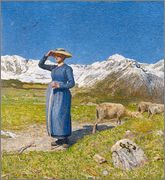
Giovanni Segantini , Mezzogiorno sulle Alpi (1891)*
Uno dei più bei romanzi che abbia letto. Mi ha fatto riscoprire il piacere della lettura che da qualche mese languiva: davo la colpa al caldo, alle distrazioni estive di vario genere, alla stanchezza mia... invece no: la causa stava proprio nella qualità della lettura. Perché "La lingua salvata" mi ha inaspettatamente assorbito in modo assoluto e io ne ho gustato ogni pagina.
Pacato e obiettivo, lucido e umile nelle interpretazioni, semplice nell'esposizione, Canetti accompagna il lettore lungo il sentiero della propria memoria, ripercorrendo l'infanzia, fino all'adolescenza. E il lettore attento può osservare con chiarezza i germi di una rara sensibilità e di una eccezionale ricchezza di sentimenti; di una curiosità vivace e intelligente; oltre che di profondi valori morali e culturali. (Sentivo ogni nuova esperienza come qualcosa di fisico, come una sensazione di dilatazione corporea. [...]Era una porta che si apriva all'improvviso là dove neppure la si poteva immaginare, e di colpo ci si trovava in un paesaggio con luce propria...).
Ne risulta una rievocazione dolce e sofferta, melanconica e dura, ma sempre appassionata e appassionante; la madre, i familiari, gli amici, gli insegnanti,... appaiono figure vive e vibranti; ne escono pagine spesso intensamente poetiche e suggestive, alcune davvero indimenticabili.
Una coinvolgente autobiografia, dunque, ma non solo: è infatti qualcosa di più completo e vasto, di respiro carico e profondo, che affonda le sue radici fin nella Memoria storica dell'Umanità.
Non "conoscevo" Elias Canetti (Premio Nobel per la Letteratura, nel 1981); ora ringrazio Carla, amica di buone letture, che me lo ha fatto incontrare.
*Risalimmo la Lötschental seguendo la mulattiera, unica via di comunicazione della valle con il mondo esterno. [... ] d'un tratto la valle mi si aprì davanti, inondata di sole, sfolgorante di luce: s'innalzava lassù verso le candide montagne e sfociava in un ghiacciaio... Qui ogni cosa era diversa, immagine di un mondo arcaico. Tutte le donne portavano in testa cappelli di paglia, ma non solo le donne, anche le ragazzine.

July 22, 2026
"The Tongue Set Free" is the first volume of Elias Canetti's autobiographical narratives, devoted to his childhood memories from 1905 to 1921. From his birth in Rustchuk, Bulgaria, on the Danube, to his departure from Zurich, Elias Canetti was born into a wealthy Sephardic merchant family. His paternal grandfather, as charismatic as he was authoritarian, preserved the Eastern culture of the Sephardic Jews of the Ottoman Empire. But his parents, who had studied in Vienna, Austria, spoke mostly German, and it was in this language that Canetti would later write, encouraged by his mother, who instilled in him a love of literature from a very young age. In "The Tongue Set Free," Canetti speaks at length about his relationship with his mother, which was both intense and sometimes highly conflicted, especially after Elias's father died suddenly in Manchester, where the family had settled. Elias spent the war years in Vienna and then Zurich, where his ailing mother eventually entered a sanatorium. His brothers were sent to Lausanne, while Elias remained near Zurich, at a boarding school. Switzerland appeared to him, amidst a war-torn Europe, as a paradise. Elias showed great intellectual precocity: he was lively and curious, passionate about literature and the natural sciences, and his naiveté increasingly displeased his mother, deeply affected by those years of mourning and war.

September 19, 2018
Radici come rami.
Da Rustschuk a Vienna, fino a Manchester e a Zurigo. Città, lingue, culture differenti. E libri. Tanti.
“Ogni volta che avevo finito un libro, ne discutevo con mio padre e talvolta mi eccitavo a tal segno che lui doveva calmarmi. Non mi disse mai però, come usano fare gli adulti, che le fiabe non sono vere; e di questo gli sono particolarmente grato, forse le considero vere ancora oggi.”
Quando a sette anni perde il padre, è la madre che lo sostituisce e accompagna Elias nel suo cammino di conoscenza. Insieme incontrano i grandi nomi della letteratura, ne discutono, e gli insegna il tedesco, lingua che parlava col marito.
È un legame intenso, quello con la mamma, un legame esclusivo. Che convive con l’ombra di un grido:
«Figlio mio, tu giochi e tuo padre è morto! Tu giochi, giochi, e tuo padre è morto! Tuo padre è morto! Tuo padre è morto! Tu giochi e tuo padre è morto!».
Grido che incide indelebilmente nella memoria di Elias l’incontro con la morte. Sarà presenza pesante e dolorosa, tanto da diventare tema costante, ossessivo, nelle sue opere.
La morte, il suo nemico. Il nemico dell’umanità.
Il primo viaggio autobiografico si ferma al 1921. È prosa sorprendente e ricca. Penetra con forza emotiva vigorosa e viva. Scorre ora come ruscello, ora come fiume in piena, con lucidità feroce o elegiaca tenerezza. Il lettore non può che seguirlo fin là, dove con la cacciata dal paradiso Elias nascerà alla vita.
Continuo a figurarlo con gli occhi rivolti ai cerchi scuri della tappezzeria, amici, compagni di gioco, di conversazione. E vorrei abbracciarlo.
“A casa, nella stanza dei bambini, giocavo per lo più da solo. In verità giocavo poco, parlavo piuttosto con la tappezzeria. I molti cerchi scuri nel disegno della tappezzeria li vedevo come persone. Inventavo una quantità di storie in cui essi figuravano da protagonisti, qualche volta ero io a raccontargliele, ma qualche volta anche loro partecipavano al gioco; comunque non mi stancavo mai di questi personaggi della tappezzeria ed ero capace di stare ore e ore a discorrere con loro.”
Quanta gratitudine dobbiamo a penne come la sua. Quanta!
Da Rustschuk a Vienna, fino a Manchester e a Zurigo. Città, lingue, culture differenti. E libri. Tanti.
“Ogni volta che avevo finito un libro, ne discutevo con mio padre e talvolta mi eccitavo a tal segno che lui doveva calmarmi. Non mi disse mai però, come usano fare gli adulti, che le fiabe non sono vere; e di questo gli sono particolarmente grato, forse le considero vere ancora oggi.”
Quando a sette anni perde il padre, è la madre che lo sostituisce e accompagna Elias nel suo cammino di conoscenza. Insieme incontrano i grandi nomi della letteratura, ne discutono, e gli insegna il tedesco, lingua che parlava col marito.
È un legame intenso, quello con la mamma, un legame esclusivo. Che convive con l’ombra di un grido:
«Figlio mio, tu giochi e tuo padre è morto! Tu giochi, giochi, e tuo padre è morto! Tuo padre è morto! Tuo padre è morto! Tu giochi e tuo padre è morto!».
Grido che incide indelebilmente nella memoria di Elias l’incontro con la morte. Sarà presenza pesante e dolorosa, tanto da diventare tema costante, ossessivo, nelle sue opere.
La morte, il suo nemico. Il nemico dell’umanità.
Il primo viaggio autobiografico si ferma al 1921. È prosa sorprendente e ricca. Penetra con forza emotiva vigorosa e viva. Scorre ora come ruscello, ora come fiume in piena, con lucidità feroce o elegiaca tenerezza. Il lettore non può che seguirlo fin là, dove con la cacciata dal paradiso Elias nascerà alla vita.
Continuo a figurarlo con gli occhi rivolti ai cerchi scuri della tappezzeria, amici, compagni di gioco, di conversazione. E vorrei abbracciarlo.
“A casa, nella stanza dei bambini, giocavo per lo più da solo. In verità giocavo poco, parlavo piuttosto con la tappezzeria. I molti cerchi scuri nel disegno della tappezzeria li vedevo come persone. Inventavo una quantità di storie in cui essi figuravano da protagonisti, qualche volta ero io a raccontargliele, ma qualche volta anche loro partecipavano al gioco; comunque non mi stancavo mai di questi personaggi della tappezzeria ed ero capace di stare ore e ore a discorrere con loro.”
Quanta gratitudine dobbiamo a penne come la sua. Quanta!
September 24, 2025
Il racconto si snoda tra l'infanzia dell'autore e i suoi 15 o 16 anni, nel 1920 circa, tra la Bulgaria, l'Inghilterra, Vienna, Zurigo, al seguito dei genitori prima, della sola madre ben presto.
I ricordi, siano essi reali o ricostruiti saldandone i lembi non importa, sono precisi e dettagliatissimi, molto avvincenti; la scrittura sopraffina, tutta permeata da diffusa ironia e una certa dose di autoironia, difficilissima virtù, soprattutto oggi.
Fra le decine di gustosi aneddoti e acute riflessioni sui rapporti umani, sul valore della cultura e su molto altro, due mi sono sembrati gli elementi costanti: il rapporto con la madre, donna imponente, che aspira a costruire il figlio secondo la sua titanica volontà, così da giustificare il suo sacrificio di donna; l'enorme valore che il bambino Canetti attribuisce alle sue letture e, da un certo punto in poi, alla scuola, nella persona di alcuni maestri illuminati.
Mi è parso un bambino scrittore già prima di padroneggiare l'arte della scrittura, capace di osservare le cose con occhio affilato e, laddove l'umano delude, di rivolgersi senza amarezza o esitazione agli uomini di carta che popolano il mondo della letteratura
I ricordi, siano essi reali o ricostruiti saldandone i lembi non importa, sono precisi e dettagliatissimi, molto avvincenti; la scrittura sopraffina, tutta permeata da diffusa ironia e una certa dose di autoironia, difficilissima virtù, soprattutto oggi.
Fra le decine di gustosi aneddoti e acute riflessioni sui rapporti umani, sul valore della cultura e su molto altro, due mi sono sembrati gli elementi costanti: il rapporto con la madre, donna imponente, che aspira a costruire il figlio secondo la sua titanica volontà, così da giustificare il suo sacrificio di donna; l'enorme valore che il bambino Canetti attribuisce alle sue letture e, da un certo punto in poi, alla scuola, nella persona di alcuni maestri illuminati.
Mi è parso un bambino scrittore già prima di padroneggiare l'arte della scrittura, capace di osservare le cose con occhio affilato e, laddove l'umano delude, di rivolgersi senza amarezza o esitazione agli uomini di carta che popolano il mondo della letteratura
September 23, 2024
Cannetti was the one of that powerful cohort of Viennese public intellectuals of the intra-wars period in the 20th century. In his essay Joshua Cohen writes:
I’ve read those three volumes of his memories. They definitely do not lack “novelistic fluency”. In fact i was not sure which particular episode did really happened and which was based on some fact but richly adorned by a sparkle of Cannetti’s rich imagination. It was not that important for me as it was a good literature in any case.
Gombrowitz famously has started his published diary with the entry: “Me.Me.Me”. These memoirs are not totally like that, but there is a palpable inclination towards it. Also Canetti comes across as a trickster occasionally acknowledging his not very straightforward relationship with truth, especially in relation to his mother. However, he seems to be honest about this and tries to explain his intentions. His relationships with women in general are quit peculiar. This makes for a lively read. He totally rejects Freud and psychoanalysis that was so popular in the Viennese circles of his day; but any shrink would have a huge research field in these memoirs.
I would not call his memoirs very intellectual, but they are chatty, intelligent and very well written. He has met a lot of other writers and thinkers of that time. Karl Kraus Karl Kraus was a major influence. It is quite strange that he is not so well known nowadays. He seemed to be almost a cult figure in his time in Vienna. And his opus The Last Days of Mankind was a very wildly read. Hermann Broch was Canetti’s friend. Through his eyes, Robert Musil and Thomas Mann didn’t appreciate his work enough but of course regretted later and rectified the situation.
He is the best when telling a little anecdotes, stories from his childhood, describing the relatives, friends and colleagues or even one step removed: the relatives of the friends. Some of those portraits are almost gothic in scope. For example, aged five he decided to kill his little girlfriend because she did not want to share her books with him. He was running at her with a huge axe. Fortunately he was stopped but the intention was there and left a big impression on his future life and relationship with violence and death. We also get acquainted with a dwarf-student making pictures of the nudes and sharing them in a chemistry lab; almost an ogre step father of his girlfriend- not totally senile old man who eats only meat and drinks enormous quantity of wine, very greedy with his money though he does not need it anymore and needs to be kept in a closed room not to chase women on the streets. We learned about Canetti’s practically paralysed friend who could not feed himself but had become a professor of philosophy. Also less plausibly in my view, we learn about a baby been born in a car by simply falling out on the floor and none of the parents noticed.
However, among these stories and anecdotes one can find sufficient food for thought. His description of the first realisation related to a strong emotion is the most penetrating from a psychological point of view. In his case looking at Rembrandt’s “Blinding Samson” he has understood for the first time what a hatred was:
His life was far from easy. He has lost his father when he was six. His mother was still very young and quite controlling. They moved around a lot. He was Jewish, relatively well off, but living in a time of ravishing antisemitism, budding Nazism but also of mass democratic movements. Needless to say it has left a trace in his thinking and his work.
At a school he has met a fellow Jewish “antiwar student who trusted Hitler to stop the war and bring peace forever.” He remarks on the page: “I can still him, his glowing face of peace, the countenance of an apostle, and i hope that he did not have to pay for his faith with his life.”
I am convinced that in terms of the atmosphere (for no better word) the first few decades of the 20th century hold an uncanny resemblance to our times. This memoirs is another confirmation. At one point, he observes:
It is as relevant as ever. Also the other side of this coin is total disbelief in anything written which might be associated with “old media”. Instead, people chose to believe in conspiracies, charlatans and demagogues who tell them what they want to hear. The example above with the jewish student seems to be so incongruent with our hindsight. But again the parallel that could be drown with many situations in our time is unpleasant to put it mildly.
Canetti also comment on his personal contact with the first way of migration into Palestine in the 20s of the previous century. His cousin was the leader of the local movement of Sephardic Jews’ community in Bulgaria. “he knew how to fill them with hope”.
This cousin has commented on his rhetoric power that made him a leader:
But Canetti has made another lesson. He did not use his potential for “good cause” or a temptation to “abuse”. Approximately at the same time, in 1927, he witnessed a mass appraisal in Vienna and its subsequent reprisal when many people died. This event has powerfully changed him and made him fascinated with the power of the crowd for life: “I never forgotten how gladly one falls prey to the crowd.”
He has spent the next twenty years studying the phenomenon and writing a book about the power of the crowd.
Defying death was another of his life-long strong passions. When young he has read “Gilgamesh” and was profoundly affected by the hero’s search for immortality. For the remainder of his long life he was thinking about this issue and collecting his own thoughts as well as the thoughts of the others. He has published The Book Against Death that has been recently republished in English by Fitzcarraldo editions. His very honourable if slightly quixotic stand has reminded me of a character and a movement in fact in Solenoid by Mircea Cărtărescu, a novel currently quite trendy and gathering a lot of attention in its relatively recent english translation. Maybe Cărtărescu haș borrowed an idea from a fellow but older Central European. Or maybe it is just in the air in that land drenched in blood of generations. In any case:
“Canetti tried his hand at the epic novel and concluded its pages in flames. He tried his hand at the grand unifying theory of crowds and wound up alone and lonely, claiming he never wanted or needed the followers he never even had. It was only in the memoirs that he achieved the dream of novelistic fluency and programmatic amplitude, though even that series went unfinished. Of the five planned volumes, each to be titled after an organ of sense, only three—The Tongue Set Free, The Torch in My Ear, and The Play of the Eyes—were completed and published.”
I’ve read those three volumes of his memories. They definitely do not lack “novelistic fluency”. In fact i was not sure which particular episode did really happened and which was based on some fact but richly adorned by a sparkle of Cannetti’s rich imagination. It was not that important for me as it was a good literature in any case.
Gombrowitz famously has started his published diary with the entry: “Me.Me.Me”. These memoirs are not totally like that, but there is a palpable inclination towards it. Also Canetti comes across as a trickster occasionally acknowledging his not very straightforward relationship with truth, especially in relation to his mother. However, he seems to be honest about this and tries to explain his intentions. His relationships with women in general are quit peculiar. This makes for a lively read. He totally rejects Freud and psychoanalysis that was so popular in the Viennese circles of his day; but any shrink would have a huge research field in these memoirs.
I would not call his memoirs very intellectual, but they are chatty, intelligent and very well written. He has met a lot of other writers and thinkers of that time. Karl Kraus Karl Kraus was a major influence. It is quite strange that he is not so well known nowadays. He seemed to be almost a cult figure in his time in Vienna. And his opus The Last Days of Mankind was a very wildly read. Hermann Broch was Canetti’s friend. Through his eyes, Robert Musil and Thomas Mann didn’t appreciate his work enough but of course regretted later and rectified the situation.
He is the best when telling a little anecdotes, stories from his childhood, describing the relatives, friends and colleagues or even one step removed: the relatives of the friends. Some of those portraits are almost gothic in scope. For example, aged five he decided to kill his little girlfriend because she did not want to share her books with him. He was running at her with a huge axe. Fortunately he was stopped but the intention was there and left a big impression on his future life and relationship with violence and death. We also get acquainted with a dwarf-student making pictures of the nudes and sharing them in a chemistry lab; almost an ogre step father of his girlfriend- not totally senile old man who eats only meat and drinks enormous quantity of wine, very greedy with his money though he does not need it anymore and needs to be kept in a closed room not to chase women on the streets. We learned about Canetti’s practically paralysed friend who could not feed himself but had become a professor of philosophy. Also less plausibly in my view, we learn about a baby been born in a car by simply falling out on the floor and none of the parents noticed.
However, among these stories and anecdotes one can find sufficient food for thought. His description of the first realisation related to a strong emotion is the most penetrating from a psychological point of view. In his case looking at Rembrandt’s “Blinding Samson” he has understood for the first time what a hatred was:
“I learned what hatred is. I had felt hatred when very young, much too young, at five when I had tried to kill Laura with an ax. But you don’t know what you have felt; you have to see it in front of you, in others, in order to recognise it and know it. Something you recognise and know becomes real only of you. You have experienced it previously. It lies dormant in you, and you can’t name it; then all at once, it is there, as a painting; and something happening to others creates itself in you as a memory: now it is real.”
His life was far from easy. He has lost his father when he was six. His mother was still very young and quite controlling. They moved around a lot. He was Jewish, relatively well off, but living in a time of ravishing antisemitism, budding Nazism but also of mass democratic movements. Needless to say it has left a trace in his thinking and his work.
At a school he has met a fellow Jewish “antiwar student who trusted Hitler to stop the war and bring peace forever.” He remarks on the page: “I can still him, his glowing face of peace, the countenance of an apostle, and i hope that he did not have to pay for his faith with his life.”
I am convinced that in terms of the atmosphere (for no better word) the first few decades of the 20th century hold an uncanny resemblance to our times. This memoirs is another confirmation. At one point, he observes:
“Our conversations at home had made me aware of how blind one could be if one wants to be blind. I began to understand that books were no different in this respect, that a reader has to be alert; that it is dangers to get lazy, putting off criticism and accepting whatever you are told.”
It is as relevant as ever. Also the other side of this coin is total disbelief in anything written which might be associated with “old media”. Instead, people chose to believe in conspiracies, charlatans and demagogues who tell them what they want to hear. The example above with the jewish student seems to be so incongruent with our hindsight. But again the parallel that could be drown with many situations in our time is unpleasant to put it mildly.
Canetti also comment on his personal contact with the first way of migration into Palestine in the 20s of the previous century. His cousin was the leader of the local movement of Sephardic Jews’ community in Bulgaria. “he knew how to fill them with hope”.
This cousin has commented on his rhetoric power that made him a leader:
“I feel more and more myself. You’ve got the people in hand like soft dough and you can do anything you want with them. You could get them to start fires, to ignite their own houses. There are no limits to this sort of power. Try it yourself! You only have to want it! You want abuse this kind of power. You’ll use it for good cause, just as i do for for our cause.”
But Canetti has made another lesson. He did not use his potential for “good cause” or a temptation to “abuse”. Approximately at the same time, in 1927, he witnessed a mass appraisal in Vienna and its subsequent reprisal when many people died. This event has powerfully changed him and made him fascinated with the power of the crowd for life: “I never forgotten how gladly one falls prey to the crowd.”
He has spent the next twenty years studying the phenomenon and writing a book about the power of the crowd.
Defying death was another of his life-long strong passions. When young he has read “Gilgamesh” and was profoundly affected by the hero’s search for immortality. For the remainder of his long life he was thinking about this issue and collecting his own thoughts as well as the thoughts of the others. He has published The Book Against Death that has been recently republished in English by Fitzcarraldo editions. His very honourable if slightly quixotic stand has reminded me of a character and a movement in fact in Solenoid by Mircea Cărtărescu, a novel currently quite trendy and gathering a lot of attention in its relatively recent english translation. Maybe Cărtărescu haș borrowed an idea from a fellow but older Central European. Or maybe it is just in the air in that land drenched in blood of generations. In any case:
“It makes the necessity of enterprise seem even more valid. In this way I experienced the effect of a myth: something I have thought about in various ways during the ensuing half century, something I have often turned over in my mind, but never once earnestly doubted. I absorbed as a unity something that has remained in me as a unity. I cant find fault with it. The question whether I believe such a tale does not affect me; how can I, given my intrinsic substance, decide whether i believe in it. The aim is not to parrot the banality that so far all human being have died: the point is to decide whether to accept death willingly or stand up against it. With my indignation against death, I have acquired a right to glory, wealth, misery, and despair of all experience. I have lived in this endless rebellion. And if my grief for the near and dear that i have lost in the course of time was no smaller that that of Gilgamesh for his friend Enkidu, I at least have one thing, one single thing, over the lion man: I care about the life of every human thing and not just that of my neighbour.”

June 8, 2020
Primo volume di una monumentale autobiografia iniziata nel 1977 e continuata con “Il frutto del fuoco”, nel 1980 e “Il gioco degli occhi”, nel 1985. Una lettura sicuramente gradevole che ha come sottotitolo “Storia di una giovinezza” e che, per quanto mi riguarda, ha tenuto desta l’ attenzione per i tre quarti mentre ha generato una certa stanchezza nella parte finale; probabilmente perché ho trovato molto avvincenti le situazioni narrate rispetto alla prima, seconda e terza infanzia mentre l’avviarsi dell’autore nella pubertà è stato appesantito dal profilo dello stesso ragazzo narrato. Il volume inizia con i primissimi ricordi di vita, in Bulgaria, in seno a una famiglia di ebrei sefarditi di origine spagnola; una famiglia facoltosa, di commercianti, ben integrata ma con un’identità linguistica precisa e ancorata alla lingua spagnola. Una coppia genitoriale giovane e affiatata che invece parla eleggendo a veicolo linguistico, privilegiato e intimo, il tedesco; un bambino che sente parlare contemporaneamente spagnolo e bulgaro, comprendendoli entrambi fino ai sei anni, e che si incuriosisce all’universo linguistico esclusivo della mamma e del papà. Un periodo della vita, felice, comunitario, integro, che improvvisamente si sgretola e si sfalda a causa, prima, di dissapori interni alla grande famiglia, in particolare per via della rottura tra il padre di Elias e il genitore, il capofamiglia, e poi per via della morte prematura dello stesso papà di Canetti quando ormai la famigliola è emigrata in Inghilterra. Inizia così una vita nuova, caratterizzata dalla condizione di orfano e di fratello maggiore che comporterà al piccolo Elias preoccupazioni, ansie e responsabilità inaudite. È la parte più toccante della narrazione, non interessa un unico blocco ma si dissemina nel resto dell’opera e della vita, lasciando un segno profondo, quello dell’assenza e al tempo stesso del rapporto quasi simbiotico con la madre. Segue poi il resoconto delle tappe di una vita in viaggio; ai due anni trascorsi a Manchester ( 1911-1913) si giustappongono gli anni di Vienna, tra il 1913 e il 1916, e per finire quelli del “paradiso perduto”, in Svizzera, che coprono il restante intervallo fino al 1921. Si tratta di soggiorni lunghi ma il senso di precarietà è latente. Il periodo inglese e quello viennese sono ricchi di aneddoti che permettono di costruire un profilo biografico di tutto interesse; al centro sempre la riflessione costante sull’esposizione linguistica; un esempio fra tutti, il più evidente, è sicuramente il barbaro apprendistato al quale la giovane vedova sottopone il figlio per fargli apprendere la lingua tedesca, ultimo ed estremo ancoraggio all’amato marito. Canetti, poliglotta, scriverà tutte le sue opere in tedesco. Gli anni della crescita corrispondenti alla scolarizzazione sono inizialmente molto interessanti, si entra dentro l’universo privato del percorso di formazione, generosamente anticipato dalle sollecitazioni ricevute in famiglia; emerge netto il profilo di un alunno sui generis, un assettato di sapere che stona perfino con il rigore educativo che pure caratterizzava l’epoca facendolo entrare in conflitto con un universo studentesco comunque eterogeneo e non sempre zelante. Un atteggiamento quasi superbo, il suo, del tutto involontario che solo l’onda antisemita riesce a fargli finalmente percepire. I ricordi legati alla Svizzera sono meno interessanti, forse perché nel frattempo il ragazzo che è lontano dalla madre, ha modo di crearsi una sua autonomia di pensiero e si perde quell’aura eccezionale che aveva caratterizzato le altre età fino a quando la mamma non irrompe prepotentemente a indirizzarlo un’altra volta, lontano dalla favola bella della Svizzera, imponendogli l’ennesimo trasferimento, questa volta in Germania. Sigla Canetti: “il paradiso zurighese era finito, finiti gli unici anni di perfetta felicità”.

August 14, 2015
Ha toccato molte corde segrete, questo libro. Ha scavato con minuzia e pazienza da archeologo, in me lettore. Ha riportato alla luce tenerezze sepolte. Risvegliato meraviglie. Ne ho adorato il ritmo e la consistenza; la ricchezza lessicale e l'asciuttezza degli aggettivi; la sapienza disarmata, «... priva di altezzosità». Mi hanno stupito la limpidezza del ragionamento e la felicità della scrittura, fluida, mai compiaciuta. Il tempo narrativo è teso, misurato, non si abbandona al vagheggiamento, lega fatti a ragionamenti come in un romanzo. Raro, in un memoriale. La profondità d'introspezione mi ha sorpreso per esattezza e freschezza. È rammentata e descritta nel suo essere sorgiva, acerba nell'intuizione poi consolidata; e ha rianimato, nel ricordo, le mie sorprese di ragazzo, la perspicacia acquisita, le indignazioni profonde e tutti i sapori dimenticati dei miei passi incerti. Ho qui ritrovato i fondamenti di un'educazione concepita, non improvvisata, ma anche i difetti di un certo terrore pedagogico, che oggi mi sono apparsi ingenui, più che dannosi. L'emotività di un tempo (che appare lontano) era ancora impressionabile, non anestetizzata da una realtà onnipresente e cruda. Mi sono infine riconosciuto nella descrizione, a mio avviso perfetta, della vita intellettuale e della sensibilità, qui rappresentate.
Enorme diletto. E gran conforto.
Enorme diletto. E gran conforto.

July 14, 2021
Susan Sontag found this superior to Sartre's The Words. I fail to see that. Making allowances for a clumsy translation, I found this a near caustic experience. While neither Les Mots nor this are memoirs in a clear sense of personal recollection, the gulf of decades makes both of these efforts speculative at best, unlike the thousands of memoirs which drown our culture, many of which are published while the author is still experiencing the subject matter, aren't we already nostalgic for what's going to happen this afternoon? Whereas Sartre attempted to artfully configure his thoughts on memory and language into an account of what he'd like to remember, much of which was embellished by the accounts of others. Canetti finds himself late in life estranged and regards the causes of his shipwreck steeped deep in his childhood from the early death of his father, the subsequent moves around Europe and the devastating falling out with his mother, whom he had previously worshipped.
His ideation of murder at the age of 4-5 appears to haunt him, as did the exclusive nature of language as his family spoke Ladino a variant of Spanish in the rural Bulgaria of his early youth. His parents spoke German to each other. The gypsies nodded and smiled.
Canetti being on the nebbish side shied away from business which was the family vocation and instead anchored to his mother's humanism became a nascent scholar and then writer. He's both jealous and generous. He's strangely asexual but almost physically intimate with his mother, until, of course, she "betrays" him.
I am not sure if I will read the other two volumes.
His ideation of murder at the age of 4-5 appears to haunt him, as did the exclusive nature of language as his family spoke Ladino a variant of Spanish in the rural Bulgaria of his early youth. His parents spoke German to each other. The gypsies nodded and smiled.
Canetti being on the nebbish side shied away from business which was the family vocation and instead anchored to his mother's humanism became a nascent scholar and then writer. He's both jealous and generous. He's strangely asexual but almost physically intimate with his mother, until, of course, she "betrays" him.
I am not sure if I will read the other two volumes.

June 21, 2012
Non avrei mai immaginato che un anziano scrittore che scrive dei primi anni della propria esistenza mi potesse entusiasmare a tal punto. Un'autobiografia? No: o meglio non semplicemente. In queste pagine si può trovare molto di più, e non sarà troppo disagevole riconoscere nei tanti personaggi e nelle tante abitudini, idiosincrasie, esperienze esistenziali, anche sé stessi. Un libro formidabile, perché il sig. Canetti è riuscito ad insegnare tante cose ad ognuno di noi lettori, al di là di una scrittura e di uno stile vicini alla perfezione. Slurp!

January 25, 2022
Pazzesco, meraviglioso, immenso. Da rileggere all'infinito.

July 27, 2019
Ho scritto di là il 07 giugno del 2016
" de memoria"
Un Bildungsroman lontano anni luce da quello del giovane Torless o di Hans Castorp.
La formazione “normale” di Elias Canetti in persona, sospesa tra due punti: la lingua salvata, a tre anni, dal coltellino del moroso della tata e quella salvata dai contadini del Vallese svizzero, con la meraviglia del suono delle vocali dei versi in tedesco antico che, il sedicenne Elias, crede di ritrovare nella parola “ Chuom Buobilu”, anziché Bublein, piccino: un rapporto più ricco e occulto di vocali.
Un appassionante racconto sulla scoperta del “mondo dei segni” grazie a una vita nomade, come nomadi dentro sono gli ebrei se si vuole dare come storiche le diaspore bibliche.
Inizia in una Bulgaria cosmopolita in cui si parlano molte lingue che il piccolo apprende, a cominciare dallo spagnolo degli ebrei sefarditi, quando si dispersero per l’Europa orientale dopo la cacciata dei cattolicissimi reali Isabella di Castiglia e Ferdinando II d'Aragona, e da cui originavano i Canetti.
Continua in Inghilterra, dove gli inquieti genitori emigrano per liberarsi dal giogo di una famiglia pervasiva: apprende un perfetto inglese in poco tempo.
A Vienna, dove la madre giovanissima vedova si trasferisce apprende, finalmente, il tedesco, la lingua segreta parlata dai genitori nell'intimità. Sarà la sua lingua intima per sempre, anche quando si trasferirà in Svizzera, durante la I^ guerra e dove apprenderà non solo i rudimenti di altre lingue europee ma anche il dialetto svizzero, variante del tedesco.
Detto così può sembrare la pubblicità delle scuole internazionali, se non fosse che solo attraverso la conoscenza del parlato il piccolo Elias entra in empatia con i compagni di gioco e di scuola e con le nuove stimolanti culture. È quello che ora si chiama intenzionalità, che una macchina non potrebbe mai davvero possedere da un punto di vista strutturale.
Il nonno Canetti, racconta ironicamente il giovane Elias, si vantava di parlarne diciassette, ma tutte funzionali alla sua attività di import-export, essendo un ricchissimo commerciante.
A lui la conoscenza delle lingue serve a ben altro!
Sarà la madre a togliergli l’illusione che attraverso i segni possa impadronirsi della realtà: dovrà andare a guadagnarsi il pane in Germania per toccare con mano cosa vuol dire, per un intero popolo, essere ridotti sul lastrico per aver perso una guerra che non dovevano provocare! La parola inflazione si materializzerà con le lacrime e il sangue delle persone in carne e ossa, ben altra cosa che la mediazione ovattata dei libri.
Mi sarebbe facile sull'onda delle suggestioni partorire una operazione nostalgia con “La lingua salvata”. Ma di queste operazioni ne ho piene le tasche. Questo lisciare per il pelo i sessanta-settantenni dalla mattina alla sera, con la riproposizione a mantra degli anni sessanta, è becera e ridicola e soprattutto inquietante, Proust o non Proust. Scoprire, infatti, che un motivetto dell’Orietta Berti, che allora disprezzavi tanto, ti è entrato nella mente a tua insaputa scaraventandoti nel giorno e l’ora in cui ti capitò di ascoltarlo dal pianino che passava per strada, è traumatizzante.
Quindi resisto (?) alle immagini di me bambina, che come Elias rubavo i quaderni ai miei cugini per scoprire il segreto di quei segni misteriosi che loro smorfia vano in parole.
Piuttosto mi viene da riflettere come le esperienze degli anni cinquanta siano così simili a quelle degli anni dieci, quelli di Canetti, mentre mi sono lontanissime quelle contemporanee delle mie nipotine, così brave con il tablet e le app, che ancora non ho capito cosa siano.
Mi piacerebbe scoprire dove condurranno questi nuovi strumenti, come modificheranno i rapporti di conoscenza e di empatia tra le persone; come sarà l’umanità tra venti trent’anni; se finirò, vecchia bacucca, come tutti i vecchi bacucchi di quei miei primi anni che guardavano con orrore il giradischi e la televisione, sospirando di nostalgia per i bei tempi passati!
Consigliato a tutti i vecchi della mia età. Ai giovani non so. Del resto anche l’archeologia può essere un campo d’interesse, o no?
" de memoria"
Un Bildungsroman lontano anni luce da quello del giovane Torless o di Hans Castorp.
La formazione “normale” di Elias Canetti in persona, sospesa tra due punti: la lingua salvata, a tre anni, dal coltellino del moroso della tata e quella salvata dai contadini del Vallese svizzero, con la meraviglia del suono delle vocali dei versi in tedesco antico che, il sedicenne Elias, crede di ritrovare nella parola “ Chuom Buobilu”, anziché Bublein, piccino: un rapporto più ricco e occulto di vocali.
Un appassionante racconto sulla scoperta del “mondo dei segni” grazie a una vita nomade, come nomadi dentro sono gli ebrei se si vuole dare come storiche le diaspore bibliche.
Inizia in una Bulgaria cosmopolita in cui si parlano molte lingue che il piccolo apprende, a cominciare dallo spagnolo degli ebrei sefarditi, quando si dispersero per l’Europa orientale dopo la cacciata dei cattolicissimi reali Isabella di Castiglia e Ferdinando II d'Aragona, e da cui originavano i Canetti.
Continua in Inghilterra, dove gli inquieti genitori emigrano per liberarsi dal giogo di una famiglia pervasiva: apprende un perfetto inglese in poco tempo.
A Vienna, dove la madre giovanissima vedova si trasferisce apprende, finalmente, il tedesco, la lingua segreta parlata dai genitori nell'intimità. Sarà la sua lingua intima per sempre, anche quando si trasferirà in Svizzera, durante la I^ guerra e dove apprenderà non solo i rudimenti di altre lingue europee ma anche il dialetto svizzero, variante del tedesco.
Detto così può sembrare la pubblicità delle scuole internazionali, se non fosse che solo attraverso la conoscenza del parlato il piccolo Elias entra in empatia con i compagni di gioco e di scuola e con le nuove stimolanti culture. È quello che ora si chiama intenzionalità, che una macchina non potrebbe mai davvero possedere da un punto di vista strutturale.
Il nonno Canetti, racconta ironicamente il giovane Elias, si vantava di parlarne diciassette, ma tutte funzionali alla sua attività di import-export, essendo un ricchissimo commerciante.
A lui la conoscenza delle lingue serve a ben altro!
Sarà la madre a togliergli l’illusione che attraverso i segni possa impadronirsi della realtà: dovrà andare a guadagnarsi il pane in Germania per toccare con mano cosa vuol dire, per un intero popolo, essere ridotti sul lastrico per aver perso una guerra che non dovevano provocare! La parola inflazione si materializzerà con le lacrime e il sangue delle persone in carne e ossa, ben altra cosa che la mediazione ovattata dei libri.
Mi sarebbe facile sull'onda delle suggestioni partorire una operazione nostalgia con “La lingua salvata”. Ma di queste operazioni ne ho piene le tasche. Questo lisciare per il pelo i sessanta-settantenni dalla mattina alla sera, con la riproposizione a mantra degli anni sessanta, è becera e ridicola e soprattutto inquietante, Proust o non Proust. Scoprire, infatti, che un motivetto dell’Orietta Berti, che allora disprezzavi tanto, ti è entrato nella mente a tua insaputa scaraventandoti nel giorno e l’ora in cui ti capitò di ascoltarlo dal pianino che passava per strada, è traumatizzante.
Quindi resisto (?) alle immagini di me bambina, che come Elias rubavo i quaderni ai miei cugini per scoprire il segreto di quei segni misteriosi che loro smorfia vano in parole.
Piuttosto mi viene da riflettere come le esperienze degli anni cinquanta siano così simili a quelle degli anni dieci, quelli di Canetti, mentre mi sono lontanissime quelle contemporanee delle mie nipotine, così brave con il tablet e le app, che ancora non ho capito cosa siano.
Mi piacerebbe scoprire dove condurranno questi nuovi strumenti, come modificheranno i rapporti di conoscenza e di empatia tra le persone; come sarà l’umanità tra venti trent’anni; se finirò, vecchia bacucca, come tutti i vecchi bacucchi di quei miei primi anni che guardavano con orrore il giradischi e la televisione, sospirando di nostalgia per i bei tempi passati!
Consigliato a tutti i vecchi della mia età. Ai giovani non so. Del resto anche l’archeologia può essere un campo d’interesse, o no?
March 22, 2024
Primer volumen autobiográfico de Canetti, me pareció magnífico . Muy recomendable para aquellos lectors que gusten de este género .
Comparto frases :
“Pero para que una ‘moraleja ‘ le llame a uno la atención ha de contrastar con la manera como uno siente y actúa, y ha de permanecer mucho tiempo dentro de uno antes de que encuentre el momento oportuno para armarse de valor y salir a la luz bruscamente. “
“No hay que guardar para el enemigo una piedra en el bolsillo , ni la venganza en el corazón.”
“Porque no es cierto que el paso de los años tenga el mismo carácter para todos .”
“Había historias que lo dejaban a uno totalmente indiferente, e historias de las que uno se acordaba cada dia mejor. Eso revelaba algo sobre nuestro estado de ánimo y no sobre el autor.”
“Un hombre satisfecho no hace nada , un hombre satisfecho es perezoso, un hombre satisfecho se sienta a descansar antes de empezar a hacer algo. Un hombre satisfecho hace y vuelve a hacer lo mismo, como un funcionario.”
“Uno cree abrirse al mundo y paga por ello con la ceguera ante lo inmediato. Es inconcebible la soberbia con la que decimos lo que nos importa y lo que no.”
Comparto frases :
“Pero para que una ‘moraleja ‘ le llame a uno la atención ha de contrastar con la manera como uno siente y actúa, y ha de permanecer mucho tiempo dentro de uno antes de que encuentre el momento oportuno para armarse de valor y salir a la luz bruscamente. “
“No hay que guardar para el enemigo una piedra en el bolsillo , ni la venganza en el corazón.”
“Porque no es cierto que el paso de los años tenga el mismo carácter para todos .”
“Había historias que lo dejaban a uno totalmente indiferente, e historias de las que uno se acordaba cada dia mejor. Eso revelaba algo sobre nuestro estado de ánimo y no sobre el autor.”
“Un hombre satisfecho no hace nada , un hombre satisfecho es perezoso, un hombre satisfecho se sienta a descansar antes de empezar a hacer algo. Un hombre satisfecho hace y vuelve a hacer lo mismo, como un funcionario.”
“Uno cree abrirse al mundo y paga por ello con la ceguera ante lo inmediato. Es inconcebible la soberbia con la que decimos lo que nos importa y lo que no.”

August 15, 2018
Le parole di Marcoaldi per commentare il primo libro dell’autobiografia di Canetti. Per fortuna continua...
http://www.repubblica.it/speciale/200...
http://www.repubblica.it/speciale/200...

April 22, 2023
La lingua salvata è la prima parte dell'autobiografia dello scrittore Elias Canetti, vincitore del premio Nobel nel 1981, nella quale racconta della propria infanzia e adolescenza. È anche il mio primo, o quasi, incontro con questo autore.
La prima parte racconta dei primissimi ricordi nella cittadina bulgara di Rustschuk, dove Elias Canetti, di famiglia ebrea sefardita, era nato e visse fino ai sei anni. Un ambiente pieno di colori e multiculturale, "orientale" come lo definisce lui stesso, pieno di fascino, non solo per gli occhi ingenui di un bambino.
"[...] quando dico che si trova in Bulgaria ne do un'immagine insufficiente, perché nella stessa Rustschuk vivevano persone di origine diversissima, in un solo giorno si potevano sentire sette o otto lingue."
A causa principalmente del desiderio di emancipazione dei suoi genitori, progressisti e intellettuali, dalle famiglie di origine, più tradizionaliste e conservatrici, iniziano per Elias varie peregrinazioni in giro per l'Europa. Prima Manchester, poi Vienna e infine Zurigo, un'Europa che sta attraversando in quei decenni gli scossoni legati alla prima guerra mondiale. Parallelamente, avverranno nel protagonista la scoperta prima della lettura, poi della lingua tedesca, la lingua proibita parlata dai genitori tra loro e insegnatagli dalla madre in soli tre mesi con un metodo spietato, e infine l'apertura al mondo e all'apprendimento del sapere in tutte le sue forme e sfaccettature. Tutto cattura e affascina la mente geniale del narratore che dimostra fin da piccolo curiosità, intelligenza e sensibilità fuori dal comune.
"Qualunque cosa mi venisse presentata metteva in me radici profonde, c'era posto per tutto. [...] Non appena avevo assimilato una cosa, questa stabiliva nessi e alleanze con altre cose, e poi continuava a crescere, creando la propria atmosfera e reclamando nuovi elementi".
Questa percettività è l'elelmento che mi ha affascinata di più durante la lettura, l'amore di Elias per il sapere e la capacità di farlo proprio non solo a livello intellettivo, ma in modo profondo, con tutto l'essere, mi ha aperto gli occhi sul modo a confronto inconsapevole e superficiale in cui sono parte del mondo.
Se non do un giudizio pieno a questa lettura è perché, sebbene abbia ammirato molto il narratore-protagonista, l'ho trovato al contempo insopportabile, e insopportabili sono la maggior parte delle persone che gli stanno intorno, a partire dalla madre. Le relazioni famigliari sono del tipo che oggi verrebbe chiamato disfunzionale, con legami malsani e la maturazione di una serie di traumi che non vengono mai apertamente affrontati. C'è sicurmante da mettere la storia nel suo contesto storico, ma questa mancanza di comunicazione affettiva, in netto contrasto con il dialogo rivolto tutto all'arte, al teatro e alla letteratura, l'ho trovato un elemento asfissiante, claustrofobico del libro. Nonostante questo è sicuramente una lettura che mi ha arricchito e che mi poterò dentro.
"Allora non sapevo ancora che cosa è la vastità, eppure lo intuivo: il poter contenere in sé moltissime cose, anche tra loro contraddittorie, sapere che tutto ciò che sembra inconciliabile sussiste tuttavia in un suo ambito, e questo sentirlo senza perdersi nella paura, e anzi sapendo che bisogna chiamarlo col suo nome e meditarci sopra: ecco la cosa che proprio da mia madre ho imparato, ed è la vera gloria della vita umana".
La prima parte racconta dei primissimi ricordi nella cittadina bulgara di Rustschuk, dove Elias Canetti, di famiglia ebrea sefardita, era nato e visse fino ai sei anni. Un ambiente pieno di colori e multiculturale, "orientale" come lo definisce lui stesso, pieno di fascino, non solo per gli occhi ingenui di un bambino.
"[...] quando dico che si trova in Bulgaria ne do un'immagine insufficiente, perché nella stessa Rustschuk vivevano persone di origine diversissima, in un solo giorno si potevano sentire sette o otto lingue."
A causa principalmente del desiderio di emancipazione dei suoi genitori, progressisti e intellettuali, dalle famiglie di origine, più tradizionaliste e conservatrici, iniziano per Elias varie peregrinazioni in giro per l'Europa. Prima Manchester, poi Vienna e infine Zurigo, un'Europa che sta attraversando in quei decenni gli scossoni legati alla prima guerra mondiale. Parallelamente, avverranno nel protagonista la scoperta prima della lettura, poi della lingua tedesca, la lingua proibita parlata dai genitori tra loro e insegnatagli dalla madre in soli tre mesi con un metodo spietato, e infine l'apertura al mondo e all'apprendimento del sapere in tutte le sue forme e sfaccettature. Tutto cattura e affascina la mente geniale del narratore che dimostra fin da piccolo curiosità, intelligenza e sensibilità fuori dal comune.
"Qualunque cosa mi venisse presentata metteva in me radici profonde, c'era posto per tutto. [...] Non appena avevo assimilato una cosa, questa stabiliva nessi e alleanze con altre cose, e poi continuava a crescere, creando la propria atmosfera e reclamando nuovi elementi".
Questa percettività è l'elelmento che mi ha affascinata di più durante la lettura, l'amore di Elias per il sapere e la capacità di farlo proprio non solo a livello intellettivo, ma in modo profondo, con tutto l'essere, mi ha aperto gli occhi sul modo a confronto inconsapevole e superficiale in cui sono parte del mondo.
Se non do un giudizio pieno a questa lettura è perché, sebbene abbia ammirato molto il narratore-protagonista, l'ho trovato al contempo insopportabile, e insopportabili sono la maggior parte delle persone che gli stanno intorno, a partire dalla madre. Le relazioni famigliari sono del tipo che oggi verrebbe chiamato disfunzionale, con legami malsani e la maturazione di una serie di traumi che non vengono mai apertamente affrontati. C'è sicurmante da mettere la storia nel suo contesto storico, ma questa mancanza di comunicazione affettiva, in netto contrasto con il dialogo rivolto tutto all'arte, al teatro e alla letteratura, l'ho trovato un elemento asfissiante, claustrofobico del libro. Nonostante questo è sicuramente una lettura che mi ha arricchito e che mi poterò dentro.
"Allora non sapevo ancora che cosa è la vastità, eppure lo intuivo: il poter contenere in sé moltissime cose, anche tra loro contraddittorie, sapere che tutto ciò che sembra inconciliabile sussiste tuttavia in un suo ambito, e questo sentirlo senza perdersi nella paura, e anzi sapendo che bisogna chiamarlo col suo nome e meditarci sopra: ecco la cosa che proprio da mia madre ho imparato, ed è la vera gloria della vita umana".

August 19, 2017
"L'impulso di rivolgermi alle stelle, così irraggiungibili e intoccabili, cominciò, credo, proprio allora, e crebbe negli anni successivi fino a transformasi in una religione, la religione delle stelle. Non mi aspettavo nulla dalle stelle, all'infuori della regola del perpetuo ritorno nello stesso luogo, in un rapporto immutato e immutabile con altre stelle con le quali formavano costellazioni dai nomi meravigliosi."

January 28, 2018
3,8/5
Mi-a fost tare greu sa “ intru “ in cartea asta. După prima jumătate am vrut de mai multe ori sa renunț la ea. Traducerea am găsit-o ca fiind ciudata , copilărească , iar vocea scriitorului nu-mi inspira nimic . Era o povara sa încep sa citesc.
Dar încetul cu încetul povestirea a început sa fie mai fluida. Cu cât micul Canetti creștea, cu atât îmi era mai drag sa citesc despre el , despre setea lui fantastica de cunoaștere , despre figura titanica a mamei, despre prietenii si profesorii lui , toti un personaj mai interesant ca celălat.
E păcat ca nu e valabilă o traducere mai recenta a celui de-al doilea volum , ultima ediție fiind atât de veche încât nu știu dacă o sa o găsesc pe undeva .As reveni cu mare interes in viața lui.
Mi-a fost tare greu sa “ intru “ in cartea asta. După prima jumătate am vrut de mai multe ori sa renunț la ea. Traducerea am găsit-o ca fiind ciudata , copilărească , iar vocea scriitorului nu-mi inspira nimic . Era o povara sa încep sa citesc.
Dar încetul cu încetul povestirea a început sa fie mai fluida. Cu cât micul Canetti creștea, cu atât îmi era mai drag sa citesc despre el , despre setea lui fantastica de cunoaștere , despre figura titanica a mamei, despre prietenii si profesorii lui , toti un personaj mai interesant ca celălat.
E păcat ca nu e valabilă o traducere mai recenta a celui de-al doilea volum , ultima ediție fiind atât de veche încât nu știu dacă o sa o găsesc pe undeva .As reveni cu mare interes in viața lui.

January 17, 2016
Out of four books that I needed to read for my German class, this one was my favorite. This autobiography tells the story of a Jewish boy and his life up until 1920. He tells us about his relationship with his parents, his time in school and his love for learning.
I love how it is told. Only the events that shaped the boys life are emphasised. There is something special about this book that made me like it so much. Maybe it's the love for literature that he showed early on in his life or his life in general. His family moved a lot and lived in Vienna, Zürich, Manchester and I loved that aspect of the book.
I love how it is told. Only the events that shaped the boys life are emphasised. There is something special about this book that made me like it so much. Maybe it's the love for literature that he showed early on in his life or his life in general. His family moved a lot and lived in Vienna, Zürich, Manchester and I loved that aspect of the book.

March 18, 2019
Pages of futile contemplation on childhood reminiscences and his relationship with his mother. Loses its pace and rhythm after a while. Nevertheless a decent autobiography. Surprising to see he doesn't cite Spitteler as a Nobel laureate.
October 16, 2025
Hacía tiempo que no disfrutaba tanto con un libro, y me sorprende aún más que se trate de una autobiografía. Impresiona la facilidad con la que Canetti logra que uno se sienta identificado con su historia. Me gusta leer, pero disfruto aún más cuando leo a Canetti.

March 31, 2025
Bf em pot haver agradat mes? Quin gaudi de lectura! M’ha encantat, l’he devorat a poc a poc perquè no volia que s’acabés! Una autobiografia amb un luxe de detalls admirable

December 28, 2024
Molto, molto bello.

January 20, 2021
«Todo lo que venía hacia mí echaba raíces sólidas, [...] me parecía que me lo ofrecían todo y yo solo tenía que cogerlo. En cuanto lo poseía empezaba a relacionarse con otras cosas, se unía a ellas, crecía, creaba su atmósfera y reclamaba más cosas nuevas».
La lengua salvada (1977) es el primero de cuatro tomos que integran la autobiografía de Elias Canetti. En los 80, a partir del Nobel de Literatura del autor, se empezó a reconocer esta obra como hecho artístico principal y no complementario, como suele valorarse este género.
Se trata de una narración universal que recoge sus primeras impresiones sobre el mundo y sus pueblos, partiendo del singular protagonismo que tuvieron en su infancia los cuentos, las nanas y las tradiciones búlgaras. Solo después de reconocer esta primera identidad, solapada a su primera lengua, se adentra en los secretos de las otras lenguas y ciudades que lo formaron.
Dos ejes ordenan el recuento de la vida de Canetti: las conversaciones y los saberes. En estas coordenadas orbitan los hechos que van modelando su carácter. Por un lado, la admiración o la completa repulsión –no hay término medio– hacia aquellos con quienes ejercita la expresión en sus cuatro lenguas, y por otro la recolección afanosa de saberes que se esfuerza por entretejer para hacerlos cuerpo. Estos dos móviles de la educación de Canetti son el corazón de sus anécdotas, las cuales relata casi a la manera de un bildungsroman, siguiendo los primeros logros intelectuales de un joven demasiado curioso que aprende a reclamar el conocimiento sobre el mundo.
También hay un itinerario secreto para este pequeño explorador. Aunque su principal preocupación sea absorber sabiduría de sus viajes, conversaciones y lecturas, nada lo libera de tener que cargar tempranamente con la tragedia. La muerte del padre, la relación con la madre, la guerra, su condición de judío y extranjero deciden gran parte de los senderos que debe recorrer.
Mi Canetti favorito es el de 16 años, el más tenaz. Me encontré en él y puedo compartir su hambre de saber, la actitud soberbia con la que separa lo que interesa de lo que no, y ese creer abrirse al mundo, aunque con bastante ceguera ante lo más inmediato de la experiencia.
En fin, creo que ya me extendí demasiado. La literatura no se halla solo en la narrativa ficcional, la obra poética o la dramática. El relato de la propia vida también es creación, siempre que exista técnica en el desarrollo y la ejecución del lenguaje.
La lengua salvada (1977) es el primero de cuatro tomos que integran la autobiografía de Elias Canetti. En los 80, a partir del Nobel de Literatura del autor, se empezó a reconocer esta obra como hecho artístico principal y no complementario, como suele valorarse este género.
Se trata de una narración universal que recoge sus primeras impresiones sobre el mundo y sus pueblos, partiendo del singular protagonismo que tuvieron en su infancia los cuentos, las nanas y las tradiciones búlgaras. Solo después de reconocer esta primera identidad, solapada a su primera lengua, se adentra en los secretos de las otras lenguas y ciudades que lo formaron.
Dos ejes ordenan el recuento de la vida de Canetti: las conversaciones y los saberes. En estas coordenadas orbitan los hechos que van modelando su carácter. Por un lado, la admiración o la completa repulsión –no hay término medio– hacia aquellos con quienes ejercita la expresión en sus cuatro lenguas, y por otro la recolección afanosa de saberes que se esfuerza por entretejer para hacerlos cuerpo. Estos dos móviles de la educación de Canetti son el corazón de sus anécdotas, las cuales relata casi a la manera de un bildungsroman, siguiendo los primeros logros intelectuales de un joven demasiado curioso que aprende a reclamar el conocimiento sobre el mundo.
También hay un itinerario secreto para este pequeño explorador. Aunque su principal preocupación sea absorber sabiduría de sus viajes, conversaciones y lecturas, nada lo libera de tener que cargar tempranamente con la tragedia. La muerte del padre, la relación con la madre, la guerra, su condición de judío y extranjero deciden gran parte de los senderos que debe recorrer.
Mi Canetti favorito es el de 16 años, el más tenaz. Me encontré en él y puedo compartir su hambre de saber, la actitud soberbia con la que separa lo que interesa de lo que no, y ese creer abrirse al mundo, aunque con bastante ceguera ante lo más inmediato de la experiencia.
En fin, creo que ya me extendí demasiado. La literatura no se halla solo en la narrativa ficcional, la obra poética o la dramática. El relato de la propia vida también es creación, siempre que exista técnica en el desarrollo y la ejecución del lenguaje.

December 16, 2013
The Tongue Set Free is a beautifully written memoir. It opens with an extraordinary image, Canetti's earliest memory. A man makes him stick out his tongue; if he talks he will cut it off. Years later Canetti realises that this was his nursemaid's lover, frightening him into silence about their rendezvous. The idea of speaking as the entry into forbidden grown-up life dominates this book. When he is seven his father dies. He is propelled from childhood into adulthood, from his father to his mother, through language. In an extraordinary, cruel episode his mother forces him to learn perfect adult German in three months, to replace the English of her husband as quickly as possible. His tongue is set free: he has won his mother, from his brothers, against all lovers. It is the most intense Oedipal relationship and Canetti describes it brilliantly. But it's all extraordinary, and all masterfully written. There are wonderful descriptions of Canetti's first oriental, medieval home in pre-World War l Bulgaria: of his later homes in Manchester, in Vienna, in Switzerland. These are unforgettable snapshots.

September 21, 2019
A fantastic story of growing up in a myriad of places that carry in them the wonder of bazaars and roadside cafes. A story that starts in Bulgaria, traverses to Manchester, to Vienna and to Zurich - each place more intoxicating than the one that went before. Each pretending to be an impression of a child who is being introduced to the world in bits, but in reality a mirage of probably inaccurate memories of a self-assured writer. The promise of the author-to-be is visible in the boy who labours over a play for weeks and reads Walser under covers. And yet, you can sense the hesitation, the search for an idol and a direction throughout the recollection. In Canetti’s own words:
“His head is made of stars, but not yet arranged into constellations”
The writing is beautiful, the reflections illuminating, and the mother obsession disturbing. I loved the third part of the autobiography, and though this first part is slightly less engrossing, it is a book I will easily recommend.
“His head is made of stars, but not yet arranged into constellations”
The writing is beautiful, the reflections illuminating, and the mother obsession disturbing. I loved the third part of the autobiography, and though this first part is slightly less engrossing, it is a book I will easily recommend.

Read
July 25, 2023Това е автобиография на ранните години на Елиас Канети, като той живее последователно в България, Англия, Австрия, Швейцария и предстои да се мести в Германия, защото на предищното място животът му бил станал прекалено лесен. Набляга на семейството и образованието. Макар и самовглъбен, Канети е много впечатлителен и надраснал годините си . Родее се с Кафка, но е по-земен от него. Най-характерните му качества, освен очевидния му талант, са неговата правдивост и скромност.
Нещо особено за нашата родина не се казва - детски случки, етническо разнообразие по онова време в Русе. В пансиона в Швейцария имало едно момиче Лалка, много добра на шах, и нищо повече така и не се разбра за нея.
Биографията е наситена със събития и впечатления, единствено ми доскучаваше там, където ставаше дума за местната щвейцарска литература, която не познавам.
Нещо особено за нашата родина не се казва - детски случки, етническо разнообразие по онова време в Русе. В пансиона в Швейцария имало едно момиче Лалка, много добра на шах, и нищо повече така и не се разбра за нея.
Биографията е наситена със събития и впечатления, единствено ми доскучаваше там, където ставаше дума за местната щвейцарска литература, която не познавам.
Displaying 1 - 30 of 209 reviews