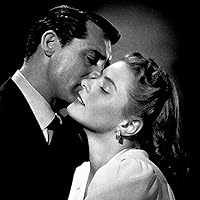
Chicago, 1950. Rosalind Porter siempre ha desafiado las convenciones: tanto en su trabajo como física para diseñar la bomba atómica, como en la apasionada historia de amor que vivió con su colega Thomas Weaver. Cinco años después del fin de la guerra y de su romance, Weaver vuelve a ponerse en contacto, y también el FBI. El agente Charlie Szydlo quiere que Rosalind espíe a su antiguo amor, ya que sospecha que está vendiendo secretos nucleares a Rusia.
A medida que los sentimientos de Rosalind hacia los dos hombres se intensifican, se verá obligada a elegir entre el hombre que le enseñó a amar, o aquel cuyo amor puede salvarle.
Una emocionante historia de amor ambientada en plena Guerra Fría, con el glamour de Mad Men y el ambiente y tensión de The Americans.
When I was child, bookstores and libraries were sanctuaries, my invitation to adventure, escape, satisfaction. Wanting to be a part of the action, I wrote my first 'novel' when I was six. Years later, my first real book arrived in bookstores.
But it's taken me until my fifth novel to tackle a topic that's always called to me: women in science. My mother was trained as a biochemist at the University of Chicago during World War II, and remained at the University afterwards, researching cures for cancer. But as was typical in that era, when she married, she gave up her career to be a wife. She spent the rest of her life aching for science. As a result, science flowed into her cooking, cleaning, our healthcare. She measured, she weighed, she considered, she hypothesized.
My mother's best friend was her cousin Jean. Walking together to campus each day, they discussed everything. But no matter how many times she asked, Jean refused to tell my mother a single detail about what was going on at the 'Metallurgical Laboratory' where she worked. As it turns out, Jean was a clerical worker for the Manhattan Project and stayed true to her oath of secrecy until long after the atom bomb was dropped.
That story of silence stuck with me. And my research revealed there was one female physicist involved in those early Chicago years of the Manhattan Project: Leona Woods, the youngest member of the team. Atomic Love is in no way based on Woods' life. Still, her presence at that critical time and place in history allowed me to create my main character, Rosalind Porter, a female physicist who is asked to risk love and limb to protect her country.
Adventure. Escape. Satisfaction. I hope you will find these things and more in Atomic Love.
Rosalind Porter, 30, is an extremely clever young woman, so much so that she works on the Manhattan Project with Enrico Fermi. She has a love affair with British scientist Thomas Wheeler who ultimately lets her down and gets her sacked from the work she loves. Why? It is now 1950 and she’s working at Marshall Fields in Chicago retailing antique jewellery. She’s becomes aware she’s being followed though he’s not very good partly because he’s so darned tall! This proves to be FBI Agent Charlie Szydlo who tells her a startling story about Wheeler ......The story is told from the perspectives of Charlie and Roz.
I absolutely love this book. First of all, any writer who can make science (especially physics 🤦🏼♀️) interesting to a dunce like me probably deserves an award! It’s so well written, at times it’s very colourful, at others very mysteriously cloak and dagger but it grips from start to finish. The depiction of the post war period with the growing freeze of the Cold War and massive concerns now that Russia had the A-Bomb and want the H-Bomb, The ‘reds under the bed’ of McCarthyism is really well done. The author also shows the changing role of women and how some want more than the traditional roles assigned. The characterisation is excellent, there are some lovely characters you can invest time in. There’s obviously Roz and Charlie and their respective families and though you don’t know what to make of Wheeler, he’s not dull! There’s real intensity in some of the encounters between Roz and Wheeler and Roz and Charlie that you feel like an intrusive eavesdropper so you hardly dare to breathe. Charlie’s revelations to Roz of his experiences as a Japanese prisoner of war are profoundly moving and you can feel the growing emotional charge between them. I love the Russian spy element and the perceived and actual danger is very intriguing with the plot containing betrayal, secrets and lies.
Overall, in my opinion this is a first class historical thriller of many depths which is so good I didn’t want the book to end and it’s one I recommend.
With thanks to Penguin Michael Joseph for the ARC.
This book was ridiculous. If I had been scrolling through an Amazon or Goodreads booklist, I probably never would have deigned to read something as woefully trite as a book titled "Atomic Love," but as one of Book of the Month's August picks, I decided to trust it. It didn't impress.
The main character is a female scientist named Rosalind who was the sole woman working on the infamous "Manhattan Project" that developed and deployed the atomic bomb in World War II. Unfortunately, her slimy ex-boyfriend and co-worker (always a winning combo), who left her heartbroken, is now accused of selling secrets about that very bomb to the Russians. A ~dreamy~ yet wounded (both physically and emotionally) war-vet-turned-FBI-agent now wants Roz to begin sleeping with said ex-boyfriend again to find out if he's really a spy. SPOILER: she does it, but can't help feeling inexplicably drawn to the FBI agent, too, despite the burns on his hand that somehow make him so insecure that he's refused to even go on a date with a girl for NINE YEARS.
Lots of lip quivering and hand trembling ensues, and despite their best efforts, Roz and the FBI agent, Charlie, can't resist each other. After describing how his hand was held to a fire by the Japanese during the war, Rosalind holds his deformed hand and THIS line happens:
"When she lets go of his hand, her fingers still tingle from having touched it. Like the sizzle off a match, it sets a ripple of fire moving through her whole being, smoldering long, long after he's gone."
She also feels it AT THE TIPS OF HER BREASTS. Charlie also describes Roz multiple times as someone who "doesn't know she's beautiful" (insert eye roll). Believe me, Charlie, she knows. It's why she felt like putting the burned hand of an FBI agent assigned to protect her on her chest was an okay thing to do.
Overall, for a book about espionage, World War II and supposedly strong, smart women, "Atomic Love" was boring and cliche. The only part that I enjoyed was the last seven pages, and maybe the fact that I had finished it, too.
When I was young, I spent a lot of time thinking about spies (like all kids who spend more time with books than with friends, I had a lot of niche fixations). Many of the nonfiction accounts of spying tried to dispel the idea that the job isn’t nearly as sexy as the movies make it out to be. Well. All I have to say about that is that while I begrudgingly accept this claim, it won’t stop me from wholeheartedly enjoying suspenseful Cold War stories full of double agents, stolen secrets, and lies.
Rosalind Porter is a brilliant woman who has been wronged. One of the Manhattan Project physicists who helped work on the atomic bomb, her career was ruined and her heart was broken by war’s end. Five years later, she’s living a nondescript life in Chicago when an FBI agent taps her to help figure out who could be leaking nuclear secrets to the Russians. Then, a former colleague and old flame gets in touch, forcing her to reckon with old demons even as her present fills up with shadowy new ones.
This is a suspenseful, character-driven story that is just as much about Rosalind’s life as it is about espionage. We get the spy stuff in spades—there’s wire-tapping, covert operations, and people who aren’t who they say they are—but there’s also romance with a capital R. Imagine a vintage James Bond thriller, except the hero isn’t a playboy in a tux but a savvy young woman thrown into perilous circumstances in the gritty McCarthy era. Doesn’t that sound fun?
4 stars Thanks to G.P. Putnam's Sons and NetGalley for allowing me to read and review this ARC Publishes August 18, 2020
I am not one who likes to read books dealing with sabotage or espionage - the mystery in that just does not appeal to me. This book however does deal with espionage, and although a major issue in the book, it actually takes a backseat to the characters. In addition, I am not a great romance reader, either. This book does have romance, but is built into the plot in a way that it is not glaring or even the main action.
Rosalind Porter is a scientist and worked as the only woman among men in the building of the atom bomb, the Manhattan Project. She saw the A-bomb as only a good product, until it was dropped on Japan. Her boyfriend Tom Weaver was a co-worker, until the day she not only lost her job, but he ended their relationship.
Years later an FBI agent, Charles Szydlo, enters her life and changes everything she thought she knew about not only her own past, the disappearance of Tom Weaver, but also about love.
This was my first experience with Jennie Fields. This novel has appeal to both genders. I find her writing to be easy to digest, a good solid interpretation of the era and characters that are both true to life and easy to relate to. It is time for me to back track and read some of the books that I have already missed by this talented author.
Chicago, 1950. Rosalind Porter worked as a physicist on the Manhattan Project. And that’s what attracted me to this story. After the war, once men were back, she was no longer needed. On this previous job, she met Thomas Weaver. A man she deeply fell in love with and hasn’t seen him for four years.
With the love for science, she’s trying to find a new science job, but it’s a struggle to find a science job for a woman. At the same time, Charles Szydlo, an FBI agent, approaches her and asks her to spy on Thomas Weaver.
In the first 10% of the story, we learn very little about protagonist and a lot about the FBI agent. I enjoyed reading about his background and his family, but what happened to the protagonist? I was hoping that her dimensions would be developed through the Manhattan Project, instead it dives into her relationships with men.
I didn’t find the protagonist interesting and didn’t connect with her.
The writing is descriptive, which for me makes the pace very slow.
If you like descriptive writing and romance stories, then it might be a story for you.
Source: ARC was provided by the publisher via Netgalley in exchange for an honest review.
Atomic Love by Jennie Fields is a historical novel set in 1950’s Chicago just after the second world war. Rosalind Porter is a physicist was involved in the Manhattan Project the development of the atom bomb; she is feeling guilty for all the people that died because of it. Her Lover Thomas Wheeler is also with the project. But he leaves her and makes her lose her job at the project. Years later she sells jewellery at a department store. Far cry from the scientist she used to be. When she meets Thomas Wheeler again and with that an FBI agent Charlie Szydio, who thinks that Wheeler is selling secrets to the Russians and wants Rosalind to help him prove it. But meeting Wheeler brings up the memories of the past and her love for him. Thank you, Penguin Michael Joseph, for a copy of Atomic Love. Historical fiction is one of my favourite genres. But for me personally this book wasn’t for me. I was expecting a gripping story of spies and espionage but, this is more a romance novel. I was seriously going to DNF this 20% in, but I thought I would preserve and give it the benefit of the doubt but for me it didn’t improve. Don’t get me wrong there is lots of positive reviews. I just thought it was a bit flat. I was waiting for something big to happen and unfortunately it did not. Just Rosalind couldn’t decide what man she wanted. Which I’m sorry too cheesy for me and I found Rosalind irritating.
Bad dialogue, weird story, unsatisfying finish. Wish they gave Rosalind, as the main character, more of a sense of agency. We are told she is a brilliant scientist but not once does she put any of that skill/knowledge to use. Her primary role for the entire course of the book is damsel in distress - waiting on a man (does not matter which one) to show up and solve her problems for her.
This is a book I've wanted to write for a long time. First, I very much wanted to tell a story about a female scientist in an era when few women were scientists. My mother was a scientist at the University of Chicago after WWII, and gave up her career when she married, something most women did in that era. It was a decision that haunted her the rest of her life.
Another thing that drew me to this tale was that my mother's cousin, who was also her best friend worked at the mysterious 'Metallurgical Laboratory' on the University of Chicago campus. She never told my mother what she was doing there. Even years later, she was very circumspect about it. It turned out that the MetLab was a cover for the Manhattan Project where the first atomic reaction was conceived and carried out. A little research told me there was indeed one young female scientist who worked on that project. And though this book isn't based on her life, her presence allowed me to tell this tale.
Atomic Love is about betrayal and espionage. About daunting moral choices. And about three people deeply wounded both spiritually and physically by World War II, and how they come to heal each other.
I knew this was more romance than historical/women’s fiction going in so that doesn’t bother me as much as it seems to bother other reviewers. However, while I do like romances as palate cleansers this did not do it for me. It is just too sappy and cheesy and melodramatic and emotional (“Her bones feel phosphorescent as she reflects on [his] touch, his kiss, his presence.” No idea what that even means. My bones have never felt phosphorescent.) So much repetitive description of Rosalind’s creamy white skin and how “the ceiling lights pull rainbows out of her hair”. [eyeroll] Rosalind spent most of the book going back and forth between which guy she loved and it got old fast especially since I wasn’t crazy about either of them. One broke her heart and the other just needed rescuing and wanted to shield her from every bad situation like she was a delicate flower in need of a big strong man. Ugh. And then the ending (mildly spoilery)...it’s like the author gave her a relationship and then belatedly realized having her prioritize the relationship somehow made her a weak woman so hastily sent her off to pursue her science dreams while the guy gets over his hurt feelings at light speed and vows to wait for her.
I am 0/2 on the books I chose for my August BOTM picks.
Loved that the MC was a leading scientist in her field, which was less common back when this book was set in. The love triangle made things steamy. It kept me on the edge of my seat and ended up reading this in one sitting! Loved it and I'm not typically into historical fiction!
Chacigo, 1950. Rosalind Porter had always defied expectations in her work as a physicist on the Manhattan Project and in her passionate love affair with colleague, Thomas Weaver. Rosalind is now working behind a jewelry counter. Weaver had destroyed her life and ambitions when he made sure that she lost her job.
FBI Agent Charlie Szydlo is looking to trace Weaver back to the war years to see if he had been supplying the Russians with US war secrets. Charlie asks Rosalind if she can get close to Weaver and get a confession from him.
The pace flows along smoothly in this historical romance. Rosalind is feeling guilty about her part in the creation of the nuclear bomb that maimed and killed so many people. The story is told by Special Agent Charlie Szydlo and Rosalind Porters point of views. I felt the ending was a bit rushed. I also felt it was more about the love interests than anything else.
I would like to thank #NetGalley, #PenguinUK #MichaelJoseph and the author #JinnieFields for my ARC in exchange for an honest review.
I totally enjoyed reading this, although it did get a bit silly and gloopy, especially towards the end. But I took it as a fun read and am not going to nitpick anything too much. Not quite 4 stars for me, but fun.
This historical fiction novel packed a punch. I really enjoyed the fact that it wasn't just another WWII novel. It explored how the war really affected people well after the war was over. It also explored the beginnings of the Cold War.
The novel was told from two different point of views. Rosalind is a physicist who was the only woman who created the atomic bomb. She had issues dealing with what happened with the bomb. She was fired from her job and now her former love and the man, Weaver, who got her fired is back in her life. She wants nothing to do with Weaver until the FBI approaches her to spy on him because they think he is a communist and selling secrets about bombs. The novel is also from Charlie Szydlo the FBI agent who works with Rosalind to get information about Weaver. Charlie was a prisoner of war and suffered many horrible things in Japan. He is still dealing with the aftermath even as he works as an FBI agent. He and Rosalind begin a friendship as they try to figure out what exactly Weaver is doing.
This novel explored so many different themes. The reader also learned about how hard it was for many women after the war to have to go back and just be mothers. Rosalind and Charlie were interesting characters and I really enjoyed the many depths of this novel.
It's 1950, and in Chicago, Rosalind "Roz" Porter, an ingenious scientist who worked on The Manhattan Project and who had overseen the development of the atomic bomb through its various stages, is trying to move on from the fog of war. Thomas Weaver, a coworker and an immigrant from Britain, broke her heart when the war ended and combined with the intense, pervading guilt she feels for her role in creating the bombs that were dropped on Hiroshima and Nagasaki, Roz is struggling to come to terms with everything. She decides it's time to leave her role as a scientist and resigns herself to a more conventional lifestyle. But then both Weaver and the FBI gets back in touch. Special Agent Charlie Szydlo wants Roz to spy on Weaver, whom the FBI suspects of passing nuclear secrets to Russia. Roz helped to develop these secrets and knows better than anyone the devastating power such knowledge holds. But can she spy on a man she still loves, despite her better instincts? At the same time, something about Charlie draws her in. He's a former prisoner of war haunted by his past, just as her past haunts her. Rosalind's final assignment launches her on a mission to find the truth...no matter where it leads. As Rosalind's feelings for each man deepen, so too does the danger she finds herself in.
Atomic Love is a captivating literary thriller with a love story at its heart and the exploration of forbidden love. Roz holds her own in a world dominated by men and Fields's rich descriptions of 1950s America were detailed and immersive enough that you could transport yourself there in an instant. It's both a high-octane thriller and an emotionally resonant page-turner all tied up in a pacey and absorbing package. There are a plethora of twists and turnsregarding this espionage love triangle and the feelings of each character were described in intimate detail. The cast was an engaging mix of characters, some with mixed or conflicting loyalties and some with no loyalties at all. You're never quite sure who can be trusted. This story is actually inspired by real-life female physicist Leona Woods, who helped to build the atomic bomb alongside Enrico Fermi. Everything works together to form a mighty satisfying conclusion. It is a dramatic, high-stakes story and one I recommend for those who enjoy intelligent historical fiction with a large smattering of romance. Many thanks to Michael Joseph for an ARC.
The wind whips your hair, loosening it from its restraint. You stand on the hillside and look out, a plume of smoke taking over. The ashes trail along in the breeze, a faint hint of smoke tickles your nose. The destruction in front of you is your fault. You created it. You unleashed a fury you can never take back.
Later as you walk the non-existent streets of the aftermath, you see the horrible scene you have painted. The scar you have etched into the earth is ugly. No soul is left breathing, no life is left to see for miles upon miles. Everything is gone. You kneel down in the smoldering ashes and weep for everything you have done.
Atomic Love was a tale told after the bombings on Hiroshima and Nagasaki and explored the aftermath of hidden secrets.
Rozalind was such a strong female character and I loved reading about a female scientist during and after WWII. She radiated strength and it was refreshing to read about a character of her leadership. I also loved learning a bit about the science Roz worked on and it was written in an understandable way that made it enjoyable for me. While I thought the premise of this book sounded very intriguing, the plot itself fell a little short for me. There were moments of interest about the war as secrets were revealed, but they were few and far between with more detail on the love interest talked about instead.
Now, I enjoy a good love story, but the one in this book felt a little out of place and rushed. The ending was also wrapped up too quickly in my opinion. It was as if the chapters of the book were slowly dripping from a jar of molasses and then the final chapters were thrown in a blender and spit out in a whirlwind. I think they needed more balance.
Overall I recommend if you love a strong female lead, enjoy WWII era books, and have an interest in science.
TW: War Crimes/Actions, Torture, War Details, Murder.
*I received a gifted copy of this book from the publisher for my honest review.
I've always been a fan of historical fiction, so when Book of the Month offered this one I jumped on it. Set in 1950s Chicago, there was something so refreshing about reading a Cold War novel about a female scientist who finds herself not only wrapped up in a case revolving around Russian operatives, but also a love triangle. This book was a little slow in the beginning but once it got started and all the characters were introduced, I found it hard to put down. I also enjoyed the feminist undertones and the nods given to the early years of the Female Liberation Movement that took hold in the United States after WWII. Highly Recommend this one to anyone looking for a historical fiction novel with a Cold War Twist.
I received a complimentary copy of this eBook ARC e-galley from the author, Penguin Random House, and Netgalley in exchange for an honest review.
Rosalind Porter loves her job as a scientist. When the war ends and her career is ruined by the man who broke her heart, Rosalind is stuck working at the jewelry department at a department store. Now Weaver is back ready to make amends. Can Rosalind forgive him or will she become a spy for the FBI and ruin his life forever? Read on and find out for yourself.
This was a pretty good historical romance spy fiction novel. If you like spy stories, romance, and more, be sure to check this book out when it officially hits bookstores and wherever books and eBooks are sold on August 18, 2020.
I normally just don’t rate books I dislike , but this one masquerading as women’s empowerment while acting as if a woman isn’t special unless she has a fancy job, using tropes like, “beautiful and she doesn’t know it,” and filled with truly the cringiest depictions of love merited one. Yuck.
I received an advanced copy of this novel from the publisher via NetGalley in return for a candid review. This review does not contain spoilers.
Atomic Love Has All the Subtlety of its Title
Summary Five years after her work on the Manhattan Project and her romance with fellow scientist Thomas Weaver ended in catastrophe, Rosalind Porter, the heroine of Atomic Love, lives in Chicago and works behind a jewelry counter. At the request of FBI agent Charlie Szydlo, Rosalind agrees to spy on her former lover who is now expected of selling atomic secrets to Russian spies.
Rating ⭐⭐ Rating: 2 out of 5.
Review In the first chapter or so, I thought I had a handle on the tone of Atomic Love. The number of times heroine Rosalind remarks on the color of FBI Agent Charlie Szydlo’s eyes in a single paragraph clued me in—this, I thought, was a romance novel masquerading as women’s fiction. As someone who adores and defends the romance genre whenever possible, this was by no means a detrimental assumption. But, as I kept reading, I found none of the charms of romance. Nor did I find the tension of noir, which often uses romance tropes to deliver subversive messages about society. Instead, Atomic Love sort of split the difference, becoming too dour to be a satisfying romance and too conventional to be an engrossing noir.
The author certainly does not shy away from heavy themes. The bombings of Hiroshima and Nagaski. Japanese prisoner of war camps. Geopolitics at a time when authoritarianism was happening at home and abroad. But the characters and prose Fields crafts aren’t weighty enough to bear this history. This is a novel where people say whatever pops into their head, usually in the most dramatic way possible. This is a novel where “Noooooo!” is rendered on the page (six o’s in no—I counted). This is a novel where the romantic lead–despite the attempt at a love triangle, we know he’s the romantic lead because we get his point of view–thinks things like, “Women. He’s so bad at this,” but his base-level misogyny is fine because he loves his sister and has a comically evil ex.
There are some nice historical touches and Rosalind, though she never gets to do any science on-page, does maintain a love for it. The author’s note makes it clear that the novel is meant as a celebration of female scientists and the city of Chicago, and those aspects do come across. Though not enough to make up for the tonal inconsistencies and lack of tension. This is not a subtle novel. It’s the kind of story I could see working okay on screen with actors good enough to sell the illusion of characters thinking deeply about the traumatic and weighty subject matter (or going the opposite direction and selling an effervescent pastiche of it). Not so much when we’re in the characters’ heads realizing there’s nothing going on under the surface.
Rosalind Porter worked on the Manhattan Project as the only woman physicist. But now, in 1950, she’s selling antique jewelry at Marshall Fields. Her job at the lab had ended abruptly just after her love affair with colleague Thomas Weaver had also ended abruptly. Heartbroken and depressed she left science behind and moved on with her life. But now Weaver has contacted her again and wants to re-establish their relationship. FBI agent Charlie Szydlo also wants her to see Weaver again, because the FBI suspects Weaver has been passing secrets on to the Russians and they want Rosalind to spy on him.
This work of historical fiction captured my attention from the beginning, and the twists and turns in the plot kept me turning pages. I wasn’t always in Rosalind’s camp. She seemed very vulnerable and far too easily swayed. There were times when she showed her intelligence and courage, but other times when I wanted to just shake her. I loved Charlie, though I found it hard to believe he’d be accepted into the FBI given his obvious PTSD and disability resulting from his time spent as a POW in a Japanese camp during WW2.
I’m not sure how this book came to my attention, but I noticed that both Ann Patchett and Elinor Lipman (authors whose works I’ve enjoyed) praised it.
عشق اتمی سرگذشت زن دانشمندیه ( رزالیند) که در اختراع بمب اتم دست داشته طبق گفته ی نویسنده تخیل و واقعیت هر دو در نوشتن این کتاب دخیل بودن . کتاب متوسط رو به بالا بود کلا توو ۱۰۰ صفحه ی اول همه س تکرار حرف های شخصیت ها بود اما کم کم بهتر شد . البته طوری هم نبود که نخواهید ادامه بدین . نمیشه گفت خیلی خوب بود اما خوندنش برای یک بار خالی از لطف نیست . امتیازم بهش ۳/۵ بود . پ ن : ترجمه خوب بود اما سانسور داشت . و یه کم ترجمه ی نوشیدنی الکلی در همه جای کتاب به لیموناد جالب نبود ! لیمونادی که رز حتی توو چاییش می ریخت 😐
Chicago, 1950. Rosalind Porter had always defied expectations in her work as a physicist on the Manhattan Project and in her passionate love affair with colleague, Thomas Weaver. Rosalind is now working behind a jewelry counter. Weaver had destroyed her life and ambitions when he made sure that she lost her job.
FBI Agent Charlie Szydlo is looking to trace Weaver back to the war years to see if he had been supplying the Russians with US war secrets. Charlie asks Rosalind if she can get close to Weaver and get a confession from him.
The pace flows along smoothly in this historical romance. Rosalind is feeling guilty about her part in the creation of the nuclear bomb that maimed and killed so many people. The story is told by Special Agent Charlie Szydlo and Rosalind Porters point of view. I felt the ending was a bit rushed. I also felt it was more about the love interests than anything else.
I would like to thank #NetGalley, #PenguinBooksUK #MichaelJoseph and the author JennieFields for my ARC in exchange for an honest review.
Atomic Love, by Jennifer Fields, was the story of Rosalind and her quest for science. Rosalind was once an important physicist assigned a top secret position on the Manhattan Project. In a world full of men and war, Roz meets Weaver, a fellow scientist, and falls in love. Weaver is her first serious relationship, but soon becomes her arch nemesis. Weaver destroyed her life and ambitions by seeing that she lost the position she held so dear.
Enter FBI agent Charlie, many years post war. Charlie is looking to trace Weaver back to the war and the possibility that he may have been supplying the Russians with US war secrets, specifically regarding the A-bomb. Charlie approaches Roz in hopes that she can get close to Weaver and seek out a confession.
Can Roz overcome her anger toward Weaver for betraying her, long enough to trap him, or do lost feelings of love linger? It isn't long before Roz and Charlie, working together closely, also become drawn to one and other. Ultimately, Roz must decide between lost love that ended in betrayal, or follow her newfound relationship and a future with Charlie. Above all else,Roz dreams to re-enter the world of science, her true passion.
Atomic Love is a historical fiction with so much more. It is a book of mystery and espionage, love and betrayal, spying and secrets. Roz is a genius, but playing a man's game when women were expected to stay at home.
My personal opinion of Roz is not that attractive. Her answer to Weaver/Charlie and leading them both along, while involved with each physically and emotionally, is not a trait of a strong female protagonist. As a matter of fact, her actions justify the very stereotype of women in the 1950's. Roz simply led too much with her heart, and other body parts, and did not use her head wisely. I am glad, however, that she did indeed seek her spot in the scientific world once again. In that I am a female chemist and chemical engineer, I feel for her position, even now in the year 2020. What I would have enjoyed is a bit more scientific detail within the writing.
I appreciated Roz's internal strife with the use of the atomic bomb. Was it a scientific wonder, or had she partaken in the devastation of a country and its 200,000 people? Something for all to ponder...
Thank you to Netgalley for the opportunity to read this ARC in exchange for my personal opinions and review.
📚 Hello Book Friends! ATOMIC LOVE by Jeannie Fields was an entertaining mystery with a touch of thriller. I enjoyed the intelligent plot. The book did not have major twists and had a straightforward delivery. I did not like the main character much. Rosalind came across a weak woman who was not able to make up her mind. I would have liked for her to be much stronger. I was also looking forward to discovering more about her involvement in the Manhattan project, but that did not happen. The book is a good read, nonetheless.
Inca nu m-am decis daca mi-a placut aceasta carte. Aveam niste asteptari cat casa. Ii dau 3,5 stele. Mi s-a parut ca prea mult timp s-a invartit in jurul cozii, părând ca spune multe cand de fapt nu spunea nimic. Cred ca subiectul avea un potențial mult mai mare.
Thank you to Penguin Group and NetGalley for providing an advance copy of this book in exchange for my honest review. The book will be published on August 18th, 2020.
Writing: 2/5 Plot: 3/5 Characters: 3/5
Historical fiction in the post WWII era — espionage, a love triangle, a strong and imtelligent female lead. The author endorsements are impressive — Ann Patchett, Delia Owens, Rebecca Wells, B.A. Shapiro … I was drawn in because our heroine — Rosalind Porter — is a physicist who worked on the Manhattan Project with Enrico Fermi himself.
In truth, this book is a Romance. The characters are tropes — strong powerful tropes that appeal to a lot of people — but with no fresh insights or depth. A strong, capable, heroine who has doubts about her capabilities because she has been betrayed by the man she loved, torn between the now contrite betrayer and another man who is damaged both physically and emotionally by his war experiences and yet who is capable of a great love that only she can supply. Add in a national emergency and evil Russians. Stir. It’s exciting but not new.
I found the writing to be heavy handed and a little trashy. The male / female stereotypes annoyed me. This is one of those historical fiction novels where the characters — especially the women — have modern sensibilities even while struggling with historical problems. And Rosalind’s constant “love of science” doesn’t actually get a lot of airplay — we don’t hear much about her previous work or what scientific puzzle is appealing to her now.
If you love romantic historical thrillers, this book is for you! If you are looking for in-depth characters and some insightful commentary about strong women who were able to achieve something in a difficult time — meh.
An unusual angle for what is a historical romantic thriller resulting in a superb story that grips from the first page. Rosalind is a highly intelligent nuclear scientist who now works in a jewellers shop in Chicago. She is lonely and bored and devastated that Wheeler, who had been the love of her life betrayed her. Rosalind was a superb student and was the only woman in her section of the Manhattan Project where they created the Atomic Bomb. When Rosalins saw the devastation caused by what she helped to build she is overwhelmed with guilt, hence her lonely life now. Wheeler begins to contact her again hinting at secrets he must confess to her. He betrayed her once. he is contrite and loving but there are dark secrets there and how can she trust him. Espionage, war, love, betrayal - finely crafted cocktail of themes with sharp characters and beautiful written. The plot darkens and thickens into a exciting and most enjoyable read. A thought provoking book that this reader could not put down. I look forward to reading more from this author.
Don't let the cheesy title fool you - ATOMIC LOVE is an intriguing tale of the after effects of the Manhattan Project and the Russians in the race to have atomic weapons of their own. It's full of espionage, double-crossing, and the FBI - and would make a wonderful miniseries, in my opinion. Jennie Fields has an adept way of creating believable, three-dimensional characters. I was caught up in this novel the whole time and loved the setting of my hometown, Chicago.
Female physicist, Rosalind Porter, has a passionate love affair with colleague, Thomas Weaver, while collaborating on the Manhattan Project. After the A-bomb is dropped, their relationship implodes. When the two meet again several years later, more bombshells are dropped involving love, deceit, betrayal, espionage and an FBI agent haunted by his past. Excellent read!
Historical fiction is one of my favorite genres! I really connected with Charlie in his story as a POW. I thought the ending was great for Roselind, but I hated it for Charlie, so I had to give it four stars. But it was a beautifully written story.