Retroactivo, novela corta de Bob Shaw Cuando fuimos a ver el fin del mundo, de Robert Silverberg Servicio fúnebre, de Gerard F. Conway Una situación especial en la ciudad de Sumit, de R. A. Lafferty Mecenas, novela corta de William Rotsler Frases útiles para el turista, de Joanna Russ Sobre la pendiente, de Harlan Ellison Ahora tengo la cabeza en otro lugar, novela corta de Grania Davis A la caza del Sol, novela corta de Gordon Eklund El hombre que saludaba con la mano, de Gardner R. Dozois El hombre sin cabeza, de Gene Wolfe Joven Tigre, novela corta de Edgar Pangborn
Carr was born in Grants Pass, Oregon. He attended the City College of San Francisco and the University of California, Berkeley from 1954 to 1959.
Carr discovered science fiction fandom in 1949, where he became an enthusiastic publisher of fanzines, which later helped open his way into the commercial publishing world. (He was one of the two fans responsible for the hoax fan 'Carl Brandon' after whom the Carl Brandon Society takes its name.) Despite a long career as a science fiction professional, he continued to participate as a fan until his death. He was nominated five times for Hugos for Best Fanzine (1959–1961, 1967–1968), winning in 1959, was nominated three times for Best Fan Writer (1971–1973), winning in 1973, and was Fan Guest of Honor at ConFederation in 1986.
Though he published some fiction in the early 1960s, Carr concentrated on editing. He first worked at Ace Books, establishing the Ace Science Fiction Specials series which published, among other novels, The Left Hand of Darkness by Ursula K. Le Guin and Rite of Passage by Alexei Panshin.
After conflicts with Ace head Donald A. Wollheim, he worked as a freelancer. He edited an original story anthology series called Universe, and a popular series of The Best Science Fiction of the Year anthologies that ran from 1972 until his death in 1987. He also edited numerous one-off anthologies over the same time span. He was nominated for the Hugo for Best Editor thirteen times (1973–1975, 1977–1979, 1981–1987), winning twice (1985 and 1987). His win in 1985 was the first time a freelance editor had won.
Carr taught at the Clarion Workshop at Michigan State University in 1978, where his students included Richard Kadrey and Pat Murphy.
Perhaps all science fiction anthologies should start with a 3-star rating. The template may comprise of such: the occasional 1 star tales clogging the drain followed by a bunch of 'average' throwaways suddenly buoyed to the top by one or two utter gems, which surprise as much as they deliver the elusive 5 star watermark.
Under Terry Carr's editorial shuffling, Universe 2 is more of the same as its predecessor (a rating ratio somewhere in the middle), another good intro to the American (mostly) version of the SF New Wave, but one that feels like it was selected and categorized by Carr using a pair of dice, two sticks of Acapulco Gold, and amethyst-tinted sunglasses.
Retroactive • [A.E.S.O.P.] • (1972) • novelette by Bob Shaw -The two Bob Shaw novels that I had read seemed to suffer under my own self-inflicted hype. Gems of ideas blaze forward, yet hit roadblocks dulled by hairy-knuckled melodrama and kitchen-sink deliveries. However this entry is a fine one. Government surveyors visit a white-sand planet in search of the glimmering cities that randomly appear in the blinding deserts like mirages. How a city (and a race of humanoid beings) functions in its own multiplying diasporas of time and space is fascinating. A black hole in a prehistoric forest only heightens the dramatic tension of who survives and who remains locked within the in-between.
When We Went to See the End of the World • (1972) • short story by Robert Silverberg -Humorous cocktail party-era expose of the new swingers culture of US Suburbia. Everyone spouts on and on about their recent holiday overseas, but Silverberg has a little fun with future-forward traveling as much as he does with marital infidelity. How we all have our many versions of Earth's inevitable doomsday. Solid.
Funeral Service • (1972) • short story by Gerard F. Conway -a SF Zombie tale (ala Monkey's Paw) and a rather fresh one at that. Universe 1 included Conway's 'Mind Ship', a layered yet confusing rumination on telepathic space travel (see Cordwainer Smith), but here in Vol. 2, Conway outdoes himself. When our protagonist revives his father at The Funeral Service, he finds out that second chances may be more-than-dead on arrival. A somber take on senility, as well a precursor to the fine modern horror novel 'Handling the Undead' by John Ajvide Lindqvist.
A Special Condition in Summit City • (1972) • short story by R. A. Lafferty -what if the government knew that all humans were telepathic? What if they had a machine that could disrupt that telepathic powers in each human...would it bring a next-level purity, or royally fuck things up? Of course, madman Lafferty plays with the latter scenario.
Patron of the Arts • (1972) • novelette by William Rotsler -rich man pays poor man to electronically sculpt the love of his life, Madelon. Only Madelon has a thing for the sculptor, and the rich man wallows in his wealth, self pity empowered by his own superficial heartbreak. Not a bad tale by any means, but its philosophies about art and reality wax the poetic a bit too much. Can't imagine how Rotsler turned this into a full-length novel.
Useful Phrases for the Tourist • (1972) • short story by Joanna Russ -a slightly witty take on what to say in future-world tourism. I recently read Russ' wonderful Gleepsite -- fantastic! -- but this is a note-on-a-napkin type of tale.
On the Downhill Side • (1972) • short story by Harlan Ellison -Uncle Harlan turns a weird tale into a ghost melodrama into a WTF head-scratcher. Well, it's set in the cemeteries in New Orleans. It has a ghost maiden, too, and a spectral dancer spinning on death's threshold. And how can I forget it has an otherworldly unicorn. The sugar makes the teeth ache in this one, and Harlan again proves he's one of the most wildly inconsistent in SF's top tier.
The Other Perceiver • (1972) • short story by Pamela Sargent -if you like scatological science fiction and aliens that look like turtles, then this short story was meant for you. Silly? Of course it is, and as juvenile as an EC comic where on every other page someone seems to be turning into a puddle. What Sargent is telling us is the world may just turn into one colonoscopy bag. Vaguely reminiscent of Stephen King's 'Grey Matter', but of course with lots of poo.
My Head's in a Different Place, Now • (1972) • novelette by Grania Davis -I really dug this far-out tale by Grania Davis. A young hippy family can't deal with urban living and all of its injustices. So what they're layabouts, scrubs, and complaining at all the world's problems while never lifting a finger to make life better. Wayfaring onwards, when they travel all the way past Mexico and Yucatan, they find a lost village where everything is cheap and magic shrooms blossom at midnight. Of course the white hippies gorge on the shrooms, only to find that they're suddenly at the end-of-the-world wearing new bodies altogether. For those old enough to remember 'Creature Double Feature', this is Matango (Attack of the Mushroom People) revisited, with sadsacked hippies getting their own twisted justice on themselves. The surprise of the collection.
Stalking the Sun • (1972) • novelette by Gordon Eklund -there is a pocket of stories that deal with game hunters time traveling. Whether to our prehistoric past or to the future forests, Eklund turns in a short piece that turns the tide on evolved man as savage - however it is the three-way marriage that appears more interesting than the explosive revelation at the end.
The Man Who Waved Hello • (1972) • short story by Gardner Dozois [as by Gardner R. Dozois] -Nearly 5 decades before various men were getting caught in the Covid-era Zoom meetings with their screens mistakenly unmuted and their cocks brazenly out in plain view, Dozois turns a sophomoric tale into a glimpse of middle-rung corporate madness. Here, the corporation gifts one of its workers with a video phone, and the rest is history.
The Headless Man • (1972) • short story by Gene Wolfe -a headless man finds true love. Can't say much more than that.
Tiger Boy • [Tales of a Darkening World] • (1972) • novelette by Edgar Pangborn -while Pangborn's tale in Universe 1 (Mount Charity) was top shelf, this novelette falls below rank. When writing of a small village, it isn't necessary to list each goddamn member living there. At points I had nothing to grasp regarding who was who. Story goes: one mute boy follows a spectral boy whose companion is a powerful tiger, only to be hunted down by the villagers who have no real reason to kill them yet persist nonetheless like an idiotic mob. Yeah, it kind of stinks like a bright dish quickly molding to grey, and I was really looking forward to Pangborn closing it out in style as he did in Volume 1.
So back to the beginning: what do you get with this 1970s anthology, yes, it's three stars yet again. The average of the average SF collection but still somehow worth it, paperback collector or otherwise.
At least I didn't have to suffer through another Ron Goulart story :/
Ah, this one got me into trouble. I was attracted to the stunning Dean Ellis cover and plucked it out of the wire spin rack in the drug store. I was about twelve years old at the time. I read the first couple of stories and took it to school with me the next day. What one did, you see, was hold the text book upright on the desk, hold the paperback open inside of it, and you looked like you were following along with what the teacher was saying, and learning all about the wonders of algebra, whereas you were actually reading your literary selection. The teacher was happy because they thought they were teaching and that you were learning and you were happy because Gerald F. Conway was cool and algebra was boring, so it was a win-win for everyone. The system broke down because of Joanna Russ, who wrote the funniest story I'd ever read, Useful Phrases for the Tourist. I sat there and giggled and laughed and it must have been obvious that I wasn't amused by algebra. I got a stern lecture about paying attention and being quiet and not being rude and a warning that silly sci-fi stuff would rot my brain and was warned never to do it again. I promised solemnly that I would mend my ways and clean up my act and pay proper obeisance to the algebraic gods henceforth. So, the next day, I sat in class and read The Other Perceiver by Pamela Sargent, which was the funniest story I'd ever read. I chuckled and chortled and choked and guffawed and.... well, it all turned out all right in the end, I suppose; I've still got that same copy of Universe 2 on my shelf, though I never did get a handle on algebra. Aside from the aforementioned, the contents include William Rotsler's classic Patron of the Arts, Harlan Ellison's wonderful On the Downhill Side, Robert Silverberg's When We Went to See the End of the World (upon which that lovely Dean Ellis cover was based), Edgar Pangborn's Tiger Boy.... not to mention good stories by Bob Shaw, R.A. Lafferty, Grania Davis, Gordon Eklund, Gardner R. Dozois, and Gene Wolfe.
This is the first Universe I read, making me interested to read others in Terry Carr's anthology series. This has extremes in sci-fi or speculative fiction stories -- the extremely good and the extremely bad, with some stories of in-between quality. This was a good picture of what the genre was like in the early 1970s in America.
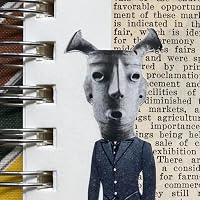
There were pen and ink illustrations by Alicia Austin before each selection. I can't understand why there's a dog before the first story ... since a dog never appears in it. Some of the illustrations are better than the stories, such as the one for Lafferty's.
Selections:
* "Retroactive" by Bob Shaw. Very good space military piece. Here, soldiers and a hired driver meet aliens who can travel through time. As soon as you think you've got this story figured out, it shifts. WARNING: A species of gorilla-like aliens are wiped out. * "When We Went to See the End of the World" by Robert Silverberg. Congratulations if you read this -- you got to see the normally brilliant Silverberg pull a shit out of his pen with this parody of America in the 1960s. The cover of the 1972 paperback was based on this story. * "Funeral Service" by Gerard F. Conway. Very disturbing story shows you why the dead are better left for dead. * "A Special Commission in Summit City" by R. A. Lafferty. We go from the sublime to the ridiculous. Although there were some impressive technical fireworks in the writing, the story was so dark, it was practically invisible. * "Patron of the Arts" by William Rotslter. Not much to say about the future of art. Has some eye-rolling sci-fi tropes, like colonies throughout the solar system by 2000. Also notes the Shah of Iran was still in power (oops) and has a chauffeur named Bowie (double oops.) * "Useful Phrases for the Tourist" by Joanna Russ. One of the best (and shortest) things she ever wrote -- a parody of a book for human tourists on the planet Locrine. * "On the Downhill Side" by Harlan Ellison. This is where unicorns come from, according to Ellison. This sad story can be found in many anthologies. * "The Other Perceiver" by Pamela Sargent. A turtle-like alien becomes a roommate to an easily manipulated human. Takes shit to a whole new level. With vidphones. * "My Head's in a Different Place, Now" by Grania Davis. Her first published story. A hippie mother and her old man move out of America, hear about a folk legend from the natives, and suddenly step into that legend with the help of really special mushrooms. * "Stalking the Sun" by Gordon Eklund. So, time travel has been discovered. What should you do? Become a hunting guide to blast the brains out of the creators who live in the future, of course. Very grim story. * "The Man Who Waved Hello" by Gordon R. Dozois. He doesn't use an arm or hand to wave hello. This is an incredibly vivid story of a man an the verge of suicide ... but can't quite do it. A very effective portrait of major depression, no matter what setting or year it's supposed to be set in. * "The Headless Man" by Gene Wolfe. Just like the title states, this is about a man born without a head. I'm sure the first thing Wolfe thought was, "How would a headless guy find a girlfriend?" * "Tiger Boy" by Edgar Pangborn. Very well written, but extremely sad, story of a future state of New York, where a mostly mute boy meets the legendary Tiger Boy and his "brown tiger." Apparently, this is the same place Pangborn wrote about in his story that appears in the previous anthology. WARNING: Senseless animal deaths.
When I reviewed Universe 1 a couple of days ago, I rated it as 5/5, noting that even though no individual story rated higher than a 4.5, the overall strength of the anthology merited a 5. The same is true for Universe 2. It also features a number of impressive stories, and even the lesser efforts are entertaining reads. The gems of the collection are the Ellison (which won a Nebula), the Silverberg, and the Pangborn.
“Retroactive” by Bob Shaw (4/5) – space travelers on an alien planet find traces of aliens who travel in space rather than time. A party tries to capture what appears to be a pregnant female and are pulled far into the past. A portal back to the future may only allow one to return.
“When We Went to See the End of the World” by Robert Silverberg (4.5/5) – at a party, a couple tells of their special excursion to see the end of the world, only to find out that many other couples did also, and all saw something different.
“Funeral Service” by Gordan Eklund (4/5) – a man uses a new service to bring his dead father back to life after three years, to settle things with him. But he comes to realize that what comes back is just an amalgamation of memories from when the man died, not really the man himself.
“A Special Condition in Summit City” by R.A. Lafferty (4/5) – what if everyone is telepathic and we only understand one another’s words and symbols because they are enhancements to our real telepathic communication, and we just don’t realize that the latter is happening. Two scientists propose this and turn off the telepathy to show what happens. More wonderful madcap Lafferty.
“Patron of the Arts” by William Rotsler (4/5) – a rich businessman becomes the patron of an an artist working in a new medium: cubes that are sort of like holograms. The man’s wife becomes the artist’s inspiring model and lover.
“Useful Phrases for the Tourist” by Joanna Russ (4/5) – short but clever list of phrases for tourists to alien worlds.
“On the Downhill Side” by Harlan Ellison (4.5/5) – the ghosts of two dead people – one who could not love at all, the other who loved too much – meet in New Orleans in their last chance to resolve things and move on. A very effective character piece in a creative story by Ellison, and much different from many of his other award winners.
“The Other Perceiver” by Pamela Sargent (3/5) – a man is gathering dung for an alien who is studying it in hopes of doing something for the world. Perhaps an interesting idea but it never quite comes together.
“My Heads in a Different Place, Now” by Grania Davis (3.5/5) – two 1960s drop out head for Mexico, where they find a drug that really changes them. Effective first person narration, even if the story overall really is only ok.
“Stalking the Sun” by Gordon Eklund (3.5/5) – two men and a woman (part of a married group) go hunting in the future, where they can take trophies from the evolved animals. They find a group of primitive, evolved humans, and the woman insists on hunting one of them. An interesting take on the hunting and time travel story, lessened a bit by an ending that feels a bit off.
“The Man Who Waved Hello” by Gardner Dozois (4/5) – Dozois was a great short story writer, and I wish he’d done more. Here, a man in a future society, run by government in conjunction with corporations, lives alone in a bland apartment, using drugs as a way of seeing more. One part that seems very recent (and note that this story is from 1972) is that the man gets a bonus which he is forced to spend on something from a government/corporate list. He choses a video phone, advertised as something that will enable you to now communicate with anyone from home and feel like you were with them. (Shades of Zoom.) And his first use of it? Essentially to send a dick pic to a woman he’s been stalking.
“The Headless Man” by Gene Wolfe (4/5) – relatively minor Wolfe but even minor Wolfe is good. It’s fable about a man born without a head.
“Tiger Boy” by Edgar Pangborn (4.5/5) – in a post-apocalyptic world, young orphan Bruno is voiceless. He’s like by those in his village, but is essentially alone emotionally. In the area, there are stories of another boy who is wandering the countryside accompanied by a tiger. This Tiger Boy is feared by the people: it’s said his singing draws people to him and they don’t return. Bruno goes to him, and they bound, Bruno finding a bit of a voice as poet. But yet in the end, it’s a tragedy. Pangborn was great at creating characters and getting to the hearts of their emotions. This is a fine effort by him.
A perfectly cromulent anthology of new (at the time of publication) commissioned work that has some good variety. Good showings from Shaw and Pangborn are weighted down by a bafflingly bad story from Ellsion and questionable stories from writers I'm unfamiliar with. I wish the stories from Russ and Lafferty were better, as I know they are capable from more.
Whats unfortunate is that there's no real standout here. The Shaw and Pangborn come the closest to being something memorable, but sadly I think that the entire anthology will slip out of my mind before I know it. It was pleasant to read during the moment in my life where I'm having trouble focusing on longer works, but it's nothing more than filler.
As always it's really hard to rate these anthologies, and I struggle to have any strong opinions on a bunch of stories that were nice to read in the moment but ultimately don't amount to much.
*** • Retroactive • [A.E.S.O.P.] • novelette by Bob Shaw **** • When We Went to See the End of the World • short story by Robert Silverberg *** • Funeral Service • short story by Gerard F. Conway ** • A Special Condition in Summit City • short story by R. A. Lafferty ** • Patron of the Arts • novelette by William Rotsler ** • Useful Phrases for the Tourist • short story by Joanna Russ * • On the Downhill Side • short story by Harlan Ellison ** • The Other Perceiver • short story by Pamela Sargent ** • My Head's in a Different Place, Now • novelette by Grania Davis *** • Stalking the Sun • novelette by Gordon Eklund *** • The Man Who Waved Hello • short story by Gardner Dozois [as by Gardner R. Dozois] ** • The Headless Man • short story by Gene Wolfe * • Tiger Boy • [Tales of a Darkening World] • novelette by Edgar Pangborn
While Universe 1 (1971) contained few standout stories but an overall high level of quality, Universe 2 (1972) contains a handful of outright masterpieces: namely, Robert Silverberg’s “When We Went to See the End of the World” and Gerard F. Conway’s “Funeral Service”. Gene Wolfe’s “The Headless Man” and Gordon Eklund’s surprisingly good “Stalking the Sun” are close [..]
I'm fairly positive on this collection! There were a couple of real stinkers but out of 13 stories that's not bad. I would probably give the nod to R.A. Lafferty's "A Special Condition in Summit City" as the best, a very funny and weird (typical Lafferty) story about the breakdown of human comprehension and communication. After that in some order, On the Downhill Side by Harlan Ellison, Retroactive by Bob Shaw, Stalking the Sun by Gordon Eklund, and The Headless Man by Gene Wolfe would be my picks for a top 5.
A Special Condition in Summit City by R.A. Lafferty
“Funeral Service” by Gordan Eklund
“Stalking the Sun” by Gordon Eklund two men and a woman (part of a married group) go hunting in the future, where they can take trophies from the evolved animals.
"When we went to see the end of the world" -time travel
The Man Who Waved Hello by Gardner Dozois
The Headless Man” by Gene Wolfe
Tiger Boy” by Edgar Pangborn - Bruno
This entire review has been hidden because of spoilers.
*** Retroactive • Bob Shaw **** When We Went to See the End of the World • Robert Silverberg ** Funeral Service • Gerard F. Conway ** A Special Condition in Summit City • R. A. Lafferty **** Patron of the Arts • William Rotsler **** Useful Phrases for the Tourist • Joanna Russ * On the Downhill Side • Harlan Ellison ** The Other Perceiver • Pamela Sargent ** My Head's in a Different Place, Now • Grania Davis *** Stalking the Sun • Gordon Eklund * The Man Who Waved Hello • Gardner Dozois *** The Headless Man • Gene Wolfe *** Tiger Boy • Edgar Pangborn