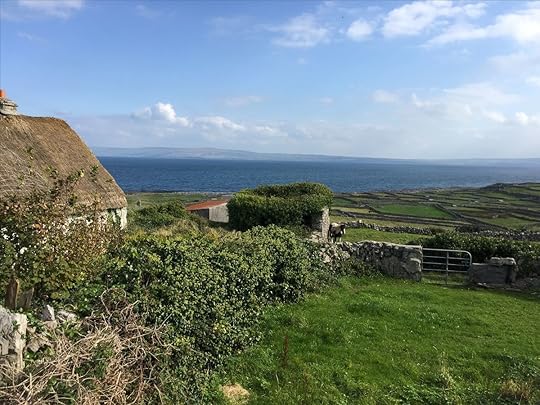
Nei ricordi d'infanzia di Grace e Jeannie c'è una piccola isola poco al largo della costa di Cork, in Irlanda, esposta ai venti e alle tempeste dell'Atlantico. Passano lì gran parte dell'anno, per molti anni, con la madre e la sorella più piccola, Em. Il padre è quasi sempre assente; è un autore di successo che descrive nei suoi libri la vita quotidiana su un'isola di una famiglia riscattata dalle false promesse del capitalismo. Uno stile di vita incorrotto, verdure coltivate nell'orto, niente scuola, e giornate trascorse a contatto con la natura, allo stato selvatico. Una donna e le sue tre figlie trasformate in un esperimento sociologico negli anni Sessanta, per farne materia da best seller. Un giorno, però, accade l'irreparabile: un incidente, un gioco di bambine, che distruggerà per sempre un già fragile equilibrio. Per questo l'isola viene abbandonata, ma ne seguiranno altre due, l'isola di Wight in Inghilterra e Procida in Italia. I tre luoghi scandiscono le fasi di crescita di Grace e Jeannie, le due voci narranti che si alternano nel ripercorrere una storia di separazione, follia, colpe, turbamenti e recriminazioni. Il passato, sepolto e rimosso, torna progressivamente a galla nel presente, con domande rimaste troppo a lungo senza risposta, fino a una resa dei conti che straccerà il velo di un patto scellerato.
The prose is lyrical and poetic but the characterization and plot was a let down for me. mage: Grace's Day is my first novel by William Wall and this is one I picked up while on a recent browse of a bookshop and was intrigued by the premise and the setting of the novel. I love to pick up books on the blind and let my own judgement lead the purchase like in the good old days and sometimes this can work quite well and other times it can lead to disappointment.
Grace and her siblings live on an Island off the South West coast of Ireland along with their mother. Their father is a successful writer of travel books and spends much time away from his family. One day tragedy occurs when one of the children falls from the Island's watchtower and the family become fractured with guilt and remorse.
The reader becomes very aware that the writer of this novel and a unique way with words, his writing is poetic and lyrical and there is great beauty in his Island description of landscape and life. However I didn't enjoy the characterisation or the plot as both seemed lacking in effort, this was a stroy that just plodded along at a very slow pace. I didn't connnect or sympathise with any of the characters and finished the book feeling a sense of relief to have gotten to the end.
I rated this one 2 stars an ok read but certainly not one I remaember a year from now.
Incipit: “Tanto tempo fa avevo due sorelle e vivevamo su un’isola. Eravamo io, Jeannie ed Em. Mi chiamavano Grace, ma di grazia non ne ho mai avuta molta. Da bambina ero goffa. Lo sono ancora dopo tutti questi anni.“
Grace e Jeannie si alternano nel raccontare la storia di una famiglia speciale, che vive su un’isola speciale, teatro di eventi che segneranno la loro infanzia (e quindi la loro vita) per sempre.
“Noi bambine cercavamo di trovare la nostra strada in quel mondo fatto di ostacoli che proliferavano nel caos, e sono convinta che anche gli adulti navigassero vista. Solo il gatto sapeva tutto.”
Ma il racconto non si ferma lì: “c’erano tre isole: l’infanzia, la giovinezza e l’età adulta, e io ero alla ricerca di mio padre in ognuna di queste”.
“C’è sempre qualcosa in più nella luce di un’isola. È la presenza del mare, è come vivere in un mondo dove c’è sempre uno specchio nascosto”.
E nel passaggio da un’isola all’altra, da un’età all’altra, come un’onda si ripete l’incessante, disordinato tentativo di ricomporre il disegno di un evento che la memoria ha snaturato.
E di cercare rifugio, nel contempo, in ciò che più rassicura : le scienze della Terra per una, la psicologia per l’altra.
Jeannie: “Mentre parlo imparo qualcosa di nuovo ed è questo: che due persone possono commettere qualsiasi enormità e questo non può scalfire neanche in modo infinitesimale la millenaria storia delle rocce. “
Grace: “La famiglia è un nido fatto di menzogne e potere e noi tiriamo prima un filo e poi un altro e siamo convinti per questo di avere tutto in mano.”
Absolutely brilliant and beautiful. Some passages took my breath away. The characterizations, subtly and elegantly constructed, are complex, intense, multi-layered and the pacing is perfect. When the reveal comes it is both shocking and utterly convincing.
I don't know how William Wall manages to do so much, to look so deeply into the hearts of his characters, in so few pages. It's a mystery and a wonder, as is the fact Wall isn't (yet) a household name in North America.
I read a lot of books, and I like, admire, and deeply enjoy many of them -- the majority, I would say -- but then along comes a book like GRACE'S DAY and I find myself saying, "Oh, this is the real thing. This is what literature should be, what words and sentences are made for."
Grace's Day is a poetic novel about family, consequence, and telling stories. Grace and Jeannie live on an island off the west coast of Ireland with their younger sister Em, who they take turns looking after, and their mother. Their father is a writer who comes and goes, with his family seemingly an experiment in wild living that he can use as material, and his best friend, a poet, also comes and goes from the island. One day, Em falls to her death from the watchtower, and the guilt and consequences echo as the sisters grow up and become adults.
Self-consciously told in multiple voices looking back, this novel looks at not only the characters and events, but in how writers take real life events and use them for their own creative purposes. The writing style is lyrical and it suits the novel, but the narrative and characters didn't quite capture my attention enough, though there were more engaging sections—particularly those which shine light on Grace and Jeannie's relationship.
This is a solid piece of literary fiction that will probably really strike a chord with some people, but it just felt a little bit too predictably a novel about how male writers can be rubbish and the consequences of a messed up childhood.
La scrittura mi è sembrata un pochino caotica e confusionaria. Il rapporto tra le sorelle non viene espresso in modo chiaro e,durante la narrazione,ci si perde tra i diversi punti di vista e tra le diverse motivazioni che spingono i personaggi ad adottare certi comportamenti. Lettura un po'deludente!
There's nothing more depressing than reading about the vapid inner thoughts of middle class Irish people. This particular string of inner - not to say introverted - thoughts begins promisingly on a remote island somewhere out in the West, with three (or is it four) sisters growing up in this cut-off place and their mother who appears to be slightly mad, but in a good way. But this being a Contemporary Irish Novel it doesn't take long for someone to die; in this case it's one of the three (or is it four) sisters, who is killed by falling from a great height. The rest of the entire book stays right here, at that event, and keeps coming back to this death again and again even when everyone has grown up, got married, etc.
The plot, such as it is, is marred by over-written, over-wrought artistic prose that just gets in the way, as though put on exhibition. This is not a book that carries you along. It keeps inviting you to stop and admire how wonderful the writing is. And what's more, I find something very creepy about a male writer trying to write as though he were first a young girl, then a teenager, then a grown-up. This is especially true when he somewhat lasciviously gets into writing about the underage teenager deciding she's going to have sex for the first time - with her mother's boyfriend. The detailed anatomical descriptions of how this all happens is frankly, unnerving. Apart from that and the constant harping on the death of the little sister, the people in this story are all bores and at the end, *drunken* bores who make films for the BBC and throw around the names of authors like V S Pritchett.
The look-at-me sections are peppered with meaningless statements that are (one presumes) intended to be profound, Here's a random example: "They belonged to an underworld that stubbornly remained attached by life, or love, and through which doors and light and gifts passed forward and back". Sorry but wtf does that even *mean*? Awful. Oh - I forgot to add that the slightly mad mother ends up going completely nuts, becoming a drug addict, etc. So that's cheerful too. Add in a few bits about rabbits getting trapped and skinned, or insects carefully burned in candle flames - and you may get the picture.
For some reason, the latter part of the book is set in Italy, which gives our Author an opportunity to display his ignorance about Italy. The only actual Italians who are allowed to intrude on the relentlessly anglophonic narrative are only there for amusement or decoration, with no serious role to play. I wish white middle class British and Irish authors would leave Italy out.
Needless to say, Ireland's literary luvvies think this is great writing.
This is such a beautiful book. My copy is literally underlined on every page. I'm second generation Irish living in Scotland and I've been over there many times and the opening section set on an island off the west coast of Ireland just took my breath away. It could have been my mother talking. The two sisters at the heart of the book are so well-drawn I almost feel I know them. The initial plot twist is heartbreaking and Grace's revenge is completely credible. Men come out badly in this book. The poet (lover of mother and daughter) and the travel-writer (father of the two girls) are both selfish and unrelieable. The two sisters are formidably intelligent and yet struggle to come to terms with their lives, Grace in particular. What seemed to me to stand out was how even in a family memory is unrelieable and even misleading, how family stories develop and become the truth even though they are based on a fiction, and how such stories can ruin lives. A beautifully written book that rings true for anyone who has experienced life.
This is a very beautiful, very sad book about grief, shame and the stories we spin to make our lives meaningful. The writing is beautiful and you care about the characters, though they are all cruel and broken. I feel ultimately, the story loses its way a little, there are eddys that drag focus to the language and sidebars and obscure what (I think) was supposed to be the main takeaway. Still, a beautiful book. You can taste the sea.
I read this book in one sitting. I’m breathless! A beautifully written story of memory and love No two memories of an event are the same we have two narrators and from these sisters we get a narrative but is it the whole story. I’ll be looking for more William Wall to read
3 e 1/2 per questo romanzo che sa creare dell'atmosfera affascinante, intorno alle vicende di una madre e delle sue figlie. Ambientato su un'isola, col mare a fare costantemente da sfondo e intriso della sensualità, appena percepita, dalle bambine, nei rapporti in casa, mentre il loro padre -famoso scrittore- è sulla terraferma e le lascia a sperimentare una vita un po'hippy, che però verrà sconvolta da un incidente...Interessante.
Una famiglia. Padre, madre, tre figlie, un'isola semideserta sull'oceano Atlantico e il mito della decrescita felice. Questo è lo scenario in cui le quattro donne, con quasi perenne assenza del padre, conducono la propria vita selvaggia in quasi totale autoproduzione. Si intuisce fin da subito che entrambi i genitori si intrattengono in relazioni extra coniugali. Il che andrebbe anche bene se gli 'extra' non andassero troppo oltre e non coinvolgessero anche le figlie. Sinceramente ho trovato questo libro disturbante, costellato di uomini orrendi e adulti irresponsabili, incapaci di comunicare e superficiali. Questa incapacità di affrontare la vita e i rapporti umani fa si che l'intero nucleo familiare si trascini in un'esistenza misera, traumatica e traumatizzante. Come una maledizione. Si sente la mano dell'autore dall'inizio alla fine. In parte mi ha ricordato quelle storie senza possibilità di riscatto come Le sorelle Macaluso in cui la pena non è proporzionale all'offesa. La sentenza è di vivere l'intera propria esistenza nella miseria come riscatto per un'errore commesso, senza andare avanti, senza oblio, senza amore, è terribile. E se poteva avere senso nell'antica Grecia, ai tempi di Shakespeare e nel melodramma, non ha molto senso nella narrativa.