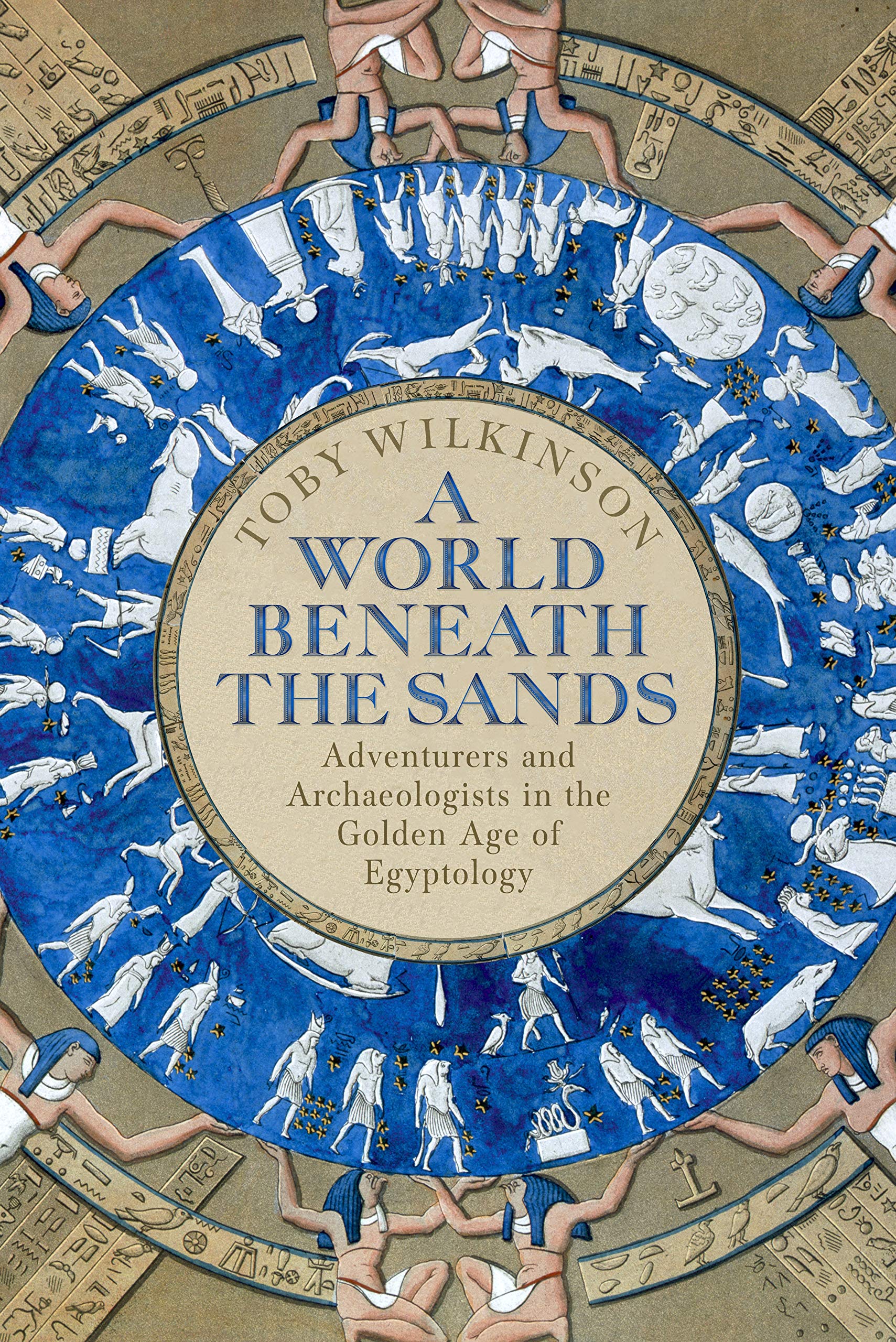
Toby Wilkinson is a great storyteller, and the people and events he writes about come alive in this book.
That is just the fatal flaw of this book, however: “the people he writes about.” For the people about whom he writes share a delightful common characteristic. They are all Westerners.
The golden age of Egyptology was an age in which the West presumed that it could control, write, unearth, and wholly understand Egypt’s past. After all, Wilkinson cites Balfour unironically:
“We know the civilisation of Egypt better than we know the civilisation of any other country. We know it further back; we know it more intimately; we know more about it. It goes far beyond the petty span of the history of our race, which is lost in the prehistoric period at a time when the Egyptian civilisation had already passed its prime.”
At this point the Gentle Reader must stop and roll her eyes. Dude. This is literally quoted by Edward Said in Orientalism - the seminal text on Western imperialism through scholarship. Toby Wilkinson has set out to write the history of Egyptology as though he has no understanding of the last thirty years of scholarship on that exact topic.
He mentions exactly one Egyptian archeologist by name: Ahmed Kamal. But where every other major figure mentioned in this book receives a lengthy biography, he has maybe 3 sentences on Kamal, and these as afterthoughts. This is a great pity. Kamal somehow became an Egyptologist in a world that looked down upon Egyptians as no more than “natives”. Why is his perseverance, or his story, or his education, not part of Egypt’s golden age?
But it goes on and on and on. He talks about the “discovery of Egypt.” Egypt can’t be discovered! It existed already. This is an age-old topic in Native American studies - no more did Columbus discover the New World. On and on he goes. Overbearing and nice Westerners like Lucy Duff Gordon earn mention (tbh she sounds cool, I would like her, but why is she included? A token woke figure??!), but no Egyptians at all. I don’t even believe we have a single Egyptian quoted here. This to me is like writing a history of 1492 without mentioning the Native Americans. What of the reises who stood with Carnarvon and Carter and Lady Evelyn? We hear that they are faithful, but there are no names.
Wilkinson does highlight the casual racism of some figures but ultimately he does nothing to change the Western-dominated story of Egyptology that has left out the (mostly) men of Egypt who were the backbone of any Egyptological discovery, and whose history was “discovered” and taken from them. By refusing to give them a voice, Wilkinson has bought into the narrative created by the men he profiles.
Perhaps we ought to give Dr. Wilkinson the benefit of the doubt. Perhaps there was simply little information on such marginalized figures. I rather doubt that. But even so, why does he not even acknowledge this? Moreover, had he called his book “A European History” and explained this perspective, it might have mitigated this lack.
I really wanted to love this. Like some other readers I came to the golden age of Egyptology by way of the incomparable Barbara Mertz, and Wilkinson is a first-rate Egyptologist who does best when talking about Ancient Egypt. I really kept hoping I would be proven wrong and that Wilkinson would surprise me- but he didn’t.
For me this book is a massive disappointment because I had such high hopes. Honestly though, it could have been written fifty years ago without much difference. I would much more highly recommend Donald Reid Malcolm’s Whose Pharaohs, which, although it may be less enlivening (it might not put the living to sleep, although I presume one’s readers are intelligent enough to stand a little scholarship) is nuanced and tells the whole story, not just the white 95% male story.