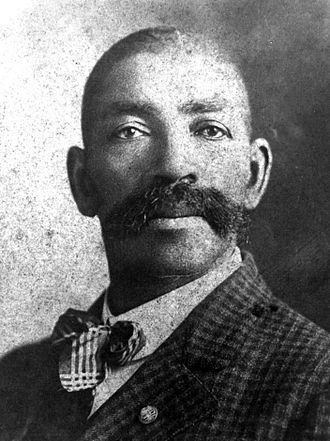
Born into slavery, Bass Reeves became the most successful US Marshal of the Wild West. Many "heroic lawmen" of the Wild West, familiar to us through television and film, were actually violent scoundrels and outlaws themselves. But of all the sheriffs of the frontier, one man stands out as a true Bass Reeves.
He was the most successful Federal Marshal in the US in his day. True to the mythical code of the West, he never drew his gun first. He brought hundreds of fugitives to justice, was shot at countless times, and never hit.
Bass Reeves was a black man, born into slavery. And though the laws of his country enslaved him and his mother, when he became a free man he served the law, with such courage and honor that he became a legend.
Gary James Paulsen was an American writer of children's and young adult fiction, best known for coming-of-age stories about the wilderness. He was the author of more than 200 books and wrote more than 200 magazine articles and short stories, and several plays, all primarily for teenagers. He won the Margaret Edwards Award from the American Library Association in 1997 for his lifetime contribution in writing for teens.
He never shirked his duty. ~ Why Chief Marshal Leo Bennet thought Bass Reeves made a good deputy.
Although this is a work of fiction, Gary Paulsen put as much truth as he could dig up on Bass Reeves into it. When it comes to law and order, you can't get any better man than Bass Reeves. Paulsen spends a good chunk of the book fleshing out the boyhood and fugitive years Bass lived before becoming a free man. He became a deputy at the age of 51. Anecdotes of his life in the book include a 25-mile chase to catch a serial horse thief. Bass and the criminal had to switch horses three times. And Bass, at the age of 70, prevailed with a trick he learned from the Comanches. That trick involved dismounting and running alongside his horse on the downhill slopes to help his horse have more stamina. Bass Reeves even had to round up his own son Bennie and arrest him for murder. He told his son that "free men live by the law." The last law enforcement job he had was as town constable for Muscogee, Oklahoma. He was 81 when they hired him. Check out this book to get the Gary Paulsen treatment of a legendary lawman from the Wild West.
Whether you classify The Legend of Bass Reeves: Being the True and Fictional Account of the Most Valiant Marshal in the West as fiction or nonfiction, it's a phenomenal book. And who better to create a unique blend of fable and fact than Gary Paulsen, who has written superb works of both fiction and nonfiction? Because there are large gaps in what we know of Bass Reeves's life, Paulsen fills them with his own storytelling, but it all adds up to a portrait of a real historical figure whose deeds render him fit for comparison to American folk heroes like Paul Bunyan and Pecos Bill. According to this book, Bass was born in 1824 (most online sources I've seen say 1838), the slave of a wealthy white Texan whom Bass just calls Mister. The mister is older and fatter than in his heyday, but owns a huge spread of ranch land, and even as a young boy Bass is required to help work it. His mother, Mammy, makes sure he doesn't do anything to raise the Mister's ire; the man gets ornery when he overindulges on whiskey, which is often. Mammy senses that Bass may be endowed with a touch of clairvoyance, but he's surprised one day to meet a coyote who seems to speak directly into his mind. "Things will change." What did the witch dog mean? The next seventy-five years is one long parade of change for Bass, so it's hard to pinpoint what the coyote foresaw.
At age twelve Bass first encounters Indians, a band of Comanches who devastate that region of Texas with their raids on white families. Bass spots the Comanches on horseback traveling the open Western lands, and Mister is so concerned by the report that he breaks a cardinal rule of slaveholding: never give a slave a firearm. He puts a .36-caliber percussion-cap muzzle-loading rifle in Bass's hands in case the Comanches head their way, and Bass demonstrates steady, accurate aim the first time he practices with the gun. No Comanches show up that night, but in the days ahead Bass comes face to face with one. His rifle empty at the time, he never does figure out how he lived to tell the tale. The Comanche has two fresh, bloody scalps dangling from his lance, and when Bass mentions this to Mister, the fat old man reluctantly concludes it's probably the two Garnett females, whose husband and father is at war in Mexico. Riding to the Garnett place alongside Mister to confirm, Bass walks into a macabre scene that leaves him retching and profoundly shaken. The sight of a murdered, mutilated woman and her young daughter will haunt him always, and he'll never underestimate what the Comanches are capable of. The Wild West was at least as gruesome and chaotic as modern legends claim.
Bass assumes more responsibility around the ranch in his late teens. He's emerged into his prime youth: tall, lean, muscled. He always loved riding Mister's horses when the man wasn't watching, particularly his Roman nose, but now he saddles and rides them in full view and Mister doesn't complain: he needs Bass to manage the ranch. Mister even lets Bass into the house and teaches him to play poker, a game that Bass shows aptitude for. Mammy sternly reminds him not to beat Mister too often, but the old man insists on playing for money; as a slave, Bass has never owned anything material, but Mister lets him keep his winnings and spend it in town. As the betting limit increases over time, Bass earns a couple hundred dollars, a tidy sum for any black man, slave or free. Then comes a night when Mister gets a little too drunk and runs out of cash to bet. He rashly wagers Bass's freedom against all of the adolescent slave's money. He'll throw in Mammy's freedom too, since Bass insists on it. A few tense rounds of play, followed by an accusation of cheating, and Bass's life suddenly turns upside down. He never thought Mister would pull a gun, or that he'd have to defend himself by cracking a whiskey jug over the man's head. Whether Mister lives or dies, Bass is in for the Texas justice system to crash down on his own head harder than that jug. In anguished tears, Mammy orders her only son to gallop out of there on the Roman nose before he's hanged for murder. It's a surreal swirl of events and emotions: Bass is homeless, a runaway slave and fugitive from the law; he like as not will never see Mammy again. How did life go so wrong in one evening?
The Indian Territory (comprised of Oklahoma and pieces of surrounding states) is where the Five Civilized Tribes—Chickasaw, Creek, Cherokee, Cree, and Seminoles—were forced by President Andrew Jackson to migrate to. As the land degenerated into a haven for outlaws, the government abandoned all oversight of it. Murder, theft, rape, and torture were common; the Indians couldn't leave, but who else would enter these parts? Bass Reeves rides into the Territory after fleeing the law, living off the wild land and helping his Roman nose do the same. He holes up away from criminals and Indians, sometimes going months without seeing anyone in the thousands of square miles of wilderness. Possessed of a marvelous memory, Bass learns the Territory's every hill, ridge, canyon, mountain, and hideout, noting where outlaws congregate and the location of stores that offer goods for sale. He still has the money won from Mister in their gambling sessions, and he purchases food, clothing, and other essentials to survive outdoors. Bass proves he can defend himself by shooting a pair of renegades who fire on him; his aim is steady as ever. He could subsist in the Territory on his own indefinitely...but again the coyote's prediction comes true.
A pack of wolves chasing a young Creek Indian girl prompts Bass to intervene; he won't let the carnivores tear her to shreds. Bass fends them off but suffers grievous injury, nearly bleeding out as he lifts the girl onto his horse and rides for help, but he isn't destined for heaven yet. The Creeks are nothing like the bloodthirsty Comanches, and Betty Two Shoes—the girl Bass rescued—has a family that is deeply grateful to the man who saved her. They want him to live among them, to treat him as a member of the family. Bass resides with the Creeks for better than two decades, until President Abraham Lincoln's Emancipation Proclamation officially liberates him from the bondage he was born into. He still doesn't know if Mister died that night he struck him, but Bass departs the Indian Territory to forge a new life. The greater part of his legacy is only beginning.
Settling down, Bass weds Nellie Jennie and they raise a slew of children while he runs a prosperous cattle ranch in Arkansas. But it's at age fifty-one that he accepts assignment as a deputy in the Indian Territory, under reforms initiated by legendary Judge Isaac Parker. The Territory is a cesspool of crime, but no one knows its ins and out like Bass. As a black man, he'll able to move more freely among the Indians, who distrust white people. In summer of 1875 Bass dons the badge at an age when most men of the era were slowing down, if not dead. Criminals had a considerable new foe in Deputy Bass Reeves.
His years as a lawman read like a series of thrilling vignettes. Bass pursues Bob Dozier, a notorious horse rustler, for years, always losing the scent just when he expects to corner the man. Finally trapping him in a cabin, Bass has his showdown, and his incredible luck holds up as it would for his entire career. He gets his man and Dozier gets death, victim of a deputy many call fearless. Bass has a long, hard chase after the cagey Jim Webb, a horse thief and murderer. Every time Bass rides into the Territory with a warrant, the odds are against his own survival, but he doggedly picks up Webb's trail. Bass is now seventy years old, but seems no less physically or mentally fit than in his prime. He uses his smarts to outpace Webb over a pursuit that stretches dozens of miles, slowly gaining as the notorious rustler burns his horses' energy. The two men fill their hands for an exchange of hot lead to rival any in Bass's career, but only the black man with seven decades of life under his belt is left standing. Webb may be the most impressive catch of Bass's years as deputy, but his next case is, by far, his most personal and painful.
What sort of warrant would Bass dread carrying out? One for his son, Bennie. After killing his own wife in a fit of passion at discovering her marital infidelity, Bennie runs off into the Territory. Bass requests that he be sent after Bennie, and that no other deputy attempt to do the job. Maybe he can persuade the kid to go home and face Judge Parker without the need for bullets. Riding out after his own boy is emotionally draining, but Bass has steeled himself for what has to be done by the time he corners Bennie in a closed canyon. The boy needs to turn himself in and get squared away with the law, but like any compassionate father, Bass will stand by him through the ordeal. His duty to the badge doesn't decrease his love for Bennie one bit.
Serving the Territory from 1875 to 1907, Bass could have then hung up his spurs for a life of quiet contentment, but the man had something left in the tank. At age eighty-one he is hired as town constable of Muskogee, Oklahoma, where he cleans up crime for the next few years. Even as an octogenarian, criminals learn not to trifle with Bass Reeves. He passes away in 1910 to a brief flurry of appreciative news posts about his career, though he didn't become a mainstay of American Western lore as many less-deserving figures did. He came, he conquered, then disappeared into history, but what a record of achievement he left behind. Gary Paulsen seems justified in asserting that Bass Reeves is as wondrous a hero as ever roamed the Wild West.
Packed with drama and excitement, The Legend of Bass Reeves is one of Gary Paulsen's best books, an extraordinary claim when that library of works includes The Rifle, Hatchet, Tiltawhirl John, Sarny: A Life Remembered, The Foxman, Woods Runner, The Island, Paintings from the Cave: Three Novellas, Woodsong, and Puppies, Dogs, and Blue Northers. Why is The Legend of Bass Reeves so powerful? A major reason is his rise from slavery, what he did with the opportunity after escaping Mister. "They could kill him, but they'd never own him again. No man would own him. He was running free, and nothing would make him turn back from that. Back from freedom." If someone owns you, they are responsible for your actions or lack thereof. After leaving Mister, Bass was accountable for the course of his own life. Would it be a worthwhile or wasted one? Would he spend his mental and physical resources wisely, or squander them? One could hardly do a more exemplary job in these respects than Bass, and it was possible only because he was free.
Arduous though his travel in the Indian Territory was as a teen fugitive, young Bass never took the miracle of freedom for granted. "Whenever he began to well up with self-pity, he said out loud, 'No man owns me or will ever own me again.' Sometimes he thought about that witch dog talking to him years ago. 'Things will change.' He was living a new life now." Bass lost his home and Mammy, but refused to lose sight of the fact that freedom is worth any cost. Born at a time when blacks in America were forcibly subjugated to whites, his long span of years lasted to the dawn of a new era, when the principles behind the country's founding began applying to people of every race. This, perhaps above all, is why Bass accepted the title of U.S. deputy. He states it perfectly when explaining to his son why he must bring him to justice. "Because it's the law...It's not just the white man's rules anymore, son, and free men live by the law." Bass respected the law out of a personal conviction that it's right to do so, not because a white man commanded him to. He exercised his freedom by choosing justice, and Bass cherished his ability to do so every day of his life. Would that we all followed his example.
Gary Paulsen is known for wilderness stories, but he writes magnificent Westerns. The atmosphere, characters, moments of searing emotion, and bedrock values of his best Western novels are remarkable; The Haymeadow, for which he won a Western Writers of America Golden Spur Award, is fantastic, and The Legend of Bass Reeves joins it as a memorable Paulsen story. I wasn't sure the mixture of fiction and nonfiction would work, but after reading the book I don't see how he could have done it much better. I rate The Legend of Bass Reeves three and a half stars, and Bass joins my personal list of Old West heroes I admire for their true grit in that sensational period of American history. If you enjoy the serious juvenile books Gary Paulsen has written, I recommend this one. Rarely has he performed at a higher level.
Finished watching the "Lawmen: Bass Reeves" miniseries (Paramount+ which I don't have, but our library had it on DVD), and it was just great—informative, inspiring and exciting, as well as a total blast watching the oh-so-British David Oyelowo's award-worthy performance as he growled his way through the story of this long-overlooked American hero, ("t'day ah'm'a bit'a boaf, ah reckin").
And so I immediately wanted to learn more about this amazing true-life figure. A few facts are indisputable: Bass was a runaway slave who became the country's first black U.S. Deputy Marshal, working from Arkansas into the Indian Territory (now Oklahoma) where many of the worst outlaws went to hide, and where between the ages of 37 to 69, he made somewhere from 3-4,000 arrests, killed some 20 men in the line of duty, and never shot first yet was never wounded.
Problem is, other than that basic information—largely gleaned from official court records of his work as a Deputy under the equally legendary "Hanging Judge" Isaac Parker, there are few written records of Reeves' life, and so decent biographies are hard to find. Our library did have one called Black Gun, Silver Star: The Life and Legend of Frontier Marshal Bass Reeves, but that was longer than I was looking for, and several reviewers said that with the dearth of actual details, this focused more on those outlaws that he tracked down and arrested than on Reeves himself. So as I often do, I opted instead for this shorter bio for "young readers"—which unfortunately in this case was a mistake.
Paulsen says up front that much of this "biography" is imagined, but I didn't realize just how much of the book that was going to be. The first half is a fully made-up childhood that doesn't even place him as a slave with the right family (putting him with an unnamed drunk farmer, rather than Arkansas state legislator William Steele Reeves—hence the surname); and then Bass doesn't even become a lawman until 30 pages before the end of the book. On top of which Paulsen gets many of the dates and ages wrong (at least according to the Wikipedia page). So overall, a frankly 2-star read about a genuine 10-star legend.
Paulsen DOES make a good point in highlighting just how unheroic many of our Old West "heroes" actually were—Carson, Hickok, Cody, Earp, et al—and then clearly showing how Reeves surpasses them all in terms of accomplishments, integrity, courage and overall grit; but has long been overlooked if not totally forgotten, (for undoubtedly—if perhaps unintentionally—racist reasons). He also provides a brief but moving background on how the "Five Civilized Tribes" of the American Southeast were forcibly relocated to the Indian Territories (the famous "Trail of Tears") which were already populated by the Osage tribe (and watch "Killers of the Flower Moon" to see how that turned out).
Anyway—skip this book but DO learn more about this amazing figure…at the very least, go read Reeves' Wikipedia page; and if you can, certainly watch the series (which okay, gets off to a bit of a slow start—but stick with it, or just jump in at Episode 3 or 4). Much remains to be done to elevate Bass Reeves to his well-deserved place in history, but at least the process has begun.
He never shirked his duty. ~ Why Chief Marshal Leo Bennet thought Bass Reeves made a good deputy.
Although this is a work of fiction, Gary Paulsen put as much truth as he could dig up on Bass Reeves into it. When it comes to law and order, you can't get any better man than Bass Reeves. Paulsen spends a good chunk of the book fleshing out the boyhood and fugitive years Bass lived before becoming a free man. He became a deputy at the age of 51. Anecdotes of his life in the book include a 25-mile chase to catch a serial horse thief. Bass and the criminal had to switch horses three times. And Bass, at the age of 70, prevailed with a trick he learned from the Comanches. That trick involved dismounting and running alongside his horse on the downhill slopes to help his horse have more stamina. Bass Reeves even had to round up his own son Bennie and arrest him for murder. He told his son that "free men live by the law." The last law enforcement job he had was as town constable for Muscogee, Oklahoma. He was 81 when they hired him. Check out this book to get the Gary Paulsen treatment of a legendary lawman from the Wild West. *Reviewed by Darla from Red Bridge*
This year’s theme for Black History Month, chosen by the Association for the Study of African American Life and History, is “African Americans and Labor”. Today’s Book Club Spotlight by author Gary Paulsen takes a well-deserving look at a Black man who not only served his community faithfully through his work but excelled far above his station. ALA Notable Book and One Book for Nebraska Teens 2017, The Legend of Bass Reeves, is at once a historical fiction novel and historical fact. Known for his outdoor adventure novels, Paulsen writes vignettes based on the life of Bass Reeves, interspersing them with historical background, making the case for Reeves to be the one true hero of the West.
An illiterate runaway slave, Bass Reeves was the true, unknown icon of the Western Frontier. Despite facing down the barrel of a gun countless times, he was never injured, and he never shot first. Having daringly escaped slavery at 17, Bass lived free in the lawless land of Indian Territory- run by gangs and thieves. After saving one of their own from wolves, he finds companionship and family with the Muscogee Creek people for over 20 years. Never one to slow or turn down a challenge, at the age of 51, Reeves took up the badge and became the most successful and feared Deputy Federal Marshal of the West, his life story rivaled only by the fictional Lone Ranger.
“They could kill him, but they’d never own him again.” -Gary Paulsen
For readers 10 and up, The Legend of Bass Reeves is a mostly fictional account of the real man. Unfortunately, as an illiterate former slave, Reeves did not keep any journals, and not much was written about him while he was alive. Paulsen sets out to right some of this wrong, pulling Reeves from obscurity. For his young audience, Paulsen wanted to give the unstoppable and honorable Bass Reeves his due instead of the outlaws like Billy the Kid and Butch Cassidy. TThe Legend of Bass Reeves, while about the heroic man, also delves into the lawless West, from the makeup of the land, the communities, and the treatment of Black and Native peoples in an accessible way for young readers to understand and any Book Club Group to discuss the finer points of.
The Legend of Bass Reeves by author Gary Paulsen is a Western written for young readers. It focuses on the true story of a little-known marshal who patrolled the old Indian Territory, now known as Oklahoma.
Bass Reeves was born a slave in the 1830's American South. He grew up tending to chores and animals while his 'mammy' cooked and cleaned. One day while out searching for cattle he came across a strange dog that seemed to speak to him, telling him that "someday things will change". The 'witch-dog's' prophecy turned out to come true eventually and Bass ran away from home when an opportunity presented itself. He embarks on a series of adventures while avoiding the price on his head for being a runaway slave. While wandering he learns the Indian Territory like the back of his hand and gains the attention of a federal judge who's determined to track down felons hiding in the Indian Territory to avoid the law. Bass becomes a federal marshal and makes some 3,000 arrests during his remarkable career.
The book is well-written and fairly historically accurate, although the author does admittedly embellish the story and fictionalize some missing gaps. I enjoyed the book more than I anticipated, but I want to add even though it's considered a young readers book it has some brutal violence and language that makes it unsuitable for elementary aged kids. This book should greatly appeal to Western enthusiasts and history lovers alike.
A really good book. Paulsen seems to be mostly a YA writer but his books are of interest to adults certainly. This one had some good sections of history about Bass Reeves, and also dramatized some important segments of his life. It spent the most time on his childhood, of which the least is known. I might have liked to see more on his days as a lawman in the Oklahoma Territory.
By any standard, Bass Reeves was a heroic figure of a man. He was born a slave, lived for years in Indian Territory as an escaped slave, and then after the age of 50 became one of Judge Isaac Parker's frontier marshals. He brought many criminals to justice, killing some in self defense and bringing in others to be hung or sentenced for their crimes. He remained a lawman well into his 70s. It would take a much longer book than this to do his life justice by Paulsen does a good job of selecting important scenes to emphasize.
I had never heard dof Bass Reeves. And I guess that's the point of the book. Gary Paulsen asks why are we glorifying the criminals of the Wild West and overlooking the truly good people?
This is a story that is very scarse on research material, so Mr. Paulsen does the best he can and then imagines the rest. He tells us the truths and then he tells us a story. It's an interesting way to get the facts of Bass Reeves life o there while also entertaining us and asking us to think.
I haven’t read any Gary Paulsen in a few decades and this is definitely a kids book but it was a perfect introduction to the life of Bass Reeves. I stumbled upon a comic book of Bass Reeves and wanted a bit more and this was the first book I came across. Very fast read and hits all the highlights. Truly can’t believe there’s no movie about Reeves yet. I propose using the aging technology from The Irishman and get Will Smith to play him as an old and young man. Amazing life and amazing story!
I've known about Bass Reeves for a long time, but this is first story about his life that I've read. Paulsen's story telling fills in the gaps of his life which we don't know too much about. Spoiler alert...The fact that this giant (literally and figuratively) of man doesn't even have a marked grave or any sort of monument speaks volumes to the prejudices towards people of color. Much like women, no matter how brave, upstanding, law abiding and heroic they are, their memories have to be fought for.
I liked how Paulsen took several of the old Western "heroes" (Kit Carson, Wild Bill Hickock, Buffaloe Bill, Billy the Kid, Butch Cassidy, Wyatt Eyrp etc) down a notch and told a little of their dark sides, how they weren't such great people after all. The one thing I was surprised Paulsen didn't mention was that the character of The Lone Ranger of old TV Western fame, is inspired by the great Bass Reeves.
Paulsen doesn't hold back on the violence and gore of the old west that we love to idolize. It was a hard place to live. Bass Reeves was definitely one of the unsung heroes who made it just a little bit safer.
This entire review has been hidden because of spoilers.
“The Legend of Bass Reeves” was a great book to read. Its a true story but if the book didn’t tell me that I would’ve never thought these events could have happened. It was about a slave who started taking on more responsibilities as his master got a worse drinking problem. As the slave, Bass, starts to take on more duties he learns of not only of unjustified laws but also the dangers of outlaws that roam the county. Bass sees some Comanches but they don’t see him so he escapes. He tells his master and earns a gun for protection. Bass later goes back to that spot and a single Comanche sees him. His gun isn’t loaded but the Comanche doesn’t know that so all he does is slap Bass with a stick. He and the master saw a farm that was attacked by Comanches, they found the people dead and buried them. He starts to play poker with the master. Even though he wins more and more money each game, his mother is quick to remind him to be careful. Finally, the master’s drinking problem is so bad that Bass runs the whole farm. The master decided to play Bass in poker for freedom. If Bass won, he and his mother were free. Bass sees the master cheating and gets mad. He yells at the master, earning a hit on the head. Bass hits back and the master draws his gun. Bass knocks him out. His mother comes in and tells Bass to take a horse and run to the north. She stays to take care of the master. Bass wanders into a territory set aside for Indians.
It’s a lawless land where outlaws run free. He sees comanches torturing a man but cannot help. He hides in the forests exploring the whole territory. One day he sees a young, civilized Indian girl riding a horse hike being chased by wolves. The girl falls off the horse and he runs over to help. He shoots one of the wolves scaring the others off but got bit in is leg. He rides on a horse, carrying the girl, but faints from blood loss. He wakes up in the girl’s village. They help him get healthy again. Bass lived with the Indians for twenty two years. After slavery has been outlawed Bass started a farm. His other may have come lived with him. Bass got married and had five girls and five boys. His wife died so he got married again.
Back then, the average life span was forty years. Bass Reeves was fifty one when he started working for a powerful judge as a ranger. Bass gets into many fights, never shooting first, and never getting shot. After awhile he his son killed his wife and ran off. Bass brought him back where he was sentenced to a life sentence. He got off from good behavior. At eighty one years old he was hired to be a town sheriff. he later died of disease.
This book is very similar to other Gary Paulsen books because it has the theme of growing up and adapting to your surroundings. At a young age he runs the farm and sees horrible things. Although he is given a lot of responsibility, he works hard and learns from his mistakes. Another similarity this book had to other Gary Paulsen books was the nonfiction pages in between chapters. This book had a chapter of historical fiction text, then a chapter of facts.
This book was very descriptive when describing Comanche attacks. It told about some pretty disturbing acts that happened. Overall, I really enjoyed this book.
This entire review has been hidden because of spoilers.
The Legend of Bass Reeves is a book about an Old Western cowboy who was once a slave, and then became a great deputy in his town. The book is also about all his ups and down, and the life of a slave on the run. This book would most likely fit into the western adventure genre. The reason is the book takes place in areas such as Texas, Oklahoma, and Arkansas. You can find the main characters in shootouts and fistfights. Also, horses are the main way to travel. Lastly, the time is set during the time after the Civil War and into the beginning of the 20th century (the time when the western age hit). The book takes place in Texas during the Old West. The author Gary Paulsen does a superb job on describing the landscape from his not so beautiful battle scenes to the beautiful forest brush, he makes you feel as if you're there. For example, “The smell almost gagged Bass; burned hair, feather, flesh. He took short breaths and tried to hold his head down out of the wind that blew toward him-but still he vomited off to the side of the mule. While he was leaning over, the animal felt the reins loosen and moved forward to catch up to the horse and brought Bass around the corner of the building where he could see…” as quoted on page 35. The main character of the book is Bass Reeves, Bass Reeves is a non-fictional character from the Old Western times. He is an African American slave at a young age and later becomes a Old Western deputy. He is very strong from working on the cattle farm and a very quick learner for a slave with no knowledge of school, and because of these traits he reminds me of my friend Nick Moore. The reason is Nick is smart, strong, knows how to fight, and he knows how to shoot a gun. Also, Gary Paulsen does a superb job describing Bass Reeves, such as in the book when the author is describing Bass’s accomplishes in the Prologue. In the book, the author, Gary Paulsen uses very thought out descriptions throughout the book, which I enjoyed. The reason is, the book makes you feel think you’re in the book, which makes you trapped in the books spell and read until the end of the book. Also, a scene that really moved me was near the end of the book when Bass has to bring his son in, warning there will be spoilers in the next couple sentences. The reason this very sad moment in the book moved me was, because this is when Bass Reeves has to bring in his son into justice. The dialogue was insanely sad and the book even made me cry. Lastly, I enjoyed the book a lot. I enjoyed the dialogue and the beautiful scenes. I also enjoyed the battle scenes that came from Bass and the bandit filth. I compare this book to the recent Disney movie Maleficent. I think this because the peasant in the movie, Stephan was a young peasant with no fame at all, who later became the king. This is related to the book because Bass was a slave who later became a famous and very successful deputy feared by criminals, and praised by the thousands.
This book is amazing! The book has a few cuss words, but several of them were common during his time. Gary Paulsen tells all about Bass Reeves's early life and the legends that he made. I'd heard about Bass Reeves as U.S. Marshall, but I didn't know much about his childhood. An amazing fact that it tells is that Bass was in his 80's when he died! GREAT book.
Gary Paulsen's work of historical fiction offers 3 snapshots of the life of Bass Reeves, deputy U.S. Marshal. It begins with Bass' childhood in slavery. From a young age, Bass captures wild cattle for his slave master, dubbed "Mister" by his mother. Growing up, Bass becomes proficient in many useful skills, including horseback riding and hunting. After a close encounter with a hostile Native American tribe, Bass earns more trust and responsibilites from the Mister. He begins to learn the value of his hard work on the ranch, learning the value of money while playing the mister in poker, and gradually saving up money of his own, until one day Bass plays the Mister for his and his mother's freedom. The mister cheats and Bass catches him. In part retaliation for the mister's treachery and in part self-defense, Bass incapacitates the mister and escapes with a few weapons, a horse, and a mule. Here, Paulsen finishes this segment with a brief history on the mistreatment of Native Americans, detailing the infamous "Trail of Tears" and several other hardships the Native American people endured. The story then returns to Bass, a young man fresh out of the bonds of slavery. For a short while, Bass scouts out the American frontier, learning about the land and how to sustain him in the wild. Bass has a close encounter with two random bandits, both of which are shot and killed by him in self-defense. Later, Bass finds a young Native American girl named Betty under attack by a pack of wolves. Bass successfully fends them off, but is injured in the process, and in his half-conscious attempt to get him and Betty help, Bass passes out from loss of blood. Bass awakens to a Creek family that treats his wounds and later offer him a place in their tribe. Bass accepts, and the narrative fast-forwards Bass' later years, which make up the final segment of the book. This segment briefly details Bass' life amoung the Creeks, how he learns their language and lives with them for over 20 years. Then the text explains the establishment of US law in the Indian Territories, and how Bass left a life of safety and leisure on his ranch to hunt for outlaws. In this portion of the book, three different outlaw chases are detailed, each demonstrating Bass' skill as a horseback rider, a shooter, and a survivalist in the great American plains. The Legend of Bass Reeves would be of excellent use in a middle school history class, particularly one that focused on late 19th / early 20th century America. As for the actual writing itself, I feel like it fails to come together as a single cohesive narrative. This in part is resultant of the genre itself. As a work of historical fiction, Paulsen likely felt restricted in some ways to take creative liberties with Bass' story, and felt obligated to provide historical contexts for each story segment. But I felt like the narrative itself suffered in a lot of ways as a result. For one, the transitions between the different windows of Bass Reeve's life were poorly handled. Nothing breaks a compelling narrative more than intermittent history lessons! Additionally, the different snapshots of Bass' lives lacked a theme or central conflict that tied all the parts together. Perhaps if the segments were all tied together somehow in relation to Bass' relationship with death and murder, it could work itself into a more complete narrative. Maybe I should write my own version of the story of Bass Reeves... Haha. I gave it a 3/5 because it's got deputies and gangsters duking it out on horseback. Minus two stars for not being a complete narrative.
This entire review has been hidden because of spoilers.
Paulsen, Gary. The Legend of Bass Reeves: Being the True and Fictional Account of the Most Valiant Marshal in the West. Brilliance Books, 2010.
Genre: Historical Fiction
Summary: This book by Gary Paulsen is an excellent account of a real figure of the old west whose legend is almost forgotten. Bass Reeves was a massive former slave who was able to earn his freedom through beating his slave master in a game of cards and the heroics just get more awesome from there. He learned the seven languages of the "civilized" tribes. He brought in seventeen dangerous outlaws of the old west by himself without even a scratch on him. He is widely regarded as the most successful U.S. Marshall of the 1800's. After President Lincoln issued the Emancipation Proclamation freeing all of the slaves, Bass Reeves became a family man. He married and had seven children (which at the time you were lucky to have one that was healthy enough to survive). What is cool about this book is that Bass Reeves was a real person, and the facts that are present in this book are correct, but Gary Paulsen also creates conversations of "What-If's" that engage the reader in might have happened beyond what we currently know about this man. After all the "Lone Ranger" may have been based upon his life. I must say that I did not technically "read" this book. I listened to the audio book, but in some ways that might have been better. Regardless of the medium that you use to obtain the information on these pages, I promise you that you will enjoy it. This book is perfect for the tween category of readers who may be interested in learning more about the Old West. If you like Butch Cassidy and Buffalo Bill, you will LOVE Bass Reeves.
A Creative Writing Lens: Gary Paulsen hits an absolute homerun here. Anytime you can take historical content and change it into something entertaining and enjoyable to read then you have succeeded as an author. I'm joking a little bit here, but a big reason that many kids do not enjoy their history class is that the content is dry. In the defense of the teachers and the subject it isn't supposed to be fun to read, but it is important. To give Paulsen even more acclaim I devoured the audiobook as I just kept hitting "next chapter" and finished it in just a few hours. If more people in the History field took the approach that Paulsen did here, I think more kids would be excited to learn history. Well Done Gary Paulsen. I tip my cap to you.
It wasn’t his fault. He didn’t have time to stop and think about what would happen. All what he could think about was the pain. The pain that could come and the pain that would come. It wouldn’t be the hurting type of pain but the pain that makes your gut wrench because you think you did something wrong. This is the pain that Bass Reeves felt even 20 years after he ran free. This book by Gary Paulsen tells the true and fictional account of Bass Reeves who was marshal in the middle to late 1800’s. He died in the year of 1911. In this book you feel like you are standing next to Bass, going through all the things he did. From his birth to his death.
When I read this book I was blown away and I felt like a whole world had just been unveiled to me. From the second I opened this book I felt like I was the amazing Bass Reeves. Gary Paulsen used so much detail That you felt like you were standing there. Seeing what Bass Reeves was seeing, feeling what Bass Reeves was feeling. Gary Paulsen didn’t add so much detail that you were bored to death, but he added enough so that you hooked and you wanted to keep on reading. I think that this was mainly why it was so good. Like the details just made you feel like you were him, you were the legendary Bass Reeves.
I think another reason why I liked this book was because of the different parts. The first part it told about his life as a slave, the second part told about him running away, the third part told about his early life in Oklahoma, and the fourth part told about his life as a marshal. The parts are sort of confusing because Bass’s age changes every time and it’s sort of hard to follow the story when you don’t know what has happened lately. But as soon as you start understanding it it can make the story better than before.
In conclusion this is a great book that you should really read. The details really make the book better and so does the parts of the story. Together they make a great story that is really worth reading. So go read it.
The Legend Of Bass Reaves Gary Paulsen In this book a teen named Bass Reaves he lives with his mom and a guy named miser him and his mom are black and they are the misters slaves. bass and the mister hunt that's what they live off of they live on like farm they have horses and donkeys and they catch wild cows for food. only the mister can catch a cow bass isn't strong enough to catch the cows they are long horns. They live by Comanche Indian's. At first in the book bass and the mister a catching cows. then they get the cow and take it home and put it in a pen. then they go and eat when they eat bass says that when they eat the mister gets food first and he get to picks what he eats. when they eat wild pig the mister takes all the good meat and leaves with the non good stuff. then the mister takes bass to the town and they stay the night there and the mister gives bass his first candy. then bass finds a magical dog that tells him " someday thing will change". The dog became true and when the time is right for bass to leave he does and runs away he finds a place in Indian territory and learn the place. he hides from the bounty on him. then he leave and become a sheriff and makes a lot of arrest.
some things that the author does is that he use foreshadowing by say "some day thing will change" and then it actually happened. and he uses flash backs to remind the reader of how bass has a bounty on him. that's it
i would recommend this book to somebody who likes reading about slavery and doesn't mind some thing dieing. the book was not confusing. it wasn't hard or easy it was in the middle. It was not predictable. It was believable. my favorite part was when bass got to run away.
Gary Paulsen crafts a great story for young people who are interested in historical fiction, wild west adventures, or uplifting pick-yourself-up-by-the-bootstraps kind of stories. This breezy novel tells the story of Bass Reeves, a former slave turned Federal Marshall who turned in over 3,000 felons hiding in what is now Oklahoma. It details his early life as a child slave, through his teenage years and escape to freedom, and then some highlights of his career as a man of the law.
I felt that the story was great. It spends as much time with it's six-gun shooting adventure as it does with the heavier elements of its story- the realities of life as a slave and black man, both pre and post-Civil War. It's characters are well realized despite the brevity of the book, which is because of Paulsen's decision to focus on Reeves and few others, not spreading himself too thin. The themes of doing what's right, being honorable, and standing up for oneself will resonate with it's intended audience, as will its short length and easy reading level. This book will be a hit with picky readers- especially those who want something with a little more action and a little less mushy-gushy stuff. It even takes time to discuss on the difficulty and waste of killing a man, even a bad man, and gives kids a flip side to the action oriented movies and games. The only downside to this story is its use of several anachronisms, having characters saying things like "bargain basement finds" or "double tap", but that's not something it's intended audience will pick up on. Overall I think this book is a must-ad to the bookhself of any young teen or ambitions tweener.
I read the book THE LEGEND OF BASS REEEVES, by Gary Paulsen. This book is about a boy named bass Reeve , bass is the son of a single mom slave. Some of the characters are Bass Reeves, mrs Reeves, and the slave owner which is name is mister. Bass really wasnt like most slaves because his slave owner gave him a horse, gun , and allowed him to ride on his property. This book is taken place on a slave owners land about three hours from Paris, Texas. Bass and mister were very close he would take bass to.the closest town which was Paris. He also showed bass how to play poker . Bass and the mister would play pocker twice a week beting with pennies but after awhile bass figured out mister and how he played until one day the mister told bass that if he won " him and his mother would be free and leave his property ". But bass got mister cheating and he stood up because his freedom was on the line and they got into and when they did the mister swung on bass and bass knocked him out . When bass mother came in she told him he better take off north because when mister woke up he will beat him to death. His mother told him to head north to free states , will Bass Reeves make it north or will he get caught by comanche Indians? I rated this book five stars because it is a really good book. If u like to read old western books this will be the one u want to read because it will hook u real easy is very good. I found this book at my school library.
"Omens .. don't always mean what they say" Things will change. How can things not change ? p 37, 26, 39
Action, suspense hide history. By age 16, Bass born 1824 was adult "six foot two when most men were five foot three or four" p 212 and had to flee his beloved mama and drunken master. In 1875 when lifespan was usually 40 years, Bass 51 was freed by Lincoln's Emancipation. He was one of 200 marshals appointed by "Hanging Judge" Parker to "clean up" lawless Indian Territory.
Paulsen adds tension to incidents recorded starting then. By age 70, Bass had tracked cold-blooded killers like Webb, Dozier, for two, three years. The persistent marshal had disguises, techniques, secret tricks.
Thrills are in the details. Bass brought in a record number of men over trips, "three thousand times" p 170, even for his own son. Yet he himself was unharmed after remarkably close calls. Always illiterate, his "memory became truly phenomenal" p 150. Bass was a true hero.
My husband had happened on a movie about Bass Reeves, and I have to admit, I'd never heard of this awesome, fearless, good western lawman. I wanted to read more about him and requested this book from the library I work at. Gary Paulsen is a fantastic writer, children and adults enjoy him. His foreword to the book must be read, as it tells us the real story of some of the western personas that history has come to revere or make famous in a positive light. And as he says in his foreword, Bass Reeves was so much more than any of them.
Paulsen sheds a light on Reeves growing up as a slave and how he became the man he was. Anyone who likes westerns will enjoy this one. Anyone who wants to know more about an African-American western lawman or who wants their children to know about him should read this book.
Gary Paulsen’s short book about lawman Bass Reeves is a mixture of fact and fiction and for good reason: much is unknown about large parts of Reeves’ life. For this YA book, Paulsen makes the wise choice of focusing on young Bass’ life as an isolated slave immersed in nature and learning about hunting and raising cattle. To me this was the most interesting part of the book, not the tales of heroics capturing desperados. The books reads quickly, doesn’t shy away from violence, death, and earthy topics, provides an introduction to the Oklahoma Territory, and contrasts Bass Reeves, a true hero, with a number of historical frauds who are nevertheless seen as admirable. Once again, Paulsen seems incapable of writing an uninteresting book. Highly recommended, especially for reluctant male readers.
This is a YA read which I didn't know until I got it. Still, I enjoyed it. It is a mix of fact and fiction. Bass Reeves was an exception character in the western frontier, an ex enslaved man who became a superior US Deputy Marshal. His little known story is worthy of reading about in any form. This is an excellent format for YA readers. Gary Paulsen writes it well and makes it exciting enough to keep your attention. My only problem is that it skips a long period of Bass' life and ends abruptly at another. Perhaps available information was too sketchy to fill in more details about certain periods of his life so I give the author a pass on that although it made the narration seem choppy toward the last third of the book.
I haven't read the entire book so I can promise you, since I am only on page 50, that there will be little to no spoilers. So far, I have seen this as the book of a hard-working slave, turning into a legend with a gun. there are these Native Americans called Comanches that are killing everyone with bows, and their master, or as Bass calls him "the Mister" get very afraid. He gives Bass a gun and Bass is great with it. It is a story for people who like to hear stories about the olden days but I would suggest this book for everyone who wants a little excitement in their lives. I hope that you read this book because as I said I am only on page fifty where the story is just starting and I am already hooked.
The Legend of Bass Reeves by Gary Paulsen. The lexile level is 950. Bass Reeves was a black man born into slavery. the laws of his country enslaved him and his mother. when he became a free man he served the law.
The theme of this book is courage. He had the courage to chase outlaws Bob Dozier and Jim Webb. “chasing after him in the dark. But he kept going, and this time his luck held.” The setting of the story is in the 1800’s west of the Mississippi river.
I think that people who like reading about how things were back then. I liked this book because it wasn't confusing to me and it wasn't too hard to read. I did like the ending. My favorite part was when he chased the outlaws. I like the author because he writes fictional books that are based in real places.
I picked up this book because it had a horse on it and my kids love horses. I knew nothing about this man. I was pleasantly surprised to find out that this is about a real man, an African American, and a former slave. The author's introduction talks about the famous and infamous cowboys/men of the wild west and shines a different light on these people. The sections were vividly written, realistic, and an engaging read. The reader learns about life as a young slave, surviving as a young man, and then as a marshal during dangerous times of the west. The book shows a more accurate picture of how native Americans were treated and that there were many different native American cultures and peoples.
The book is fictional in that Paulsen writes about Reeves's life as if he was writing a novel, with all kinds of situations and dialog that are supplied by the author. Historians really know very little about Bass Reeves's early life growing up in Texas, so a lot of that is filled in based on typical conditions and experiences of that time and place.
It's actually a deeper, richer book than I remembered. It does address the kinds of racism that Bass faced, and did an okay job pointing out that black, white, and native peoples all had different prejudices that worked against their getting along together. It felt a little heavy-handed with that once or twice, but overall I think it was a really fair and sensible depiction of the era.
This book was awesome! I'm not even into the Wild West or cowboys, but it awaken the love for that time period that we all seem to go through as kids. The character (who is a real historical person) was well-written and extremely likeable. This story is touching and heartfelt while being action packed. Also, the author did very well researching the techniques that cowboys used and the food that they enjoyed during that time. Everything was very detailed and really made you feel like it was a first person account.
This book is one of the rare books that the historian and the dude-bro in me both loved. I totally recommend it to anyone.
The story of this former illiterate slave turned US Marshall is amazing! Cunning, smart, brave, and a guy you want on your police force.
What is really sad, is we know so little about Bass Reeves life. One author of a Bass Reeves books, told of a story, when they went to The Oklahoma State historical Society for more information on Bass Reeves said "we don't store the history of black police officers in our state." Wow, I hope that is untrue and a misunderstanding from the researcher but if it is true, Oklahoma has a lot to do to redeem itself! This man should be revered and heralded! Rock it Bass Reeves!