

What do you think?

Turning to Wallpaper: Poems and Art
"Wear poetry as both perfume and armor."
Wong’s words and artistry are both vibrant with color, richly textured, defiant, and unapologetic in their boldness.
Her speaker begins her spiritual journey of remembrance that transcends body, tradition, or even nation in the pursuit of authentic art that is constructed through the radical acceptance of the past in order to leave it all behind.
Turning to Wallpaper is a story where no wounds are left unconfronted or softened. It is beautiful, without beauty. There is “pain, but no victimhood.”
Wong’s words and artistry are both vibrant with color, richly textured, defiant, and unapologetic in their boldness.
Her speaker begins her spiritual journey of remembrance that transcends body, tradition, or even nation in the pursuit of authentic art that is constructed through the radical acceptance of the past in order to leave it all behind.
Turning to Wallpaper is a story where no wounds are left unconfronted or softened. It is beautiful, without beauty. There is “pain, but no victimhood.”
- GenresPoetry
128 pages, Paperback
Published September 28, 2021
About the author
Heidi Wong
3 books28 followersHeidi Wong is an author, artist, and social media personality originally from Hong Kong. In November 2020, she began posting storytelling videos on Tiktok, where she gained millions of followers.
Her most recent collection, Turning to Wallpaper, focuses primarily on transcending the silenced and demonized female body, conceptions of femininity and masculinity, tradition, and nation in order to reconcile with one’s past.
You can follow her on social media @itsheidiwong
Her most recent collection, Turning to Wallpaper, focuses primarily on transcending the silenced and demonized female body, conceptions of femininity and masculinity, tradition, and nation in order to reconcile with one’s past.
You can follow her on social media @itsheidiwong
Ratings & Reviews
Friends & Following
Create a free account to discover what your friends think of this book!
Community Reviews
Displaying 1 - 30 of 33 reviews

November 8, 2021
Turning to Wallpaper by Heidi Wong is a poetry collection that tackles issues such as growing up in a foreign country, being a woman, death, rape and many more.
Wong provides beautiful imagery and I am impressed both by the way she handles the language and by the way she talks about so many serious topics.
In a sense, Turning to Wallpaper reminded me a bit of Dead Dad Jokes and Dear Azula, I Have A Crush On Danny Phantom because of the topics they tackled and because of the writing.
Although, I will have to admit that since I am very picky when it comes to poetry, I didn't enjoy all of the poems. Some of them felt like they were dragging on for too long and many of the metaphors fell completely flat for me. Maybe it's the language barier? I don't know.
Anyway, this was a decent read. If you enjoyed the other two books I mentioned above, you will probably enjoy this one too.
If you made it this far, congratulations!
'Til next time, take care :) :) :)
I received a free e-book from NetGalley in exchange for an honest review.
Wong provides beautiful imagery and I am impressed both by the way she handles the language and by the way she talks about so many serious topics.
In a sense, Turning to Wallpaper reminded me a bit of Dead Dad Jokes and Dear Azula, I Have A Crush On Danny Phantom because of the topics they tackled and because of the writing.
Although, I will have to admit that since I am very picky when it comes to poetry, I didn't enjoy all of the poems. Some of them felt like they were dragging on for too long and many of the metaphors fell completely flat for me. Maybe it's the language barier? I don't know.
Anyway, this was a decent read. If you enjoyed the other two books I mentioned above, you will probably enjoy this one too.
If you made it this far, congratulations!
'Til next time, take care :) :) :)
I received a free e-book from NetGalley in exchange for an honest review.

September 10, 2021
‘Turning to wallpaper’ is my first experience with Heidi Wong and I really enjoyed the confidence and certainty within her words. She has a beautiful and macabre authenticity within her verses and she entwines her heritage within the modern world where everyone has ownership of everything. She claims a space for herself by producing this individual and bold collection which feels as rich and intense as art on those walls she breaks down:
‘...watching another girl read Macbeth like she was the poetry her cheekbones/ gather july, her hair us the rust of a city that glows of a kind adulthood.’
She deals with traumatic experiences such as racism and assault but makes her survival part of her strength and although her poetry is dark at times there is always beauty.
‘...watching another girl read Macbeth like she was the poetry her cheekbones/ gather july, her hair us the rust of a city that glows of a kind adulthood.’
She deals with traumatic experiences such as racism and assault but makes her survival part of her strength and although her poetry is dark at times there is always beauty.

July 25, 2021
Heidi Wong’s Turning to Wallpaper is a collection of glittering language and gut wrenching experiences. She dives into the pain of otherness, survival, loss and faith through an examination of what poetry can do to process deep wounds of living as a multi-cultured woman. She pulls at the loose strings of complicated experiences to unravel the layers of emotions attached to each situation. As Wong reflects in one poem, she is “piecing together poems with any word except/ the word” while making each memory crystal clear to the reader. Though she wrestles with a number of forms of trauma including sexual assault, racism, death and immigration, her poems resound with the strength of survival that asserts power after moments of powerlessness and questions her choices in the intimate process of facing ugliness. The poems have a surreal feel that is supported from the art spattered throughout the book with pieces which directly tie to the images she crafts.
The organization of the works in this collection travels the road to healing through recognition of strength and endurance. One path that is significant to the speaker’s journey is the loss of a twin in utero. Wong highlights the path to acceptance that turns from acknowledging “as if/ his shadow did not fill your lungs” to finding “the absence of grief instead of the absence of you” and later declaring “i eclipsed you”. Another refers to assault at the age of 19. The speaker traverses this subject with jarring imagery like “losing my eyes to his ceiling, leaving my tongue/ on his ochre dresser, my legs on his nightstand”. She also asserts, “i am not a broken girl. i know where my pieces lie,/ each one, still mine”. One poem, written to her assaulter, embodies a poet’s vengeance and a wronged woman’s curse upon him.
Emily Dickenson is noted for asserting that poets, “Tell all the Truth but tell it slant” in order to reach “the Truth’s superb surprise”. This is what Heidi Wong does with her surreal diction. She writes, “isolation wraps around your neck like a lover”, “she nurses the carcass of her softness back to health”, “my sanctuary is a mouthful of blood” and leaves “the exoskeleton of what I hoped to be true about nineteen/ draped over his closet door”. Her phrasing makes the reader engage with the text and the metaphors being drawn. Wong explores the concept of home when two continents pull at her identity: Asia and North America. She speaks to this rift, saying, “if you had to gouge one of your eyes out,/which would you choose?”. There is a complex relationship with both locations as she admits “america, you are the lover who never wanted me” and “i wonder if, as a child, i told my country i am not like you/ when i meant i cannot love/ what looks like me, when i cannot bear/ to look at me”.
Teachable Moments:
I have to say that, outside of some of the more potentially triggering content, this book as a whole would serve a teacher well for mainstream or AP level courses. Heidi Wong’s meta approach to poetry opens the door to conversations of poetry’s purpose, audience and powers. She takes structural risks at various points in the collection that pay off such as with a palindrome (“Heaven Backwards”), a double sonnet (“A Broken Double Sonnet on Your New Girl”) and a narrative told out of order (“Our Story, Told in the Wrong Order”). The work is filled with metaphor, examples of potent phrasing and imagery, and even allusions that connect a poem’s speaker with tragic characters and gods. I can clearly see using pieces from this collection to pair with Greek myths, N.K. Jemisin’s “Henosis”, Charlotte Perkins Gilman’s “The Yellow Wallpaper”, Titus Andronicus, Romeo and Juliet and King Lear and develop alternate explorations of the referenced aspects for analysis or original writing. She is a master of linguistic acrobatics that speaks about subjects indirectly while also making the topics vivid and accessible, something that students can evaluate and mimic in their own works.
The organization of the works in this collection travels the road to healing through recognition of strength and endurance. One path that is significant to the speaker’s journey is the loss of a twin in utero. Wong highlights the path to acceptance that turns from acknowledging “as if/ his shadow did not fill your lungs” to finding “the absence of grief instead of the absence of you” and later declaring “i eclipsed you”. Another refers to assault at the age of 19. The speaker traverses this subject with jarring imagery like “losing my eyes to his ceiling, leaving my tongue/ on his ochre dresser, my legs on his nightstand”. She also asserts, “i am not a broken girl. i know where my pieces lie,/ each one, still mine”. One poem, written to her assaulter, embodies a poet’s vengeance and a wronged woman’s curse upon him.
Emily Dickenson is noted for asserting that poets, “Tell all the Truth but tell it slant” in order to reach “the Truth’s superb surprise”. This is what Heidi Wong does with her surreal diction. She writes, “isolation wraps around your neck like a lover”, “she nurses the carcass of her softness back to health”, “my sanctuary is a mouthful of blood” and leaves “the exoskeleton of what I hoped to be true about nineteen/ draped over his closet door”. Her phrasing makes the reader engage with the text and the metaphors being drawn. Wong explores the concept of home when two continents pull at her identity: Asia and North America. She speaks to this rift, saying, “if you had to gouge one of your eyes out,/which would you choose?”. There is a complex relationship with both locations as she admits “america, you are the lover who never wanted me” and “i wonder if, as a child, i told my country i am not like you/ when i meant i cannot love/ what looks like me, when i cannot bear/ to look at me”.
Teachable Moments:
I have to say that, outside of some of the more potentially triggering content, this book as a whole would serve a teacher well for mainstream or AP level courses. Heidi Wong’s meta approach to poetry opens the door to conversations of poetry’s purpose, audience and powers. She takes structural risks at various points in the collection that pay off such as with a palindrome (“Heaven Backwards”), a double sonnet (“A Broken Double Sonnet on Your New Girl”) and a narrative told out of order (“Our Story, Told in the Wrong Order”). The work is filled with metaphor, examples of potent phrasing and imagery, and even allusions that connect a poem’s speaker with tragic characters and gods. I can clearly see using pieces from this collection to pair with Greek myths, N.K. Jemisin’s “Henosis”, Charlotte Perkins Gilman’s “The Yellow Wallpaper”, Titus Andronicus, Romeo and Juliet and King Lear and develop alternate explorations of the referenced aspects for analysis or original writing. She is a master of linguistic acrobatics that speaks about subjects indirectly while also making the topics vivid and accessible, something that students can evaluate and mimic in their own works.

September 8, 2021
This collection of poetry and art is dark, but so good. The author's experience s and pain clearly shine through the poems. The visual art accompanies the poems perfectly, or the other way round.
I'll certainly seek out Wong's other work.
I'll certainly seek out Wong's other work.

September 25, 2021
Poetry is very hit or miss with me. I will either love it or be left super confused. Wong's stream of consciousness writing, unfortunately, fell closer to the miss side for me. She is brilliant at creating atmosphere and a whole story with just a few well-chosen words and lines, I will not deny that I walked away from each poem with something to think about and my emotions engaged, but it's not something I'm excited to share with other readers.
It ended up being something that I don't mind having spent the time to read, but not something I will be recommending.
Many thanks to NetGalley and Central Avenue Publishing for the early read!
It ended up being something that I don't mind having spent the time to read, but not something I will be recommending.
Many thanks to NetGalley and Central Avenue Publishing for the early read!

August 9, 2021
3.5/5 Stars
Thank you so much to NetGalley and the publishers for providing me with an advanced copy. This in no way influences my thoughts or opinions
This is a collection of new-age poetry that talks about loss, trauma, identity, and race without being like the other Instagram and Tumblr attempts at poems.
The cover really doesn't do this collection justice as it is beautiful and haunting, like all things written from the heart tend to be.
"the grave of my body was full;
they could not live there anymore" - one of my favorite lines
One of the complaints I had was that sometimes the poem could get muddled and lost with all the different imagery and content. But I think there are some really great works that one can dive deep into and analyze. This could very well be a poet that our children's children will be studying.
Thank you so much to NetGalley and the publishers for providing me with an advanced copy. This in no way influences my thoughts or opinions
This is a collection of new-age poetry that talks about loss, trauma, identity, and race without being like the other Instagram and Tumblr attempts at poems.
The cover really doesn't do this collection justice as it is beautiful and haunting, like all things written from the heart tend to be.
"the grave of my body was full;
they could not live there anymore" - one of my favorite lines
One of the complaints I had was that sometimes the poem could get muddled and lost with all the different imagery and content. But I think there are some really great works that one can dive deep into and analyze. This could very well be a poet that our children's children will be studying.
February 25, 2022
Amazing poetry and amazing artwork.
The poems touch on many subjects that may be sensitive for some. What it’s like to be a woman, rape, and many more topics. I found my self relating to many of these poems. Things that have happened and feelings I have felt in my life.
I love how the artwork contributes to the poems and the emotions they show.
I definitely recommend this book, especially if you like poems and artwork.
The poems touch on many subjects that may be sensitive for some. What it’s like to be a woman, rape, and many more topics. I found my self relating to many of these poems. Things that have happened and feelings I have felt in my life.
I love how the artwork contributes to the poems and the emotions they show.
I definitely recommend this book, especially if you like poems and artwork.
October 4, 2021
10/4/2021 Full review tk at TheFrumiousConsortium.net.
10/6/2021 Wow, this book is a gut punch, in several very excellent ways.
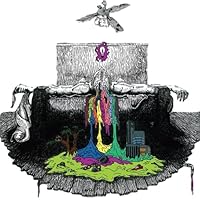
First, ofc, there's the art, all by Heidi Wong, which is primarily dark to macabre. My review copy was a black and white Kindle version, so there's only so much I can say about something I can't observe in its full glory, but the renditions I had available to me were striking and invited long scrutiny (and it's easy to tell just from the cover photo on this page that I definitely missed out on the vibrancy of her use of color.) While much of the art was a bit too lushly Gothic for my personal taste, it did compliment the text quite well. My favorite pieces were the ones that combined Tarot imagery with the use of social media, two of my most recent preoccupations.
Perhaps unsurprisingly, the poetry in the book also spoke to issues that have been in my head for this last longest while. Dealing with topics of family, illness, immigration, alienation, death and sexual assault via imagery courtesy of Shakespeare and Ovid, the rawness of the emotions is for the most part cleverly, impactfully channeled through Ms Wong's intelligent use of wordcraft and construction. Our Story, Told In The Wrong Order is a particular favorite, tho I'm hoping it's less confessional than metaphorical! Another of my favorite poems of this collection, After The Breakup, is particularly impactful for its dissonant ending. I loved the callbacks to and correlation between Lavinia and Philomela throughout.
But the overall very good construction of the poetry and art was somewhat dampened by the lack of arrangement in the volume itself. The poems would have felt more impactful had they been grouped thematically, where repetitions of phrase might have served a theme. Instead, the scattered references made it all feel a bit same-y.
This collection is also at its strongest when not tying itself too closely to a particular setting. Amorphous dreams of New York City and Victoria Harbor work much better than the name checks of towns so small as to carry no cultural weight, which is then compounded by a complete lack of setting description. Better that these faceless places also remain nameless, so the mind doesn't try and fail to construct specificity out of nothing. Maybe that's just me, but my brain was completely thrown out of my immersive enjoyment of the poems by wondering where and what a Milbank or Kirkland were and signified (and once a chagrin at realizing that defaulting to Saint Petersburg being in Russia was perhaps not the obvious choice for interpretation here.) I get that these names mean something to the author, but the point of publishing poetry is to connect, to share meaning, to create for these words a weight and importance. Name checking only works if the name belongs to something consequential to the reader. In lieu of that, give me at least the bare bones sketch of these nowhere places so I understand what you're trying to make me feel.
Easier to construct specificity -- and universality! -- out of human emotions and situations. Even the obscure gods and myths invoked conjured a fresh layer on the poems they were attached to, simply by having a pre-existing cultural personality known arguably to millions through time worldwide. Ms Wong is deeply talented. Especially given her own predisposition to elegant construction, I believe she'd benefit from working with a poetry editor who'd push back on the intrinsic poetic inclination to excess and sprawl, in much the way a city planner can aid an architect's vision so that the end result is closer to harmonious marvel than impenetrable chaos. Turning To Wallpaper definitely leans towards the former, but could use a little more help to get all the way there.
Turning To Wallpaper by Heidi Wong was published September 28 2021 and is available from all good booksellers, including Bookshop!
10/6/2021 Wow, this book is a gut punch, in several very excellent ways.
First, ofc, there's the art, all by Heidi Wong, which is primarily dark to macabre. My review copy was a black and white Kindle version, so there's only so much I can say about something I can't observe in its full glory, but the renditions I had available to me were striking and invited long scrutiny (and it's easy to tell just from the cover photo on this page that I definitely missed out on the vibrancy of her use of color.) While much of the art was a bit too lushly Gothic for my personal taste, it did compliment the text quite well. My favorite pieces were the ones that combined Tarot imagery with the use of social media, two of my most recent preoccupations.
Perhaps unsurprisingly, the poetry in the book also spoke to issues that have been in my head for this last longest while. Dealing with topics of family, illness, immigration, alienation, death and sexual assault via imagery courtesy of Shakespeare and Ovid, the rawness of the emotions is for the most part cleverly, impactfully channeled through Ms Wong's intelligent use of wordcraft and construction. Our Story, Told In The Wrong Order is a particular favorite, tho I'm hoping it's less confessional than metaphorical! Another of my favorite poems of this collection, After The Breakup, is particularly impactful for its dissonant ending. I loved the callbacks to and correlation between Lavinia and Philomela throughout.
But the overall very good construction of the poetry and art was somewhat dampened by the lack of arrangement in the volume itself. The poems would have felt more impactful had they been grouped thematically, where repetitions of phrase might have served a theme. Instead, the scattered references made it all feel a bit same-y.
This collection is also at its strongest when not tying itself too closely to a particular setting. Amorphous dreams of New York City and Victoria Harbor work much better than the name checks of towns so small as to carry no cultural weight, which is then compounded by a complete lack of setting description. Better that these faceless places also remain nameless, so the mind doesn't try and fail to construct specificity out of nothing. Maybe that's just me, but my brain was completely thrown out of my immersive enjoyment of the poems by wondering where and what a Milbank or Kirkland were and signified (and once a chagrin at realizing that defaulting to Saint Petersburg being in Russia was perhaps not the obvious choice for interpretation here.) I get that these names mean something to the author, but the point of publishing poetry is to connect, to share meaning, to create for these words a weight and importance. Name checking only works if the name belongs to something consequential to the reader. In lieu of that, give me at least the bare bones sketch of these nowhere places so I understand what you're trying to make me feel.
Easier to construct specificity -- and universality! -- out of human emotions and situations. Even the obscure gods and myths invoked conjured a fresh layer on the poems they were attached to, simply by having a pre-existing cultural personality known arguably to millions through time worldwide. Ms Wong is deeply talented. Especially given her own predisposition to elegant construction, I believe she'd benefit from working with a poetry editor who'd push back on the intrinsic poetic inclination to excess and sprawl, in much the way a city planner can aid an architect's vision so that the end result is closer to harmonious marvel than impenetrable chaos. Turning To Wallpaper definitely leans towards the former, but could use a little more help to get all the way there.
Turning To Wallpaper by Heidi Wong was published September 28 2021 and is available from all good booksellers, including Bookshop!
August 16, 2021
“𝑾𝒆𝒂𝒓 𝒑𝒐𝒆𝒕𝒓𝒚 𝒂𝒔 𝒃𝒐𝒕𝒉 𝒑𝒆𝒓𝒇𝒖𝒎𝒆 𝒂𝒏𝒅 𝒂𝒓𝒎𝒐𝒓.”
Poet, artist, feminist and TikTok sensation, Victoria Wong, has published her third collection of poetry and her first collection with Central Avenue Publishing. The poems in 𝑻𝒖𝒓𝒏𝒊𝒏𝒈 𝒕𝒐 𝑾𝒂𝒍𝒍𝒑𝒂𝒑𝒆𝒓 are radiant gems which emit a strange, alluring glow.
The beauty of 𝑻𝒖𝒓𝒏𝒊𝒏𝒈 𝒕𝒐 𝑾𝒂𝒍𝒍𝒑𝒂𝒑𝒆𝒓 resides in its fierce and imaginative language together with Wong’s eerie, surreal artwork — expressionistic oil painting and hyper-realistic digital art — which changes the ordinary into the wonderful and odd.
The collections themes include loss, love, death, family, displacement, isolation, foreignness, body image, self-mutilation, authenticity and transformation.
I highly recommend 𝑻𝒖𝒓𝒏𝒊𝒏𝒈 𝒕𝒐 𝑾𝒂𝒍𝒍𝒑𝒂𝒑𝒆𝒓 and look forward to reading Heidi Wong’s next collection.
𝑻𝒉𝒆 𝑵𝒊𝒈𝒉𝒕 𝒀𝒐𝒖 𝑫𝒊𝒆𝒅 𝑰 𝑫𝒓𝒆𝒂𝒎𝒕 𝒐𝒇 𝒂 𝑯𝒖𝒎𝒎𝒊𝒏𝒈𝒃𝒊𝒓𝒅 𝑶𝒖𝒕𝒔𝒊𝒅𝒆 𝑴𝒚 𝑾𝒊𝒏𝒅𝒐𝒘
𝒇𝒐𝒓 𝒋.
i could barely hear it sing,
but i saw it’s wings
beating against the wind, as if
they had known flight
beyond this lifetime.
i pressed my hands to the glass
and imagined you, too, were somewhere
in the sky, wings stretched out
in open air, still trying to sing.
𝑻𝒐 𝑩𝒆 𝑨𝒔𝒊𝒂𝒏, 𝑵𝒐𝒘
𝒘𝒓𝒊𝒕𝒕𝒆𝒏 𝒅𝒖𝒓𝒊𝒏𝒈 𝒕𝒉𝒆 𝒄𝒐𝒓𝒐𝒏𝒂𝒗𝒊𝒓𝒖𝒔 𝒑𝒂𝒏𝒅𝒆𝒎𝒊𝒄
how godly, to be asian,
now, and love yourself.
a covenant of history, a scripture
to our goldblood, to be asian,
now, is to be the sun
shining, also, shining,
still, on those who both consume
and condemn its light.
when the world is a torch, to be asian,
now, is to be a witch
refusing to burn.
𝑨𝒃𝒐𝒖𝒕 𝒕𝒉𝒆 𝑨𝒖𝒕𝒉𝒐𝒓
Heidi Wong is a poet and artist who grew up between Beijing, Hong Kong, and New York.
While specializing in expressionistic oil painting and hyper-realistic digital art, Heidi’s poetry is equally packed with intensity and boldness. Since posting her work on social media at 15 years old, she has developed a unique voice composed of the stark juxtaposition between surreal and macabre imagery with intimate and beautiful language.
Her third collection, 𝑻𝒖𝒓𝒏𝒊𝒏𝒈 𝒕𝒐 𝑾𝒂𝒍𝒍𝒑𝒂𝒑𝒆𝒓, focuses on the idea of transcendence–transcending the silenced and demonized female body, conceptions of femininity and masculinity, tradition, and even nation in order to ultimately reconcile with and escape one’s past.
A huge thank you to @NetGalley and @centavepub for a DRC of 𝑻𝒖𝒓𝒏𝒊𝒏𝒈 𝒕𝒐 𝑾𝒂𝒍𝒍𝒑𝒂𝒑𝒆𝒓 by Heidi Wong.
Poet, artist, feminist and TikTok sensation, Victoria Wong, has published her third collection of poetry and her first collection with Central Avenue Publishing. The poems in 𝑻𝒖𝒓𝒏𝒊𝒏𝒈 𝒕𝒐 𝑾𝒂𝒍𝒍𝒑𝒂𝒑𝒆𝒓 are radiant gems which emit a strange, alluring glow.
The beauty of 𝑻𝒖𝒓𝒏𝒊𝒏𝒈 𝒕𝒐 𝑾𝒂𝒍𝒍𝒑𝒂𝒑𝒆𝒓 resides in its fierce and imaginative language together with Wong’s eerie, surreal artwork — expressionistic oil painting and hyper-realistic digital art — which changes the ordinary into the wonderful and odd.
The collections themes include loss, love, death, family, displacement, isolation, foreignness, body image, self-mutilation, authenticity and transformation.
I highly recommend 𝑻𝒖𝒓𝒏𝒊𝒏𝒈 𝒕𝒐 𝑾𝒂𝒍𝒍𝒑𝒂𝒑𝒆𝒓 and look forward to reading Heidi Wong’s next collection.
𝑻𝒉𝒆 𝑵𝒊𝒈𝒉𝒕 𝒀𝒐𝒖 𝑫𝒊𝒆𝒅 𝑰 𝑫𝒓𝒆𝒂𝒎𝒕 𝒐𝒇 𝒂 𝑯𝒖𝒎𝒎𝒊𝒏𝒈𝒃𝒊𝒓𝒅 𝑶𝒖𝒕𝒔𝒊𝒅𝒆 𝑴𝒚 𝑾𝒊𝒏𝒅𝒐𝒘
𝒇𝒐𝒓 𝒋.
i could barely hear it sing,
but i saw it’s wings
beating against the wind, as if
they had known flight
beyond this lifetime.
i pressed my hands to the glass
and imagined you, too, were somewhere
in the sky, wings stretched out
in open air, still trying to sing.
𝑻𝒐 𝑩𝒆 𝑨𝒔𝒊𝒂𝒏, 𝑵𝒐𝒘
𝒘𝒓𝒊𝒕𝒕𝒆𝒏 𝒅𝒖𝒓𝒊𝒏𝒈 𝒕𝒉𝒆 𝒄𝒐𝒓𝒐𝒏𝒂𝒗𝒊𝒓𝒖𝒔 𝒑𝒂𝒏𝒅𝒆𝒎𝒊𝒄
how godly, to be asian,
now, and love yourself.
a covenant of history, a scripture
to our goldblood, to be asian,
now, is to be the sun
shining, also, shining,
still, on those who both consume
and condemn its light.
when the world is a torch, to be asian,
now, is to be a witch
refusing to burn.
𝑨𝒃𝒐𝒖𝒕 𝒕𝒉𝒆 𝑨𝒖𝒕𝒉𝒐𝒓
Heidi Wong is a poet and artist who grew up between Beijing, Hong Kong, and New York.
While specializing in expressionistic oil painting and hyper-realistic digital art, Heidi’s poetry is equally packed with intensity and boldness. Since posting her work on social media at 15 years old, she has developed a unique voice composed of the stark juxtaposition between surreal and macabre imagery with intimate and beautiful language.
Her third collection, 𝑻𝒖𝒓𝒏𝒊𝒏𝒈 𝒕𝒐 𝑾𝒂𝒍𝒍𝒑𝒂𝒑𝒆𝒓, focuses on the idea of transcendence–transcending the silenced and demonized female body, conceptions of femininity and masculinity, tradition, and even nation in order to ultimately reconcile with and escape one’s past.
A huge thank you to @NetGalley and @centavepub for a DRC of 𝑻𝒖𝒓𝒏𝒊𝒏𝒈 𝒕𝒐 𝑾𝒂𝒍𝒍𝒑𝒂𝒑𝒆𝒓 by Heidi Wong.
August 22, 2021
Preface: Heidi Wong still manages to exceed my expectations, even though I have very high ones in regards to her writing. She's one of the most powerful impactful poets and painters I have ever had the pleasure of reading and viewing.
Background: I read "The Blue Velvet Dress Says I Told You So" with the infamous turning to wallpaper poem so, "Turning to Wallpaper" came as a very pleasant surprise. I had been so excited to get my hands on the book so I was ecstatic to receive an ARC copy AND review it.
Plot: The book is centered around the idea of woman, how she can transcend her body and become more than the "docile, domestic" stereotype that is written around her. The pain and experiences told in this book and how she so beautifully describes them both breaks and heals my heart simultaneously.
Emotion: This book was so powerfully reassuring to me, yet so deeply profound in the message it delivers. I felt like I accompanied Heidi in this sense of exile, longing, aching, displacement, and heartbreak. She never fell into one monotonous tone or one style with all her poems, and the fact that paintings gave a visual depiction of each experience just absolutely fascinated me. Both of her books hold such genius in their lines (and not the type of genius that simply holds to itself, but also delivers itself to its audience in such clear and simple terms).
Takeaway: If you're thinking of reading this book, buy it. Do it. Trust me on this one. She's a phenomenal writer and always so well worth the read.
Background: I read "The Blue Velvet Dress Says I Told You So" with the infamous turning to wallpaper poem so, "Turning to Wallpaper" came as a very pleasant surprise. I had been so excited to get my hands on the book so I was ecstatic to receive an ARC copy AND review it.
Plot: The book is centered around the idea of woman, how she can transcend her body and become more than the "docile, domestic" stereotype that is written around her. The pain and experiences told in this book and how she so beautifully describes them both breaks and heals my heart simultaneously.
Emotion: This book was so powerfully reassuring to me, yet so deeply profound in the message it delivers. I felt like I accompanied Heidi in this sense of exile, longing, aching, displacement, and heartbreak. She never fell into one monotonous tone or one style with all her poems, and the fact that paintings gave a visual depiction of each experience just absolutely fascinated me. Both of her books hold such genius in their lines (and not the type of genius that simply holds to itself, but also delivers itself to its audience in such clear and simple terms).
Takeaway: If you're thinking of reading this book, buy it. Do it. Trust me on this one. She's a phenomenal writer and always so well worth the read.
September 28, 2021
**I received an advanced copy from the publisher in exchange for an honest review!*
Heidi’s writing is immediately impressive. drawing from Shakespearian inspiration, Turning to Wallpaper is a much needed reprieve from your average modern poetry collections. the language the author uses is reminiscent of a time when poetry was complex and full of cadence. this book has a rhythm to it which is all its own. it flows effortlessly together, weaving a story of girlhood, life between continents, feminism, and the art of finding yourself. this is a must-read for fans of the genre. heidi fills a void in the world of poetry in a way that many of the biggest names out there have failed to do. the melody of words scratches the corners of your brain in the most pleasant ways while the digital art from the author herself is a visual treat for your eyes. do yourself a favor and add this one to your shelf.
Heidi’s writing is immediately impressive. drawing from Shakespearian inspiration, Turning to Wallpaper is a much needed reprieve from your average modern poetry collections. the language the author uses is reminiscent of a time when poetry was complex and full of cadence. this book has a rhythm to it which is all its own. it flows effortlessly together, weaving a story of girlhood, life between continents, feminism, and the art of finding yourself. this is a must-read for fans of the genre. heidi fills a void in the world of poetry in a way that many of the biggest names out there have failed to do. the melody of words scratches the corners of your brain in the most pleasant ways while the digital art from the author herself is a visual treat for your eyes. do yourself a favor and add this one to your shelf.
August 21, 2021
Heidi Wong has a way with words. She uses strategic imagery to paint pictures in our minds. Her collection wasn’t an easy read but it was definitely something. It’s clear that a lot of her influences derive from classic poetry, not the new wave of poetry that many of us see in this time. I think that makes her poetry all the more unique. It has depth and makes you question. It makes you reread to get a grasp on what she’s saying. This is not a poetry collection for someone who just wants a quick read.
Heidi expresses heavy topics in this collection. From death to rebirth and everything in between. She even shows the duality of women. That they are not just soft but also fierce. She brings hope and encouragement to others. The collection is hard to get through in one sitting. Expect to take breaks.
The artwork itself is beautiful. Poems in their own way. They also match with the poems surrounding them. It’s Visual representations of her thoughts and emotions.
Overall, I enjoyed Heidi Wong's poetry. She is a talented woman and can teach us all how to hone and utilize our voice and talent. I can’t wait to what else she brings.
Heidi expresses heavy topics in this collection. From death to rebirth and everything in between. She even shows the duality of women. That they are not just soft but also fierce. She brings hope and encouragement to others. The collection is hard to get through in one sitting. Expect to take breaks.
The artwork itself is beautiful. Poems in their own way. They also match with the poems surrounding them. It’s Visual representations of her thoughts and emotions.
Overall, I enjoyed Heidi Wong's poetry. She is a talented woman and can teach us all how to hone and utilize our voice and talent. I can’t wait to what else she brings.

March 16, 2022
3.5 stars
.
This collection of poems was pretty good. There were some that were real gems and stood out, others not so much. However, all are written with surreal, beautiful language. Wong touches on assault, heritage, home, survival, grief, and being a woman in both dark and lovely ways. The artwork in the book is also bold and stunning and added a layer of depth to the work.
.
My favorites from the collection:
-"Lavinia Does Not Die and Instead Becomes a Poet"
-"The Only Child"
-"How I Became an Atheist"
-"3 in 4"
-"Home Says Go Back To Where You Came From"
-"Ode to the Crazy Girl Label"
-"What the Living Must Do"
-"If I Never Stop Turning You to Poetry"
-"Collar"
-"Suitcases From College"
-"For Henry"
-"Alternate Universe in Which I Never Found Poetry"
.
This collection of poems was pretty good. There were some that were real gems and stood out, others not so much. However, all are written with surreal, beautiful language. Wong touches on assault, heritage, home, survival, grief, and being a woman in both dark and lovely ways. The artwork in the book is also bold and stunning and added a layer of depth to the work.
.
My favorites from the collection:
-"Lavinia Does Not Die and Instead Becomes a Poet"
-"The Only Child"
-"How I Became an Atheist"
-"3 in 4"
-"Home Says Go Back To Where You Came From"
-"Ode to the Crazy Girl Label"
-"What the Living Must Do"
-"If I Never Stop Turning You to Poetry"
-"Collar"
-"Suitcases From College"
-"For Henry"
-"Alternate Universe in Which I Never Found Poetry"

July 23, 2024
An interesting juxtaposition of femininity, loss, race, abuse, death, and growing up, this collection of poetry has an overall somber tone that occasionally cries out for justice. There were a few poems that I found deeply moving and a few that I stopped reading partway through because I just didn't like them. We once again have an interesting lack of capital letters, which is more problematic when paired with the occasional lack of punctuation, so I just skipped those poems altogether because I really have no idea what's going on at that point. Overall, this collection tended to be a bit too dark for my tastes, and I connected with less than half of these pieces, but there were a few that left me deep in thought for a long time, and I'll honor those.
November 22, 2021
There are several aspects of this book that I can relate too as a female such as the poem "3 in 4" and "After the Breakup". These poems have to do with being a woman and the feeling of love.
Other poems in the book, I could only read and try to understand the emotions that the author put into her work. Poems that dealt with the idea of a homeland and not feeling like you belong such as in the poem "Home Says Go Back To Where You Came From" and others like that.
It would do a disservice to the book and to the author not to mention the artwork that is scattered throughout the book. Each piece is truly stunning and elevates the poetry around it.
Truly a stunning work in both writing and art.
Other poems in the book, I could only read and try to understand the emotions that the author put into her work. Poems that dealt with the idea of a homeland and not feeling like you belong such as in the poem "Home Says Go Back To Where You Came From" and others like that.
It would do a disservice to the book and to the author not to mention the artwork that is scattered throughout the book. Each piece is truly stunning and elevates the poetry around it.
Truly a stunning work in both writing and art.

March 5, 2024
I think the poet has a great voice and the art is lovely! My honest reaction is that the poems discussing grief and family were 5 stars, but the interruptions of breakup poems and lover poems kind of detracted for me. I think a past relationship could have been it's own set of poetry, like a sister collection. I get that the overarching theme is grief, but the strength and gut-wrenching personal pain of losing family simply outperformed the grief over a lost relationship with a partner, and I think breaking these two apart could have allowed both topics to really explore themselves.

August 12, 2021
This collection of poetry and art was beautiful crafted and explores the traumas and pain of the author. The imagery is beautiful and surreal. The poetry is written in free verse and is beautiful and very evocative. They are filled with emotion and very skillfully written. The flow of the poetry and art was done perfectly and really elevated the book for me.
I would like to thank Central Avenue for providing me with an ARC.
I would like to thank Central Avenue for providing me with an ARC.

September 21, 2021
I highly enjoyed Heidi Wong's poems and art! I always want to like poetry, but sometimes, they just don't resonate with me, but Turning to Wallpaper is something I really liked. I could really feel her emotions with each poem and understood her struggles with being Chinese during the pandemic. I would love to read more of her poetry! Her art is amazing as well! I really enjoyed having the art and poetry in one book.

October 13, 2021
I received this through Netgalley. This review is my own.
I fear this book was wasted on me. I haven’t read much poetry and find it difficult to truly understand poetry. Even though I was often lost while reading this particular work, I could still enjoy the beauty of the words. I could feel the emotions though I wasn’t always certain of the meaning.
There was also gorgeous artwork included among the poems, most of it dark or brooding but still beautiful.
I fear this book was wasted on me. I haven’t read much poetry and find it difficult to truly understand poetry. Even though I was often lost while reading this particular work, I could still enjoy the beauty of the words. I could feel the emotions though I wasn’t always certain of the meaning.
There was also gorgeous artwork included among the poems, most of it dark or brooding but still beautiful.
March 10, 2022
Before I share the things about this book that didn’t work for me, I do want to say what I liked about it. The illustrations were beautiful. Wong is clearly an artist, and created thought-provoking art for this collection.
While Wong is a talented artist, I don’t know that the same could be said for her work as a poet. Usually in poetry collections I find at least five quotes that stick out to me. In this collection I highlighted nothing. I just found it to be dark, gory at times, and sad. While there is a place for those emotions in writing, it seemed far more bleak than I anticipated. There were also two instances that mentioned violence toward animals and these gave me a severe uneasiness. This collection was short, but it disturbed me enough to the point that I kept hoping I was almost at the end.
I think Wong had good commentary on racial prejudice and belonging, but this collection made me feel anxious more than anything.
While Wong is a talented artist, I don’t know that the same could be said for her work as a poet. Usually in poetry collections I find at least five quotes that stick out to me. In this collection I highlighted nothing. I just found it to be dark, gory at times, and sad. While there is a place for those emotions in writing, it seemed far more bleak than I anticipated. There were also two instances that mentioned violence toward animals and these gave me a severe uneasiness. This collection was short, but it disturbed me enough to the point that I kept hoping I was almost at the end.
I think Wong had good commentary on racial prejudice and belonging, but this collection made me feel anxious more than anything.
July 9, 2021
Turning to Wallpaper is a beautifully presented collection of art and poems. It will appeal to the poet's large following on social media. The difficulties of the poet's life - her family, her creativity and heritage, are explored often through dark imagery in free verse. It did lack light and shade for me.
I received an advanced copy. Thank you to the publisher.
I received an advanced copy. Thank you to the publisher.

August 11, 2021
Thanks to netgalley and the publisher for this arc. The poetry was really beautiful and dark, and right up my alley, even though I'm very picky when it comes to poetry. I just loved the rawness of it. The artworks throughout the book were also beautiful and fit the mood really well. My favorite poem was 'To The Gods Who Do Nothing'
April 7, 2024
I just couldn't enjoy it, The freestyle just didn't flow in my mind and I guess I like poetry with a little more structure. I'm sure I would like it better if it was being read to me. However the art was absolutely gorgeous.
January 11, 2022
3.5/5 stars!
Read
April 28, 2022Heidi Wong writes with precise detail the atmosphere of her many lives in this collection — one can’t help but to fall into them with her.
May 1, 2022
It took me forever to read this because I thought it was so bad. The artwork is STUNNING, but in an effort to not be rude, I'll leave it at that.
July 26, 2022
so good. tragic but beautiful. insanely detailed. obsessed.

February 14, 2023
Loved the photos in the book and the amazing imagery that danced in my head as a read the poems.
Absolutely mesmerizing
Absolutely mesmerizing

August 10, 2023
love was an eternal cloud before i lost my legs in the woods. in dreams, i return there. i caress what i abandoned, what abandoned me, what had to be abandoned, then leave it to die.
September 21, 2024
Visceral and inspiring.
This entire review has been hidden because of spoilers.
Displaying 1 - 30 of 33 reviews