

What do you think?

The Match: The Day the Game of Golf Changed Forever
The year: 1956. Four decades have passed since Eddie Lowery came to fame as the ten-year-old caddie to U.S. Open Champion Francis Ouimet. Now a wealthy car dealer and avid supporter of amateur golf, Lowery has just made a bet with fellow millionaire George Coleman. Lowery claims that two of his employees, amateur golfers Harvie Ward and Ken Venturi, cannot be beaten in a best-ball match. Lowery challenges Coleman to bring any two golfers of his choice to the course at 10 a.m. the next day to settle the issue. Coleman accepts the challenge and shows up with his own power team: Ben Hogan and Byron Nelson, the game's greatest living professionals, with fourteen major championships between them. In Mark Frost's peerless hands, complete with the recollections of all the participants, the story of this immortal foursome and the game they played that day--legendarily known in golf circles as the greatest private match ever played--comes to life with powerful, emotional impact and edge-of-your-seat suspense.
272 pages, Hardcover
First published January 1, 2007
Ratings & Reviews
Friends & Following
Create a free account to discover what your friends think of this book!
Community Reviews
Displaying 1 - 30 of 439 reviews

April 10, 2024
Prior to reading The Match, many years earlier I read and watched the movie The Greatest Game Ever Played. Both are written phenomenally well by Mark Frost.
The match is about a non-publicized match between two amateur golfers, Harvie Ward and Ken Venturi, and two hugely successful golf professionals, Ben Hogan and Byron Nelson.
Frost describes in vivid detail each hole at Cypress Point where this unusual match was played. The course was designed by Alister Mackenzie and I felt like I was walking alongside these golf legends on each hole.
The Match captures what golf was like before the PGA, as well as key elements of each person’s professional and personal journey.
Highly recommend!
The match is about a non-publicized match between two amateur golfers, Harvie Ward and Ken Venturi, and two hugely successful golf professionals, Ben Hogan and Byron Nelson.
Frost describes in vivid detail each hole at Cypress Point where this unusual match was played. The course was designed by Alister Mackenzie and I felt like I was walking alongside these golf legends on each hole.
The Match captures what golf was like before the PGA, as well as key elements of each person’s professional and personal journey.
Highly recommend!

October 15, 2017
Mark Frost, the author, was also the co-creator of the TV series Twin Peaks
If all you care about is who won…

"The par 3 fifteenth at Cypress Point, 113-yard par three, slightly downhill across a narrow, deep, diagonal cove to a green nestled atop the rocks, an island of grass surrounded by ancient cypress stands and six of MacKenzie’s rough-edged natural bunkers... no tricks, no camouflage, no other defenses except the wind off the sea, which can render it nearly unplayable…"
On a day like this, perhaps?
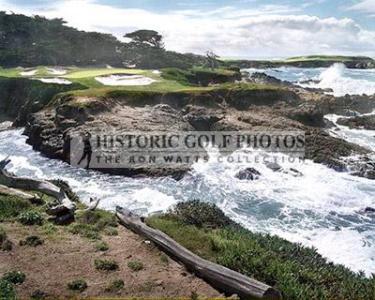
Once I started reading this, I read nothing else till I was finished.
I know that there won’t be many people who will see this review who give a hang about golf, especially a non-fiction book about golf. For these readers, I hope that, if you have the time to read this overlong review, you’ll at least understand why I read the book with such pleasure.
The golf match which is told of was a best-ball match that occurred on Wednesday, January 11, 1956, at the (very) private Cypress Point golf course on the Monterrey Peninsula in California. Two two-person teams competed against each other. Details ->>>
Layout of the book
The hole-by-hole description of the Match is contained in six chapters, separated by chapters devoted to one or more of the players. These “Match chapters” amount to 50-60 pages of the book. The last Match chapter ends on p. 186, so the Prologue and all the earlier chapters occupy about 2/3 of those 186 pages, the Match chapters 1/3.
There are two chapters that follow all this, one very short, on the results of the 1956 Clambake, finally the book’s longest, simply called Afterward. In this, Frost takes the stories of all his characters through the remaining years of their fame, and into their years of decline and death. The only one still living when the book was published in 2007 was Ken Venturi.
There’s also an Appendix, “Monterrey and Cypress Point”, which contains most of the historical info that I’ve recounted here about the creation of the course. Also a very useful index.
the players
The four players involved in the Match were two golf professionals (one team) against two amateurs (the other).
The professionals:
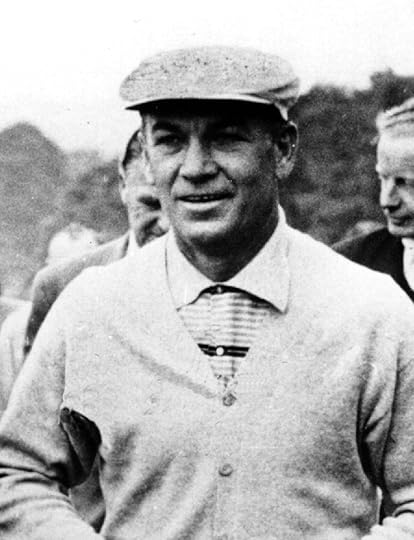
Ben Hogan (1912-1997) was 43 years old, on the way out of his career in professional golf. He would win only one tournament after the day of the match. When Hogan was nine, his family moved from a small Texas town to Fort Worth. His father, a blacksmith, took his own life in that same year – an event which the nine-year old Hogan walked in on as his dad pulled the trigger.
Hogan was one of the greatest golfers who ever played the game. He won 63 professional tournaments in his career (losing three seasons to WW II and one to injury). Nine of his wins were in major championships. In 1953 he played in six tournaments and won five, including the Masters, U.S. Open, and British Open – the only time he ever played in the latter.
His swing was considered a thing of beauty and perfection, which he could execute perfectly, over and over, having spent hundreds of hours on the practice range hitting scores of thousands of balls. Hogan and his wife had been involved in a horrendous traffic accident in February 1949. He had thrown his body in front of his wife in the passenger seat, saving her life. The injuries he sustained caused doctors to advise him that he might never walk again, let alone play golf. But Hogan played a good round of golf in December. The next month he tied for first place in the Los Angeles Open.
See https://en.wikipedia.org/wiki/Ben_Hogan

Byron Nelson (1912-2006), also 43 years old, had already retired from competition on the pro golf circuit. His last professional win had been in 1951, in the Bing Crosby Pro-Am. Nelson was also a Texas boy, from the Fort Worth area, whose parents were middle class and very religious. He’d almost been killed by typhoid fever at the age of eleven.
Nelson won his first major title at The Masters in 1937. Nelson won four more majors – a second Masters, the U.S. Open, and two PGA Championships. In his career, he won a total of 52 professional events. In achieving this record over a relatively short career (he retired in 1946 from regular play) Nelson had achieved the reputation of the greatest golfer of the times, the first to be held in such esteem since the great amateur Robert Jones had retired from competition in 1930.
Nelson was not accepted for military duty during WW II because of a congenital blood clotting disorder. In 1945 he won 18 of 35 PGA events he competed in, including 11 in a row - records that have never been beaten. In ‘45 Nelson had also finished second 7 times. Arnold Palmer once said: "I don't think that anyone will ever exceed the things that Byron did by winning 11 tournaments in a row in one year.”
See https://en.wikipedia.org/wiki/Byron_N...
The amateurs:

Ken Venturi (1931-2013) was 25 years old. Venturi had grown up in the San Francisco area and had been a high school golf champion. Venturi turned professional at the end of the year in which the Match was played. The highlight of his professional career came in 1964 when he overcame severe dehydration in 100-degree heat, to win the U.S. Open. At that time the Open was still played as a three-day event, with 36 holes played on the final day. Doctors followed Venturi around the course in his last round, believing that he was in great danger of succumbing to heat stroke.
After retiring from golf in 1967, Venturi became the color commentator and lead analyst for CBS Sports, a position that he held for the next 35 years – the longest lead analyst stint in sports broadcasting history.
See https://en.wikipedia.org/wiki/Ken_Ven...
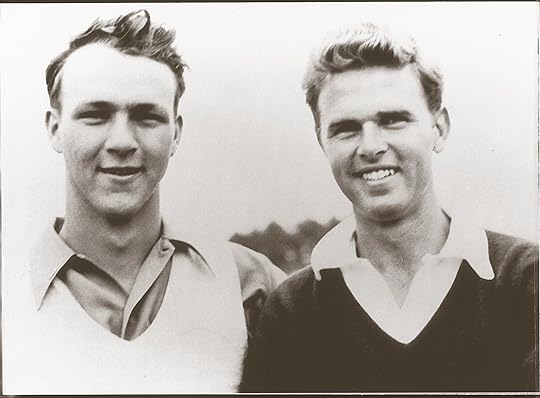
Harvie Ward and Arnold Palmer
Harvie Ward (1925-2004) [if you’re like me, you’ve probably never heard of him, even if those other names are familiar] was thirty years old. Ward had been a champion golfer at the University of North Carolina, and had played in his first Masters in 1948. He won the U.S. Amateur tournament twice, and the British Amateur once. In the late ‘40s and early ‘50s Ward had established himself as one of the greatest amateur golfers of the era.
See https://en.wikipedia.org/wiki/Harvie_...
Comparison of the two teams
Neither of the professionals had completed high school, both dropping out after the tenth grade. Both had had hard times financially during the ‘20s and ‘30s. Both the younger amateurs had attended college: Ward at the U. of N.C., where he’d won the NCAA Division I championship in 1949, and graduated with a degree in economics; Venturi at San Jose State. At this time both were getting along very well, with decent paying jobs (see below) that allowed them to compete whenever they felt like it in amateur or open golfing events.
Each team had one very outgoing member, who made friends and impressed people without even trying: Nelson and Ward. Nelson was one of those people who never met a fellow human he couldn’t get along with; and Frost says of Ward,
On the other hand - Hogan was withdrawn and steely, likely related to the awful event he had witnessed as a child. This was something that virtually no one knew all during Hogan’s career in golf and business, and those few who did know never made it public. Venturi, for his part, was held back by a severe stuttering problem, but was not unfriendly, as Hogan was felt to be by all but … his small inner circle, to whom he was gracious and loyal.
the occasion
The occasion which brought these players together in that second week of January 1956 was the Bing Crosby Pro-Am. This tournament was conceived in 1937 by Crosby as a winter get together with friends and members of the Hollywood hoi polloi, during that time of the year when the professional golf circuit (such as it was in those days) was experiencing its annual rebirth in the sunny clime of California. In the 1950s Crosby’s tournament was played on three different courses; different groups of players played on each course each day. The courses were Pebble Beach, Cypress Point, and the Monterrey Peninsula Country Club.
Crosby himself, one of the most famous entertainers of his time, was actually an extremely good golfer, carrying a handicap in the low single digits. [I either never knew this, or had forgot it. Thanks Mark Frost.] In these days of the Crosby Clambake, as it was known, it was an invitation-only event, with Crosby himself issuing the invitations, assigning the pairings of professional & amateur for the pro-am teams, and even assigning the handicaps to the amateur partner in each team.
the venue
The Match was played on the Cypress Point course. Cypress Point is listed on this site http://www.worldstopmost.com/2017-201... as the second most beautiful golf course in the world.
Around 1920 a man named Samuel Finley Brown Morse (a distant cousin of the inventor of the telegraph), who had been working as a manager of properties on the Monterrey Peninsula, obtained financial backing to purchase 5200 heavily wooded acres between Monterrey and Carmel with plans on developing the land. In his former job, in 1916, Morse had ordered building a golf course which became Pebble Beach. Morse, though a developer, was also a fervent environmental conservationist – a combination of interests that led to the preservation of much of the natural beauty of those parts of the Peninsula which Morse himself owned, and probably had similar effects in the case of other properties around Monterrey.
In 1923, when Morse’s second course, the Monterrey Peninsula CC was being built, Morse hired a thirty-year-old woman named Marion Hollins as the athletic director of his Pebble Beach Resort.
https://upload.wikimedia.org/wikipedi...
Marion Hollins and Alister Makenzie

Ms. Hollins
Frost gives a nice little bio of Marion Hollins (1892-1944), which puts the sparse Wiki article on her to shame. Hollins was from an enormously wealthy family in the New York area. When she expressed an interest in golf at an early age (she was much the tom-boy), her dad had commissioned Willie Dunn, a Scottish course designer who had just finished designing Shinnecock Hills, to design a private course on the Hollins’ estate. At six, Marion began taking lesson; at fourteen she entered the U.S. Women’s Amateur; and fifteen years later, in 1921, she won the tournament - her first of two wins. She was more than a good golfer from a Gilded Age family. Frost says, “from the outset, she possessed a magnetic, vital personality, a gift for social interaction, and what was often described as a “man’s mind.” Even as a teenager, Hollins was filled with a restless purpose and a hunger to achieve, along with the energy, intelligence, and drive to bring her visions into being.” Her motto was “Failure is impossible.” Her father lost his fortune in a bank failure before Marion could inherit. She, being an early suffragette, simply set out to make her own living.
Once she was working at Pebble Beach, Marion began exploring the other properties on the Peninsula that Morse owned. When the saw a 150-acre plot a mile north of Pebble Beach that early Spanish settlers had named ”La Punta de Cipreses”, Frost writes that Hollins “felt a transcendent charge light up her senses. Cypress Point, she told Morse, was the place to build the most glorious golf club on the planet.” So certain was she that she bought an option (which she later exercised) on the property from Morse, at $1000 an acre, and determined to create Cypress Point Golf Club herself.
The first course architect she hired, “exhausted by the demands of [his] prior success”, suddenly died of pneumonia before he made much progress on Cypress Point. Hollins chose as his replacement a former army surgeon from Scotland, who had started making a name for himself as a course designer. Frost writes that this man, Dr. Alister MacKenzie, “possessed the soul of a poet.” By the time he finished Cypress Point, his reputation had been made. Among the other American courses he designed was Augusta National, to become the venue of one of the world’s most famous tournaments, the Masters.
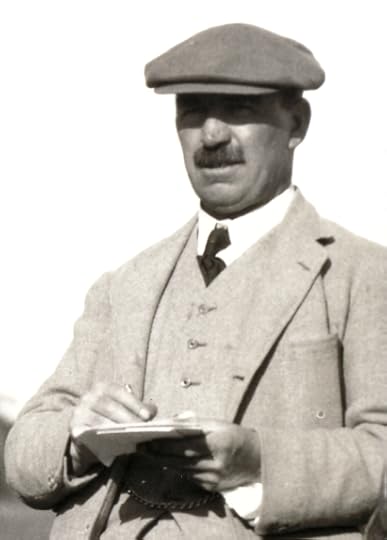
Dr. MacKenzie
Descriptions of the holes
In the Match chapters, Frost includes in his narration of the play of each hole a pretty detailed description of the layout of the hole. I found these descriptions very useful in creating a vision of the hole, probably not too accurate, but enough to increase my enjoyment. (It’s really too bad that these couldn’t have been accompanied by photographs, or even a single back-of-the-scorecard map of the course. But not in my paperback edition, at least.)
Here’s a couple examples, from the first few holes.
that subtitle
What exactly does the subtitle of the book – “The Day the Game of Golf Changed Forever” – mean? It sounds overdramatic, certainly. Let’s skip directly to the back of my edition. The last two pages include a very brief “Interview” with the author, in which he answers eight questions. Here’s one.
Q: Without giving away the book, why do you think this particular game had such an impact on the sport of golf?
A: It marks the great divide between the end of the period when pros and amateurs played the game as relative equals, and the beginning of the modern era, which has been thoroughly dominated by professionals and, increasingly, by market forces that have transformed it, for better or worse, into a billion-dollar industry.
. . . . . . . . . . . . . . . . . . . .
Previous review: The Marriage of Cadmus and Harmony creative non-fiction (?) about the Greek myths
Random review: Studs Lonigan
Next review: The Tempest
Previous library review: Farewell to Cricket Don Bradman
Next library review: Cinderella Man the James J. Braddock story
If all you care about is who won…
"The par 3 fifteenth at Cypress Point, 113-yard par three, slightly downhill across a narrow, deep, diagonal cove to a green nestled atop the rocks, an island of grass surrounded by ancient cypress stands and six of MacKenzie’s rough-edged natural bunkers... no tricks, no camouflage, no other defenses except the wind off the sea, which can render it nearly unplayable…"
On a day like this, perhaps?
Once I started reading this, I read nothing else till I was finished.
I know that there won’t be many people who will see this review who give a hang about golf, especially a non-fiction book about golf. For these readers, I hope that, if you have the time to read this overlong review, you’ll at least understand why I read the book with such pleasure.
The golf match which is told of was a best-ball match that occurred on Wednesday, January 11, 1956, at the (very) private Cypress Point golf course on the Monterrey Peninsula in California. Two two-person teams competed against each other. Details ->>>
Layout of the book
The hole-by-hole description of the Match is contained in six chapters, separated by chapters devoted to one or more of the players. These “Match chapters” amount to 50-60 pages of the book. The last Match chapter ends on p. 186, so the Prologue and all the earlier chapters occupy about 2/3 of those 186 pages, the Match chapters 1/3.
There are two chapters that follow all this, one very short, on the results of the 1956 Clambake, finally the book’s longest, simply called Afterward. In this, Frost takes the stories of all his characters through the remaining years of their fame, and into their years of decline and death. The only one still living when the book was published in 2007 was Ken Venturi.
There’s also an Appendix, “Monterrey and Cypress Point”, which contains most of the historical info that I’ve recounted here about the creation of the course. Also a very useful index.
the players
The four players involved in the Match were two golf professionals (one team) against two amateurs (the other).
The professionals:
Ben Hogan (1912-1997) was 43 years old, on the way out of his career in professional golf. He would win only one tournament after the day of the match. When Hogan was nine, his family moved from a small Texas town to Fort Worth. His father, a blacksmith, took his own life in that same year – an event which the nine-year old Hogan walked in on as his dad pulled the trigger.
Hogan was one of the greatest golfers who ever played the game. He won 63 professional tournaments in his career (losing three seasons to WW II and one to injury). Nine of his wins were in major championships. In 1953 he played in six tournaments and won five, including the Masters, U.S. Open, and British Open – the only time he ever played in the latter.
His swing was considered a thing of beauty and perfection, which he could execute perfectly, over and over, having spent hundreds of hours on the practice range hitting scores of thousands of balls. Hogan and his wife had been involved in a horrendous traffic accident in February 1949. He had thrown his body in front of his wife in the passenger seat, saving her life. The injuries he sustained caused doctors to advise him that he might never walk again, let alone play golf. But Hogan played a good round of golf in December. The next month he tied for first place in the Los Angeles Open.
See https://en.wikipedia.org/wiki/Ben_Hogan
Byron Nelson (1912-2006), also 43 years old, had already retired from competition on the pro golf circuit. His last professional win had been in 1951, in the Bing Crosby Pro-Am. Nelson was also a Texas boy, from the Fort Worth area, whose parents were middle class and very religious. He’d almost been killed by typhoid fever at the age of eleven.
Nelson won his first major title at The Masters in 1937. Nelson won four more majors – a second Masters, the U.S. Open, and two PGA Championships. In his career, he won a total of 52 professional events. In achieving this record over a relatively short career (he retired in 1946 from regular play) Nelson had achieved the reputation of the greatest golfer of the times, the first to be held in such esteem since the great amateur Robert Jones had retired from competition in 1930.
Nelson was not accepted for military duty during WW II because of a congenital blood clotting disorder. In 1945 he won 18 of 35 PGA events he competed in, including 11 in a row - records that have never been beaten. In ‘45 Nelson had also finished second 7 times. Arnold Palmer once said: "I don't think that anyone will ever exceed the things that Byron did by winning 11 tournaments in a row in one year.”
See https://en.wikipedia.org/wiki/Byron_N...
The amateurs:
Ken Venturi (1931-2013) was 25 years old. Venturi had grown up in the San Francisco area and had been a high school golf champion. Venturi turned professional at the end of the year in which the Match was played. The highlight of his professional career came in 1964 when he overcame severe dehydration in 100-degree heat, to win the U.S. Open. At that time the Open was still played as a three-day event, with 36 holes played on the final day. Doctors followed Venturi around the course in his last round, believing that he was in great danger of succumbing to heat stroke.
After retiring from golf in 1967, Venturi became the color commentator and lead analyst for CBS Sports, a position that he held for the next 35 years – the longest lead analyst stint in sports broadcasting history.
See https://en.wikipedia.org/wiki/Ken_Ven...
Harvie Ward and Arnold Palmer
Harvie Ward (1925-2004) [if you’re like me, you’ve probably never heard of him, even if those other names are familiar] was thirty years old. Ward had been a champion golfer at the University of North Carolina, and had played in his first Masters in 1948. He won the U.S. Amateur tournament twice, and the British Amateur once. In the late ‘40s and early ‘50s Ward had established himself as one of the greatest amateur golfers of the era.
See https://en.wikipedia.org/wiki/Harvie_...
Comparison of the two teams
Neither of the professionals had completed high school, both dropping out after the tenth grade. Both had had hard times financially during the ‘20s and ‘30s. Both the younger amateurs had attended college: Ward at the U. of N.C., where he’d won the NCAA Division I championship in 1949, and graduated with a degree in economics; Venturi at San Jose State. At this time both were getting along very well, with decent paying jobs (see below) that allowed them to compete whenever they felt like it in amateur or open golfing events.
Each team had one very outgoing member, who made friends and impressed people without even trying: Nelson and Ward. Nelson was one of those people who never met a fellow human he couldn’t get along with; and Frost says of Ward,
[he] graduated into a world that wanted nothing more than to throw a meaty arm around his shoulder, pour him a double Scotch rocks, introduce him to the girl next door, teach him the secret handshake, and hand over the key to the executive washroom.
On the other hand - Hogan was withdrawn and steely, likely related to the awful event he had witnessed as a child. This was something that virtually no one knew all during Hogan’s career in golf and business, and those few who did know never made it public. Venturi, for his part, was held back by a severe stuttering problem, but was not unfriendly, as Hogan was felt to be by all but … his small inner circle, to whom he was gracious and loyal.
the occasion
The occasion which brought these players together in that second week of January 1956 was the Bing Crosby Pro-Am. This tournament was conceived in 1937 by Crosby as a winter get together with friends and members of the Hollywood hoi polloi, during that time of the year when the professional golf circuit (such as it was in those days) was experiencing its annual rebirth in the sunny clime of California. In the 1950s Crosby’s tournament was played on three different courses; different groups of players played on each course each day. The courses were Pebble Beach, Cypress Point, and the Monterrey Peninsula Country Club.
Crosby himself, one of the most famous entertainers of his time, was actually an extremely good golfer, carrying a handicap in the low single digits. [I either never knew this, or had forgot it. Thanks Mark Frost.] In these days of the Crosby Clambake, as it was known, it was an invitation-only event, with Crosby himself issuing the invitations, assigning the pairings of professional & amateur for the pro-am teams, and even assigning the handicaps to the amateur partner in each team.
the venue
The Match was played on the Cypress Point course. Cypress Point is listed on this site http://www.worldstopmost.com/2017-201... as the second most beautiful golf course in the world.
Around 1920 a man named Samuel Finley Brown Morse (a distant cousin of the inventor of the telegraph), who had been working as a manager of properties on the Monterrey Peninsula, obtained financial backing to purchase 5200 heavily wooded acres between Monterrey and Carmel with plans on developing the land. In his former job, in 1916, Morse had ordered building a golf course which became Pebble Beach. Morse, though a developer, was also a fervent environmental conservationist – a combination of interests that led to the preservation of much of the natural beauty of those parts of the Peninsula which Morse himself owned, and probably had similar effects in the case of other properties around Monterrey.
In 1923, when Morse’s second course, the Monterrey Peninsula CC was being built, Morse hired a thirty-year-old woman named Marion Hollins as the athletic director of his Pebble Beach Resort.
https://upload.wikimedia.org/wikipedi...
Marion Hollins and Alister Makenzie
Ms. Hollins
Frost gives a nice little bio of Marion Hollins (1892-1944), which puts the sparse Wiki article on her to shame. Hollins was from an enormously wealthy family in the New York area. When she expressed an interest in golf at an early age (she was much the tom-boy), her dad had commissioned Willie Dunn, a Scottish course designer who had just finished designing Shinnecock Hills, to design a private course on the Hollins’ estate. At six, Marion began taking lesson; at fourteen she entered the U.S. Women’s Amateur; and fifteen years later, in 1921, she won the tournament - her first of two wins. She was more than a good golfer from a Gilded Age family. Frost says, “from the outset, she possessed a magnetic, vital personality, a gift for social interaction, and what was often described as a “man’s mind.” Even as a teenager, Hollins was filled with a restless purpose and a hunger to achieve, along with the energy, intelligence, and drive to bring her visions into being.” Her motto was “Failure is impossible.” Her father lost his fortune in a bank failure before Marion could inherit. She, being an early suffragette, simply set out to make her own living.
Once she was working at Pebble Beach, Marion began exploring the other properties on the Peninsula that Morse owned. When the saw a 150-acre plot a mile north of Pebble Beach that early Spanish settlers had named ”La Punta de Cipreses”, Frost writes that Hollins “felt a transcendent charge light up her senses. Cypress Point, she told Morse, was the place to build the most glorious golf club on the planet.” So certain was she that she bought an option (which she later exercised) on the property from Morse, at $1000 an acre, and determined to create Cypress Point Golf Club herself.
The first course architect she hired, “exhausted by the demands of [his] prior success”, suddenly died of pneumonia before he made much progress on Cypress Point. Hollins chose as his replacement a former army surgeon from Scotland, who had started making a name for himself as a course designer. Frost writes that this man, Dr. Alister MacKenzie, “possessed the soul of a poet.” By the time he finished Cypress Point, his reputation had been made. Among the other American courses he designed was Augusta National, to become the venue of one of the world’s most famous tournaments, the Masters.
Mackenzie knew that in Cypress Point he had been handed the most magnificent canvas on which to create a course any architect had even known. His only concern was that the holes suggested by the existing landscape would be so inherently difficult not even accomplished players could ever hope to master them…
Mackenzie walked the Cypress property throughout February of 1926, often with Marion Hollins by his side, in every kind of weather. The land varied wildly – sloping up from coastal cliffs, banked by ancient dunes along the northern edge, skirting up into the forested foothills of the Santa Lucia Mountains… He orchestrated a route through these different zones that would create not only a rising physical challenge and a dramatic progression of mood but, by its climax along the rocky, windswept coast, provoke a spiritual journey for the soul…
When he returned to tweak the finished product in November 1928 he realized why no discouraging word had been heard from the members: they were too busy gasping in astonishment at its beauty to care how they played. The hand of man had so artfully improved on the raw materials of nature that no one could tell where the work of one ended and the other began, and it took everyone’s breath away.
Dr. MacKenzie
Descriptions of the holes
In the Match chapters, Frost includes in his narration of the play of each hole a pretty detailed description of the layout of the hole. I found these descriptions very useful in creating a vision of the hole, probably not too accurate, but enough to increase my enjoyment. (It’s really too bad that these couldn’t have been accompanied by photographs, or even a single back-of-the-scorecard map of the course. But not in my paperback edition, at least.)
Here’s a couple examples, from the first few holes.
that subtitle
What exactly does the subtitle of the book – “The Day the Game of Golf Changed Forever” – mean? It sounds overdramatic, certainly. Let’s skip directly to the back of my edition. The last two pages include a very brief “Interview” with the author, in which he answers eight questions. Here’s one.
Q: Without giving away the book, why do you think this particular game had such an impact on the sport of golf?
A: It marks the great divide between the end of the period when pros and amateurs played the game as relative equals, and the beginning of the modern era, which has been thoroughly dominated by professionals and, increasingly, by market forces that have transformed it, for better or worse, into a billion-dollar industry.
. . . . . . . . . . . . . . . . . . . .
Previous review: The Marriage of Cadmus and Harmony creative non-fiction (?) about the Greek myths
Random review: Studs Lonigan
Next review: The Tempest
Previous library review: Farewell to Cricket Don Bradman
Next library review: Cinderella Man the James J. Braddock story

October 2, 2017
This book isn’t exactly about one game of golf, not that it wouldn’t have been great if that were all it did. This book tells the history of golf from the American perspective during a time that the game changed drastically. At some points I forgot I was reading nonfiction, and that is a compliment. Each player became a character, but the fact that it actually happened made it worth reading, because a made up round of golf would most likely be a bit unbelievable and unreadable.

October 31, 2017
This is an outstanding read, in my opinion, but you need to be a golf fan and old enough to remember the key players in order to enjoy it as much as I did. It is a true story and takes place in 1956 at the Bing Crosby Clambake golf tournament on the Monterrey Peninsula in California. The tournament is known today as the AT&T Pebble Beach Pro-Am. Since the tournament format is a high profile pro-am it draws many celebrities and corporate high roller participants. Two of the
high rollers, Eddie Lowry and George Coleman, were partying together before the tournament started. Eddie was a strong supporter of amateur golf and proposed a better ball challenge match between two of America's top amateurs and two top professionals with a sizable wager on the outcome. Everyone agreed and the game was on to be played the next day at the world renowned Cypress Point Golf Club. The amateur contestants were Harvie Ward and Ken Venturi. The
professionals were Byron Nelson and Ben Hogan. Mark Frost is an excellent writer and he describes the match in a descriptive and exciting way and also includes a great deal of personal history on all of the protagonists. This is the best book I've read recently.
high rollers, Eddie Lowry and George Coleman, were partying together before the tournament started. Eddie was a strong supporter of amateur golf and proposed a better ball challenge match between two of America's top amateurs and two top professionals with a sizable wager on the outcome. Everyone agreed and the game was on to be played the next day at the world renowned Cypress Point Golf Club. The amateur contestants were Harvie Ward and Ken Venturi. The
professionals were Byron Nelson and Ben Hogan. Mark Frost is an excellent writer and he describes the match in a descriptive and exciting way and also includes a great deal of personal history on all of the protagonists. This is the best book I've read recently.

July 27, 2020
Great story of a match between professional golfers and their amateur counterparts in an era where this was a big distinction. But the better part of the book is the history and lore around the 4 players (and some fans) that took part. Must read for any golfer! Only knock on the book - not sure what really changed about golf as a result of this match.

May 28, 2020
Some sports books chronicle games, a rare few capture the instant a sport transforms. Mark Frost’s The Match epitomizes the latter.
It recounts of a private 1956 best ball round at Cypress Point, California between professionals Ben Hogan and Byron Nelson, and two gifted young amateurs, Ken Venturi and Harvie Ward. The pros won by a single hole, but Frost makes clear that something larger was at stake — the passing of golf’s amateur ideal into a commercialized professional modern age.
As the sun sets over the Pacific, Frost pauses to describe Hogan, stoic, precise, and almost mythical:
“Because he was Ben Hogan, and it was just past twilight, and his like would never pass this way again.”
If The Match was the first great turning point in golf, the second was one I witnessed — Tiger Woods making the game feel inevitable. At his peak, he didn’t just play, he defined victory. Tiger was the reason I first picked up a club over twenty years ago.
Frost, who also wrote The Greatest Game Ever Played, writes nonfiction like fiction — deeply researched, yet cinematic and full of heart.
The Match remains an indelible record of that glowing Pacific afternoon when golf grew up. A memory that will forever transcend time.
It recounts of a private 1956 best ball round at Cypress Point, California between professionals Ben Hogan and Byron Nelson, and two gifted young amateurs, Ken Venturi and Harvie Ward. The pros won by a single hole, but Frost makes clear that something larger was at stake — the passing of golf’s amateur ideal into a commercialized professional modern age.
As the sun sets over the Pacific, Frost pauses to describe Hogan, stoic, precise, and almost mythical:
“Because he was Ben Hogan, and it was just past twilight, and his like would never pass this way again.”
If The Match was the first great turning point in golf, the second was one I witnessed — Tiger Woods making the game feel inevitable. At his peak, he didn’t just play, he defined victory. Tiger was the reason I first picked up a club over twenty years ago.
Frost, who also wrote The Greatest Game Ever Played, writes nonfiction like fiction — deeply researched, yet cinematic and full of heart.
The Match remains an indelible record of that glowing Pacific afternoon when golf grew up. A memory that will forever transcend time.

August 19, 2019
My husband and I listened to this as we traveled this summer. What a great book on golf and some of the main players pro and amateur that played in the 40's, 50's, and years after. How some of the great tournaments started and courses were developed. If you have a love of golf or your spouse does this is a great read! I really enjoyed the history of these players I've always heard about.

August 18, 2025
As someone who recently took up the sport, this was a great history of the earlier stages of the game. Great story telling!

April 29, 2026
Absolutely loved it. Every golf fan should read it. It goes beyond just the game.

January 11, 2025
Very fitting read in today’s golf landscape focused more and more on the economics and less on the sporting side of the game.

September 7, 2023
As a golf junkie and an amateur golf historian this book provided awesome insight into the glamorous (or not so much) world of early competitive golf. Would recommend to any golf nerd and was a great entertaining read
May 5, 2025
Relentlessly human while painting pictures of the titans of golf. “The Match” artfully weaves the lives of four men, 18 holes of golf, and our hearts together in such a way that we can’t believe it should be any other way.
A story of a competition between professionals and amateurs that couldn’t have happened at any other time in history and we are fortunate to have this recounting of it. What a match.
A story of a competition between professionals and amateurs that couldn’t have happened at any other time in history and we are fortunate to have this recounting of it. What a match.

May 24, 2026
Enjoyed this book so much. I enjoy golf, and this book gives us a glimpse behind the scenes into historic golfers and the greatest golf match of all time. So fun.
But even if you don’t like golf, this is a good book to read. It is a historical book in the best sense- yes it guides you through a time period. But more importantly, it peels back the curtain on figures and shows their internal lives.
But even if you don’t like golf, this is a good book to read. It is a historical book in the best sense- yes it guides you through a time period. But more importantly, it peels back the curtain on figures and shows their internal lives.

August 9, 2019
I LOVE golf but, I dunno, this book just wasn't my cup of tea. Perhaps it's because I enjoy playing the game way more than I do watching or paying attention to it unless it's a major with Tiger in contention, especially today.

August 6, 2023
A very quick read that is a must for golf fans. The golf in The Match is entertaining for sure and has its share of drama, but it’s the Afterward that is the highlight for me. Four men who loved golf and were always bound by this match despite any struggles that life brought on. I found it to be quite touching.

May 1, 2024
I enjoyed the detail given to every shot each player took during the match, and this made me dream of playing Cypress Point someday. This was also a solid look into golf’s history and some players I know as legends.

June 26, 2025
Listened to this with my husband as we drove through the U.P. of MI. I enjoyed it, but it was him who gave it 5⭐️
He says ... "My favorite part was the retelling of the players' life stories. Great book for golfers and nongolfers alike."
He says ... "My favorite part was the retelling of the players' life stories. Great book for golfers and nongolfers alike."

August 16, 2025
Listened to this book in the car traveling home from Washington with my husband. We both enjoyed it. I’m not a golf enthusiast but enjoyed the history of the story, whereas my husband knew all the players so enjoyed hearing details of The Match.

May 9, 2020
Enjoyable recreation of the 1956 match. Felt like some of the oral history blended with folklore, but that’s ok.
October 17, 2023
In all fairness, I am not the target demographic of this book. My dad gave it to me for some birthday or Christmas and I recently found myself with zero other books in the house besides this one. I am literally PUMPED to be finished. That’s all I have to say about that.
July 27, 2025
Solid book. Very interesting story about the intersection of amateur and professional golf at a time when both were trending in opposite directions.
Not knowing anything about the match, or much about the golfers competing, it was a fun and insightful historical retelling.
Make sure to read the book during the summer months, as it will have you craving access to a golf course. Provided a strong drive to put in the hours and seek continuous improvements in my own game.
Not knowing anything about the match, or much about the golfers competing, it was a fun and insightful historical retelling.
Make sure to read the book during the summer months, as it will have you craving access to a golf course. Provided a strong drive to put in the hours and seek continuous improvements in my own game.
September 22, 2026
Cool to see how the amateur status was more suitable for living than the professional career was back then. Dudes were really just out there selling cars and then winning Opens on the side lol
March 19, 2024
I liked it

August 17, 2025
read this book over the course of a year and a half, so extremely slow. but as someone who spends too much money and time on golf it was great

June 21, 2026
Read this after playing Monterey Peninsula, which made it incredibly cool as I could picture the course and area perfectly. Lots of interesting insight into the amateur golf experience that shaped the game way back in the day. Makes me want to play Cypress and Pebble!!!

January 1, 2011
Five years ago, I read Frost's book The Greatest Game Ever Played, a nonfiction account of Francis Ouimet's stunning upset of Harry Vardon in the 1913 US Open, and the beginnings of golf as a major American sport -- and I loved it. Frost follows a similar formula in The Match. The book is a nonfiction account of a round of golf played in 1956 by the world's top two amateurs (Ken Venturi and Harvie Ward) and the world's top two professionals (the legends Byron Nelson and Ben Hogan). Frost relates how the match came about (a bet between two millionaires who were friends of the participants and connected to the golf world), describes the importance of the match within the history of the game (the match foretold the transition of the game from amateurs to professionals, and signified the coming rise of the modern PGA Tour), and then interweaves the lives and backstories of the four competitors with a hole-by-hole, stroke-by-stroke account of the match. In comparison to The Greatest Game Ever Played, I found the account of the match in this book to be slightly less exciting than the account of the 1913 US, but I found the character histories of the four competitors to be more engaging than those of Ouimet and Vardon. The very small criticism I have of the book is that there tends to be a ton of hero worship and Frost throws around a lot of superlatives (e.g. “the sixteenth hole of Cypress Point is the most exquisite hole in golf”, or describing one of Nelson’s or Hogan’s best years as perhaps the greatest year ever had by a golfer, etc.); but when you’re describing legends such as Nelson and Hogan, superlatives may actually be the appropriate adjectives. Overall, I loved the book, and Frost heads to my short list of authors whose other books (at least nonfiction ones) I will all immediately purchase. The book also caused me to wish Goodreads.com allowed half-star ratings as I reserve five stars for those books that are brilliantly told, that impart deeper reactions or convey deeper levels of emotion, and that showcase brilliant prose. The Match only accomplishes the first of these, and yet it is possibly my favorite nonfiction sports account ever. I’ll settle for the four, but wish it could be a four-and-a-half. In any case, an engaging read, and highly recommended.

April 9, 2019
This is a really interesting book about what was certainly one of the greatest match play matches of all time - and it happened in a practice round. With no t.v. cameras. With money (the players' and their sponsors' own) and pride the only things on the line. Byron Nelson and Ben Hogan - perhaps past their primes by a little but still the most formidable pros in the game - versus Ken Venturi and Harvie Ward - the pre-eminent amateurs in golf when amateurs were still equal to the pros.
The match took place during a Tuesday practice round before what was then the Crosby Clambake (now the Pebble Beach Pro-Am). Eddie Lowery, who sponsored both Venturi and Ward, challenged George Coleman (like Lowery a wealthy businessman and excellent golfer) that his two golfers could beat any other two in the world. Coleman arranged for Nelson and Hogan to partner together and made the bet.
The beauty of this is that there is no official record of the match. Frost does a great job of describing the action, which he had to piece together from eyewitness accounts. There was no t.v. Word quickly spread around the Monterey Peninsula about what was happening and people started to show up to watch but not until the golfers had pretty much completed the front nine. Yet Frost captures the drama and intensity of the match quite well while interspersing the personal stories of the main characters.
I'm not sure I agree with the subtitle of the book, which refers to the demise of amateurs competing with the pros in any significant way and the rise of the professional tour. But don't worry about that. If you're a golf fan just sit back and enjoy Frost's telling of one of the greatest golf matches ever played and barely seen.
The match took place during a Tuesday practice round before what was then the Crosby Clambake (now the Pebble Beach Pro-Am). Eddie Lowery, who sponsored both Venturi and Ward, challenged George Coleman (like Lowery a wealthy businessman and excellent golfer) that his two golfers could beat any other two in the world. Coleman arranged for Nelson and Hogan to partner together and made the bet.
The beauty of this is that there is no official record of the match. Frost does a great job of describing the action, which he had to piece together from eyewitness accounts. There was no t.v. Word quickly spread around the Monterey Peninsula about what was happening and people started to show up to watch but not until the golfers had pretty much completed the front nine. Yet Frost captures the drama and intensity of the match quite well while interspersing the personal stories of the main characters.
I'm not sure I agree with the subtitle of the book, which refers to the demise of amateurs competing with the pros in any significant way and the rise of the professional tour. But don't worry about that. If you're a golf fan just sit back and enjoy Frost's telling of one of the greatest golf matches ever played and barely seen.
April 28, 2018
There are some wonderful parts of this book, as it unpacks a seminal moment in golf history. Remarkably, that moment didn't involve TV, a championship or even a tournament. It was a casual four-man, best-ball competition put together on a whim and a bet. And two of the game's all-time greats (Ben Hogan and Byron Nelson) played a down-to-the-wire match against the two best amateurs of their era (Ken Venturi and Harvie Ward). I'd never heard about it.
The setup was impeccable: one of the loveliest golf courses in the world, Cypress Point near Monterey, California. Perfect weather on a cool, sunny January day in 1956. All four played at the top of their games, blasting away at a tour course with treacherous hazardous all over the place. The worst of them finished 5 under par, and between them they had something like 2 bogeys on the day.
The book sets up the situation with a history of golf at the time, with special attention to how the high status of amateurs that ran through World War II was starting to give way to the rising popularity (and money) of pro golf during the post-war economic boom. Hogan and Nelson had prospered as much as anyone could during pro golf's impoverished days, earning $10,000 or maybe $25,000 in a great year. Meanwhile, amateurs could pocket money from sham jobs or real jobs in which their main role was to charm people by playing golf (stockbroker, car salesman). But they would pretend to be too classy to play golf for money (or, in some cases, they didn't need the money). Tradition kept the two parties apart in some tournaments, and in competition in others, the "Opens" that had the game's highest prestige.
The way the men's lives were intertwined was remarkable, and a reminder that the world of golf was very small in those days. Nelson and Hogan were caddies at the same Fort Worth, Texas, golf course at the same time, and Nelson (a few years older) beat Hogan in the caddie championship in a playoff. Then they shared cars and motel rooms as they tested the pro tour. They became good friends as each tried to make it, and even their wives became great friends. Only a falling out as Nelson reached the pinnacle first, and Hogan took a much more painful and arduous route, led their friendship astray.
Meanwhile, both Nelson and Hogan each knew Ward and Venturi. Nelson in particular tutored the younger men in the nuances of the game, enabling them to rise to the top of the amateur ranks.
So, what brought them together? That's the subject of the 1st half of the book. Basically, what made it happen was the third big trend in golf at that time: Bing Crosby. Crosby created the pro-am almost singlehandedly with his bacchanal known as the Clambake. It was a drinkfest, skirt-chasing, celebrity golf tournament that he hosted at Pebble Beach and Cypress Creek each January, and it helped to bring pro golf into the limelight by attracting Hollywood stars and putting them together with pro golfers and big-time businessmen.
Hogan and Nelson had played at the Clambake many times, but in 1956, they were on the downside. Nelson had retired about 8 years earlier (when he was the best golfer in the world) to become a rancher in Texas, and he came to the Clambake as one of his few golf events of the year. Hogan was in his last year of competitive play, as hip and leg problems stemming from a car accident were taking their toll. Arguably, he or Sam Snead were the best player in the world at the time. Along come top amateurs Venturi and Ward -- and their employer, an aggressive car dealer on the West Coast, bets his buddy that they can "beat any two men alive." After all, they hadn't lost a best-ball competition in four years, beating hundreds of opponents in match play. So the car dealer's buddy calls up Hogan, who says, "I'll play if Byron plays," and he calls up Nelson who says, "I'll play if Ben plays," and that was it. Match on, see you tomorrow morning at Cypress Creek.
The 2nd half of the book is a shot-by-shot recitation of the magical round. It probably would be remembered anyway, given the caliber of the players. But the fact that all of them played out of their minds is what brings it to legendary status. And the author brings that to light, along with evoking the beauty of the course -- makes you want to play it, as a bucket-list activity.
Overall, this book is a joy to read if you like golf. It's about how to play golf and how to watch golf, and it's about the evolution of golf and of the character that it takes to play it at the highest level. My only criticism -- and it gets more severe as the book continues -- is that the author seems gives too much praise to the four men. Yes, he acknowledges their flaws (Harvie became a drunk, Hogan wasn't nice to people, Venturi almost threw away his career by drinking), but basically he says the four of them are great men. Byron Nelson in particular is repeatedly called the nicest, gentlest, calmest man that there ever was. Hogan is called the toughest competitor there ever was, except maybe for Venturi. Harvie is applauded for being the friendliest guy there ever was and being so grateful when the folks at Augusta National bailed him out by giving him a greeter-type job when he finally sobered up. Harvie's cheating on his wife was "boys will be boys" stuff. And on it goes.
Even minor characters in the book's appendix get the hagiographic treatment. The course designer is the unheralded genius who finally got his due in the 1980s. The woman whose vision it was for Cypress Creek is a visionary. Etc. The heaps of praise get old.
Still, this is a charming book, and it gives permanence to a great golf match that exhibited some of the highest ideals of sportsmanship and shot-making that golf ever saw.
The setup was impeccable: one of the loveliest golf courses in the world, Cypress Point near Monterey, California. Perfect weather on a cool, sunny January day in 1956. All four played at the top of their games, blasting away at a tour course with treacherous hazardous all over the place. The worst of them finished 5 under par, and between them they had something like 2 bogeys on the day.
The book sets up the situation with a history of golf at the time, with special attention to how the high status of amateurs that ran through World War II was starting to give way to the rising popularity (and money) of pro golf during the post-war economic boom. Hogan and Nelson had prospered as much as anyone could during pro golf's impoverished days, earning $10,000 or maybe $25,000 in a great year. Meanwhile, amateurs could pocket money from sham jobs or real jobs in which their main role was to charm people by playing golf (stockbroker, car salesman). But they would pretend to be too classy to play golf for money (or, in some cases, they didn't need the money). Tradition kept the two parties apart in some tournaments, and in competition in others, the "Opens" that had the game's highest prestige.
The way the men's lives were intertwined was remarkable, and a reminder that the world of golf was very small in those days. Nelson and Hogan were caddies at the same Fort Worth, Texas, golf course at the same time, and Nelson (a few years older) beat Hogan in the caddie championship in a playoff. Then they shared cars and motel rooms as they tested the pro tour. They became good friends as each tried to make it, and even their wives became great friends. Only a falling out as Nelson reached the pinnacle first, and Hogan took a much more painful and arduous route, led their friendship astray.
Meanwhile, both Nelson and Hogan each knew Ward and Venturi. Nelson in particular tutored the younger men in the nuances of the game, enabling them to rise to the top of the amateur ranks.
So, what brought them together? That's the subject of the 1st half of the book. Basically, what made it happen was the third big trend in golf at that time: Bing Crosby. Crosby created the pro-am almost singlehandedly with his bacchanal known as the Clambake. It was a drinkfest, skirt-chasing, celebrity golf tournament that he hosted at Pebble Beach and Cypress Creek each January, and it helped to bring pro golf into the limelight by attracting Hollywood stars and putting them together with pro golfers and big-time businessmen.
Hogan and Nelson had played at the Clambake many times, but in 1956, they were on the downside. Nelson had retired about 8 years earlier (when he was the best golfer in the world) to become a rancher in Texas, and he came to the Clambake as one of his few golf events of the year. Hogan was in his last year of competitive play, as hip and leg problems stemming from a car accident were taking their toll. Arguably, he or Sam Snead were the best player in the world at the time. Along come top amateurs Venturi and Ward -- and their employer, an aggressive car dealer on the West Coast, bets his buddy that they can "beat any two men alive." After all, they hadn't lost a best-ball competition in four years, beating hundreds of opponents in match play. So the car dealer's buddy calls up Hogan, who says, "I'll play if Byron plays," and he calls up Nelson who says, "I'll play if Ben plays," and that was it. Match on, see you tomorrow morning at Cypress Creek.
The 2nd half of the book is a shot-by-shot recitation of the magical round. It probably would be remembered anyway, given the caliber of the players. But the fact that all of them played out of their minds is what brings it to legendary status. And the author brings that to light, along with evoking the beauty of the course -- makes you want to play it, as a bucket-list activity.
Overall, this book is a joy to read if you like golf. It's about how to play golf and how to watch golf, and it's about the evolution of golf and of the character that it takes to play it at the highest level. My only criticism -- and it gets more severe as the book continues -- is that the author seems gives too much praise to the four men. Yes, he acknowledges their flaws (Harvie became a drunk, Hogan wasn't nice to people, Venturi almost threw away his career by drinking), but basically he says the four of them are great men. Byron Nelson in particular is repeatedly called the nicest, gentlest, calmest man that there ever was. Hogan is called the toughest competitor there ever was, except maybe for Venturi. Harvie is applauded for being the friendliest guy there ever was and being so grateful when the folks at Augusta National bailed him out by giving him a greeter-type job when he finally sobered up. Harvie's cheating on his wife was "boys will be boys" stuff. And on it goes.
Even minor characters in the book's appendix get the hagiographic treatment. The course designer is the unheralded genius who finally got his due in the 1980s. The woman whose vision it was for Cypress Creek is a visionary. Etc. The heaps of praise get old.
Still, this is a charming book, and it gives permanence to a great golf match that exhibited some of the highest ideals of sportsmanship and shot-making that golf ever saw.

December 6, 2016
Very engaging reporting of a seminal golf event--one I had never heard about, and since I'm not a golf fan this isn't surprising. Frost makes a game that, for me, is quite boring to watch but he brings it to life in crisp, well-paced prose. He also develops the lives of the four players who played this famous match. Interesting commentary too about a sport that thrived well before money and corporate sponsorship changed an athlete's connection to athletics.
November 14, 2016
A book for the sports enthusiast, especially golfers, covering the match of a life time between four of the sports greats played when golf was a weekend sport. This is a must read, a true story of our four greats born into the difficulties of that time creating their own advantages.
Displaying 1 - 30 of 439 reviews