

What do you think?

Ravenor #3
Ravenor Rogue
In the third book of the series, Inquisitor Ravenor's pursuit of his arch-nemesis Molotch takes him and his team into the dangerous reaches of space known as the Halo Stars. Unknown to Ravenor, one of his team hides a deadly secret that could doom them all. Can our heroes find and defeat their enemy before the team is destroyed from within?
320 pages, Hardcover
First published March 5, 2007
Ratings & Reviews
Friends & Following
Create a free account to discover what your friends think of this book!
Community Reviews
Displaying 1 - 30 of 163 reviews

January 25, 2022
A stunning, immense, and totally cinematic ending to the trilogy. Abnett has written a killer story that would be awesome in and of itself but the fact that it's seeped in Warhammer lore coolness makes it that much more enjoyable. Very character and mystery driven and quite unlike any other Warhammer stuff I've read. Highly recommended trilogy even if you haven't read any Warhammer before, it's way accessible and fun.

December 23, 2013
Cliches become cliches because they're over-used, but that doesn't mean they don't hold a nugget of truth in them: in fact, the reason a turn of phrase becomes cliche in the first place is because it holds so much truth in it that it keeps being used again and again in a variety of situations. In that sense, cliches have a kind of power that makes them difficult to stop using.
The statement "The road to hell is paved with good intentions" is a hoary old warning, something everyone has heard in some way, shape, or form throughout life, and it's something one will continue to hear for the rest of one's life. It's meant to prevent one from meddling in another person's business, a reminder to leave a situation well enough alone unless one is invited to do so. Sometimes, poking one's nose into another's business, no matter how well-meaning one's intentions might be, can prove to be incredibly disastrous - especially if one doesn't know what one is doing. Actually, even when one thinks one knows what one is doing, it might be best not to interfere. The statement is a reminder that there's a time and place for everything, and knowing the difference of when to interfere, and when not to, can make a world of difference in a whole host of situations.
There are plenty of examples of this in fiction - really, all one has to do is pick a genre and an author and it won't be long until one comes across a situation that suits the spirit of the statement. It crops up a lot in nonfiction as well, but I'm biased to its interpretations in fiction because it often comes across as a little less moralistic that way.
At any rate, the latest work of fiction to play with the possibilities of that cliched but very true statement is Ravenor Rogue by Dan Abnett, the third and final book in his Ravenor trilogy. Set several months after the events of the second book, Ravenor Returned, it opens with Ravenor deciding to quit his hunt for Zygmunt Molotch, whom he thought dead at the beginning of the first book, Ravenor, but who was confirmed to be alive in the climax of Ravenor Returned. However, Ravenor is forced to return to Thracian Primaris to answer for his involvement in the destruction of Eustis Majoris, leaving the hunt for Molotch up to another Inquisitor and her retinue. Unfortunately, but typically, things don't turn out quite as they should, and Ravenor goes on the hunt again - this time as a rogue, since he is conducting it without the permission of the Inquisition. This decision leads him down a dark road that, though there is triumph at the end of it, is also poisoned by trust betrayed and secrets revealed too late.
I found it interesting that, in a way, this novel paralleled Hereticus, the last novel in the Eisenhorn trilogy. Just like his mentor Eisenhorn, Ravenor makes a decision that affects the lives of those around him, and which leads him down a very dark road. The only difference, however, is that due to the choice of narrative perspective Abnett uses for the Ravenor books, Ravenor's fate is not as clearly telegraphed as Eisenhorn's in the Eisenhorn trilogy. At the end of the second book Malleus, it's clear what sort of fate Eisenhorn is going to meet, what course of action he's going to take, and the events in Hereticus only serve to make clear to the reader just what happens to him, because the reader is already knows what Eisenhorn will do, but not how.
And speaking of narrative perspectives, I know that I complained in my review for Ravenor that I wasn't too happy with Abnett's decision to swing between third-person limited and first-person for the Ravenor books, but I revised that statement in my review for Ravenor Rogue, saying that once Abnett's reasons for his decision were made clear, both the second and first books made perfect sense. However, it is in Ravenor Rogue that Abnett's decision becomes, I think, legitimately questionable. I can understand why a third-person limited perspective would work great for the kind of story he tells for all three of the Ravenor books, but then why still use the first-person perspective at all when third-person limited would do just as well? I'm entirely aware that I might just be nitpicking, but it does make me wonder.
Something I don't think I'm being too nitpicky about is the way the female characters have been portrayed.
The only characterization that I really appreciate in this novel isn't for any of the "good guys," but instead for one of the antagonists.
As for the plot, it's not as spectacular as the plot for Ravenor Returned, but it serves its purpose - and, more importantly, has quite a few really fun twists that I didn't really see coming.
Overall, Ravenor Rogue is a pretty good conclusion to the series. It's not as extraordinary as I might have wanted it to be, but it does deliver on its intended purpose, and it is a satisfying-enough read that I can let it stand as a decent conclusion to the entire trilogy. However, it isn't without its problems, particularly in the characterization of some of the female characters: Abnett proves that he's not a very dab hand at writing women experiencing complex emotions, and I hope that he learns how to write them well as soon as possible, since otherwise his female characters aren't all that objectionable. Everything else is relatively tolerable, even fun to a degree, and certainly there's enough incentive to go and find a copy of Pariah to find out just what happens next to Ravenor and his crew.
The statement "The road to hell is paved with good intentions" is a hoary old warning, something everyone has heard in some way, shape, or form throughout life, and it's something one will continue to hear for the rest of one's life. It's meant to prevent one from meddling in another person's business, a reminder to leave a situation well enough alone unless one is invited to do so. Sometimes, poking one's nose into another's business, no matter how well-meaning one's intentions might be, can prove to be incredibly disastrous - especially if one doesn't know what one is doing. Actually, even when one thinks one knows what one is doing, it might be best not to interfere. The statement is a reminder that there's a time and place for everything, and knowing the difference of when to interfere, and when not to, can make a world of difference in a whole host of situations.
There are plenty of examples of this in fiction - really, all one has to do is pick a genre and an author and it won't be long until one comes across a situation that suits the spirit of the statement. It crops up a lot in nonfiction as well, but I'm biased to its interpretations in fiction because it often comes across as a little less moralistic that way.
At any rate, the latest work of fiction to play with the possibilities of that cliched but very true statement is Ravenor Rogue by Dan Abnett, the third and final book in his Ravenor trilogy. Set several months after the events of the second book, Ravenor Returned, it opens with Ravenor deciding to quit his hunt for Zygmunt Molotch, whom he thought dead at the beginning of the first book, Ravenor, but who was confirmed to be alive in the climax of Ravenor Returned. However, Ravenor is forced to return to Thracian Primaris to answer for his involvement in the destruction of Eustis Majoris, leaving the hunt for Molotch up to another Inquisitor and her retinue. Unfortunately, but typically, things don't turn out quite as they should, and Ravenor goes on the hunt again - this time as a rogue, since he is conducting it without the permission of the Inquisition. This decision leads him down a dark road that, though there is triumph at the end of it, is also poisoned by trust betrayed and secrets revealed too late.
I found it interesting that, in a way, this novel paralleled Hereticus, the last novel in the Eisenhorn trilogy. Just like his mentor Eisenhorn, Ravenor makes a decision that affects the lives of those around him, and which leads him down a very dark road. The only difference, however, is that due to the choice of narrative perspective Abnett uses for the Ravenor books, Ravenor's fate is not as clearly telegraphed as Eisenhorn's in the Eisenhorn trilogy. At the end of the second book Malleus, it's clear what sort of fate Eisenhorn is going to meet, what course of action he's going to take, and the events in Hereticus only serve to make clear to the reader just what happens to him, because the reader is already knows what Eisenhorn will do, but not how.
And speaking of narrative perspectives, I know that I complained in my review for Ravenor that I wasn't too happy with Abnett's decision to swing between third-person limited and first-person for the Ravenor books, but I revised that statement in my review for Ravenor Rogue, saying that once Abnett's reasons for his decision were made clear, both the second and first books made perfect sense. However, it is in Ravenor Rogue that Abnett's decision becomes, I think, legitimately questionable. I can understand why a third-person limited perspective would work great for the kind of story he tells for all three of the Ravenor books, but then why still use the first-person perspective at all when third-person limited would do just as well? I'm entirely aware that I might just be nitpicking, but it does make me wonder.
Something I don't think I'm being too nitpicky about is the way the female characters have been portrayed.
The only characterization that I really appreciate in this novel isn't for any of the "good guys," but instead for one of the antagonists.
As for the plot, it's not as spectacular as the plot for Ravenor Returned, but it serves its purpose - and, more importantly, has quite a few really fun twists that I didn't really see coming.
Overall, Ravenor Rogue is a pretty good conclusion to the series. It's not as extraordinary as I might have wanted it to be, but it does deliver on its intended purpose, and it is a satisfying-enough read that I can let it stand as a decent conclusion to the entire trilogy. However, it isn't without its problems, particularly in the characterization of some of the female characters: Abnett proves that he's not a very dab hand at writing women experiencing complex emotions, and I hope that he learns how to write them well as soon as possible, since otherwise his female characters aren't all that objectionable. Everything else is relatively tolerable, even fun to a degree, and certainly there's enough incentive to go and find a copy of Pariah to find out just what happens next to Ravenor and his crew.

September 22, 2025
While still new to the Warhammer universe, Abnett's works really set a high bar. The conclusion to the Ravenor trilogy takes a slightly different tack, introducing more horror aspects from the void, but we know the series was building up to this. After the debacle in Eustis Majoris, where Ravenor and his team thwarted the plans of corrupt politicians to bring forth the ancient, powerful language of creation/destruction, Ravenor's team left 'on a hunch' to find the main culprit, and long term antagonist of Ravenor, Molotch.
Molotch an the 'facilitator' Culzean fled the scene at Eustis Majoris, headed toward a bolthole Culzean left on another planet. Molotch agreed to lie low for some time, and now months have passed. The novel starts with Ravenor on the same planet, again with a hunch he is there, but no dice so far. A high ranking mission from the Inquisitors arrives at Ravenor's abode. Ravenor has been avoiding his superiors for some time, deciding to continue his pursuit of Molotch. Yet, his superiors are not happy. He left a gigantic mess at Eustis and they want him and his crew to help sort it out. Revenor agrees, but soon decides (with the help of some info) that pursuing Molotch takes priority and hence 'goes rogue'; now, the team are outlaws, and even the Inquisitor office is trying to track him down.
I will not go into the details, but Moltoch leads them on a merry chase for sure, filled with all kinds of adventure and mystery. The key holding this all together is not Molotch, however, but the uber demon that was predicted to emerge on Eustis. We know it manifested in one of Ravenor's crew, and will eventually become a serious (e.g., civilization destroying) issue, but the secret is kept from Ravenor. Lots of action for sure, but Abnett also fills the pages with all kinds of mind-blowing strangeness and mystery, all paced at a steady, bone-crunching pace. Fun stuff! 4 rogue stars!!
Molotch an the 'facilitator' Culzean fled the scene at Eustis Majoris, headed toward a bolthole Culzean left on another planet. Molotch agreed to lie low for some time, and now months have passed. The novel starts with Ravenor on the same planet, again with a hunch he is there, but no dice so far. A high ranking mission from the Inquisitors arrives at Ravenor's abode. Ravenor has been avoiding his superiors for some time, deciding to continue his pursuit of Molotch. Yet, his superiors are not happy. He left a gigantic mess at Eustis and they want him and his crew to help sort it out. Revenor agrees, but soon decides (with the help of some info) that pursuing Molotch takes priority and hence 'goes rogue'; now, the team are outlaws, and even the Inquisitor office is trying to track him down.
I will not go into the details, but Moltoch leads them on a merry chase for sure, filled with all kinds of adventure and mystery. The key holding this all together is not Molotch, however, but the uber demon that was predicted to emerge on Eustis. We know it manifested in one of Ravenor's crew, and will eventually become a serious (e.g., civilization destroying) issue, but the secret is kept from Ravenor. Lots of action for sure, but Abnett also fills the pages with all kinds of mind-blowing strangeness and mystery, all paced at a steady, bone-crunching pace. Fun stuff! 4 rogue stars!!
August 8, 2024
Poor Carl. The things he knows. I have a feeling gideon is up for the challenge.
June 3, 2022
The last of the Ravenor trilogy, and arguably the strongest book of the three. Abnett showcases his mastery of the 40k universe here, dazzling us with set pieces and worlds of every kind. As well, i feel this book was written before GW was as remorseless with its writers as it is now, so Abnett was able to have a bit more bandwidth with what he showed us here in terms of the lore.
The story is tight and fast, with great action sequences that really draw you in. Abnett manages to build the entire trilogy into a fitting climax, with some twists and turns you might not expect. A great book and a satisying conclusion to a great series.
The story is tight and fast, with great action sequences that really draw you in. Abnett manages to build the entire trilogy into a fitting climax, with some twists and turns you might not expect. A great book and a satisying conclusion to a great series.

June 25, 2026
+I told you closure was overrated.+
Kara nodded. 'It's still closure,' she said.
Kara nodded. 'It's still closure,' she said.

March 9, 2023
Too slow in some parts, too fast in others, the story-telling was still well enough paced, accommodating different demands of drama, atmosphere and context. As so often with Abnett's work, the first half is dragging a bit, from which events snowball into an overwhelming climax with unforeseen twists and ingenious inventions of this gifted author. Many of which are so brilliant and entertaining I can't step down to 4/5 stars, no matter how many typos and slips of consistency or annoying thickness of protagonists happen along the way.
Major arcs are closed, important side lanes go unexplored and trailing plots hug their potential. I'd really like to know how certain things continue, how certain people continue, and what will follow these gigantic events. Which is very good, all things considered, for the closing part of a trilogy that was promised to be only the second in a trilogy of trilogies!
That said, I shall take "Pariah" from the shelf and see who we'll meet again and what they all have been up to.
Major arcs are closed, important side lanes go unexplored and trailing plots hug their potential. I'd really like to know how certain things continue, how certain people continue, and what will follow these gigantic events. Which is very good, all things considered, for the closing part of a trilogy that was promised to be only the second in a trilogy of trilogies!
That said, I shall take "Pariah" from the shelf and see who we'll meet again and what they all have been up to.

April 25, 2014
Ravenor Rogue, has, for me, one of the most iconic and dramatic endings to a Warhammer 40K trilogy. The emphasis with these novels had previously been built on the relationship between Ravenor and his team of specialists, his surrogate family. What Ravenor Rogue does is start to pull at the fraying threads that have developed between that family and slowly pull it apart.
Ravenor, a man confined to a force chair - an emotionless black box - is obsessed with his pursuit of his nemesis, Zygmunt Molotch. Where previously he has been able to control himself during the pursuit of his duty, Molotch simply drives Ravenor beyond the limits of rational thought. The conflict Ravenor has with him is far too personal, they have fought for too long and have been made to lose too much because of the other.
Eisenhorn, Ravenor's mentor had this problem with his nemesis, Pontius Glaw, and he ended up losing everything. If Ravenor cannot control his anger then he will lose everything as well. Ravenor's superiors know this, hence why they take him off the pursuit for his arch nemesis, but Ravenor cannot let him go. Molotch must be stopped, even if it means Ravenor has to go rogue to do it.
This pursuit takes Ravenor on a dark journey into the heart of darkness. Ravenor's search takes him to a new world, a world with oceans so deep they are literally unexplorable and covered with ice caps hundreds of meters thick. Ravenor and the gang take a submarine to a giant underwater sphere with spider legs called The Wych House in order to use the house's scrying powers to locate Molotch.
Dan Abnett has never been one to be lacking in the imagination department when it comes to interesting locations to set his action scenes. The Wych House, and it's magical door through time and space is perhaps the most iconic out of the whole Ravenor Trilogy. Although perhaps not the most original, Dan has after all written for Dr Who and the Door is very reminiscent of the Tardis. However, the setting of an underwater vastness located between impenetrable ice and a colossal abyss is the perfect location for an ambush.
And Dan doesn't disappoint. The tension is nerve wracking and there is a genuine fear for the lives of all the characters concerned. By this time in the book the threads of Ravenor's group of companions is truly beginning to fray with animosity, jealousy, even demonic possession. The Wych House isn't as much an interesting setting for the action as it is a location to throw a match on a waiting pool of gasoline.
But Ravenor's journey doesn't end here. No. Dan Abnett really wanted to end this trilogy with a cataclysmic conclusion, and he doesn't half deliver on that. The daemon Slyte, a plot thread within the Trilogy that has slowly been building to fruition finally comes into it's own. Possession gives way to Daemonic Manifestation and Slyte is born into the physical universe. A skyscraper high monster of tentacles, claws and teeth. A Lovecraftian monstrosity by way of Mike Mignola's Conquer Worm. A threat to the universe so terrible it is the only thing that could bring two enemies together like Ravenor and Molotch.
The tragedy of Ravenor's conflict with Zygmunt Molotch is that under alternative circumstances they could have been friends, perhaps even brothers. Their superior intellect and prowess separate them from others, and if they weren't opposed to each other in ideology then they could have been comrades in arms.
But alas this is not to be so. They may be the best of enemies, but they're destined to destroy each other.
Ravenor's final victory over Molotch is as bitter as it is intimately personal. Compared to the catastrophic wake of destruction that the two have left behind in their wake across three different Sub-Sectors, Ravenor extinguishing Molotch's mind in an empty field on Gudrun is nothing more than tragic.
And as with any tragedy Ravenor still loses everything. All he fought for, his supposed family, leave or are taken away from him. Blinded in his pursuit of duty, Ravenor, one of the smartest men in the universe, failed to see that which was right in front of him. That even if he won, he was still going to lose.
Ravenor, a man confined to a force chair - an emotionless black box - is obsessed with his pursuit of his nemesis, Zygmunt Molotch. Where previously he has been able to control himself during the pursuit of his duty, Molotch simply drives Ravenor beyond the limits of rational thought. The conflict Ravenor has with him is far too personal, they have fought for too long and have been made to lose too much because of the other.
Eisenhorn, Ravenor's mentor had this problem with his nemesis, Pontius Glaw, and he ended up losing everything. If Ravenor cannot control his anger then he will lose everything as well. Ravenor's superiors know this, hence why they take him off the pursuit for his arch nemesis, but Ravenor cannot let him go. Molotch must be stopped, even if it means Ravenor has to go rogue to do it.
This pursuit takes Ravenor on a dark journey into the heart of darkness. Ravenor's search takes him to a new world, a world with oceans so deep they are literally unexplorable and covered with ice caps hundreds of meters thick. Ravenor and the gang take a submarine to a giant underwater sphere with spider legs called The Wych House in order to use the house's scrying powers to locate Molotch.
Dan Abnett has never been one to be lacking in the imagination department when it comes to interesting locations to set his action scenes. The Wych House, and it's magical door through time and space is perhaps the most iconic out of the whole Ravenor Trilogy. Although perhaps not the most original, Dan has after all written for Dr Who and the Door is very reminiscent of the Tardis. However, the setting of an underwater vastness located between impenetrable ice and a colossal abyss is the perfect location for an ambush.
And Dan doesn't disappoint. The tension is nerve wracking and there is a genuine fear for the lives of all the characters concerned. By this time in the book the threads of Ravenor's group of companions is truly beginning to fray with animosity, jealousy, even demonic possession. The Wych House isn't as much an interesting setting for the action as it is a location to throw a match on a waiting pool of gasoline.
But Ravenor's journey doesn't end here. No. Dan Abnett really wanted to end this trilogy with a cataclysmic conclusion, and he doesn't half deliver on that. The daemon Slyte, a plot thread within the Trilogy that has slowly been building to fruition finally comes into it's own. Possession gives way to Daemonic Manifestation and Slyte is born into the physical universe. A skyscraper high monster of tentacles, claws and teeth. A Lovecraftian monstrosity by way of Mike Mignola's Conquer Worm. A threat to the universe so terrible it is the only thing that could bring two enemies together like Ravenor and Molotch.
The tragedy of Ravenor's conflict with Zygmunt Molotch is that under alternative circumstances they could have been friends, perhaps even brothers. Their superior intellect and prowess separate them from others, and if they weren't opposed to each other in ideology then they could have been comrades in arms.
But alas this is not to be so. They may be the best of enemies, but they're destined to destroy each other.
Ravenor's final victory over Molotch is as bitter as it is intimately personal. Compared to the catastrophic wake of destruction that the two have left behind in their wake across three different Sub-Sectors, Ravenor extinguishing Molotch's mind in an empty field on Gudrun is nothing more than tragic.
And as with any tragedy Ravenor still loses everything. All he fought for, his supposed family, leave or are taken away from him. Blinded in his pursuit of duty, Ravenor, one of the smartest men in the universe, failed to see that which was right in front of him. That even if he won, he was still going to lose.

November 25, 2025
Wow, I can't remember a book captivating me like this in a long time. Like the second book, I finished it in under two days. The writing style and storytelling are incredibly good. The story was thrilling from the very beginning and not a single second was even remotely boring. I loved the dynamics between all the characters; even the villains were very relatable, and you could empathize with everyone. I really hope to learn more about them all in the few remaining books in the series.

July 20, 2018
Started promising... but not.
December 17, 2018
Musím se přiznat, že Ravenor patří k mým nejméně oblíbeným Abnettovým sériím. Je to asi v tom, že hrdina je v podstatě jen živoucí mozek pohybující se v přístroji udržujícím ho naživu, v podstatě takový Dalek. A důraz je spíš na postavy kolem něj, které ovšem zase nejsou natolik osobité a většinu času jsem netušil, které z mnoha drsňáckých žen je kapitola věnována. Tenhle problém jsem měl i s touhle knihou... na druhou stranu je to finální díl triogie, ve které jde fanatický inkvizitor po svém odvěkém protivníkovi, a tudíž to má samozřejmě větší grády. Všechny náznaky problémů, které se objevily v minulých knihách, tady vrcholí. Podělá se úplně všechno, co může.
Je to čtivé, je to velkolepé, je to warhammerovské. Je tam spousta efektních a nápaditých pasáží a bizarních světů. Na druhou stranu je to Abnett, takže kromě jeho kladů jsou tu i jeho zápory. Především dlouhá výstavba příchodu ohrožení - a pak jeho rychlá likvidace. Tady to ční víc, jak se ukazuje, co všechno hraje proti hrdinům, kolik zrádců a vnitřních problémů mají na palubě. A s tím, jak se objevuje zlo, které přesahuje síly jakékoliv postavy. A stejně je to zase během pár stránek vyřešeno.
Já to beru jak vliv Abnettových začátků v 2000 AD, kde měli všechny komiksy šest stran, takže přesně tolik měl, aby nastavil a vyřešil problém. A jak známo, co se člověk v mládí naučí...
Je to čtivé, je to velkolepé, je to warhammerovské. Je tam spousta efektních a nápaditých pasáží a bizarních světů. Na druhou stranu je to Abnett, takže kromě jeho kladů jsou tu i jeho zápory. Především dlouhá výstavba příchodu ohrožení - a pak jeho rychlá likvidace. Tady to ční víc, jak se ukazuje, co všechno hraje proti hrdinům, kolik zrádců a vnitřních problémů mají na palubě. A s tím, jak se objevuje zlo, které přesahuje síly jakékoliv postavy. A stejně je to zase během pár stránek vyřešeno.
Já to beru jak vliv Abnettových začátků v 2000 AD, kde měli všechny komiksy šest stran, takže přesně tolik měl, aby nastavil a vyřešil problém. A jak známo, co se člověk v mládí naučí...

January 13, 2014
I think maybe I'm just spoiled by "Eisenhorn", because the Ravenor books just didn't hold up in comparison. Don't get me wrong, there are some great scenes -- Abnett translates psychic fights into something you'd truly want to see directed by Christopher Nolan -- but the character doesn't have the draw of his predecessor.
Eisenhorn started out as ultra-conservative, and turned into the WH40K equivalent of Lord Vader. Ravenor, on the other hand, is just R2D2 with Emperor Palpatine's psychic power and none of the evil. I felt more attached to some of the secondary and tertiary figures than the one the books are named after. This could have been the Sholto Unwerth trilogy for all I cared.
Sorry Mr. Abnett. They're decent books with some fun parts, which is why I'm giving them 3 stars, but for the money...I'd check them out from the library instead of buying them.
Eisenhorn started out as ultra-conservative, and turned into the WH40K equivalent of Lord Vader. Ravenor, on the other hand, is just R2D2 with Emperor Palpatine's psychic power and none of the evil. I felt more attached to some of the secondary and tertiary figures than the one the books are named after. This could have been the Sholto Unwerth trilogy for all I cared.
Sorry Mr. Abnett. They're decent books with some fun parts, which is why I'm giving them 3 stars, but for the money...I'd check them out from the library instead of buying them.

September 27, 2024
What a befitting end for the Ravenor trilogy, a series that has been more concise and frankly enjoyable than the Eisenhorn trilogy. Each story has been tied up and many tragedies occurred. I will never forget Zael and Frauker high above that storage hold, Abnetts powerful scenes really do hit. However, as always the end is a bit abrupt.

May 1, 2025
I feel like I give out 5 stars too easily and I fought with myself to give this less... But I just couldn't do it. Action packed and emotional with moments that made me pause to take it all in. An awesome read.

October 9, 2025
this was really fun, i enjoyed it a lot more than the previous entry in this series. it felt much more like a classic inquisitor novel whereas the previous one i read was a bit more scat and felt quite random. i enjoyed the setting in a rainy and grimdark stack city with the gang hiding out in the back alleys surveilling the big bad guys - just a nice classic neonoir feeling
i also enjoyed the cast of characters - it was great to see how everyday people were swept up int he mess of ravenor's activities and how some of them eventually joined his hanza. in general there were quite a few very interesting characters - ravenor, being bodiless but still having a functioning mind and apparently some human desires, zael being a legit child but having some mysterious tie to a big bad prophecy, and in particular orfeo culzean was very interesting - hard to tell who's side he was on, his motivations, what he says being truth or bluffs, all quite well done. i also really liked bellknap and kara's side story, particularly about faith and belief, all topped off with an interesting twist at the end with slyte healing kara. plyton's backstory (before she joined the gang) was also cool, as a pretty average civil servant working to do waht is right
great reveal into who the diadochoi actually is too. also loved the scene with ravenor hypnotising strykson so he revelas critical info while thinking he's actually talking about something else
overall enjoyed the themes of faith, revenge, and if the end justifies the means, but these felt mostly sidelined to focus on intrigue and action, which was okay. the action was done really well although it does bore me most of the time
i also enjoyed the cast of characters - it was great to see how everyday people were swept up int he mess of ravenor's activities and how some of them eventually joined his hanza. in general there were quite a few very interesting characters - ravenor, being bodiless but still having a functioning mind and apparently some human desires, zael being a legit child but having some mysterious tie to a big bad prophecy, and in particular orfeo culzean was very interesting - hard to tell who's side he was on, his motivations, what he says being truth or bluffs, all quite well done. i also really liked bellknap and kara's side story, particularly about faith and belief, all topped off with an interesting twist at the end with slyte healing kara. plyton's backstory (before she joined the gang) was also cool, as a pretty average civil servant working to do waht is right
great reveal into who the diadochoi actually is too. also loved the scene with ravenor hypnotising strykson so he revelas critical info while thinking he's actually talking about something else
overall enjoyed the themes of faith, revenge, and if the end justifies the means, but these felt mostly sidelined to focus on intrigue and action, which was okay. the action was done really well although it does bore me most of the time

April 8, 2021
I would like to start this by saying the Ravenor trilogy lives up to the Eisenhorn series in every regard, the action, the storytelling it all comes together perfectly and leaves me feeling amazed by Abnett's consistant skill as an author. But do I prefer the Ravenor series or Eisenhorn? I think they both have their strengths, I feel as if Ravenor has better character building and small character moments where as the story of Eisenhorn feels more intense and plot driven. Despite this I think they both bring fresh new things to the table and I enjoy them both equally what a phenomenal series.

April 4, 2017
Things finally come to a head between Ravenor and his posse and Molotch and his cadre of Chaos worshippers. This one was more dynamic than the previous two, and has some cool ideas thrown in. The final part seemed a bit anticlimactic, but did have a few twists that at least made it interesting. I guess I'll move on to the Eisenhorn VS Ravenor series.
May 23, 2023
Guter Abschluss mit vielen verschiedenen Ansätzen und Einblicken aus verschiedenen Perspektiven.
September 23, 2026
Good soup
This entire review has been hidden because of spoilers.

July 6, 2025
Oh Abnett.....the things you know.
Dan Abnett hits a home run with this epic conclusion to his Ravenor trilogy. By the time this book hit its final third I was ravenously (pun intended) eating up the pages desperate to get to the final conclusion. I think the Ravenor books have gotten better as they go on and with this final book we certainly reach an apex.
The stakes seem higher and at times the book is pretty emotional as the characters we have become attached to are quite literally dragged to hell and back. Abnett takes us on a spectacular voyage with multiple set pieces I would kill to have brought to the big screen. There is a climactic section in the middle that reads a little like James Camerons Aliens crossed with the Absyss. Its bloody awesome stuff and just shows how exciting and wild the 40K world can be.
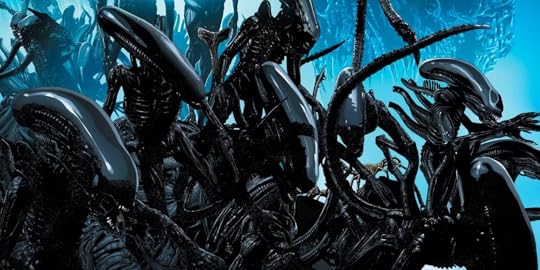
There is so much to love in this book. Initially I did not think I would come to love this batch of characters as much as the Eisenhorn posse, but by the end, after all these guys had been through, I was fully invested. This book takes a really heavy lean towards the darker corners of the 40K universe and I think that works really well for this finale and the ending you will have a hard time putting down (don't eat beforehand). In some of Abnetts earlier works I have felt he struggles with a good ending but this book is the exception. I felt, whatever state things are left in by the end, the final pages were perfect and a fitting end to the Ravenor trilogy.
An exciting triumph that is not afraid to flirt with multiple genres. Abnett protects!
PSA: Once you have finished this, head into the book 'The Emperor's Gift' by Aaron Dembski-Bowden. It follows an unfinished plot thread from this book.
Dan Abnett hits a home run with this epic conclusion to his Ravenor trilogy. By the time this book hit its final third I was ravenously (pun intended) eating up the pages desperate to get to the final conclusion. I think the Ravenor books have gotten better as they go on and with this final book we certainly reach an apex.
The stakes seem higher and at times the book is pretty emotional as the characters we have become attached to are quite literally dragged to hell and back. Abnett takes us on a spectacular voyage with multiple set pieces I would kill to have brought to the big screen. There is a climactic section in the middle that reads a little like James Camerons Aliens crossed with the Absyss. Its bloody awesome stuff and just shows how exciting and wild the 40K world can be.
There is so much to love in this book. Initially I did not think I would come to love this batch of characters as much as the Eisenhorn posse, but by the end, after all these guys had been through, I was fully invested. This book takes a really heavy lean towards the darker corners of the 40K universe and I think that works really well for this finale and the ending you will have a hard time putting down (don't eat beforehand). In some of Abnetts earlier works I have felt he struggles with a good ending but this book is the exception. I felt, whatever state things are left in by the end, the final pages were perfect and a fitting end to the Ravenor trilogy.
An exciting triumph that is not afraid to flirt with multiple genres. Abnett protects!
PSA: Once you have finished this, head into the book 'The Emperor's Gift' by Aaron Dembski-Bowden. It follows an unfinished plot thread from this book.
July 28, 2026
Again, this one is written a week or two after I finished. I did a lot of reading while on vacation, and didn't have a lot of time to write my thoughts, so take the summary with a larger grain of salt than usual.
This is also a fantastic book. I know I've said that about the two prior entries, but man this is great. I try to judge genre fiction, especially someone writing in a pre-existing universe, a little more gently, but this book doesn't need it. It would be a 5 star space detective story without being tied to 40k, and that's really saying something.
A word about the structure - in typical Abnett fashion, he has the party go about their business without explicitly stating what the end goal is, keeping the reader in the dark. In this book, he maintains that mystique both longer and more successfully than usual. This approach has both upsides and downsides, and for a lesser author it would lead to confusion, but the narrative Abnett spins is compelling enough that I wasn't overly concerned with exactly WHY they're pursuing a particular avenue of investigation.
On to the summary:
The book begins with a prequel, where Ravenor, still healthy, attempts to capture Molotch alive after breaking open a Cognitae conspiracy. Molotch dives off a cliff into a fiery column, but is teleported at the last moment. This establishes that Ravenor has been chasing Molotch for a long time, and is borderline obsessed after numerous skin of the teeth escapes.
We return to the present day. Ravenor has (so it would seem) prevented the daemon Slyte from entering our reality, and broken open another Chaos cult that reached all the way to the upper echelons of the planetary government. Instead of helping to rebuild the key planet of Eustis Majoris, Ravenor has been ignoring missives from his superiors to pursue Molotch.
Molotch himself, with his captor/co-consiprator Culzean, have been laying low. After several months, Molotch gives offering to the Chaos gods through a series of 8 (+1 to throw off the scent) murders that he casts as accidents or street crime. He's been let off his leash/escaped by Culzean, who sends his bodygaurd Slade to collect him. The two end up at a discrete dive bar in the capital district. There's an interesting bit here where Molotch demonstrates how much smarter he is than those around him, and I want to give particular credit to Abnett - writing smart characters is hard. Molotch reveals several different ways he could collapse the sector using only what he brought with him and the people in the bar, going from hypnosis of key people present, subtle diseases introduced through the money supply, and simply crashing the sector economy. I don't remember the specifics, and I do remember thinking at the time that it was a little farfetched, but it's impressive writing nonetheless.
When Molotch returns to Culzean, he complains that he is being kept in the dark and Ravenor has been dogging their heels the whole time which he attributes to Culzean's incompetence. However, the fixer has been deliberately feeding Ravenor just enough information to stay in his shadow, reasoning that is the last place anyone would look. Molotch applauds the deception, and the two agree to work more closely together, but it's still a strained alliance.
Meanwhile Ravenor has been chasing ghosts, and the Inquisition finally sends several inquisitors personally. After he's taken off the case, they strike at what they assume is Molotch's secret hideout, but stealing a beat from Aliens, have to go in without guns to avoid triggering a fatal toxic spill. Molotch and company kill all of the team, excepting one of the Inquisitor's interrogators who is actually a Cognitae graduate. Molotch leaves him handcuffed while he sets fire to the area, and leaves behind a gene-modded corpse so that the Inquisition will believe him dead.
Luckily, one of the henchwomen for the Inquisitors is delayed because she's on a date with Nayl. She arrives late, frees the traitor by cutting his hand off, and the pair survive and join Ravenor's party. Despite the Inquisition believing Molotch is dead, Ravenor goes dark and is declared rogue as he continues the hunt.
Part II of the novel covers the hunt for the Wych House. There's a whole society Abnett sets up around prospecting for rare ores, the gemstones that are castoffs, sector-wide upper crust, and the cutthroat nature of prospecting. The prospectors have been relying on "clarity" imparted by the Wych House, and after some time the party is able to locate a guide. They'd been turned away by overhanded tactics with gem dealers, but all they needed was a proper introduction.
The House is an undersea walking building, staffed by keepers who have been trained from birth to keep stray thoughts out of their head. At the center of the House is a door that will take you to a place and time where any question can be answered. Ravenor seeks to ask where he can find Molotch.
But Molotch and Culzean have already gimmicked the door. Ravenor enters with Nayl and the swordswoman, and are taken to a pleasant farming community where Culzean is waiting for them. He has a proposal - Molotch and Ravenor have their destinies inextricably linked, and that is counterproductive. Culzean and Molotch are seeking to prevent the daemon Slyte from fully entering reality; up until now his powers have been contained through Carl Thonius's efforts. They reason that this daemon could destroy the Imperium, and they seek to exploit the gaps in Imperial society and spread rot from within. The destruction of the Imperium would be the destruction of their skills and importance as well.
Ravenor of course refuses, and returns through the door. He knows where to find Molotch now, because his mechanical chair has recorded star charts. However, the door does not take him back, instead taking him to a Tyranid-infested world. Ravenor is badly wounded, is forced to ware the sworswoman (I cannot for the life of me remember her name!), and Thonius's daemon finally forces open the door.
Back at the Wych House, Culzean's mercenaries have taken the remains of Ravenor's team captive. Using the distraction of the Tyranids, they're able to get the upper hand, eventually being forced to abandon the sinking fortress and leaving Ravenor, Nayl, and the sworswoman with no way out but back into the door.
The trio take back with them one of the housekeepers, a teenage girl. They skip through dozens of places, before the badly wounded Ravenor is able to discover that the door responds to his psychic thoughts. He focuses on the Arethustra, the ship the rest of the team is on, but is instead redirected to a listening post Arethustra a thousand years in the past and on the other side of the galaxy. He's taken prisoner there, and his Inquisitorial credentials don't exist yet.
The Guardsmen there wear psychic blockers to keep the psychic plant life that will slowly drive you mad away. Ravenor's vox is broken, but he is able to convince the medic treating him to remove her blocker before it fails entirely. She's able to stabilize him, but he does flatline at one point. The medic presents this to her commander to convince her that Ravenor is dead, and uses this to stage an escape back to the door. Ravenor uses the psychic plants to enhance his power. The medic is hanged as a traitor (revealed in the epilogue, where Ravenor is under trial by the Inquisition).
Back on the Arethustra, Thonius has assumed command given Ravenor's assumed death. The ship is apparently haunted. Zael, still comatose, has been conversing with the blank Frauka, having burned him out with his psychic power. I do love this - there's a slow reveal that the voice Frauka has been hearing in his head isn't his own (non-warp) insanity, or Slyte, but Zael - Zael being a teenage pervert, begging Frauka to read his erotica to him. There's been a mutiny, Patience is imprisoned after being driven insane by the warp phenomena and attempting to kill Zael, believing him to be the daemonhost.
Ravenor has left the door, focused on the word Home, which takes him to the Hinterlight, the ship in the first novel. There he is restored to working order.
Ravenor and the crew are reunited, and seek a final confrontation with Molotch. However, during the fight, Thonius falls and Slyte is released. Culzean and his bodyguard are consumed while Slyte's power grows, Ravenor enlists Molotch to banish the daemon, Kara and Belknap the medic split after she reveals she'd been covering for the possessed Thonius which upsets his faithful sensibilities.
Molotch says that daemons can only be banished with the correct tools (owned by Culzean) and at the correct time and place. Ravenor figures the door can be the correct time and place, and sets his enemy Molotch to crafting the ritual using Culzean's collection.
The group is rescued at the last moment as reality unravels. Slyte is successfully banished, and Ravenor confronts Molotch for the last time, unceremoniously killing him.
The epilogue covers the trial of Ravenor by the Inquisition, which has left Ravenor and his team broken, and it's not all that clear whether the Inquisition will decide that his working with Chaos and defying orders will be outweighed by his stopping both Molotch and Slyte.
This is also a fantastic book. I know I've said that about the two prior entries, but man this is great. I try to judge genre fiction, especially someone writing in a pre-existing universe, a little more gently, but this book doesn't need it. It would be a 5 star space detective story without being tied to 40k, and that's really saying something.
A word about the structure - in typical Abnett fashion, he has the party go about their business without explicitly stating what the end goal is, keeping the reader in the dark. In this book, he maintains that mystique both longer and more successfully than usual. This approach has both upsides and downsides, and for a lesser author it would lead to confusion, but the narrative Abnett spins is compelling enough that I wasn't overly concerned with exactly WHY they're pursuing a particular avenue of investigation.
On to the summary:
The book begins with a prequel, where Ravenor, still healthy, attempts to capture Molotch alive after breaking open a Cognitae conspiracy. Molotch dives off a cliff into a fiery column, but is teleported at the last moment. This establishes that Ravenor has been chasing Molotch for a long time, and is borderline obsessed after numerous skin of the teeth escapes.
We return to the present day. Ravenor has (so it would seem) prevented the daemon Slyte from entering our reality, and broken open another Chaos cult that reached all the way to the upper echelons of the planetary government. Instead of helping to rebuild the key planet of Eustis Majoris, Ravenor has been ignoring missives from his superiors to pursue Molotch.
Molotch himself, with his captor/co-consiprator Culzean, have been laying low. After several months, Molotch gives offering to the Chaos gods through a series of 8 (+1 to throw off the scent) murders that he casts as accidents or street crime. He's been let off his leash/escaped by Culzean, who sends his bodygaurd Slade to collect him. The two end up at a discrete dive bar in the capital district. There's an interesting bit here where Molotch demonstrates how much smarter he is than those around him, and I want to give particular credit to Abnett - writing smart characters is hard. Molotch reveals several different ways he could collapse the sector using only what he brought with him and the people in the bar, going from hypnosis of key people present, subtle diseases introduced through the money supply, and simply crashing the sector economy. I don't remember the specifics, and I do remember thinking at the time that it was a little farfetched, but it's impressive writing nonetheless.
When Molotch returns to Culzean, he complains that he is being kept in the dark and Ravenor has been dogging their heels the whole time which he attributes to Culzean's incompetence. However, the fixer has been deliberately feeding Ravenor just enough information to stay in his shadow, reasoning that is the last place anyone would look. Molotch applauds the deception, and the two agree to work more closely together, but it's still a strained alliance.
Meanwhile Ravenor has been chasing ghosts, and the Inquisition finally sends several inquisitors personally. After he's taken off the case, they strike at what they assume is Molotch's secret hideout, but stealing a beat from Aliens, have to go in without guns to avoid triggering a fatal toxic spill. Molotch and company kill all of the team, excepting one of the Inquisitor's interrogators who is actually a Cognitae graduate. Molotch leaves him handcuffed while he sets fire to the area, and leaves behind a gene-modded corpse so that the Inquisition will believe him dead.
Luckily, one of the henchwomen for the Inquisitors is delayed because she's on a date with Nayl. She arrives late, frees the traitor by cutting his hand off, and the pair survive and join Ravenor's party. Despite the Inquisition believing Molotch is dead, Ravenor goes dark and is declared rogue as he continues the hunt.
Part II of the novel covers the hunt for the Wych House. There's a whole society Abnett sets up around prospecting for rare ores, the gemstones that are castoffs, sector-wide upper crust, and the cutthroat nature of prospecting. The prospectors have been relying on "clarity" imparted by the Wych House, and after some time the party is able to locate a guide. They'd been turned away by overhanded tactics with gem dealers, but all they needed was a proper introduction.
The House is an undersea walking building, staffed by keepers who have been trained from birth to keep stray thoughts out of their head. At the center of the House is a door that will take you to a place and time where any question can be answered. Ravenor seeks to ask where he can find Molotch.
But Molotch and Culzean have already gimmicked the door. Ravenor enters with Nayl and the swordswoman, and are taken to a pleasant farming community where Culzean is waiting for them. He has a proposal - Molotch and Ravenor have their destinies inextricably linked, and that is counterproductive. Culzean and Molotch are seeking to prevent the daemon Slyte from fully entering reality; up until now his powers have been contained through Carl Thonius's efforts. They reason that this daemon could destroy the Imperium, and they seek to exploit the gaps in Imperial society and spread rot from within. The destruction of the Imperium would be the destruction of their skills and importance as well.
Ravenor of course refuses, and returns through the door. He knows where to find Molotch now, because his mechanical chair has recorded star charts. However, the door does not take him back, instead taking him to a Tyranid-infested world. Ravenor is badly wounded, is forced to ware the sworswoman (I cannot for the life of me remember her name!), and Thonius's daemon finally forces open the door.
Back at the Wych House, Culzean's mercenaries have taken the remains of Ravenor's team captive. Using the distraction of the Tyranids, they're able to get the upper hand, eventually being forced to abandon the sinking fortress and leaving Ravenor, Nayl, and the sworswoman with no way out but back into the door.
The trio take back with them one of the housekeepers, a teenage girl. They skip through dozens of places, before the badly wounded Ravenor is able to discover that the door responds to his psychic thoughts. He focuses on the Arethustra, the ship the rest of the team is on, but is instead redirected to a listening post Arethustra a thousand years in the past and on the other side of the galaxy. He's taken prisoner there, and his Inquisitorial credentials don't exist yet.
The Guardsmen there wear psychic blockers to keep the psychic plant life that will slowly drive you mad away. Ravenor's vox is broken, but he is able to convince the medic treating him to remove her blocker before it fails entirely. She's able to stabilize him, but he does flatline at one point. The medic presents this to her commander to convince her that Ravenor is dead, and uses this to stage an escape back to the door. Ravenor uses the psychic plants to enhance his power. The medic is hanged as a traitor (revealed in the epilogue, where Ravenor is under trial by the Inquisition).
Back on the Arethustra, Thonius has assumed command given Ravenor's assumed death. The ship is apparently haunted. Zael, still comatose, has been conversing with the blank Frauka, having burned him out with his psychic power. I do love this - there's a slow reveal that the voice Frauka has been hearing in his head isn't his own (non-warp) insanity, or Slyte, but Zael - Zael being a teenage pervert, begging Frauka to read his erotica to him. There's been a mutiny, Patience is imprisoned after being driven insane by the warp phenomena and attempting to kill Zael, believing him to be the daemonhost.
Ravenor has left the door, focused on the word Home, which takes him to the Hinterlight, the ship in the first novel. There he is restored to working order.
Ravenor and the crew are reunited, and seek a final confrontation with Molotch. However, during the fight, Thonius falls and Slyte is released. Culzean and his bodyguard are consumed while Slyte's power grows, Ravenor enlists Molotch to banish the daemon, Kara and Belknap the medic split after she reveals she'd been covering for the possessed Thonius which upsets his faithful sensibilities.
Molotch says that daemons can only be banished with the correct tools (owned by Culzean) and at the correct time and place. Ravenor figures the door can be the correct time and place, and sets his enemy Molotch to crafting the ritual using Culzean's collection.
The group is rescued at the last moment as reality unravels. Slyte is successfully banished, and Ravenor confronts Molotch for the last time, unceremoniously killing him.
The epilogue covers the trial of Ravenor by the Inquisition, which has left Ravenor and his team broken, and it's not all that clear whether the Inquisition will decide that his working with Chaos and defying orders will be outweighed by his stopping both Molotch and Slyte.
This entire review has been hidden because of spoilers.
April 15, 2026
Great book (middle part 5/5), good use of time travel in a story, a fitting conclusion to the Ravenor trilogy but the ending in itself sucked.
I know the Ravenor trilogy as well as the Eisenhorn trilogy continues in the Bequin trilogy (a lot of trilogies) but every main or side character has an open ending or they are dead. The majority of readers would also read Bequin anyways so this was just not necassary.
I know the Ravenor trilogy as well as the Eisenhorn trilogy continues in the Bequin trilogy (a lot of trilogies) but every main or side character has an open ending or they are dead. The majority of readers would also read Bequin anyways so this was just not necassary.
This entire review has been hidden because of spoilers.

September 18, 2021
This brings the saga nicely to an end. A truly grim and dark end.
July 20, 2019
While this book still has great moments, and shows an exceptional amount of imagination, I can't help but think it's easily the worst of the 3 Eisenhorn and 3 Ravenor books.
I don't have the same aversions as some people, in that I do believe that Ravenor and his crew were mostly as interesting sympathetic as Eisenhorn and Co.
The story this time around, however, just got a little too weird. It went from the 40k Detective Stories of Eisenhorn to some kind of insane Cthulhu-esque cosmic multiverse time-hopping fate-destined adventure, and it got there a little too quickly.
The final act of this book goes by in a blur.
My biggest complaint was that the villains seem so lazily written this time around. They're just too good, whenever they need to be. Like evil Sherlock Holmes or something, they can tell everything about someone in a glance, they can teach themselves a secret language by listening to a few sentences, overpower any of the good guys in combat, and the like. There's no real reasoning for it, other than to challenge the good guys.
Some of it felt extremely convenient. Bad guys would catch the good guys just because, and it would never be explained. They "knew the whole time", I suppose. Some of the twists and betrayals were also very easy to predict. They also utterly break the rules of 40k in some places, which didn't even seem necessary. It would be like having Gandalf grow angel wings and fly to the top of a tower, when he could have just taken the stairs.
All of that being said, it was still a great read, and I don't regret having gone back through it. I just think it's the weakest of the 6. The ending is certainly a risk, and some will love it, some will hate it.
I am sad that I won't get more adventures with these characters, so clearly I enjoyed it, but I did feel like this trilogy ended on a damp squib, as opposed to the pure genius of the third Eisenhorn novel.
I don't have the same aversions as some people, in that I do believe that Ravenor and his crew were mostly as interesting sympathetic as Eisenhorn and Co.
The story this time around, however, just got a little too weird. It went from the 40k Detective Stories of Eisenhorn to some kind of insane Cthulhu-esque cosmic multiverse time-hopping fate-destined adventure, and it got there a little too quickly.
The final act of this book goes by in a blur.
My biggest complaint was that the villains seem so lazily written this time around. They're just too good, whenever they need to be. Like evil Sherlock Holmes or something, they can tell everything about someone in a glance, they can teach themselves a secret language by listening to a few sentences, overpower any of the good guys in combat, and the like. There's no real reasoning for it, other than to challenge the good guys.
Some of it felt extremely convenient. Bad guys would catch the good guys just because, and it would never be explained. They "knew the whole time", I suppose. Some of the twists and betrayals were also very easy to predict. They also utterly break the rules of 40k in some places, which didn't even seem necessary. It would be like having Gandalf grow angel wings and fly to the top of a tower, when he could have just taken the stairs.
All of that being said, it was still a great read, and I don't regret having gone back through it. I just think it's the weakest of the 6. The ending is certainly a risk, and some will love it, some will hate it.
I am sad that I won't get more adventures with these characters, so clearly I enjoyed it, but I did feel like this trilogy ended on a damp squib, as opposed to the pure genius of the third Eisenhorn novel.

September 8, 2017
Nem titok, hogy Dan Abnett a kedvencem a Warhammer-szerzők hosszú sorában. Még jó régen, a Gaunt Szellemei sorozatával állított maga mellé, és bár látom a hibáit, és vannak olyan (nem Warhammer) regényei is, amik egyáltalán nem tetszettek, a harci leírásokban és a karakteralkotásban a tehetsége megkérdőjelezhetetlen. A Ravenor-trilógia – ellentétben a Gaunt Szellemeivel vagy a The Horus Heresy sorozattal – nem háborús sci-fi, inkább valami krimi-thriller-szerűség, így a harci jelenetek nem dominálnak benne ezúttal sem. Gyilkosságok azonban történnek, valamint kisebb volumenű kézifegyveres összetűzések, szóval akciójelenetekben végül is nem szenvedünk hiányt, de jóval nagyobb hangsúly kerül most is a karakterekre.
Bővebben a blogon:
https://profunduslibrum.blogspot.hu/2...
Bővebben a blogon:
https://profunduslibrum.blogspot.hu/2...

August 1, 2011
I'm a big fan of Abnett, and he's an author I'd very much like to meet. This is the third offering in the Ravenor series and by this point he, like his predecessor Eisenhorn, is wandering the slippery slope towards radicalism.
Some people don't like Abnett's vision of the 41st millennium; they call it implausible or "fluff-breaking", but for me it encapsulates the weirdness and the darkness of the universe while showing the strength of humanity too.
Some people don't like Abnett's vision of the 41st millennium; they call it implausible or "fluff-breaking", but for me it encapsulates the weirdness and the darkness of the universe while showing the strength of humanity too.

January 6, 2009
Same review as Ravenor Returned--except this one, if I recall correctly for I'm doing a lot of these reviews retrospectively, has him finally hanging his balls out there and giving the middle finger to The Inquisition...so he has to "turn in his badge" and go do it himself, with the possibility of the Inquisition coming after him as well.

December 29, 2019
I had forgotten just how well paced and nail biting this one was. An excellent ending. Onto the next.
November 9, 2024
oh Carl the things you knew
This entire review has been hidden because of spoilers.
January 5, 2025
Excellent ending to a riveting tale with so many ups and downs. Character development through the series is wrapped up perfectly in this ending.
Displaying 1 - 30 of 163 reviews