Celebrate the beauty and strength of solitude with this poetic observation of the animal kingdom and those who move through it on their very own.
That silvery cloud swimming in the sea is actually a school of fish. That splash and crash is a pod of whales, sounding. Behold, a fever of stingrays gliding by. But what do you call a group of octopuses? A tangle of octopuses? A chandelier of octopuses? A multipus of octopuses? No, octopuses prefer to be alone. The octopus is a solitary animal.
This lyrical, nonfiction text honors animals who live in solitude, in contrast to others who live in groups. Against a backdrop of the specific names of various animal tribes (a parade of elephants, a tower of giraffes, a dazzle of zebras), Stein shines a spotlight on those animals who go through life on their own. With nature at his back, Stein invites readers to draw strength and comfort from the behaviors of fellow mammals. Perfect for children who tend to be alone, and their parents...as well as all children, who will be encouraged to respect the natural choices of their peers.
Joshua David Stein writes children's books and cookbooks, sings songs, draws, and sometimes dances. He lives in Brooklyn, New York, with his two sons, Achilles and Auggie; a rescue pup named Hermione; and a rusty old car named Kimberly.
Learn all about animals that typically live alone with this fun non-fiction picture book. This books a fun and easy way to learn about animals who are solitary and who live in groups. The words are lyrical and flow easily into one another. The illustrations are vibrant and eye-catching. My daughter and I had a lot of fun learning the various words used to describe different groups of animals. I found myself learning things I never knew before too! Get this book for a quick read that will teach you something fun along the way.
This is a sweet little children's book with great drawings about animals, particularly those that are introverts who travel alone, and that's the way they like it. There's a sweet message here about realizing we're all different. Some like to travel and live in groups and others don't and that's okay. ;)
Here are some quotes I liked:
"The panther arrives by herself. The panther is a solitary animal... That silvery cloud swimming in the sea is actually a school of fish. That splash and crash is a pod of whales sounding. Behold, a fever of stingrays gliding by. But what do you call a group of octopuses?... Octopuses prefer to be alone. The octopus is a solitary animal... A huddle of hummingbirds is a charm. Pigeons, flying together, are called a kit... An eagle is a solitary animal. From the ground, she looks like a lonely speck. But from up in the sky, the eagle sees all the world below... There's a whole world of solitary animals out there. Alone. Together. Happy."
I feel a bit iffy about applying a human label, introvert, to animals. Also, the illustrations depict an eagle looking at an octopus, a panther, and a sloth at the same time and I don't think that's possible. I found myself wondering if this was a complete list of solitary animals. I suspect not.
What a fantastic read. Stunning illustrations accompany this fabulous non-fiction book about those animals that prefer to be alone, rather than in a group.
Solitary Animals is a great nonfiction animal book that reads like a story. I love the bright illustrations. But I have a couple of minor issues with the book. First, calling animals "introverts" is assigning human behavioral characteristics to animals, which I think is misleading for children who are learning about zoology. There aren't some jaguars who are introverts and some who are extroverts. Their solitary life has more to do with survival instincts than wanting more or less social interaction with other animals. Thankfully, the author clarifies this point at the end of the book on the "More About Solitary Animals" page.
Second, which I guess is basically the same issue, is that the author assigns human emotions to animals as well. The final page says, "Alone. Together. Happy." Again, the Q&A at the end clears up some of this confusion, but maintains that "animals are happy to be alone, even from their mommies and daddies." I believe this is just a way to make that concept more understandable to younger children.
A group of fish is a school, a bunch of whales are a pod and several stingray a fever, but what do you call a group of octopuses? You don’t, because octopuses prefer to be alone. Some animals have evolved to be alone; their instincts prompt them to be independent and rely only on themselves. Learn about some amazing animals who stand apart from the herd. With large, clear, colorful images and only a few words per page this makes a great read aloud. The message about the loners in the animal kingdom is a welcome one. A final page includes more facts about solitary animals - examining why they live alone, whether the behavior is learned and is absolute. Questions about whether they miss their parents and whether humans are solitary round out the back matter. I would have LOVED a list of additional reading or sources for kids intrigued by the brief glimpse of some intriguing animals. This is a great resource to address the great range of adaptive behaviors available in the animal (and human) kingdom.
Appealing, richly colored pictures. Loved the guesses for an octopus group: a "tangle," a "chandelier"! The multipage spread for the sloth is effective. (Would have been even more effective with the separation of the text placement of "animal, too" on the third page.)
Quibbles: Subtitle: but are they really introverts? Not sure why that was slapped on there, nor is it particularly supported in the text. Verb agreement: right off the bat, a "parade of elephants" *passes* by. It's a challenge inherent in mass nouns and happens again at least once. Hit my ear with a clunk. Conclusion: kinda assumptive. "Alone. Together. Happy." How do we know they're happy? From whose perspective are they "together"? What about the time of year they mate? Some of these solitary animals mate and leave; some stick together to raise the young; so they are not always solitary.
The endpapers of this book are striking - a jungle as seen through the kind of green you’d see if you were looking through night vision goggles. The kind of green you’d see if you were looking for a panther at night. Though this is a book about solitary animals there are many animal groupings represented, and some delightful new vocabulary for young readers. There is a “parade” of elephants, a “charm” of hummingbirds, and a “dazzle” of zebras to name a few. But the stars of Solitary Animals are the panther, the octopus, the sloth, and the eagle (though it should be pointed out that the eagle, while a solitary hunter, does mate for life). The only quibble I have with this book is the use of the word “introverts” in the subtitle. Is this to allow kids who aren’t as social to feel ok about themselves? The colorful illustrations are vivid and attention grabbing. Ages 3-6
This book's Illustrations are nothing if not eye catching! I adored the bright artwork found on the cover, and that is simply the tip of the iceberg. Throughout this book the animals are drawn so vibrantly and with such skill. I could go on, but, I'll spare you. Just know that I'm enamored with the illustrations in this one. Now for the writing... I thought the topic of this nonfiction book seemed interesting enough. I enjoy learning random animal facts as much as the next person. My favorite of the varying names for groups of different animals has to be "a fever of stingrays"! This nonfiction read was extremely quick and somehow even more fun!
Learn all about animals that typically live alone with this fun non-fiction picture book. This books a fun and easy way to learn about animals who are solitary and who live in groups. The words are lyrical and flow easily into one another. The illustrations are vibrant and eye-catching. My daughter and I had a lot of fun learning the various words used to describe different groups of animals. I found myself learning things I never knew before too! Get this book for a quick read that will teach you something fun along the way.
Gorgeous vibrant illustrations introduce the reader to solitary animals, animals that are not found in groups. Animals that do roam in groups are given some attention and the book tells what those groups are called such as a school of fish, herd of elephants and tower of giraffes. Additional information is found in the back of the book but would have liked more information on the animals that are highlighted as solitary animals (panther, octopus, sloth, and eagle). Would be fun to pair this with the picture book “Herd of cows, flock of sheep” by Walton.
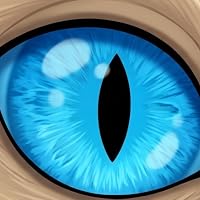
The book opens talking about animals that live in groups and the names of those groups and then points out that we don't have names for groups of some animals because they are solitary. The use of dark color emphasizes that solitary animals are often harder to see because there is only one of them versus a whole school of fish. My only complaint is that I wish more animals were listed. A great picture book non-fiction for preschoolers and young elementary school kids. The eyes of the panther do a great job drawing your attention to pick up this book.
A beautifully illustrated book. Informative and unique in it's delivery. In this book you will learn the names for groups of animals like zebras, and hummingbirds, but more importantly, that there are some animals that live alone, like the sloth and the panther. I loved the additional information at the end. The explanation of why some animals live alone and how all creatures are social and solitary at times makes understanding this concept very relatable.
A great topic for a nonfiction picture book here, and it is handled nicely with carefully chosen text and amazing illustrations. I love the rhythm and feel of it--the style is distinctly bold and eye-catching, but does not steal attention from the text, or skimp on detail and color (the palettes here are fantastic, too). I was delighted to see this is a first picture book from this illustrator, and I look forward to seeing more!
Not what I expected… starts with collective nouns for 3 different animals, then a solitary animal. The illustrations are lush, but colors are more artistic than realistic. The more about solitary animals page at the end feels a little woo woo new age as opposed to scientific. No additional back matter or resources. I don’t consider eagles solitary as they mate for life. I would like this book better if it was positioned as a fiction picture book as opposed to nonfiction.
A delightful tribute to those creature ~ eagle, panther, octopus, and sloth ~ all animals who prefer to live alone. Along the way, illustrator Dominique Ramsey paints large, deep intensely colored pictures of other animals and their groups, including the collective nouns such as a gulp of swallows, a fever of sting rays and a dazzle of zebras. Beautiful dramatic illustrations in this uniquely-topicked title.
5 stars for the stunning artwork; 4 stars for the concept; 3.5 stars for the writing. I don't like to get too picky with books written for young readers, because this is a fantastic concept for a picture book. I wished that the number of solitary animals outweighed the examples of groups, and that there was a little more explanation (even in the backmatter) of instinct. The author uses words like "prefer to be alone" and "happy," rather than explaining that this is due to survival instinct.
Not on the purchase worthy shelf because once again it is printed in China, but otherwise a clever way of describing animals that live together and those that are more solitary even if the author covers few animals altogether which is why I gave it 4 not 5 stars. The illustrations make up for the lack of content. Illustrator Dominique Ramsey’s artwork is incredible!! I especially loved the giraffes drinking and I truly thought I’d feel fur when I touched the paper!
More simple than I was expecting, this beautifully illustrated book categorizes animals as social or solitary. So we get some neat terms for different animal groups, punctuated by different solitary animals. And in the end, an author's note offers more information on why some animals are more social or more solitary. Humans are generally social animals, but the author acknowledges that even social animals appreciate solitude sometimes: a balance is generally achieved.
It is odd how this book tries to tell kids it is okay to be an introvert by talking about animals that don't live in groups. Also, I heard a story on the radio how a bunch of octopuses were living on the same underwater mountain and the researchers were surprised they were all clustered there. The illustrations are lovely though. Skip the last two pages and read Sandra Boynton's "But Not the Armadillo" instead.
With striking illustrations reminiscent of 1940's Disney by Dominique Ramsey, Solitary Animals is beautiful and educational. I appreciate Joshua David Stein's contrasting solitary and social creatures. Back matter includes answers to potential questions that a younger reader may ask. A digital advanced reader copy was reviewed.
The concept and the text are fascinating. There is a relaxing feeling about this book that would help make a kid who needs his/her alone time feel better about it, I think. Fun reading the odd words used to describe groups of various birds, fish, and animals.
I loved everything about this book: the stunning, almost glowing illustrations, the animal facts, the wordplay. The text is simple enough not to overwhelm young readers, but whet their appetite for leaning about nature. I also liked the message that solitary animals aren't necessarily scary or creepy, but play an important role in nature and are living in the way that suits their species best.
Stunning illustrations! Books talks about animals that live in groups and the interesting names they are called( pods, dazzles, fevers etc) but also about the animals that prefer to be solitary such as a bald eagle or an octopus or a sloth. Would be great for a k-2 program or preschool and older. The illustrations alone are worth reading this book but it is also very informative!
The vibrant art is alluring. Extreme closeups juxtapose with full page illustrations. The simple, straightforward text balances teaching about animal group names and pointing out which animals prefer to go solo. A cool teaching book that isn't overpacked with information; it would work well for curious preschoolers.
This is pretty educational about some animals that tend to stick to themselves, versus animals that group together. I also like the Q&A at the end that notes how solitary animals tend to learn to rely on themselves quickly, as opposed to sticking with family (and also negating the idea that humans are solitary animals).
Any praise for this book (and there should be MUCH praise) must begin with the incredibly dense, rich, informative, and fascinating illustrations. For such a simple concept (so0me animal species survive best in a solitary/singular behavior pattern than in groups), the text and comparative examples comprise a glorious exploration of the animal world.