

What do you think?

Der Schrei der Eule
Der frisch geschiedene Robert Forrester steht jeden Abend in Jennys Garten und sieht zu ihrem Küchenfenster hoch. Die junge Frau symbolisiert für ihn die Unschuld, die er verloren hat. Der Beginn einer Liebesgeschichte?
432 pages, Paperback
First published January 1, 1962
About the author
Patricia Highsmith
491 books5,310 followersPatricia Highsmith (19 January 1921 – 4 February 1995) was an American novelist who is known mainly for her psychological crime thrillers which have led to more than two dozen film adaptations over the years.
She lived with her grandmother, mother and later step-father (her mother divorced her natural father six months before 'Patsy' was born and married Stanley Highsmith) in Fort Worth before moving with her parents to New York in 1927 but returned to live with her grandmother for a year in 1933. Returning to her parents in New York, she attended public schools in New York City and later graduated from Barnard College in 1942.
Shortly after graduation her short story "The Heroine" was published in the Harper's Bazaar magazine and it was selected as one of the 22 best stories that appeared in American magazines in 1945 and it won the O Henry award for short stories in 1946. She continued to write short stories, many of them comic book stories, and regularly earned herself a weekly $55 paycheck. During this period of her life she lived variously in New York and Mexico.
Her first suspense novel Strangers on a Train published in 1950 was an immediate success with public and critics alike. The novel has been adapted for the screen three times, most notably by Alfred Hitchcock in 1951.
In 1955 her anti-hero Tom Ripley appeared in the splendid The Talented Mr Ripley, a book that was awarded the Grand Prix de Litterature Policiere as the best foreign mystery novel translated into French in 1957. This book, too, has been the subject of a number of film versions. Ripley appeared again in Ripley Under Ground in 1970, in Ripley's Game in 1974, The Boy Who Followed Ripley in 1980, and in Ripley Under Water in 1991.
Along with her acclaimed series about Ripley, she wrote 22 novels and eight short story collections plus many other short stories, often macabre, satirical or tinged with black humour. She also wrote one novel, non-mystery, under the name Claire Morgan , plus a work of nonfiction Plotting and Writing Suspense Fiction and a co-written book of children's verse, Miranda the Panda Is on the Veranda.
She latterly lived in England and France and was more popular in England than in her native United States. Her novel Deep Water, 1957, was called by the Sunday Times one of the "most brilliant analyses of psychosis in America" and Julian Symons once wrote of her "Miss Highsmith is the writer who fuses character and plot most successfully ... the most important crime novelist at present in practice." In addition, Michael Dirda observed "Europeans honoured her as a psychological novelist, part of an existentialist tradition represented by her own favorite writers, in particular Dostoevsky, Conrad, Kafka, Gide, and Camus."
She died of leukemia in Locarno, Switzerland on 4 February 1995 and her last novel, Small g: A Summer Idyll, was published posthumously a month later. (Gerry Wolstenholme, July 2010).
She lived with her grandmother, mother and later step-father (her mother divorced her natural father six months before 'Patsy' was born and married Stanley Highsmith) in Fort Worth before moving with her parents to New York in 1927 but returned to live with her grandmother for a year in 1933. Returning to her parents in New York, she attended public schools in New York City and later graduated from Barnard College in 1942.
Shortly after graduation her short story "The Heroine" was published in the Harper's Bazaar magazine and it was selected as one of the 22 best stories that appeared in American magazines in 1945 and it won the O Henry award for short stories in 1946. She continued to write short stories, many of them comic book stories, and regularly earned herself a weekly $55 paycheck. During this period of her life she lived variously in New York and Mexico.
Her first suspense novel Strangers on a Train published in 1950 was an immediate success with public and critics alike. The novel has been adapted for the screen three times, most notably by Alfred Hitchcock in 1951.
In 1955 her anti-hero Tom Ripley appeared in the splendid The Talented Mr Ripley, a book that was awarded the Grand Prix de Litterature Policiere as the best foreign mystery novel translated into French in 1957. This book, too, has been the subject of a number of film versions. Ripley appeared again in Ripley Under Ground in 1970, in Ripley's Game in 1974, The Boy Who Followed Ripley in 1980, and in Ripley Under Water in 1991.
Along with her acclaimed series about Ripley, she wrote 22 novels and eight short story collections plus many other short stories, often macabre, satirical or tinged with black humour. She also wrote one novel, non-mystery, under the name Claire Morgan , plus a work of nonfiction Plotting and Writing Suspense Fiction and a co-written book of children's verse, Miranda the Panda Is on the Veranda.
She latterly lived in England and France and was more popular in England than in her native United States. Her novel Deep Water, 1957, was called by the Sunday Times one of the "most brilliant analyses of psychosis in America" and Julian Symons once wrote of her "Miss Highsmith is the writer who fuses character and plot most successfully ... the most important crime novelist at present in practice." In addition, Michael Dirda observed "Europeans honoured her as a psychological novelist, part of an existentialist tradition represented by her own favorite writers, in particular Dostoevsky, Conrad, Kafka, Gide, and Camus."
She died of leukemia in Locarno, Switzerland on 4 February 1995 and her last novel, Small g: A Summer Idyll, was published posthumously a month later. (Gerry Wolstenholme, July 2010).
Ratings & Reviews
Friends & Following
Create a free account to discover what your friends think of this book!
Community Reviews
Displaying 1 - 30 of 474 reviews

July 10, 2012
IL TALENTO DI PATRIZIA
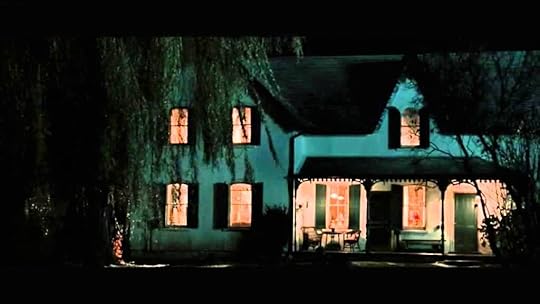
Il mio primo incontro con Patrizia è stato la volta che partii per un viaggio che doveva durare qualche settimana, forse qualche mese, ma non poté andare oltre un anno perché la patria (maledetta sempre sia) mi richiamò, e così son dovuto tornare, se pur dimenticando il cuore nel posto che lasciavo eccetera eccetera.
Dicevo di Patrizia: questo è stato il suo primo libro che ho letto. Cominciato proprio in quel viaggio, in traduzione, dimenticato su qualche sedile, ricomprato in originale, letto e riletto, in italiano e in inglese, fu scintilla immediata, amore alla prima pagina, al punto che non ho potuto non leggerne un’altra ventina scritti da lei.

Il primo romanzo della Highsmith fu portato sullo schermo dal Maestro del thriller con lo stesso titolo “Strangers On a Train-L’altro uomo” nel 1951, protagonisti Farley Granger e Robert Walker. Il libro era uscito solo l’anno prima e Hitchcock, per pagare meno i diritti, fece un’offerta anonima.
Ma prima di parlarne un poco, mi piacerebbe finalmente focalizzare cosa della Highsmith mi ha catturato da subito, quella sensazione di piacere che è andata avanti per molti anni.
Le sue storie sono thriller: non gialli, non polizieschi, non noir, ma thriller. Con un particolare stile di suspense: niente colpi di scena né salti sulla sedia, niente effetti, men che meno effettacci. Sottile, Patricia è sottile, usa lame lunghe affilate e sottili.
L’inquietudine… Ecco, credo sia l’inquietudine: quella che dissemina, che trasmette, che mi prendeva leggendola. Coniugata alla sua anima ribelle e solitaria.
Un’inquietudine che ho riconosciuto subito: perché non parlava a me, ma parlava di me.
In fondo, c’è qualcuno che non avrebbe voluto essere Tom Ripley?
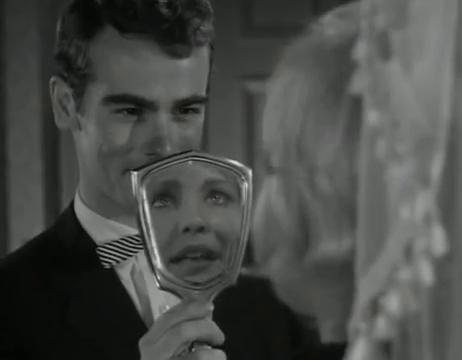
Hitchcock utilizzò una storia della Highsmith una seconda volta, nel 1962, per un episodio della serie “The Alfred Hictcock Hour” intitolato “Annabel” come il romanzo. Fu diretto da Paul Henreid, il mitico Victor Laszlo di “Casablanca”, e aveva come protagonisti i due qui sopra, Dean Stockwell e Susan Oliver.
Robert Forester è stato lasciato dalla moglie Nickie, lascia New York e si trasferisce a Langley in Pennsylvania.
Passeggiando di notte, vede una finestra illuminata, dietro il vetro una ragazza: Robert è affascinato e attratto dalla serenità della ragazza, da come si muove a suo agio in quella casa, intenta e concentrata nelle sue azioni.
La ragazza diventa presto un’ossessione, e Robert diventa uno stalker, la spia sempre più spesso. Una sera mentre è appostato, la conosce nel giardino. La ragazza si chiama Jenny. Parlano, si trovano simpatici, lei lo invita in casa. Jenny coglie nell’incontro con Robert un segno, una premonizione. Capisce che il prossimo matrimonio col turbolento Greg è uno sbaglio, annulla le nozze e lascia il fidanzato. Inizia a frequentare Robert sempre più assiduamente.
Greg la prende male. Molto. È il suo turno di appostarsi, seguire, spiare.
Jenny si invaghisce di Robert, vuole una storia con lui.
Greg allora va a cercare l’ex moglie di Robert, se la fa alleata, e insieme a Nickie comincia a tormentare Robert.
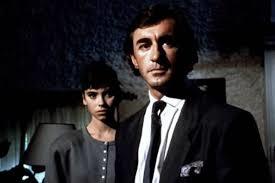
Mathilda May e Christophe Malavoy in “Le cri du hibou” di Claude Chabrol, 1987, il più celebre adattamento di questo romanzo.
Per fortuna Robert viene trasferito dalla sua ditta aeronautica e così spera di mettere fino alla doppia persecuzione: sia gli eccessi sentimentali di Jenny, che l’accanimento di Greg e Nickie.
Però Greg non molla: e una sera tra i due scoppia una brutta lite, Robert lo mette ko, Greg rimane svenuto - giorni dopo viene ritrovato un cadavere decomposto che la polizia ritiene sia quello di Greg, che non si vede più da quella sera, l’identificazione è complicata dato lo stato di decomposizione, Robert diventa il sospettato numero uno.
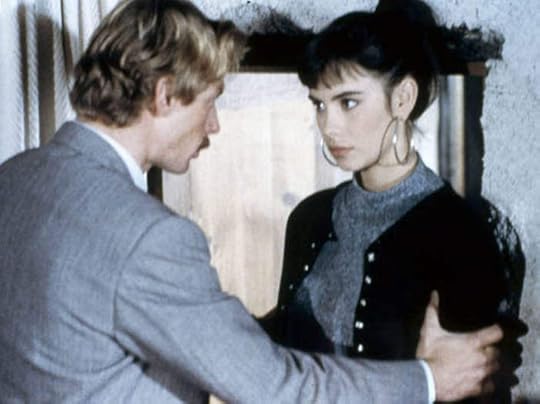
La May con Jacques Penot.
Questo, come molti altri romanzi di Highsmith, partono a ritmo lento, pigro, quasi sonnolento: poi prendono velocità, diventano tumultuosi, si arrestano solo all’ultima pagina con la parola fine.
Questo, come molti altri romanzi di Highsmith, non ha alcun interesse per il classico whodunnit (chi è stato) dei thriller. Ma si direbbe che neppure i perché la interessino molto. Il suo obiettivo non è lo spavento, e neppure la paura: ma l’ansia, l’inquietudine.
Se c’è violenza è senza rumore, silenziata. Gioca col lettore come il gatto col topo, motivo per cui non poteva non stregare un regista come Hitchcock. E Chabrol.
Highsmith riesce a essere lucida e analitica immergendosi in geografie d’inconscio e irrazionale. Coniuga Kafka e Dostoevskij nel thriller.
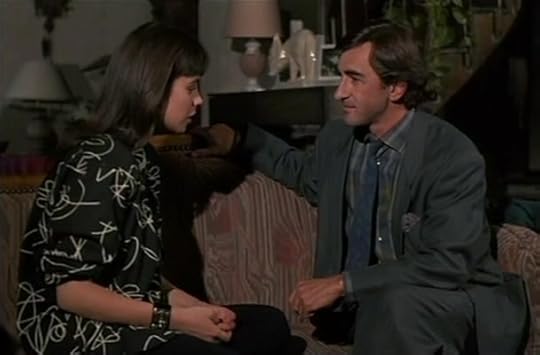
Ancora i due protagonisti.
Leggendolo, leggendo Patricia provavo quello che ho provato uscendo dopo aver visto “L’inquilino del terzo piano” di Roman Polanski: la strada, il mondo era il solito, ma non lo riconoscevo più, il mio sguardo era cambiato, le cose non erano come sembravano, o non sembravano come erano, tendevo a guardare oltre e dietro, a deformare, a ingrandire, ingigantire, credevo di sapere e scoprivo di ignorare. Sono due realtà che s’incontrano e s’intersecano, i confini sfumano, sfocano, normale e anormale diventano una cosa sola.
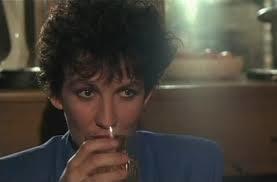
Virginie Thévenet.
Chabrol ha diretto un buon adattamento di questo bel romanzo, trasformando la civetta in gufo. Scelse come protagonisti due attori che hanno avuto un breve momento di gloria anche in Italia, Christophe Malavoy e Mathilda May. Lei di persona faceva venire i brividi.
Bei brividi. Quelli che fanno tremare i polsi.
Quelli che mi lasciano proprio senza fiato sono i libri che quando li hai finiti di leggere e tutto quel che segue vorresti che l'autore fosse un tuo amico per la pelle e poterlo chiamare al telefono tutte le volte che ti gira. Holden Cauldfield dixit.

Altra versione cinematografica della stessa storia: “The Cry of the Owl-Il grido della civetta” di Jamie Thraves, con Paddy Considine e Julia Stiles 2009.
Il mio primo incontro con Patrizia è stato la volta che partii per un viaggio che doveva durare qualche settimana, forse qualche mese, ma non poté andare oltre un anno perché la patria (maledetta sempre sia) mi richiamò, e così son dovuto tornare, se pur dimenticando il cuore nel posto che lasciavo eccetera eccetera.
Dicevo di Patrizia: questo è stato il suo primo libro che ho letto. Cominciato proprio in quel viaggio, in traduzione, dimenticato su qualche sedile, ricomprato in originale, letto e riletto, in italiano e in inglese, fu scintilla immediata, amore alla prima pagina, al punto che non ho potuto non leggerne un’altra ventina scritti da lei.
Il primo romanzo della Highsmith fu portato sullo schermo dal Maestro del thriller con lo stesso titolo “Strangers On a Train-L’altro uomo” nel 1951, protagonisti Farley Granger e Robert Walker. Il libro era uscito solo l’anno prima e Hitchcock, per pagare meno i diritti, fece un’offerta anonima.
Ma prima di parlarne un poco, mi piacerebbe finalmente focalizzare cosa della Highsmith mi ha catturato da subito, quella sensazione di piacere che è andata avanti per molti anni.
Le sue storie sono thriller: non gialli, non polizieschi, non noir, ma thriller. Con un particolare stile di suspense: niente colpi di scena né salti sulla sedia, niente effetti, men che meno effettacci. Sottile, Patricia è sottile, usa lame lunghe affilate e sottili.
L’inquietudine… Ecco, credo sia l’inquietudine: quella che dissemina, che trasmette, che mi prendeva leggendola. Coniugata alla sua anima ribelle e solitaria.
Un’inquietudine che ho riconosciuto subito: perché non parlava a me, ma parlava di me.
In fondo, c’è qualcuno che non avrebbe voluto essere Tom Ripley?
Hitchcock utilizzò una storia della Highsmith una seconda volta, nel 1962, per un episodio della serie “The Alfred Hictcock Hour” intitolato “Annabel” come il romanzo. Fu diretto da Paul Henreid, il mitico Victor Laszlo di “Casablanca”, e aveva come protagonisti i due qui sopra, Dean Stockwell e Susan Oliver.
Robert Forester è stato lasciato dalla moglie Nickie, lascia New York e si trasferisce a Langley in Pennsylvania.
Passeggiando di notte, vede una finestra illuminata, dietro il vetro una ragazza: Robert è affascinato e attratto dalla serenità della ragazza, da come si muove a suo agio in quella casa, intenta e concentrata nelle sue azioni.
La ragazza diventa presto un’ossessione, e Robert diventa uno stalker, la spia sempre più spesso. Una sera mentre è appostato, la conosce nel giardino. La ragazza si chiama Jenny. Parlano, si trovano simpatici, lei lo invita in casa. Jenny coglie nell’incontro con Robert un segno, una premonizione. Capisce che il prossimo matrimonio col turbolento Greg è uno sbaglio, annulla le nozze e lascia il fidanzato. Inizia a frequentare Robert sempre più assiduamente.
Greg la prende male. Molto. È il suo turno di appostarsi, seguire, spiare.
Jenny si invaghisce di Robert, vuole una storia con lui.
Greg allora va a cercare l’ex moglie di Robert, se la fa alleata, e insieme a Nickie comincia a tormentare Robert.
Mathilda May e Christophe Malavoy in “Le cri du hibou” di Claude Chabrol, 1987, il più celebre adattamento di questo romanzo.
Per fortuna Robert viene trasferito dalla sua ditta aeronautica e così spera di mettere fino alla doppia persecuzione: sia gli eccessi sentimentali di Jenny, che l’accanimento di Greg e Nickie.
Però Greg non molla: e una sera tra i due scoppia una brutta lite, Robert lo mette ko, Greg rimane svenuto - giorni dopo viene ritrovato un cadavere decomposto che la polizia ritiene sia quello di Greg, che non si vede più da quella sera, l’identificazione è complicata dato lo stato di decomposizione, Robert diventa il sospettato numero uno.
La May con Jacques Penot.
Questo, come molti altri romanzi di Highsmith, partono a ritmo lento, pigro, quasi sonnolento: poi prendono velocità, diventano tumultuosi, si arrestano solo all’ultima pagina con la parola fine.
Questo, come molti altri romanzi di Highsmith, non ha alcun interesse per il classico whodunnit (chi è stato) dei thriller. Ma si direbbe che neppure i perché la interessino molto. Il suo obiettivo non è lo spavento, e neppure la paura: ma l’ansia, l’inquietudine.
Se c’è violenza è senza rumore, silenziata. Gioca col lettore come il gatto col topo, motivo per cui non poteva non stregare un regista come Hitchcock. E Chabrol.
Highsmith riesce a essere lucida e analitica immergendosi in geografie d’inconscio e irrazionale. Coniuga Kafka e Dostoevskij nel thriller.
Ancora i due protagonisti.
Leggendolo, leggendo Patricia provavo quello che ho provato uscendo dopo aver visto “L’inquilino del terzo piano” di Roman Polanski: la strada, il mondo era il solito, ma non lo riconoscevo più, il mio sguardo era cambiato, le cose non erano come sembravano, o non sembravano come erano, tendevo a guardare oltre e dietro, a deformare, a ingrandire, ingigantire, credevo di sapere e scoprivo di ignorare. Sono due realtà che s’incontrano e s’intersecano, i confini sfumano, sfocano, normale e anormale diventano una cosa sola.
Virginie Thévenet.
Chabrol ha diretto un buon adattamento di questo bel romanzo, trasformando la civetta in gufo. Scelse come protagonisti due attori che hanno avuto un breve momento di gloria anche in Italia, Christophe Malavoy e Mathilda May. Lei di persona faceva venire i brividi.
Bei brividi. Quelli che fanno tremare i polsi.
Quelli che mi lasciano proprio senza fiato sono i libri che quando li hai finiti di leggere e tutto quel che segue vorresti che l'autore fosse un tuo amico per la pelle e poterlo chiamare al telefono tutte le volte che ti gira. Holden Cauldfield dixit.
Altra versione cinematografica della stessa storia: “The Cry of the Owl-Il grido della civetta” di Jamie Thraves, con Paddy Considine e Julia Stiles 2009.

April 17, 2021
Patricia Highsmith continues to impress and, this time, surprise me. This 1962 book didn't ever go the way I thought it would, which is a good thing. Though I never knew where it was going, I was always interested, held fast in Highsmith's nicotine-stained grip.
It starts off with a young man, Robert Forester, who shows us he's decent by loaning a colleague ten dollars, no questions asked. Then he shows us he's weird by driving into the country and peeping in on a girl who lives alone. This is something he does quite frequently, as it turns out.
I thought, having half a dozen Highsmith reads under my belt, oh, I know what she's doing here. Dear Pat is making us like another psychopath. What goodies does she have in store for us here?
But it turns out I was wrong. I forgot that there's another character that Highsmith writes well in addition to the "likeable psychopath", and that's the "misunderstood innocent". Of course, peeping in on a woman in her home is strange and, well, wrong, but it turns out that there are far worse people populating the pages of this book than Robert Forester.
Apparently this book was one of Highsmith's least favourites of her work, and in a way I understand why. The characters are weak - I don't have the same depth in understanding of them as I have in her other books. Forester is mysteriously passive, his ex wife is inexplicably evil, and the rest of them are rather thinly drawn or downright perplexing. The police are antagonistic and blind. Societal condemnation is shallow, damning and contributes to a claustrophobic, trapped reality for the protagonist.
However, I still read with this propulsion. I still felt compelled. Would our misunderstood man ever get out of the trap? Could he outrun the suspicion against him? Could he escape the trail of corpses inextricably attached to his name? The idea of misunderstood innocent against the world is a fascinating one, and works well in this bleak, noir story. I was in its clutches all the way to the brilliant, sinister conclusion.
Sigh. She did it, again.
It starts off with a young man, Robert Forester, who shows us he's decent by loaning a colleague ten dollars, no questions asked. Then he shows us he's weird by driving into the country and peeping in on a girl who lives alone. This is something he does quite frequently, as it turns out.
I thought, having half a dozen Highsmith reads under my belt, oh, I know what she's doing here. Dear Pat is making us like another psychopath. What goodies does she have in store for us here?
But it turns out I was wrong. I forgot that there's another character that Highsmith writes well in addition to the "likeable psychopath", and that's the "misunderstood innocent". Of course, peeping in on a woman in her home is strange and, well, wrong, but it turns out that there are far worse people populating the pages of this book than Robert Forester.
Apparently this book was one of Highsmith's least favourites of her work, and in a way I understand why. The characters are weak - I don't have the same depth in understanding of them as I have in her other books. Forester is mysteriously passive, his ex wife is inexplicably evil, and the rest of them are rather thinly drawn or downright perplexing. The police are antagonistic and blind. Societal condemnation is shallow, damning and contributes to a claustrophobic, trapped reality for the protagonist.
However, I still read with this propulsion. I still felt compelled. Would our misunderstood man ever get out of the trap? Could he outrun the suspicion against him? Could he escape the trail of corpses inextricably attached to his name? The idea of misunderstood innocent against the world is a fascinating one, and works well in this bleak, noir story. I was in its clutches all the way to the brilliant, sinister conclusion.
Sigh. She did it, again.

October 20, 2017
Have you ever read a book with a plot that makes you so anxious to read more, thinking about the plot even when you're not reading. Well, this one did. It was a masterpiece, truly a masterpiece. The beginning was decent, however, after page 100, things starts to get more interesting and the suspense keeps you wondering " what's going to happen next?".
I can't say anything about the plot without spoiling it. All I can say it was one of the best novels I read this year.
I can't say anything about the plot without spoiling it. All I can say it was one of the best novels I read this year.

December 16, 2014
When a girl living in an isolated house spurns her fiancee for the peeping Tom that's been spying on her, things quickly circle the drain, lives destroyed in a maelstrom of hatred, jealousy, lies, and death...
I read The Talented Mr. Ripley in the fairly recent past and have been on the lookout for more of Patricia Highsmith and her twisted protagonists ever since. This one was only $1.99 on the kindle.
Robert Forrester is a soon-to-be divorced man working at an engineering firm in a small town when he chances upon Jenny alone in her home. Jenny soon gives her fiancee and decides she's in love with Robert. Robert decides he's not in love with her but not until after her ex-fiancee decides to ruin Robert's life with the help of Robert's crazy ass ex-wife Nickie. This is some twisted shit.
I have to think that Gillian Flynn is a big Patricia Highsmith fan since this thing has Gone Girl written all over it. I guess it's like what might have happened if Amy and Nick had gotten divorced but still remained a cancerous part of one anothers' lives.
I don't want to give away any more than I already have. Suffice to say, people lie, people cry, and people die.
I would have rated this much higher but Robert seems to be taking stupid pills throughout the book, every time his ex-wife appears, in fact. The ending is the worst offender.
However, the book is still a crazy read. There's not a person without a few screws loose among the main cast. Highsmith's writing is like a mannerly Jim Thompson. You get the feeling she knew first hand about the crazy shit she was writing about, much like old Jim.
3.5 out of five stars. It was a good read but not as good as Ripley.
I read The Talented Mr. Ripley in the fairly recent past and have been on the lookout for more of Patricia Highsmith and her twisted protagonists ever since. This one was only $1.99 on the kindle.
Robert Forrester is a soon-to-be divorced man working at an engineering firm in a small town when he chances upon Jenny alone in her home. Jenny soon gives her fiancee and decides she's in love with Robert. Robert decides he's not in love with her but not until after her ex-fiancee decides to ruin Robert's life with the help of Robert's crazy ass ex-wife Nickie. This is some twisted shit.
I have to think that Gillian Flynn is a big Patricia Highsmith fan since this thing has Gone Girl written all over it. I guess it's like what might have happened if Amy and Nick had gotten divorced but still remained a cancerous part of one anothers' lives.
I don't want to give away any more than I already have. Suffice to say, people lie, people cry, and people die.
I would have rated this much higher but Robert seems to be taking stupid pills throughout the book, every time his ex-wife appears, in fact. The ending is the worst offender.
However, the book is still a crazy read. There's not a person without a few screws loose among the main cast. Highsmith's writing is like a mannerly Jim Thompson. You get the feeling she knew first hand about the crazy shit she was writing about, much like old Jim.
3.5 out of five stars. It was a good read but not as good as Ripley.

July 12, 2021
Η Patricia Highsmith είναι γάτα στο να μας παρουσιάσει την πλήρη διατομή μιας άβολης, μυστηριώδους ιστορίας περνώντας μας από το κόσκινο της ψυχοσύνθεσης όλων των εμπλεκόμενων προσώπων, μέσω της συμπεριφοράς τους σε μια δεδομένη κατάσταση. Η κραυγή της κουκουβάγιας είναι ένα βιβλίο με γεγονότα στην επιφανειακή στιβάδα και με ψυχογραφικούς κόμπους και αινίγματα προς τα μέσα. Τα γεγονότα είναι το περιτύλιγμα, όμως η προσοχή στρέφεται στο εσωτερικό των χαρακτήρων και από εκεί εφορμά η μοναδική ατμόσφαιρα της αφήγησης.
Δεν έχω εξοικείωση αλλά ούτε και αδυναμία στην αστυνομική λογοτεχνία και δεν πιστεύω πως η Highsmith ανήκει αμιγώς εκεί. Είναι κάτι παραπάνω και κάτι πιο δίπλα από αυτήν. Κάτι καλύτερο, θα έλεγα, με την έννοια του ότι η λογοτεχνική κηλίδα της απλώνεται σε ένα ρευστό και ταυτόχρονα μεστό γράψιμο, συμπεριλαμβάνοντας πολλά στοιχεία τα οποία στρογγυλεύουν την τέρψη του αναγνώστη, κλείνουν τον κύκλο. Ό,τι συμβαίνει στο περιθώριο, η λεπτομέρεια, το επιμέρους, είναι πολύ συχνά και το πιο σημαντικό που κραυγάζει για την προσοχή μας.
Μου αρέσει πάντα να ανακαλύπτω Αμερικές, εδάφη που δεν έχω ξαναπατήσει. Η Patricia Highsmith είναι ένα από αυτά. Και γουστάρω πολύ που ανακάλυψα άλλη μια γυναίκα που γράφει έτσι.
Δεν έχω εξοικείωση αλλά ούτε και αδυναμία στην αστυνομική λογοτεχνία και δεν πιστεύω πως η Highsmith ανήκει αμιγώς εκεί. Είναι κάτι παραπάνω και κάτι πιο δίπλα από αυτήν. Κάτι καλύτερο, θα έλεγα, με την έννοια του ότι η λογοτεχνική κηλίδα της απλώνεται σε ένα ρευστό και ταυτόχρονα μεστό γράψιμο, συμπεριλαμβάνοντας πολλά στοιχεία τα οποία στρογγυλεύουν την τέρψη του αναγνώστη, κλείνουν τον κύκλο. Ό,τι συμβαίνει στο περιθώριο, η λεπτομέρεια, το επιμέρους, είναι πολύ συχνά και το πιο σημαντικό που κραυγάζει για την προσοχή μας.
Μου αρέσει πάντα να ανακαλύπτω Αμερικές, εδάφη που δεν έχω ξαναπατήσει. Η Patricia Highsmith είναι ένα από αυτά. Και γουστάρω πολύ που ανακάλυψα άλλη μια γυναίκα που γράφει έτσι.

November 7, 2024
There is something about mid-century America that seems perfectly suited to crime. Perhaps it is the cool, matter-of-fact prose in style at the time; perhaps the uneasy coexistence of modern and antediluvian ideas about gender and sexuality; perhaps the sharp way that people dressed, or the state of technology (the phone, but not yet the answering machine); perhaps the impression, liberating and frightening, that it was still possible, then, to skip town in a way that really meant something. To simply be gone.
There is something almost perfect about The Cry of the Owl—my first by Patricia Highsmith (and, I take it, a rather odd place to start). Clearly, Highsmith had a sharp eye for human foibles. She manages to be at once sympathetic and merciless, whimsical and cold, implausible and utterly believable.
There is something almost perfect about The Cry of the Owl—my first by Patricia Highsmith (and, I take it, a rather odd place to start). Clearly, Highsmith had a sharp eye for human foibles. She manages to be at once sympathetic and merciless, whimsical and cold, implausible and utterly believable.

February 15, 2020
4.5
A psychological thriller at its finest; original, disconcerting and thought-provoking.
“It takes only a noisy minority in the community to hang a man, literally or figuratively.”
Robert Forester becomes obsessed with Jenny Thierolf after one night seeing her through her kitchen window. He can’t help going back every night to watch her doing her household chores in the kitchen. Somehow her actions calm him and give him peace.
Until one night he is found out by Jenny. But instead of calling the police, Jenny invites him in for coffee.
Then things become complicated; for Jenny, for Robert and for Jenny’s quick-tempered fiancé.
“You might say, she was very happy until she met me. Until she decided I represented death.”
A psychological thriller at its finest; original, disconcerting and thought-provoking.
“It takes only a noisy minority in the community to hang a man, literally or figuratively.”
Robert Forester becomes obsessed with Jenny Thierolf after one night seeing her through her kitchen window. He can’t help going back every night to watch her doing her household chores in the kitchen. Somehow her actions calm him and give him peace.
Until one night he is found out by Jenny. But instead of calling the police, Jenny invites him in for coffee.
Then things become complicated; for Jenny, for Robert and for Jenny’s quick-tempered fiancé.
“You might say, she was very happy until she met me. Until she decided I represented death.”

December 17, 2022
'He wasn't the prowler, was he, Jen? Is that how you met him?'
You know, I think this is my favourite Highsmith to date, outside of the iconic Ripliad. It's archetypical PH in lots of ways, unsettling and uneasy, with lots of throwaway disturbing lines ('All right, little girl, I love you. But there are times when I think you need a good spanking. You'll hear from me again' -yikes!) But what made this so gripping for me is the sheer unexpectedness of the story.
As usual, thinking in terms of our common cultural patterns just doesn't wash when it comes to a Highsmith novel. All bets are off as she creates a wild-pack of characters who just don't behave in the way society prescribes, and they don't even know that they're such moral loners - in their heads, their thinking and behaviour makes perfect sense. It's we who are chilled as a doctor's eyes turn cold, or a woman reads cartoon birds in a way their creator didn't intend.
Most of all - and this is unusual in Highsmith world - this is a portrait of a kind of innocence - a wayward, weird and not wholesome innocence, but that's what I think it is.
Gripping and dripping with unease, it's best to just give yourself up to Highsmith's perverse, lonely and misanthropic vision.

April 21, 2021
Of all the unputdownable Patricia Highsmith novels I have read this year - and there have now been seven of them - this one was the unputdownablest. That doesn't mean it was the best or even my favorite, it just means I inhaled it.
It's the tale of the misunderstood peeping tom. And there are deaths, of course, but our prowling protagonist didn't cause them. Or did he?
I liked the way Highsmith created a chorus: a group of neighbors, written as a collective howl. I liked the kindly doctor, a bit player we think, until he becomes central to the story's theme of the vagaries of death. And the horribly evil ex-wife was exquisitely horribly evil.
There's foreshadowing, and then there's foreshadowing the way Highsmith does it. Like having Jenny, the object of our protagonist's nocturnal snooping, reading Dostoevsky's The Possessed, and wondering what Kirilov's speech meant.
And this too: the protagonist draws sketches of make-believe birds on postal cards to give Jenny. Like: 'The Lesser Evil,' sometimes called the Peripatetic Paraclete. Habitat: gloomy valleys. Color: dark blue with black trim. Cry: 'Cudbee worse! Cudbee worse! Or: The Stubborn Bide-A Wee whose Habitat is Homes of the well-to-do and whose Cry resembles "I'm here! I'm here!"
Sometimes Highsmith chooses the worst sins of noir: the cinematic episodes; a character lying about just one fragment of a story; maybe one coincidence too many. But then a father will come to bail a son out of jail, the father looking ten years older than his age, a sad silence painting its own family history.
It's what she does.
It's the tale of the misunderstood peeping tom. And there are deaths, of course, but our prowling protagonist didn't cause them. Or did he?
I liked the way Highsmith created a chorus: a group of neighbors, written as a collective howl. I liked the kindly doctor, a bit player we think, until he becomes central to the story's theme of the vagaries of death. And the horribly evil ex-wife was exquisitely horribly evil.
There's foreshadowing, and then there's foreshadowing the way Highsmith does it. Like having Jenny, the object of our protagonist's nocturnal snooping, reading Dostoevsky's The Possessed, and wondering what Kirilov's speech meant.
And this too: the protagonist draws sketches of make-believe birds on postal cards to give Jenny. Like: 'The Lesser Evil,' sometimes called the Peripatetic Paraclete. Habitat: gloomy valleys. Color: dark blue with black trim. Cry: 'Cudbee worse! Cudbee worse! Or: The Stubborn Bide-A Wee whose Habitat is Homes of the well-to-do and whose Cry resembles "I'm here! I'm here!"
Sometimes Highsmith chooses the worst sins of noir: the cinematic episodes; a character lying about just one fragment of a story; maybe one coincidence too many. But then a father will come to bail a son out of jail, the father looking ten years older than his age, a sad silence painting its own family history.
It's what she does.

December 5, 2014
"She had called him up to give him a piece of her mind, Robert supposed, and what surprised him more than anything was that she could be so voluble, so sure of herself, while addressing someone she considered a murderer. Weren’t people supposed to be afraid of murderers? If she really believed him a murderer, wouldn’t she be afraid he might get angry and come after her, too?"
It appears that this January has been the month of reading gloriously messed up books and it all started with The Cry of the Owl.
Robert is depressed. The only reprieve from his low moods is when he watches Jenny, a twenty-something from behind a tree outside of her house. Robert is a stalker. Of course, this leads to complications, and - this being a Highsmith novel - complications lead to twists that turn the hunter into the hunted and make you question the sanity of every one of the characters.
"A crow flew over, cawing. Late at night for a crow, Jenny thought. A crow was black. That was fitting."
It appears that this January has been the month of reading gloriously messed up books and it all started with The Cry of the Owl.
Robert is depressed. The only reprieve from his low moods is when he watches Jenny, a twenty-something from behind a tree outside of her house. Robert is a stalker. Of course, this leads to complications, and - this being a Highsmith novel - complications lead to twists that turn the hunter into the hunted and make you question the sanity of every one of the characters.
"A crow flew over, cawing. Late at night for a crow, Jenny thought. A crow was black. That was fitting."
October 2, 2018
10/2018
From 1962.
Robert has been gently stalking Jenny (watching her through her kitchen window, not her undressing). In the book, they call it prowling. When Jenny catches him, she invites him in, and they became friends. Bonding over their shared depression. Soon, in a great twist, Jenny starts stalking Robert. Then her jilted ex fiancee is stalking both of them. I won't tell what happens, but a lot of things do.
I have read this before, I think eleven years ago. But, though I did remember it when I actually was reading it, in the intervening time I forgot it, or confused it with her Deep Water (I thought that book had this title, and when I figured it out, it threw me into uncertainty). So, the lesson for me is, do more rereading.
From 1962.
Robert has been gently stalking Jenny (watching her through her kitchen window, not her undressing). In the book, they call it prowling. When Jenny catches him, she invites him in, and they became friends. Bonding over their shared depression. Soon, in a great twist, Jenny starts stalking Robert. Then her jilted ex fiancee is stalking both of them. I won't tell what happens, but a lot of things do.
I have read this before, I think eleven years ago. But, though I did remember it when I actually was reading it, in the intervening time I forgot it, or confused it with her Deep Water (I thought that book had this title, and when I figured it out, it threw me into uncertainty). So, the lesson for me is, do more rereading.

December 24, 2014
Patricia Highsmith is deceptively simple. She uses virtually no words that an average fourth-grade reader couldn't understand, and for the first maybe fifty pages, I can persist in the delusion that she is writing a shallow story, an adult version of a Dick and Jane reader. And then things turn DARK, and the darkness belongs not to one character (even to Ripley), but to everyone, to the world that these characters inhabit. And there is no out, no relief. I think maybe we're mistaken to read her as if she's writing realist thrillers; maybe we should read her as if she's writing dark parables in the tradition of Shirley Jackson or Flannery O'Connor.

August 29, 2017
Τέταρτο βιβλίο της Πατρίσια Χάισμιθ που διαβάζω, μετά το εξαιρετικά απολαυστικό "Ο ταλαντούχος κύριος Ρίπλεϋ", το πολύ καλό "Βαθιά νερά" και την καλούτσικη συλλογή διηγημάτων "Ιστορίες για μισογύνηδες", και για άλλη μια φορά δηλώνω ικανοποιημένος και -μπορώ να πω- μαγεμένος από την γραφή και την μαεστρία της στην δημιουργία δραματικών νουάρ ιστοριών και στην σκιαγράφηση κάποιων εξαιρετικά δυνατών και μοιραίων χαρακτήρων.
Στο οπισθόφυλλο της ελληνικής έκδοσης, υπάρχει αυτό το μικρό κειμενάκι που αναφέρεται στην πλοκή του βιβλίου: "Ο Ρόμπερτ Φόρεστερ δεν έμοιαζε άνθρωπος που θα κινούσε υποψίες. Η πρώην γυναίκα του είχε πει στην αστυνομία ότι ήταν αλλοπρόσαλλος, ότι είχε βίαιες τάσεις και μάλιστα ότι την είχε πυροβολήσει. Ίσως να ήταν ψυχοπαθής δολοφόνος". Δεν μπορεί να πει κανείς ότι πρόκειται για περίληψη της ιστορίας, έτσι λιτό και αινιγματικό όπως είναι το κειμενάκι. Και νομίζω ότι αυτό είναι και το σωστό στην προκειμένη περίπτωση: Όσα λιγότερα ξέρει κανείς, τόσο το καλύτερο. Έχουμε να κάνουμε με μια πραγματικά ιδιαίτερα καλογραμμένη και ενδιαφέρουσα δραματική ιστορία, με στοιχεία εγκλήματος και εξαιρετική νουάρ ατμόσφαιρα. Μην περιμένετε μυστήριο, απίθανες εκπλήξεις στην πλοκή και πολλή δράση, παρά μονάχα ένα δράμα χαρακτήρων, μια ευκαιρία της συγγραφέως να θίξει κάποιες από τις παθογένειες της Αμερικάνικης κοινωνίας της δεκαετίας του '60.
Όσοι περιμένουν ένα θρίλερ με γρήγορους και αγωνιώδεις ρυθμούς, μπόλικο μυστήριο και... χορταστική δράση, καλύτερα να ψάξουν αλλού. Το βιβλίο αυτό μπορεί να ανήκει γενικά στην Αστυνομική Λογοτεχνία, αλλά στην ουσία πρόκειται για ένα δραματικό νουάρ, με φοβερά σκιαγραφημένους χαρακτήρες και κάποιες περίεργες καταστάσεις που αναδεικνύουν το καλό και το κακό πρόσωπο που μπορεί να έχει ένας οποιοσδήποτε άνθρωπος. Η γραφή είναι τρομερή, από τις ωραίες και λιτές περιγραφές του αστικού τοπίου, των σκηνικών και των σκέψεων των χαρακτήρων, έως τους εξαιρετικά ρεαλιστικούς διαλόγους. Αργά αλλά σταθερά, η Πατρίσια Χάισμιθ αρχίζει να γίνεται η αγαπημένη μου γυναίκα συγγραφέας...
Στο οπισθόφυλλο της ελληνικής έκδοσης, υπάρχει αυτό το μικρό κειμενάκι που αναφέρεται στην πλοκή του βιβλίου: "Ο Ρόμπερτ Φόρεστερ δεν έμοιαζε άνθρωπος που θα κινούσε υποψίες. Η πρώην γυναίκα του είχε πει στην αστυνομία ότι ήταν αλλοπρόσαλλος, ότι είχε βίαιες τάσεις και μάλιστα ότι την είχε πυροβολήσει. Ίσως να ήταν ψυχοπαθής δολοφόνος". Δεν μπορεί να πει κανείς ότι πρόκειται για περίληψη της ιστορίας, έτσι λιτό και αινιγματικό όπως είναι το κειμενάκι. Και νομίζω ότι αυτό είναι και το σωστό στην προκειμένη περίπτωση: Όσα λιγότερα ξέρει κανείς, τόσο το καλύτερο. Έχουμε να κάνουμε με μια πραγματικά ιδιαίτερα καλογραμμένη και ενδιαφέρουσα δραματική ιστορία, με στοιχεία εγκλήματος και εξαιρετική νουάρ ατμόσφαιρα. Μην περιμένετε μυστήριο, απίθανες εκπλήξεις στην πλοκή και πολλή δράση, παρά μονάχα ένα δράμα χαρακτήρων, μια ευκαιρία της συγγραφέως να θίξει κάποιες από τις παθογένειες της Αμερικάνικης κοινωνίας της δεκαετίας του '60.
Όσοι περιμένουν ένα θρίλερ με γρήγορους και αγωνιώδεις ρυθμούς, μπόλικο μυστήριο και... χορταστική δράση, καλύτερα να ψάξουν αλλού. Το βιβλίο αυτό μπορεί να ανήκει γενικά στην Αστυνομική Λογοτεχνία, αλλά στην ουσία πρόκειται για ένα δραματικό νουάρ, με φοβερά σκιαγραφημένους χαρακτήρες και κάποιες περίεργες καταστάσεις που αναδεικνύουν το καλό και το κακό πρόσωπο που μπορεί να έχει ένας οποιοσδήποτε άνθρωπος. Η γραφή είναι τρομερή, από τις ωραίες και λιτές περιγραφές του αστικού τοπίου, των σκηνικών και των σκέψεων των χαρακτήρων, έως τους εξαιρετικά ρεαλιστικούς διαλόγους. Αργά αλλά σταθερά, η Πατρίσια Χάισμιθ αρχίζει να γίνεται η αγαπημένη μου γυναίκα συγγραφέας...

February 17, 2020
Jeepers, what a story!
It's likely that nothing could be more inappropriate than to say something like, 'This is among Highsmith's strangest tales.' ~when they're *all* strange, so it's always simply a matter of degrees.
Still, she does something here that's unique (or rare) in what I know of her work so far: she gives us a very sympathetic protagonist. Naturally (since this is the world of Highsmith), he's psychologically flawed. We first meet him in the act of being a Peeping Tom. But Highsmith presents this maladjustment in what may be the most innocent way imaginable. Not only that... at one point - when she catches him in the act - the object of his 'affection' is quickly smitten.
~ which, for the protagonist (Robert), becomes a systematic hell on earth.
Much of what is involved here smacks of improbability. Yet, such is Highsmith's skill that - with crackling dialogue and unique insight into the human condition - she is confident in making the improbable plausible (mixing it as she does with enough verisimilitude to make the progression smooth). She also has a larger goal: she sets out to focus on certain types (supporting characters here) who are capable of being even more dangerous than they seem; who, if not appeased on a regular basis (i.e., if you don't submit to their dominance), could be savages just waiting to be unleashed.
As I got midway or so, I was finding myself thinking that this 272-page novel was hinged on a plot that could have been wrapped up faster and more economically. But Highsmith was clever. She made things richer; she found layers inside of layers - and kept me reading as if by a kind of centrifugal force. I could not stop turning the pages.
It's likely that nothing could be more inappropriate than to say something like, 'This is among Highsmith's strangest tales.' ~when they're *all* strange, so it's always simply a matter of degrees.
Still, she does something here that's unique (or rare) in what I know of her work so far: she gives us a very sympathetic protagonist. Naturally (since this is the world of Highsmith), he's psychologically flawed. We first meet him in the act of being a Peeping Tom. But Highsmith presents this maladjustment in what may be the most innocent way imaginable. Not only that... at one point - when she catches him in the act - the object of his 'affection' is quickly smitten.
~ which, for the protagonist (Robert), becomes a systematic hell on earth.
Much of what is involved here smacks of improbability. Yet, such is Highsmith's skill that - with crackling dialogue and unique insight into the human condition - she is confident in making the improbable plausible (mixing it as she does with enough verisimilitude to make the progression smooth). She also has a larger goal: she sets out to focus on certain types (supporting characters here) who are capable of being even more dangerous than they seem; who, if not appeased on a regular basis (i.e., if you don't submit to their dominance), could be savages just waiting to be unleashed.
As I got midway or so, I was finding myself thinking that this 272-page novel was hinged on a plot that could have been wrapped up faster and more economically. But Highsmith was clever. She made things richer; she found layers inside of layers - and kept me reading as if by a kind of centrifugal force. I could not stop turning the pages.

March 2, 2021
>>Der frisch geschiedene Robert Forrester steht jeden Abend in Jennys Garten und sieht zu ihrem Küchenfenster hoch. Die junge Frau symbolisiert für ihn die Unschuld, die er verloren hat. Der Beginn einer Liebesgeschichte?<<
„Der Schrei der Eule“ von Patricia Highsmith – ein Buch, das mich einfach sehr sehr gefesselt hat!😍 Die Geschichte scheint zu Beginn ein bisschen verrucht und entwickelt sich zum wahren Albtraum in so vielen Facetten! Zum Inhalt und den Entwicklungen möchte ich an dieser Stelle auch nichts weiter sagen, denn es macht unglaublich Spaß und ist voller Spannung, die Geschichte mit all seinen Entwicklungen, Irrungen und Wirrungen selbst zu entdecken!
Nach „Salz und sein Preis“ und „Tiefe Wasser“ wieder ein absolut ausgezeichnetes Buch, was so viel mehr enthält und entwickelt als man zu Beginn glaubt.
Fazit: Für mich war „Der Schrei der Eule“ ein echtes Lese-Highlight🌟📖
„Der Schrei der Eule“ von Patricia Highsmith – ein Buch, das mich einfach sehr sehr gefesselt hat!😍 Die Geschichte scheint zu Beginn ein bisschen verrucht und entwickelt sich zum wahren Albtraum in so vielen Facetten! Zum Inhalt und den Entwicklungen möchte ich an dieser Stelle auch nichts weiter sagen, denn es macht unglaublich Spaß und ist voller Spannung, die Geschichte mit all seinen Entwicklungen, Irrungen und Wirrungen selbst zu entdecken!
Nach „Salz und sein Preis“ und „Tiefe Wasser“ wieder ein absolut ausgezeichnetes Buch, was so viel mehr enthält und entwickelt als man zu Beginn glaubt.
Fazit: Für mich war „Der Schrei der Eule“ ein echtes Lese-Highlight🌟📖

March 10, 2013
Reading Patricia Highsmith is my drug of choice lately. I just can’t get enough of her writing. Once again, she creates a creepy character that somehow the reader accepts and even roots for. Robert Forester finds comfort in watching a stranger, Jenny, nearly every night. He's a ‘peeping tom’. Sounds scary doesn’t it? Yet, he comes off as harmless and almost endearing in his bizarre need to find solace in watching Jenny. It’s not a sexual thing but rather he watches her cook and just go about her errands.
So, here I am rooting for a guy who's warped once again. The ensuing maze he leads the reader on is a mind f#ck that renders one helpless and compulsively drawn to Forester's series of equally bizarre choices and circumstances. Add a cast of eccentric and some evil characters and you're in “Highsmith Country” yet again.
So, here I am rooting for a guy who's warped once again. The ensuing maze he leads the reader on is a mind f#ck that renders one helpless and compulsively drawn to Forester's series of equally bizarre choices and circumstances. Add a cast of eccentric and some evil characters and you're in “Highsmith Country” yet again.

August 4, 2022
A peeping tom gets involved in the life of his voyeuristic victim, a move that will lead to murder. I read this months ago and for some reason forget to add it to Goodreads. It was possibly my unconscious ridding me of an unpleasant memory. I am a fan of Highsmith, but I really didn’t get this one. The whole thing seems quite unlikely and there are so many absurdities within the story that you have to keep going back to check whether what you just read really happened. Love you Patricia, but hated this one!

April 2, 2023
Η ιστορία μας ξεκινά με τον Ρόμπερτ ,έναν απλό τριαντάχρονο που ξοδεύει το μεγαλύτερο μέρος της ημέρας του δουλεύοντας και όταν τελειώνει ,ξεδινει οδηγώντας στην εξοχή και κρυφοκοιτωντας από το παράθυρο του απομονωμένου σπιτιου της τη νεαρή Τζένυ .ακούγεται άρρωστο και φυσικά είναι ,αν και ο Ρόμπερτ δεν αισθάνεται κάποια ερωτική έλξη για την κοπέλα .καθώς η ιστορία εξελίσσεται και μαθαίνουμε πράγματα γι'αυτόν ,ανακαλύπτουμε ότι πάσχει από κάποια ψυχολογικά προβλήματα και περισσότερο τον γοητεύει να κοίτα,να παρατηρεί (η παρατήρηση και το βλέμμα είναι το μοτίβο του βιβλίου ) την ζωή των άλλων και να προσπαθεί να τη μιμηθεί και αυτός κόντρα στη δική του επιθυμία για στασιμότητα.στη συνέχεια της ιστορίας μας η Τζένυ όμως επιδεικνύει μια ακόμη πιο περίεργη συμπεριφορά,ανακαλύπτοντας τον Ρόμπερτ και αντί να τον διώξει ,να καλέσει την αστυνομία ή κάτι τέτοιο ,τον προσκαλεί στο σπίτι και τη ζωή της ,με ολέθριες συνέπειες για εκείνη ,τον αρραβωνιαστικό της ,αλλά και όλους τους εμπλεκόμενους ,μιας και ο Ρόμπερτ κουβαλάει πάνω του τον θάνατο ...
Η ιστορία αυτή ,δεν είναι μια απλή ιστορία μυστηρίου ή θρίλερ .είναι ένα πανέξυπνο ψυχολογικό παζλ όπου ο ένας χαρακτήρας επηρεάζει τον άλλο με τις πράξεις του και τον ωθεί στα βαθύτερα του ένστικτα .όλοι οι χαρακτήρες κάνουν αψυχολογητες κινήσεις και όταν έρχεται η ώρα να λογοδοτήσουν στον περίγυρο τους ,τότε αντιδρούν με ακόμη πιο περίεργους τρόπους .ήταν έξυπνο ,γρήγορο ,σε ορισμένες περιπτώσεις λίγο φλύαρο ,αλλά συνολικά απολαυστικό . Μου θύμισε αρκετά και την αρρωστημένη σχέση στη λολίτα ,όπως αναφέρεται στον πρόλογο ,αλλά και τον "συλλέκτη" ,και λόγω θεματολογίας,αλλά και ως προς το ότι συχνά έπιανες τον εαυτό σου από την μια να μη μπορεί να ταυτιστεί με κανέναν χαρακτήρα λόγω περίεργης συμπεριφοράς και από την άλλη να τους συμπονας για όσα περνούν . η πρώτη μου επαφή με τη συγγραφέα .προτάσεις για άλλα έργα της??
⭐⭐⭐⭐/5 αστέρια
Η ιστορία αυτή ,δεν είναι μια απλή ιστορία μυστηρίου ή θρίλερ .είναι ένα πανέξυπνο ψυχολογικό παζλ όπου ο ένας χαρακτήρας επηρεάζει τον άλλο με τις πράξεις του και τον ωθεί στα βαθύτερα του ένστικτα .όλοι οι χαρακτήρες κάνουν αψυχολογητες κινήσεις και όταν έρχεται η ώρα να λογοδοτήσουν στον περίγυρο τους ,τότε αντιδρούν με ακόμη πιο περίεργους τρόπους .ήταν έξυπνο ,γρήγορο ,σε ορισμένες περιπτώσεις λίγο φλύαρο ,αλλά συνολικά απολαυστικό . Μου θύμισε αρκετά και την αρρωστημένη σχέση στη λολίτα ,όπως αναφέρεται στον πρόλογο ,αλλά και τον "συλλέκτη" ,και λόγω θεματολογίας,αλλά και ως προς το ότι συχνά έπιανες τον εαυτό σου από την μια να μη μπορεί να ταυτιστεί με κανέναν χαρακτήρα λόγω περίεργης συμπεριφοράς και από την άλλη να τους συμπονας για όσα περνούν . η πρώτη μου επαφή με τη συγγραφέα .προτάσεις για άλλα έργα της??
⭐⭐⭐⭐/5 αστέρια

October 4, 2025
I read somewhere that Patricia Highsmith is the American equivalent of Simenon and as I am a Simenon Noir afficionada, I decided to read something of hers.
What can I say, this isn't Noir and it doesn't even come close to any of Simenon's Noir creations. For Simenon the "whodunnit" element is unimportant. The tension is created by the observation of human nature and of the spiraling down of a person who seems outwardly normative. Peter Stamm is an example of an excellent contemporary Noir author.
The build up here surrounds the tension of a crime that will surely be committed and then, after the event, the question of was a crime actually committed.
Sounds like a good thriller. It isn't. The characters are indeed scarred individuals, but I found the characterization mediocre and superficial, and the denouement obvious and painstakingly extended.
What can I say, this isn't Noir and it doesn't even come close to any of Simenon's Noir creations. For Simenon the "whodunnit" element is unimportant. The tension is created by the observation of human nature and of the spiraling down of a person who seems outwardly normative. Peter Stamm is an example of an excellent contemporary Noir author.
The build up here surrounds the tension of a crime that will surely be committed and then, after the event, the question of was a crime actually committed.
Sounds like a good thriller. It isn't. The characters are indeed scarred individuals, but I found the characterization mediocre and superficial, and the denouement obvious and painstakingly extended.
May 22, 2025
Recientemente me resulta difícil encontrar libros que me entusiasmen, y cuando vi uno de la gran maestra Patricia Highsmith, no lo dudé. Como toda autora prolífica, algunos de sus libros me encantan y otros no. Este pertenece a la primera categoría.
La trama es engañosamente sencilla al principio, y a medida que avanza, se vuelve más densa, más turbia... la lectura fue adictiva. Lo terminé en apenas 10 días y confieso que cometí uno de los pecados capitales de los lectores: tenía tanta curiosidad por saber qué iba a pasar a continuación que a veces me adelantaba unas páginas para enterarme.
En apenas 300 páginas Highsmith arma una historia de odios irracionales, venganzas y problemas psicológicos y emocionales excelente.
La recomiendo 100%.
La trama es engañosamente sencilla al principio, y a medida que avanza, se vuelve más densa, más turbia... la lectura fue adictiva. Lo terminé en apenas 10 días y confieso que cometí uno de los pecados capitales de los lectores: tenía tanta curiosidad por saber qué iba a pasar a continuación que a veces me adelantaba unas páginas para enterarme.
En apenas 300 páginas Highsmith arma una historia de odios irracionales, venganzas y problemas psicológicos y emocionales excelente.
La recomiendo 100%.

December 5, 2025
Αυτό που κάνει την Κραυγή της Κουκουβάγιας ένα ιδιαίτερο μυθιστόρημα για μένα είναι ο χαμηλόφωνος τρόπος με τον οποίο η Χάισμιθ δίνει υπόσταση στη μοναξιά.
Μαντεύουμε το ότι ο Ρόμπερτ είναι ένας μοναχικός, εξαρθρωμένος άνθρωπος από την αρχή· κάποιος που συνοδεύεται από το αίσθημα της ήττας που του έχει επιβληθεί. Η εικόνα μιας γυναίκας, της Τζένυ, στην κουζίνα της λειτουργεί γι’ αυτόν ως ένα διάλειμμα και υπόσχεση γαλήνης - κάτι σαν λιμάνι. Όμως δεν υπάρχει σταθερό καταφύγιο εδώ, ούτε πουθενά αλλού. Οι σχέσεις στην κοινότητα είναι σαν σπίτια από άχυρο κτισμένα πάνω σ’ ένα υπόστρωμα αδιαφορίας και φόβου. Η αδυναμία σύνδεσης γεννάει τέρατα - η βία, είτε πραγματική είτε ως απειλή, είναι αισθητή από την πρώτη έως και την τελευταία σελίδα. Η απόσταση ανάμεσα σ΄αυτό που θέλουν οι χαρακτήρες και αυτό που μπορεί να υπάρξει είναι το στοιχείο που δίνει τη δραματική ένταση.
Η Πατρίτσια τραβάει αργά την κιμωλία στον πίνακα: ο Ρόμπερτ και η Τζένυ επαναλαμβάνουν εκνευριστικά την αυτοκαταστροφική τους ρουτίνα, πλησιάζοντας ολοένα τους λύκους. Ο περίγυρος περιμένει, εκνευριστικά απαθής, την κακιά την ώρα: ο Γκρεγκ, ο πρώην της Τζένυ -ο πραγματικά εμμονικός παραμονευτής- είναι το καλό παιδί που παλεύει να κερδίσει πίσω το κορίτσι του, ο Ρόμπερτ είναι απλά ο ψυχοπαθής στάλκερ.
Τα θύματα είναι αφύσικα αμέριμνα απέναντι στον κίνδυνο για να αποτελούν ρεαλιστικούς χαρακτήρες, όμως δεν πειράζει: η Χάισμιθ προβαίνει σε μια σαφή δήλωση εδώ. Μια διαμαρτυρία, την ουσία της οποίας οι περισσότεροι αναγνώστες μπορούν και πρέπει να νιώσουν.
Υπέροχη η τελευταία σκηνή: μια χορογραφία ανόητης βίας που ολοκληρώνεται όπως περίπου στο Φάργκο των Κοέν· όχι μ΄ έναν κρότο αλλά μ’ έναν λυγμό.
Δύο στα δύο -μετά κι από το Κάρολ- με την Πατρίτσια · είναι σχεδόν σίγουρο ότι βρίσκομαι στην αρχή μιας ενδιαφέρουσας σχέσης.
Ed Hopper: Nighthawks –Wikipedia
Laurie Anderson: Walking and Falling – Youtube
Μαντεύουμε το ότι ο Ρόμπερτ είναι ένας μοναχικός, εξαρθρωμένος άνθρωπος από την αρχή· κάποιος που συνοδεύεται από το αίσθημα της ήττας που του έχει επιβληθεί. Η εικόνα μιας γυναίκας, της Τζένυ, στην κουζίνα της λειτουργεί γι’ αυτόν ως ένα διάλειμμα και υπόσχεση γαλήνης - κάτι σαν λιμάνι. Όμως δεν υπάρχει σταθερό καταφύγιο εδώ, ούτε πουθενά αλλού. Οι σχέσεις στην κοινότητα είναι σαν σπίτια από άχυρο κτισμένα πάνω σ’ ένα υπόστρωμα αδιαφορίας και φόβου. Η αδυναμία σύνδεσης γεννάει τέρατα - η βία, είτε πραγματική είτε ως απειλή, είναι αισθητή από την πρώτη έως και την τελευταία σελίδα. Η απόσταση ανάμεσα σ΄αυτό που θέλουν οι χαρακτήρες και αυτό που μπορεί να υπάρξει είναι το στοιχείο που δίνει τη δραματική ένταση.
Η Πατρίτσια τραβάει αργά την κιμωλία στον πίνακα: ο Ρόμπερτ και η Τζένυ επαναλαμβάνουν εκνευριστικά την αυτοκαταστροφική τους ρουτίνα, πλησιάζοντας ολοένα τους λύκους. Ο περίγυρος περιμένει, εκνευριστικά απαθής, την κακιά την ώρα: ο Γκρεγκ, ο πρώην της Τζένυ -ο πραγματικά εμμονικός παραμονευτής- είναι το καλό παιδί που παλεύει να κερδίσει πίσω το κορίτσι του, ο Ρόμπερτ είναι απλά ο ψυχοπαθής στάλκερ.
Τα θύματα είναι αφύσικα αμέριμνα απέναντι στον κίνδυνο για να αποτελούν ρεαλιστικούς χαρακτήρες, όμως δεν πειράζει: η Χάισμιθ προβαίνει σε μια σαφή δήλωση εδώ. Μια διαμαρτυρία, την ουσία της οποίας οι περισσότεροι αναγνώστες μπορούν και πρέπει να νιώσουν.
Υπέροχη η τελευταία σκηνή: μια χορογραφία ανόητης βίας που ολοκληρώνεται όπως περίπου στο Φάργκο των Κοέν· όχι μ΄ έναν κρότο αλλά μ’ έναν λυγμό.
Δύο στα δύο -μετά κι από το Κάρολ- με την Πατρίτσια · είναι σχεδόν σίγουρο ότι βρίσκομαι στην αρχή μιας ενδιαφέρουσας σχέσης.
Ed Hopper: Nighthawks –Wikipedia
Laurie Anderson: Walking and Falling – Youtube

February 22, 2014
A surprisingly existentially bleak and super-deliberately paced little thriller. For most of it I felt that the thriller format (in this case the classic man-falsely-accused-of-a crime or perhaps framed-for-a-crime plot) was a MacGuffin concealing and revealing (at the same time) the theme of the difficulty of carrying on a love affair in a social world--how the relations between two people are always mediated, even ruined, buy the meddling, interpretations, fears, and disapproval of those near to us but outside of the relationship--the crowd, the social world, all those "friends" who join the lynch mob in the end.
Without spoilers, about two thirds of the way through the novel things get even darker than that, and the drama becomes more like a Greek tragedy, begins looking like the disastrous outcome of a single, questionable act--as if the theme were simply fate, or fatality, and human powerlessness in a social world self-righteously obsessed with judgement. An act that is not in-and-of itself truly bad, but is understandably(!) misinterpreted by everyone on the outside and therefore leads to nothing short of disaster for everyone involved. In the end, The Cry of the Owl reminded me of no other novel so much as Camus's L'Etranger--the theme of which is "a white, Christian Algerian can get away with randomly shooting a Muslim Algerian, but you will not escape punishment if you don't cry at your own mother's funeral." I will leave this similarity between the two novels here in code so as not to spoil the plot of The Cry of the Owl for you if you haven't read it yet. You should. It's a quite satisfying American existentialist noir read.
The other notable aspect of the novel, for me, was its pacing--always key in this genre, I would say. The first half or so is recounted at an almost maniacally deliberate step-by-step pace. I'm sure some will think it slow but I absolutely reveled in the perfection of the narrative's speed (or lack thereof)--it created a drama of its own, a nearly magical tension. After the big event about 2/3 of the way through, I felt like the narrative went a bit rudderless, though, and was disappointed in/impatient with a couple of the chapters leading up to the quite satisfying and exciting denouement. Balancing pace with information must be one of the more difficult aspects of penning a thriller, I realized, finding a story whose information is communicable at a pace suitable to the suspense and satisfaction (pay-off of the suspense) that you want to produce in your reader. For most of this novel Highsmith hits the ideal speed and the information and events happen at a pace perfectly commensurate with the movement of the plot. I felt that the speed/event ratio got skewed towards the end, but certain events needed to happen in order for the climax to pay-off, so perhaps that's just the way the cookie crumbles sometimes--it got me thinking about the mechanics of thriller writing, though.
Without spoilers, about two thirds of the way through the novel things get even darker than that, and the drama becomes more like a Greek tragedy, begins looking like the disastrous outcome of a single, questionable act--as if the theme were simply fate, or fatality, and human powerlessness in a social world self-righteously obsessed with judgement. An act that is not in-and-of itself truly bad, but is understandably(!) misinterpreted by everyone on the outside and therefore leads to nothing short of disaster for everyone involved. In the end, The Cry of the Owl reminded me of no other novel so much as Camus's L'Etranger--the theme of which is "a white, Christian Algerian can get away with randomly shooting a Muslim Algerian, but you will not escape punishment if you don't cry at your own mother's funeral." I will leave this similarity between the two novels here in code so as not to spoil the plot of The Cry of the Owl for you if you haven't read it yet. You should. It's a quite satisfying American existentialist noir read.
The other notable aspect of the novel, for me, was its pacing--always key in this genre, I would say. The first half or so is recounted at an almost maniacally deliberate step-by-step pace. I'm sure some will think it slow but I absolutely reveled in the perfection of the narrative's speed (or lack thereof)--it created a drama of its own, a nearly magical tension. After the big event about 2/3 of the way through, I felt like the narrative went a bit rudderless, though, and was disappointed in/impatient with a couple of the chapters leading up to the quite satisfying and exciting denouement. Balancing pace with information must be one of the more difficult aspects of penning a thriller, I realized, finding a story whose information is communicable at a pace suitable to the suspense and satisfaction (pay-off of the suspense) that you want to produce in your reader. For most of this novel Highsmith hits the ideal speed and the information and events happen at a pace perfectly commensurate with the movement of the plot. I felt that the speed/event ratio got skewed towards the end, but certain events needed to happen in order for the climax to pay-off, so perhaps that's just the way the cookie crumbles sometimes--it got me thinking about the mechanics of thriller writing, though.

December 27, 2016
I have now read five of Highsmith's novels. A few days ago I wrote in another review about the importance (for me, at least) of reading books written by women. Now I have to add that there are all kinds of women writing stories and this author is on the far side of some spectrum.
For one thing, she seems to lack sympathy for human beings or at least she rarely creates characters who are admirable and many, including women, who are despicable. I know this is true in life. None of us, men or women, are always admirable and some are despicable. Thus I must contradict myself and say that she does have a certain sympathy for the despicable and looks deeply into why and how that is. We have writers like that now, but Patricia Highsmith was doing this in the 1950s and 1960s.
The Cry of the Owl includes two spurned men. Robert, who is depressed and adrift after his divorce from a despicable woman and another man who turns hateful after his fiancee takes up with Robert. Just to unstabilize things a bit more, Robert has been lurking outside the window of this other woman's house, being a peeping Tom.
It gets messy right away as the murky motivations of both the men and the women never become quite clear. If I had to live as any one of these people, I would be fearful for my sanity. Robert at least has a couple good friends which I suppose is a sign that he is not despicable but he is unbalanced and weird in an Aspergers kind of way.
I have always been afraid of people who appear insane to me. I try to steer clear of neurotic individuals. I feel these are healthy attitudes but a better understanding of what makes such people the way they are does help alleviate the fear. Besides self preservation, it is also a fear of the unknown.
That is why I read Patricia Highsmith.
For one thing, she seems to lack sympathy for human beings or at least she rarely creates characters who are admirable and many, including women, who are despicable. I know this is true in life. None of us, men or women, are always admirable and some are despicable. Thus I must contradict myself and say that she does have a certain sympathy for the despicable and looks deeply into why and how that is. We have writers like that now, but Patricia Highsmith was doing this in the 1950s and 1960s.
The Cry of the Owl includes two spurned men. Robert, who is depressed and adrift after his divorce from a despicable woman and another man who turns hateful after his fiancee takes up with Robert. Just to unstabilize things a bit more, Robert has been lurking outside the window of this other woman's house, being a peeping Tom.
It gets messy right away as the murky motivations of both the men and the women never become quite clear. If I had to live as any one of these people, I would be fearful for my sanity. Robert at least has a couple good friends which I suppose is a sign that he is not despicable but he is unbalanced and weird in an Aspergers kind of way.
I have always been afraid of people who appear insane to me. I try to steer clear of neurotic individuals. I feel these are healthy attitudes but a better understanding of what makes such people the way they are does help alleviate the fear. Besides self preservation, it is also a fear of the unknown.
That is why I read Patricia Highsmith.

January 13, 2013
I love Highsmith's books, but this one is really bad. This is the 8th book by her that I have read, and I was amazed at all the absurd and unlikely situations in it. Below is a rough list of all the absurd and unlikely situations. Take into account that there are a lot of spoilers on it. Before I start, I know some reviewers state that Jenny inviting a prowler into her house is absurd, but we later understand that Jenny is insane, so believing this was not a problem for me. However:
1. Robert's attitude towards Jenny. He says he doesn't like her, but, except for very few times, he acts as if he does. I know that, in real life, some people’s actions and words sometimes don’t match, but here it is a plain contradiction.
2. Nickie helping out Greg. Nickie is insane as well, but we are never given an explanation as to why she hates Robert so much. Moreover, for unknown reasons, she is even willing to help Greg (a stranger she barely knows) so that Robert gets into trouble with the law. Sure, you may argue that Nickie hates Robert and that is all is matters to her regardless of whether or not she knows Greg, but it just doesn’t make sense to me the way it is presented on the book.
3. Dr. Knott taking care of Robert the way he does is also very unlikely. Sure, his wife died and he has little to do in town, but he practically adopts Robert just because of a wound in his arm. Is he so lonely that he is driven to do this for Robert? It is developed in rather unrealistic manner, in my opinion.
4. Why was Greg bailed out of jail despite shooting Dr. Knott and trying to kill Robert?
5. Mr. Kolbe asking Robert to give Greg his gun back after Greg tries to kill Robert in Robert's own house. Greg convinces Mr. Kolbe that he's not the real Greg, so Mr. Kolbe orders Robert, by poiting a rifle at him, to give Greg his gun back and lets him escape. I don’t even know where to start describing all the nonsense in this situation.
The book is filled with unexpected twists and it is well written (characters are well developed) and a page turner (although only to find more absurd behavior page after page). This why I have given the novel two stars. Nevertheless, I admit that I was never surprised by the plot because I had previously watched the Jamie Thraves’ 2010 movie adaptation starring Paddy Considine and Julia Stiles. To be honest, the director and screenwriter did a great job at adapting this book into a movie, because they removed all these absurd situations and made it more realistic.
This book reminded me a lot of Highsmith's "A Suspension of Mercy". It has a different plot, but similar twists and it is a lot more convincing and realistic.
1. Robert's attitude towards Jenny. He says he doesn't like her, but, except for very few times, he acts as if he does. I know that, in real life, some people’s actions and words sometimes don’t match, but here it is a plain contradiction.
2. Nickie helping out Greg. Nickie is insane as well, but we are never given an explanation as to why she hates Robert so much. Moreover, for unknown reasons, she is even willing to help Greg (a stranger she barely knows) so that Robert gets into trouble with the law. Sure, you may argue that Nickie hates Robert and that is all is matters to her regardless of whether or not she knows Greg, but it just doesn’t make sense to me the way it is presented on the book.
3. Dr. Knott taking care of Robert the way he does is also very unlikely. Sure, his wife died and he has little to do in town, but he practically adopts Robert just because of a wound in his arm. Is he so lonely that he is driven to do this for Robert? It is developed in rather unrealistic manner, in my opinion.
4. Why was Greg bailed out of jail despite shooting Dr. Knott and trying to kill Robert?
5. Mr. Kolbe asking Robert to give Greg his gun back after Greg tries to kill Robert in Robert's own house. Greg convinces Mr. Kolbe that he's not the real Greg, so Mr. Kolbe orders Robert, by poiting a rifle at him, to give Greg his gun back and lets him escape. I don’t even know where to start describing all the nonsense in this situation.
The book is filled with unexpected twists and it is well written (characters are well developed) and a page turner (although only to find more absurd behavior page after page). This why I have given the novel two stars. Nevertheless, I admit that I was never surprised by the plot because I had previously watched the Jamie Thraves’ 2010 movie adaptation starring Paddy Considine and Julia Stiles. To be honest, the director and screenwriter did a great job at adapting this book into a movie, because they removed all these absurd situations and made it more realistic.
This book reminded me a lot of Highsmith's "A Suspension of Mercy". It has a different plot, but similar twists and it is a lot more convincing and realistic.

January 25, 2023
The Cry of the Owl (1962) is another askew page turner from the twisted mind of Patricia Highsmith. This one draws on her own experience as a stalker to portray a fictional stalker whose relatively inoccuous activities soon spiral out of control.
The Cry of the Owl features some of the most unpleasant characters I've encountered in a Highsmith novel (one based on her ex with whom she'd just split). Whilst the subversive and queasy world of Patricia Highsmith may lack plausibility it's another progressively weird and compelling page turner.
A memorable outing
4/5

This "extraordinary story" (Julian Symons) begins with an act of naive voyeurism. Robert Forester, a depressed but fundamentally decent man, liked to watch Jenny through her kitchen window, a harmless palliative, as he saw it, to his lonely life and failed marriage. As he is drawn into her life, however, the recriminations of his simple pleasure shatter the deceptive calm of this small Pennsylvania town. With striking clarity and horrible inevitability, Forester is caught up in a series of deaths in which he is the innocent bystander, presumed guilty.
Highsmith has once again, as Graham Greene wrote "created a world of her own, a world claustrophobic and irrational which we enter each time with a sense of personal danger". And that sense of danger grows from the first page to the sinister and chilling conclusion.
The Cry of the Owl features some of the most unpleasant characters I've encountered in a Highsmith novel (one based on her ex with whom she'd just split). Whilst the subversive and queasy world of Patricia Highsmith may lack plausibility it's another progressively weird and compelling page turner.
A memorable outing
4/5
This "extraordinary story" (Julian Symons) begins with an act of naive voyeurism. Robert Forester, a depressed but fundamentally decent man, liked to watch Jenny through her kitchen window, a harmless palliative, as he saw it, to his lonely life and failed marriage. As he is drawn into her life, however, the recriminations of his simple pleasure shatter the deceptive calm of this small Pennsylvania town. With striking clarity and horrible inevitability, Forester is caught up in a series of deaths in which he is the innocent bystander, presumed guilty.
Highsmith has once again, as Graham Greene wrote "created a world of her own, a world claustrophobic and irrational which we enter each time with a sense of personal danger". And that sense of danger grows from the first page to the sinister and chilling conclusion.

February 5, 2018
I must begin by saying that I think Patricia Highsmith's writings give me the creeps! AND, I think she is brilliant. When you read her books, it is impossible to determine where she is going to take you this time!
Her books have an almost physiological effect on me – I actually experience what the characters feel, rather than using my imagination to try to simulate the experience. The ending here is particularly good in this regard as it gives no closure, but allows the sense of despair and horror to continue after the book has been closed. This makes it a rather uncomfortable read, as I can mostly do without palpitations, a dry throat and a sense of mounting panic.
The book has aged, but not dated. If anything, I found Highsmith's characters even more disturbing (actually, her characters are always disturbing) in light of how social mores and psychological knowledge has advanced.
The two protagonists meet in a most unconventional way (Robert is lurking outside of Jenny's window at night watching her in her kitchen as she cooks, etc.) and they become friends! I mean, who would think this up???? High smith, of course!
From there, Highsmith makes anything believable.....
Her books have an almost physiological effect on me – I actually experience what the characters feel, rather than using my imagination to try to simulate the experience. The ending here is particularly good in this regard as it gives no closure, but allows the sense of despair and horror to continue after the book has been closed. This makes it a rather uncomfortable read, as I can mostly do without palpitations, a dry throat and a sense of mounting panic.
The book has aged, but not dated. If anything, I found Highsmith's characters even more disturbing (actually, her characters are always disturbing) in light of how social mores and psychological knowledge has advanced.
The two protagonists meet in a most unconventional way (Robert is lurking outside of Jenny's window at night watching her in her kitchen as she cooks, etc.) and they become friends! I mean, who would think this up???? High smith, of course!
From there, Highsmith makes anything believable.....
June 20, 2017
Workmanlike prose and a story that is not so much a mystery as a succession of ways people the protagonist knows end up fucking with him.
When I read Highsmith's "This Sweet Sickness", I immediately knew she was autistic. Not only a biography of hers clarified it ("Beautiful Shadow: A Life of Patricia Highsmith"), but one of her close "friends", a therapist, stated in retrospect that these days she would have been diagnosed as having Asperger's. So it didn't surprise me that this book touched some aspects of having that neurological makeup that many others won't experience: having intense fascinations that sometimes could easily be classified as malicious (the protagonist in this novel obsesses over the image of normalcy a woman gives and he stalks her house, something Patricia herself did), being unable to justify those obsessions yet failing to resist their appeal, being unable to properly connect with human beings, people around you distrusting you and/or you suspecting they do, people around you trying to convince you you are crazy and/or trying to convince others of it to ruin your life, etc. As interesting twists early on, . There's a lack of progression in the relationships the protagonist has; those people are mostly "just around", which is usual for autistic people.
The running theme in the novel is that the protagonist represents death. . I couldn't understand why the protagonist kept taking his abusive ex's calls, yet it mirrors Patricia's at least a decade long relationship with an abusive woman that treated her like dirt. Maybe Patricia felt she deserved that kind of treatment. The ex in this story also partially represents one of Highsmith's early lovers, painter Allela Cornell, who killed herself, and Patricia seemed to regret not having been able to care for her properly. I think Highsmith truly felt that she represented Death in a way, that she caused people around her to suffer without meaning to and while being unable to stop it. The story ends right on that note:
When I read Highsmith's "This Sweet Sickness", I immediately knew she was autistic. Not only a biography of hers clarified it ("Beautiful Shadow: A Life of Patricia Highsmith"), but one of her close "friends", a therapist, stated in retrospect that these days she would have been diagnosed as having Asperger's. So it didn't surprise me that this book touched some aspects of having that neurological makeup that many others won't experience: having intense fascinations that sometimes could easily be classified as malicious (the protagonist in this novel obsesses over the image of normalcy a woman gives and he stalks her house, something Patricia herself did), being unable to justify those obsessions yet failing to resist their appeal, being unable to properly connect with human beings, people around you distrusting you and/or you suspecting they do, people around you trying to convince you you are crazy and/or trying to convince others of it to ruin your life, etc. As interesting twists early on, . There's a lack of progression in the relationships the protagonist has; those people are mostly "just around", which is usual for autistic people.
The running theme in the novel is that the protagonist represents death. . I couldn't understand why the protagonist kept taking his abusive ex's calls, yet it mirrors Patricia's at least a decade long relationship with an abusive woman that treated her like dirt. Maybe Patricia felt she deserved that kind of treatment. The ex in this story also partially represents one of Highsmith's early lovers, painter Allela Cornell, who killed herself, and Patricia seemed to regret not having been able to care for her properly. I think Highsmith truly felt that she represented Death in a way, that she caused people around her to suffer without meaning to and while being unable to stop it. The story ends right on that note:

July 9, 2021
3,5⭐️
Wenn ich nicht gewusst hätte, dass Frau Highsmith‘s Vorbilder die Herren des Existentialismus sind , wie Camus, hätte ich das Buch schlechter bewertet und nicht verstanden.
Sämtliche Hauptakteure in dem Buch haben die „Pfanne heiß“.
Ich war zur Hälfte schon selbst halb wahnsinnig wie krank man sein kann. Das macht sie wirklich großartig!
70er Jahre und noch völlig katastrophale Geschlechterverhältnisse, insbesondere wenn’s um die bevorstehende Ehe geht. Die Anfang 20 jährige Protagonistin wünscht sich ihrer Liebe einen Pullover zu stricken! 🤯 So was triggert mich hart- da fällt mir doch fast die Bierflasche aus der Hand 🙃
Mit ihren Beschreibungen der Nachbarn und Freunde, war ich an die Art von Stephen King erinnert, die Banalitäten des Alltags grandios herauszuarbeiten. Allerdings kommt sie in diesem Buch nicht an sein Niveau heran.
Das Buch war für mich recht vorhersehbar. Leider war ich insbesondere in der zweiten Hälfte durchaus mal gelangweilt.
Es endet mit einer tollen Erkenntnis und der Absurdität dieser.
Das Buch ist zum Verzweifeln tragisch.
Ich kann sehr gut nachvollziehen warum Frau Highsmith bezüglich des Herausstellens psychologischer Abgründe der Menschen gefeiert wird.
Es gibt Autoren die packen einen damit zu 100%. In meinem Fall fehlt die restlose Begeisterung für ihr Werk.
Wenn ich nicht gewusst hätte, dass Frau Highsmith‘s Vorbilder die Herren des Existentialismus sind , wie Camus, hätte ich das Buch schlechter bewertet und nicht verstanden.
Sämtliche Hauptakteure in dem Buch haben die „Pfanne heiß“.
Ich war zur Hälfte schon selbst halb wahnsinnig wie krank man sein kann. Das macht sie wirklich großartig!
70er Jahre und noch völlig katastrophale Geschlechterverhältnisse, insbesondere wenn’s um die bevorstehende Ehe geht. Die Anfang 20 jährige Protagonistin wünscht sich ihrer Liebe einen Pullover zu stricken! 🤯 So was triggert mich hart- da fällt mir doch fast die Bierflasche aus der Hand 🙃
Mit ihren Beschreibungen der Nachbarn und Freunde, war ich an die Art von Stephen King erinnert, die Banalitäten des Alltags grandios herauszuarbeiten. Allerdings kommt sie in diesem Buch nicht an sein Niveau heran.
Das Buch war für mich recht vorhersehbar. Leider war ich insbesondere in der zweiten Hälfte durchaus mal gelangweilt.
Es endet mit einer tollen Erkenntnis und der Absurdität dieser.
Das Buch ist zum Verzweifeln tragisch.
Ich kann sehr gut nachvollziehen warum Frau Highsmith bezüglich des Herausstellens psychologischer Abgründe der Menschen gefeiert wird.
Es gibt Autoren die packen einen damit zu 100%. In meinem Fall fehlt die restlose Begeisterung für ihr Werk.

July 16, 2022
The book's hero is an odd sort of Peeping Tom. He loves looking at a cute young woman cooking in her kitchen and getting together with her boyfriend. He is not interested in the sexual aspect of peeping: He just is drawn to Jenny. From this strange beginning, there arise two murders, a suicide, some very cynical policing, and general persecution of the book's focus, Robert.
Patricia Highsmith's The Cry of the Owl is a dark but superbly crafted mystery novel with two villains: Jenny's onetime boyfriend Greg and Robert's one-time wife Nickie. Both are determined to kill or injure in any way possible Robert for daring to befriend Jenny after Jenny had called the relationship with Greg off. It gets worse when Greg and Nickie team up in getting their revenge on Robert.
I am now of the opinion that Highsmith is probably the greatest woman mystery novelist of all time. Next to her, Agatha Christie is "cozy" garbage. She was a tortured lesbian who spent much of her life depressed, but who wrote perfectly crafted novels imbued with her own particular brand of darkness.
Patricia Highsmith's The Cry of the Owl is a dark but superbly crafted mystery novel with two villains: Jenny's onetime boyfriend Greg and Robert's one-time wife Nickie. Both are determined to kill or injure in any way possible Robert for daring to befriend Jenny after Jenny had called the relationship with Greg off. It gets worse when Greg and Nickie team up in getting their revenge on Robert.
I am now of the opinion that Highsmith is probably the greatest woman mystery novelist of all time. Next to her, Agatha Christie is "cozy" garbage. She was a tortured lesbian who spent much of her life depressed, but who wrote perfectly crafted novels imbued with her own particular brand of darkness.


June 7, 2018
Να διευκρινίσω ότι παρόλο που προωθείται σαν αστυνομικό, δεν έχει και μεγάλη σχέση με τα αστυνομικά μυθιστορήματα που έχουμε όλοι στο μυαλό μας...όσοι ψάχνουν για αστυνομικό, με καταιγιστικό ρυθμό, αιματηρές δολοφονίες, και μυστήριο για το ποιος είναι ο δολοφόνος, ας το προσπεράσουν!
Πρόκειται περισσότερο για ένα νουάρ μυθιστόρημα, με έμφαση στους χαρακτήρες, ωραία γραφή που σε κρατάει και που διαβάζεται αρκετά γρήγορα.
3.5* Ή 7/10
Πρόκειται περισσότερο για ένα νουάρ μυθιστόρημα, με έμφαση στους χαρακτήρες, ωραία γραφή που σε κρατάει και που διαβάζεται αρκετά γρήγορα.
3.5* Ή 7/10
Displaying 1 - 30 of 474 reviews