CNA-prys (1978), Louis Luyt-prys (1979), WA Hofmeyr-prys (1979), Winifred Holtby-prys (1981). Die swerfjare van Poppie Nongena het by verskyning in November 1978 die gemoed van die hele land beroer. Binne vier maande is dit drie keer herdruk. Dit is verskeie kere bekroon en Elsa Joubert word ook ‘n Fellow van die Society. Sedertdien is die roman vertaal in Frans, Spaans, Duits, Nederlands en Italiaans. In 1985 het ‘n Amerikaanse uitgawe verskyn. Hoë lof is van kritici ontvang. Audrey Blignault het die betekenis van die roman só 'n Aangrypende, onvergeetlike boek wat die sluier tussen die witmens en die swartmens in Suid-Afrika afruk." André P. Brink het dit in Rapport as die boek van die jaar in die Afrikaanse prosa "'n Visioen van menslike gevangenskap... Ontstemmend en indrukwekkend... Verpligte literatuur vir elke mens wat oor hierdie land wil saampraat." Oorsee het die gesaghebbende Sunday Times Literary Supplement ‘n entoesiastiese bespreking van die roman geplaas. En The Times se resensent "(The novel) unfolds with the inexorable force of a Greek tragedy." As voorhoogstuk was Poppie eweneens suksesvol. Dit is in sowel Afrikaans as Engels landwyd opgevoer. In New York is dit eers in ‘n eksperimentele teater aangebied; daarna het dit as Off Broadway-opvoering die Obi-toekenning verwerf vir die beste dramateks. Dit is gekies vir die Edinburgh-toneelfees, en later ook in Londen opgevoer, waar Thuli Dumakude as Poppie die gesogte Olivier-prys verower het. Vervolgens is dit opgevoer in Australië, Kanada en Chicago. Die skrywer self sê oor dié "Die lewe van die werklike Poppie het my diep geraak, en my beklem. Hier was ‘n vrou, magteloos vasgevang in ‘n onmenslike sisteem, wat veg vir die bestaan van haar gesin. Deur die boek wou ek aan haar ‘n stem gee."
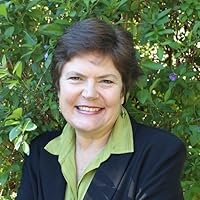
Elsa (Elsa) Antoinette Murray Joubert was the author of several (travel) books that concern themselves with life in Africa, the relationships between people and the conflicts between cultures.
Joubert grew up in Paarl and matriculated from the all-girls school La Rochelle in Paarl in 1939. She then studied at the University of Stellenbosch from which she graduated with a Bachelor of Arts degree in 1942 and an SED (Secondary Education Diploma) in 1943. She continued her studies at the University of Cape Town which she left with a Master's degree in Dutch-Afrikaans literature at in 1945.
After graduating, she taught at an all-girls high school in Cradock, then worked as the editor of the women’s pages of Huisgenoot, a well-known Afrikaans family magazine, from 1946 to 1948. She then started writing full-time and travelled extensively in Africa, from the springs of the Nile in Uganda, through the Sudan, to Cairo, as well as to Mozambique, Mauritius, Réunion, Madagascar, and Angola. She also visited Indonesia.
In 1950 Elsa Joubert married Klaas Steytler, a journalist and later publisher and author, who died in 1998. She has three children, two daughters and one son, and lives in Oranjezicht, Cape Town.
This book was recommended to me by an independent bookseller in Cape Town when I asked, “If you were to recommend one book about South Africa for me to read while here, what would it be?”
The story of Poppie Nongena starts before and goes through the imposition of apartheid, which is reported through the life experiences of a simple country girl whose happy early life is transformed by South Africa’s official white supremacy. The book has been named one of the 100 best African novels of the 20th century by an international panel of scholars and writers. In reality, it was a collaboration between Joubert and her housekeeper, who told Joubert her life story on the condition her identity not be revealed. The truth only came out after Poppie’s death when people of her childhood village recognized the characters and stories.
Joubert has left the voice of Poppie in her subject’s own voice, with all its multilingual eccentricities. This can take some getting used to (the narrator speaks of Poppie in the third person as a child and in both the first and the third as an adult), and some reviewers apparently never do. But the device makes Poppie all the more real, which makes her story all the more compelling. The book is a terrific preparation or companion for visiting Cape Town, where much of it is set, but stands on its own as a timeless tale of human endurance.
Immediately after closing the book on Poppie, I read Trevor Noah’s memoir, Born a Crime, based on the comedian’s youth in Johannesburg. Noah was born about 10 years after Poppie’s story was published, starting near the end of apartheid, reporting its demise and Mandela’s elections through the eyes of a young child and then revealing its gritty aftermath from the inside as a restless young man born of a black mother and white father. The common themes in the lives of Poppie and Noah despite all their differences makes reading both books even more memorable and credible.
Author: Elsa Joubert Title: The Long Journey of Poppie Nongena Publishers: Jonathan Ball Publishers, 2019
Originally published in Afrikaans in 1978 as Die Swerfjare van Poppie Nongena by Elsa Joubert, this epic novel has been translated into 13 languages, staged as a drama and recently has been turned into a major motion picture. This seven chapter narrative is told through Poppie Nongena’s eyes accounting a story of a timid soul who through hardship grew into a brave woman and for over thirty years settled and resettled in places like Upington, Lamberts Bay, Cape Town and Mdantsane
Some of the key themes found in-between this three hundred pager include big family dynamics; underlying negative effects of the Group Areas Act and Pass Laws Act; conflicts between African culture, religion and African spirituality; forced marriages at a young age; in-laws expectations; importance of education and the sacrifices that come with child barring/motherhood
Poppie’s family stretched over four generations, a Xhosa family originally from Gordonia (Northern Cape) however due to the Group Areas Act they were eventually relocated to Cape Town were at some point almost ten people lived together in a two-roomed shack. Poppie was the fourth born, with three elder brothers; Plank, Hoedjie and Mosie. She also had step brothers and sisters; Pieta, Katie, Jakkie and Baby. Most of her life she had to carry some of the responsibilities of her siblings while also carrying for an ailing husband, Stone and their five children. Due to circumstances after moving to Cape Town, her children had to be separated in order to find better schooling. The eldest Bonsile, lived in Mdantsane with his brother Fezi; the two daughters Nomvula and Thandi lived with ailing paternal grandparents in the tribal lands and the last born Kindjie and grandson Vukile (Bonsile’s child) lived with the rest of the family in Cape Town. This heavy family responsibility came at an early age for Poppie, for instance at nine years Poppie had to leave school in order to take care of her step brothers and sisters.
Although written more than forty years ago, the book still explores current themes that still weigh on a lot of South Africans especially women. For instance the role of alcohol in leading to domestic abuse of women; the level of migrate workers from other African countries coming to South Africa looking for better economic opportunities in the process leaving behind family and children; how black women lack financial and estate security; and how patriarchal notions in religion, culture and legislature suppresses the social mobility, personal growth and financial security of black African women. Therefore this book not only talks to the micro-dynamics of how families units get broken but offers a macro examination of how of our country has went through a level of cosmetic construction, where nothing much has changed to address these issues oppressing the black woman post 1994
Even through violently losing her grandson due to the State of Emergency riots, losing her husband due to sickness, a disintegrated family and ruthless government system, Poppie still had commendable determination to keep moving forward “We already know what life is like. We take what comes our way and then we go on. But we don’t give up” she said
Apartheid, Groups Areas Act culture, poverty, family bonds, step parents' demeanors, substance abuse, love, life, death, courage, despair, strength, weakness, unfairness, black-on-black violence,......where do I begin reviewing this book? These topics are all there.
Born during the apartheid years and having lived through /survived them for 20 years before the dawn of a democratic South Africa, I am "privileged" to be in a position to compare the two eras and appreciate the current constitution, even though it is "NOT YET UHURU". I can relate stories of family members, neighbours, friends and acquaintances, which were similar to those narrated in this book, and most importantly, I have witnessed many similar events myself. GOD SAVE THE WORLD, and let the world be amenable to saving.
an incredible biography that reveals the overwhelming restrictions and injustices that people of colour faced in South Africa that made life exhausting and painful to live.
Elsa Joubert beskryf die lewensstryd van 'n eenvoudige swartvrou teen die gesiglose tirannie van die Apartheidstaat. Poppie is gebore in Gordonia in die noordweste waar sy Afrikaans grootword. As jongmeisie trou sy met 'n Xhosaman en word Poppie Nongena. Hierdie besluit agtervolg haar so lank sy lewe, want in die oë van die staat word sy nou as swartmens geklassifiseer, 'n persona non grata. So word sy gedwing om te skuif van Lambertsbaai na die Kaap, waar die meeste van haar kinders gebore sou word, en dan uiteindelik na die Ciskei, wildvreemd vir haar. In hierdie onstuimige jare beskryf Joubert die geleidelike verharding van hierdie groep verstote mense, totdat hulle uiteindelik deel word van die stedelike geweld en opstand wat die land geruk het van Sharpeville tot in die 80's. Sy sien hoe haar kinders en familie wegraak in hierdie maalstrome, sommige uit vrye keuse en ander op die verkeerde tyd op die verkeerde plek.
Suid-Afrika stoei nog steeds met die oorblyfsels en gevolge van hierdie tragiese deel van ons geskiedenis. Of ons dit te bowe gaan kom is nog 'n ope vraag.
Good story. Alan Paton rated it as "An epic...will always maintain it's unique position in the literature of South Africa.....so ends this sad tale...One is left with two overriding impressions...One is the courage of the woman in her never-ending struggle to live under the Laws in SA. The other is the art of the woman who tells the story"
1981.
I couldn't have said it better. If you haven't read it, well worth the read, especially the Afrikaans version.
The details of Poppie's story are certainly worth the read. In that respect I'd give it a 4 or 5. The writing style, however, is not good. I'm not sure why it's categorized as fiction. Should be biography or history.
Let's be clear. I read a translation of this into English, titled Poppie Nongena. The writing style was challenging, which could have been unaided by the translator, but the picture of South African life from rural to urban settings was breathtaking.
My usual process for approaching my TBR is as follows: I discover a book through podcasts, Instagram, Goodreads, or just happening upon it in the Little Free Libraries, public libraries, and bookstores in my area. If I like the premise or am struck by a review, I will add it to my TBR and let it sit until it strikes my fancy to pick it up. When I do come back to a book, often because the title or cover seems like the type of read I'm looking for, I dive right in without reminding myself of what the book is about at all, sometimes even forgetting the genre depending on how long it has sat in my stack. If the book has an introduction, I will read it before reading the text of the book because I figure the introduction is included because it is helpful to have some background before reading.
This book has nothing by way of introduction, and so I opened the book right into the story, and I think I missed out on a lot of the depth and beauty that this book had to offer by not doing more research before reading.
As has been cited by so many reviewers before, this book is considered by many to be the most important book to come out of Africa (specifically South Africa) in the twentieth century. Elsa Joubert (who sadly died in May of COVID-19 related symptoms) was part of an influential group of Afrikaans called the Sixtiers who wrote revolutionary literature with the goals of promoting Afrikaans language and culture and of resisting and overturning the Apartheid state. However, I knew embarrassingly little about the timeline and on-the-ground realities of South African Apartheid, and I am sure that I missed a lot in my uninformed reading of the book. Furthermore, I failed to appreciate the nuances of language that Joubert prioritized in the (self-translated) English translation of this book. I gleaned a lot from the glossary of terms in the back, but I didn't know which terms were Afrikaans, which were Xhosa, and which were some combination or something entirely other.
Nonetheless, I was captivated by the story of Poppie and her family. The structure of this novel was unusual for me and took some getting used to, but Poppie's alternating first- and third-person narration as she (the real-life woman) related her story to Joubert offered a fascinating glimpse into her shifting perspective from childhood to adulthood.
For a clear summary of this book and the surrounding context, I highly recommend reading Rolland Simpi Motaung's review, which details and elucidates a lot of the proper nouns of South African Apartheid that aren't explained in the novel.
Een baie goed geskrewe boek. Als Nederlander is Afrikaans nie altijd maklijk nie, maar ik er ben er toch goed doorheen gekomen. Het is bijna alsof je dislekties bent.
Woorden zoals baie, kierie en skollie waren in het begin moeilijk, en de zinsbouw is even wennen, maar als je daar aan gewend bent is het wel vlot. Ook de namen en titels, zoals kleinma, buti en tata-ka zijn anders, maar uit de context en de stamboom in het begin zijn deze goed te begrijpen.
Ntombizodumo Eunice Ntsatha heeft het verhaal mooi en duidelijk verteld. Haar doorzettingsvermogen en realistische blik zijn baie inspirerend. En wat haar overkomen is, is echt verschrikkelijk. Dit soort dingen wens je niemand toe, en zou niemand moeten overkomen. Helaas is de nasleep van de apartheid tot vandaag nog duidelijk merkbaar in Zuid Afrika.
Story was exhausting, well anyway Poppie's life is. And that's the point. This was on a reading list for an African American history course I took last summer, and would definitely recommend it as a window into life under apartheid rule. Consider, while reading, how those insane and unfair systems exist in smaller subtler forms in the US today, and what is being done about them. I rated it just 3 stars because I read an English translation with plenty of grammatical inconsistencies and clumsy language. I wonder if these exist in the original Afrikaans version or in other translations.
The content is a long-running story familiar to so very many South Africans - sad, but true and the pitfalls must be so frustrating to the people in the locations/townships. I did not much enjoy the stilted style of story telling. I realise this was probably the way Poppie related her history, but was too 'removed' in style - did not draw me in.
A very poignant read about the life and times of a family in apartheid South Africa. I enjoyed the story of Poppy's family, more so because I could identify with most of the places in Cape Town and Mdantsane where her family has lived. The writing felt like it was translated at times from Afrikaans , which it was but an otherwise an enjoyable read.
About as sad as one would expect such a book to be. I actually listened to the audiobook and Theresa Seders does an outstanding job with the narration. On the downside, very much in the genre of Cry, the beloved country (Alan Paton). As jy Afrikaans verstaan, dan is hierdie die boek vir jou!
Ek lees hierdie boek en besef daar is so baie wat ek nie geweet nie. Nie verstaan het nie. Steeds nie weet en verstaan nie. Briljant geskryf en so bly ek het uiteindelik Poppie se storie gelees.
A brilliant, heartbreaking, eye opening book. No book has even touched me like this one has. The theme is still, and I say this with a sadness in my heart, relevant today.
I might've experienced some of the apartheid years while growing up, but experiencing it as a child is very different to an adult's experience of it. As far as I can remember it was "normal" to be in a white school while "the others" were in a black school. The same applies to our maid. It was "normal" that she lived in a township when we didn't. When I read Poppie, I suddenly saw the other side. Here is the story of the maid who couldn't move in the "white townships" without a pass (this would've been in the '60s/before my time), little money to pay for the bus or living at the madam's house and not getting permission to go home to her husband and family. It's heart-rending, tear-jerking stuff once you see what white South Africa did to its black counterpart.
Fortunately there's a note of forgiveness too. And I think, thanks to Mandela, the same applies to real-life South Africa as well.
A very interesting read, explaining the intriguing life of a black women in Apartheid South Africa. It explains the life of somebody caught in the middle of an unfair system. All the sorrow and struggle told by a women that just want the best for her family.
This book touched a nerve as I was in my early teens, still living in South Africa during he Apartheid era, when I read it. My "battery hen" eyes were opened...
This book reminded me of a lot of our history from the 70s and 80s. It also added some missing pieces for me. I found the style a little awkward to read.