

What do you think?

Borderline Fortune
A collection that explores inherited trauma on an individual and communal level, from a National Poetry Series–winning poet who “refus[es] the mind’s limits” (Carol Muske-Dukes)
Borderline Fortune is a meditation on intangible family inheritance—of unresolved intergenerational conflicts and traumas in particular—set against the backdrop of our planetary inheritance as humans. As species go extinct and glaciers melt, Teresa K. Miller asks what we owe one another and what it means to echo one’s ancestors’ grief and fear. Drawing on her family history, from her great-grandfather’s experience as a schoolteacher on an island in the Bering Strait to her father’s untimely death, as well as her pursuit of regenerative horticulture, Miller seeks through these beautifully crafted poems to awaken from the intergenerational trance and bear witness to our current moment with clarity and attention.
Borderline Fortune is a meditation on intangible family inheritance—of unresolved intergenerational conflicts and traumas in particular—set against the backdrop of our planetary inheritance as humans. As species go extinct and glaciers melt, Teresa K. Miller asks what we owe one another and what it means to echo one’s ancestors’ grief and fear. Drawing on her family history, from her great-grandfather’s experience as a schoolteacher on an island in the Bering Strait to her father’s untimely death, as well as her pursuit of regenerative horticulture, Miller seeks through these beautifully crafted poems to awaken from the intergenerational trance and bear witness to our current moment with clarity and attention.
- GenresPoetry
96 pages, Paperback
First published October 5, 2021
About the author
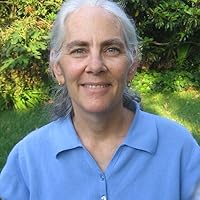
Teresa K. Miller
4 books6 followersTeresa K. Miller won the 2020 National Poetry Series with BORDERLINE FORTUNE (Penguin, Oct. 2021), having previously placed as a finalist with two other manuscripts. A graduate of Barnard College and the Mills College MFA program, she is the author of SPED (Sidebrow, 2013) and FOREVER NO LO (Tarpaulin Sky, 2008) as well as co-editor of FOOD FIRST: SELECTED WRITINGS FROM 40 YEARS OF MOVEMENT BUILDING (Food First Books, 2015). Her poems and essays have appeared in ZYZZYVA, AlterNet, Entropy, Common Dreams, and elsewhere. Originally from Seattle, she tends a mini orchard near Portland, Oregon.
Ratings & Reviews
Friends & Following
Create a free account to discover what your friends think of this book!
Community Reviews
Displaying 1 - 16 of 16 reviews

March 29, 2022
2 stars
On a craft level, I admire these poems. But that's about it. On a meaning level, they were far too opaque for my taste. The weird thing is that the author's note suggests Miller was working with some interesting themes, they just didn't come forward for me in a decipherable way in the poems. Perhaps if it had come at the beginning of the book instead, I would have found the poems more scrutable.
On a craft level, I admire these poems. But that's about it. On a meaning level, they were far too opaque for my taste. The weird thing is that the author's note suggests Miller was working with some interesting themes, they just didn't come forward for me in a decipherable way in the poems. Perhaps if it had come at the beginning of the book instead, I would have found the poems more scrutable.
July 10, 2021
Borderline Fortune is Teresa K. Miller’s incantatory address to the dead, to the as-yet unborn, and to we who occupy the tenuous border between them. Her speaker explores the fluidity of existence questioning, throughout the collection, what we perceive to be our individual and collective legacies. Interspersed throughout, short italicized poems act as a chorus meant to advise and console us.
The first section “To the Dead,” is a requiem, asking “All the mortals on the stoop—/how to revive them, usher them in.” Though the speaker decides “No personal/god will resurrect to offer grace…” she nevertheless engages in a search for meaning. Suggesting a fluidity beyond her own experience, the speaker says: “If I had a child, she was already mine. We did it backward/skipping time.”
The collection’s rich imagery is tied to the physicality of the landscape whose contours mirror the contours of the soul. “What am I if not a meadow, a rat/tunneling through the scraps…” But there is respite when the speaker says: “It wasn’t all bad, was it. Didn’t we in the slant/light have fun.” The collection’s final poem returns the reader to the borderline of its title as, “A ripple of photons/banded at the margin, where we jumped/one state to another.” Within the book’s own borders, Miller’s speaker offers a visceral and satisfying contemplation of life’s mysterious “fortune.”
The first section “To the Dead,” is a requiem, asking “All the mortals on the stoop—/how to revive them, usher them in.” Though the speaker decides “No personal/god will resurrect to offer grace…” she nevertheless engages in a search for meaning. Suggesting a fluidity beyond her own experience, the speaker says: “If I had a child, she was already mine. We did it backward/skipping time.”
The collection’s rich imagery is tied to the physicality of the landscape whose contours mirror the contours of the soul. “What am I if not a meadow, a rat/tunneling through the scraps…” But there is respite when the speaker says: “It wasn’t all bad, was it. Didn’t we in the slant/light have fun.” The collection’s final poem returns the reader to the borderline of its title as, “A ripple of photons/banded at the margin, where we jumped/one state to another.” Within the book’s own borders, Miller’s speaker offers a visceral and satisfying contemplation of life’s mysterious “fortune.”
March 1, 2022
One of the great gifts poetry can give us is the diamonds of perfectly- and unexpectedly-chosen words and phrases — gems to be held up to the light, examined under a jeweler’s loupe, until they prismatically bloom into new worldviews and perspectives.
This is the gift Teresa’s work has been giving me from her early chapbook up until this collection, a crowning achievement in her already-admirable body of work. As a distant cousin in the word-making trade, something I admire about her poems is Teresa’s consistent ability to mine her vast vocabulary for the right word — never to show off her intelligence or call attention to phraseology for its own sake, but to most precisely reflect a unique facet of human experience.
A casual reader or a child could just glide through the conversational rhythms and unfussy structure of these poems, but repeated readings unfurl rich symbolism and multiple meanings as memories of wood and stone, humans and wild things, entwine with hard-earned meditations on life, death, love, family — the topics we all should slow down and dwell upon, just like these exceptional poems.
P.S. Many books’ acknowledgements are tedious, duty-bound laundry lists relatively meaningless to the reader, but Teresa’s words about her partner and parents brought tears to my eyes. May we all live to earn such praise from our loved ones.
This is the gift Teresa’s work has been giving me from her early chapbook up until this collection, a crowning achievement in her already-admirable body of work. As a distant cousin in the word-making trade, something I admire about her poems is Teresa’s consistent ability to mine her vast vocabulary for the right word — never to show off her intelligence or call attention to phraseology for its own sake, but to most precisely reflect a unique facet of human experience.
A casual reader or a child could just glide through the conversational rhythms and unfussy structure of these poems, but repeated readings unfurl rich symbolism and multiple meanings as memories of wood and stone, humans and wild things, entwine with hard-earned meditations on life, death, love, family — the topics we all should slow down and dwell upon, just like these exceptional poems.
P.S. Many books’ acknowledgements are tedious, duty-bound laundry lists relatively meaningless to the reader, but Teresa’s words about her partner and parents brought tears to my eyes. May we all live to earn such praise from our loved ones.
January 20, 2022
The precision of language paradoxically and beautifully frames an effusive, indeterminately located voice and a shifting apostrophized object--at times a person, at times a place or inanimate object--in a book that confronts the slippery identifications and confusions that arise in the blowback of familial and environmental traumas, replete with startlingly original imagery and crisp juxtapositions of sounds. The economy of language raises the stakes immensely in Miller's spare poems, but she meets the challenge and opens up entire worlds with a style that interrogates the rhetorical conventions of lyric poetry and, even more fundamentally, the suspect gap between "you" and "me." What are we tethered to in the wake of family histories and geological transformations? Another great book from the National Poetry Series.
January 27, 2022
There are certain works we keep on our shelves as nourishment, there to return to when we need restoration of some kind. It's a small selection of works that occupy this space on my shelves, but Borderline Fortune will join this space for sure. Miller's exploration of the relationships between lineage, earth cycles and ecosystems, procreation and the elements that join and separate what might intersect is, frankly, way smarter than I am. Her carefully placed wording, use of form, and references invite my mind to bend, but it's this invitation that makes me want to return to the writing again and again. There is no agenda, no didactic approach to the material; rather, I'm led through the writing to experience it the way I enjoy experiencing art the most: gathering nourishment from it however I might in that moment. I look forward to returning to this work again and again.

January 16, 2022
If only the information in the Author’s Note had more bearing on the actual poems, this collection could have invoked the fortunes of the poet’s grandparents, their voyage from Seattle to Little Diomede Island in the Bering Strait, and their missionary life among the Inaliit. Instead, all of that rich description remains in the borderline: “the point unknowable.” Many of these poems read like flotsam and jetsam, washing up on the shore of each page and requiring thorough beach-combing to discover their treasures, such as this piece of jet discovered by the poet herself:
“I wanted for you the invisible door,
the one you couldn’t reach for,
the end of your breath’s long hallway.”
“I wanted for you the invisible door,
the one you couldn’t reach for,
the end of your breath’s long hallway.”

July 31, 2021
ARC given by NetGalley for Honest Review
"Borderline Fortune" is the short-form poetry collection we've all been waiting for. It's rich with metaphor, energy, and emotion. Poems flow and ebb together as they are not titled so we move with the direction of Miller's words. Most times this is stream less but I was getting some whiplash between poems.
I was a fan of the italicized interludes that specifically spoke to the reader. This was done in a way that landed authentically rather than preachy.
"Borderline Fortune" is the short-form poetry collection we've all been waiting for. It's rich with metaphor, energy, and emotion. Poems flow and ebb together as they are not titled so we move with the direction of Miller's words. Most times this is stream less but I was getting some whiplash between poems.
I was a fan of the italicized interludes that specifically spoke to the reader. This was done in a way that landed authentically rather than preachy.
January 19, 2022
Puzzles for the Heart and Mind
Ms. Miller's poetic interior world is passionate and breathtakingly intuitive, but there is a structure supporting it. As long as I have been reading her I've been on the trail of that structure. It has called for deduction, inference, and fine observation of linguistic detail. In short, these poems have brought out my best as a reader. Her vision of humanity and nature enlarges my own.
Ms. Miller's poetic interior world is passionate and breathtakingly intuitive, but there is a structure supporting it. As long as I have been reading her I've been on the trail of that structure. It has called for deduction, inference, and fine observation of linguistic detail. In short, these poems have brought out my best as a reader. Her vision of humanity and nature enlarges my own.
January 20, 2022
Borderline Fortune is remarkable for both linguistic and emotional precision.
In these poems, Miller proves the value of the right word in the right place, how it can resonate in the body and take up residence in the mind, becoming both a gorgeous artifact and the seed of something new. These poems both stand alone and collectively create a world, one that remains beautiful and mysterious even as it suffers the consequences of careless habitation.
In these poems, Miller proves the value of the right word in the right place, how it can resonate in the body and take up residence in the mind, becoming both a gorgeous artifact and the seed of something new. These poems both stand alone and collectively create a world, one that remains beautiful and mysterious even as it suffers the consequences of careless habitation.
September 12, 2025
I can appreciate her craft and her vast array of vocabulary,which is why I have given the two stars, but as a whole this collection just didn’t resonate with me barring one or two lines.I found it disjointed and rather too vague in areas,to the point i was just completely lost which is understandable with one read through but I’ve now read this three times with no additional clarity. Not my sort of poetry but that’s okay not every poem is meant for every person

July 30, 2026
I was awed at first but eventually tired of this too-short style. Though they often go nowhere, there are twisty lines that play well with words. Standouts include pages 3, 4, 5, 12, 21, 22, 25, 28, 29, 30, 46, 47, 49, 51, 58, 63, 64, 66, 67, and 68.

December 21, 2021
4.75 stars

December 22, 2021
I was lucky to see the author read from Borderline Fortune. These poems are fierce, restless, alive.

September 15, 2022
I genuinely could not follow this. It was like a series of disconnected (beautifully summarized) photographs that didn’t feel cogent. Maybe just because I listened on audiobook. Felt elusive.

February 20, 2025
Not sure why this gets those two bad reviews. I appreciate the comment about audiobook being not its best format, yet it still seems valuable. And that it requires effort - so? That's a critique?

April 29, 2025
In terms of poetry it's not bad at all, it's just not my cup of tea.
Displaying 1 - 16 of 16 reviews