Jump to ratings and reviews
Rate this book

Priscilla: The Life of an Early Christian

Rate this book
Who was Priscilla? Readers of the Bible may know her as the wife of Aquila, Paul's coworker, or someone who explained baptism to Apollos. Biblical references to Priscilla spark questions: Why is she mentioned before her husband? Does the mention of her instruction of Apollos mean that women taught in the church? What is her story? Ben Witherington III addresses these questions and more. In this work of historical fiction, Priscilla looks back on her long life and remembers the ways she has participated in the early church. Her journey has taken her to Ephesus, Corinth, and Rome, and she's partnered with Paul and others along the way. Priscilla's story makes the first-century world come alive and helps listeners connect the events and correspondence in different New Testament books. Witherington combines biblical scholarship and winsome storytelling to give listeners a vivid picture of an important New Testament woman.

Audio CD

First published May 14, 2019

41 people are currently reading
359 people want to read

About the author

Ben Witherington III

129 books151 followers
Ben Witherington III (PhD, University of Durham) is Amos Professor of New Testament for Doctoral Studies at Asbury Theological Seminary in Wilmore, Kentucky, and is on the doctoral faculty at the University of St. Andrews in Scotland. He is the author or coauthor of more than thirty books, including The Jesus Quest, The Paul Quest, and The New York Times bestseller The Brother of Jesus. He has appeared on the History Channel, NBC, ABC, CBS, and CNN.

Ratings & Reviews

What do you think?
Rate this book

Friends & Following

Create a free account to discover what your friends think of this book!

Community Reviews

5 stars
26 (16%)
4 stars
74 (46%)
3 stars
48 (30%)
2 stars
8 (5%)
1 star
3 (1%)
Displaying 1 - 30 of 42 reviews
Profile Image for Wes Van Fleet.
Author 2 books17 followers
July 13, 2022
What a joy! Witherington takes his decades of New Testament and early church scholarship and tells the story of what it would have been like to be a follower of Jesus in the first century. He does this simply, beautifully, and provoking my from the perspective of Priscilla. I seriously enjoyed this so so much.
Profile Image for Traci Rhoades.
Author 3 books102 followers
March 26, 2020
This reads like a documented account from an eyewitness, more specifically an elderly Priscilla (Prisca) to her adopted daughter. The letters of Paul and Luke's account in Acts are referred to as just written or being written. There might be some creative liberty but the author has painstakingly researched early documents to create context and understanding of difficult passages in the letters and in revelation. I appreciated the effort put into this readable account.
Profile Image for Leslie.
298 reviews4 followers
August 7, 2019
I had been anticipating the new book Priscilla: The Life of an Early Christian by Dr. Ben Witherington III for most of the last year since I first saw it in the IVP catalog. Witherington takes his knowledge as a Professor of New Testament at Asbury Theological Seminary and spins a story surrounding the character of Priscilla in the Bible who is most often mentioned in conjunction with her husband Aquila. Through the story Priscilla is telling her story to her adopted daughter Julia who is serving as her scribe. In this narrative, Priscilla tells the behind the scenes stories of the life of early Christians. Throughout her story, Priscilla eludes to many scripture passages and events as well as historical events. Witherington uses his background in New Testament and the history of the time period not only to fill in myriad details of what actually happened. He also introduces each chapter with quotes from various primary sources of the time period and includes numerous images to illustrate the story as well. Copius footnotes are included so that readers can follow-up on interesting items.

Finishing the book, I found that I enjoyed it and recommend it to others, but I didn't love the book like I anticipated I would. The story was well-researched and interesting and having the narrative "what if" of early Christian life will send many readers back to their Bibles to re-read passages. However, the story line as told by Priscilla was not as gripping as I had hoped. It read more like a biography than as historical fiction.

Disclosure of Material Connection: I received Priscilla via NetGalley and purchased a copy to donate to the library where I am employed. I was not required to write a positive review. The opinions I have expressed are my own. I am disclosing this in accordance with the Federal Trade Commission’s 16 CFR, Part 255: “Guides Concerning the Use of Endorsements and Testimonials in Advertising.
Profile Image for Josh Ponder.
10 reviews
September 6, 2025
Ben Witherington does a wonderful job of weaving together the historical backdrop of the early church with engaging storytelling. At times, he leans a little strongly on presenting certain theological perspectives as fact rather than exploring them with nuance, but those moments are relatively rare and don’t detract significantly from the overall experience. What stood out most was how the book brought fresh insight into the world of the Jesus movement and the broader historical events happening around it. I genuinely enjoyed reading it and would recommend it to anyone who appreciates an educational, thought-provoking look at early Christian history.
72 reviews
April 29, 2019
The book Priscilla tells the story of the New Testament from the perspective of Priscilla, who was a co-worker with Paul in sharing the Gospel. The story is told as Priscilla tells the story of her life to her adopted daughter, Julia. In many ways, this is an imaginative retelling of how the New Testament was written and the life of Paul from a firsthand witness. The book also includes details about what daily life was like in the Roman Empire. However, the transitions between story and history often felt stilted, which took away from the reading experience for me. Still, this book could function as a good introduction to the historical context of the New Testament.
Profile Image for Bob.
2,462 reviews726 followers
July 4, 2019
Summary: An imaginative rendering of the story of Priscilla, a companion of Paul, as a dictated narrative recorded by her adopted daughter Julia, as she faces possible trial before a Roman tribunal.

Priscilla (or Prisca) is one of those fascinating minor characters we meet in the book of Acts and several of the letters of Paul. Often mentioned before her husband Aquila, she is described as a tentmaker, who works with her husband and Paul to support their mission efforts. When Paul writes the Corinthians, he sends their greetings along with his own. Later, in the letters to the Romans and the second letter to Timothy, he sends greetings to them. Perhaps most significantly, Priscilla and her husband instructed Apollos, who became a noteworthy preacher, in the truth of the gospel.

This book is an imaginative filling out of her story, and that of the early Christian movement. As the story opens, Priscilla is a woman of 80, still proprietor of a tentmaking business in Rome. Her nightmares about the early Neronian persecution of Christians, during which she lost her husband, result in her determining to tell her whole story to her adopted daughter Julia, who takes it down on wax tablets to copy to papyrus. 

She traces her Christian journey from the day of Pentecost, when she and her mother became followers of the Way, and were expelled from their home. Eventually, they take up tentmaking in Rome. Prisca meets Aquila, another believer. She describes persecutions of Jews in Rome and their banishing to Corinth, their encounter with and travels with Paul, their instruction of Apollos, to whom she later. attributes the Letter to the Hebrews.

Witherington creates an urgency to the account. Shortly after beginning the narrative, Priscilla receives a summons to appear in a month before the tribunal of Domitian, who has resumed the persecution of Christians. The theme of persecution runs through the narrative--the brutalities of Nero, who illuminated the city with burning Christians, banishments, the trials of Paul, of Peter and many others.

Priscilla's narrative incorporates descriptions of everyday life, often assumed in scripture, and makes connections that help flesh out the development of the early Christian movement--the ministries of Peter, James, and John, and their writings, along with the gospels of Luke and John Mark.

The account also chronicles the ideal of Paul about Jewish-Gentile relationships in the church, and the struggle, and ultimately failure to achieve this ideal as differences separated these two and the number of Jewish followers of the Way declined. There were both external pressures from the rest of the Jewish community, and the struggle to grasp the new covenant realities that made inclusion of the Gentiles possible.

Finally, the portrayal of Priscilla and the discussion of women and their roles in the church and the world helps us understand both cultural limits and the gospel possibilities Paul envisioned. This commentary by Priscilla, responding to a question from Julia reflects Witherington's understanding of Paul on women:

" 'That's true, but Paulus's pastoral principle was 'start with them where they are, and lead them where you want them to go.' He knew the places Timothy and Titus served were male-dominated, especially on Crete, but if you carefully read the first letter Paulus wrote to Timothy, he mentions female deacons. Those texts were never meant to exclude women from praying or prophesying or teaching or whatever they were gifted and called by God to do so. Paulus view was to change those in the body of Christus over time rather than change society at large.' "

Sadly, Priscilla probably didn't envision that two thousand years later the church would still be wrestling with this one.

There are times when the incorporation of explanations of daily life seem a bit artificial, and the use of Latin or Greek terms, and then explanation, while helpful from a historical perspective, seems unnatural in a conversation. Nevertheless, the narrative reflects Witherington's extensive understanding of the New Testament and its Mediterranean context, and helps us return to the biblical narratives with fresh eyes. The extensive use of illustrations to complement the text add to the reader's understanding and interest. The use of the impending appearance before the tribunal adds narrative tension, and offers the opportunity for a discussion of the realities of Christian hope that have strengthened believers facing persecution in every age. This is a book both to inform and encourage!

________________________________

Disclosure of Material Connection: I received this book free from the publisher. I was not required to write a positive review. The opinions I have expressed are my own.
Profile Image for William Stapleton.
41 reviews1 follower
July 4, 2023
View all my reviews

Outline:
I. Introduction

A. Background info - Ben Witherington III
B. Brief overview of the book "Priscilla"
II. Summary of the Book
A. Introduction to the character of Priscilla
B. Exploration of Priscilla's background and historical context
C. Discussion of Priscilla's significant contributions to the early Christian community
D. Analysis of Priscilla's interactions with other biblical figures, such as Paul and Apollos
E. Examination of Priscilla's role in teaching and mentoring others
III. Key Themes Explored
A. Gender equality and the role of women in early Christianity
B. The importance of education and knowledge in the early Christian community
C. The power of collaboration and partnership in ministry
D. The significance of hospitality and community in the early Church
IV. Analysis and Evaluation
A. Discussion of the author's writing style and approach
B. Evaluation of the author's research and historical accuracy
C. Examination of the book's strengths and weaknesses
D. Assessment of the book's contribution to the field of biblical studies
E. Comparison with other works on early Christianity and the role of women
V. Conclusion
A. Recap of the main points discussed in the book
Review:
"Priscilla" by Ben Witherington III is a comprehensive exploration of the life and contributions of Priscilla, a prominent figure in the early Christian community. Witherington, a well-known biblical scholar, delves into the historical context surrounding Priscilla and sheds light on her significant role in the growth and development of early Christianity.

The book begins by introducing Priscilla and providing essential background information on her life. Witherington then dives into the historical context, offering insights into the cultural and social dynamics of the time. Through meticulous research, he uncovers the various aspects of Priscilla's life and ministry, examining her interactions with other biblical figures, such as Paul and Apollos.
One of the book's key strengths lies in its exploration of the role of women in early Christianity. Witherington challenges traditional assumptions and presents a compelling case for the equality and active involvement of women in the early Church. He highlights Priscilla's teaching and mentoring roles, emphasizing her intellectual prowess and the importance of education in the early Christian community.

Witherington's writing style is engaging and accessible, making "Priscilla" a valuable resource for both scholars and general readers interested in early Christianity. The author combines rigorous scholarship with a storytelling approach, providing historical details while maintaining a compelling narrative.

The book's research and historical accuracy are commendable. Witherington draws from a wide range of sources, including biblical texts, ancient writings, and archaeological findings, to paint a comprehensive picture of Priscilla's life. His analysis is well-supported and encourages readers to reconsider their understanding of early Christian history.

While "Priscilla" is a notable contribution to the field of biblical studies, some readers may find that certain sections delve too deeply into academic discussions. Additionally, although the book emphasizes Priscilla's significance, some readers might have preferred a broader examination of other influential women in the early Church.

"Priscilla" is a well-written and thoroughly researched book that sheds light on the often overlooked contributions of women in early Christianity. It challenges traditional assumptions and presents a compelling argument for the importance of gender equality and the active involvement of women in the ministry.

Profile Image for Jeannine.
785 reviews10 followers
July 8, 2019
I am a fan of pretty much everything written by Ben Witherington III. He makes a lot of biblical topics and books more accessible to the general reader. Priscilla is a somewhat new venture I think, this is essentially a retelling of the Acts story/the early Church from the point-of-view of Priscilla (Priscilla & Aquila in Acts 18). By and large it's an easy read and makes the story very digestible adding some relevant history/background. I am not the academic that Witherington is however, I still take issue with some things he presents as fact. One example is his presentation of Junia/Junias as a divorced woman, remarried to a Christian and that this was readily acceptable/embraced in the early Christian community. I am reading an ARC copy that has footnotes but there is no footnote that helps me understand where this comes from and that is not clear biblically. There is only one reference to Junia/Junias in the Bible in Acts 16:7 and most academic debate surrounds whether she was a female apostle and whether the name is male or female. I find no academic references to her being divorced/remarried and find that addition to the story would lead those less solid in their biblical background to believe that this was true vs a literary addition. The book is sort of fictional, sort of historical-biography but this crosses a line. I'm not taking a particular viewpoint on divorce/remarriage only that a well respected author is stating as fact something that is not that clear in academic circles and is definitely not made clear in the biblical text and that can lead readers to an understanding that is not quite on target. That bothers me...
Profile Image for Debbie.
3,629 reviews86 followers
April 27, 2019
"Priscilla" is educational biographical fiction about what life was like for the early Christians. Priscilla (wife of Aquila) recounted her life from when she was visiting Jerusalem when the Holy Spirit came down (in Acts) through historical events like the Jews (and Christians) being expelled from Rome, the deaths of Peter and Paul, and the destruction of the Temple in 70 AD.

The author wove historical information and what daily life was like into the story along with events mentioned in the New Testament that she would (or could) have witnessed or participated in. He also included his views and explanations about things like why Priscilla in mentioned before Aquila and if women were allowed to teach. I didn't always agree with his take on things (like the first gospel being finished after the fall of the Temple), but they aren't uncommon views.

There were footnotes explaining where quotes or certain information came from. There were some nice black-and-white pictures of archaeological finds that illustrated information in the story. Overall, I'd recommend this interesting book, especially to those who know little about the historical backdrop of the first 60 years of early Christianity.

I received an ebook review copy of this book from the publisher through NetGalley.
Profile Image for Jon.
59 reviews
August 29, 2023
I like Ben Witherington, and in this book, his years of research into the social background of the New Testament comes through. The fictional presentation through a lesser-known female figure of the early church is clever I think (other scholars who have done something similar tend to pick men), and provides lots of insights the average reader will not be familiar with. Unfortunately, the dialogue is very clunky, and at times, it feels like the form of the writing is lost to the cramming-in of content. I personally find the author’s other books to be much better and clearer, especially as this book is not so clear about where he draws on imagination versus evidence. However, I have given this book three stars because I think the intended audience would find the form of writing helpful in taking in so much information, and I think the author should be credited for his creativity.
Profile Image for Annarella.
14.2k reviews165 followers
February 20, 2019
Even if I'm no really religious I've been a fan of novels set in the early century of Christianity since I read Quo Vadis and I was really happy to be approved for this book.
I started to read as soon as I get the copy and I was hooked as soon as I started to read it.
It's a vivid, details and well researched story of the seminal person of Christianity seen through the eyes of a woman.
I loved the well written characters, the vivid description and the attention to the historical details.
Priscilla is a great character and her memories are both interesting and engaging.
Highly recommended to fan of Ancient Rome fiction and inspirational books.
Many thanks to the publisher and Netgalley for this ARC
Profile Image for Phoebe.
Author 3 books47 followers
November 22, 2019
Lovers of history will also enjoy this historical fiction account by New Testament historian Ben Witherington III of Priscilla’s life, the Priscilla of the famed “Priscilla and Aquila” in Acts. The novel reads as a narrative of an older Priscilla telling her daughter her eventful life story, from her witnessing the Pentecost to her marriage to Aquila to their service with St. Paul. In addition to the story, it includes many explanatory historical footnotes, and my favorite features are the photographs of the various locations and inscriptions described in the story. This allowed me to visualize life for the early Christians of ancient Rome more easily. Read my full review on my blog here: https://beingincommunity.com/books-gi...
Profile Image for Sam Vargas.
24 reviews1 follower
June 8, 2025
This book was not what I expected, although I did go into it blind. It has more of a storytelling perspective so there are a lot of assumptions made. however, I did really enjoy it because of so much of the historical texts that were used for this book as well as scripture. It gave me a better picture and understanding of life during that time because of the way it was described using the historical texts. Knowing that this is a story of a historical figure that pulls from many different texts is important to note ahead of time. And there are plenty of footnotes about the things that are historically accurate and the things that are assumptions as well. I definitely recommend it!
Profile Image for Julia .
329 reviews6 followers
April 28, 2019
I received an ARC of this boom in exchange for my honest review. What an amazing book. I read Phoebe, also published by IVP, last year and it was one of my favorite books of the year. Priscilla has the potential to be that in 2019. It is filled with historical and biblical evidence and fact, but paints the picture of Priscilla and her importance of the church in a way that I've never heard before. Priscilla is made to seem personable and a character genuinely invested in. Of course, the way the author fills in some details is imaginative and fictional, but I appreciate that - it got me thinking outside the box and surmising about history. Highly highly recommend.
Profile Image for M Christopher.
580 reviews
October 9, 2024
Ben Witherington III is a fine New Testament scholar, whose articles & commentaries I have benefitted from greatly. He is NOT a good storyteller or writer of dialog. Had he chosen to present this material as a speculative biography / early church history, it would have been much better. But as an imaginative story telling session between Priscilla and her adopted daughter, it is unbelievable, stilted, and nearly unreadable.

Dr. Witherington, please stick to what you do well.
Profile Image for Brittany Gillen.
354 reviews3 followers
Read
April 28, 2025
Didn’t finish. Not really a fiction book. Non-fiction with a weak story frame that just distracts.
Profile Image for Julia.
52 reviews20 followers
June 21, 2019
Highly recommend! An excellent window into the first century world of the New Testament. Occasionally the prose feels a little green, but the overall book is a worthwhile read and I appreciate the author taking the time to write from the female perspective.
Profile Image for Melody Schwarting.
2,133 reviews82 followers
December 17, 2019
Have you ever wondered what would happen if an academic publisher printed a historical fiction novel?

Witherington is a New Testament scholar and masterfully commands the history of ancient Rome. Unfortunately, he never lets you forget it. There are invasive footnotes, pictures from archaeological digs and museums that explain rather than illustrate, and a glut of statements/questions/answers by characters that serve more to educate the 21st century reader than to bring the story to life. It reads like a New Testament 101 class with a professor who spent the summer at an archaeological dig and wants to bring everything to life, while silently crushing souls by passing around pieces of ancient pottery. I mean, I'm a historian, and I love that stuff , but even I found it dreadfully dry after extended periods of time.

I dislike comparing books, but I will compare Witherington's Priscilla and Phoebe by Paula Gooder, because they work for nearly identical goals, and are wildly disparate in execution. Phoebe holds up as a story in its own right. Gooder's research remains in the background (she has a lengthy section on her historical/interpretive choices after the story is concluded) and only serves to bring the context to life. Witherington's "story" is contrived--he patches together all the biblical references to Prisca (Priscilla) to create her personal history, then has Prisca tell her story to her adopted daughter, with a facile present-day conflict. While Gooder did something similar with Phoebe, she let Phoebe's narrative carry the story. It seems like Prisca is trying to hit theological bullet points along the way, with her daughter Julia's questions filling in the gaps expected by someone familiar with second temple Judaism and early Christianity. Prisca's story, told as dialogue rather than uninterrupted narrative, is choppy and disjointed.

I love many of the historical and interpretive choices Witherington makes. The catacomb of Priscilla! Paul's weird eye problems! Prisca's social status vs. Aquila's! Peter and Paul and James! I do feel like I have a better idea of what life in Rome for early Christians was like due to reading this book, and I understand the interactions of major early Christians better, too. Just for those reasons, I'd recommend reading this book, while holding loose expectations for quality dialogue.

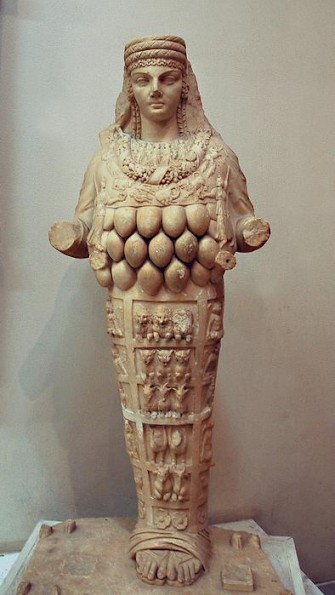
However, I couldn't ever decide if I was reading a textbook (footnotes, archaeological photos, pointed statements) or a novel (dialogue, emotion, relationship). I think Priscilla would have hugely benefited from endnotes rather than footnotes, excising the epigraphs, and including the explanatory textbook pictures as an appendix rather than in the chapters. Witherington could also have done without documenting every. single. Bible. verse. referred to in the narrative. Many of the historical tidbits were just distracting and didn't enliven the narrative: see early "Beware of Dog" signs, that creepy Artemis statue, and a random George Eliot quotation after a slough of Juvenal and Pliny???

Priscilla would have benefited from a co-writer, preferably one with a good sense for historical fiction, who could have said, "No, we don't need to quote Sextus Julius Frontinus' The Aquarius of Rome at the beginning of the chapter about Paul in prison." Ancient Roman industrial engineering is not exactly what draws most people into the story of Paul's imprisonment in Caesarea! Hehe. Aquarius.

Despite these drawbacks, I did learn from and like Priscilla, but I would only recommend it to readers who are as interested in contemporary New Testament scholarship as in historical fiction.
Profile Image for Mary Lou.
228 reviews10 followers
August 27, 2022
Reviewed by: Mary Lou Codman-Wilson, PhD., Pastoral Psychology, Psychological Anthropology, Christian Education and Buddhism.

Historical fiction is a fascinating literary art form. By using his sanctified imagination, known Biblical text, and historical research, Ben Witherington III offers readers a credible account of Priscilla, the apostle Paul’s colleague. Through the retelling of her story, Witherington describes the early years and persecution of the first century church, the relationship of its leaders to one another, and a view of first century Roman through the eyes of tent-maker Priscilla and her husband, Aquilla. Although the book suffers from occasional artificiality and stiffness in the dialogue, it provides a reasonable accounting of the life of one of the key women in the history of the church. Witherington’s Priscilla is a thought-provoking contribution to early church history.

Excerpts:

“Was there some sort of tension between Peter and Paulus? Did they not get along well as brothers in Christus? I remember you telling the story of Paulus and Peter in Antioch. . .[when] Paulus confronted Peter in public, presumably in the assembly meeting, about his hypocrisy of first dining with Gentiles and then backing off under pressure from the men who came from Jacob [James] in Jerusalem. Did Peter agree with him?”

Prisca nodded confidently “Paulus talked to us about that confrontation in Antioch when we were with him in Corinth. Paulus had a temper and was not shy about expressing his feelings. He later regretted blowing up at Peter in front of others. They should have talked privately. That incident created a certain tension between the two men. . . They never worked together hand in hand, but like persons acting in the same drama, they both played important roles and have helped make the assembly of God what it is today”

“That helps me understand a bit better, but it seems sad they never fully reconciled.”

Prisca looked weighed down by what her daughter had said. “Julia, we are all imperfect people, and yet those are the only kinds of people God has to work with, and by his grace and love he has chosen to do so. So we must not judge those men too harshly. They were never rivals. They both worked for the same cause, the same King, the same Kingdom. But they were very different persons with very different personalities.. . .They served the same Lord. That outweighed everything. As Paulus used to say, “We must not dwell on the past but we must learn from it and I think both men did that.” (pp.155-156)


“’Domina, how exactly did Christus followers who were hiding in the catacombs hear about Nero’s torments, and how did Nero’s soldiers find them? I’m too young to remember.’ But just as Prisca was about to speak, a breathless Achilles ran into the room. ‘Domina, there is a centurion at the door.’ Julia felt like someone had put tongs on her heart, and she became as breathless as Achilles. Prisca paled, but then looked resolute. Slowly gathering herself, she made her way to the front entrance. ‘Yes?’ she queried the tall man in full regalia. In a strong and authoritarian voice he said, ‘Be ready in the morning, as I will come to take you to the tribunal. Hail, Domitianus!’ And then he pounded his chest with one fist and departed. Visibly shaken, Prisca returned to her room and to the brazier, and Julia could see she was shivering, but not primarily from the cold. Julia moved next to her and took her in her arms. ‘Don’t worry, Domina. We are all in the Lord’s hands.” She winced a little as the words came out of her mouth. Her mother knew this better than anyone, and she despised that she made such a fearful thing sound trite” (pp. 158-159).
Profile Image for David .
1,349 reviews197 followers
April 25, 2019
What was life like in the decades after Jesus' death? For this, we have little information. There is the New Testament of course, as well as legends and findings from archaeology. Within this, one of my favorite things about Paul's letters are all the people he mentions: Apollos, Priscilla, Aquila, Junia, Phoebe, Silas, etc. All of these people certainly had stories of their own, but only show up as supporting characters in the story of Paul.

This book imagines what life may have been like for one of those people: Priscilla. Withingerton writes from his deep knowledge of this era, which is the best thing about the book. There are probably a whole host of people who will never read a commentary or theology book, but they will read a biography or a story. In telling Priscilla's story, Witherington sneaks in a lot of first-century knowledge. The reader will come away knowing a bit more. Further, the footnotes are very helpful in this regard.

At the same time, perhaps in an effort to teach more than entertain, this book sounds wrong at times. A good story sucks you in. There were times in this story when I was pulled out, reminded I was reading a story. For example, at one point Priscilla points out that the remedy to bad religion is not no religion, but good religion. Seriously, did anyone say that before the last century or so? These points throughout remind us that while there is a story being told, the story is not primary.

Along with that, I personally did not find the extensive scripture quotations. There are more than a few times where Priscilla tells Julia (the person she is telling the story to) to get out Peter's letter or Paul's letter or Luke's gospel and read a portion. Again, it simply takes you out of the story.

I think where this story succeeds best is where Priscilla talks about real life events from the persecution of Nero to the destruction of Pompeii. If anything, the book would have been better had Witherington imagined even more story and built up more of the history around it, and preached less. Perhaps a scholar does not like just making stuff up, but in the end this almost reads more like a dialogue than a story.

All that aside, it is still a good read. The best part of it is that we recognize the huge role women played in the early church. Priscilla of course was a leader and she tells us of Phoebe and Junia. Within this we get the argument that the Joanna who visited the empty tomb with Mary is the same as the Junia of Romans 16:7. Priscilla also reminds us that Acts was not about Paul, but about the gospel getting to Rome. She fills us in (and certainly not all scholars agree) that Paul traveled to Spain, then back east, before being arrested and executed. Any book that brings more first-century knowledge to Christians, or anyone, is good. So despite any flaws, this is highly recommended for any Christian or fan of ancient history.

I received a free advanced copy of this book from NetGalley for purposes of review
Profile Image for Jan.
1,226 reviews
October 9, 2019


Ben Witherington has combines Biblical scholarship and winsome storytelling in the Intervarsity Academic publication. Prisca is retelling the story of her past with Aquila her husband. She was known for explaining baptism to Apollos, and she was Paul’s coworker. Priscilla is troubled with nightmares of her life in the early first century of the Christian church and she is retelling her story to Julia, her adopted daughter who is writing it down. It is a combination of imaginative storytelling, photos from early Christian history and scriptures from many early writings of the time, not included in our Bible. It is a very innovative approach which is easy to follow, with short chapters, lots of pictures and quotes to support and flesh out the history of the time.
It is an excellent example of the role Priscilla and other women played in the earliest lives of the church. Pastors and students alike will be taken for an easy stroll through the most gut wrenching time in the followers of Christ and it is amazing how today’s church developed through Paul, Peter, Christ and a Priscilla and Aquila. Hebrews 13:7 says “Remember your leaders, who spoke the word of God to you. Consider the outcome of their way of life and imitate their faith”. An easy read but scholarly at the same time.
Ben Witherington has written 40 books and is a popular lecturer as well as a United Methodist Pastor. He has a BLOG The Bible and Culture and can be send at his website at www.benwitherington.com.
A fresh new look at religious fiction storytelling, worth the investment.

Profile Image for Emily P.
428 reviews11 followers
April 30, 2019
I am always interested in Ben Witherington's work, and "Priscilla: The Life of An Early Christian" was an involving read. I anticipated the book would be similar to a textbook, and while there are some archeology photos, along with detailed footnotes, this reads more like a historical novel.

Blended with the story of Priscilla in Scripture and that of a bit of creative license on the author's part, the book was informative and gripping. If you are a history buff or interested in researching the life of the early followers of The Way, you will be drawn in to the story. This reimagining of Priscilla's day to day life and how she responded to Jesus' call on her life are worth the read.

I was able to be an early reviewer of this title thanks to #NetGalley. All opinions are my own.
515 reviews5 followers
June 15, 2022
Priscilla and Aquila, coworkers of the apostle Paul, are mentioned in Acts 18:2,18,26; Rom 16:3; 1 Cor 16:19; and 2 Tim 4:19. From these passages we know that they were tentmakers like Paul; that they were expelled from Rome with other Jews during the reign of the Emperor Claudius; that they worked with Paul in Corinth and Ephesus; and that they later returned to Rome.

From these data, New Testament scholar Ben Witherington constructs a possible life story for Priscilla in this historical novel. Set in Rome in 96 AD, the novel has Priscilla relate her life story to her daughter. In fascinating plot details and footnotes, the reader benefits from Witherington's thorough knowledge of the Bible and its world.
Profile Image for Michelle Noble.
178 reviews3 followers
May 6, 2019
I love historical bible stories that are written as a novel. However, this book didn't meet my expectations. It was missing a certain excitement that usually accompanies these types of stories. It's narrated by Prisca approximately in 60 AD. She tells the story of what happened in Roma following the resurrection of Jesus Christ. The turbulent and dangerous religious politics of the time. She is telling the story to her adopted daughter who is writing it down.
32 reviews
October 19, 2020
I was expecting a historical reconstruction of the woman Prisca but this isn’t what this is. It’s basically a retelling of the stories in Acts with lots of words from Paul thrown in. So basically it’s a story about Paul from Prisca’s point of view. It does have some surface information about early Roman Empire but not much. The author also assumes a conservative view of the dating and authorship of some NT letters that most scholars don’t agree with.
Profile Image for Jordan Hilkey.
49 reviews
August 12, 2022
Priscilla was a good read for me. I learned some good cultures things about the time which was nice. However, it feel a bit simplistic. It was less about Priscilla and more about telling the story of Paul and things we see in the New Testament. This would be followed by some Priscilla storyline, but very little. It was a breeze of a read, which was nice but not very engaging. It just didn’t pull me in.
Profile Image for Connie Masson.
11 reviews1 follower
December 19, 2024
Chronicling the Early History of Christianity

What a beautiful way to learn about Christianity through Pricilla’s memories and her life story! I thoroughly enjoyed this telling through a mom sharing her life with her daughter. The love and respect of them both is such a wonderful example for us today. Hearing the story of Christ through this perspective just made it all come to life in a wonderful new way for me! I look forward to reading more from this author.
Profile Image for Amy Kannel.
698 reviews54 followers
Read
September 2, 2025
This was an interesting glimpse of cultural/historical context for the New Testament. But way less about Priscilla herself and way more just sort of a retelling of Acts than I expected. And the bridge narrative of Priscilla telling the story to her adopted daughter was very...stilted. As other reviewers have noted, Witherington's strengths do not lie in writing believable dialogue/creating characters/crafting a story.
Profile Image for Jacob O'connor.
1,645 reviews26 followers
January 17, 2022
I love and hate this genre. I love to learn history in story form. It brings it to life. It's the spoonful of sugar that helps the medicine go down. I hate that these stories are rarely told well. Witherington's tale gives enough of the former to overcome the latter. As such I can recommend this to any Bible student. If you're not curious about New Testament history, you may not enjoy it.
Profile Image for Paul Herriott.
429 reviews16 followers
February 12, 2020
What a treat, historical fiction written by an esteemed NT scholar and based upon actual known events and culture. Priscilla is the ideal historical person to extrapolate a life of, she is well thought of and intersected with significant aspects of the known story. Highly recommend for anyone.
Displaying 1 - 30 of 42 reviews

Can't find what you're looking for?

Get help and learn more about the design.