

What do you think?
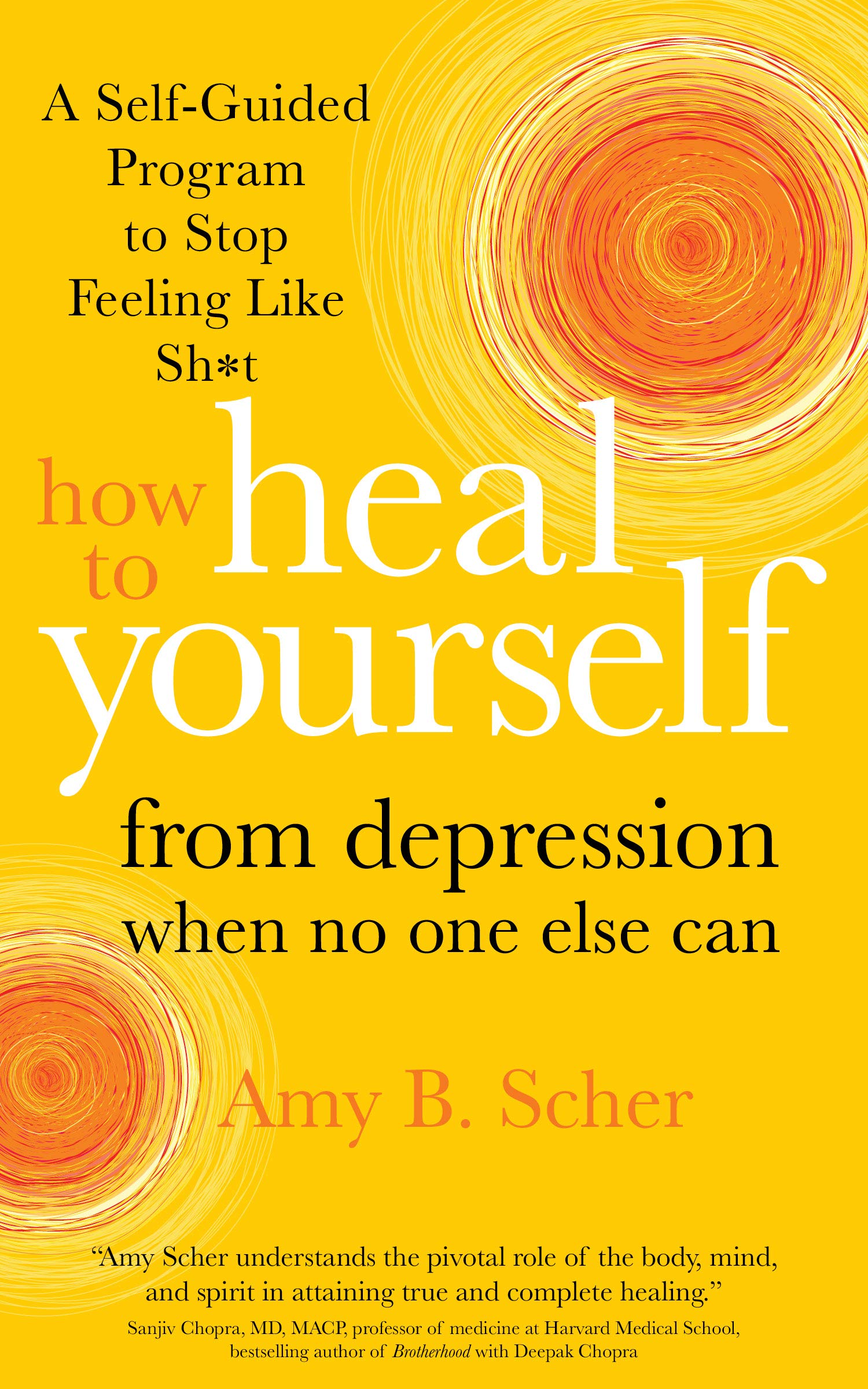
How to Heal Yourself from Depression When No One Else Can: A Self-Guided Program to Stop Feeling Like Sh*t
An accessible approach to helping anyone struggling with depression to reclaim a joyful life. From feeling exhausted or blue to not being able to get out of bed, depression happens on a spectrum and can affect anyone. Our current approach of medicine and therapy doesn't always offer all the answers.But according to Amy B. Scher, that’s not as much of a mystery as you might think. If you’ve done everything to heal from depression but are still stuck, you’re not alone. Amy sees it as the literal depression of self—a side effect of being buried under our lives. It’s not all in your head. It’s not all in your body, either. It happens in the whole self. But just as depression happens in every part of you, healing does too. Scher’s bestselling books have been endorsed by prominent physicians and helped thousands of people overcome chronic illness, emotional challenges, and more.With How to Heal Yourself from Depression When No One Else Can, she brings her proven approach of using energy therapy for releasing emotional stress and trauma to one of the most widespread mental health challenges of our time.In this book, you’ Learn how invisible emotions may be negatively affecting youUnderstand why it’s okay to stop chasing that mountain of happiness we’ve been programmed to chase (spoiler it doesn’t even exist)Release stuck emotional baggage, even if you don’t know what it isUse emotional healing techniques such as The Sweep to release subconscious beliefs and Thymus Test & Tap to clear stuck emotions from the bodyLearn how to release patterns like perfectionism, lack of boundaries, fear, and more that contribute to depressionGet answers for your healing from your subconscious mindFinally end the cycle of depression and become the happiest, healthiest version of yourself Amy has proven that working with the body’s energy system for deep transformation is often effective when nothing else works. Here she brings much-needed relief to anyone who wants to end the cycle of depression and rediscover the inherent wellness that resides in each of us.
322 pages, Kindle Edition
Published February 23, 2021
About the author
Amy B. Scher
23 books114 followersAMY B. SCHER is a bestselling and award-winning author of six books translated into over 20 languages. She teaches and writes on the topics of healing, human-ing, and writing.
She's been featured in Oprah Daily, The Washington Post, Good Morning America, CBS, Cosmopolitan, and more.
Amy lives with her wife in New York City where they spend most of their time planning their next meals, next adventures, or watching another episode of The Golden Girls.
If you'd like Amy to speak at your book club, either in person or by video, feel free to reach out to her via her website or social media.
She can be found at www.amybscher.com and on instagram at @amybscher.
She's been featured in Oprah Daily, The Washington Post, Good Morning America, CBS, Cosmopolitan, and more.
Amy lives with her wife in New York City where they spend most of their time planning their next meals, next adventures, or watching another episode of The Golden Girls.
If you'd like Amy to speak at your book club, either in person or by video, feel free to reach out to her via her website or social media.
She can be found at www.amybscher.com and on instagram at @amybscher.
Ratings & Reviews
Friends & Following
Create a free account to discover what your friends think of this book!
Community Reviews
Displaying 1 - 24 of 24 reviews
May 25, 2021
It’s grotesque that charlatans like this author seek to profit from a vulnerable community, and all the more so that they do so under the guise of offering solutions. This is unscientific hogwash, and poorly written to boot. Scher should be ashamed of herself.

May 6, 2021
[DNF]
Far distant than what I expected it to be! Just couldn't read it
Far distant than what I expected it to be! Just couldn't read it

October 30, 2020
Had high hopes reading this book, but felt like a bait & switch once I got into the meat of it - similarly to how I felt after finishing the author's first book.
I knew this is a book about energy healing, although anyone just reading the title might not figure this out (and it seems apparent from the other, sole review on NetGalley that yes, this seems elusive to others unfamiliar with this author.
The author had a spiritual experience in India while working on healing herself from a tick bite - although what that spiritual experience was, I couldn' tell you. Nor could I tell you what helped them heal. The first book was a great travel book, and I felt it entirely accurate after having a similar experience in India.. I used the author's first book as my preparation for the culture shock that is India, even though I'd read it hoping for insight on energy healing.
The biggest issues with this book are twofold: 1- the author assumes the person reading it has zero self-awareness and needs to learn odd things they likely already have keen awareness of, such as to label their trauma (ie Grief Trauma, Medical Trauma, Collective Trauma), AND 2- all the energy healing techniques are easily found online and shared freely by those who created them although the author states they created the energy healing techniques shared in the book save EFT.
Nutshell: If you know anything about EFT, or TTT, or other 'tapping' methods, or any of Louise Hay's exhaustive work, and if you've done even a little bit of talk therapy, this book bears no perceivable usefulness other than maybe the author's personal stories.
I will applaud the author for stating clearly that working through trauma needs support from a mental health professional, and that deep-seated issues should not be dealt with solo. However, in the same paragraph the author also suggests teaming up with a friend to do the work together if they cannot afford professional help. As a former counselor and social worker, didn't sit well. The book's entire premise focuses on healing yourself from depression, tricky to deal with under the best care and tutelage. That an unaware but well-intentioned friend could help you process deep, "Capital-T trauma" ... well you'd think if someone wanted to heal themselves when no one else could, they'd have already tried talking to a trusted friend. Or getting some fresh air. Or making your bed every morning (all things suggested in the book).
It is my opinion, after reading the book (more like scanning it, because there wasn't anything new or groundbreaking here for me to digest), the author hasn't suffered from deep depression themselves. Or, if they have, they're so far removed from it they've forgotten what it's like.
Case in point: in the chapter about boundaries, the author explains how to give "a simple no". Useful, definitely, but the examples given are far from simple and sometimes involve lying or making something up. A simple no means, simple. No excuses, and no need to explain yourself. "No, and thank you for inviting me". That's a simple no. For someone that's depressed, even this might feel daunting / too much. Yet the suggestions made in the book -- well, if I were the one using them, I'd honestly need note cards. And, there's so much more to creating healthy boundaries than just saying no... yet that's all that's covered in the book.
I wanted to love this book and recommend it highly. While I no longer work directly as a social worker or counselor, I do come in contact with depressed folks multiple times a day, seeking advice and guidance. I'm a huge fan of energy work, use EFT in my personal and professional life, and am all for non-medical interventions regarding mental health where appropriate. Unfortunately, this isn't the book to do it, and after a handful of books from the author that haven't delivered on their promise, I need to stop hoping they'll satiate.
2/5, an extra star given as the author is an excellent writer and storyteller.
I knew this is a book about energy healing, although anyone just reading the title might not figure this out (and it seems apparent from the other, sole review on NetGalley that yes, this seems elusive to others unfamiliar with this author.
The author had a spiritual experience in India while working on healing herself from a tick bite - although what that spiritual experience was, I couldn' tell you. Nor could I tell you what helped them heal. The first book was a great travel book, and I felt it entirely accurate after having a similar experience in India.. I used the author's first book as my preparation for the culture shock that is India, even though I'd read it hoping for insight on energy healing.
The biggest issues with this book are twofold: 1- the author assumes the person reading it has zero self-awareness and needs to learn odd things they likely already have keen awareness of, such as to label their trauma (ie Grief Trauma, Medical Trauma, Collective Trauma), AND 2- all the energy healing techniques are easily found online and shared freely by those who created them although the author states they created the energy healing techniques shared in the book save EFT.
Nutshell: If you know anything about EFT, or TTT, or other 'tapping' methods, or any of Louise Hay's exhaustive work, and if you've done even a little bit of talk therapy, this book bears no perceivable usefulness other than maybe the author's personal stories.
I will applaud the author for stating clearly that working through trauma needs support from a mental health professional, and that deep-seated issues should not be dealt with solo. However, in the same paragraph the author also suggests teaming up with a friend to do the work together if they cannot afford professional help. As a former counselor and social worker, didn't sit well. The book's entire premise focuses on healing yourself from depression, tricky to deal with under the best care and tutelage. That an unaware but well-intentioned friend could help you process deep, "Capital-T trauma" ... well you'd think if someone wanted to heal themselves when no one else could, they'd have already tried talking to a trusted friend. Or getting some fresh air. Or making your bed every morning (all things suggested in the book).
It is my opinion, after reading the book (more like scanning it, because there wasn't anything new or groundbreaking here for me to digest), the author hasn't suffered from deep depression themselves. Or, if they have, they're so far removed from it they've forgotten what it's like.
Case in point: in the chapter about boundaries, the author explains how to give "a simple no". Useful, definitely, but the examples given are far from simple and sometimes involve lying or making something up. A simple no means, simple. No excuses, and no need to explain yourself. "No, and thank you for inviting me". That's a simple no. For someone that's depressed, even this might feel daunting / too much. Yet the suggestions made in the book -- well, if I were the one using them, I'd honestly need note cards. And, there's so much more to creating healthy boundaries than just saying no... yet that's all that's covered in the book.
I wanted to love this book and recommend it highly. While I no longer work directly as a social worker or counselor, I do come in contact with depressed folks multiple times a day, seeking advice and guidance. I'm a huge fan of energy work, use EFT in my personal and professional life, and am all for non-medical interventions regarding mental health where appropriate. Unfortunately, this isn't the book to do it, and after a handful of books from the author that haven't delivered on their promise, I need to stop hoping they'll satiate.
2/5, an extra star given as the author is an excellent writer and storyteller.

May 12, 2023
I really didn’t enjoy this book and have reservations. I might try this techniques but I highly doubt they’ll work. My question is, if this helps depression, why don’t more people talk about this as a treatment option? She constantly referenced “woo woo sh*t” in the beginning and how she doesn’t believe in it but that’s exactly what this is to me and she really lost me when she started talking about trauma from past lives. I personally do not believe in past lives. It was a difficult read for sure. Very difficult to finish it but I read it in its entirety. I will be trying the muscle testing but have reservations about everything else. I had such high hopes for this book and was very disappointed. So disappointed, in fact, that I will donate this book to my job (I work in a drug and alcohol rehab facility) for the clients to read if they’re bored and I never give smh books away. Hopefully one of my clients is able to get something more out of this book than I did because I absolutely hated it and went into it with an open mind. Super disappointing.
November 21, 2021
There were some good incites but a lot of the book was related more on spiritual healing rather than real techniques. For example, relying on your "body energy" to tell you things. If you fall forward in response to a question, that's a "yes" and if you fall backward, that's a "no." While I do agree that feelings are rooted in your physical body and you can make yourself sick, I don't necessarily identify spiritually this way.

Read
June 19, 2021A symptom of depression is not being able to concentrate and ironically I couldn't concentrate on this 🤣 other self help books I always feel connected to the author whereas this felt too much like reading a text book, so I decided to give up
September 14, 2022
I absolutely adored this new book by Amy Scher on energy psychology and therapy, “How to Heal Yourself from Depression When No One Else Can.”
As the subtitle states, this self-guided program to stop feeling like shit is really a step by step program with so much useful information, exercises, and Amy’s thoughtful down-to-earth support.
You will learn a basic version of EFT tapping (including two additional variations. thymus tapping, and a script technique you read out loud to yourself. Amy provides a boatload of information on boundaries, self-compassion, and thoughtful examples in dealing with inner conflicts. I’ve learned so much. The best part is, once you do this work, even feeling just a little better goes a long way to start living life joyously.
And if you tried EFT in the past and just never “got it” like me, you’ll find that Amy’s approach is uncomplicated and very simply. She often repeats her instructions as you move through the book.
I recommend this book for anyone that is depressed, feeling down, or just out of whack with who they are. Amy takes a different approach to depression and I’m excited for you to read it. Important note: this is not a replacement for going to see your Doctor regarding a physical complaint or get checked out for clinical depression. This type of energy therapy is either a last resort when no one can help or a supplement to your healing.
As the subtitle states, this self-guided program to stop feeling like shit is really a step by step program with so much useful information, exercises, and Amy’s thoughtful down-to-earth support.
You will learn a basic version of EFT tapping (including two additional variations. thymus tapping, and a script technique you read out loud to yourself. Amy provides a boatload of information on boundaries, self-compassion, and thoughtful examples in dealing with inner conflicts. I’ve learned so much. The best part is, once you do this work, even feeling just a little better goes a long way to start living life joyously.
And if you tried EFT in the past and just never “got it” like me, you’ll find that Amy’s approach is uncomplicated and very simply. She often repeats her instructions as you move through the book.
I recommend this book for anyone that is depressed, feeling down, or just out of whack with who they are. Amy takes a different approach to depression and I’m excited for you to read it. Important note: this is not a replacement for going to see your Doctor regarding a physical complaint or get checked out for clinical depression. This type of energy therapy is either a last resort when no one can help or a supplement to your healing.
February 5, 2024
I really wanted to like this book, but it felt so much like a biography that it was really hard not to get frustrated and start skimming every time she wandered off course to talk about her symptoms. Honestly I feel a little exasperated that I learned so much about her medical history and depression symptoms, but feel unclear about the practical things she was trying to communicate.
After a while I just couldn’t see how the symptom stories and personal anecdotes she was including were even relevant. It felt like I was reading her journal at points frankly. A couple hundred pages, and I would honestly struggle to summarize the overarching point she was intending to get across, other than ‘the author has been unwell, her mind and body are connected, and she feels better now.’
This is the first self help book I’ve read that I would actually recommend people stay away from, unless you have a personal interest in the authors life story.
After a while I just couldn’t see how the symptom stories and personal anecdotes she was including were even relevant. It felt like I was reading her journal at points frankly. A couple hundred pages, and I would honestly struggle to summarize the overarching point she was intending to get across, other than ‘the author has been unwell, her mind and body are connected, and she feels better now.’
This is the first self help book I’ve read that I would actually recommend people stay away from, unless you have a personal interest in the authors life story.
July 13, 2025
excellent book!
I purchased this book because I was suffering from my seasonal summer depression due to Multiple Sclerosis heat sensitivity. I was falling deeper and deeper into a spiral. From the moment I started this book I felt like Amy was speaking to me. I am a practitioner of QiGong for decades and am a believer in energy. This book fit into my beliefs. I also purchased the audio book and hearing Amy speak the words reinforced the message. She has a lovely demeanor and is very compassionate. This book helped me tremendously to get in touch with feelings I had buried deep down. Trauma lives inside us and Amy shows us how to release that negative energy. I loved it.
I purchased this book because I was suffering from my seasonal summer depression due to Multiple Sclerosis heat sensitivity. I was falling deeper and deeper into a spiral. From the moment I started this book I felt like Amy was speaking to me. I am a practitioner of QiGong for decades and am a believer in energy. This book fit into my beliefs. I also purchased the audio book and hearing Amy speak the words reinforced the message. She has a lovely demeanor and is very compassionate. This book helped me tremendously to get in touch with feelings I had buried deep down. Trauma lives inside us and Amy shows us how to release that negative energy. I loved it.

June 14, 2026
This was a tough book to get through. I think the teachings in this book can be helpful to some but it just didn’t connect with me. The author dives deep into Meridians, Chakras, Tapping Techniques, Muscle Testing, and Energy Therapy as a whole. All things I am familiar with and have never really worked with my brain. But as the author suggested I stuck it out and gave it a real shot, which I kind of regret. The book was very repetitive which I think was on purpose to get the reader used to the few techniques explained but I guess I was hoping for a few different ideas on “How To Heal Myself From Depression.”
September 22, 2023
Started off okay, but quickly got the impression the author's approach was "I...I...I" rather than "you...you...you" approach--a sort of self-aggrandizing tone that became so off-putting I stopped reading it altogether. I've no doubt this book will help some people, but I am not one of them.

July 11, 2024
I don’t know why and how I managed to get to the end of this book. It felt too repetitive and I was not really into it at all. The book started well though, specially on the section of grief, but it lost me midway.
April 26, 2022
A very informative read for someone dealing with depression.

January 12, 2025
A load of hogwash and I went into this with an open mind. Very hokey
December 11, 2023
I wasn’t particularly a fan of the author’s writing style or how the book was edited. However, I did find the content of the book useful for me personally. While it may be easy to find the information online, it helps to have it all in one place and refer back to the book when practicing the exercises. I do think the tapping exercises and scripts have helped me so far, and while I may not do them daily I plan to do them on an as-needed basis.

November 20, 2020
Amy Scher takes you on a journey to heal depression through the use of energy work. I've just started to learn more about energy healing, and found the processes and techniques to be interesting. If you're also new to energy healing, this book "How to Heal Yourself from Depression When No One Else Can" is a perfect introduction and thorough examine of this kind of work.
But, it's more than that. Thoughtfully curated practices such as EFT (tapping) and "sweeping" are useful tools to help you on your energy healing journey to cure your depression. I'd recommend, if you're diagnosed with depression, to use these practices alongside the advice of your physician.
This is type of book that will become your best friend in times of great need.
But, it's more than that. Thoughtfully curated practices such as EFT (tapping) and "sweeping" are useful tools to help you on your energy healing journey to cure your depression. I'd recommend, if you're diagnosed with depression, to use these practices alongside the advice of your physician.
This is type of book that will become your best friend in times of great need.
November 9, 2020
I received a copy of this book through NetGalley in exchange for an honest review.
This book was a bit meh for me.
The author spends a lot of time defining terms and talking about awareness. This is an important step but it takes up a lot of the book. For someone experiencing depression or who has done therapy these are probably things you're already familiar with.
The author also focuses a lot on techniques like tapping, which just aren't my jam. I appreciate the suggestions on working through trauma and experiencing feelings, but the focus on tapping, breathing, and scanning feels pretty narrow.
Overall I felt a little lost with this book but it could help others.
This book was a bit meh for me.
The author spends a lot of time defining terms and talking about awareness. This is an important step but it takes up a lot of the book. For someone experiencing depression or who has done therapy these are probably things you're already familiar with.
The author also focuses a lot on techniques like tapping, which just aren't my jam. I appreciate the suggestions on working through trauma and experiencing feelings, but the focus on tapping, breathing, and scanning feels pretty narrow.
Overall I felt a little lost with this book but it could help others.
March 10, 2021
I love this book!
This feels like the book I have been waiting for! Amy explains in such a great, and easy to understand, way how mind and body connects and how we can help ourselves feeling better. This book is loaded with easy to do exercises that is manageable to do even when you feel low and don't feel like doing anything. I know this is a book I'll return to over and over again. Both in my work as a terapeut and to use for myself :) Thank you Amy! <3
This feels like the book I have been waiting for! Amy explains in such a great, and easy to understand, way how mind and body connects and how we can help ourselves feeling better. This book is loaded with easy to do exercises that is manageable to do even when you feel low and don't feel like doing anything. I know this is a book I'll return to over and over again. Both in my work as a terapeut and to use for myself :) Thank you Amy! <3

March 11, 2021
I read Amy's book "How to Heal Yourself When No One Else Can" and it was life-changing for me. To be honest, I kind of fell of the wagon, and I've really been struggling with depression. So I was SO excited when this book arrived on my doorstep. I'm only halfway through, and I am feeling reinvigorated and excited to take control of my life again and feeling like I can truly heal myself from depression. Thank you Amy!!
March 15, 2021
This a very practical helpful book, with easy techniques and simple to use tools to process emotions and heal. It's an excellent resource to help with stressful situations and depression. Amy's recommendations on using micro steps to progress in healing is elegantly effective. And her explanation of emotions being first before thoughts (see Chapter 5) is great - pointing out why, for those many of us, the methods that are only cognitive or just utilize thinking, are of limited/no help.
March 13, 2021
I was introduced to Amy Scher at the latest Ancestor Healing Summit by The Shift Network and immediately felt attracted to Amy's beautiful positive energy. Her book is a ray of light to my sometimes struggling days, it's a must read and must share with others, connecting with your feelings makes life easier always.

April 3, 2021
Another excellent book by Amy B. Scher. I was concerned that it would just rehash her other two books, but although most of the energy techniques are the same, she does an excellent job explaining depression and tweaking the techniques to fit the topic. She is definitely a practitioner who can make energy work not seem too weird.
Read
March 9, 2021I bought this book because nothing else worked with my chronic illness and associated depression.
Amy B. Scher literally saved my life...when all was lost.
This book is a simple and sincere way out of the dark.
Go running....
Amy B. Scher literally saved my life...when all was lost.
This book is a simple and sincere way out of the dark.
Go running....

January 20, 2021
Full review at my blog www.therapybooknook.com/blog
Displaying 1 - 24 of 24 reviews