

What do you think?
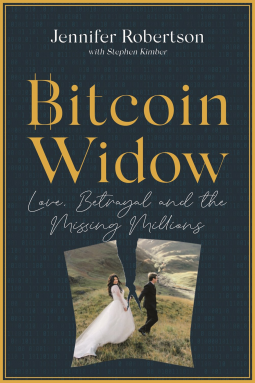
Bitcoin Widow: Love, Betrayal and the Missing Millions
She met the man of her dreams and suddenly had it all. Then, in one fateful night, she lost everything, and the nightmare began
Jennifer Robertson was working hard to build a life for herself from the ashes of her first marriage. Still only twenty-six, she swiped right on a dating app and met Gerry Cotten, a man she would not normally have considered—too young and not her type—but found she’d met her match. Eccentric but funny and kind, Cotten turned out to be a bitcoin wizard who quickly amassed substantial wealth through his company, Quadriga. The couple travelled the world, first-class all the way, while Cotten worked on his multitude of encrypted laptops.
Then, while the couple was on their honeymoon in India, opening an orphanage in their name, Gerry fell ill and died in a matter of hours. Jennifer was consumed by grief and guilt, but that was only the beginning. It turned out that Gerry owed $250 million to Quadriga customers, and all the passwords to his encrypted virtual vaults, hidden on his many laptops, had died with him. Jennifer was left with more than one hundred thousand investors looking for their money, and questions, suspicions and accusations spiralling dangerously out of control.
The Quadriga scandal touched off major investment and criminal investigations, not to mention Internet rumours circulating on dark message boards, including claims that Gerry had faked his own death and that his wife was the real mastermind behind a sophisticated sting operation. While Jennifer waited for a dead man’s switch e-mail that would probably never come, it became clear that Cotten had gambled away about $100 million of the funds entrusted to him for investment in his many schemes, leaving Robertson holding the bag.
Bitcoin Widow is Catch Me If You Can meeting a widow betrayed, a life of fairy-tale romance and private jets torched by duplicity, as Jennifer Robertson tries to reset her life in the wake of one of the biggest investments scandals of the digital age.
Jennifer Robertson was working hard to build a life for herself from the ashes of her first marriage. Still only twenty-six, she swiped right on a dating app and met Gerry Cotten, a man she would not normally have considered—too young and not her type—but found she’d met her match. Eccentric but funny and kind, Cotten turned out to be a bitcoin wizard who quickly amassed substantial wealth through his company, Quadriga. The couple travelled the world, first-class all the way, while Cotten worked on his multitude of encrypted laptops.
Then, while the couple was on their honeymoon in India, opening an orphanage in their name, Gerry fell ill and died in a matter of hours. Jennifer was consumed by grief and guilt, but that was only the beginning. It turned out that Gerry owed $250 million to Quadriga customers, and all the passwords to his encrypted virtual vaults, hidden on his many laptops, had died with him. Jennifer was left with more than one hundred thousand investors looking for their money, and questions, suspicions and accusations spiralling dangerously out of control.
The Quadriga scandal touched off major investment and criminal investigations, not to mention Internet rumours circulating on dark message boards, including claims that Gerry had faked his own death and that his wife was the real mastermind behind a sophisticated sting operation. While Jennifer waited for a dead man’s switch e-mail that would probably never come, it became clear that Cotten had gambled away about $100 million of the funds entrusted to him for investment in his many schemes, leaving Robertson holding the bag.
Bitcoin Widow is Catch Me If You Can meeting a widow betrayed, a life of fairy-tale romance and private jets torched by duplicity, as Jennifer Robertson tries to reset her life in the wake of one of the biggest investments scandals of the digital age.
352 pages, Paperback
First published January 18, 2022
Ratings & Reviews
Friends & Following
Create a free account to discover what your friends think of this book!
Community Reviews
Displaying 1 - 30 of 121 reviews

April 24, 2022
Netflix’s Trust No One The Hunt for the Crypto King Brought Me Here!
Backstory
There once was a young Canadian man by the name of Gerry Cotten. He owned a website where people could buy and sell bitcoin in Canada. His company was called Quadriga CX. In 2018, people started to report that they were having difficulty getting paid for the bitcoin that they sold on Quadriga’s website. In early January 2019, Jennifer Robertson, Gerry’s wife announced that Gerry had died while in India. She also delivered devastating news: Gerry died with all of the passcodes so everyone who put in money or who had bitcoin with Quadriga was out of luck, approximately $190 million.
Further investigation showed that Gerry had started Quadriga with a person by the name of Omar Dhanani who was convicted on identity theft charges.
At some point the Canadian authorities became involved. They discovered that Gerry was actually involved in a scheme where he was using his customers’ funds to invest in highly speculative investments. He lost their money, and that was the reason that he could not pay the funds owed to people in 2018.
Now, the question is: Is Gerry Cotten really dead?
He goes on vacation immediately when his scheme is crashing down, and he clearly knows at least one person who was involved in identity theft. There are surgeries that can defeat facial recognition. If you remember The Tinder Swindler (also on Netflix), the scammer tried to obtain this surgery, and the plastic surgery denied him because “only criminals want that type of surgery.”
He lost $150 million in his scheme, but the last time I checked $190 million less $150 million equals $40 million which is still a lot of money. Oh and did I mention that he executed a will just 12 days before his “death”?
Did Gerry run off with $40 million and a new identity as his scheme was crumbling down around him?
Let’s go my armchair detectives!
The “Death”
According to Jennifer Robertson, the wife of Gerry Cotten, Gerry passed away on December 9, 2018 while on a trip to India. His cause of death was related to Crohn’s Disease.
In the book, Jennifer Robertson states that they stayed at the Oberoi Rajvilas, a five-star luxury hotel. According to my internet sleuthing, there is a 24-hour doctor on call.
However, instead of calling on the hotel doctor, Jennifer calls up the front desk asking for the best hospital and an ambulance after Gerry complained of stomach pain.
After the hotel placed Gerry in a golf cart and then the hotel’s SUV, he was admitted to the hospital and welcomed into a private room. The initial diagnosis was food poisoning. An IV was started, and additional medications were administered.
The next day, Gerry took a turn for the worst. Gerry went into cardiac arrest and had two smaller “episodes”. Then, his heart failed at 7:26 pm on December 9, 2018. His official cause of death was listed as “sudden cardiac arrest” with a final diagnosis of “Septic Shock/Peritonitis/Intestinal Obstruction.”
What Points to Gerry Cotten Being Alive
Gerry had motive, means, and opportunity to fake his own death.
As far as motive, Gerry’s financial scheme was falling apart. He was going to lose everything and go to jail. Gerry was even behind on the rental payments at the airfield where he stored his private plane. Additionally, Gerry had several safes in his home. Both of which were empty.
Gerry mentioned possibly moving to Malta and obtaining a European passport. Additionally, Gerry’s former business partner was involved in an online identity theft ring.
Gerry very conveniently executed his will 12 days before his “death.”
Someone on the Netflix documentary stated that Gerry’s Skype camera was in use after his death.
Gerry had a closed-casket funeral, and his death certificate has his name misspelled. According to the Netflix documentary, it is possible to obtain a fake death certificate.
The first embalmer refused to undertake the task because the hotel staff transported the body and couldn’t provide all of the information she wanted to know in advance. What a full-service hotel!
What Points to Gerry Cotten Being Dead
Although some of the safes were found empty, additional monies were recovered from other safes including $75,000.
According to the Netflix documentary, an investigative reporter flew to India and spoke to the doctor who worked on Gerry Cotten. He confirmed the death.
I spoke to one of my sources, someone who has Crohn’s Disease and is also a registered nurse.
“Can you really die of sepsis if you are in a hospital, and they immediately push antibiotics?”
“People die of sepsis despite multiple antibiotics all the time. I see it frequently in the ICU where I work. And having a perforated bowel can absolutely cause severe septic shock that can lead to death.”
“Yes, that stuff is plausible. Especially with how people can get weird intestinal bacteria when they travel, bacteria their immune system hasn’t developed antibodies for. People with Crohn’s are at higher risk for perforation if they’ve had flair ups.”
Alcohol and stress can also cause Crohn’s flair ups. Gerry Cotten has drinking, in a foreign country, highly stressed as his scheme was falling apart, and he had a history of previous flair ups.
After Jerry died, Jennifer had to decide whether to file for creditor protection or bankruptcy. Because she believed that it was only a matter of time before the funds were located, she decided to file for creditor protection. She lent $490,000 to Quadriga from her personal accounts and was never reimbursed.
Jennifer Robertson did not walk away with millions. She was left with only $90,000, a $20,000 retirement account, her Jeep, and some personal effects (not even her wedding ring). Gerry did not leave a life insurance policy.
Conclusion
Listen, I love a good conspiracy theory more than John Munch of Law and Order SVU, but Gerry Cotten is dead. He had a history of Crohn’s Disease, and he had the perfect storm of circumstances to lead to a flair up. Jen is living with her parents and staying up all night to teach English as a second language. This doesn't correspond with secretly having millions of dollars.
Many investors are still suffering though, and they deserve some peace with an exhumation. But let’s not forget that Jennifer Robertson is a real person with feelings, someone who lost her husband, and lost her home.
This book was awesome! It was extremely interesting, changed my mind about the case, and the ghost writer made this read like a dream (hat’s off to Stephen Kimber!). Bitcoin Widow was really well done.
2024 Reading Schedule
Jan Middlemarch
Feb The Grapes of Wrath
Mar Oliver Twist
Apr Madame Bovary
May A Clockwork Orange
Jun Possession
Jul The Folk of the Faraway Tree Collection
Aug Crime and Punishment
Sep Heart of Darkness
Oct Moby-Dick
Nov Far From the Madding Crowd
Dec A Tale of Two Cities
Connect With Me!
Blog Twitter BookTube Facebook Insta
Backstory
There once was a young Canadian man by the name of Gerry Cotten. He owned a website where people could buy and sell bitcoin in Canada. His company was called Quadriga CX. In 2018, people started to report that they were having difficulty getting paid for the bitcoin that they sold on Quadriga’s website. In early January 2019, Jennifer Robertson, Gerry’s wife announced that Gerry had died while in India. She also delivered devastating news: Gerry died with all of the passcodes so everyone who put in money or who had bitcoin with Quadriga was out of luck, approximately $190 million.
Further investigation showed that Gerry had started Quadriga with a person by the name of Omar Dhanani who was convicted on identity theft charges.
At some point the Canadian authorities became involved. They discovered that Gerry was actually involved in a scheme where he was using his customers’ funds to invest in highly speculative investments. He lost their money, and that was the reason that he could not pay the funds owed to people in 2018.
Now, the question is: Is Gerry Cotten really dead?
He goes on vacation immediately when his scheme is crashing down, and he clearly knows at least one person who was involved in identity theft. There are surgeries that can defeat facial recognition. If you remember The Tinder Swindler (also on Netflix), the scammer tried to obtain this surgery, and the plastic surgery denied him because “only criminals want that type of surgery.”
He lost $150 million in his scheme, but the last time I checked $190 million less $150 million equals $40 million which is still a lot of money. Oh and did I mention that he executed a will just 12 days before his “death”?
Did Gerry run off with $40 million and a new identity as his scheme was crumbling down around him?
Let’s go my armchair detectives!
The “Death”
According to Jennifer Robertson, the wife of Gerry Cotten, Gerry passed away on December 9, 2018 while on a trip to India. His cause of death was related to Crohn’s Disease.
In the book, Jennifer Robertson states that they stayed at the Oberoi Rajvilas, a five-star luxury hotel. According to my internet sleuthing, there is a 24-hour doctor on call.
However, instead of calling on the hotel doctor, Jennifer calls up the front desk asking for the best hospital and an ambulance after Gerry complained of stomach pain.
After the hotel placed Gerry in a golf cart and then the hotel’s SUV, he was admitted to the hospital and welcomed into a private room. The initial diagnosis was food poisoning. An IV was started, and additional medications were administered.
The next day, Gerry took a turn for the worst. Gerry went into cardiac arrest and had two smaller “episodes”. Then, his heart failed at 7:26 pm on December 9, 2018. His official cause of death was listed as “sudden cardiac arrest” with a final diagnosis of “Septic Shock/Peritonitis/Intestinal Obstruction.”
What Points to Gerry Cotten Being Alive
Gerry had motive, means, and opportunity to fake his own death.
As far as motive, Gerry’s financial scheme was falling apart. He was going to lose everything and go to jail. Gerry was even behind on the rental payments at the airfield where he stored his private plane. Additionally, Gerry had several safes in his home. Both of which were empty.
Gerry mentioned possibly moving to Malta and obtaining a European passport. Additionally, Gerry’s former business partner was involved in an online identity theft ring.
Gerry very conveniently executed his will 12 days before his “death.”
Someone on the Netflix documentary stated that Gerry’s Skype camera was in use after his death.
Gerry had a closed-casket funeral, and his death certificate has his name misspelled. According to the Netflix documentary, it is possible to obtain a fake death certificate.
The first embalmer refused to undertake the task because the hotel staff transported the body and couldn’t provide all of the information she wanted to know in advance. What a full-service hotel!
What Points to Gerry Cotten Being Dead
Although some of the safes were found empty, additional monies were recovered from other safes including $75,000.
According to the Netflix documentary, an investigative reporter flew to India and spoke to the doctor who worked on Gerry Cotten. He confirmed the death.
I spoke to one of my sources, someone who has Crohn’s Disease and is also a registered nurse.
“Can you really die of sepsis if you are in a hospital, and they immediately push antibiotics?”
“People die of sepsis despite multiple antibiotics all the time. I see it frequently in the ICU where I work. And having a perforated bowel can absolutely cause severe septic shock that can lead to death.”
“Yes, that stuff is plausible. Especially with how people can get weird intestinal bacteria when they travel, bacteria their immune system hasn’t developed antibodies for. People with Crohn’s are at higher risk for perforation if they’ve had flair ups.”
Alcohol and stress can also cause Crohn’s flair ups. Gerry Cotten has drinking, in a foreign country, highly stressed as his scheme was falling apart, and he had a history of previous flair ups.
After Jerry died, Jennifer had to decide whether to file for creditor protection or bankruptcy. Because she believed that it was only a matter of time before the funds were located, she decided to file for creditor protection. She lent $490,000 to Quadriga from her personal accounts and was never reimbursed.
Jennifer Robertson did not walk away with millions. She was left with only $90,000, a $20,000 retirement account, her Jeep, and some personal effects (not even her wedding ring). Gerry did not leave a life insurance policy.
Conclusion
Listen, I love a good conspiracy theory more than John Munch of Law and Order SVU, but Gerry Cotten is dead. He had a history of Crohn’s Disease, and he had the perfect storm of circumstances to lead to a flair up. Jen is living with her parents and staying up all night to teach English as a second language. This doesn't correspond with secretly having millions of dollars.
Many investors are still suffering though, and they deserve some peace with an exhumation. But let’s not forget that Jennifer Robertson is a real person with feelings, someone who lost her husband, and lost her home.
This book was awesome! It was extremely interesting, changed my mind about the case, and the ghost writer made this read like a dream (hat’s off to Stephen Kimber!). Bitcoin Widow was really well done.
2024 Reading Schedule
Jan Middlemarch
Feb The Grapes of Wrath
Mar Oliver Twist
Apr Madame Bovary
May A Clockwork Orange
Jun Possession
Jul The Folk of the Faraway Tree Collection
Aug Crime and Punishment
Sep Heart of Darkness
Oct Moby-Dick
Nov Far From the Madding Crowd
Dec A Tale of Two Cities
Connect With Me!
Blog Twitter BookTube Facebook Insta

December 23, 2021
Jennifer Robertson is the widow of Gerald Cotten, the serial scammer who founded the QuadrigaCX crypto exchange and stole between CAD$190 million and CAD$250 million of his customers’ money. I obtained — was *not* given promotionally — a draft proofreading copy of her autobiography. The book is out in January 2022. I don’t recommend it.
It’s utterly unclear to me why this book exists. It’s 334 pages of Robertson justifying herself. But the money’s gone, and it’s not coming back. Jennifer was allowed only her wedding ring, her car and some personal effects and has to work a normal job now. There’s no litigation in motion. The Quadriga trails are all cold. Why did Robertson think this was a good idea?
Robertson is not interesting. Nobody will pick up this book for any reason other than the collapse of Quadriga — but there’s nothing here that will change your mind about Quadriga or its collapse.
Jennifer meets Bitcoin entrepreneur Gerry Cotten on Tinder, a year after he and his friend Michael Patryn started a Bitcoin exchange called Quadriga Coin Exchange, or QuadrigaCX. Jennifer likes Gerry and moves in with him. Gerry pays for everything with his Bitcoin money.
We get Robertson’s sense of Cotten — a standoffish opinionated nerd, who doesn’t like people much, but is very charming and much loved when he does get out and meet people. Cotten encrypts everything; Robertson doesn’t understand the technical details.
“So the truth is, I didn’t know all that much about Gerry or his business.” Well, so much for the one reason we’re reading this. Robertson stresses repeatedly how she didn’t know so many things.
Quadriga can’t get real banking because it’s dodgy as hell — I mean, because banks don’t understand Bitcoin. Robertson establishes Robertson Nova Consulting to be one of Quadriga’s “payment processors” — let none say “money mule.” She also helps Cotten mail envelopes full of cash to customers — in the manner of absolutely zero reputable financial businesses, but quite a lot of criminal enterprises. “Should I have asked more questions?” Robertson asks.
Robertson lets Cotten run everything in their financial lives. “‘Here,’ I said to him at some point. ‘Here are the passwords to my accounts. You take over.’”
Cotten and Patryn fail to list Quadriga on the public stock markets in 2015. They split in 2016, and Cotten runs the exchange all by himself.
(Robertson finds out in 2019, when Quadriga has collapsed, that Patryn and his partner Lovie Horner together still owned more of Quadriga than Cotten did. Robertson has still never met Patryn face to face.)
Robertson and Cotten travel the world. Cotten wins $900,000 in online gambling, supposedly, and puts it into Robertson Nova Property Management, so Robertson can buy houses to rent out. She emphasises how she was a nice landlord, not like those nasty landlords.
Everything’s going swimmingly, they’re travelling the world and spending money like water. But CIBC freezes $28 million of Quadriga money in early 2018, and Cotten is stressed. Bitcoin is crashing, and the customers want their money back.
Cotten gets more stressed, and sicker and sicker from Crohn’s disease. Robertson and Cotten go to India. Cotten dies. A panic ensues as everyone tries to recover Quadriga from Cotten’s locked laptop. After a month of Cotten being dead and Quadriga not giving anyone their money or cryptos, Robertson finally admits publicly that Cotten has died.
Robertson details all the ridiculously sketchy-looking stuff she did in the month after Cotten’s death, claims her complete innocence in all regards, then calls the doubters who pointed out the sketchiness “conspiracy theorists.”
Crypto journalist Amy Castor gets a mention. I think she’s the only critic of the farrago of nonsense at the time who’s called out by name:
> Amy Castor, a freelance journalist who “focused on cryptocurrencies and financial fraud,” would later add more fuel to this fire when she described me as “moving aggressively to protect her newly acquired assets.”
That was because Robertson was doing literally that thing — putting Cotten’s assets into her own name before the court had been called in. I’d call that relevant to the public interest, given Cotten’s exchange had just collapsed with a $200 million hole in the accounts. Robertson doesn’t seem to think so.
In fact, the quote is from a blog post by Castor about one of the Ernst & Young CCAA monitor reports — the stage before bankruptcy — referencing a story in the Halifax Chronicle-Herald about how Robertson “took her deceased husband’s name from the ownership of the four properties, worth a combined $1.1 million, then took out collateral mortgages on all four in favour of a trust of which she is a trustee, and finally transferred ownership of at least two of those properties to that trust.” But Robertson goes after the blogger for talking about it.
The doubters turn out to be correct — Quadriga was a scam all the way down. Cotten was a serial fraudster, who had joined with Patryn to run Ponzi schemes from age 15. He lied to Robertson, a whole lot, about everything to do with Quadriga and his entire personal business history. The stress of the Quadriga bankruptcy drives Robertson to the point of attempting suicide.
Robertson comes across as deeply incurious — but only about the tricky details. She paints herself as very interested in everything in the world — except the details of her life partner, or of the business he runs that she participates in and they live off. That bit, she just trusted him on.
There’s a known phenomenon of confidence tricksters who completely fool their partners, often leaving their partner as the patsy for their crimes. I don’t know if that was one of Cotten’s contingency plans, but that sort of relationship would help explain Robertson’s ridiculous incuriosity.
Robertson comes across to me more as a fool than a co-conspirator, so I guess the book did its job. I’m assuming that no checkable statement of fact in the book is a lie — ’cos you can bet the aggrieved creditors will be going over it with a fine-toothed comb. Robertson is much more upset about journalists questioning her bona fides than she seems about the 76,000 people her husband ripped off.
I wonder about things the book doesn’t mention. I’m thinking of the famous photo of the stovetop with uncashed banker’s drafts on it — Quadriga customers sent Cotten money, and he didn’t even bother cashing it in for two years. As if the retail exchange was just a façade, and the real business was to launder cryptos out — like a car wash with massive turnover, but no visible customers.
Cotten supposedly took bitcoins from Quadriga and used them to trade altcoins on other exchanges. Were Cotten’s altcoin gambling losses really him laundering bitcoins out for his real customers? Quadriga is known to have been used to cash in dirty bitcoins. That stovetop is something I’d really like to ask Robertson about.
The book fills in some details — though not nearly enough — of the Quadriga story. But I don’t trust this narrator’s reliability.
If you want a quick introductory summary of the story of QuadrigaCX, read the Vanity Fair article and the Ontario Securities Commission report— and not this book.
If you’ve been closely following the saga of QuadrigaCX since the exchange’s collapse, I suppose this is a document you should read. I thought I was that interested in Quadriga, but perhaps I’m not.
It’s utterly unclear to me why this book exists. It’s 334 pages of Robertson justifying herself. But the money’s gone, and it’s not coming back. Jennifer was allowed only her wedding ring, her car and some personal effects and has to work a normal job now. There’s no litigation in motion. The Quadriga trails are all cold. Why did Robertson think this was a good idea?
Robertson is not interesting. Nobody will pick up this book for any reason other than the collapse of Quadriga — but there’s nothing here that will change your mind about Quadriga or its collapse.
Jennifer meets Bitcoin entrepreneur Gerry Cotten on Tinder, a year after he and his friend Michael Patryn started a Bitcoin exchange called Quadriga Coin Exchange, or QuadrigaCX. Jennifer likes Gerry and moves in with him. Gerry pays for everything with his Bitcoin money.
We get Robertson’s sense of Cotten — a standoffish opinionated nerd, who doesn’t like people much, but is very charming and much loved when he does get out and meet people. Cotten encrypts everything; Robertson doesn’t understand the technical details.
“So the truth is, I didn’t know all that much about Gerry or his business.” Well, so much for the one reason we’re reading this. Robertson stresses repeatedly how she didn’t know so many things.
Quadriga can’t get real banking because it’s dodgy as hell — I mean, because banks don’t understand Bitcoin. Robertson establishes Robertson Nova Consulting to be one of Quadriga’s “payment processors” — let none say “money mule.” She also helps Cotten mail envelopes full of cash to customers — in the manner of absolutely zero reputable financial businesses, but quite a lot of criminal enterprises. “Should I have asked more questions?” Robertson asks.
Robertson lets Cotten run everything in their financial lives. “‘Here,’ I said to him at some point. ‘Here are the passwords to my accounts. You take over.’”
Cotten and Patryn fail to list Quadriga on the public stock markets in 2015. They split in 2016, and Cotten runs the exchange all by himself.
(Robertson finds out in 2019, when Quadriga has collapsed, that Patryn and his partner Lovie Horner together still owned more of Quadriga than Cotten did. Robertson has still never met Patryn face to face.)
Robertson and Cotten travel the world. Cotten wins $900,000 in online gambling, supposedly, and puts it into Robertson Nova Property Management, so Robertson can buy houses to rent out. She emphasises how she was a nice landlord, not like those nasty landlords.
Everything’s going swimmingly, they’re travelling the world and spending money like water. But CIBC freezes $28 million of Quadriga money in early 2018, and Cotten is stressed. Bitcoin is crashing, and the customers want their money back.
Cotten gets more stressed, and sicker and sicker from Crohn’s disease. Robertson and Cotten go to India. Cotten dies. A panic ensues as everyone tries to recover Quadriga from Cotten’s locked laptop. After a month of Cotten being dead and Quadriga not giving anyone their money or cryptos, Robertson finally admits publicly that Cotten has died.
Robertson details all the ridiculously sketchy-looking stuff she did in the month after Cotten’s death, claims her complete innocence in all regards, then calls the doubters who pointed out the sketchiness “conspiracy theorists.”
Crypto journalist Amy Castor gets a mention. I think she’s the only critic of the farrago of nonsense at the time who’s called out by name:
> Amy Castor, a freelance journalist who “focused on cryptocurrencies and financial fraud,” would later add more fuel to this fire when she described me as “moving aggressively to protect her newly acquired assets.”
That was because Robertson was doing literally that thing — putting Cotten’s assets into her own name before the court had been called in. I’d call that relevant to the public interest, given Cotten’s exchange had just collapsed with a $200 million hole in the accounts. Robertson doesn’t seem to think so.
In fact, the quote is from a blog post by Castor about one of the Ernst & Young CCAA monitor reports — the stage before bankruptcy — referencing a story in the Halifax Chronicle-Herald about how Robertson “took her deceased husband’s name from the ownership of the four properties, worth a combined $1.1 million, then took out collateral mortgages on all four in favour of a trust of which she is a trustee, and finally transferred ownership of at least two of those properties to that trust.” But Robertson goes after the blogger for talking about it.
The doubters turn out to be correct — Quadriga was a scam all the way down. Cotten was a serial fraudster, who had joined with Patryn to run Ponzi schemes from age 15. He lied to Robertson, a whole lot, about everything to do with Quadriga and his entire personal business history. The stress of the Quadriga bankruptcy drives Robertson to the point of attempting suicide.
Robertson comes across as deeply incurious — but only about the tricky details. She paints herself as very interested in everything in the world — except the details of her life partner, or of the business he runs that she participates in and they live off. That bit, she just trusted him on.
There’s a known phenomenon of confidence tricksters who completely fool their partners, often leaving their partner as the patsy for their crimes. I don’t know if that was one of Cotten’s contingency plans, but that sort of relationship would help explain Robertson’s ridiculous incuriosity.
Robertson comes across to me more as a fool than a co-conspirator, so I guess the book did its job. I’m assuming that no checkable statement of fact in the book is a lie — ’cos you can bet the aggrieved creditors will be going over it with a fine-toothed comb. Robertson is much more upset about journalists questioning her bona fides than she seems about the 76,000 people her husband ripped off.
I wonder about things the book doesn’t mention. I’m thinking of the famous photo of the stovetop with uncashed banker’s drafts on it — Quadriga customers sent Cotten money, and he didn’t even bother cashing it in for two years. As if the retail exchange was just a façade, and the real business was to launder cryptos out — like a car wash with massive turnover, but no visible customers.
Cotten supposedly took bitcoins from Quadriga and used them to trade altcoins on other exchanges. Were Cotten’s altcoin gambling losses really him laundering bitcoins out for his real customers? Quadriga is known to have been used to cash in dirty bitcoins. That stovetop is something I’d really like to ask Robertson about.
The book fills in some details — though not nearly enough — of the Quadriga story. But I don’t trust this narrator’s reliability.
If you want a quick introductory summary of the story of QuadrigaCX, read the Vanity Fair article and the Ontario Securities Commission report— and not this book.
If you’ve been closely following the saga of QuadrigaCX since the exchange’s collapse, I suppose this is a document you should read. I thought I was that interested in Quadriga, but perhaps I’m not.
December 23, 2021
In January 2019, QuadrigaCX, the largest cryptocurrency exchange in Canada, went belly up after its founder, Gerald Cotten, died under bizarre circumstances in India. Roughly $200 million (Canadian) in customer funds disappeared along with him.
Investigations revealed that Cotten had been running Quadriga like a Ponzi, treating customer deposits like his own personal slush fund. The timing of his death was peculiar, as the clock was ticking on his Ponzi. Cotten was struggling to keep up with customer withdrawals. Instead of getting caught and going to jail, he died and went to heaven. Although some still think he faked his demise.
Six months prior to his death, Cotten wed Jennifer Robertson, a woman he met four years earlier. A month before he died, he signed a detailed will leaving everything to her. When Quadriga’s customers realized they had been duped, they had questions — lots of questions — and some of those question were directed at Robertson, the person closest to Cotten when he passed.
During Quadriga’s bankruptcy hearings, Robertson refused interviews with the press. Little was known about her. Now she has a book: “Bitcoin Widow: Love, Betrayal and the Missing Millions.” The 330-page memoir comes out January 18 and is available for pre-order on Amazon. HarperCollins is the publisher.
Robertson did not pen the memoir alone. She enlisted the help of Canadian journalist Stephen Kimber. Kimber actually did a pretty good job piecing all of this together, but despite his professionalism, the book is still a slog. I don’t recommend it.
Robertson lacks the depth and introspection you might expect from someone who was “betrayed.” She also lacks empathy. The book is mostly about her feeling wronged by the press — e.g. me. She treats the 76,000 Quadriga customers who Cotten hurt only as an afterthought.
Here is what she wants us to believe: She wants us to believe that Cotten is really dead. (Jilted investors at one point wanted his body exhumed to prove this wasn’t a massive exit scam.) She wants us to believe she truly loved Cotton, who she describes as her “soul mate.” She also wants us to believe she had no inkling of the massive fraud her partner was committing — and she was benefiting from.
“The possibility that Gerry had committed fraud never even crossed my mind,” she writes.
The book contains mostly what we already know from court documents and investigations. It also includes details most readers could probably care less about like she lost her virginity in tenth grade, her mother worked at a post office, and she is obsessed with the number eight. Coincidentally, the first chapter opens on December 8, 2018.
On that day, Robertson and Cotten are on their honeymoon in Jaipur, India. After they check into the opulent Oberoi Rajvilas hotel for $800 (Canadian) a night, Cotten, age 30, who was diagnosed with Crohn’s before the pair met, has come down with a horrendous belly ache.
All told, 2018 was a bad year for Quadriga. It was the year the wheels started coming off. In January, the Canadian Imperial Bank of Commerce (CIBC) froze $30 million (Canadian) in Quadriga funds. On top of that, as the price of bitcoin plummeted that year, more and more people were exiting their positions and trying to get their cash off the exchange. Little did they know, there was hardly any cash left.
Robertson gets Cotten into the upscale Fortis hospital where his condition worsens. The following day, he goes into cardiac arrest twice and dies. She is with him through the entire event and is tasked with getting his body back to Halifax, where they were living before things fell apart. A closed-casket funeral is held and Cotten’s body is put into the frozen earth. His body was severely swollen, too swollen for a public viewing, Robinson says.
The book jumps back and forth in time as Robertson relives the trauma of losing the alleged love of her life. I have to admit, it is difficult picturing Cotten as a catch outside of all of his money, as charming as many people said he was. Looking at Youtube videos he posted, he appears immature. In one, he is holding his brother Brad upside-down in 2012. “Have you ever tried drinking water upside down?” Brad says, the two of them in fits of giggles. This is the man child Robertson supposedly fell in love with.
Anyway, as Robertson recounts her life, she takes us through her on-again off-again relationship with Jacob Forgeron, who she met in 10th grade and later married. The marriage ends in divorce, and soon after, she meets Cotten on Tinder, a popular dating app. They are both 26.
Cotten founded Quadriga in late 2013 with business partner Michael Patryn, who turns out to be ex-con Omar Dhanani, who spent 18 months behind bars in the US, before being sent back to Canada. Robinson claims she never actually met Patryn and had no notion of his shady past — or that Cotten and Patryn went way back.
“Even though they were business partners at Quadriga, for instance, I never met Michael Patryn face to face, or anyone else connected to the company that was at the centre of Gerry’s work life,” she writes.
The entire book is like this — Robertson presenting shocking facts about Cotten and Quadriga and her putting a spit and shine on it to polish up her reputation. Essentially, she denies knowing anything about the inner workings of the business. The book title should have been: “I Know Nothing!”
Cotten and Robertson lived together starting in May 2015. They already had their pet name, calling each other “Booboo.” Up until that time, she made her living mainly as a bartender and waiting tables.
Quadriga could not get banking — banks don’t like dealing with crypto companies due to the high risk of money laundering. To get around that, Robertson describes how Cotten hired freelancers and had them set up bank accounts, so they could process funds on behalf of Quadriga.
She herself set up Robertson Consulting Nova to process money for Cotten. “Gerry would deposit money destined for clients into my corporate account and then send me lists of their names and email addresses and the amount I was to send each of them. I’d either send the funds by wire or e-transfer.”
Robertson earned an extra $1,000 (Canadian) a month this way — but oddly, it didn’t seem to trigger any alarm bells for her. She stopped processing payments, she said, after they moved from Toronto to Halifax, where they bought their first home together in 2016.
By then Quadriga was using “commercial payment processors” — her term for shadow banks that basically set up a network of bank accounts to funnel money to and from Quadriga customers. She said she knew nothing of Quadriga’s clients beyond what she needed to know to send them money.
Cash is another way to get around banks and Cotten dealt with lots of it. “Gerry continued to deal in cash over all the time we were together, but the piles grew bigger and bigger,” Robinson said.
Cotten was doing business with Adam O’Brien who ran a Bitcoin ATM company in Canada. Cotten supplied O’Brien with crypto, and O’Brien, in turn, brought Cotten suitcases full of bills from the sale of bitcoin — $20 million (Canadian) in total, enough to raise most people’s eyebrows, but not Robertson’s.
“I understood from Gerry that cryptocurrency was still new, so old-school, conventional bankers were often suspicious of it. That was one reason why Gerry said he worked so hard to verify the bona fides of his customers.”
The bona fides of his customers? Bitcoin ATMs are essentially nothing more than street corner money laundering machines. They charge high transaction fees, which criminals don’t mind paying for the simple reason that bitcoin ATMs generally don’t require identity checks up to certain amounts, particularly in Canada, up until recently.
When Robertson was searching for new employment, Gerry suggested they take up their newfound wealth and invest in real estate. Robertson setup Robertson Nova, her residential property management company (not to be confused with her payment processing business), and started buying up real estate. Eventually, the pair owned 16 rental properties to the tune of $7.5 million (Canadian). Robertson brought in her stepfather Tom Beazley to help manage the properties and got herself a personal assistant named Tanya Reid, who would also drink beer with her and listen to her woes when needed.
Apparently, Beazley and Reid were doing most of the heavy lifting for Robertson’s company — which she called a “financial success.” Reid also became the couple’s errand girl. “In the end, Tanya became a primary personal assistant for Gerry, picking up laundry and running errands, while Gerry continued to run the business as he always had — alone, from inside his laptop.”
Robertson tells us she didn’t care about the money. However, she clearly didn’t mind spending it either. The book details countless vacations she took with Cotten — a cruise around South Africa, a wedding celebration in a castle in Scotland for the extended family, a mini-honeymoon in Amsterdam, another cruise around Australia, and on and on. They couple bought a yacht, a small island, a vacation home, and chartered a private plane. The entire relationship was one big vacation.
It’s a wonder that Cotten, who ran Quadriga as a one-man show from his laptop after 2016 when Patryn supposedly stepped away, got any real work done at all. Actually, we now know he wasn’t actually working so much as spending and gambling away other people’s money.
It is also a wonder that Robertson, who talks at length about her curiosity for the world, had no curiosity whatsoever about Cotten’s business or the piles of cash coming in and going out of their home. At one point, she describes delivering an envelope of cash to one of Quadriga’s customers herself.
After Cotten died, Robertson’s fantasy world came apart at the seams, and she was hounded by journalists. She was shocked and offended by the innuendo and suspicions. I’m the only journalist she specifically calls out in the book by name: “Amy Castor, a freelance journalist, who ‘focuses on cryptocurrencies and financial fraud,’ would later add more fuel to this fire when she described me as ‘moving aggressively to protect her newly acquired assets.’”
That statement was absolutely true, by the way. Even before the accountants, courts and lawyers moved in to clean up the mess that was Quadriga, Robertson was moving property into her own name to protect it from creditors. In the end, however, she had to hand over nearly everything to Ernst and Young, the court appointed monitor and bankruptcy trustee. Initially, she proposed to keep $5 million (Canadian) — money that never would have ended up in her name had Cotten not stolen millions from his customers.
She also wanted to keep her engagement band, worth $80,000 (Canadian). Here is her reasoning for finally opting to give it up without a fight: “In practical terms, selling it would put the smallest of dents in the huge losses [Quadriga investors] already suffered. But symbolically, taking that ring off my finger offered a small measure of vengeance for all that Gerry had done to harm them.”
What Robinson doesn’t seem to understand is that none of this money was hers to begin with. In the end, she was allowed to keep her wedding band, $90,000 (Canadian) in cash, her $20,000 (Canadian) retirement fund, her Jeep Cherokee, and some other personal belongings.
She mourned dead Gerry by writing to him: “Oh, sweetheart, I only now understand just how much stress you were under . . . I am so sorry. This must have been awful for you.” It’s a shame she never wrote any such heartfelt letters to Quadriga customers. At least one of whom lost his entire life savings.
At one point, during the court proceedings that followed Quadriga’s shuttering, Robertson went to Aruba to escape the pressure and tried to commit suicide by swallowing too many Ativan. She managed to save herself by calling an ambulance. This is the first I had heard of her suicide attempt.
Robertson is now moving on with her life. She moved into a cabin owned by her family, taught English online for a bit, and went back to school. She had two relationships after Cotten, and neither of them ended well because she “still had feelings for Gerry.” I’ve heard from a source that she is now in yet another relationship and is heavily pregnant. Cotten has been dead for three years now.
If you have been following the Quadriga saga, you won’t find much new in “Bitcoin Widow.” Robertson is a hard person to feel sympathy for. She is getting on with her life, sure, but there are still 76,000 Quadriga customers waiting for the bankruptcy courts to return a fraction of their losses. They are struggling to get on with their lives too.
Investigations revealed that Cotten had been running Quadriga like a Ponzi, treating customer deposits like his own personal slush fund. The timing of his death was peculiar, as the clock was ticking on his Ponzi. Cotten was struggling to keep up with customer withdrawals. Instead of getting caught and going to jail, he died and went to heaven. Although some still think he faked his demise.
Six months prior to his death, Cotten wed Jennifer Robertson, a woman he met four years earlier. A month before he died, he signed a detailed will leaving everything to her. When Quadriga’s customers realized they had been duped, they had questions — lots of questions — and some of those question were directed at Robertson, the person closest to Cotten when he passed.
During Quadriga’s bankruptcy hearings, Robertson refused interviews with the press. Little was known about her. Now she has a book: “Bitcoin Widow: Love, Betrayal and the Missing Millions.” The 330-page memoir comes out January 18 and is available for pre-order on Amazon. HarperCollins is the publisher.
Robertson did not pen the memoir alone. She enlisted the help of Canadian journalist Stephen Kimber. Kimber actually did a pretty good job piecing all of this together, but despite his professionalism, the book is still a slog. I don’t recommend it.
Robertson lacks the depth and introspection you might expect from someone who was “betrayed.” She also lacks empathy. The book is mostly about her feeling wronged by the press — e.g. me. She treats the 76,000 Quadriga customers who Cotten hurt only as an afterthought.
Here is what she wants us to believe: She wants us to believe that Cotten is really dead. (Jilted investors at one point wanted his body exhumed to prove this wasn’t a massive exit scam.) She wants us to believe she truly loved Cotton, who she describes as her “soul mate.” She also wants us to believe she had no inkling of the massive fraud her partner was committing — and she was benefiting from.
“The possibility that Gerry had committed fraud never even crossed my mind,” she writes.
The book contains mostly what we already know from court documents and investigations. It also includes details most readers could probably care less about like she lost her virginity in tenth grade, her mother worked at a post office, and she is obsessed with the number eight. Coincidentally, the first chapter opens on December 8, 2018.
On that day, Robertson and Cotten are on their honeymoon in Jaipur, India. After they check into the opulent Oberoi Rajvilas hotel for $800 (Canadian) a night, Cotten, age 30, who was diagnosed with Crohn’s before the pair met, has come down with a horrendous belly ache.
All told, 2018 was a bad year for Quadriga. It was the year the wheels started coming off. In January, the Canadian Imperial Bank of Commerce (CIBC) froze $30 million (Canadian) in Quadriga funds. On top of that, as the price of bitcoin plummeted that year, more and more people were exiting their positions and trying to get their cash off the exchange. Little did they know, there was hardly any cash left.
Robertson gets Cotten into the upscale Fortis hospital where his condition worsens. The following day, he goes into cardiac arrest twice and dies. She is with him through the entire event and is tasked with getting his body back to Halifax, where they were living before things fell apart. A closed-casket funeral is held and Cotten’s body is put into the frozen earth. His body was severely swollen, too swollen for a public viewing, Robinson says.
The book jumps back and forth in time as Robertson relives the trauma of losing the alleged love of her life. I have to admit, it is difficult picturing Cotten as a catch outside of all of his money, as charming as many people said he was. Looking at Youtube videos he posted, he appears immature. In one, he is holding his brother Brad upside-down in 2012. “Have you ever tried drinking water upside down?” Brad says, the two of them in fits of giggles. This is the man child Robertson supposedly fell in love with.
Anyway, as Robertson recounts her life, she takes us through her on-again off-again relationship with Jacob Forgeron, who she met in 10th grade and later married. The marriage ends in divorce, and soon after, she meets Cotten on Tinder, a popular dating app. They are both 26.
Cotten founded Quadriga in late 2013 with business partner Michael Patryn, who turns out to be ex-con Omar Dhanani, who spent 18 months behind bars in the US, before being sent back to Canada. Robinson claims she never actually met Patryn and had no notion of his shady past — or that Cotten and Patryn went way back.
“Even though they were business partners at Quadriga, for instance, I never met Michael Patryn face to face, or anyone else connected to the company that was at the centre of Gerry’s work life,” she writes.
The entire book is like this — Robertson presenting shocking facts about Cotten and Quadriga and her putting a spit and shine on it to polish up her reputation. Essentially, she denies knowing anything about the inner workings of the business. The book title should have been: “I Know Nothing!”
Cotten and Robertson lived together starting in May 2015. They already had their pet name, calling each other “Booboo.” Up until that time, she made her living mainly as a bartender and waiting tables.
Quadriga could not get banking — banks don’t like dealing with crypto companies due to the high risk of money laundering. To get around that, Robertson describes how Cotten hired freelancers and had them set up bank accounts, so they could process funds on behalf of Quadriga.
She herself set up Robertson Consulting Nova to process money for Cotten. “Gerry would deposit money destined for clients into my corporate account and then send me lists of their names and email addresses and the amount I was to send each of them. I’d either send the funds by wire or e-transfer.”
Robertson earned an extra $1,000 (Canadian) a month this way — but oddly, it didn’t seem to trigger any alarm bells for her. She stopped processing payments, she said, after they moved from Toronto to Halifax, where they bought their first home together in 2016.
By then Quadriga was using “commercial payment processors” — her term for shadow banks that basically set up a network of bank accounts to funnel money to and from Quadriga customers. She said she knew nothing of Quadriga’s clients beyond what she needed to know to send them money.
Cash is another way to get around banks and Cotten dealt with lots of it. “Gerry continued to deal in cash over all the time we were together, but the piles grew bigger and bigger,” Robinson said.
Cotten was doing business with Adam O’Brien who ran a Bitcoin ATM company in Canada. Cotten supplied O’Brien with crypto, and O’Brien, in turn, brought Cotten suitcases full of bills from the sale of bitcoin — $20 million (Canadian) in total, enough to raise most people’s eyebrows, but not Robertson’s.
“I understood from Gerry that cryptocurrency was still new, so old-school, conventional bankers were often suspicious of it. That was one reason why Gerry said he worked so hard to verify the bona fides of his customers.”
The bona fides of his customers? Bitcoin ATMs are essentially nothing more than street corner money laundering machines. They charge high transaction fees, which criminals don’t mind paying for the simple reason that bitcoin ATMs generally don’t require identity checks up to certain amounts, particularly in Canada, up until recently.
When Robertson was searching for new employment, Gerry suggested they take up their newfound wealth and invest in real estate. Robertson setup Robertson Nova, her residential property management company (not to be confused with her payment processing business), and started buying up real estate. Eventually, the pair owned 16 rental properties to the tune of $7.5 million (Canadian). Robertson brought in her stepfather Tom Beazley to help manage the properties and got herself a personal assistant named Tanya Reid, who would also drink beer with her and listen to her woes when needed.
Apparently, Beazley and Reid were doing most of the heavy lifting for Robertson’s company — which she called a “financial success.” Reid also became the couple’s errand girl. “In the end, Tanya became a primary personal assistant for Gerry, picking up laundry and running errands, while Gerry continued to run the business as he always had — alone, from inside his laptop.”
Robertson tells us she didn’t care about the money. However, she clearly didn’t mind spending it either. The book details countless vacations she took with Cotten — a cruise around South Africa, a wedding celebration in a castle in Scotland for the extended family, a mini-honeymoon in Amsterdam, another cruise around Australia, and on and on. They couple bought a yacht, a small island, a vacation home, and chartered a private plane. The entire relationship was one big vacation.
It’s a wonder that Cotten, who ran Quadriga as a one-man show from his laptop after 2016 when Patryn supposedly stepped away, got any real work done at all. Actually, we now know he wasn’t actually working so much as spending and gambling away other people’s money.
It is also a wonder that Robertson, who talks at length about her curiosity for the world, had no curiosity whatsoever about Cotten’s business or the piles of cash coming in and going out of their home. At one point, she describes delivering an envelope of cash to one of Quadriga’s customers herself.
After Cotten died, Robertson’s fantasy world came apart at the seams, and she was hounded by journalists. She was shocked and offended by the innuendo and suspicions. I’m the only journalist she specifically calls out in the book by name: “Amy Castor, a freelance journalist, who ‘focuses on cryptocurrencies and financial fraud,’ would later add more fuel to this fire when she described me as ‘moving aggressively to protect her newly acquired assets.’”
That statement was absolutely true, by the way. Even before the accountants, courts and lawyers moved in to clean up the mess that was Quadriga, Robertson was moving property into her own name to protect it from creditors. In the end, however, she had to hand over nearly everything to Ernst and Young, the court appointed monitor and bankruptcy trustee. Initially, she proposed to keep $5 million (Canadian) — money that never would have ended up in her name had Cotten not stolen millions from his customers.
She also wanted to keep her engagement band, worth $80,000 (Canadian). Here is her reasoning for finally opting to give it up without a fight: “In practical terms, selling it would put the smallest of dents in the huge losses [Quadriga investors] already suffered. But symbolically, taking that ring off my finger offered a small measure of vengeance for all that Gerry had done to harm them.”
What Robinson doesn’t seem to understand is that none of this money was hers to begin with. In the end, she was allowed to keep her wedding band, $90,000 (Canadian) in cash, her $20,000 (Canadian) retirement fund, her Jeep Cherokee, and some other personal belongings.
She mourned dead Gerry by writing to him: “Oh, sweetheart, I only now understand just how much stress you were under . . . I am so sorry. This must have been awful for you.” It’s a shame she never wrote any such heartfelt letters to Quadriga customers. At least one of whom lost his entire life savings.
At one point, during the court proceedings that followed Quadriga’s shuttering, Robertson went to Aruba to escape the pressure and tried to commit suicide by swallowing too many Ativan. She managed to save herself by calling an ambulance. This is the first I had heard of her suicide attempt.
Robertson is now moving on with her life. She moved into a cabin owned by her family, taught English online for a bit, and went back to school. She had two relationships after Cotten, and neither of them ended well because she “still had feelings for Gerry.” I’ve heard from a source that she is now in yet another relationship and is heavily pregnant. Cotten has been dead for three years now.
If you have been following the Quadriga saga, you won’t find much new in “Bitcoin Widow.” Robertson is a hard person to feel sympathy for. She is getting on with her life, sure, but there are still 76,000 Quadriga customers waiting for the bankruptcy courts to return a fraction of their losses. They are struggling to get on with their lives too.
March 19, 2022
This book is so poorly written it is almost painful to read. I’m shocked Stephen Kimber allowed his name to be associated with it. I was given a copy as I would not spend one cent on such a self-serving piece of fantasy. Anyone who for one second thinks she is as clueless and innocent as she would have you believe is a far bigger fool than any of the people they duped!!

November 23, 2021
I’m an Indigo employee, and I received an advanced reading copy of this book from Indigo, in exchange for my honest feedback.
Compulsively readable, and fast paced - this memoir was hard to put down. I don’t recall hearing anything about this case, or Jennifer of Gerry when all this happened, so I came to this book with a bit of a blank slate.
The story this book is centred around is salacious, and full of scandal and mystery - so I think people will really be intrigued by, and want to pick up the book. It was a quick read, and interesting enough that i look forward to talking about it more with people.
While the book was intriguing enough that I had a hard time putting it down, I did struggle a bit with this book.
Pretty immediately I was put off by Jennifer’s descriptions and explanations of their travels. The way she describes different cultures, countries, and people kept rubbing me the wrong way. Her descriptions of India, especially, were jarring and pretty harmful - at one point she describes the city scenes as “apocalyptic”.
Jennifer (& Gerry) both have quite a colonial, paternalistic attitude to travel, and towards people from other cultures and communities. Despite their love of travel, it didn’t feel like all of their adventures and travels taught them any kind of empathy or cultural sensitivity - and that combined with their exorbitant spending, and coloured with the dark cloud of Gerry’s criminal activity, and the scandal that surrounded Jennifer made them both pretty unsympathetic and i likeable for me.
There is also casual racism that’s skated by a couple of times - pretty much unaddressed, and definitely not condemned.
If i’m being honest, the writing was pretty mediocre. I did read an advanced reading copy, so it’s possible it will have gone through some more edits by the time it comes out.
I won’t speculate here on Jennifer’s involvement (or lack thereof) in the scandal, or in the criminal activity - and obviously this book is very much HER perspective on HER terms.
Obviously though - the goal is to sell books, and I think this book is going to keep people guessing, and speculating for a while.
Compulsively readable, and fast paced - this memoir was hard to put down. I don’t recall hearing anything about this case, or Jennifer of Gerry when all this happened, so I came to this book with a bit of a blank slate.
The story this book is centred around is salacious, and full of scandal and mystery - so I think people will really be intrigued by, and want to pick up the book. It was a quick read, and interesting enough that i look forward to talking about it more with people.
While the book was intriguing enough that I had a hard time putting it down, I did struggle a bit with this book.
Pretty immediately I was put off by Jennifer’s descriptions and explanations of their travels. The way she describes different cultures, countries, and people kept rubbing me the wrong way. Her descriptions of India, especially, were jarring and pretty harmful - at one point she describes the city scenes as “apocalyptic”.
Jennifer (& Gerry) both have quite a colonial, paternalistic attitude to travel, and towards people from other cultures and communities. Despite their love of travel, it didn’t feel like all of their adventures and travels taught them any kind of empathy or cultural sensitivity - and that combined with their exorbitant spending, and coloured with the dark cloud of Gerry’s criminal activity, and the scandal that surrounded Jennifer made them both pretty unsympathetic and i likeable for me.
There is also casual racism that’s skated by a couple of times - pretty much unaddressed, and definitely not condemned.
If i’m being honest, the writing was pretty mediocre. I did read an advanced reading copy, so it’s possible it will have gone through some more edits by the time it comes out.
I won’t speculate here on Jennifer’s involvement (or lack thereof) in the scandal, or in the criminal activity - and obviously this book is very much HER perspective on HER terms.
Obviously though - the goal is to sell books, and I think this book is going to keep people guessing, and speculating for a while.
March 4, 2022
I am sure there are still many unanswered questions relating to the Quadriga scandal. This book is a poorly written and rambling attempt for self justification and a grab for pity for the author. It is almost impossible for me to believe that Jennifer Robertson was naive enough to overlook the criminal aspects of her husband’s Ponzi schemes. And there is very little genuine sympathy for the many who lost a great deal of money that went into their ostentatious life style. But the other question in my mind is why there are so many who get involved in dubious financial investments in order to hopefully get rich quickly. It almost never actually happens in real life.

December 16, 2021
I am Jennifer's sister. I have just read an advance copy of this book. It is a page turner and well written. It broke my heart all over again.
My family and I lived this beside her and again I marveled at her strength and resilience. I do not know how she made it through this. I also learned so much more myself and send her all the love and light as she continues her life journey.
I promise... you will look at the next news article you read very differently. I know I no longer take them at face value. We must all try to walk a mile in someone else's shoes.
My family and I lived this beside her and again I marveled at her strength and resilience. I do not know how she made it through this. I also learned so much more myself and send her all the love and light as she continues her life journey.
I promise... you will look at the next news article you read very differently. I know I no longer take them at face value. We must all try to walk a mile in someone else's shoes.

December 23, 2021
I really enjoyed this memoir about a multimillion dollar bitcoin company. It was intriguing and shocking. Looking back, I realised I had read about this case without taking too much notice as, like many, I had no clue about cryptocurrency. I was fascinated by her story and found her to be credible and honest. The writing was evenly paced. 4.5 stars. Thanks to Netgalley for the opportunity to read and review this arc.

January 27, 2022
This was a brave book to write.
When this story originally broke I definitely thought that Gerry had faked his own death, but it is abundantly clear that that is not the case.
I cannot imagine how difficult this book would have been to write, which is of course nothing compared to living through these very tragic event
Big thanks to Harper Collins for access to this book for work! #indigoemployee
When this story originally broke I definitely thought that Gerry had faked his own death, but it is abundantly clear that that is not the case.
I cannot imagine how difficult this book would have been to write, which is of course nothing compared to living through these very tragic event
Big thanks to Harper Collins for access to this book for work! #indigoemployee

May 9, 2022
⁹Jennifer Robertson wrote a book about her marriage to Gerald Cotten, a bitcoin fraudster. I'm not sure why Robertson wrote this book. Certainly to justify her own dubious actions, and maybe to make money. Money seems very very important to her.
The main statement of the book is, "I didn't know anything." Is it possible? I guess so. Is it probable? I really don't think so. Not when you're stuffing envelopes with cash and driving around the place to deliver them. But of course there is no tangible evidence that she was in on the scam, and therefore no accountability. Does she feel sorry for the people who collectively lost $250 million dollars? Maybe. Maybe not. She wants us to believe she does. But she is not sorry enough to give up her own millions, generated from the real estate business Cotten set up for her. Read this book if you want to get drunk on crocodile tears.
The main statement of the book is, "I didn't know anything." Is it possible? I guess so. Is it probable? I really don't think so. Not when you're stuffing envelopes with cash and driving around the place to deliver them. But of course there is no tangible evidence that she was in on the scam, and therefore no accountability. Does she feel sorry for the people who collectively lost $250 million dollars? Maybe. Maybe not. She wants us to believe she does. But she is not sorry enough to give up her own millions, generated from the real estate business Cotten set up for her. Read this book if you want to get drunk on crocodile tears.

February 16, 2022
Oh geez, honestly, Jennifer’s life sounds like one of my worst nightmares.
I hope Jennifer continues to find happiness.
I hope Jennifer continues to find happiness.
September 29, 2022
Oh boy I have some thoughts.
Let’s start, online personal vitriol is unacceptable in any circumstance. However this just read as a person unable to take responsibility.
How can you be so native, and that’s speaking from a native person. You know NOTHING about the your husbands business? He worked from home, he brought work on vacations, you worked for him briefly, he gave you millions of dollars. You claim to be a curious person but didn’t think to ask more questions. I simply don’t understand.
Wanting to keep property/assets you were able to afford because let’s a call a spade a spade your husband stole from others is not ok.
The author is still incredibly privileged after the dust is settled. The privilege of having an education and opportunity to further it, the privilege of family having a second home for you to live in, the privilege of a settlement to pay for renovations on that home and now live in rent free. Frankly the privilege of being a white woman in Canada.
This author painted a very woe is me story with very little regard for the actual victims. The people that trusted her husband and gave him their hard earned money.
Let’s start, online personal vitriol is unacceptable in any circumstance. However this just read as a person unable to take responsibility.
How can you be so native, and that’s speaking from a native person. You know NOTHING about the your husbands business? He worked from home, he brought work on vacations, you worked for him briefly, he gave you millions of dollars. You claim to be a curious person but didn’t think to ask more questions. I simply don’t understand.
Wanting to keep property/assets you were able to afford because let’s a call a spade a spade your husband stole from others is not ok.
The author is still incredibly privileged after the dust is settled. The privilege of having an education and opportunity to further it, the privilege of family having a second home for you to live in, the privilege of a settlement to pay for renovations on that home and now live in rent free. Frankly the privilege of being a white woman in Canada.
This author painted a very woe is me story with very little regard for the actual victims. The people that trusted her husband and gave him their hard earned money.

June 15, 2022
Gerry Cotten was a fraudster who swindled millions from bitcoin investors using a Ponzi scheme. After his death in 2018 and the investigations that followed, investigators say that he used his investors’ money as his own private slush fund. This book was his widow’s memoir. Jennifer Robertson writes about her life before meeting Gerry, their relationship, their increased net worth and the perks that went along with it, and his death including the conspiracy theories and discovery of his fraudulent activities.
This book was an interesting read, particularly because I never heard about this in the media. Perhaps Covid news overshadowed it since it all started coming to light in 2019/2020. Regardless, it kept me engaged and glued to the audio.
The reason I gave it three stars was because a lot of the memoir read like Jennifer defending herself. It focused a lot on her own innocence and ensuing mental health problems as a result of the aftermath of her husband’s scam. I don’t doubt that she was a victim in all of it too but the book’s tone was at times a bit too much “poor me.” I also wanted to hear more about the fraud itself but Jennifer glossed over that topic and sometimes even minimized it by claiming her husband was a loving man. Given that she claimed to have had no idea about his criminal activity, I would contest that perhaps she never really truly knew him. I would argue that a loving person would never steal millions of dollars from innocent people.
I understand it is her memoir but wish there had been a stronger note of accountability within her words. It sounded like many people lost their savings which Gerry and Jennifer used to finance their exotic and expensive lifestyle. I’m sure there are still some angry people out there who will react strongly to this book.
This book was an interesting read, particularly because I never heard about this in the media. Perhaps Covid news overshadowed it since it all started coming to light in 2019/2020. Regardless, it kept me engaged and glued to the audio.
The reason I gave it three stars was because a lot of the memoir read like Jennifer defending herself. It focused a lot on her own innocence and ensuing mental health problems as a result of the aftermath of her husband’s scam. I don’t doubt that she was a victim in all of it too but the book’s tone was at times a bit too much “poor me.” I also wanted to hear more about the fraud itself but Jennifer glossed over that topic and sometimes even minimized it by claiming her husband was a loving man. Given that she claimed to have had no idea about his criminal activity, I would contest that perhaps she never really truly knew him. I would argue that a loving person would never steal millions of dollars from innocent people.
I understand it is her memoir but wish there had been a stronger note of accountability within her words. It sounded like many people lost their savings which Gerry and Jennifer used to finance their exotic and expensive lifestyle. I’m sure there are still some angry people out there who will react strongly to this book.

February 2, 2022
I am completely obsessed with this story, and it was nice to hear Jennifer’s side. It is one that gets left out of many interviews. This is a great read if you are interested in the story of Gerald Cotten.
April 1, 2022
An autobiography by the widow of the Quadriga bitcoin Ponzi scheme creator. The book focuses primarily on bragging about her former lifestyle, and proclaiming her innocence and how she is also a victim. There was very little about the actual scheme to interest me.

July 9, 2022
Interesting memoir of Jennifer Robertson who was married to Gerry Cotten, the founder of Quadriga, a Canadian bitcoin/cryptocurrency company. Gerry died suddenly in India at age 30 and was the only person who had access to the passwords for the hot and cold wallets that held investors' bitcoin.

January 29, 2022
It’s not good. The only positive thing I can say about this book is that it’s written with the sophistication of a college application essay so it’s a quick and easy read.
January 29, 2022
I was not sure when I saw this book in my local bookstore the other day. I picked it up and read a bit, noticing that it took place in Nova Scotia, Canada, which is where I live. I know almost nothing about Bitcoin but found the writeup interesting so I picked it up.
I have to say, in the beginning, I didn't really like the book. Jennifer's writing style is very good but I was not liking her description of things in Nova Scotia. "Winners" for example is far from a department store, in my opinion. Jennifer called Mount Saint Vincent University a "women's" university, which is has not been since probably the 1980s. I also graduated from MSVU (I finished the year Jennifer started actually) and it is known as more of a science school now, and for the excellent education program.
But, putting those thing aside, I liked the story Jennifer writes about here. I found that I was unable to put the book down, especially when it came to the aftermath of Gerry's death in 2018. I do not remember hearing anything about this when it was happening so I was interested to find out the details of what happened to Jennifer as a result of Gerry's business dealings.
All I can say here is that Jennifer presents as a very strong woman who endured a lot. I completely believe that she had no idea what Gerry was really doing with his business. I think she fell in love with a guy who was working on the business and then got swept up in what it gave them. The cars, the vacations, the houses, a yacht, leasing a private plane, etc you can say what you want about Jennifer and Gerry living extravagantly but, at the end of the day, I think most people in their position would have done the same things with the money. Very few people would have tucked the kind of money Gerry was making into an account and just let it sit there. Gerry appeared to be doing well in his business and Jennifer was supporting him as a loving partner and was along for the ride.
I think the intent behind this book was to discuss what happened but also show how Jennifer was able to move on with her life. She had a good support system i her family and friends, which I think was a big thing for her. I liked that she discussed how she moved on afterwards. She found a place to live with her two dogs, she started a brand new career, she decided to increase her education, and she was doing it all on her own. I did not take this story as a "poor me" but as one young woman who faced a lot in a short amount of time and did what she could to come out on the other side.
I have to say, in the beginning, I didn't really like the book. Jennifer's writing style is very good but I was not liking her description of things in Nova Scotia. "Winners" for example is far from a department store, in my opinion. Jennifer called Mount Saint Vincent University a "women's" university, which is has not been since probably the 1980s. I also graduated from MSVU (I finished the year Jennifer started actually) and it is known as more of a science school now, and for the excellent education program.
But, putting those thing aside, I liked the story Jennifer writes about here. I found that I was unable to put the book down, especially when it came to the aftermath of Gerry's death in 2018. I do not remember hearing anything about this when it was happening so I was interested to find out the details of what happened to Jennifer as a result of Gerry's business dealings.
All I can say here is that Jennifer presents as a very strong woman who endured a lot. I completely believe that she had no idea what Gerry was really doing with his business. I think she fell in love with a guy who was working on the business and then got swept up in what it gave them. The cars, the vacations, the houses, a yacht, leasing a private plane, etc you can say what you want about Jennifer and Gerry living extravagantly but, at the end of the day, I think most people in their position would have done the same things with the money. Very few people would have tucked the kind of money Gerry was making into an account and just let it sit there. Gerry appeared to be doing well in his business and Jennifer was supporting him as a loving partner and was along for the ride.
I think the intent behind this book was to discuss what happened but also show how Jennifer was able to move on with her life. She had a good support system i her family and friends, which I think was a big thing for her. I liked that she discussed how she moved on afterwards. She found a place to live with her two dogs, she started a brand new career, she decided to increase her education, and she was doing it all on her own. I did not take this story as a "poor me" but as one young woman who faced a lot in a short amount of time and did what she could to come out on the other side.

October 29, 2022
I think these kinds of memoirs are going to become a more common staple in the publishing world; the Complicit Grifters style memoir. Or Scammers by Proxy people. Whatever you can call it.
My first foray into these kinds of stories is the one on Anna Delvey by her friend Rachael Williams.
There's a big disadvantage with books written about well-known con artists by people close to them.
The Good: Details journalists don't have access to.
The Bad: Details left out, because the authors have their own asses to cover.
This is exactly that case. After reading Jennifer's account, Gerry is dead, for sure.
And, while I don't think Jennifer is covering up anything that would indicate where those millions are, I think there is still a lot she's hiding.
She plays dumb to a degree that's implausible. She never suspected anything was weird about his business? She never looked into crypto further, and all all the problems that came with it?
Like Rachael, Jennifer was blinded by all the money, and, while knowing issues were on the horizon, didn't do anything, because she wanted to keep going on trips.
The part that got me was when Gerry said he won millions at some crypto casino in China and wanted her to set up her own company, to make more money.
He suddenly has millions of dollars he got by accident and has the idea she start her own company with it?
Hon, we don't buy it.
I'm glad she wrote this, and it was entertaining. But it also saddens me to think how love and money are so hard to distinguish from each other.,
My first foray into these kinds of stories is the one on Anna Delvey by her friend Rachael Williams.
There's a big disadvantage with books written about well-known con artists by people close to them.
The Good: Details journalists don't have access to.
The Bad: Details left out, because the authors have their own asses to cover.
This is exactly that case. After reading Jennifer's account, Gerry is dead, for sure.
And, while I don't think Jennifer is covering up anything that would indicate where those millions are, I think there is still a lot she's hiding.
She plays dumb to a degree that's implausible. She never suspected anything was weird about his business? She never looked into crypto further, and all all the problems that came with it?
Like Rachael, Jennifer was blinded by all the money, and, while knowing issues were on the horizon, didn't do anything, because she wanted to keep going on trips.
The part that got me was when Gerry said he won millions at some crypto casino in China and wanted her to set up her own company, to make more money.
He suddenly has millions of dollars he got by accident and has the idea she start her own company with it?
Hon, we don't buy it.
I'm glad she wrote this, and it was entertaining. But it also saddens me to think how love and money are so hard to distinguish from each other.,

January 22, 2023
It's incredible how banal Jennifer has made her life sound. Whether she's ordering a Shock Top at Jack Astor's in Mississauga, or reminding us that she still shops at Walmart, I did not envy a minute of her life. The entire book is a sad, painful cringe. Everyone has their theories about Quadriga, and either this lady is the craftiest person to work part-time in HR for Porter Airlines, or she's just in desperate need of cash. Throughout it all, even as she's finding secret storage units and accepting that her husband ran a ponzi scheme that left investors (and her!!) penniless, she claims she loves him as much as before. REALLY. REALLY?
(my theory: Gerry died by suicide (e.g. intentionally mismanaging his Crohn's) after realizing the jig was up. he tried to set up Jennifer with $$ to protect her.)
(my theory: Gerry died by suicide (e.g. intentionally mismanaging his Crohn's) after realizing the jig was up. he tried to set up Jennifer with $$ to protect her.)

October 5, 2023
I actually surprised myself with how much I enjoyed this book. I literally lost so much sleep unable to put it down. So well written, lots of detail and the author put her story out there in all the raw emotions and details. I am sure there is so much controversy over if she is lying, in fact the documentary about this situation implies she is hiding something. I personally am not someone who would ask so fee questions about how much husband spent his time, but would also not think ever he was being dishonest or committing fraud. Pretty certain few people who commit fraud, tell others they are doing it. Gerry seems to have two different personalities or just been incredibly good at hiding his true self. Guess Noone will ever know his thought process but this book had me deeply invested in reading and learning more
January 23, 2022
Enthralled from the get go. Written from the heart with honesty. Could not put down. Imagine yourself living that lifestyle, the fall out in the aftermath of deceit. How would you take necessary steps to reinvent a new life forward? Kudos to Jennifer. Enjoyable read.

February 19, 2022
The writing isn’t the best and she rambles a bit, however, it is interesting to see the story from her perspective. I can’t say that I would have had the wool pulled over my eyes the way she did. Way too many red flags.

July 31, 2022
not my favorite read. I felt like all I was reading about was all the cool things these people had done with “their millions” and the explanation of how Gerry actually pulled of his scheme was told in few sentences. I felt, the book had no substance…

May 6, 2023
Rich, white lady loses it all, and spends a whole book humble bragging about it and name dropping all her luxe faves. I’m not sure how she didn’t have an inkling about her husband’s business (too much money in her eyes maybe?), but it’s hard to feel too sorry for her.

March 6, 2022
Really poorly written but the story was one that interested me… that said, it was super repetitive and essentially an essay on why Jennifer is innocent. Nothing much to it.

July 5, 2022
Missing Huh
I didn't love this book too much. I found it a little speculative.
In fact, I am not even sure if the millions are truly missing. This book could have just been a big ruse to try to put to bed that she has no idea where the millions are!
I was hoping for more details about bitcoin, but this was mostly just a memoir from someone who loved someone who knew about bitcoin.
bitcrime
2.9/5
I didn't love this book too much. I found it a little speculative.
In fact, I am not even sure if the millions are truly missing. This book could have just been a big ruse to try to put to bed that she has no idea where the millions are!
I was hoping for more details about bitcoin, but this was mostly just a memoir from someone who loved someone who knew about bitcoin.
bitcrime
2.9/5
February 3, 2022
I couldn't put this book down and read it in 2 days. What a strange true story. I don't think we will ever know if the widow actually knew the truth or not. I will now watch the documentary on Netflix.

December 14, 2021
Absolutely fascinating. More to come when this releases into the wider world.
March 18, 2022
An astonishing autobiography by Jennifer Robertson - widow of Gerry Cotter, co-founder and CEO of Quadriga, a bitcoin cryptocurrency trading platform.
If you read this to better understand the bitcoin world, you will be disappointed - it remains as elusive and mysterious as it always has for me.
However, the disastrous fallout when a Ponzi scheme is uncovered after Cotten's death, and the ultimate impact to unknowing widow Jennifer, is a story to be read and understood.
Reads like a thriller- hard to imagine this happening in quiet Canada.
If you read this to better understand the bitcoin world, you will be disappointed - it remains as elusive and mysterious as it always has for me.
However, the disastrous fallout when a Ponzi scheme is uncovered after Cotten's death, and the ultimate impact to unknowing widow Jennifer, is a story to be read and understood.
Reads like a thriller- hard to imagine this happening in quiet Canada.
Displaying 1 - 30 of 121 reviews