In stories both absurd and all-too-real, Christopher Evans paints a portrait of the uncanniness of modern life. The president of a holistic dog food company is haunted by a pop song from her past. Nine siblings band together to raise themselves after parental abandonment. A domestic argument reveals a woman’s supernatural gift. A failing musician finds his calling soundtracking another man’s life. Christopher Evans's stories are people with strays ― those who fall for the allure of nostalgia, grapple with male fragility, deny family trauma, and acquiesce to authority. For these characters, resignation and reinvention are only a breath apart. Nothing Could Be Further from the Truth is a bold debut collection that sits at the threshold of expectation and reality.
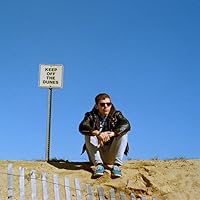
Christopher Evans is a graduate of the University of British Columbia’s Creative Writing Program and a former Prose Editor for PRISM international. His work has appeared in Best Canadian Poetry, The New Quarterly, The Lifted Brow, EVENT, Maisonneuve, and elsewhere and has been shortlisted for the Commonwealth Short Story Prize. He currently teaches creative writing to children in Vancouver, British Columbia, on the traditional, ancestral, and unceded territories of the Musqueam, Squamish, and Tsleil-Waututh peoples.
I'm delighted to be the first person on GR to review this book. What a lovely book. If nothing in these stories could be further from truth, then this author is a terrific liar. After all, all the best storytellers are. The stories in this absolute delight of a collection are definitely of a slice of life variety, but sometimes that life takes turn for the strange. Not so far as to venture into the magical realism territory, just kind of out there. Most of the time, it doesn’t even get that far and stays strictly within the bounds of possible, but-like the best of fiction does-it finds beauty in the ordinary, reasons in the chaos and solace in the sadness. Never read the author before, he’s Canadian, a lot of stories are based there, but it’s never all that location specific in a way that a location would define the narrative. Not like the story that takes place in an unnamed though thinly veiled Latin American country and features an exiled author, who comes back only to find himself trapped by the new regime, and three visits by his greatest fan. The pear on the cover refers to one of the stories permanently featuring pears, lots of them. An excellent story about nine siblings raising themselves, having been failed by their parents, essentially what Shameless ought to have been, had it not chosen to be stupid and ride out on cheap jokes. The titles of short stories in collections never stick with me, but in this case, it doesn’t even matter so much, because there’s no need to play favorites – there were simply too many. Every so often you read a book and the writing just really clicks with you, really speaks to you, and this was definitely one of those reading experiences for me. I just loved the way the author sees the world, the way he writes the world. It’s original, clever, just the right kind of strange. There’s so much soul in these pages, so much emotionally intelligent observation, so much compassion (the proper kind, not the lachrymose sentimental variety). I absolutely loved this book, loved the time I spent with it. A quiet treasure for the weary spirit. Recommended.. Thanks Netgalley.
It's not the stories, it's me. I think I'm just out of the reader demographic here, since almost all the characters and narrators read like lost teenagers to me. The writing was competent but there were number of phrases and descriptions repeated through some of the stories - like the dogs dreaming - and they would have been better served had I not read them all in a sitting. I did truly enjoy the story of the 9 siblings and their resourcefulness in the face of their neglectful parents, and wondered if it might be stretched out into at least a novella. Yay Canadian writers!
This is quite the mix of stories, you never quite know what will come next. From the surreal to plaintive tales of everyday life, they are uniformly delightful.
This collection of stories is a montage of our more recent society. The whole is looking rather fractured, and peopled with characters provoking a sense of wonder from a prior generation who simply shake their heads and mutter "wow." I hope not all of society has been dumbed down but from where I'm sitting, somewhere near the bottom in a downtown core, it certainly looks and feels that way. Most of these stories are satirical commentary on relationships, and a not so subtle jab at the value system we seemingly embrace. I once heard it said that the winner for most boring NY times headline was: Important Canadian UN Initiative. I am I being too harsh? I love Monroe, her writing is exquisite but often a little too pastoral. Too harsh. In any case this collection is about the diverse people in our wonderfully expansive country and I especially enjoyed the dichotomy of characters. More characters in general terms, will likely respond with "Duh" or "Gee, I wonder", as opposed to, "I begged off, despite my brother's admonitions...."but I laugh at them all. Satire is my favourite form of wit. I saw clearly some of the aspects of the wonderful women who have graced my life. And I think I can see how a writer must be extremely clever in describing behaviour attributed to the fairer sex. Aunts and Uncles: A woman scorned, mixed with alcohol is not a good thing. Jane Gopnik is very funny; the writing is clever and refreshing. The girlfriend in 'Always hungry, Always poor' is a perfect example of what could be called passive aggressive, but I think it's only phrased that way in general terms, because of the tone of voice. Ie: spoken by a woman in a calm, almost motherly way, and with such rational conviction that it's obvious her opinion is correct regardless of any evidence to the contrary. This type of behaviour in my experience has left me rather confused. I think they call it cognitive dissonance. So accordingly the girlfriend claims that boyfriend is using this ""confused" look to as strategy of avoidance. Accept when he really is confused, like how she insisted that the cat move out with her, even though it had been his cat for years before they met. I thank the author for that, because I've just had way too many confused looks on my face over the years and I've simply come to the conclusion that you just can't reason with some people. Although how I turn it into humour I'm still trying to figure out. I once read an author who's editor had told him, " write about the place like only an author of fiction can." In other words fiction can hold more truth without fear of being liable. In any case two thumbs up.
What an oddly amusing and entertaining little collection of stories… all of which explore ‘emotional paralysis’ of one form or another… These stories have a tendency towards the absurd - which I really dislike in my literature - but Evans resists going there full tilt… thankfully.
Individually they are (almost) all rather depressing commentaries on (someone’s) life… but they fit together to create a quirky little ‘give your head a shake’ moment experience as a reader. Grounded enough in the here and now - the nitty gritty reality of life’ - yet with just enough dark humour, and a tendency to magical realism, that they lift you up and they keep you also from diving into the deepest darkest depths of despair. And, oddly enough, in at least a few of the stories, there is just the teeniest glimpse of hope - for the broken down characters and for us, humanity in general.
Thanks to Edelweiss and the publisher for granting me access to a digital ARC.
Sad, absurd, somehow mundane and yet totally extraordinary, this is a truly excellent collection of short fiction. Actually, the best short story collection that I have read as of yet. So many short fiction collections have only a couple of amazing stories, with the rest being duds. This is not the case with this book! The only reason it took me so long to finish reading this book is because I misplaced it when moving into a new home, and only found it again when moving out of that home. Once found, I devoured the remaining stories in one night.
The stories in Nothing Could Be Further from the Truth will live rent-free in your head forever. I've been reading Christopher Evans' short fiction in literary journals for some years and I'm always blown away by his work. One of my favourite Canadian fiction authors.
Every story in this book shows, thankfully through figurative language, a facet of humanity that's a little bit crooked or so bent it verges on... not being human at all. I'd say that, for every single one I needed to go back to the book title and then realize those people can't really exist somewhere else than the book and the author's imagination - or can it? Anyways, disturbing content, wrong book to read just before going to sleep, maybe the right book to think about how some choices in daily life can be... unintentionally damaging - and then maybe make better ones?
The truth is this is one of the best short story collections I've read in recent years. Evans's stories veer from the somberness of a Russian novel to the exotic and bizarre, with a cast of eccentric characters who invite our empathy and compassion. I devoured this funhouse of a book, a masterclass in writing short stories.
Truly incredible short fiction. Punchy, self-contained, haunting. I did find it unsettling at times, but I assume that was the point. Excellently crafted stories iterating the resentment of being poor. I would highly recommend "Always Hungry, Always Poor" and "The Passion and Fugue of Edward Frank: A Profile by Jane Gopnik" specifically.
Really nice collection of stories. "Nora at the Cinema", "you the truth teller", "registry," and "do the Donna" are highlights. Similar brand of fiction to Karen Russell - less fantastical, more grounded but altogether more cohesive. Glad I found this by accident at the library looking for Vonnegut lol.
A wonderful set of stories! This is Canadiana (and especially Western Canadiana) at its finest with characters that you can't help but sympathize with, as strange, obsessive, and absurd as many of them are. There is a lot of humor and heart here, and the characters Chris Evans crafts will stick with me for a long time. Not sure I'll look at pears or dog food the same way again!
An absurd short story collection with stories that read like Miranda July or episodes of "I think you should leave". A fun time! It's wildly unfair for this book to only have a handful of reviews. I'll look into reading more from this author.
I really wanted to support Canadian authors so I grabbed this at the library but oof, not good. I know short stories are hard but I went in with no expectations and this was still really disappointing.
What a thoroughly enjoyable book to read! I couldn't put it down, each story was funny, interesting and unexpected. I was sorry when I reached then end. Highly recommend it.
Christopher Evans’ collection of short fiction, Nothing Could Be Further from the Truth, is a tutorial in expecting the unexpected. These are unconventional, sometimes hilarious, sometimes disturbing tales from the frayed edge of the contemporary urban experience. Evans populates his fictional landscape with loners and misfits, mostly young men and women: disaffected, delusional, or well-meaning but misguided people adrift in an unfeeling world that seems to offer no direction and little purpose. Typical of Evans’ self-effacing male protagonists is 20-year-old Richard in “Cakewalk,” who has returned to his old school. Charged with looking after his nephew, who has a project on display in the science fair, Richard wanders the familiar corridors, gazing impassively at class photos featuring his younger self, watching himself recede “a little deeper into the crowd each year,” until, in the photo from grade twelve, “He appeared not to be there at all.” When he encounters his grade-four teacher, her half-hearted attempt at faking familiarity when she obviously doesn’t remember him is a humiliating indicator of the negligible impression he’s left behind. The doormat narrator of “You Better Run” doesn’t mind watching his girlfriend Julie engage in physical intimacies with other men and women on the dancefloor because, as he explains, they have “something that Julie needs.” But everything changes one day when he arrives home from work unexpectedly at lunchtime, surprising Julie and discovering a strange pair of men’s Reeboks under the bed. Without acknowledging Julie’s betrayal, he immediately starts wearing the shoes and finds this act of rebellion endows him with unaccustomed strength and confidence. Other characters seem to operate at a slight distance from reality. Nora in “Nora, at the Cinema,” saunters through her entirely ordinary days as if the world is a movie set, her attitudes and behaviours driven by obsessive self-regard. The financially strapped narrator of “Soundtracker” is in for a shock after he advertises his creative services on Craigslist, offering to provide musical accompaniment for any activity, however mundane. And in “Always Hungry, Always Poor,” the narrator discovers brief respite from chronic loneliness in the company of a pack of coyotes. Family discord is a recurring theme, and children in these stories find themselves in the uncomfortable position of reversing roles with the adults who are supposed to care for them. “Of This, We Were Certain” is narrated by one of nine siblings who become bizarrely self-sufficient after their mother runs off and their father withdraws into his shed. And in “Aunts and Uncles,” youthful Carter is forced to accompany his alcoholic Aunt Cindy on a variety of pointless errands, aware that his burden of responsibility includes keeping her from lurching off the deep end. Absurdity blows through these pages like a refreshing breeze, and a couple of stories take it to a higher level, veering gleefully into the realm of the surreal (“I Don’t Think So,” “Over the Coffee Table and Down the Hall”). But even as he indulges his more arcane narrative impulses Evans never loses his connection with the reader’s heart. These are stories of quotidian struggle in which the author always gives us someone to root for, something to care about. Despite a bit of nuttiness and the occasional whimsical flourish, he maintains a firm grip on his material. In his relentlessly entertaining debut collection, Christopher Evans presents a series of arch depictions of what it means to be imperfectly human and vulnerable in a troubling and troublesome modern world. And despite the title, this is an author who forges a path to life’s painful truths more often than he might care to admit.