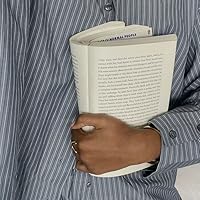
HONORED AS A NOTABLE 100 BOOK IN THE 2021 SHELF UNBOUND BEST INDIE BOOK COMPETITION
FINALIST FOR THE 2021 FOREWORD INDIES AWARDS
Penned by a writer who had to teach himself the rules of English grammar, A Few Words About Words offers an easy and accessible approach to understanding and using the English language.
In a world dominated by countless print and social media outlets, written communication is king. Writing "your" when you mean "you're" and "there" when you mean "they're" can make the difference between getting or not getting new business. A missing comma can result in a PR catastrophe, and a well-written line can be remembered for generations. And yet, many native speakers struggle with the English language.
Spawned from the widely-circulated and beloved newsletter of the same name, Joe Diorio's A Few Words About Words blends quick-witted anecdotes from more than 30 years of newsletter entries that highlight the common, uncommon, and surprising grammar mistakes most English speakers make. The result is a digestible, all-encompassing look at English grammar.
Humorous, enlightening, and completely comprehensible, A Few Words About Words will be the go-to grammar guide you pick up and can't put down.
Joe’s humor, engagement, and storytelling helps almost any reader absorb the information he provides in this book to improve their writing skills. He made something that seems mundane for my age sound useful and entertaining at the same time, which shows a lot about his own writing abilities and establishes his credibility in his field of work as an excellent author to take tips from.
Somewhat entertaining anecdotes for people who enjoy language, but little if anything here to help the novice (or anyone else) improve either writing or grammar.
The author delivers fun, useful, and interesting ways to tackle the sticky problem of brushing up on basic grammar and punctuation skills, plus learning some new tricks, for those of us who were not always paying attention the first time around.
This book reads like a high school stream-of-consciousness essay. The author would have been better served in the long run had he ended his book after his very lengthy introduction where he went on and on about having to look up the rules of grammar and punctuation. As it is, the book is a long rant about the indignities of having to look stuff up that he never bothered to learn when he was in school. The take-away from this book purporting to help writers learn about the vagaries of the English language is not to learn the rules of grammar and punctuation. Rather, he would have writers write those god-awful work arounds that make sentences more convoluted than using the proper grammar/punctuation.
Perhaps Diorio would have been better off telling writers to learn the rules before developing all the sloppiness of bad habits or at the very least to buy a book like The Chicago Manual of Style.
My thanks to Beaufort Books and Edelweiss for an eARC.
My inner word nerd was very excited to see this non-fiction book's cover! My office uses a very thorough proofing process so I'm quite familiar with proofreading marks.
Joe Diorio, author of A Few Words About Words, wrote a monthly newsletter with the same name for 30 years. It began as a tool to recruit clients for his writing and editing business, and continued as a forum for Diorio and his subscribers to make observations about the use of grammar and language in the world, especially by politicians, reporters, and other public figures, and in speeches, advertising, movies, holiday greetings, etc. In his 186-page book, he gathered a sampling of the newsletters and included several current observations. He also shared reflections on his career which included working for IBM and Vanderbilt University.
The book has a section on COVID-19 terminology (pandemic, flatten the curve, social distancing, etc.); it's important to document the language of this time for posterity. Mr. Diorio's humor in a potentially dry subject is appreciated but didn't always hit the mark. I enjoyed sharing the numerous Star Trek references with my husband, a fan of the series.
I would've enjoyed this more if I had read one chapter every few days. The 'stream of consciousness' approach to some chapters felt disjointed when reading several chapters in one sitting. Thank you to Beaufort Books and Joe Diorio for the review copy; please be kind when grading this review.
Full disclosure! I work with the author's sister who put me in touch with Joe as a speaker for a recent Library program I hosted. He was a terrific speaker (and his sister is pretty terrific, too!). This is a breezy, entertaining and very informative look at the English language and how we often malign it. Diorio is a terrific storyteller, self-deprecating and funny and this useful resource, at a blissful 175 pages, is must-reading for writers (and talkers!) everywhere.
I love any and all grammar books and A Few Words About Words is a first-rate addition to my collection. Joe Diorio is the author of a popular newsletter of the same name that has been around for 30 years. He built this book around those columns, organized by subject and theme, trimmed or expanded as needed, and connected by personal anecdotes for continuity. The end result is a lighthearted and engaging guide to English grammar and a wholehearted apologia for using it correctly.
*A Few Words About Words* is a clever, entertaining, and genuinely useful guide to the English language. Joseph J. Diorio makes grammar easy to understand without making it feel like a textbook. The humor and practical examples make the lessons memorable, while the subject remains highly relevant to everyday writing and communication. A refreshing and enjoyable read for anyone who wants to sharpen their command of English.
A Few Words About Words is an enjoyable and informative read. Joseph J. Diorio makes grammar easy to understand by combining useful lessons with humor and relatable examples. I especially liked how he takes common mistakes and explains them in a simple, memorable way. A great choice for anyone looking to improve their writing while enjoying the process.
As a writer, I’ve read many grammar books, but A Few Words About Words stands out for its humor and accessibility. Diorio manages to turn everyday grammar pitfalls into fun, memorable lessons. A must-have for anyone who writes for work or pleasure.
An entertaining and useful guide to better writing. Diorio takes everyday grammar mistakes and explains them in a way that is easy to understand without becoming overly technical. The humor makes the lessons memorable, while the practical advice makes the book genuinely useful.
A Few Words About Words is a refreshing approach to grammar. It shows how small mistakes in words and punctuation can have a big impact on communication. Informative, accessible, and often humorous, this is a worthwhile read for writers, professionals, and anyone looking to improve their English.
You can never compare this book with classical like The Elements of Style. Still, I learn something new. An “alumnus” is a male graduate. An “alumna” is a female graduate. “Alumni” is the plural for male and female graduates, while “alumnae” is the plural for female graduates. And in case I have to think of some new stuff I have learned, here is one: “Body mullet” refers to what we wear for Zoom calls; work clothes on top, gym shorts below.