Jump to ratings and reviews
Rate this book

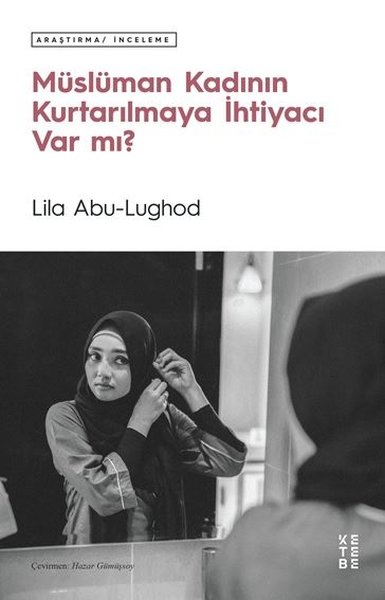
Müslüman Kadının Kurtarılmaya İhtiyacı Var mı?

Rate this book
Namus cinayetleri, Müslüman kadının yanlış şekilde temsil edilmesi ve sansasyonel haberler, Batı’da insan hakları grupları ve Namus cinayetleri, Müslüman kadının yanlış şekilde temsil edilmesi ve sansasyonel haberler, Batı’da insan hakları grupları ve medya tarafından sürekli olarak pompalanarak şu fikrin yayılmasına katkıda bulundu: Müslüman kadınların kurtarılması gerekiyor. Lila Abu-Lughod, Müslüman Kadının Kurtarılmaya İhtiyacı Var mı? kitabında bu çıkarıma cesurca meydan okuyor. Otuz yıldan beri Arap kadınları hakkında araştırmalar yapan ve yazılar yazan antropolog, bugün de Müslüman kadınların içinde bulunduğu sıkıntıları inceliyor, İslam kültürü hakkında yapılan genellemelerin bu kadınların karşılaştıkları zorlukları aşmalarına yardımcı olup olmayacağını, hatta açıklayıp açıklamayacağını sorguluyor.

Müslüman Kadının Kurtarılmaya İhtiyacı Var mı? belli bir amaç için askeri müdahale dahil her şeyi mübah gören bir zihniyeti gözler önüne sererken aynı zamanda kadınların gerçek deneyimlerine dayanıp detaylı öykülerini sunarak konuya ilişkin geniş bir perspektif sağlıyor.

344 pages, Paperback

First published November 1, 2013

148 people are currently reading
3947 people want to read

About the author

Lila Abu-Lughod

28 books181 followers
Lila Abu-Lughod was born to Palestinian academic Ibrahim Abu-Lughod and American sociologist Janet Abu-Lughod in 1952. She obtained her PhD from Harvard University in 1984. She is is an American with Palestinian and Jewish ancestry who is professor of Anthropology and Women's and Gender Studies at Columbia University in New York City. A specialist of the Arab world, her seven books, most based on long term ethnographic research, cover topics from sentiment and poetry to nationalism and media, from gender politics to the politics of memory

Ratings & Reviews

What do you think?
Rate this book

Friends & Following

Create a free account to discover what your friends think of this book!

Community Reviews

5 stars
284 (33%)
4 stars
312 (37%)
3 stars
164 (19%)
2 stars
61 (7%)
1 star
20 (2%)
Displaying 1 - 30 of 100 reviews
Profile Image for Turbulent_Architect.
146 reviews54 followers
February 22, 2019
I am very ambivalent about this one. The introduction was so promising, and there were admittedly several flashes of insights scattered throughout, but overall, Do Muslim Women Need Saving? was a bit of a disappointment to me. Abu-Lughod’s stated aim is to articulate why prevailing Western stereotypes about Islam and about the Arab world fail to capture the reality of Muslim women’s lives. She promises to present the reader with “women’s hopes and dreams, desires, anger, and disappointments” in order to lay rest to the common stereotypes and misconceptions about Muslim women (p. 5). Given my interest in Middle Eastern politics and my frequent criticisms of Islamophobia, I thought this was an exciting prospect. At the same time, Abu-Lughod presents her book as a critique of the universalist claims of human rights discourse. For someone like me who sympathizes with a certain brand of Enlightenment rationalism, this sounded like an immensely challenging viewpoint that might lead me to question my views. But in the end, the book fell very far short of these expectations.

An anthropologist by profession, Abu-Lughod seeks to complicate the abstract universalism of human rights discourse by contrasting it with the concrete particular in all of its complexity and ambiguity. This is a worthwhile (even necessary) undertaking in theory. The problem, however, lies in the execution. For all of Abu-Lughod’s insistence on the particular, she actually devotes shockingly little attention to it. In the first place, her own research limited to the Egypt—a minuscule part of the Arab world. In the second, it focuses not only on just a couple of relatively far removed Bedouin communities in Egypt, but on just a handful of women from those couple of communities. In other words, the sample of particulars with which she is working is infinitesimal.

Now to be fair, Abu-Lughod acknowledges this in the introduction to the book. However, this is insufficient, for her reservations quickly vanish, and do not seem to temper her conclusions anywhere else in the book. Maybe she thinks that she is justified in doing this. After all, only one counter-example is necessary to refute a universal statement. But of course, cultural generalizations of the kind Abu-Lughod criticizes (e.g. “Muslim women are oppressed,” “Western culture is highly individualistic”) are rarely meant to be bona fide universals. They are much more commonly used (rightly or wrongly) to express patterns or general tendencies. And just as interviewing a few Americans living on a commune is insufficient to prove that American society is not consumerist or individualistic, so interviewing a few women living in remote Bedouin communities is insufficient to dislodge general observations about Egyptian society, let along about the entire “Arab world” or about all “Muslim countries” (whatever those are).

Methodological considerations like might not be such a big deal if Abu-Lughod were a little more modest in her aims and a little more cautious about the conclusions she draws. Much more damning to my mind is her overall lack of direction and argumentative rigour. Being a philosopher by training myself, I am perhaps more sensitive to this than most, but it was often very unclear to me what conclusions I was supposed to draw from the considerations presented. To summarize very briefly, Abu-Lughod begins by highlighting the manner in which the rhetoric of “saving Muslim women” has been used to justify military interventions in Middle Eastern countries by the United States. She traces what she calls the “new common sense” about going to war for oppressed Muslim women to two distinct but overlapping sources. The first of these is the language of human rights; the second, the “pulp nonfiction” that has flooded the market since September 11th 2001 and offered sensationalized accounts of honour crimes, forced marriage, rape, etc. She then goes on to critique human rights discourse in detail. Specifically, she argues that the category of “Muslim women’s rights” fails to capture the complexity of women’s lives, and that human rights in general cannot be understood outside of frames of global governance and "privilege." Her principal conclusion is that “there is always a certain incommensurability between everyday lives and the social imagination of rights” (p. 176).

What are we to conclude from this analysis? Is it that human rights are not genuine moral truths? Or just that human rights discourse is often harmful despite its truth? Is it that we ought to abandon universal moral claims altogether in favour of a communitarian particularism? Or just that we need to be careful in the way that we formulate and conceptualize these universals? Is it that Islam is no more oppressive by nature than any other ideology? Or is it that it is no more used in practice to justify various abuses? These claims are very different, and only some of them are true, yet Abu-Lughod frequently runs them together as though they were all the same. The result is often some of the most outlandish non-sequiturs I have ever seen written in a piece of academic writing. Already her conclusion (“there is always a certain incommensurability between everyday lives and the social imagination of rights”) should strike us as suspicious. What justifies the universal always here?

A few more examples. Abu-Lughod insists that talk about liberating women from a “patriarchal culture” cannot do justice to the complexity of women’s suffering, e.g. as a result of poverty, substance abuse, etc. (p. 197). This is true. But it is no more a critique of human rights than the claim that access to at least a minimal income is insufficient for human happiness is a critique of social welfare. Earlier on, she stresses that “honour countries” do not have a monopoly on illiberal values, and that these can be found everywhere (p. 126-127). Once again, true, but entirely beside the question whether the "illiberal values" are there, whether they are there in higher concentration, whether something needs to be done, and by whom. And more: she repeatedly insinuates that Westerners might take “(porno)graphic” pleasure in consuming pulp nonfiction accounts of Muslim women’s suffering. Again, this may or may not be true, but I fail entirely to see how it is supposed to discredit either the accounts themselves or the value-judgments that Westerners may or may make upon reading them.

In the conclusion, Abu-Lughod claims to have shown that “rather than asking whether Muslim women have rights,” we should ask “what the concepts of ‘Muslim women’s rights’ or ‘the oppressed Muslim women’ are doing in the world and who is making use of these concepts.” (p. 220-221). But in fact, she hasn't shown this at all; she has presupposed it. Throughout the book, she focuses her attention on the question of the consequences of human rights discourse, to the exclusion of the question of its correctness. And in a move that has become a staple of the contemporary Left, she often jumps from premises about their consequences to a conclusion about their (in)correctness.

The result is that she is repeatedly led into performative contradiction. Perhaps the most egregious example of this is when she denies the neutrality and universality of human rights language within a paragraph of writing that “One must be critical of gender subordination” (p. 87). From what perspective can we claim that we must be critical of gender subordination if not from a neutral and universal one? Is it from “our” (Western) perspective? Or is it rather from “their” (Muslim) one? If the former, how do we distinguish our claim from the most blatant imperialism? If the latter, why should “their” values hold any sway over us? There are multiple other cases where Abu-Lughod denies the very impartial point of view that she requires in order to formulate her own critique. It seems to me that the cause of this strange phenomenon—which is at the same time the most glaring error in the book—is that she fails entirely to distinguish between what we might call culture and society, that is, between cultural self-understanding and political norms. She is right to point out that we often judge other cultures on the basis of our own culturally specific interpretations of certain norms and rights, e.g. of choice, fulfilment, freedom, etc. But this says nothing about the norms themselves, and in the final analysis, Abu-Lughod cannot avoid appealing to these herself.

The shortcomings of Abu-Lughod's analysis are particularly frustrating because I actually agree with many, if not most, of her views. She thinks we need to mediate “sweeping generalizations” with “intimate familiarity” with concrete others. Yes! She argues that terms like “oppression” and “patriarchy” are very blunt instruments that do not do justice to the complexity of people’s lives (p. 25). Yes! That we need to contextualize the veil within the dense framework of lived meanings that it carries (p. 38). Yes! That it is necessary to break free from simple oppositions between "Islam" and "the West" that treat them as homogenous essences (p. 53). Yes! Yes! Yes! But her arguments are frequently confused, confusing, and self-contradictory; her claims opaque, sensationalistic, or just irrelevant; and her tone often perplexing. Why does she say that “lists and numbers give the appearance of objectivity” as though this were in some sense incorrect? Why does she say that honour crimes never occur outside of institutions as though this were anything more than an benign truism? Add to this a liberal dose of post-structuralist buzzwords (“hegemonic,” “power,” “violence,” "privilege") and prejudices (liberalism is inseparable from Western individualism, universalism squashes cultural difference), and you have one of the most frustrating books I have read in recent memory.

Do Muslim Women Need Saving? does have redeeming features. There are, as I have said, several flashes of insight. There are many points where it is on the right track, but falls prey to conceptual muddles, hasty generalizations, or just outright non-sequiturs. It seems to me that Abu-Lughod is at her best when she highlights the complexity of human life, the multiplicity of ways of being, and the various points of similarities between cultures that would count against simple oppositions between "us" and "them," between "Islam" and "the West." But then she is at her worst when she tries to tie these to the question of human rights and to critique the universal perspective from which alone questions of human rights violations can be posed. The biggest problem, I suppose, is that the latter is supposed to be the point of the book.
1 review1 follower
July 28, 2016
The arguments in this book don't hold up. For one, the author is guilty of the same generalizing of Muslim women she warns against early in the book. I am a woman who was raised in a Muslim community that held deeply conservative values which were highly disadvantaged for women. The men called the shots basically. I completely disagree with her rationalizations which overall seem to say, these women are just fine, they have pride in their modesty, blah blah blah. I would bet that most women in my own community would defend the even the most misogynistic aspects of our culture -- women are a part of upholding patriarchy as well as men. The stigma of speaking out and going against the grain is strong and it just isn't done.

People will always find a way to have honor in their way of life. It's a basic survival mechanism. But this pride and "choice" is all relative. Many are making do with the situation they're in.


I found her arguments about the "seduction" honor crimes particularly offensive. Yes, they get attention and are easy headlines, but the fact remains that they do occur and disproportionately result in female victims.

It's clear early on that she's decided on the answer to the book's title question. This book repeatedly argues from essentially this same point of view, making for increasingly predictable chapters. It would have fared better if this were a more nuanced and balanced examination of Muslim women incorporating voices of more varied populations.

Profile Image for Elen Ghulam.
Author 7 books27 followers
May 25, 2015
I so wanted to like this book because I mostly agree with the points it is trying to make. However bogged down in academic language, repeating the same point over and over, it frequently felt like rhetoric more than a well researched document. Ultimately, the book fails to prove the points it is attempting to convey. It is a shame. Somewhere between the pages lays an unfulfilled potential for a great book that is sorely needed. Hopefully some other author will do the job in the near future. This one doesn't cut the mustard.
Profile Image for Danielle.
66 reviews
July 20, 2016
Written by an anthropologist, this book is extremely well articulated, well researched, and will make you question long-held assumptions. The author urges readers not to impose sweeping generalizations on all Muslim women, and to not place blame on the religion of Islam for women's mistreatment but rather to blame the cultural and socio-political climate of middle-eastern countries.
Profile Image for Zainab Bint Younus.
378 reviews432 followers
January 24, 2025
"Do Muslim Women Need Saving?" By Lila Abu-Lughod was published in 2013, but I only managed to read it now in 2025... and I wish I'd read it years ago!

In 2025, much of what Abu-Lughod says in this book is common knowledge (I think) to most Muslim women, but it's absolutely worth poring through this book to appreciate and benefit from Abu-Lughod's sharp analysis and critique of the narrative of "Muslim women's rights."

Abu-Lughod opens her book by immediately getting rid of the idea that Muslim women are oppressed by Islam, and dives into the many ways that this oppression narrative has permeated the West and become "the new common sense."

Abu-Lughod tackles the imperialist manufacturing of consent for war in Muslim countries, namely, the claim that Muslim women must be "freed" from Muslim.men (and Islam itself). She rips apart the "pulp nonfiction" genre of "memoirs" by women who claim Islam as the source of their oppression; the creation of the label of "honour crimes" specifically in relation to Muslim women; and the ways in which "Muslim women's rights" have created their own capitalist industry through NGOs and business collaborations.

Powerfully, she sheds light on all the ways that feminists have ignored oppression of Muslim women by Western nations and their allies (most obviously, the oppression of Palestinian women by the Zionist occupation, and of American military occupation in Afghanistan).

It is infuriating that everything Abu-Lughod discusses in this book is as relevant in 2025 as it was in 2013 - but also shows how hell-bent Western agendas are, and how little they have changed over the decades.

This book is deep, but also fairly easy to read - absolutely needed for ANYONE who is involved in da'wah work re: Muslim women, activism work, and honestly, just existing as Muslims in the West.
Profile Image for Sofia.
Author 5 books264 followers
March 8, 2016
I did a presentation for one of my modules at uni, entitled "Do Muslim Women Need Saving?" last week. One of the books I read was this one and I'd highly recommend it. In fact I've even suggested to some of my friends that it should be compulsory reading for muslimahs who are sick of being patronised and demonised all at the same time. Abu-Lughod is an anthropologist so she's in the business of unpacking the projection of Islam as an oppressive force for the Others, and she does this very well without creating a naive picture of some sort of Muslim utopia us Muslim women can opt into. In fact I was apprehensive to read the book as I thought it may well do that, but it doesn't. The writing is very accessible, not at all overly academic and tools you up very well to answer the question with a resounding, no! If you enjoyed Edward Said's Orientalism, you will enjoy this. It's written in a much more understandable way than Said wrote, but you can see she's taken his approach and applied it specifically to Muslim women and the discourse surrounding them (she calls it gendered Orientalism). Also unlike many other academic books, it didn't cost an arm and a leg to buy, it was about £7 from Amazon.
The book was written 10 years after she first wrote an article by the same title. You can read the article here: http://org.uib.no/smi/seminars/Pensum...

She laments the fact that 10 years on, the situation is still the same.
Profile Image for Ang.
1,841 reviews52 followers
January 20, 2016
I don't know what to say about this book but that it didn't convince me that they don't. I don't mean to belittle, but I also don't think the book did anything to say that women's issues aren't more dire in some countries than others, and that some of those countries are majority Muslim. Some of the ridiculous acrobatics the author did to convince us of things....she basically asserts that the all-encompassing burqaa is ACTUALLY not oppressive, because they allow women to go out in public. I have a hard time with this, but the argument is that culture dictates that men and women be separate at all times, and the burqaa is like a little room that allows women to follow the cultural mores, so voila, freedom!

Her baloney that none of us are TRULY free to make choices (because there is no real choice) so who cares if Muslim women are free is, well, baloney. I honestly don't understand how that argument helps anyone.

In summation, I hated this book, and I'm mad at it, and I don't really think a word of it is convincing. ARGH.
126 reviews14 followers
September 25, 2022
Abu-Lughod argues Westerners view Muslim women as voiceless, oppressed victims of violent, savage Muslim men who need to be “saved” by Westerners, often through literal violent imperialism. She makes excellent points. The “plight of Muslim women” has been used to justify imperialist intervention. Westerners are extremely ignorant about Islam yet simultaneously see Islam as the only source of the Middle East’s problems. They don’t recognize the material realities of occupation, political corruption, war, poverty, hunger, and homelessness. Misogyny, crime, and violence against women in the West are played down to the detriment of women. Muslim societies are portrayed as uniquely violent and misogynistic. Westerners take on the role of saviors to women from societies they are completely ignorant about and collectively do more harm than good.

With that being said, I have reservations about elements of this book. Abu-Lughod conducted research with Bedouin women in Egypt, but her book is about the whole Muslim world. Her experiences with these Bedouin women and her female Palestinian family members are extrapolated to all Muslim women. She speaks on behalf of African and Asian Muslim women, but their perspectives are shockingly absent. The experiences of Bedouin women in Egypt don’t even represent all women in Egypt, let alone all Muslims. For example, she discusses the intricacies of honor culture among Egyptian Bedouins, but is honor culture observed by Egyptian Bedouins the same as Kurds, Turks, or Pashtuns observe it? Abu-Lughod interviews a handful of these Bedouin women who already feel women have sufficient rights and respect but do ALL Muslim women feel this way? Is the situation of women in Egypt the same as in Yemen, Saudi Arabia, Iran, or Brunei?

Abu-Lughod replaces the generalization that women are voiceless victims of Muslim men with the generalization that Muslim women love conservative and patriarchal forms of Islam. This idea is sustained only by her interactions with her own family members and Egyptian Bedouins—the women who don’t feel this way are dismissed by Abu-Lughod as cosmopolitan liberals brainwashed by the West. There are indeed women who reject misogynistic visions of Islam and rebel against honor culture and extreme forms of veiling. There is a long history of women from Muslim backgrounds critiquing how Islam has been used to oppress women ex. Nawal El Saadawi, Mariama Ba, Begum Rokeya, Fatema Mernissi, Layla Balabakki, Alifa Rifaat, and Marjane Satrapi. Abu-Lughod tends to deny Islam is utilized to oppress women at all. She argues that material realities and bad behavior cause women’s suffering, or these practices and beliefs are not oppressive but just Western cultural misunderstandings. Confusingly, she embraces cultural relativism but simultaneously denies culture can be misogynistic and harmful to women. Wife beating and honor crimes are “bad behavior,” but at what point is systemic bad behavior indicative of a greater cultural and religious problem? What Abu-Lughod argues for is like a woke form of Oriental despotism, “Muslim women just enjoy gender inequality!”

Abu-Lughod is even critical of indigenous Muslim feminist efforts like Musawah, Sisters in Islam, WISE, and Women Living Under Muslim Laws. You are left entirely confused about what is possibly the answer to addressing gendered violence and gender inequality in Muslim nations and communities. I agree it isn’t offensive Orientalist literature or occupation, but it is also apparently not NGOs, Muslim feminism, or Muslim-led organizations either. Abu-Lughod critiques groups like Musawah and WISE by citing the diverse lives of rural women in Egypt and these groups’ failure to reach or relate to them. Again, arises this issue of extrapolating Bedouin Egyptian women to all Muslim women. Islam, as practiced in Egypt, isn’t the same as practiced in other nations. It’s also perfectly understandable that feminist groups would focus on issues of gender inequality and violence like FGC, domestic abuse, honor killings, and stoning. They’re specific, cogent issues to focus on, and convincing citizens and governments of the incompatibility of these practices with Islam would quantifiably raise the status of women. These are also religious groups that want to address religious issues. Poverty and political corruption are far trickier issues to deal with. She is extremely critical of other authors, activists, and groups yet offers zero solutions.

Abu-Lughod’s discourse on veiling, seclusion, and honor culture is like something an Islamic extremist would write. She completely denies the inherent misogyny of these beliefs and the detrimental effects on women. She generalizes the experiences of Egyptian Bedouin women to all Muslim women and downplays that honor culture and violence disproportionately harm women. I don’t think she is examining the complexities of Muslim women’s lives by extrapolating the experience of Sunni Egyptian Bedouin women to Ibadi Omani upper-class women, urban Iranian Shi’a women, and middle-class Pakistani Deobandi women.

Abu-Lughod quotes Marnia Lazreg before defending the practice of veiling, yet Lazreg wrote an entire book critiquing the misogyny of extreme veiling practices. She references Afsaneh Najmabadi, who was a proponent of the Iraq war. Why use people as evidence who don’t agree with you?

It is also incredibly unfair that she lumped the memoir of Mukhtar Mai, a victim of a very real honor gang rape, in with a bunch of laughably fake books and literary hoaxes. If you had no idea who Mukhtar Mai is, you’d be under the impression that this book is a hoax. There is zero analysis of what happened to her. She is similarly critical of Azar Nafisi. It is like an aggressive insistence of Abu-Lughod that Muslim women don’t have a right to talk about their own experiences because it could theoretically be used for imperialist aims. The indigenous feminists who protest FGC, honor crimes, domestic violence, and so on are not talking about lived realities meaningful to them but are giving into a Western imperialist view of Muslim womanhood. When a woman speaks about these issues, she stops being an authentic, indigenous Muslim woman and becomes a liberal, cosmopolitan elite who can be comfortably dismissed.

How is it fair that Abu-Lughod enjoys the fruits of feminism and liberalism in the West while women in the East should apparently content themselves with gender inequality, systemic violence, and discrimination, or they're Western imperialists?
126 reviews
May 29, 2018
I keep going back and forth on this rating because I genuinely think the message of this book is one that needs to be more widespread and accepted. The author's general thesis about how the language of women's rights has been used in multiple ways and portrayed in certain situations and through different channels for particular goals - which may not always include the well-being of the women it purports to help - is sound, and particularly resonant in the current global political climate. Author Lila Abu-Lughod is clearly knowledgeable from her anthropological experiences in a village in upper Egypt and presents her arguments with clarity even for those completely unfamiliar with the subject.

However, Abu-Lughod argues that we cannot seamlessly apply the rhetoric of women's rights (oppression by patriarchy) to the lived experiences of the Muslim women she knows, citing the example of a domestic violence victim whose situation is complicated by global forces of economic inequality and a network of family ties that connect her to her husband. However, the experience of any woman, anywhere is a reflection not just of gender but of race, class, sexual orientation, her position in the global north or south, and many other factors. And as an aside, I find any discussion of domestic violence that doesn't take into account male socialization to be complicit in excusing it. Constructions of masculinity may become violent through their interaction with 'humiliating' factors like economic disadvantage but the root of it is unquestionably gendered if it occurs in a patriarchal society.

I also have mixed feelings about how she discusses the need to cast aside liberal ideas of choice and consider that women in different societies may value and desire different things than we may choose for them. I completely agree, but the problem is that women in any society are not a monolith and may desire different things from each other. In what way can we conceptualize a just society where each woman has the means to pursue her own goal of happiness, whatever that may entail (provided no one else is harmed)? Abu-Lughod points to the fact that many Arab societies are more family-oriented and have different conceptualizations of the self - but she and any other anthropologist would acknowledge, these mores are constantly changing and not held equally among each segments of the population, especially as they come into contact with different views. There are certainly Muslim women, who live in the Muslim world or in the West, who conceive of themselves as individuals and defend the goal of individual liberty. How can we defend (morally) a society's right to pursue its own happiness if the happiness of some of its members entail an infringement upon others (as dissidents from these societies prove exist)? How do we correct these issues that absolutely exist in our own western societies with regards to unequal opportunities due to racism, sexism, homophobia, and other forms of discrimination? I don't have the answers and I don't expect Abu-Lughod to either - but I still found the way this point was discussed to be an oversimplification of the many desires of women in the Muslim world (and doesn't even touch upon women that don't adhere to the gendered requirements placed upon them, such as gender non-conforming women and lesbians).

At the end of the day we all live in a patriarchal world where patriarchal values affect us to some degree. It's wrong to exceptionalize anyone, of course, and it's true that Muslim women have been the focus of a disproportionate amount of discourse surrounding their choices. Yet mapping morality onto covering (or not covering) the female body is a symptom of patriarchy (just as it is in the West). There is also a lack of psychological analysis that perhaps goes beyond the scope of this book but might be worth mentioning as Abu-Lughod discusses why a woman may stay in an abusive situation where she was tricked and forced into marriage - suggesting the woman may have even fallen in love with her husband but not mentioning known effects of Stockholm syndrome and other psychological coping strategies to violent and traumatic conditions? This kind of speculation minimizes problems like marital rape and spousal abuse and the cycles of trauma that they often create.

I almost feel bad writing some of this because I do get understand the author's point in writing the book and I agree with her premises and her ends, if not the logic she uses to connect them. Islam has been maligned worldwide and Muslim women portrayed as victims without agency. Westerners need to be aware of their own privilege (at home and abroad) and unpack any covert imperial assumptions. I'm all for listening to first person accounts, as Abu-Lughod suggests. But what do we do after we listen? How (if at all) do we prioritize these voices? How do we put them into context with the individual situations of the writers, and taking into account that each reflection will be colored in some way by the author's self-interest? One thing that Abu-Lughod and I whole heartedly agree on is that the situation is enormously complex and variable and I would wager that in practice she and I would preach the same things. It's still a book on an important subject with a viewpoint that isn't discussed as much in the mainstream media, so for that alone it's worth reading.
Profile Image for Queenie.
2 reviews
March 21, 2017
Good points here and there -

Abu-Lughod criticized some popular books written by western journalists on oppression of women around the world, such as Half the Sky (a book that inspired me in many ways) for ignoring the diversity of Muslim women’s lives and asking over-simplified and generalized question like “Is Islam Misogynistic?” and for their hypocrisy to invite their rich and privileged readers to save people far away.

She argued “these books do not ask us to examine the roles Westerners already play - whether in their everyday practices, their government actions or their economic strength - in perpetuating global inequities that exacerbate (and sometimes cause) the sufferings of women elsewhere.” She also touched on issues like whether NGO is a new form of colonization. All these bring a whole new perspective to me and I feel naive to have taken books like Half the Sky as universal truth without much critical thinking. (if you happen to have read Half the Sky, I am curious what you think about that!)

That said, I must say many arguments in this book are poorly developed and confusing. Abu-Lughod devoted substantial paragraphs to attack what she called “pulp nonfiction” (memoirs written by women who experienced violence in their Muslim family/ country, and later escaped) by discrediting those authors and their experiences and accusing them of selling sex and violence. These attacks look personal and unnecessary to me.

While I agree with her that we need to look at our roles and privileges before jumping into the conclusion that women in Muslim world needed to be “saved” (I rather prefer using “helped”), I have an impression that a large part of the book is built on placing blame on the West (even though Abu-Lughod said otherwise) or anything else. In subchapter “Violence in the Domestic Sphere”, She cited her friend Khadija’s plight in domestic violence and tried to explain the violent behaviors of her husband by saying “it is produced at the nexus of the global field of European tourism in the Third World and the inequalities between rich foreigners and local villagers that fuel it” and it is a product of poverty created by “transnational capitalism but(and) also by state policy, is as much part of the modern global economy and social system”. SERIOUSLY. Did she stretch her points too far it sounds ridiculous.

I really hope someone else will further contribute to the topic and write a better book - after all there is no better time than now to read more and clear misconceptions that are perpetuated by fear and ignorance.
Profile Image for Rindala.
8 reviews2 followers
March 16, 2017
Truly couldn't put the book down.
I read Abu-Lughod's journal "Do Muslim Women Need Saving?", which is a shorter version of the book, a few weeks ago and knew I needed to read more about it. I'm glad I did.
Profile Image for Ren Mooney.
146 reviews3 followers
November 5, 2025
I read the first chapter of this book for my Human Rights class and felt inclined to finish the book. This book so masterfully frames how we think about Islam in the West and it's culture as something that women suffer from. It goes back to Spivak's saying of "white men saving brown women from brown men" How do we conceptualise victims and which voiceless victims are in need of saving. This book seems more relevant for a Western audience as I feel it provides those breaking down of racialized concepts of Muslim women. Islamaphobia continues to be rising, Muslim men continue to be painted as scapegoats in Western medias and in order to contest the racist rhetorics used by right-wing parties, I think it's important to challenge why we associate Islam with violence and why we see the viel/hijab as this symbol of oppression. I felt this book did a solid job at expressing these themes and giving an introduction to a more decolonial approach to women's rights. Overall, very good read!
Profile Image for elif kalafat.
292 reviews427 followers
October 1, 2021
"İnsanların ne kadar kolayca Müslüman kadınların hakları olmadığını varsaydıklarına hayret ediyorum." diyor Lila. Kendi deneyimleri ve bu yaygın yaklaşım arasındaki kopukluğu anlamlandırmak için yaptığı bir yolculuk bu kitap. Uzmanlar bize Batı'da olmayanın "geride kalanlar" olduğu ve Batı'dakilerle arasında kapatılamaz bir uçurum olduğunu söylüyorlar. Geride kalanlar'ı da en çok Müslümanlar üzerinden tanımlıyorlar ve tektipleştiriyorlar. Asıl sorun da burada başlıyor. Müslüman kadın tipolojisi diye bir şey var mı? Dahası, özel ve tehditkâr bir kültür kültürün taşıyıcısı olarak görülen Müslüman kadının, bu zararlı kültürün onlara ne kadar yabancı olduğunun bir "sembolü" olarak görülüyor.

Bu bahsi geçen zarar için de direniş gerekiyor, Amerikan feministleri -ve aslında Türkiye feministleri de bence- bu konuya odaklanıyor diyor ama nasıl? Harekete geçmesi kolay ve kendilerine uzak konular üzerinden yalnızca. Kendi ülkelerindeki sorunları hiç gündem etmeyen Amerikan feminist kadınlar, kadın sünneti, zorla örtünme ve töre cinayetleri için ses çıkarıyorlar diyor. Çıkarsınlar pek tabii fakat bazı direnişlere katılmadan önce direnişin niyetini daha iyi sorgulamak gerek diyor Lila, nasıl düşünmemiz gerektiği, kimlerle yan yana yürümemiz gerektiğine bir bakmak lazım diye de ekliyor.

Yazar kitap boyu bizi başka başka Müslüman kadınlarla tanıştırıyor, dünyadaki feminist direniş örneklerini inceliyor, yazılan önemli makalelere referanslar veriyor. Kaynakçası mükemmel, bu konuda derinlemesine inceleme yapmak isteyenler için güzel bir nimet. Dünyada ses çıkarılan birçok konuyu gündeme alıyor, 11 Eylül'ü, Afganistan ve Taliban hükümetini ve Mısır'da gerçekleşen kadın direnişlerine kadar detaylı incelemeler sunuyor, ki kendisi de Mısır üzerine uzmanlaşan biri.

Müslüman kadınların ne giymesi gerektiği konusunda liberal demokrasilerin kanun yapmayı istemesi oldukça tuhaftır diyor ve Wendy Brown’dan alıntılarla bu başlığı destekliyor, Batı'daki sekülerizmin de kadınlara özgürlük ve eşitlik getirmediğini iddia eder. Brown, bizim görüşlerimiz çıplak ten ve övünerek sergilenen cinselliğin kadınların özgürlük ile eşitliğinin bir ölçüsü değilse bile nişanesi olduğu üstü kapalı varsayımı üzerine kuruludur, der ve şöyle ekler: "Müslüman kadınların göreli seçme hakkı yoksunluğu ile ilgili kanaatimiz tüm seçimlerin iktidar tarafından ne ölçüde şartlandırıldığı, üst üste bindirildiği ve seçme hakkının kendisinin özgürlüğünden ne ölçüde yoksullaştırılmış bir açıklaması olduğunu gözden kaçırmaktadır."

Peki, Müslüman kadının kurtarılmaya ihtiyacı var mı, Müslüman kadını kurtarma retorikleri hakkında neler hatalı, liberaller neden Taliban iktidardan uzaklaştırıldığında kadınların burkalarını neden fırlatıp atmamalarına karşı bu denli şaşkınlığa sahiptiler, gibi birçok soruya yanıt arayan bu kitap, İslamofobik kesim için yazılmış. Bazı argümanlar kafama çok oturmadı, bazılarını ise çok haklı buldum. Bazen argümanlar çok romantikti fakat arkadaşım kitaba dair yazarın da böyle düşündüğünü bana iletti! (Sümeyra'ya kocaman sevgiler!)

Şöyle dedi: "İslamafobik bir kitleye yazdığını akılda tutmakta fayda var bence bu kitabı okurken, yoksa biraz romantik gelebiliyor insana. Zaten kendisi de daha sonrasında "the romance of resistance" diye bir makale yazıp, biraz bu romantikliğe dikkat etmek gerektiğini söylüyor."

Hediye için de Elif Sena'ya kocaman teşekkürler :)
Profile Image for Muhanned Bennana.
13 reviews65 followers
March 18, 2020
When theory misrepresents reality! how about you wear a hijab and live in a patriarchal society where you have less political and sexual rights? instead of living in the USA ( a secular country)

The slaves were happy. many sick people are happy. The fact that you defend cultural sexism and racism under the label that it is just heir cultural is just a type of Salafism (irrational conservatism)

Humans strive for freedom and equality, and your argument is just what I would call a Europhobia intellectualism. some sort of hype
Profile Image for Mehreen Shaikh.
178 reviews5 followers
April 23, 2023
'It's easy to divide the world into good and bad when you are the ones drawing the line.'
👆 This pretty much sums up the book.
Profile Image for Basmaish.
672 reviews2 followers
July 11, 2018
Too academic for my liking but I might get back to the chapters that I skipped later on when I’m in a better mindset for all the information.
Profile Image for Ross Torres.
12 reviews2 followers
November 28, 2015


This spring semester I witnessed a professor wax polemically about the US's duty to save Muslim women. He presented the class a story of a Muslim woman whose face was brutally mutilated by her husband for some transgression against him. This was the professor's final word on Islam in a class exploring the major religions of the world. We were presented with few facts: the women was Muslim, her husband mutilated her, and a horrific photo of the women mutilated. He used this brief succession of images as the basis of his contention that Islam induces a horrible patriarchal society in that which the men act violently towards women, partly because they are powerless in the outside world. I was disgusted by his violent pornographic argument for the US military to save Muslim women, but I was unable to articulate my astonishment then.


These kinds of one-dimensional representations of Muslim women and how they function in the field of international politics is what Lila Abu-Lughod explores in Do Muslim Women Need Saving?. Unlike Professor Leonard, Abu-Lughod's answer is no they do not need saving as what the West presents as a Muslim women doesn't exist. She demonstrates that contrary to popular belief, the Muslim women has agency, the Muslim women doesn't need to be saved from her culture by the “civilized” culture of the West. The West seeks to disregard and to dominate others and this is partly accomplished by the idea of Muslim women needing saving.

In order to address the question of the title Abu-Lughod contends we must ask; What is a Muslim woman? How is this identity constructed and maintained? How does the West explicitly use this identity to violently encroach on the sovereignty of Afghanistan, Iraq, Pakistan, Yemen, Syria and other countries in the Muslim world? How does the West disregard the agency and the reality of what “Muslim women” are known to experience? This is put into quotes to emphasize how Abu-Laghod demonstrates that “Muslim woman” encompasses a lot of people and thus a wide variety of experiences.


We are shown how the idea and depiction of “Muslim women” in pulp non-fiction is the basis of many non-Muslims perceptions of Muslims. Abu-Lughod explains that these narratives depict women as if they were once part of “IslamLand” where they, as women, are specifically targeted by men and suffer violent oppression because of Islam, because they are “Muslim women” but had escaped to the salvation of the West, the “civilized” world (68).

She contrasts this image with her experiences working completing ethnography concerning the Bedouin people in Egypt, where she has extensive experience working with women who are Muslim. What she exhibits is that they like every other human can not be reduced to a static victim as is shown in the mainstream literature she analyzes in the book. With this it becomes evident that someone who this label is attached to, is not one-dimensional, but in fact enmeshed in a large network of actors and power. The violence these women may experience from men can not be reduced to Islam. In fact she mentions some instances of women who are trying to push a closer interpretation of Shari'a and with this a more egalitarian society is encouraged.


Thus her main argument is brought forth, that the violence between men and women that is sometimes seen in the Muslim world can not be reduced to Islam. I find the book to be continuing the work Edward Said began with Orientalism, using his critical tools of; worldliness, contrapuntal reading and textuality, to write back to the West about other experiences of being a Muslim women that may contradict the West's perception. Abu-Lughod demonstrates that we have to take into account the past and continued colonialism and imperialism violently acted by the West in the Muslim world. We must consider the worldliness of the texts that are necessarily associating violence against women with Islam. If we do this the humanity of who is referred to as the “Muslim women” in Western media can begin to emerge and this label begins to signify different things, stops legitimizing war to save “Muslim women”, makes the division between the “West” and the “East” less clear and the humanity between us all more clear.


With an analysis such as what we find in “Do Muslim Women Need Saving?” violent polemics against Islam such as of the professor and many leaders in the West, now start to appear as a mad man raving against a ghost who only exists in their mind. These polemics reduce human beings with agency to static victims of a “barbarous” culture through the graphic images of pain and violence. It is emotional hijacking and a dismissal of an entire religion and culture in order to legitimize further violence when we very well have the ability to investigate further. Through works such as Abu-Lughod's we are invited investigate further, to consider Islam and those who practice not as a homogeneous entity but heterogeneous and in process with in itself.


Profile Image for Ishaan.
32 reviews1 follower
November 22, 2025
Evocatively written and brilliantly argued. The book is still so relevant especially as we move into a new age of misinformation fuelled by tech and media bias.
Profile Image for Fred Dameron.
707 reviews11 followers
September 11, 2019
This book asks do Muslim women need saving from Islam and answers a resounding NO. Women in Islamic countries don't need to be saved from Islam but from the corrupt, patriarchal, misogynistic government's and aid agencies that they continue to come in contact with. Government's that decide what programs they will allow. Corruption that ranges from feeding police for nothing at your café to fighting a court system that supports the patriarchy. A government patriarchy that uses extremely conservative and selective passage from the Quran to keep the patriarch's in power. The biggest threat to this patriarchy is education. Not just the three R's but also in the Quran. A Quran education that has been received by the new elite women in the Muslim world has done a lot to lift women out of bondage to patriarchal forms.

For instance many Muslim women today are saying no to arranged marriages. Their not getting stoned, their not being shunned, their not being forced to live alone and never go out. Some welcome spinsterhood and some regret taking care of their families and putting marriage on hold. But, the point is they chose, within the constricts of the Quran, and with the elders and parents permission to say NO to an arranged match.

Also if we look at honor killings we see that this is not a Muslim problem. Look up the word honor in your handy thesaurus. The first simile you see is respect. The line we hear from many Muslim men is "My sister, wife, mother, daughter dishonored the family." How much different is this from the Lauren McCluskey murder in Salt Lake City Utah October of 2018. The shooter felt disrespected by Ms. McCluskey when she broke off their relationship. Disrespect or dishonor: if the Thesaurus says there similes then aren't the murders the same? If the same then doesn't the U.S. also have a "Honor Killing" problem? Or does the Muslim world really have a violence against women problem just like we in the U.S. do? Or does the U.S. actually cloak our oil grabs in the Mid - East and Central Asia under the cloak of "Were saving women from this bestial backwards religion called Islam."? When the real objective is to provide the American consumer with cheap gas for their F350 Pick Ups. Saving women becomes a fourth rate priority to USAID and the slew of NGO"S that descend on these Central and Mid-East nations, well behind security for oil rigs, pipe lines and port facilities.

What this work tries to show is that women in the Mid East and Central Asia do need our help, but not as we currently send it. They need new NON-radicalized books on Islamic Law, The Quran, Sharia Law. They need more of the secular teachers to teach their countries law and explain social services that are available. They need politicians to hold the corrupt courts and officials feet to the fire and get right with the majority of the people. They don't need aid packages that send radicalized text books written by the Saudis and teachers trained by Whabbie clerics in the second most backward version of Islam available. That's what these women don't need but it is what they get with USAID packages.

This is why we here in the U.S. think they need saving. It's a convenient lie that supports regime change that benefits big oil, costs my comrades lives, limbs, and sanity and in the end gets the U.S. NOTHING. DO Muslim Women Need Saving, YES. But not from Islam. They need saving from the long reach of the American and the West's Imperialist ambitions based on our addiction to oil, that's what they need saving from.
42 reviews
July 12, 2021
This book was a stunning piece of anthropology. It’s not as groundbreaking to me personally as it might have been a few years ago, but I can understand how it totally transformed the conversation around “Muslim women” discourse at the time it came out. Abu-Lughod is a practical and loving thinker and scholar, and her ability to tease out the power, history, and authority around the “cause” of Muslims women’s freedom is incredibly acute. The first half of the book argues that most “humanitarian” efforts around championing for muslim women’s rights are often motivated by white saviorism, orientalism, and a general infantalization of Muslim womanhood. The passionate concern for and fascination of child marriages, female genital mutilation, and honor killings as the only site of tragedy pretty much singularly blames Islam and its related “cultures” for being backwards and oppressive. Great! What a wonderful humanitarianism we’re breeding without a single look into all kinds of violence against women happening globally, and without contextualizing the violent colonial, imperial, and economic atrocities endured by the global south! Abu-Lughod does a beautiful job going into several different factors that construct these myths and explains how and why they operate. The second half of the book is a little more vague and inactionable because it focuses on the feminism that happens “on the ground” so to say, in places which the aforementioned “humanitarians” might label as oppressive for women. Abu-Lughod draws from her extensive experience on living with Bedouins in Egypt and their nuanced understanding of gender and power and freedom. Overall, it’s a really great read, and quite easy too. I don’t think it’s comprehensive or anything, but a very good work on discourse and the dialogue around “Muslim womanhood.”
Profile Image for mina .
42 reviews
April 16, 2024
As an anthropology student in grad school currently, I’m growing increasingly frustrated with many anthropologists‘ aversion to making any sort of actual statement or drawing a conclusion that’s not just.. ah yes context is important, let’s not disregard that there’s all kinds of people here and some of them are pro military intervention and some are anti military intervention, Blabla. Just say something ! Please take a side, please explain the context, give me some facts, some stats, anything tangible, this inconsistent line of shallow argumentation is so boring.
Profile Image for Nea Poulain.
Author 7 books545 followers
October 6, 2023
http://www.neapoulain.com/2018/03/cri...

¿Se imaginan que van a construir una casa bien chingona, la casa de sus sueños? Bueno, imagínenselo. Le ponen los mejores cimientos para que ni el más fuerte temblor se las tire. Ni el más fuerte. Lo malo es que para el piso y las paredes le ponen ahí cualquier cosa que se sostenga aunque sea pajita y el techo no es ni de lámina porque ya no les alcanzó. Bueno, eso es este libro; agárrense, que la crítica va para largo.

Este libro tiene algunos aciertos (está sustentado sobre algunas bases bastante decentes) y algunos desaciertos (muchos, a decir verdad, es superficial, no se basa en la estadística sino en los hechos aislados), sin embargo, va sobre una idea principal que la autora menciona en la conclusión: el propósito del libro era hablar de si las mujeres musulmanas necesitaban salvación O tenían derechos (y sonaba bastante como un o exclusivo, donde sólo se debía cumplir una de las dos cosas). Por supuesto, con esa idea, el libro no podía llegar muy lejos porque esa oración es trampa. Uno podría decir que las mujeres musulmanas tienen algunos derechos; en principio, porque las mujeres musulmanas no son una masa uniforme, sino que dependen de la legislación de países de todo el mundo. Y en algunos países mayoritariamente musulmanes, las mujeres, tienen, por ejemplo, derecho a votar, a estudiar, a manejar un carro (y en otros no como... Arabia Saudí). Pero las mujeres en general en todo el mundo no están completamente emancipadas económicamente, ni son libres sexualmente. Y eso no es exclusivo de los países mayormente musulmanes, sino de todo el mundo. Entonces, obviamente, aunque tengan derechos (los pueden tener), no están liberadas (así que considero que sería más apropiado hablar de la liberación de las mujeres).

Mujeres de Líbano en una protesta por sus derechos
Por otro lado, eso de necesitar salvación, al modo de los white saviors, pues no. Los evangelizadores en América creyeron que estaban salvando a los nativos de las llamas del infierno por herejes y henos aquí, quinientos años de colonialismo después. Los comúnmente conocidos como white saviors se caracterizan más por buscar hacer algo para su paz moral que por ayudar a alguien, son fans del reformismo, tienen ideas de salvación capitalistas y les encanta ayudar directa o indirectamente al imperialismo a joder al tercer mundo. Entonces obvio nadie los necesita. De la pregunta inicial nada se cumple.

De lo que mencioné en el último párrafo, sobre los salvadores que ayudan al imperialismo, es sobre lo que el libro tiene sus mayores aciertos (no completamente, porque nunca llega hasta el final de su razonamiento, pero sí algo bastante bueno). Analiza como, durante la intervención militar de Estados Unidos en Afganistán, se usaba una retórica sobre salvar a las mujeres de los talibanes y, en general, de los hombres musulmanes. Dice que no se tomaba en cuenta la cultura ni las voces de estas mujeres (lo último es complicado porque, bajó el régimen talibán, ¿ustedes dónde creen que las mujeres tenían oportunidad de expresarse?), sino que sólo buscaban una excusa para legitimar la invasión frente a grupos, por ejemplo, de mujeres o feministas; muchos cayeron en la trampa inconsientemente y otros simplemente lo apoyaron entendiendo las consecuencias (porque en Estados Unidos hay "feministas" que creen que se puede ser pro imperialista y feminista a la vez, o pro vida y feminista a la vez, o supremacista blanca y feminista a la vez, no entiendo a los Estados Unidos). Entonces, la autora, Lila Abu-Loghod, nos muestra perfectamente como el primer mundo usa a las mujeres (marrones) como arma para legitimarse como salvador (en lugar de como invasor). Porque claro, según ellos, están salvando a las mujeres marrones de los hombres marrones, pero, ¿quién las salva de sus hombres? ¿Acaso son superiores moralmente? El planteamiento es muy bueno, pero sobre el punto, las únicas soluciones de las que la autora habla son de que tenemos que escuchar a las mujeres, aceptar su cultura, etcétera. Para mí la solución más fácil (esto es un decir, porque es increíblemente difícil) y mejor es que existan los medios (o se pongan) para que las mujeres se emancipen económica y sexualmente. Eso les permite tener voz, una voz que sea más escuchada y es un muy buen paso para solucionar la cuestión de la mujer.

En fin, el planteamiento inicial del que hablo en todo el párrafo anterior está muy bien, y la autora lo retoma varias veces para hablar, precisamente, de la propaganda que se crea en el occidente para mostrar que, efectivamente, el oriente es un mundo bárbaro. Por supuesto que ocurren barbaridades en el mundo, así en general, cuando uno vive en el capitalismo y en el patriarcado, es común que eso paso (y por eso hay que destruirlos hasta los cimientos), pero muchas veces, hay países (Estados Unidos) que se aprovechan de algunas de estas barbaridades (son selectivos, si pasa en el primer mundo se hacen los estúpidos) para justificar sus intervenciones militares (y Dios, en quien no creo, sabe que son muchas). Otros países (algunos en Europa, no voy señalar porque son muchos) usan estas historias tristes para endurecer sus políticas migratorias y hacerlas más racistas y xenofóbicas (sin fijarse en las cosas que ocurren dentro de sus propias fronteras, con la gente que nació dentro de ellas).

Hablando de eso, la autora nos señala el entusiasmo con que el occidente consume las "memorias" (poco o nada verificables) de jóvenes musulmanas que nunca dan su nombre completo y huyen de matrimonios forzados o asesinatos de honor para llegar al maravilloso occidente (donde, siempre, siempre, descubren la libertad). Muchas han sido probadas falsas. Otras son inverificables. Y aunque no se debería dudar de la palabra de las mujeres que son víctimas, es obvio y triste que hay quien se está beneficiando del sufrimiento de otras mujeres para empujar sus agendas. La autora lo denuncia, pero no llega muy lejos después de la denuncia; yo les diré tres cosas sobre el tema: (1) la única memoria hasta el momento que me ha gustado, de ese estilo, es la de Ayaan Hirsi Ali, porque, aunque concuerdo muy poco con sus políticas y su manera de pensar, es bastante honesta; (2) son mucha propaganda de salvar a las mujeres marrones de los hombres marrones, que es falsa, porque no van a ir a liberar a ninguna mujer y (3) todo eso quiere decir que las verdaderas víctimas no llegan ni a poder alzar la voz. No las oímos porque no tienen voz, nadie les ayuda a que la tengan.

Ya que mencioné los dos puntos a favor, partiré con el resto de mi crítica. Este libro es uno que hace una gran gimnasia mental, ni yo podría hacer algunas de las acrobacias. La mayoría de estas acrobacias mentales y varios saltos de extrema longitud la autora los hace para demostrar que las mujeres musulmanas no están tan oprimidas como nosotros, los lectores, creemos. Para empezar eso sólo ya está muy mal porque en el mundo no existen las olimpiadas de la opresión. La opresión es, punto; que se manifieste de distintas maneras en distintos contextos es otro asunto. La primera de estas acrobacias mentales fue intentar contarme que la burka no era tan mala porque permitía a las mujeres salir de su casa y que era su cultura... Mi mente piensa que, mientras las mujeres no tengan opciones y capacidad de elección (es decir, estén emancipadas) no podemos decir algo así nada más porque sí para demostrarle a alguien un punto (y lo mejor sería que existiera una estadística que nos demostrara algo, especialmente porque son lo único que tenemos para demostrarle al mundo que la opresión de la mujer es real y que la cuestión de la mujer es algo importante).

A lo largo de la historia, vamos viendo varios razonamientos de este tipo, especialmente basados en anécdotas que nos cuenta la autora y en sus juicios. Vamos de un caso específico a lo general. Lo irónico (lamentablemente) es que la misma autora insiste que no se puede crear un cliché en torno a la figura de la mujer musulmana (pues lo único que comparten todas las mujeres musulmanas en este mundo es única y exclusivamente la religión), pero en estos casos de ir de una anécdota hasta lo general lo hace muy a menudo. Quiero gritarlo que por qué lo hace, ¡¿por qué?! Es algo con lo que ella misma está en contra. Y claro que podemos ir de lo específico hacia lo general y de lo general a lo específico, pero no de un sólo caso específico, porque no nos permite ver un patrón. Muchas mujeres de los Estados Unidos empezaron a darse cuenta que las violencias que sufrían no eran algo individual cuando se formaron los grupos de consiencia (uno de los lugares de donde sabe que lo personal es lo político); ellas no fueron las únicas, a lo largo del mundo, muchas mujeres se han dado cuenta de que viven en un sistema que las violenta de manera sistemática precisamente al juntar todas sus historias y darse cuenta de que no son tan diferentes. Eso, de hecho, está muy bien. Ahora, cuando tenemos un sólo caso para intentar convencernos de que, en realidad, las mujeres no están tan mal, bueno, tiendo a alzar las cejas. Y eso pasa horrores en el libro.

Hay una parte del libro que habla específicamente de Egipto y de las mujeres allí. Habla de su lucha y me encantaría poner todo esto entre comillas porque las cosas que cuenta la autora son ínfimas y pretende, con ellas, pintar todo el panorama. Para ofrecer un panorama de la cuestión de la mujer en Egipto ya existe Nawal el-Sadaawi, que investigó durante muchos años sobre temas de salud de las mujeres y otras cuestiones y escribió un libro con todo lo que descubrió sobre ello (no olviden leer La cara desnuda de la mujer árabe, que la verdad, es una mucho mejor manera de entender la lucha de la mujer en esos lares del mundo y nos muestra lo bueno y lo malo). Siento que la misma Abu-Lughodparte con un bias y nos cuenta sólo lo que le ayuda a sostener su punto, cosa que, por ejemplo, el-Sadaawi no hace.

Bueno, ahora, para acabar y no hacer esto más largo que nada, diré que me hubiera gustado que fuera un libro más proactivo y propusiera, si no soluciones, al menos un plan de acción algo claro. Y sobre las "soluciones" (que no puedo considerar exactamente como tal) que propone, hubiera preferido que fueran menos reformistas porque no le puedes poner parchecitos rositas y violetitas al patriarcado y decir que lo derribaste. En fin, eso es todo. Si fuera ustedes, me ahorraría el libro; pero si quieren leerlo, los invito a hacerlo para formar su propia opinión.
Profile Image for Stella ☆Paper Wings☆.
583 reviews44 followers
September 11, 2024
I guess I shouldn't be shocked that this book remains divisive, but it's pretty wild just how many negative reviews this book seems to have. I hadn't looked at its goodreads reviews before reading this (it came recommended by multiple professors and instructors I respect, which was enough for me), but it's fascinating to look at other people's perspectives when I honestly really liked this book.

Everyone is of course entitled to their own opinion, but I think a lot the negative reviews stem from a misunderstanding of the context of the book. It is stylistically on the academic side, which is likely why it didn't resonate with some people, and Abu-Lughod's approach is a largely anthropological one. This means that she is analyzing writing and media surrounding Muslim women (as of 2013) — which is in my opinion as demeaning and aggregious as she claims — though at times she veers into other, less focused ideas. It is easy to focus on whether these elevated stories of Muslim women's oppression are "accurate" to a "Muslim woman's experience," but Abu-Lughod's point is that we need to look beyond the stories to see what geopolitical purpose they serve and how they are weaponized as tools of western imperialism.

"Critiques of representations always incite questions about how else we might understand the world. It does not matter so much whether these memoirs are truth or fiction; the question has been how they function in the world into which they are inserted."

Admittedly, I've long disliked writers like Ayaan Hirsi Ali and even the more moderate-seeming Nicholas Kristof and Sheryl WuDunn, so it might be harder for others to separate themselves from any attachment they may have had for works like these. I generally think you should not read this book if you haven't already been exposed to intersectional feminisms and transnational feminisms. For easier primers on this subject, I'd suggest the very accessible Hood Feminism or the slightly more radical Against White Feminism: Notes on Disruption. (Full disclosure, I've only read portions of the latter, but it seems great!)

I do think sections of this book could be better written and that Abu-Lughod has an over-reliance on her own anthropological field work as a source. However, this also seems like a case of a highly academic book reaching a broader audience that it was not necessarily written for. This book is better used as a resource to understand Islamophobia and imperialism and how they operate through feminist media — rather than as a book to change the minds of western white feminists. So if you're interested in feminist theory and the "Muslim world" and already have some background on these topics, this is a pretty interesting book to add to your shelves.


Content Warnings: graphic descriptions of abuse and sexual violence (largely as quotes from other texts)
Profile Image for Riccardo Mazzocchio.
Author 3 books86 followers
July 22, 2022
Saggio impegnativo ma illuminante. I simboli chiave di una “cultura mussulmana” aliena – dal velo al delitto d’onore, per dirne alcuni – ritenuta lontana dai “valori occidentali” di magnanimità e giustizia, di lotta per i diritti umani e l'equità tra i generi sono stati utilizzati, secondo l’Autrice, per sostenere iniziative politico-economiche di stampo neoliberista volte a destabilizzare aree geografiche tramite l’occupazione militare sotto l’egida dell’ONU, a imputare il divario tra i popoli a un “clash di civiltà” Ovest/Est alimentando la retorica del "salvataggio" delle donne mussulmane - da cui il titolo del libro - le crociate morali, la xenofobia, islamofobia e, non ultimo per pericolosità, un umanitarismo lucrativo (organizzazioni, convegni, gadget, raccolta fondi, servizi giornalistici, letteratura a tema - abuso, stupro, delitto d'onore, incesto e altre crudeltà che avvengono a donne perlopiù mussulmane con l'implicazione che siano il risultato della loro cultura e avallate dalla loro religione). La nostra comprensione dell’individuo è culturalmente e storicamente specifica e proprio per questo non può corrispondere alle numerose concezioni alternative (a quella occidentale dominante) di individualità e autonomia tra sé e gli altri elaborate nel resto del mondo. Ridurre le situazioni complesse e toccanti di vita delle donne mussulmane a una questione di diritti umani “universali” calpestati adducendoli a fattori “culturali/religiosi” da contrastare non è accettabile. Questo in parte perché le loro vite e l’origine delle loro sofferenze sono così complicate e in parte perché le storie vengono distorte quando diventano di dominio pubblico.
Profile Image for Tia.
366 reviews3 followers
January 24, 2019
What a mess, what a disappointment. The first half was good, but after that it started falling apart. I don't know what the target group for this book is; on one hand, many of the points she makes are self-evident to anyone with basic knowledge of Islam and religions in general, but on the other hand the writer tries to cover up insufficient arguments with academic jargon that makes no sense to someone outside of the discipline. The main points of the book would have fit on one page. The long-winded conceptualizations of vocabularies and imaginations or whatever just muddle the message, and the writing is off-putting to anyone that prefers understandable language.
I would recommend the first three chapters to people who are interested in Islam and women's rights, but don't know very much about the topic. After that - I don't even know. I barely remember the last three chapters.
P.S. See the other reviews of the book for a better understanding of its problems.
Profile Image for Yusuf.
273 reviews37 followers
April 9, 2025
Modern bir sosyal bilim klasiği diyebilirim. Okurken, Abu-Lughod'un İslam dünyası ve kadınlara odaklandığı 30 yıllık çalışmaların onun anlayışını nasıl keskinleştirdiğine şahit olmak etkileyici. Mevzu, Marx'ı ya da sonrasında Bourdieu'yu düşünürsek, yaygın kanıların ötesine geçmek. Bilim bunun için yapılmalı ki Abu-Lughod da bunu yapıyor. Ortalama insan, mesela ben, televizyonda bir namus cinayeti haberi gördüğünde "tüh vah vah" falan der, çünkü bu kötü bir şeydir. Bu kadar. Abu-Lughod işte buraları deşiyor.

Edward Said'in oryantalist anlayışı yapı söküme uğrattığı gibi bir çok alanda, Abu-Lughod da popüler kitaplardan, konuşmalara kadar geniş bir alanda Müslüman kadın figürünün inşasını kovalıyor.

UN raporları gibi üst düzey küresel söylemlerin üzerine inşa edildiği hakikatleri kendi saha çalışmaları sırasında tanıdığı gerçek kadınların gerçeklikleri ile çarpıştırması çok etkileyici.

Kavga eden ve kendisiyle kavga edilmesini isteyen bir kitap. Derinden derine katılmadığım ve beni rahatsız eden çok yönü var. Ama bu mükemmel bir kitap olduğu, zihnimi açtığı ve beni etkilediği için böyle.

Insanı, çok zeki insanların, çok iyi kitapların, çok iyi araştırmaların var olduğuna inandıran kitaplardan. İyi ki de varlar. Hayatı yaşanır kılan şeylerden bazıları da bunlar çünkü.
Profile Image for Ava.
123 reviews6 followers
September 14, 2023
Well-written, and makes great points. I'm particularly impressed with the discussions of pulp nonfiction, the pornography of pain, and the white saviorist moral crusade. But I found the section on the "social" nature of rights to be rather unconvincing.
Profile Image for Larrry G .
156 reviews15 followers
Read
August 25, 2022
that's about as infringing as asking if they need shaving, but less practical
Profile Image for Lexie Dennis.
7 reviews
January 23, 2024
This should be mandatory reading for white feminists. It helped unpack so many of the biases I didn't even know I had from years of consuming western feminist propaganda about this topic. Highly recommend.
Displaying 1 - 30 of 100 reviews

Can't find what you're looking for?

Get help and learn more about the design.