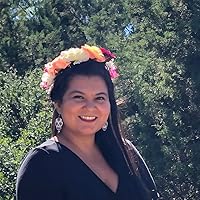
Sonia Gutiérrez's Dreaming with Mariposas, written in a Tomás Rivera and Sandra Cisneros bildungsroman vignette style, recounts the story of the Martínez family as told through the eyes of transfronteriza/transboundary Sofía Martínez, "Chofi," Francisco and Helena's daughter, as well as multiple narrators, emulating oral tradition. The novel embraces food as a communal practice with the ability to heal a family through storytelling. Dreaming with Mariposas presents glimpses of poetic diction in times of anti-rhetoric, inspiring readers to reclaim their sacred spaces and voices and to pursue dreams even when the future looks dismal. Chofi witnesses institutional racism, sexual harassment, and colorism and learns to navigate her parents' dreams and her dreams as she discovers her superpower, the strength of her Mexican Indigenous heritage, and the spirit world.
Powerful, concise, and poetic, this novel in vignettes tells the coming-of-age stories of two sisters, butterflies in a family of dreamers in southern CA during the late 70s and 80s. I honestly thought this was a memoir most of the way because the details were so rich and real and accurate to me as someone who also grew up in So Cal during this time. I really enjoyed the charm and strength of these sisters, second generation immigrants from Mexico, who, despite facing inequality, racism, violence and poverty, not only refused to be victims but became impossible to ignore. Charming, humorous, and, at times, harrowing, it’s a story of an American family you won’t forget. Definitely worth a read.
I was a little skeptical going in just because it has a similar vignette-style of writing as The House on Mango Street which I was not the biggest fan of, but here it really clicked for me!
The story following two sisters reads like a memoir, I had to keep reminding myself that this is fictional, but the way Gutierrez writes with such detail makes it feel so real. Every experience is different of course, but I felt the book really nailed the essence of growing up with this dual Mexican/American identity.
The theme of the dreams and the mariposas played out super nice in this coming-of-age story, I would highly recommend this read in both academic and personal contexts!
I bought and read this book as soon as it was released--I couldn't wait to read it! Since I live in North County and worked in the San Marcos school district I could relate to many of the places she mentions in the book. I thoroughly enjoy Sonia's writing style--it's both poetic and narrative. Her writing transports me to a different time and space and I didn't want the book to end. My high school Latina teen mentees want to read it, but I cherish my copy so much that I need to buy another copy to loan out to them.
Portrait of the artist as a young Chicana! What I loved about this book--written as a linked series of short vignettes--was that it was about coming of age as a writer/artist. Some definite nods to Cisneros's classic House on Mango Street, but Martinez makes the form her own with gorgeous description of houses, yards, food, family cuentos, and a wrenching climax when Chofi and Paloma finally flee their family home, with triumph and sadness, to realize the mariposa dreams embodied by parents and grandparents, tíos y tías.
This book captures everything perfectly of what I grew up around and how my family was. School was something my grandparents dreamed of as well as my momma, they pushed that fire that they had to me. So I feel very connected to this story.
Although the first-person narration could have misled me, Dreaming with Mariposas reads more like a memoir than a novel. It's the coming-of-age story of an Hispanic girl in the US, presented with warm affection for the girl's parents. From them, she learns both to value her roots and cultural heritage and to aspire to personal achievement. From them also, and from other relatives, she absorbs gritty lessons: You (or at least your sister) can stop a bully your own age with a solid punch in his gut. But when the bully is an adult—your uncle, for example—you cannot win. A woman unfortunate enough to marry a bad man will live with abuse until (if she's lucky) he dies. The reality Sofía knows is often harsh, but from the first page there is also the theme of escaping it, with imagination, or dreams, pointing the way.
All writers draw on personal experience, of course. Fictionalizing one's story, e.g., by changing names, perhaps altering events, gives the author leeway to shape the narrative arc and make points in ways not available to the memoirist. We can all name successful examples of the genre.
Dreaming with Mariposas is a worthy attempt. It's the nature of mariposas, butterflies, to migrate north and south, across manmade borders. Their way is light and fluttery, like the course of a dream, and in this narrative they serve as a metaphor for Sofía's path. She goes south to meet the older generation. Later she returns to get a college education en El Norte.
I see two weaknesses. The first concerns accessibility.
It's fine for an author to expect readers to do a little stretching. An example might be in the sentence: "Mexican corn didn't taste like the sweet corn kernels from a tin can—Mexican corn tasted like elote." It turns out I've eaten elote without knowing the name for it. I have no objection to looking up the word. But then I'm left feeling that I made more of an effort here than the author did, because there's no real attempt in that sentence to evoke the sensual experience of taste. How should it be done? Well, that's where art would come in, showing vs telling. I sense that the experience means more to the author than the reader.
Then there's the heavy use of Spanish—including corrupted, nonstandard versions that are going to cause problems even for readers with some facility in the language. I'm guessing, for example, that "A poco estas son tus dos huercas?" means "Are these your two little girls?" But I may be wrong. Other snippets are not in Spanish at all but (according to one of the book's discussion questions) in Nahuatl. Why that would be part of Sofía's experience is not explained.
Every writer who aspires to reach a broad audience must confront the challenge of how to render personal experience and impressions in a way that can be understood by people with other backgrounds. Granted, when the narrator is a young child, some of that experience will also be mysterious and inexplicable for her, and I acknowledge the way her confusion is carried forward to the reader. But as she grows older and more aware, it seems that the passages not in English become longer and more numerous, reflecting, I suppose, her embrace of the other language. So be it; but all writers, regardless of whether they are coming from a distinct culture, do have the burden of connecting. Failure to do that limits the appeal of their work to readers who are already on board.
Some parts of the story are lighthearted and amusing, such as the one about the girls' locker room in junior high school. But others are not really part of the narrator's story. Sometimes that works, as in the contrast between her own strict upbringing and the rumored fate of her coworker Blanca. Others, like the report of the man who rode north clutching the roof of an RV, and the kid who fell out of a tree holding a chainsaw—and who was then driven all the way from Rancho Bernardo to Tijuana for medical help—serve only as snapshots of the world in which she lives. In another piece, she's angry with US media for not reporting on violent crimes in Mexico. I don't disagree; news curators routinely make stupid calls in deciding what the public ought to know. But this chapter amounts to a rant that has very little bearing on Sofía's story. I guess it just illustrates the sort of issues she is learning to care about as she matures.
I mustn’t omit mention of some good factual stuff, such as the process for making "quality tamales." And there are some good lines: She says her mother’s sewing scissors “produced a deep baritone of seriousness." When traveling to Mexico, she says "we stuffed our suitcases like big, fat, chubby tamales with lots of masa and very little meat and sauce."
In conclusion, Sonia Guitérrez is an energetic and passionate writer. I think her writing can improve with time.
I was assigned to read this book in a Chicana/o studies class and read it very briefly. I most recently found the book as I was cleaning my bedroom and finished it in one sitting. Sonia has a way of telling stories that shine beyond the pages. If you liked The House On Mango Street, you’ll really enjoy this book.
This is a very relatable book for me because I am an immigrant. I especially recommend a professor or teacher who has a direct impact on young Chicano students. This book elucidates the mentality, the hard work, and the desire for progress along with its challenges.
Many students are lost due to the challenges, especially the cultural challenges and this book helps bring a little light to those challenges. I certainly want to emphasize the imposter syndrome students experience in academia and in the workforce.
I loved this book very much all the stories were amazing but I love the ending on page 189 when she basically says no matter what nothing is going to stop her from writing what she wants and loves!!
Overall, I liked this book but it is far from perfect. It could really have used a much better editing job. There are some pages places where there are errors - places where words are missing or added, (probably a result of changes made in the process of revision, then not caught by a competent editor) and also places where the author is obviously inserting something to make a point, but it comes across like the fakey dialogue of an after school special. Other stories are interesting and well written. Parts are a little confusing and perhaps a little arty, particularly later in the book. Other stories are clear and engaging and simply fun to read. I think that in order to really understand this book, one really must be able to speak both Spanish and English, so if that isn't you, this book may not be a good fit.
In one word, I would describe the Fiction book, Dreaming With Mariposas as a heart touching book. My favorite thing about this book is That you can really feel the emotion in it. The entails are everything. I really enjoyed how the author, Sonia put her heart into the book. She has a really open mind and i love that she shares very relatable experiences. She really made me feel the connection with the character. The book had me in shock and a bit surprised in some parts. If you like feeling some sort of empathy and deep connections with the character then you will definitely like this book because It really expresses a lot. I know I won't forget how hooked this book had me in the beginning. It just pulled me.
I absolutely loved this book! It took me back to my childhood, early struggles, friendships, and survival. I finished reading the book in an hour. I enjoyed Sonia’s choice of words-very poetic, and I loved how she incorporated all the Mexican songs I grew up with. I am looking to get a copy of two more of her books. If you ever get a chance to attend one of her book talks you will be hooked!!👍🏽
I get the comparisons to The House on Mango Street, but it's not really in the same class.
Maybe it's that there are so many unexplained things, or that some of the passages are so brief, but while there would often be a familiar name or song that I would connect to, I did not feel a connection to the author or overall story.