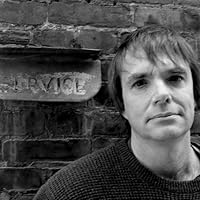
The first full-scale biography of Robert Welch, who founded the John Birch Society and planted some of modern conservatism’s most insidious seeds.
Though you may not know his name, Robert Welch (1899-1985)—founder of the John Birch Society—is easily one of the most significant architects of our current political moment. In A Conspiratorial Life , the first full-scale biography of Welch, Edward H. Miller delves deep into the life of an overlooked figure whose ideas nevertheless reshaped the American right.
A child prodigy who entered college at age 12, Welch became an unlikely candy magnate, founding the company that created Sugar Daddies, Junior Mints, and other famed confections. In 1958, he funneled his wealth into establishing the organization that would define his legacy and change the face of American the John Birch Society. Though the group’s paranoiac right-wing nativism was dismissed by conservative thinkers like William F. Buckley, its ideas gradually moved from the far-right fringe into the mainstream. By exploring the development of Welch’s political worldview, A Conspiratorial Life shows how the John Birch Society’s rabid libertarianism—and its highly effective grassroots networking—became a profound, yet often ignored or derided influence on the modern Republican Party. Miller convincingly connects the accusatory conservatism of the midcentury John Birch Society to the inflammatory rhetoric of the Tea Party, the Trump administration, Q, and more. As this book makes clear, whether or not you know his name or what he accomplished, it’s hard to deny that we’re living in Robert Welch’s America.
“Today, all of us are strapped into the roller coaster in the fantastical theme park of Welch’s political imagination. And we can’t get off. Who then was Robert Welch? To some, he was a genius: a child prodigy who was reading at age two. He attended the University of North Carolina when he was twelve. He created the Sugar Daddy and other childhood confectionaries. He founded the John Birch Society, the most successful anti-Communist organization in the history of the United States. To his detractors, he was at best a prophet of doom who predicted that the country was on the verge of a Communist conspiracy engulfing all aspects of American life…” - Edward H. Miller, A Conspiratorial Life: Robert Welch, the John Birch Society, and the Revolution of American Conservatism
Robert Welch is known to history – if he is remembered at all – for two things. First, he created the Sugar Daddy. Second, he founded the John Birch Society.
If you are unfamiliar with the Sugar Daddy, it is a piece of candy that takes an excellent ingredient – caramel – and turns it into a sticky, stone-hard block that is guaranteed to destroy any dental work you’ve had done. Meanwhile, the John Birch Society was a niche right-wing organization that developed during the Cold War, based on the proposition that everyone who disagreed with the Society was a Communist spy directed by the Kremlin.
Neither accomplishment necessarily warrants a full-scale, cradle-to-grave biography. But that has not stopped Edward H. Miller from trying. In A Conspiratorial Life, Miller tells you everything you need to know about Robert Welch, which turns out to be very little, and a whole lot more that you don’t.
***
Before going further, I should add that Welch’s claims-to-fame are not nothing. Most people – myself included – won’t have any, much less two. Still, inventing a piece of candy, and later trafficking in baseless conspiracies, are not exactly indelible accomplishments. In the case of the Sugar Daddy, it is a barely edible accomplishment. Call me old fashioned, but if you’re getting the near-400-page, hardcover treatment, you have to have really impacted events in some meaningful way.
These thoughts kept intruding as I slogged my way through the opening chapters of A Conspiratorial Life. Miller dutifully, methodically provides the backstory of the Welch family, describes young Robert’s upbringing and schooling, and follows him into adulthood. I hate to use the word “boring,” but this is extremely boring. None of this amounts to anything more than trivia. Heck, it’s not even that, because that implies that at some point, sometime in the future, knowing Robert Welch’s alma mater might help you nail a question on trivia night.
The early-goings of most biographies tend to stretch the boundaries of relevance. This slow-going can sometimes be overcome by an author with a particular flair for connecting a person’s formative years with their later selves. Miller is not able to do that here. Partly, this stems from a general lack of artistry. Mainly it’s because Welch is not an exceptional figure. His childhood doesn’t really matter because his adulthood doesn’t really matter. He’s a fringe figure who is far less important than the political organization he started, and the echoes of that organization years after his death.
***
A Conspiratorial Life is weighted down by its own self-seriousness. It is ponderous in relating all the Robert Welch information that exists, without ever wondering if it is adding anything to the conversation. Despite this oversharing, Miller only gives a single paragraph to the creation of the Sugar Daddy. Going into this, I had numerous questions about the famed tooth-destroyer, and none of them were answered.
This refusal to go in a lighthearted direction, if even for a moment, represented a doubling-down on a needlessly grim tone that had me dreading this each night.
***
Things do get mildly more interesting when Welch transforms into the person he was born to be: an angry middle-aged man.
After his brother kicked him out of the candy company he started, Welch formed the John Birch Society. Among its most well-known claims is that Dwight David Eisenhower – the Supreme Allied Commander in the European Theater of the Second World War, the 34th president of the United States, and a Republican – was actually a Communist agent. Welch never offered proof of this, as you can’t offer something that doesn’t exist. Yet he proved an early adopter to the if-you-say-it-it’s-true school of political discourse.
Miller’s main argument in A Conspiratorial Life is that Welch played an important, under-acknowledged role in putting the conservative movement onto the trajectory it travels today. Certainly, he demonstrates that Welch’s ideas were debated, shared, and often repeated by more-famous political operatives such as William F. Buckley, Clarence Manion, and Barry Goldwater.
While Miller may be onto something, he blunts the impact of his thesis by unspooling it in the most tedious way imaginable. Many of the later chapters consist solely of letters exchanged between Welch and other conservatives, which eventually becomes numbing and repetitive. There simply has to be a better way of presenting this material than by filtering it through the correspondence between Welch and Slobodan Draskovich.
By the time we get to the end of the book, and Miller is giving Welch credit for helping stop the Equal Rights Amendment, I could barely rouse myself to attention. That’s too bad, because the expansion of the John Birch Society to encompass opposition to abortion, homosexuality, and women’s rights might have proven an interesting way to study the evolution of conservatism and its embrace of the so-called culture wars.
***
It would have taken a very talented writer to give the breath of life to such a dour, humorless figure as Robert Welch. This is a man who simply epitomizes the stereotypical squareness of the postwar Eisenhower Era. He was a small-c conservative in the sense that change startled him, leading to evident discomfort with civil rights, women in the workplace, and the possibility that somewhere, two people were having sex for enjoyment.
Unfortunately, Miller’s style doesn’t give this material any added value, and occasionally detracts from it. For instance, he doesn’t seem to have a good grasp on Welch’s character, often contradicting himself as to whether Welch was a racist or an anti-Semite. This is probably a function of Miller’s struggle to provide a fair portrait of a guy he doesn’t really like. That said, it smudges the picture he’s trying to paint.
More fundamentally, I found this difficult to read. “Good” or “bad” prose is hard to define. Like obscenity, we know it when we see it. The trouble here, as best I can explain it, is that I often had to read Miller’s sentences two or three or four times to understand the sentiment he sought to convey. Even then, I was frequently perplexed.
***
Ultimately, I believe that Miller would’ve been better off writing about the John Birch Society itself, rather than recounting the entire life of its founder. There is a case to be made about the Society’s role in the conservative revolution, but A Conspiratorial Life is too broad and unfocused to make it.
***
Frankly, the political aspects of this story didn’t draw me. I came here because I believe that the post-truth, choose-your-own-reality era we inhabit is one of the biggest challenges of our times.
To that end, Miller wants us to believe that we live in a world of Welch’s making: an angry fantasy realm of fake news, of birthers, truthers, and false flag operations, where a fact is anything that gets retweeted at least a hundred times.
Yet that is not really true. Sure, Welch was a harbinger of things to come, but he was not the first man to peddle nonsense for a living. In my opinion, the lies are always the same; it’s the technology that has changed. People all across the political spectrum believe in various conspiracies. The difference now than even thirty years ago is that theorists can easily connect with each other. Welch mostly communicated through the mail. Now, anyone on earth with a cell phone can walk into a Starbucks, connect to the wi-fi for free, and say whatever pops into their heads. Depending on what is said, and who reads it, that statement can go around the globe in minutes, becoming part of the discourse, or even driving it.
Robert Welch had nothing whatsoever to do with this. He sure would have loved it, though.
Author Edward Miller shows how Robert Welch devoted his life to conspiracies… actually only one conspiracy… that communists were behind everything he did not like or could not relate to. This ranged from real communists like Mao Zedung and Josef Stalin to the United Nations to most departments in the US government, to the civil rights movement to Roe vs. Wade and on... and ... on.
Welch was born in 1899 and was active into 1980's. In all these years, he kept his 19th century small town world view. As the world became more complex, he did not in his life or in his thinking.
He founded a candy company, the one that made the Sugar Daddy. He devoted time and ingenuity, but his brother made it the success that enabled Robert to devote himself to politics.
Miller shows the birth of the John Birch Society. I’d have liked more on who John Birch actually was and why, of all names Welch chose this one for his society. (You essentially learn that Birch was a missionary in China and a solid supporter of Chaing Kai-shek.) Welch led the group to growth and sometimes effective advocacy.
The book is arranged chronologically showing how it begins with Welch’s neighborly small town values of live and let live with Jews and minorities. As time goes on, any policing of JBS publications and control of members’ messages wanes and into the civil rights era JBS echoes racist views such as lynching being a local issue. Despite the organization’s reliance on female volunteers it led a spirited (and successful) campaign against the ERA.
In 1954 Welch authored a lengthy document charging Dwight Eisenhower with being a communist tool (evidence: he did not roll back the New Deal; he supported the Marshall Plan; did not use the Army to wrest China from Mao etc.). This enabled other conservatives to marginalize the JBS throughout Welch's leadership.
While Welch is Republican, no one in his party measures up to his expectations. He despised Nixon as an opportunist and considers his revenue sharing, OSHA and other initiatives communistic. There is no mention of Nixon’s trip to China, despite the group’s early fixation on Mao and China. While Welsh, in his 80’s and not fully active, Iran-Contra would be right out of his play book.
William Buckley is shown as an ambitious and polished proponent of conservatism who competes with the large membership of JBS. In the 70’s and 80’s they are easy to ridicule/denigrate with Welch’s (old) Eisenhower statement, the (recent) JBS anti-fluoride campaign and the increasingly open racism and anti-Semitism in JBS publications.
I do not agree with the Epilogue. It contains a lot of bothsiderism. The notion that the vitriol in American politics descends from Welch is a big overstatement. Vitriol was there from the start: from those who did not provision the soldiers at Valley Forge; the bitterness of Hamilton and Burr; to the violence of slavery’s supporters (the assassination of Lincoln, the caning of Charles Sumner, bleeding Kansas, the burning of abolitionist presses, and of course, slavery itself) and later racism seen by the attacks on Tulsa's Greenwood and other communities and the removal of Native Americans.
I would think future analysis of today's partisan anger will point to easy access to the media (by both institutions and citizens), the influence of money in politics and foreign influence through disinformation.
Other than the Epilogue, this is a well researched book. It shows the influence of Robert Welch and his dedication to anti-communist conspiracies.
Edward H. Miller's A Conspiratorial Life profiles Robert Welch, the businessman-turned-right wing agitator who birthed the John Birch Society. Welch grew up in North Carolina, the son of a farmer who inculcated in him the ethics of hard work and a belief that Southerners were being oppressed by the Federal government. Moving to Boston as an adult, Welch and his brother James became wealthy candy manufacturers in the '30s and '40s while Robert matriculated in the anti-New Deal corporate atmosphere of the age. By the early '40s Robert was donating money to and taking part in America First's pro-neutrality campaigns; after WWII, he embraced a conspiratorial worldview of an international communist conspiracy ought to destroy America. After failing in a run for political office, Welch truly emerged in the early '50s as an ally of isolationist Senator Robert Taft, an enthusiastic backer of Joe McCarthy's Red-baiting crusade and a belief that Democrats - and all-too-many Republicans - were instituting a "creeping socialism" that undermined the foundations of the Republic. In 1958 Welch founded the John Birch Society, whose outrageous accusations of UN One-World Government, mind control through water fluoridation, Dwight Eisenhower as a communist agent and racial integration as a Moscow-directed conspiracy earned them condemnation in the media, scorn from elected officials, and tens of thousands of loyal followers. Welch's moment in the Sun was relatively brief; a combination of hostile press coverage, Welch's own loose tongue and electoral defeats by favored candidates like Barry Goldwater seemed to discredit Welch. But his followers became central to the Republican Party's "Southern strategy," fusing the ugliest elements of the Old Right into the GOP mainstream.
Miller's book does a compelling job in showing the nexus of Old Right ugliness and New Right ideology. His portrait of Welch himself is quite compelling; a genuine intellectual prodigy who attended university at age 12, he honed effective, forceful and learned arguments that seemed plausible to those who didn't examine them too closely. He also became so convinced of his own brilliance (once assuring Bob Taft, during a visit to Massachusetts, that Welch was more famous than the presidential candidate) that he couldn't countenance criticism or dissent. Later in life he surrendered to increasingly baroque conspiracy theories that made the International Communist Conspiracy look like small fry, claiming that today's liberals were merely descendants of the Bavarian Illuminati and other old-time secret societies. And Welch's own paranoia overwhelmed his own life; he regularly purged the JBS of disloyal followers, turned against politicians and media allies who crossed him and became increasingly isolated even as Bircher positions on communism and "culture war" conflicts became mainstreamed by the Reagan Revolution.
Recent historians have reassessed the standard portrait of the postwar Right: the idea that there was a split between the respectable "movement conservatism" of Buckley, Goldwater, Reagan, etc. and its uglier underbelly of Birchers, McCarthy and George Wallace is an item of faith not only for conservatives, but historians and political writers as well. Miller shows how much this gap is exaggerated, where it exists at all. Although Buckley famously condemned the Birchers' wilder speculations, he never fully broke with Welch or his followers to the degree mythology suggests. While Goldwater's campaign lost in a landslide, Reagan won election (first as Governor of California, later to the Presidency) in large part by mouthing Bircher platitudes in slightly more palatable terms. Welch, while claiming to personally eschew racism (and to his credit, he did purge overt Nazis and anti-Semites from the JBS), embraced George Wallace, Edwin Walker, Billy Ray Hargis and other vile segregationists who made no secret of their bigotry.
Miller's book is at its weakest, and most didactic when he makes direct comparisons to modern politics. Readers don't really need Miller to directly evoke Trump, Steve Bannon and Alex Jones to stress the parallels; for informed readers, the connection between one era's conspiracy theories and another is plain as day. The difference is that Welch, as influential as he was, couldn't win elected office, was kept at a polite but firm distance by elected Republicans and certainly never found his way into the White House. Today, the gap between conspiracy theorist and elected official is nonexistent; and most of Welch's modern counterparts lack his intelligence, ideological consistency or even his earnestness. What's left is the paranoia, denial of reality and demonization of anyone not one hundred percent in agreement as not only an opponent, but an enemy or traitor. And Welch, Miller convincingly argues, played a major role in bringing us to this point.
I've struggled through the first 160 pages of this book but have given up since, no where in the first 160 pages, did I get a sense of who Robert Welch was as a person. Rather, the author provides very detailed descriptions of contemporaneous events such as the firing of General MacArthur or the McCarthy hearings, and then briefly mentions what side of the issue Welch was on.
This book is really good in some ways, but I struggled with it. It's at its best when it's tracking internal divisions in the John Birch Society, showing the conservative narrative about conspiracy theorists and antisemites getting purged is bunk, and narrating the construction of the organization.
But other places, the book struggled. Some basic facts, like what tools are used to grow cotton and when Nixon served on the House of Un-American Activities Committee, are wrong. Some parts of the story, like how Welch went from a pretty normal business Republican to the chief architect of wild conspiracies, are pretty thin. And some arguments, like how JBS influenced modern conspiratorial thinking, could have been made with careful evidence, are just thrown up in the air.
Would still recommend it if you're into the history of the American right. It made me think about a lot of things. But overall I felt like it needed another round of stiff editing and I put it down disappointed.
This is an excellent biography of Robert Welch as well as a history of the group he founded — the John Birch Society. This book is a necessary piece of the evolution of the conservative (and reactionary) right in America over the past 80 years. The author makes a strong case that the current turmoil we find ourselves politically and socially surrounded as we are awash in conspiracy theories is the world that Robert Welch and the Birchers made. Highly recommend.
Dr. Miller has written the definitive biography of Robert Welch. Miller appears to be the first scholar to get access to a portion of Mr. Welch's personal papers.
There are some errors in this book particularly with respect to the number of actual members in the Birch Society and not enough recognition of Mr. Welch's very cozy or polite relationship with bigots (such as Verne Kaub and Gerald L.K. Smith).
Also, not many authors recognize that Welch invited life-long segregationists into the JBS as members, as employees, and as senior officials including at least 4 JBS National Council members (T. Coleman Andrews Sr., A.G. Heinsohn Jr., Thomas J. Anderson, and Dr. Thomas Parker). In addition, many people connected to the racist and anti-semitic Gerald L.K. Smith (and his organization, Christian Nationalist Crusade) were JBS members and/or financial supporters. Examples include: George B. Fowler - Holyoke MA, Dr. Hugh S. Ramsay – Bloomington IN Olive Simes – Boston (and stockholder in Robert Welch Inc), Franklin Farrel Jr. – New Haven CT [Also a contributor to National States Rights Party in 1963] Edgar A. Scheubert – Chicago IL Paul H. Talbert – Beverly Hills CA (JBS National Council member).
In 1956, Welch left the GOP to campaign and vote for T. Coleman Andrews Sr., the Presidential candidate of the pro-segregation States' Rights Party. In 1976, Welch again voted for a life-long white supremacist (Tom Anderson, American Party). Several senior officials of the White Citizens Council movement were JBS members or employees (i.e. William J. Simmons, Louis W. Hollis, Medford Evans). Evans was a particularly virulent racist who also was employed by the JBS as a Coordinator and speaker.
In some instances, Welch recommended publications (or authors) that were pro-Hitler during World War II such as Edward Delaney. In other cases, Welch recommended people or organizations that were described as flirting with fascism by the FBI -- such as Merwin K. Hart and the American Flag Committee.
But these types of errors must be understood in the context of the fact that our academic community has rarely done the granular research into Welch and the JBS which is required to discover the type of information which I have summarized above. There are numerous archives of personal papers at our colleges and universities and state historical societies which have not been seriously researched by our academic community. In addition, the JBS is reluctant to grant access to its own archives to any independent researcher so very little is known about JBS history, including its internal disputes or demographic information about its membership.
An interesting introduction to the decline of the Republican Party’s current state of dementia, albeit also it’s concomitant rise in popularity and thus also a guide to our national dementia as well.
Miller's book looks at the history of the John Birch Society and the life of its founder Robert Welch. Tracing the impact that Welch had on the society and the conservative movement in America, Miller shows how conservatism changed over time. It is an important book for anyone curious about the rise of populism and all of the off shoots of the contemporary conservative movement.
"Newspapers were undergoing a seismic change. Yellow journalism-with its sensationalist headlines, exaggerated imagery, and invented facts-had peaked. A new brand of objective reporting and professional standards-always more a broad goal than a reality-was on the rise. As journalism professionalized, it branched into reportage, analysis, and opinion..." 41
"But we do know that he revered the Republican presidents of the 1920s,-Harding and Coolidge and Hoover-who all held to Republican liberalism: an individual's moral qualities played the decisive role in failure or success." 46
"The economy roared. Americans embraced economic nationalism, abandoned the reformist spirit of the progressive era, and back the conservative Republican politics of the Harding, Coolidge, and the Hoover administrations." 54
"Classical liberalism had been the ideology of Republican hegemony between 1896 and 1929, but in the 1930s, the American people called for greater government involvement in economy." 58
"Welch's foreign policy derived from a traditional Republican view that emphasized a serious conflict between the East and the Midwest. The Midwest resented the East as arrogant, exploitative, abusive and most ominously, Anglophilic." 64-65
"The United States, Manion concluded, was not a democracy but a constitutional republic." 72
"Richard Hofstadter wrote in his seminal essay "The Paranoid Style in American Politics:" "the paranoid tendency is aroused by a confrontation of opposed interests which are...not susceptible to the normal political professes of bargain and compromise. The situation becomes worse when the representatives of a particular political interest-perhaps because of the very unrealistic and unrealizable nature of their demands-cannot make themselves felt in the political process." 101
"An entire generation had never had it so good, due not to the austerity programs that the Old Guard favoured but the administration's Keynesian economics. Eisenhower spent federal moneys throughout the recession spark by the Korean War, expanded Social Security, raised the minimum wage, and secured unemployment compensation for 4 million more workers....The prosperity that Americans enjoyed between approximately 1950 and 1970 were the seeds of green changes: the civil rights movement, the feminist movement, the consumer movement, and the LGBTQ movement. Everybody wanted a slice of the pie." 176
"But President Kennedy saw the reality of Birmingham for what it was. He was shaken by the violence, like most Americans. Birmingham jolted the president from his slumber concerning civil rights. Kennedy's worldview completely changed because of Birmingham." 287
"The Birmingham campaign was an important moment in American history because King's courage resulted in Kennedy's advocacy for what became the 1964 Civil Rights Act." 268
"In the 1970s, the Sunbelt, with its thriving oil sector, stood in stark contrast to the rusting economies of the Midwest and Northeast. American businesses were moving west and south, out of states like Michigan, Ohio, Pennsylvania, and Wisconsin and into business-friendly states without unions, high taxes, or much regulation, especially Texas and California." 333
"As Bill Clinton took the oath of office, the Left embraced a politics of sensitivity and self. The Right also adopted identity politics that cultivated the resentments of privileged White males grieving their loss of potency and hegemony in an America experiencing vast demographic change. The Right began to feed on a resentment of immigrants and the rising status of African Americans. Rather than embracing a politics of amity, both sides indicted the other with animus and antipathy." 373
"In 1987, the FCC abolished the fairness doctrine; broadcasters were no longer required to present opposing views, and conservative radio grew by leaps and bounds." 375
"As Jill Lepore observed, "the nation had its lost its way in the politics of mutually assured epistemological destruction. There was no truth, only innuendo, rumour and bias. There was no reasonable explanation; there was only conspiracy." 377
"Americans were increasingly getting their news from the internet and the social media it enabled. In 2004, Facebook arrived. In 2005, YouTube. In 2006, Twitter." 379
This book was a bit of a slog. I gave it 3 stars because I definitely learned a good bit about the John Birch Society and their influence on the conspiracy theories espoused by today's right. Miller makes the point that contrary to popular belief neither Reagan or Goldwater were actually that moderate. Goldwater adopted many of Robert Welch's views at the same time he tried to distance himself from the Society. Reagan would often parrot Birchers' conspiracies such as the claim that nuclear arms protests in the US were being orchestrated by the Kremlin.
At his heart Robert Welch was an anti-communist in much the same vein as Joseph McCarthy. He saw communists everywhere. In fact Bob Dylan wrote a song entitled 'Talkin’ John Birch Paranoid Blues.' The goal of communism was one world government under the Soviet Union. NATO and especially the UN would be the first step. And the Council on Foreign Relations would also play a role working from within. We sees echoes today of this argument when we hear talk of a globalist conspiracy. Welch saw Nelson Rockefeller, a moderate Republican, as playing the role of a grand puppeteer in the conspiracy leading to Eisenhower, Nixon's as well as Reagan's election. I couldn't help but draw comparisons to George Soros. Welch would get in some trouble when we wrote a letter to several of his friends calling Eisenhower a communist. This letter would morph into book format as the Politician. As Welch mailed copies to JBC members the 'Politician' would become public causing some in the conservative movement like William Buckley to distance themselves from Welch over concerns over losing mainstream support. I found it interesting that Eisenhower was convinced to run over fears that Robert Taft, a darling of the far right, might win the nomination. Taft was an isolationist who didn't believe in NATO and thought the US shouldn't have been involved in WWII. Reminds me of some of the far right today.
Welch also believed that the Civil Rights movement was being choreographed from Moscow. Blacks were pawns being used by the communists to convince of the need for a strong Federal response which would essentially lead to authoritarianism and make it easier for a Soviet takeover. In 1962 James Meredith became the first African American to enroll at the University of Mississippi. Edwin Walker a former US general encouraged his followers on the radio to protest, leading to a riot where 2 died and 375 were injured. Walker was subsequently arrested for inciting a riot. Walker had previously been relieved of duty after having his troops read Birch Society literature. Early in the Kennedy administration there was fear that North Koreans were indoctrinating captured US servicemen and divisions were set up to 'educate' on the dangers of communism. Edwin headed one such division; I suppose reading Welch's 'Life of John Birch' was deemed a step too far. Anyway, according to Birchers the violence in Mississippi was due to communists and opponents of racial segregation. Walker was merely trying to lead a peaceful protest. Much of the story in the mainstream media was called 'fake news' by the far right. Earl Lively would even title an article 'The Invasion of Mississippi' arguing such. These views would reverberate through much of the civil rights coverage where it was claimed the news media cherry picked shots of violence committed by police while not showing the instigation by the activists.
Before long these claims of world domination by the Soviet Union would morph into a bigger conspiracy claiming complicity within the US Government to turn the US into a satellite communist country. Of course from this we get Joseph McCarthy. Also, Dan Smoot would write a book titled 'The invisible Government' where he targets the Council on Foreign Relations for a subversive communist plot. In the 70s Birchers would partner with evangelicals to go after social issues such as abortion, pornography and sex education. It was an easy leap because of the Bolsheviks repudiation of religion to believe the UN serving as the anti-Christ in a globalist conspiracy. At one point some Birchers even started believing that communists had infiltrated the Society and some members turned on each other.
Anyway, despite dryness of the writing I did learn quite a bit about the beginnings of conservative thought and even the conservative radicalism we see today. I didn't realize that the GOP's interest in China and Taiwan go back to shortly after WWII. Conservatives supported Chiang Kai-Shek in the Civil War against Mao Zedong. Chiang Kai-Shek would lose and flee to Taiwan where he claimed to be the legitimate government. Robert Welch et al were apoplectic and accused Truman of being a closet communist and losing China to communism. I don't know that I would read another one of Miller's books but at least it was an informative read.
The biggest problem with this book is that there’s no “there” there, specifically, no information on WHY Welch founded the JBS. There may be no “smoking gun” on some diary entry or letter. But, history is a humanities field and reasonable speculation is allowed.
From Welch’s bio, the best guess is that someone as precocious as him had been, by the lights of the business world he inhabited, only moderately successful, with the additional dead weight of having had to play second fiddle to his younger brother in HIS candy company for 25 years. (Nobody forced Welch to do that; if he were really that entrepreneurial, he could have gone off on his own, either to another established business, candy company or otherwise, or started his own new business, again, candy company or otherwise.) Add in that he had made plenty of money as that second fiddle and therefore could walk away (especially when "junior" kept him on at 1/3 salary to be a consultant and to continue holding down a board seat). So, he decided to make his mark.
But Miller, after presenting the bare facts of Welch founding JBS, precisely does not go further down this road.
As for JBS still having an influence on the modern Right and the modern GOP, and perhaps it even growing? Nothing new. Rick Perlstein, blurber of this book, has discussed that. So has Jeet Heer. So have many others. It’s A-B-C reasoning to do that when Fred Koch was one of the “Indy Eleven.”
Deeper analysis otherwise might have tried to find out, one way or the other, how much Welch believed all of his conspiracy theories, and how much he thought belief in them was good for JBS business. In addition, pre-World War II, was their more evidence of his belief in conspiracy theories then?
If there’s not a lot of facts to spill out your speculation, take your best shot and say so. That’s what good history does.
This isn’t horrible, but it’s not much more than color by numbers, and I moved on from full reading to grokking and skimming after the Indy Eleven chapter.
That said, in earlier chapters?
A few things new to me: 1. McCarthy wasn’t alone in smearing George Marshall as SecDef. In his confirmation hearings, the odious Jenner called him a “traitor.” Taft, the next Senator to speak, served as a fellow traveler by not rebuking Jenner when going on the attack himself. And, tho not calling him a traitor, even Herbert Hoover had doubts about Marshall. 2. Acheson’s State Dept had a 1950 white paper saying Mao’s victory in Taiwan was inevitable. (This would have been just a couple months before his speech that excluded South Korea from the US security umbrella in the Pacific and surely was an added incentive to Kim Il Sung to think we wouldn’t intervene in his Korean unification plans.) 3. Ike got the nomination in part because Lodge challenged the credentials of three Southern GOP delegations — TX, GA, LA. Shades of 1912! And, per Wiki, Ike only won after that on the first ballot because Minnesota rules freed Stassen delegates from being bound and they switched to Ike after the initial ballot.
But, factually challenged.
Some claims are laughers, like the one that Ike was running Keynesian economics. Unless Miller means the other half of Keynes’ coin, running a budget surplus in good times to keep the economy from overheating, which Ike did in 56 and 57. (Truman had even bigger surpluses, though.)
In terms of a sheer biographical work, it’s very good, it’s a great account of the conservative movement from the view of the John Birch Society & Robert Welch. Sympathetic enough to its protagonists as well to be a comprehensive history, it spares few punches while showing honestly in full the complex reality of this strange subsector of the conservative revolution. Whereas Perlstein’s work focuses moreso on the logistics of the conservative movement as it transitions from the sidelines under the new deal era to the forefront of politics in the 70s and 80s, Miller instead looks at a group and person whose ideas were always on more in the dugout, but would occassionally come to bat, and from its position in the dugout, come to totally change the nature of conservative politics. Welch was a crackpot. In many ways a good man, hardworking, family oriented, intelligent (he solved equations for fun, and was in college very young), but still by all means a crackpot. Very distrustful of the conservative establishment, especially when he perceived them as slighting him. This happens with Eisenhower most famously, the author managed to get the letter containing the original accusation, but it also happened with Nixon and even Reagan (Reagan did of course legalize abortion and gay rights in his tenure as Governor.) Also noted is the fact that Welch sees less of a threat from the soviets than he does the Keynesians and socialists at home. He is still an “Asia firster” a crank on many ends, but he finds a broader communist conspiracy beyond the soviet union, which is of course the latest avatar of the illuminati. What is annoying is the weak, threadbare threads which Miller pulls whenever he makes these annoying ass parallels between his characters and our present moment. Yes, sure grandpa. This is just like Alex Jones, Trump and Antifa or whatever. It is worth evaluating Welch and the crackpot crankery’s role on modern conservatism, which Trump won with and many conservatives have wielded, but the comparisons are inept at best. It’s a good pairing with Perlstein. Worth a read.
4.5 stars. I chose this book in keeping with my theme of reading dark, scary books in October. It is an important biography of the man, Robert Welch,” who fueled . . . [the] ‘spread of illusion’ and worldwide view of suspicion by creating false myths that tempted the weak minded (pages 382-383).” It’s a dark book because of the conspiracy themes and beliefs that fueled Welch’s life impacting our country to this very day. Welch founded the John Birch Society, dedicated to his view that Communism was underneath everything that was happening in America (even the world) - even declaring Eisenhower was a Communist! This biography follows Welch’s life as he comes up with some of the strangest theories for events that take place between the 1920-1980s (the span of his life - and some of mine). Welch viewed most events as a conspiracy which in effect, in my view as stated by the author: “. . it poisons the mind and makes it difficult to see reality (page 383).” Welch’s influence on the conservative movement and Republican politics is clearly delineated. This can be summarized by the reference on page 100 to Richard Hofstadter’s essay “The Paranoid Style of American Politics,” in which Hofstadter writes “the paranoid tendency is aroused by a confrontation of opposed interests which are . . . not susceptible to the normal political processes of bargain and compromise.” The book shows how Welch’s pernicious influence lives on today in our fraught, contentious political situation. While the book can be plodding and text-booky at times, it is an important read.
Overall, it’s a painstakingly researched biography of a strange man, Robert Welch, who immersed himself in the world of far-right extremism and conspiracy early in his career and founded one of the most influential political organizations in 20th century America that nobody has ever heard of.
I found some sections quite boring, but mostly due to my own disinterest in US foreign policy in the 1950s and 60s, which clearly is essential to the book because Welch was obsessed with it.
I didn’t love Miller’s conclusions about the 70s/80s toward the end of the book. Historians of conservatism seem to always want to paint a narrative of change-over-time about how the culture wars came to be in the 1970s. Usually, the argument focuses on the introduction of a conservative Christian coalition that marks a “shift” to the “social” and “cultural” issues of their time and away from previous anti-communist activism…but it’s all intertwined, no? At least for me, that’s how I see it…probably will be a dissertation intervention for me.
I learned a lot about Welch and the Birchers from this book (did you know he invented Sugar Daddies and Junior Mints in his early career as a candy man?) and will certainly use the bibliography to direct more research. Impressive book!
This important and timely book details the work and beliefs of Robert Welch and his creation, the John Birch Society. The author describes Welch's growing evolution of Communist-centered conspiracy theories that grow crazier and yet more broadly effective over time. More disturbingly, the book shows how this conspiratorial mindset is dividing our country and gave us Donald Trump and his attempted overthrow of democracy. The book ends with a call for us to recognize there is no over-arching conspiracy and we are ourselves the builders of our future for better or worse. I pray it is for better.
America has become Welchland. The candyman concocted the most dangerous recipe, but we don't have to follow it.
As Arthur Schlesinger put it, 'one set of hatreds gives way to the next.' Partisanship became more central, ideology more crucial. Conspiracy theories are another means of authoritarian conditioning because they make the individual feel impotent and unable to change anything. They hold us back from doing our own thinking and seeking a better world for ourselves and our posterity.
Worth the time and effort. The history/bio of the candy man who brought us Sugar Daddy, Sugar Babies, Junior Mints, and Pom Poms and the ultimate cold war propaganda machine. A well intend US manufacturing power of personify spends his entire fortune fighting against the hidden enemy, the people who support activities that lead to one world government/communism. He perfected the conspiracy theory and used the John Birch Society to promote capitalism and the free market.
A basic understanding one must have today in "our USA is 2 different worlds now" situation.
Probably the best explanation of why Trump has managed to become president not once but twice. An in-depth look at the John Birch Society and its founder Robert Welch, the candy man, inventor of Sugar Daddy and Sugar Babies, and his from successful businessman to failure to the founding of a society that relied upon lies and the creating of myths to form The John Birch Society. Well written and well researched. Well worth the time to read and digest. Good enough that I will probably read it again.
One can deduce after reading this excellent book that it’s not only a biography of Welch, but also a biography of the dangerous falsehoods, lies, and absolute bound hatred every single right-wing radical holds today.
It would be nice if (insert cuss word) like this didn't keep cycling back around in the US. His influence (based on ignorant & paranoid thoughts) continues to this day, proving there's no time limit on stupidity.
An in-depth biography of Welch from the angle of the conspiracy theories that dominated his life. There was something missing for me to pull this narrative together into something truly compelling, but it is a subject I am grimly fascinated by so I was nonetheless hooked.
An interesting dive into the life and times of the founder of the John Birch Society. The author does a commendable job tying in Welch's leaps in logic to modern day conspiracy theories. Highly recommended and well written.
Life is too short to read something so badly written. It would have benefited from a good editor. It’s a pity the shortcomings are so egregious because the book tells a fascinating story.
Pretty interesting subject. I suspect I would have found it much more interesting had the narrator been a real person, rather than AI. I don't know what the publisher was thinking.