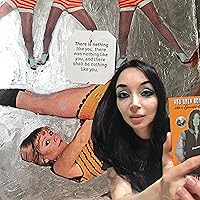
An intimate, funny, yet tragic portrait of extraordinary esoteric scholar Manly P. Hall and the occult scene of 1980s Los Angeles
• Details how the author and her boyfriend developed a close friendship with Manly Hall and how Hall at first mistook her boyfriend as his heir apparent
• Explains how Hall adopted the author as his “girl Friday” and personal weirdo screener, giving her access to the inner circles of occult Los Angeles
• Richly depicts the characters who worked and gathered at Hall’s Philosophical Research Society, including Hall’s wife, the famed “Mad Marie”
In the early 1980s, underground musicians Tamra Lucid and her boyfriend Ronnie Pontiac discovered the book The Secret Teachings of All Ages at the Bodhi Tree bookstore in Los Angeles. Poring over the tome, they were awakened to the esoteric and occult teachings of the world. Tamra and Ronnie were delighted to discover that the book’s author, Manly Palmer Hall (1901-1990), master teacher of Hermetic mysteries and collector of all things mystical, lived in LA and gave lectures every Sunday at his mystery school, the Philosophical Research Society (PRS). After their first tantalizing Sunday lecture, Tamra and Ronnie soon started volunteering at the PRS, beginning a seven-year friendship with Manly P. Hall, who eventually officiated their wedding in his backyard.
In this touching, hilarious, and ultimately tragic autobiographical account, Tamra shares an intimate portrait of Hall and the occult world of New Age Los Angeles, including encounters with astrologers, scholars, artists, spiritual seekers, and celebrities such as Jean Houston and Marianne Williamson. Tamra vividly describes how she used her time at the PRS to learn everything she could not only about metaphysics but also about the people who practice it. But when Tamra begs Hall to banish a certain man from the PRS--the same man who inherited Hall’s estate and whom his wife Marie later alleged was Hall’s murderer--Tamra and Ronnie are the ones banished.
Tamra’s noir chronicle of an improbable friendship between a twenty-something punk and an eighty-year-old metaphysical scholar reveals Hall not only as an inspiring esoteric thinker but also as a genuinely kind human being who simply wanted to share his quest for inner meaning and rare wisdom with the world.
Tamra Lucid is a founding member of the experimental rock band Lucid Nation. She was a writer and editor for Newtopia Magazine and the principal interviewer for the original Reality Sandwich. She has produced documentary films, including Exile Nation: The Plastic People, End of the Line: The Women of Standing Rock, and the award-winning Viva Cuba Libre: Rap Is War. She lives in Los Angeles with her husband, Ronnie Pontiac.
Lucid gives an insightful, highly entertaining account of her friendship with the late great scholar of esoteric traditions, Manly Palmer Hall. Instead of trying to summarize the very extensive contents of Hall's teaching, she relates her own experience of the man and the community he built. Its a tale that conveys the contagious curiosity, adventure, and sheer fun of a thirsty quest for spiritual knowledge. At the same time, Lucid casts a street-wise eye on the cast of fellow-seekers, some of them as delusional as it is possible to find on the streets of Los Angeles. As with any spiritual teacher or tradition, the fire of something inspiring attracts all kinds, and this community draws its share of both highly creative, uplifting souls, and real nut cases -- or should I say souls with a real nut-case side. Lucid's depictions of the interactions involved can be absolutely hilarious. Perhaps naturally in the end, the more self-deludingly ambitious types manage to take over the organization, as we've seen before throughout the history of religion. The more creative seekers launch new experiments, like Lucid's Lucid Nation band, hell-bent on unleashing human potential.
America has been known as a land of new beginnings—and no matter how diminished the nation’s reputation may be over time, it remains a land that hundreds of thousands migrate to in order to make a radical departure from the families, castes, and restrictions of countries in which they were born. If one was to point to a geographic spot in this nation where this fantasy of re-creation was (and perhaps still is) most potent, one would have to look to the West Coast—Hollywood-land—where the concept of modern celebrity through motion picture studios and several competing strains of spiritualism found fertile ground amongst the groves of oranges and figs that once surrounded this “Dream Capital.” Tamra Lucid is a musician and activist whose book represents a marriage of these two worlds—Hollywood glamour and hermetic mysteries. Lucid and her boyfriend Ronnie Pontiac were two youths barely in their twenties with rocker looks, psychic battle scars, and a thirst for a new life beyond what they were finding in the smoky, ironic posturing of punk clubs.
Neither of them expected that they would find a home with septuagenarian lecturer Manly P. Hall, who in the 1920’s parlayed an income gained from wealthy patrons into a lifetime of spiritual “research,” involving the collection, translation, and interpretation of priceless historic grimoires. Then there were the seekers—seekers with a capital S—Egyptologists, Buddhists, elderly socialites, struggling musicians, would-be gurus with money-making schemes on their brains, and other, more unclassifiable outliers who gathered in Hall’s offices at the Philosophical Research Society. Lucid and her partner, first shown as “weirdo” kids, end up initiated into the power structure of a world-renowned occult society led by a figure with Old Hollywood charisma—and his equally charismatic wife, whom Lucid calls one of the original riot grrls—to the point that Lucid becomes a “screener” and impromptu bodyguard to Hall, her street instincts trusted as unsparing regarding visitors are who try to obtain money, advice, or other favors.
To tell you more would be giving away too much. Once I started reading, I had to stay up all night to find out how the struggles of these tangled lives would resolve. This book filled me with such a strong hit of nostalgia for a time and place I never occupied—a love letter to 80’s LA: Tangles of bougainvillea, the scents of leather and cold French fries, the waft of incense and dank weed, diesel, chocolate. The round, peculiar scent skin gets when baked in sun; the flash of wigs and pearls on waxworks women who drive big cars and swivel with a regal weight.
This is a love story—not only of Lucid and her partner, Ronnie Pontiac—but of a now departed LA—and perhaps a now-departed America—where we see a certain type of “pioneer” spiritualist who wants to create a Grand Unified Theory of every religion—some might say with a Western World conceit that now seems like a relic of another era. Whether you find this book because of a specific interest in Hall, or because of your appreciation of Lucid and Pontiac’s work—this is a gripping ride. Her LA flickers white-hot like a flash bulb and then its negative comes, the dark spot, a jagged blot flaring in the retina for minutes to come.
A brief tour of that long-lost but fun-sounding version of 1970s/1980s California you sometimes bump into in Dory Previn songs or in the subplots of Tales of the City. Channellers, and lecturers, and normcore cultists in identical yellow sweaters, and mad grifters who used to be Queen Elizabeth I but, like, need a sofa to crash on. And roughly ten professional or semi-professional astrologers per square metre.
A few times while I was reading this, the TV or the people around me would unexpectedly start talking about something from the very paragraph I was currently reading, which seems pretty apropos - that seems to be happening to Our Heroine and the others in Manly P. Hall's orbit almost all of the time. But maybe that's just the kind of thinking that gets you into the orbit of a Manly P. Hall to begin with.
The first half of the book was quite boring and felt like the author did not really have much to say. A lot of it dragged on without offering anything particularly insightful or engaging. The second half was better and had a few moments that held my interest, but overall the book was not very interesting. One thing I did appreciate was how openly Tamra Lucid confirms how many scammers and grifters try to make money or get famous in the occult scene. That honesty was one of the few genuinely worthwhile parts of the book.
I was at PRS after the departure of Mr. Hall, Marie and Fritz. I am grateful for this loving glimpse of the man who created PRS and the people who surrounded him. I wish I could have met him as I used to drive past looking at the Egyptian Sculpture in front and wondered what it was all about while he was still there lecturing. It answers questions I had about his passing. Thank you for sharing this.