Named one of the Best Books of 2021 by The Boston Globe and Lit Hub Finalist for the PEN/Voelcker Award for Poetry Longlisted for the PEN/Jean Stein Book Award Finalist for Publishing Triangle's Thom Gunn Award for Gay Poetry
From the critically acclaimed author of Thief in the Interior who writes with a lucid, unmitigated humanity (Boston Review), a startling new collection about revolt and renewal
Mutiny a rebellion, a subversion, an onslaught. In poems that rebuke classical mythos and western canonical figures, and embrace Afro-Diasporanfolk and spiritual imagery, Phillip B. Williams conjures the hell of being erased, exploited, and ill-imagined and then, through a force and generosity of vision, propels himself into life, selfhood, and a path forward. Intimate, bold, and sonically mesmerizing, Mutiny addresses loneliness, desire, doubt, memory, and the borderline between beauty and tragedy. With a ferocity that belies the tenderness and vulnerability at the heart of this remarkable collection, Williams honors the transformative power of anger, and the clarity that comes from allowing that anger to burn clean.
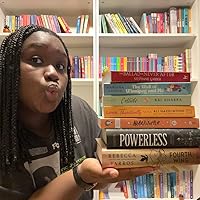
Mutiny by Phillip B. Williams Wow this poetry book truly hit I was snapping my fingers the whole time. I felt so seen as a black women and the things we have to go through. The audacity of racist people truly baffles me ugh. The poetry was enlightening, heartbreaking but also beautiful. Rating: ⭐️⭐️⭐️⭐️
Mutiny begins with a quote from Solange single Mad: "I got a lot to be mad about", Williams has every right to be.
from the spectacles of Black death, the commodification of Blackness, and conformity. Williams somehow, marvelously, puts into language and figurations . Williams is firing on all cylinders with this collection. he is enraged and as so am I!
This book will knock you off your reading socks. The poems don't sparkle, they burn, right through any preconceived approaches. It's mutiny alright, of form and word. And what facility the poet shows with an inherited (as formal traditions) art and how he bends it his way. Powerful. The collection is not divided into parts which gives a sense of transitioning from start to end, a sense of transport. This fluid forward motion is reflected in the individual poems as well. There is so much to marvel at and discover along the way it will warrant many, many readings.
a lot of jarring, uncomfortable material while reclaiming survival, not just for williams, but ancestors, with an echoing voice, reversing the shameful and tragic into joy and prosperity. the lines, dialogue from abuse, are most startling; if they're so memorable reading, i can't imagine how long they've festered in the poet's head. definitely a good example of what the power of poetry can relay compared to other forms of writing. worth a read, but man there's some heavy shit within.
Williams' poem "January 28, 1918" is an explication/reexamination/'speculation' of the Porvenir, Texas Massacre of 1918, in which Texas Rangers, local Anglo ranchers, and members of the US Cavalry murdered 15 Mexican American men and boys. It's the kind of poem capable of showing the casual reader (or the unbeliever) the scope of what poetry can do, and what poets can be. Not just painters or magicians or musicians--though they can be that, too, and certainly many of Williams' poems seem sculpted from wind, or things other than language--but also archeologists or students of disappeared history, among many other roles. Williams is honest and generous in his roles (always love a notes section in collection, especially one as full as this!!). Here, the narrator discovers as we readers do: "I wondered why I'd never learned about this massacre, this (I called under my / breath) lynching (as though to call it so were mere speculation and not fact)." Williams' transparent confrontation with history as it has been written is as much a challenge to the arbiters of history as it is an invitation for the reader to move closely with Williams', to pay attention. The rewards are great, and like the best questions they engender new ones, things undefined: "What do we call the frontier of the unexplored wilderness that was the Texas / Rangers' ferality?"
The writing never feels didactic or heavy-handed, carried instead by this closeness with the poet and his agile phrasing. An accessible but still challenging read. Williams' makes the presence of history and mythology in daily life, both private and public, very real. This is the case throughout the book, which I would add is very well paced and well arranged.
This was a virtuosic collection of formally innovative and skillfully crafted poems, and the formal constraint harnesses and focuses the powerful emotions of the mutinies in the book. The poems speak out about white hypocrisy, rape culture and sexual abuse, the horrors of the middle passage, police shooting of Black children, the massacre of 15 Mexican-Americans in 1918, and the mastery of a poetic tradition that inspires as it constrains. One is reminded of James Baldwin’s comments about the constant state of rage appropriate to any Black writer, and one gets the feeling that these poems are getting it out of their system or expressing a weariness with it. There are 19 poems in the book that are titled “Final Poem ______”. These poems also have a sensitivity and depth of feeling that reminds us that all revolution is born of love of something worth saving and of Camus’s words “I rebel, therefore We exist.” There are extraordinarily tender memories of a Father and Grandmother in these poems, as well as moving accounts of the complexity of the blooming of gay love. My favorite poem of the collection may be “Black Joy,” which tells unblinkingly of a Grandmother’s suffering and of Black deaths and refuses to be consoled. If “Joy comes in the morning. It is here / an eternal night.” While not ending in joy, we feel a passion for it that refuses to be extinguished. This was an inspiring and moving book, one whose lessons and wisdom, both about life and about how to write poetry, I’ve only begun to grasp.
Full disclosure, Williams was a professor of mine while I was in college, although I only ever took one class with him. I found this book on the shelves of the library where I now work, and decided to give it a read because I remember the class fondly, and was eager to see Williams' wit, humor, and poignancy on the page. I was blown away. The craft of these poems is unparalleled, and matched with a subject matter and tone that is as captivating as it is gut-wrenching. Despite the wealth of bad poetry in the world, you will not find a bad poem in this book. My personal favorites in this collection are "Final Poem for the White Students Next Door Who Say 'N*gga' When Singing Along to Rap Songs Loud Enough for Me to Hear," "Final Poem as Request for Maskot for White-Ran Journal, or 'They Sure do Love Black Pain.'," "Final Poem as Tidalectic Elegy" (this one in particular took my breath away), "Judgement," "Final Poem for the Moon," and "Mastery." I will be recommending this book for a long time to come.
There are moments when Williams supersedes the proposed reach of his poems. Meaning, the poem proposes a subject, and through Williams engagement with that subject, the poem's voice dilates to think carefully and thoroughly into the moment. In a poem like "Black Joy," for instance, where the tragedy around the poet's grandmother. She was so devout. And yet the people from her community couldn't be bothered to attend her funeral. How does that occur? Williams engages with this in a poetic fashion.
Often, however, the poems feel too determined to accomplish a certain investigation. And in that determination, it shuts the reader out of the poetic moment, because the poem is more about the poet being in that moment. Or it means the poems are so intentional, the intention itself is distracting. And so there is little space for the mimetic qualities of the poem.
one of those most beautiful, intelligent, and gutting collections of poetry I've ever read. genuinely such an insane and poignant discussion of grief, both interpersonal and colonial, racial, genocidal grief.
"The poet / will not stop rhyming missile with exile, will always / find another carcass and corncob crib full of limbs / for you to deliver like a gangster."
"I too would shake my ass / to the sound of stars falling night- / wise into a pit of myth-bent nomenclature / if the names sounded like home."
this was a pretty good book! (also, i read this for class and we got to chat with the author about it, which was so so cool!) williams has a really distinct style -- it's slightly pretentious, almost, as it's so cryptic, but the layers it has provide some really cool insights. also, "mastery," the six-page penultimate poem, was a hefty experience. going from this to reading sappho was quite the jump hah