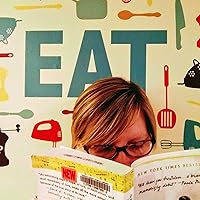
Julgustav teejuht lapsevanematele, et leida igapäevases pereelus rohkem õnne. Optimistlik ja tõhus raamat keskendub küsimusele: kuidas muuta oma pereelu nii, et see valmistaks just sellist rõõmu, mida oleme enda kujutlustes oodanud.
Lähtudes viimastest teadusuuringutest ja intervjuudest peredega pakub autor välja lahendusi üheksale kõige enam lapsevanemaid kimbutavale probleemile. Väljapääs peitub tihti väikestes ning isegi üllatavates sammudes, mille astumine ei nõua ränka jõupingutust ega kaelamurdvaid trikke.
Seda raamatut lugedes saab teada:
* kuidas muuta hommikud pingevabamaks * millised nipid teevad majapidamistööd laste jaoks lõbusamaks * mil moel piirata mudilaste ekraanides viibimise aega * kuidas juurutada valutult reegleid
KJ Dell´Antonia on endine New York Times´i emaduse blogi peatoimetaja, kelle sisukaid ja vaimukaid kirjutisi lugesid aastate jooksul miljonid silmapaarid. Tema oskus maandada pingeid ja leida lahendusi võlub lapsevanemaid üle maailma.
KJ Dell’Antonia is the author of the The Chicken Sisters, a New York Times bestseller, a Reese Witherspoon book club pick and a timely, humorous exploration of the same themes she has long focused on in her journalism: the importance of finding joy in our families, the challenge of figuring out what makes us happy and the need to value the people in front of us more than the ones in our phones and laptops, every single time.
Her next novel, In Her Boots, about the gap between the adults we think we have become, the child our mother will always see and our horrible fear that our mother is right, is coming Summer 2022 and is available for pre-order now.
She wrote and edited the Motherlode blog at the New York Times and is also the author of the viral essay Why I Didn't Answer Your Email and the book How to Be a Happier Parent. She is also known for being unexpectedly quarantined in China with three small children and her mother, which was much more novel in 2009 than it is now.
Read it? Heck, I wrote it! I can practically recite it. I still like it, though. Sometimes when I re-read bits to bone up for interviews, I still go, yeah, I really need to try that/do better with that. (It's not a memoir, it's got a ton of research and advice from parents who've BTDT). Especially on chores. We're getting better.
Just excellent! This book makes an excellent case for affixing your own oxygen mask before assisting others. In this world where parenting has become a verb, it's easy to lose yourself. And this book wants you to find yourself again. :) It's terrific.
Such a waste of a premise. This book offered no real solutions as the author's main mode of fixing thing were to just throw money at the problems. Mornings too busy for you? Hire a morning maid! House a mess? Hire a cleaning service! Is life just too hard to juggle between home and work? Stop working! It does wonders for adding free time to your life.
I think her main audience is herself. Wealthy stay-at-home moms with lots of kids. If you are that mom, then this is the book for you.
This was an affirming and pragmatic book, laced with humor and concrete tips. It's divided into topical chapters, each one focused on a particular area that tends to make parents crazy (morning routines, mealtimes, screentime, bedtime, etc.). Unlike most parenting advice books, this one repeats the refrain You do you, which is really satisfying. So many self-help books, particularly about child-rearing, act as though it is life and death whether you follow their exact prescriptions, and this one is not like that at all. It is a grab bag of various ideas that might work for you and your family. There are a few principles Dell'Antonia feels strongly about--kids should do chores, families should enjoy mealtimes together--but even where she is propounding an ideal, she recognizes how complicated they can be and encourages a certain degree of latitude. My favorite tips in here were perhaps the broadest ones: you don't have to respond to every infraction that you see, and sometimes it's better to let things go. Similarly, you don't to engage a child's protests about chores; if they do the chores, the whining soundtrack is not worth engaging with at all. She also was fabulously sane about screentime, explaining her family's general rule (screentime on weekends, not during the week) and why she thinks it helps to have a guideline rather than a time total (spoiler: no one has to be endlessly calculating, everyone "gets" how it works and can get into that rhythm without thinking about it), but she ends the chapter talking about how awesome screens are and that our children aren't going to collapse into zombies because of media consumption and that sometimes we should just enjoy screens with them. It's this kind of balance that makes the book particularly satisfying and, honestly, that models what it propounds in its title. If you're a neurotic purist trying to get everything "right," when are you going to relax and enjoy your kid? This book spoke to me where I am right now, really reveling in how creative and funny my six-year-old is, and since so many of its strategies are things we already do, it was a confidence-booster as well.
I think my favorite two things about this book are: 1) the mantras. When I finished I immediately went to her website to see if she has a printable resource. (She does!) 2) the fact that I can probably declutter 5 other parenting books because the wisdom found herein distills what I've learned about siblings, discipline, mealtime, school, bedtime, mornings, etc so well that I don't need a deep dive into all the rest. Thanks to KonMari, I'm all about the thanking books for their service and letting them go.
I've been eagerly anticipating this book for months and was not disappointed - one of the better parenting guides I've read in the past 7-8 years.
Dell'Antonia's big message here is "You do you - just be conscious of the 'you' you're choosing." She walks us through the major pitfalls of parenting, from homework struggles to family vacations to dinner table battles, by providing an overview of available research, anecdotes and suggestions from real parents, and her own experiences. Instead of preaching a particular parenting gospel, Dell'Antonia regularly reminds readers to evaluate their priorities: what's your goal here for yourself, your kid, your family? Once you've established what you're working towards, you can choose the strategies to make life easier and happier for everyone involved - and that means what works in your house might be very different than what worked for you growing up, or what's happening right next door. Additionally, expecting progress towards those goals, rather than perfection, seems to be another key element of what she's found, in her research, to lead to the happiest homes.
I wouldn't say that Dell'Antonia is breaking any new ground here, so don't expect this to be life-changing - but condensing all of the research and information into an easy-to-read book like this one is useful. I found the chapter on morning routines to be the weakest, so it was unfortunate that it comes first in the book, but it makes sense to have that topic lead off the rest of the work structurally. I am already planning to listen to her chapters on chores and discipline again, as they were filled with practical tips and advice that I started implementing even as I've been working through the book.
Because I'm a huge fan of the podcast #AMWriting With Jess and KJ, which the author cohosts, I chose to listen to the audiobook version, and I'd highly recommend it - Dell'Antonia has a humorous, conversational style which makes listening to it feel like having coffee with that mom you always see at baseball practice who seems to have achieved a parenting zen in a way you haven't quite figured out yet.
This is a readable and fairly practical book about the everyday challenges of parenting. The author starts off with 10 parenting mantras (worth remembering!) and then focuses on 9 areas where parents typically feel most challenged. A few notes on points that I want to remember...
This Could be Fun (Intro) “On the surface, we had everything we ever wanted, and below that surface, we had even more....There was nothing to complain about, but complain we did.” “We can start by changing the stories we tell ourselves about our lives as individuals and as parents...wanting to be happier has its own happiness-increasing effect.” As we change how we think, we must also change what we do.
Ten Mantras for Happier Parents 1. What you want now isn’t always what you want later. Don’t take the easy way out by doing everything for kids, help them learn to do things by themselves. 2. There is nothing wrong. This one is a philosophical one with a Buddhist slant. Sickness and crises will come but life will continue. 3. People, including children- especially children- change. Things that are not going well will generally change and improve. It is important to let that happen. 4. You don’t have to go in there. Don’t be infected by your child’s moods. 5. If you see something, don’t always say something. You don’t have to leap into every sibling argument or correct every mistake on the spot. 6. You do you. You can’t do everything, and your family can choose to do the things that you like. You don’t have to go camping, learn music or whatever just because other families do it. Especially don’t do things for college essays! 7. You can be happy when your children aren’t. You can have sympathy and empathy but don’t let your world some crashing down every time your child faces a disappointment or has bad luck. 8. Decide what to do, then do it. Most parenting choices are not life-altering. Just actively decide and stick with it instead of answering thoughtlessly and giving in to begging later. 9. You don’t have to get it right every time. There will be more chances. 10. Soak up the good. Train your brain to revel in the positive. Build up a reservoir of happiness for when things feel bad.
1. Mornings are the worst Everyone has to be somewhere, there’s a lot to get done to get ready, time is meaningless to kids. The single biggest thing we can change about mornings is to go to bed early and get enough sleep. Change the way we talk about sleep and help kids understand the need for it. Don’t allow activities that bleed into sleep time.
Do more the night before No screens in the morning Try some music Change something big- like changing schools, rescheduling a morning meeting, working from home part time. Get up for something you want to do.
2. Chores- Children should do chores. Chores help children have the satisfaction of having a job and seeing it through, it respects the adults they will become. It helps to be in a neighborhood/culture where children are expected to do their share. You can make it happen by making it a priority- teach, remind endlessly. The other way to get children to do chores is to need the help- when kids step up because of a parent being ill, etc. Don’t be a martyr, always complaining about the work that kids create. Let kids be a productive part of the family.
Kids who do chores are more self-sufficient, better prepared for adulthood and more successful in relationships with family and friends.
They’re not chores, they are life skills. “First we do it for you. Then we do it with you. Then we watch you do it. Then you do it yourself.”
Make chores a habit and give the habit time to stick. Don’t get offended when kids forget to do the chore, but don’t let them off the hook.
Expect help. For some families- eg. when there is a family run small business, this mindset is baked in, but you can adopt it because running any household takes everyone.
In general, don’t pay kids for chores.
Work together, or all at the same time.
3. Siblings The title of this chapter is “Siblings: They can bring the fun, and they can take it away.” [My daughter read it and nodded, “Yes, that’s true, I bring the fun and my brother takes it away.”]
When you see a sibling fight break out, narrate what is happening. It shows that you hear them and that you understand, and they learn to take each other’s perspective.
Jealousy: Make it about the envious child, not about the one envied. “Let’s think about what you are feeling, wanting and wishing”. Fair does not always mean equal. Parents should focus more on meeting individual needs.
property rights: Children under 5 aren’t ready to share. They are ready to take turns. Long turns are OK, or you can limit them (once across and done, turn ends at dinnertime). space occupation: Designate alone time. Accept the feelings, but limit the behaviors. Keep the fun ratio high by letting them do activities together that you would normally limit. Give them time together without you.
4. Sports and activities
5. Homework
6. Screens
7. Discipline: Instead of focusing on what we need to take away from our kids for them to learn their lesson, think about what we need to provide for them to learn to become self-disciplined. Respond, don’t react. “Authoritative” parenting- ideal pairing of rules and warmth, providing firm boundaries around issues of safety and morality and warm guidance around everything else. Accept discipline as a long term teaching process.
8. Food, fun and family time
9. Free time, vacations, holidays, birthdays and other on-demand fun: Pull the valve on the pressure. Embrace the idea of truly unscheduled time. This is easier once kids reach an age when they can entertain themselves. Take ahead about how to handle tough/unexpected situations (eg. illnesses, delays), come up with coping tools and plans, pack snacks and try to agree not to make things worse. Get help from kids in packing, planning and making arrangements. Take turns at everything, including grumpiness. Find your five things that you like to do on vacation. You don’t have to do art museums/ tourist attractions/ whatever just because it is the done thing. Spend wisely: Eg. cutting the vacation by a day but getting a better hotel room, splurging on shorter flight. Spend time in nature- beaches, trails, parks. Decide about the screens then let it go. Don’t push the age barrier by taking younger kids to destinations before they’re ready. Plan like a pro knowing your family like you do.
Back when KJ Dell’Antonia ran the Motherlode blog for the New York Times, I used to want her to be my best friend. Now I want her to move into my house and coach me through every day. This is a great book for parents of early elementary-age kids. Tons of great suggestions for habits and patterns of behavior that are probably easier to establish in the years once kids can reason but before their attitudes harden into constant striving for independence. Many of these changes will make for better interactions for everyone - but the book presents the underlying theme that you need to do what works for you. Not for your neighbor, not for your friends, but what works for your family’s values and personalities. I found the chapters on chores and homework the most helpful and we’re making changes already that are contributing to everyone’s happiness and satisfaction with way less pushback than I expected. Lots of great previews for issues in the pre-teen and teenage years as well. I waited to get this on hold from the library, but will be buying myself a copy for future reference (at P&P, natch).
I enjoyed reading/listening to this book. There are a few saying and pieces of advice I have never heard before. My favorite are: there are many paths to happiness, everyone gets a chance to be grumpy, and remember that even the biggest mistakes are not the end of the world. Also, make sure to get enough sleep :-)
Thanks to this book I feel like I have a lot more understanding of what parenting is about. It gave great tips that I will continue to look back on! Loved
I love this author. She’s funny and real and had some great tips. I loved her thoughts on screen time, chores, family dinners, vacations and holidays. I want to have realistic expectations in parenting and teach skills early that will help my kids be responsible, independent adults.
I liked the way this book was laid out: every chapter was a "problem" spot in parenting. I skipped a few chapters because they were totally irrelevant to my life: homework (because we homeschool), sports and activities (because we don't have our kids enrolled), food and dinner (because I have this taken care of).
I really liked the advice and ideas on chores and mornings! In fact every chapter had quick bits of advice and ideas from random people from research studies and experts.
It was good advice and ideas and the author quoted lots of experts and their books (if you want to dig deeper In a specific topic). I've read A LOT of parenting books so I feel that I am probably harder to please and I've probably heard it all at this point. I would absolutely give this to a newish mother (2+ yrs old) when rules and discipline maybe at the forefront of her mind.
Meh. I read a great review of this book so I thought I would check it out. But I should have known better because 1) I feel quite happy already as a parent! And 2) I don't like reading parenting books.
The best part of this book was the introduction where the author listed some of her basic philosophies regarding parenting, such as You Do You and Revel in the Good. Those were very reaffirming and comforting!
The rest of the book was divided into bigger chapters (screens, meals, vacations, etc.) and featured pretty generic advice, in my opinion. A whole lot of you do you, boo, plus what the author does. Much of the advice seemed easier said than done.
Overall it was uplifting and full of positive vibes, though. You won't have much mom guilt after reading it.
4.5 stars. It was an easy read with really applicable advice. It didn’t make me feel like a bad parent for what I’m not doing but had so many ways to tweak what I’m doing to make it just a little bit better.
I wrote a very long review of this and the Goodreads app crashed as I was hitting post, lol. But the tl;dr version is I liked this very much and thought it had a very relaxed, good-natured, “go easy on yourself and your kid—you’re both human” energy that was a useful counterweight to some of the attachment parenting type stuff I’ve read. Lots of good, common-sense advice about how to minimize family conflict and stress/unhappiness by making tweaks to your family’s environment and routines… and also just by choosing to let stuff go sometimes instead of treating every single micro-interaction or micro-infraction as a “teaching moment.” She points out how deeply annoying this would be if someone followed you around doing this to you all day as an adult… like, sometimes people behave less than perfectly because they’re bored or impatient or tired or feeling sick or just having an off day, and you can raise an eyebrow at it without stopping everything to call attention to it and suddenly escalating it into a power struggle. I can’t remember her exact phrase but I liked the ethos of “if you see something, you don’t have to say something—it’ll often just resolve itself if you don’t get involved,” especially re: sibling conflict.
I also loved the mantra “You don’t have to go in there” as a way of thinking about your child’s moods. You are not responsible for fixing OR for feeling your child’s big bad negative painful feelings for them. You can be loving towards them while continuing to be happy and undisturbed yourself, and you can give them space to wallow or sulk or process on their own. I think my main critique of attachment parenting and similar modes of thought is that it sounds great in theory but it also sounds like so much WORK, in terms of putting so much responsibility on you to monitor and be totally attuned to your kid’s emotions. As one article I read put it, it can feel like a manifestation of the uniquely American obsession with optimizing everything, specifically optimizing your parenting and optimizing your child’s inner/emotional life. This book was such a breath of fresh air in that respect. It’s ok to say no, it’s ok to have certain rules that aren’t open to negotiation and that don’t prioritize the child’s feelings or preferences, it’s ok to let your kid feel stuff on their own without immediately trying to give them a language for it or involving yourself in the processing, it’s ok to say I bet my kid’s going to turn out fine as long as I set boundaries for their safety and communicate to them in words/actions that I love them and believe in their ability to succeed. And it’s also ok to say that as a member of the family you, the parent, also get to have YOUR needs/preferences and YOUR happiness in family life taken into account. This reminded me a lot of how I was raised, and I think the fact that she has four kids + I was one of four isn’t a coincidence lol. When you are responsible for that many small children, you just don’t have TIME to be super precious about emotions, and you have to trust your kids a lot more to work out squabbles between themselves or to work through their own sulky hurt feelings while you put out fires elsewhere. And that seems healthy to me!
Super click bait-y title, but this was so well done. Intentional, practical, and self-aware -- its voice was more inclusive and non-judgmental than often is found around this topic. Also? Hilarious, clever, and truthful. So many takeaways to the point that I am putting this on my very short to-buy list so as to have as a reference for the coming years and seasons of parenthood. Takeaways: * EVERYTHING IN THE CHORES & HOMEWORK SECTION especially: - "Who do you want this child of yours to grow up to be?" -> "In a study of more than ten thousand students from thirty-three schools in various regions of this country, Harvard psychologist Richard Weissbourd found that almost 80 percent valued achievement of their own happiness over caring for others--and what's more, MOST THOUGHT THEIR PARENTS AGREED." (W.T.F.NO.) - First we do it for you, then we do it with you, then we watch you do it yourself, then you do it yourself (How to Raise an Adult life-skill-building strategy) - "Asking--and expecting--children to contribute is important. [...] Your message about helping to care for one's family needs to be repeated often, especially if it involves doing the dishes." Stick with it and then stick with it some more: time and persistence, reiteration and patience, training and follow-up - "Teach the children that not everything revolves around their homework. There is more to life. We as parents don't base our worth on whether or not their homework gets done." * "Grades aren't permanent. Success isn't permanent. Failure isn’t permanent. Some people march straight through high school, college, and graduate school. Others take different paths. Don't just highlight one route in life and make sure that even a child who's driving herself hard toward socially accepted "success" knows (as you do) that there are many roads to happiness." * "Even if your actions seem to be leading nowhere: sometimes change is gradual, and sometimes we're contributing to it even if we can't see it." * "Children, whether they're toddlers or tweens or teens, don't get everything right the first time, and they don't learn just by listening. They learn by exploring, pushing the boundaries and having things go wrong--and that last part, where things go wrong, doesn't really mean the larger process has hit a wall. Instead, big strikeouts are part of the game. Our job as parents isn't to prevent them from happening. It's to help our children see what happened and learn to navigate so that things go better next time." * "Instead of focusing on what we need to TAKE AWAY from our kids for them to learn their lesson, think instead of what we need to PROVIDE for them to learn so that they become self-disciplined." * "In any area where we're on a rocky uphill path and it seems as if everyone else is rolling gently down a grassy slope, it's important to go easy on our expectations." * “I'm raising future adults, not perfect children.” * “The more things that feel right, the more things that feel right.” * “When we're not putting all our energy into getting our kids to eat or study or do anything else exactly the way we want them to, we can put it into a much more positive place. We can talk about other things, like birds and maple sap production and town politics. We can enjoy each other. We can be happy together.”
One of the best parenting books I have read in a LONG time.
It’s not a “parenting philosophy” book but more of a “parenting practicality” book you know the nuts and bolts of how to get your kids to do chores and how to limit screen time and how to feel like you’re not loosing your mind - and I needed it SO BADLY. I have kids in a wide range of ages and I felt like her advice was best for school-aged children, there was less about the pre-school phase of life. And if you’re a parent to a newborn this would all be more theoretical than practical.
What I loved best about this book is the mix of research “here is what experts say” personal stories “here is what I tried” and crowd-sourcing “here’s what works for other families” she talked about what she tried but didn’t work for her family and what made things better for her family. I loved that she admitted the trial and error nature of figuring things out, and also this made it easier to read. I loved that she didn’t say “this is how to do it properly” but it was more like “this area of your family life really can be better!”
The thing I loved most was how relatable she was - in the chapter on technology she didn’t preach “technology is ruining our lives and destroying our social structures!!!l” like a lot of parenting books do. She was more like “technology is great. We love technology in our home. The trick is - how do we keep it from taking over our entire lives?!” I loved that. Definitely one I will buy and look back to often. And I will for sure be recommending it to my friends.
No rating for this non-fiction parenting self-help book. I didn’t know if I would enjoy this or not, but I do think it was helpful to me.
I skipped the chapter about siblings completely, as it doesn’t apply to my family. I also skipped around in the homework chapter. And I completely skipped the chapter on food and picky eaters (luckily, that’s not a problem in my home).
My takeaways: -Keep up a chores routine, but do chores WITH them -Let it go -Instead of saying “no” and “stop” try reinforcing what we want them to remember -I’m not alone
It was exactly what it promised to be--helpful tips on parenting trouble-spots. She has wise and useful advice and I liked the low-key tenor of the book. I agree with her style of parenting as it's the only way to stay sane if you have jobs and multiple children. Just decide and do it.
Exactly my jam in terms of parenting books. The general message is, “This is hard, but you’re doing great, and here are some ideas to maybe make your life easier.”
The chapter on chores inspired me to assign some harder (and more helpful) chores to my kids, and it’s been an astounding success.
I heard an interview with the author on a podcast, and really liked her approach. Her Ten Mantras for Happier Parents are great, and her style and approach are super relatable and not judge-y at all. It was not "How to Be a *Better* Parent." It was all about enjoying the journey.
Has some really solid advice. Practical take aways. There were some chapters that didn’t apply to us in our stage in life at the moment, but I’ll go back to it when the time comes for sure.
Nice synthesis on research. The chapter on discipline was the best for me. Her "10 Mantras for Happier Parents" that she lays out at the beginning of the book were great for giving perspective.