Un bosco innevato, il silenzio dell’inverno. Un lupo e un’orsa si ritrovano amici e camminano insieme alla scoperta del mondo.
Una sera d’inverno, una giovane orsa esce nella neve. La foresta è avvolta nel silenzio. A un tratto, fra gli alberi spunta un giovane lupo. Non potrebbero essere più diversi, ma insieme, nella quiete che li circonda, Lupo e Orsa esplorano la natura addormentata. L’amicizia non ha bisogno di molte parole, se insieme sai condividere l’incanto.
“Meraviglioso, sereno e filosofico” – The New York Times
Bear and Wolf both go for a walk in the snow in this lovely, contemplative wintertime picture-book from author/artist Daniel Salmieri, meeting up with one another and proceeding to explore together. Smelling the wet bark of the trees, listening to the sound of snowflakes melting on their fur, pondering the frozen surface of the nearby lake, the two companions enjoy the beauty of the season together, before parting to return to their respective families. A bond has been forged, however, and the two will meet again, in another season...
Daniel Salmieri has illustrated quite a few popular picture-books, from Dragons Love Tacos and its sequel, to the series of stories about "Those Darn Squirrels!," so it is good to see him making his debut as both author and artist in Bear and Wolf. The artwork here is lovely, with a soft-edged feeling that suites the theme of wintertime, with its vistas of falling snow, and with a color palette - grays, whites, subtle blues - that captures the season perfectly. The story is engaging, and I appreciated the theme of two very different individuals reaching out across species lines to make friends, bonding over the beauty of the natural world, but I think it's really the visuals that make this one special. Recommended to fellow winter-lovers, and to anyone looking for unusual friendship stories with a quiet, gentle feeling to them.
This book is all about perspective in all its meanings. Although Bear and Wolf live different lives and are different beasts, they are beasts nonetheless and it is in this recognition, that they become unified in their walk through the forests and the seasons. Wonderful, pencilled and water-colour double-spreads which have been celebrated so masterful by William Grill in his own books, are imagined quite beautifully here by Salmieri. The placement of the written narrative which complements the visual narrative is so well done and we are invite to imagine the journey that both bear and wolf take together. This world is a quiet one in winter and the scene in which both creatures look down into the frozen lake at the fish trapped in ice and time is beautiful. Similarly, when spring and summer arrive and the world awakens, there is bright joy and new beginnings in abundance and yet, even here, the companionship between Bear and Wolf remains. Reviews online recommend this book for 4-8 year olds; this is wrong. It is a book for anyone and everyone no matter their age.
A simple, understated friendship story about a bear and a wolf who enjoy walking together and experiencing nature (when they aren't busy doing realistic wolf and bear activities with their respective families).
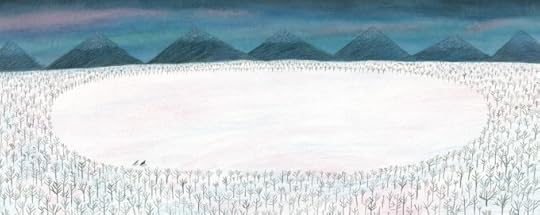
There are times when the design of a page in a picture book says everything. I had high hopes from the cover on: the intense gaze of the bear and the wolf grab the reader at once. The cinematic change in perspective from the first meeting (two openings showing the principal characters’ first sight of one another) to the desolate parting of the pair in a massive snowy clearing is engrossing. The passing of winter into spring simply done by colour with what might be a hint of landscape detail is just beautiful... and then Bear and Wolf meet again: seasons have changed, but in “the awakening woods” their friendship remains. Blimey. The forest is wonderfully drawn, the animals have movement and life, the story is so simple and yet so moving. I just love it.
This entire review has been hidden because of spoilers.
I really liked this pictures in this children’s book. It’s a sweet story about a bear and wild who become friends one day in the winter and then they split up to join their respective packs and then happen to encounter each other again in the spring.
A lovely picture book tells the story of a quiet winter encounter between a wolf and a bear. Beautiful illustrations and poetic language. A perfect winter read!
A lovely tale of friendship of two different creatures who discover a similar taste in enjoying a winter wonderland. A quiet picture book that will resonate with its readers.
A great book on how we often have a fear towards someone who comes into our territory , however we have deep innate curiosity on them. The openness to it would let us learn more on the side. Something we humans lack right now.
While the rest of the residents are close to ending their day or already sleeping, we take a final walk. Our breath looks like puffs of smoke in the frigid air. The snow-covered ground, bushes and trees help to blanket the night in silence. Our senses soak in all this season of winter has to offer us.
As we move down the well-worn path, we pause wondering if there are others enjoying the majesty of this moment when the world is cloaked in contrasting black and white. Bear and Wolf (Enchanted Lion Books, February 2018) written and illustrated by Daniel Salmieri brings readers into a winter's night in the woods. Normally avoiding each other out of mutual respect and as competitors for food, two young animals meet.
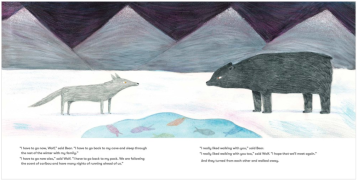
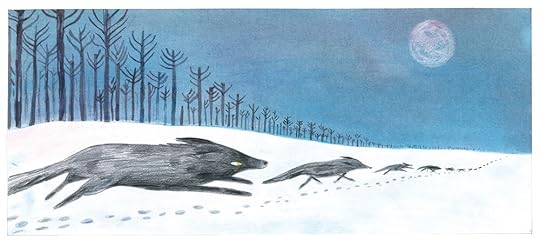
Out walking in the snow, bear and wolf meet and have a walk together. After coming to a pond, pushing away snow so they can see the fish beneath, they enjoy each other’s company and part ways. Bear goes off to finish his winter’s nap and wolf leaves to join his pack for their long search for caribou. The illustrations are pleasant, seem to exude friendliness as these two find ways to enjoy each other. I love the page where, when looking at the pond through the ice, Salmieri creates a view from the pond itself, showing Bear and Wolf peeking in. The ending shows a reunion, the two meet again for a beautiful spring walk. I enjoyed reading it, a book about being friends with someone different.
I saw lots of good things about this picture book, but I was somewhat disappointed. I think it could have been a bit longer and develop more about friendship in diversity. I also prefer neater art. There was a lot of potential, for instance to better capture the fur of the animals.
This book was a joy to read and told a lovely tale about two different animals who's paths happened to cross one day. I found this book lent itself well to teaching and exploring the following grammatical terms; adjectives, expanded noun phrases, verbs and prepositions. The way the author incorporates these terms into the book is really effective and at the same time simple. This means that children may find it easier to identify the terms and then try them out in their own writing.
What techniques can be seen in the pictures? Some of the illustrations are drawn from the perspective/ view point of each animal which was really interesting to observe because at times it seemed as if the author was comparing the lives and features of the two different animals. I liked how some of the pictures are drawn from different perspectives, for example, on one page the picture is focused from above the bear and wolfs heads showing them gazing down into the water at the fish and on the next page it illustrates what it would look like from the fish perspective and what the animals are looking at. This would be a great way of demonstrating different view points and angles which could encourage the use of positional vocabulary. This would give them a bank of ideas and terminology which could be used when producing their own writing and the children could use the book for inspiration. Another technique used throughout the book was mirroring. I found this worked really well because as a reader it illustrated the potential similarities and differences between the animals which added to the message of the story.
How do the pictures and words work together? As well as the illustrations the text is also repeated/mirrored which adds to the effect. Furthermore, underneath the picture of the bear is a sentnce about what the bear can see and similarly for the wolf which brings the words and pictures together to clarify what is happening.
What is also interesting about this book is that some pages give the reader the chance to use their imagination to visualise the words on the page,this is later confirmed as you turn the page to reveal what the author was describing. I like how the start and end of the story are similar in their sentence structure as this provokes conversations about why the author has chosen to do this and the effect it has on the reader. Also, it is an effective writers trick which could be discussed and displayed somewhere for the children to use in their own writing. The book included some repetitiveness which made it easier to read and follow along, this would be a great way for teaching vocabulary to recepetion and year one children because they could join in with parts of the story telling and pick up words which they may not have heard of or used before. This book also lends itself well to learning about seasons and habitats (hibernation, food chains, winter/summer). Overall, a great read!
A beautiful sophisticated picture book about a female bear and male wolf who meet in the stillness of winter and in recognising a certain fellowship of self within the other go for a walk in their winter wildness. It is a serene adventure, where they observe their surroundings, the forest, the falling snow, the swoop of a snowy owl - all rendered in muted colours until they encounter a frozen over lake of brighter coloured fish. They then part ways, bear to hibernate, wolf to hunt with his pack for winter, but in spring when the muted tones turn to stronger colours they meet again for a spring walk.
I loved this book for the beauty of its words, its art, and its depiction of friendship across species and gender.
Although primarily a book about winter, this beautifully illustrated look at the interaction between a bear and a wolf also provides a contrast of seasons, as at the end they meet again and we see what they do in the warm, bright hues of summer. It also provides a nice understanding for young children about what the animals do in winter - hibernate (bear), and hunt for caribou with the pack (wolf). Gentle, dreamy approach to observing nature, with lovely illustrations of snow falling; Salmieri shows us snow that is not just stark white, but mixed with gradations of pink, blue, and purple, which conveys not just color but texture and depth. Very lovely to look at and read aloud.
Loved, loved LOVED this book! What a lovely and calming book about the relationship between a bear and a wolf. The story made me feel so relaxed! This is about a bear and a wolf making friends in their habitat to explore it together but at the end of the season they have to both go back to their families. Bear hibernates and the wolf hunts. When winter is over the bear and wolf reunite. This shows that although they have spent time apart and come from different species, their strong bond wasn’t affected. It made me so happy to see they reunited after showing such a close bond before the winter came! I’m sure children would love to see this too.
A calm and gentle story about the meeting of a bear and a wolf, who peacefully walk through the winter forest and then go their separate ways. It is such a simple plot, yet what is effective is that the wolf and bear are unafraid of each other, their similarities outweigh their differences and they embrace each other as companions to enjoy the stillness of the forest. Some interesting use of perspective in this story, there is a real sense of nature being something bigger than the two characters, and belonging to no one but itself.
What a perfect quiet book to read at the beginning of winter celebrating friendship and nature. Bear goes out walking and comes across a wolf who is also enjoying a quiet winter walk taking in the beauty of their surroundings. The two enjoy the snow, the company and the silence until it is time to part ways and return to hibernation and the pack until they meet again. Simple love of being together and appreciating one another's company without having to say or do a lot. Another solid addition to classrooms and libraries.