

What do you think?

Cake Eater
She has a million followers on social media.
She uses her fashion-forward eye to pick the perfect angle and filter on every photo.
She’s iconic.
She’s a trend-setter.
She’s Marie Antoinette, the year is 3070, and she’s arrived in the Franc Kingdom to marry the prince, secure an alliance, and rake in likes from her fans.
Versailles is not the perfect palace Marie’s seen on The Apps. Her life is a maze of pointless rules, and the court watches her every move for mistakes. Her shy husband Louis is more interested in horses and computer-hacking than producing heirs. Versailles seems like a dream full of neon-lit statues, handsome android soldiers, and parties till dawn. Under the surface, it’s a creepy den of secrets: surveillance in Marie’s bedroom, censored news feeds, disappearing courtiers.
When Marie and Louis become king and queen long before they’re ready to rule, any efforts to aid their suffering subjects are stamped out by the mega-corporations of the First Estate. Between riots in Paris and image-wrecking social media firestorms, Marie can’t afford to lose her head. Using her social media savvy and Louis’ hacking knowledge, they try to fix their reputations and change their kingdom for the better, but the royals may find it’s already too late. They’re ruling over the end of an era.
She uses her fashion-forward eye to pick the perfect angle and filter on every photo.
She’s iconic.
She’s a trend-setter.
She’s Marie Antoinette, the year is 3070, and she’s arrived in the Franc Kingdom to marry the prince, secure an alliance, and rake in likes from her fans.
Versailles is not the perfect palace Marie’s seen on The Apps. Her life is a maze of pointless rules, and the court watches her every move for mistakes. Her shy husband Louis is more interested in horses and computer-hacking than producing heirs. Versailles seems like a dream full of neon-lit statues, handsome android soldiers, and parties till dawn. Under the surface, it’s a creepy den of secrets: surveillance in Marie’s bedroom, censored news feeds, disappearing courtiers.
When Marie and Louis become king and queen long before they’re ready to rule, any efforts to aid their suffering subjects are stamped out by the mega-corporations of the First Estate. Between riots in Paris and image-wrecking social media firestorms, Marie can’t afford to lose her head. Using her social media savvy and Louis’ hacking knowledge, they try to fix their reputations and change their kingdom for the better, but the royals may find it’s already too late. They’re ruling over the end of an era.
448 pages, Paperback
First published August 9, 2022
About the author
Allyson Dahlin
1 book91 followersAllyson Dahlin grew up on a farm in central New York, where she had little to do but read loads of library books and make up magical and slightly creepy stories about the woods and farm animals while pretending to be a witch/homesteader. She studied psychology in college while working as a housekeeper at a motel in Cooperstown. That job involved a lot of boring hours to think up backstories for the guests whose rooms she cleaned. A shawl left on a chair by an aging opera soprano, a stack of old baseball cards left by a Hall of Fame inductee, and the legend of a monster in the lake were all fodder for stories. It was during that time she transformed from a reader and a daydreamer to a writer.
With some writing courses and a psychology certification in hand, Allyson worked in school counseling and then at a boarding school for girls with complex trauma. Writing kept her spirits up during her intensely emotional work. Eventually, she fell into internet marketing, which meant writing for her day job as well as focusing on her novels. Her first novel, CAKE EATER, was inspired by a trip to Versailles and the realization that the circumstances of Marie Antoinette’s life could just as easily happen today.
With some writing courses and a psychology certification in hand, Allyson worked in school counseling and then at a boarding school for girls with complex trauma. Writing kept her spirits up during her intensely emotional work. Eventually, she fell into internet marketing, which meant writing for her day job as well as focusing on her novels. Her first novel, CAKE EATER, was inspired by a trip to Versailles and the realization that the circumstances of Marie Antoinette’s life could just as easily happen today.
Ratings & Reviews
Friends & Following
Create a free account to discover what your friends think of this book!
Community Reviews
Displaying 1 - 30 of 269 reviews

Read
May 7, 20215 stars to my stamina for reading this book so many times.
Anyway, I hope ya’ll like the idea of Versailles being an illusory, glitched out nightmare, and Marie Antoinette being a social media influencer, and Louis XVI being a shy computer whiz, and capitalists playing the court out like a cyberpunk pageant while the people prime their laser guillotine.
Anyway, I hope ya’ll like the idea of Versailles being an illusory, glitched out nightmare, and Marie Antoinette being a social media influencer, and Louis XVI being a shy computer whiz, and capitalists playing the court out like a cyberpunk pageant while the people prime their laser guillotine.

October 13, 2022
Allyson Dahlin’s Cake Eater is a YA “retelling” of the life of Marie Antoinette, but transliterated to the year 3070. An interesting concept, and one with a lot of potential. Unfortunately, the premise is underutilized, and Dahlin fails to capitalize on the ways the futuristic setting—replete with social media, androids, and climate apocalypses—would impact the familiar tale of the doomed young queen.
I have often struggled with retellings, particularly in the context of young adult fiction. Often, authors will adopt the familiar framework of a story and place it in an entirely new context–for instance, magical Jane Eyre or modern-day Jane Eyre. This is all well and good. But when you change the characters’ situation, you must consider the ways in which a new context will alter their beliefs and actions. Edward Rochester’s secret attic wife makes a lot less sense in the 21st century, when the availability of no-fault divorce and psychotropic medications makes locking up your spouse an unjustifiable cruelty rather than an act of humanity. In the same way, a book about Marie Antoinette and the lead-up to the French Revolution which takes place a millennium into the future should consider and explore the ramifications of how the main character’s life would be impacted by the exponential advancement of technology, new social understandings of gender/sexuality, the possibility of nuclear warfare, etc.
(Emphasis on the word “should” here.)
Bafflingly, the story in Cake Eater follows a bland, true-to-history progression. It’s also a very superficial text. Dahlin does not spend any time exploring the world of 3070 France or its society. No explanation is given to how the French Bourbons and Austrian Habsburgs have been restored to rule over the same territories they possessed in the 18th Century. Nor is it made clear how, exactly 1300 years after the “real” Marie Antoinette became dauphine, this “new” Marie Antoinette is apparently living the exact same life as her predecessor, down to possessing a dog named Mops (seriously, what?). World-building is important in all forms of fiction, but particularly in science fiction and fantasy. While many readers have a collective, shared vision of what “Regency London” or “Manhattan” are like, a futuristic monarchist restoration requires a lot of explanation and depth. Cake Eater does not provide that.
Dahlin also makes the mistake of cramming decades of historical events into just six months. The real Marie Antoinette was married in 1770 and executed in 1793. In Cake Eater, Dahlin rushes from Marie’s arrival in France on May 13, 3070, to her (botched) execution on November 14. As a result, there’s simply no time to fully develop anything—not characters and their motivations, not the complex world of court politics, and certainly not the rising tension brewing amongst the lower classes. The novel is a whirlwind of scenes that correspond to specific events from Marie Antoinette’s life, but they lack meaning or sense without sufficient background information.
I also question, in general, the utility in our collective interest in writing books about “poor little rich girls” who are unaware of their own privilege until they suddenly have a come to Jesus moment and start fighting “for their people” in some ultimately meaningless way. I commented about this with respect to a YA “retelling” of Anastasia Romanov’s life that released earlier this year. I absolutely acknowledge that the historical Marie Antoinette was unfairly maligned by both her contemporaries and by historians in the decades since; I do not think she was a vapid, wasteful woman oblivious to all human suffering. However, I believe that rich white oppressors (however well-intentioned they allegedly were ) do not need to have any more prominence in the ongoing social discourse. Why not write a retelling of the French Revolution set in the year 3070, but from the point of view of one of the people living in extreme poverty as a result of climate change and malevolent corporate oligarchies?
Just a thought.
Cake Eater is not a good book. It is not well-written, and instead presents a rushed, shallow story that is confusing at best. And then as a retelling, it shows a lack of insight on Dahlin’s part, as well as a failure to fully commit to the implications of its concept. You can’t just write “oooh, Marie Antoinette with TikTok and LED dresses!” and have it be enough. Here, Allyson Dahlin displays a disappointing lack of awareness and critical thinking. This novel adds nothing fresh to the conversation.
📌 . Blog | Review Database | Twitter | Instagram | Goodreads
I have often struggled with retellings, particularly in the context of young adult fiction. Often, authors will adopt the familiar framework of a story and place it in an entirely new context–for instance, magical Jane Eyre or modern-day Jane Eyre. This is all well and good. But when you change the characters’ situation, you must consider the ways in which a new context will alter their beliefs and actions. Edward Rochester’s secret attic wife makes a lot less sense in the 21st century, when the availability of no-fault divorce and psychotropic medications makes locking up your spouse an unjustifiable cruelty rather than an act of humanity. In the same way, a book about Marie Antoinette and the lead-up to the French Revolution which takes place a millennium into the future should consider and explore the ramifications of how the main character’s life would be impacted by the exponential advancement of technology, new social understandings of gender/sexuality, the possibility of nuclear warfare, etc.
(Emphasis on the word “should” here.)
Bafflingly, the story in Cake Eater follows a bland, true-to-history progression. It’s also a very superficial text. Dahlin does not spend any time exploring the world of 3070 France or its society. No explanation is given to how the French Bourbons and Austrian Habsburgs have been restored to rule over the same territories they possessed in the 18th Century. Nor is it made clear how, exactly 1300 years after the “real” Marie Antoinette became dauphine, this “new” Marie Antoinette is apparently living the exact same life as her predecessor, down to possessing a dog named Mops (seriously, what?). World-building is important in all forms of fiction, but particularly in science fiction and fantasy. While many readers have a collective, shared vision of what “Regency London” or “Manhattan” are like, a futuristic monarchist restoration requires a lot of explanation and depth. Cake Eater does not provide that.
Dahlin also makes the mistake of cramming decades of historical events into just six months. The real Marie Antoinette was married in 1770 and executed in 1793. In Cake Eater, Dahlin rushes from Marie’s arrival in France on May 13, 3070, to her (botched) execution on November 14. As a result, there’s simply no time to fully develop anything—not characters and their motivations, not the complex world of court politics, and certainly not the rising tension brewing amongst the lower classes. The novel is a whirlwind of scenes that correspond to specific events from Marie Antoinette’s life, but they lack meaning or sense without sufficient background information.
I also question, in general, the utility in our collective interest in writing books about “poor little rich girls” who are unaware of their own privilege until they suddenly have a come to Jesus moment and start fighting “for their people” in some ultimately meaningless way. I commented about this with respect to a YA “retelling” of Anastasia Romanov’s life that released earlier this year. I absolutely acknowledge that the historical Marie Antoinette was unfairly maligned by both her contemporaries and by historians in the decades since; I do not think she was a vapid, wasteful woman oblivious to all human suffering. However, I believe that rich white oppressors (however well-intentioned they allegedly were ) do not need to have any more prominence in the ongoing social discourse. Why not write a retelling of the French Revolution set in the year 3070, but from the point of view of one of the people living in extreme poverty as a result of climate change and malevolent corporate oligarchies?
Just a thought.
Cake Eater is not a good book. It is not well-written, and instead presents a rushed, shallow story that is confusing at best. And then as a retelling, it shows a lack of insight on Dahlin’s part, as well as a failure to fully commit to the implications of its concept. You can’t just write “oooh, Marie Antoinette with TikTok and LED dresses!” and have it be enough. Here, Allyson Dahlin displays a disappointing lack of awareness and critical thinking. This novel adds nothing fresh to the conversation.
📌 . Blog | Review Database | Twitter | Instagram | Goodreads

September 19, 2022
BEYOND FIVE STARS
I'm not crying, you're crying
Review to come
I'm not crying, you're crying
Review to come

October 1, 2022
Oh. My. Gosh.
This book was fantastic. I can’t stop thinking about it. It’s gonna haunt me for some time.
This book was fantastic. I can’t stop thinking about it. It’s gonna haunt me for some time.

July 28, 2022
I knew that dry as hell biography of Marie Antoinette I forced myself to read last year would come in handy one day for when her story is set at a rave.
Straight up, this is a book that readers who are relatively familiar with the story of the doomed queen known as Marie Antoinette will enjoy. I most certainly did, being completely unable to put it down. It's not so much a true retelling as a futuristic reimagining that keeps a toe firmly planted in the historical source material. Marie's reign spanned nearly two decades, and her marriage longer than that, so I was very curious what direction Dahlin would take this, given that this is a YA novel and primarily for teens. Needless to say I was pleasantly surprised by how it was tackled.
The year is 3070, and Maria Antonia is leaving Austro by way of a hover craft to marry the Dauphin of Franc. She is fully tapped into social media, with millions of followers hanging on to her every outfit change and event coinciding with her marriage. She is reminded constantly of her duty to provide a Bourbon heir, which is made harder by the fact that hacker proficient Louis has exactly no interest in kissing her, let alone sex. Together, the pair of them navigate the road to the throne amidst close scrutiny online, misinformation to keep them controlled by the First Estate, catastrophic weather and climate events, and a populace growing more and more disgruntled.
Confirming that Louis is ace is honestly the stroke of genius that I wish more historical accounts of the king would just come out and say. How he and Marie grew together in their relationship, and how Louis's attitude changed the more he came to know and trust her, was honestly so sweet. I think it was probably my favourite part of the book. Dahlin walked a really fine line of making you love them as a couple while also shaking your head at how their actions will be perceived by the public. On the one hand, I want you to cuddle that lamb together on your fake farm for a photo shoot so you can get closer with each other, but on the other, ma'am, people are dying outside. I also really liked seeing how they tried to relate with their people and understand the situation plaguing the kingdom via hacking and social media.
So, Marie's life is condensed down into one year in this book, beginning with her leaving to marry Louis and culminating in her facing the guillotine. And surprisingly, Dahlin crammed a lot of historical events and people into that year without making it feel hurried, boring, or confusing. Thinking back on it, I'm quite impressed. You have people such as Fersen, Mercy, Robespierre, and Yolande holding substantial roles. Then you have things such as opera visits going awry, scandal attached to her closeness with Fersen, gambling, bringing outlandish fashion to the court, and her rise and fall in public popularity. Even the "Let them eat cake" scandal was handled perfectly.
All in all, a thoroughly satisfying debut novel from an author I will definitely keep an eye on.
Straight up, this is a book that readers who are relatively familiar with the story of the doomed queen known as Marie Antoinette will enjoy. I most certainly did, being completely unable to put it down. It's not so much a true retelling as a futuristic reimagining that keeps a toe firmly planted in the historical source material. Marie's reign spanned nearly two decades, and her marriage longer than that, so I was very curious what direction Dahlin would take this, given that this is a YA novel and primarily for teens. Needless to say I was pleasantly surprised by how it was tackled.
The year is 3070, and Maria Antonia is leaving Austro by way of a hover craft to marry the Dauphin of Franc. She is fully tapped into social media, with millions of followers hanging on to her every outfit change and event coinciding with her marriage. She is reminded constantly of her duty to provide a Bourbon heir, which is made harder by the fact that hacker proficient Louis has exactly no interest in kissing her, let alone sex. Together, the pair of them navigate the road to the throne amidst close scrutiny online, misinformation to keep them controlled by the First Estate, catastrophic weather and climate events, and a populace growing more and more disgruntled.
Confirming that Louis is ace is honestly the stroke of genius that I wish more historical accounts of the king would just come out and say. How he and Marie grew together in their relationship, and how Louis's attitude changed the more he came to know and trust her, was honestly so sweet. I think it was probably my favourite part of the book. Dahlin walked a really fine line of making you love them as a couple while also shaking your head at how their actions will be perceived by the public. On the one hand, I want you to cuddle that lamb together on your fake farm for a photo shoot so you can get closer with each other, but on the other, ma'am, people are dying outside. I also really liked seeing how they tried to relate with their people and understand the situation plaguing the kingdom via hacking and social media.
So, Marie's life is condensed down into one year in this book, beginning with her leaving to marry Louis and culminating in her facing the guillotine. And surprisingly, Dahlin crammed a lot of historical events and people into that year without making it feel hurried, boring, or confusing. Thinking back on it, I'm quite impressed. You have people such as Fersen, Mercy, Robespierre, and Yolande holding substantial roles. Then you have things such as opera visits going awry, scandal attached to her closeness with Fersen, gambling, bringing outlandish fashion to the court, and her rise and fall in public popularity. Even the "Let them eat cake" scandal was handled perfectly.
All in all, a thoroughly satisfying debut novel from an author I will definitely keep an eye on.

Want to Read
October 20, 2021my most anticipated release of 2022 is OUT. NEXT. WEEK.
-----------------------------------------------
still funny that someone got pissy over the below comment
-----------------------------------------------
making me wait until august for this feels transphobic
-----------------------------------------------
still funny that someone got pissy over the below comment
-----------------------------------------------
making me wait until august for this feels transphobic

August 7, 2022
Cake Eater has a very unique and entertaining premise, and I mostly enjoyed it!
What I Liked:
►I grew to really care about the characters. Not just Marie herself, but all of the people she ends up befriending in Versailles. Her husband and his whole family are really great, and she makes some very interesting friends along the way too. Marie herself starts out a bit vapid, but you can tell that she really does care about others, even from the beginning.
►There were some great messages and commentary. Without getting into spoiler territory, I liked the turn that the book took in recognizing the plight of the common citizen in France. While we're first shown the glitz and glamour of the palace, it's clear that it is a mirage, and what is happening in the rest of the world is not so shiny at all.
►The story was exciting! It was definitely a well-paced story, no question. There was a great balance of character development and interaction, as well as action and adventure within the plot. There is also a bit of sleuthing involved, which upped the excitement levels for sure.
►It definitely provided some feels. There were so many emotions that this book evoked! I laughed, I cried, I cheered. It was, yet again, a great mix of providing fun and lighthearted moments with serious and high stakes ones.
What I Struggled With:
►This is supposed to be a whole millennium away but... people are still texting? Look. People are not going to be texting a century from now, let alone a thousand years in the future. Or using hashtags, for goodness sake. The world and technology seemed far too close to our current world than it ever would be. Think of it this way: how much do our lives differ to those in 1022? A loooot, right? Nearly nothing is the same. Yet we're expected to believe that in a thousand more years, people are still living a daily life similar to our own, replete with social media and cell phones? Yeah, I can't buy it.
►I needed to know more of a reason why this world existed. I mean, it's bizarre that they are all fashioned after long-dead people and empires, yeah? There are some references to capturing the few bits of history that were not lost in the cataclysmic event that occurred at some point, but I just never really "got" it. Also, where is everyone else? Clearly, a few European societies are still in existence, but where's the rest of the world? I guess I would have just appreciated more world-building, especially since communication seems fairly easy.
►I have mixed feelings about the end. That is obviously all I can say. I liked certain aspects, did not like others, but I will say that it at least ended, and we won't be left wondering about things!
Bottom Line: A solid debut with very enjoyable characters and story that could have benefitted from a bit more worldbuilding. Overall though, quite entertaining!
You can find the full review and all the fancy and/or randomness that accompanies it at It Starts at Midnight
What I Liked:
►I grew to really care about the characters. Not just Marie herself, but all of the people she ends up befriending in Versailles. Her husband and his whole family are really great, and she makes some very interesting friends along the way too. Marie herself starts out a bit vapid, but you can tell that she really does care about others, even from the beginning.
►There were some great messages and commentary. Without getting into spoiler territory, I liked the turn that the book took in recognizing the plight of the common citizen in France. While we're first shown the glitz and glamour of the palace, it's clear that it is a mirage, and what is happening in the rest of the world is not so shiny at all.
►The story was exciting! It was definitely a well-paced story, no question. There was a great balance of character development and interaction, as well as action and adventure within the plot. There is also a bit of sleuthing involved, which upped the excitement levels for sure.
►It definitely provided some feels. There were so many emotions that this book evoked! I laughed, I cried, I cheered. It was, yet again, a great mix of providing fun and lighthearted moments with serious and high stakes ones.
What I Struggled With:
►This is supposed to be a whole millennium away but... people are still texting? Look. People are not going to be texting a century from now, let alone a thousand years in the future. Or using hashtags, for goodness sake. The world and technology seemed far too close to our current world than it ever would be. Think of it this way: how much do our lives differ to those in 1022? A loooot, right? Nearly nothing is the same. Yet we're expected to believe that in a thousand more years, people are still living a daily life similar to our own, replete with social media and cell phones? Yeah, I can't buy it.
►I needed to know more of a reason why this world existed. I mean, it's bizarre that they are all fashioned after long-dead people and empires, yeah? There are some references to capturing the few bits of history that were not lost in the cataclysmic event that occurred at some point, but I just never really "got" it. Also, where is everyone else? Clearly, a few European societies are still in existence, but where's the rest of the world? I guess I would have just appreciated more world-building, especially since communication seems fairly easy.
►I have mixed feelings about the end. That is obviously all I can say. I liked certain aspects, did not like others, but I will say that it at least ended, and we won't be left wondering about things!
Bottom Line: A solid debut with very enjoyable characters and story that could have benefitted from a bit more worldbuilding. Overall though, quite entertaining!
You can find the full review and all the fancy and/or randomness that accompanies it at It Starts at Midnight

dnf-dnr
January 19, 2022I'll be honest - this was not a good book fit for me personally. I had a lot of trouble getting into the story and connecting with the characters - it felt like the ride we were on was interesting, but just far too slow to build momentum.
However, this book might be for you if you like:
•larger-than-life YA feelings & drama
•Marie Antoinette and/or French & European History
•Futuristic sci-fi
•alt-history, but in the future
•Commentary on social media and the role it plays in our lives / teens' lives
•Questioning expectations of others, esp. around coming-of-age
No stars rating because I don't think my personal (un)enjoyment of this book means it should be rated less - honestly just wasn't a good fit. For the right person, this will be an amazing read.
However, this book might be for you if you like:
•larger-than-life YA feelings & drama
•Marie Antoinette and/or French & European History
•Futuristic sci-fi
•alt-history, but in the future
•Commentary on social media and the role it plays in our lives / teens' lives
•Questioning expectations of others, esp. around coming-of-age
No stars rating because I don't think my personal (un)enjoyment of this book means it should be rated less - honestly just wasn't a good fit. For the right person, this will be an amazing read.

April 27, 2022
I’m sorry but I want to forget ever reading this book 😭.
If the ending had been better, then maybe I would’ve liked it. However, there was a significant portion of the book that dragged. Marie was annoying for half of the book, but then again, she’s 18 and that’s a huge point. I actually kind of liked the romance. Truly, what ruined the book for me though was the last 50 pages. Everything fell apart then. [THAT] character death was absolutely the start of this decline. Of all the characters, it had to be them 😭. If this is gonna be a historical retelling, I see no reason to not just read a textbook over this. Not only did I not like how things ended but the epilogue was completely rushed and felt random. I’m just very pissed at the ending of the book.
If the ending had been better, then maybe I would’ve liked it. However, there was a significant portion of the book that dragged. Marie was annoying for half of the book, but then again, she’s 18 and that’s a huge point. I actually kind of liked the romance. Truly, what ruined the book for me though was the last 50 pages. Everything fell apart then. [THAT] character death was absolutely the start of this decline. Of all the characters, it had to be them 😭. If this is gonna be a historical retelling, I see no reason to not just read a textbook over this. Not only did I not like how things ended but the epilogue was completely rushed and felt random. I’m just very pissed at the ending of the book.

August 27, 2022
I absolutely loved this take on Marie Antoinette and her becoming the Dauphine of France.
The epilogue did not need to be included, would have been perfect without it
The epilogue did not need to be included, would have been perfect without it

August 28, 2022
"Those who have power must learn and must protect those who have none."
This book is a a really interesting and unique genre blending novel that mixes historical, sci-fi, dystopian futuristic, elements which incorporate the life of Marie Antoinette. I've never read anything quite like this, although it did remind me of popular dystopian novels such as 1984 and The Hunger Games!
"I guess we'll have to let them eat cake."
What I loved about this book is that that there were several inclusions of actual (or what history says were actual) events from Marie Antoinette's life. These were blended superbly with modern and futuristic elements!
"You are much braver and much smarter than anyone who gives you credit for. Somehow you were exactly like I expected you to be and also nothing like what I expected."
The story has a lot of really thought provoking and conversation worthy topics. At times, I did feel like there were some pacing issues. There were some things that I think could have been cut out and the book could have been a little bit shorter but still would have been very powerful. There were also a few things that didn't feel futuristic enough for the year that the book takes place. Those things considered, I still think this is a really cool and worthy read!
"Greed leads to inequality, inequality leads to desperation, desperation leads to violence, violence leads to more violence. History repeats itself. We must stop this cycle."
This book is a a really interesting and unique genre blending novel that mixes historical, sci-fi, dystopian futuristic, elements which incorporate the life of Marie Antoinette. I've never read anything quite like this, although it did remind me of popular dystopian novels such as 1984 and The Hunger Games!
"I guess we'll have to let them eat cake."
What I loved about this book is that that there were several inclusions of actual (or what history says were actual) events from Marie Antoinette's life. These were blended superbly with modern and futuristic elements!
"You are much braver and much smarter than anyone who gives you credit for. Somehow you were exactly like I expected you to be and also nothing like what I expected."
The story has a lot of really thought provoking and conversation worthy topics. At times, I did feel like there were some pacing issues. There were some things that I think could have been cut out and the book could have been a little bit shorter but still would have been very powerful. There were also a few things that didn't feel futuristic enough for the year that the book takes place. Those things considered, I still think this is a really cool and worthy read!
"Greed leads to inequality, inequality leads to desperation, desperation leads to violence, violence leads to more violence. History repeats itself. We must stop this cycle."

August 22, 2022
3.5 Stars
This is a futuristic retelling of the story of Louis XVI and Marie Antoinette in Versailles set in 3070. Marie is a social media influencer who has millions of followers on Pinxter (Instagram), there is a scandal, a deep state, androids and Louis, a sweet and shy hacker. It’s pretty wild for a YA novel!
I’m very familiar with the history of this story and it was fun to see the author use real people’s names in a new way. The ending is similar to history but there’s also an alternate ending. I think the point of the story is to educate teens about these events, if they seek out the Wikipedia pages, but also to say that history ends up repeating itself if we’re not careful.
This is a futuristic retelling of the story of Louis XVI and Marie Antoinette in Versailles set in 3070. Marie is a social media influencer who has millions of followers on Pinxter (Instagram), there is a scandal, a deep state, androids and Louis, a sweet and shy hacker. It’s pretty wild for a YA novel!
I’m very familiar with the history of this story and it was fun to see the author use real people’s names in a new way. The ending is similar to history but there’s also an alternate ending. I think the point of the story is to educate teens about these events, if they seek out the Wikipedia pages, but also to say that history ends up repeating itself if we’re not careful.
January 21, 2022
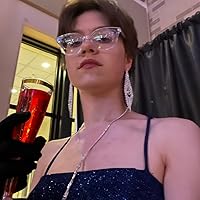
The Girl In The Fireplace got an upgrade

August 25, 2022
DNF’D couldn’t get through it. i got to 100 pages and i like to give the book 50 pages to see whether or not to dnf and i just couldn’t

June 4, 2023
3.5 Stars Rounded Down
This is a fictional Sci fi based retelling of Marie Antoinette, Louis XVI & and the French Revolution.
I'm extremely familiar with the details of the life of Marie Antoinette & Louis XVI. I highly recommend the biographies of both written by John Hardman to understand their personalities and the role Marie Antoinette played in the downfall of the French Bourbon Monarchy.
The Road to Versailles by Munro Price is an excellent study into the events that led to the Revolution and whether Louis XVI needed to die.
This kinda sorta works.
It's extremely simplified, drops many political aspects that could've strengthened the story, and focuses on the lack of sex life between Marie & Louis more than was necessary.
I liked how Fersen was handled, but frankly, the Princesse de Lamballe deserved better as she was the most loyal friend the Marie Antoinette had.
What doesn't work is that the couple are monarchs for decades before being beheaded. So this felt rushed, confused, and anticlimactic.
Also, I'm unsure if the author really understands what the first, second, and third estate are and how that impacted the revolution.
The low rating is for the suggestion that rebellion against unjust governments are unfair, corrupt, and doomed to failure.
France post revolution was fucking amazing. Women could divorce and did, after Napoleon French women will lose that freedom for almost 200 yrs. Haiti wins their freedom as do other French Caribbean islands. Jewish people are treated fairly.
Napoleon is antisemitic and racist. He reinstated slavery across the Caribbean with the exception of Haiti because Toussaint Louveture beat the French Army.
The death of rich people isn't a big deal. 1 million french peasants starved to death when Louis XIV built Versailles. Less than 40,000 people died during the Revolution. Shit Napoleon killed millions during his wars.
We learn about those that died during the so-called reign of terror but ignore that they were much less than was regularly dying under 1st Estate Management.
The trials weren't 'unfair' except that rich people were never subject to the same laws as poor people.
Like now. If I steal from my boss I'm arrested immediately. If my boss steals from me, via my check is short, it's not a crime and I have to jump through hoops to get satisfaction.
Laws protect rich folks at the expense of everyone else. So yes the courts were unfair but the nobility didn't care until that unfairness was applied to them. So their deaths were justified🤷🏾♀️
The guillotine wasn't a torture device. It was designed to equalize the death penalty. Rich people usually had a quick death, if ever subjected to their own laws, but poor people did not.
Having your head cut off was often a traumatic and brutal experience because it took a long time and the poor person suffered horribly.
The guillotine equalized death.
Rich folks are just whiners.
Louis XVI was a direct descendant of Charles I of England so he knew good and damn well he could lose his head.
He also wanted to give the third estate more support but he literally lacked the courage of his convictions.
Marie Antoinette was a political power player much more so than Sofia Copela acknowledged in her biased but gorgeous movie.
Ultimately they were absolute monarchs and deserve their death.
I feel terrible for the fate of their kids but agree their deaths were necessary.
They should've cut off Napoleon's head, too🤷🏾♀️
This is a fictional Sci fi based retelling of Marie Antoinette, Louis XVI & and the French Revolution.
I'm extremely familiar with the details of the life of Marie Antoinette & Louis XVI. I highly recommend the biographies of both written by John Hardman to understand their personalities and the role Marie Antoinette played in the downfall of the French Bourbon Monarchy.
The Road to Versailles by Munro Price is an excellent study into the events that led to the Revolution and whether Louis XVI needed to die.
This kinda sorta works.
It's extremely simplified, drops many political aspects that could've strengthened the story, and focuses on the lack of sex life between Marie & Louis more than was necessary.
I liked how Fersen was handled, but frankly, the Princesse de Lamballe deserved better as she was the most loyal friend the Marie Antoinette had.
What doesn't work is that the couple are monarchs for decades before being beheaded. So this felt rushed, confused, and anticlimactic.
Also, I'm unsure if the author really understands what the first, second, and third estate are and how that impacted the revolution.
The low rating is for the suggestion that rebellion against unjust governments are unfair, corrupt, and doomed to failure.
France post revolution was fucking amazing. Women could divorce and did, after Napoleon French women will lose that freedom for almost 200 yrs. Haiti wins their freedom as do other French Caribbean islands. Jewish people are treated fairly.
Napoleon is antisemitic and racist. He reinstated slavery across the Caribbean with the exception of Haiti because Toussaint Louveture beat the French Army.
The death of rich people isn't a big deal. 1 million french peasants starved to death when Louis XIV built Versailles. Less than 40,000 people died during the Revolution. Shit Napoleon killed millions during his wars.
We learn about those that died during the so-called reign of terror but ignore that they were much less than was regularly dying under 1st Estate Management.
The trials weren't 'unfair' except that rich people were never subject to the same laws as poor people.
Like now. If I steal from my boss I'm arrested immediately. If my boss steals from me, via my check is short, it's not a crime and I have to jump through hoops to get satisfaction.
Laws protect rich folks at the expense of everyone else. So yes the courts were unfair but the nobility didn't care until that unfairness was applied to them. So their deaths were justified🤷🏾♀️
The guillotine wasn't a torture device. It was designed to equalize the death penalty. Rich people usually had a quick death, if ever subjected to their own laws, but poor people did not.
Having your head cut off was often a traumatic and brutal experience because it took a long time and the poor person suffered horribly.
The guillotine equalized death.
Rich folks are just whiners.
Louis XVI was a direct descendant of Charles I of England so he knew good and damn well he could lose his head.
He also wanted to give the third estate more support but he literally lacked the courage of his convictions.
Marie Antoinette was a political power player much more so than Sofia Copela acknowledged in her biased but gorgeous movie.
Ultimately they were absolute monarchs and deserve their death.
I feel terrible for the fate of their kids but agree their deaths were necessary.
They should've cut off Napoleon's head, too🤷🏾♀️

May 23, 2026
This was such an usual premise. A retelling of Marie Antoinette but set in the future year of 3070. Just very clever. Characters were well written and complex. Definitely invoked emotions.

June 4, 2023
i hope the author never knows a day of peace 😭

July 29, 2022
I received an ARC from Edelweiss
TW: fire, sexual pressuring, execution
3.5
Maria, fashion influencer & princess, is about to leave behind her country for the marriage she's been promised to since birth, to become the delphine, Marie Antoinette. But France is nothing like the country she was raised in, her fiance seems almost afraid of her, and it's hard to keep any control at all, both of her feed and of her actual life. As she starts to find out about the dark side of her royal life and the dangers in France, the more clear it becomes jut how blind they are trying to keep her.
I do think this is an interesting idea. Marie Antoinette as an influencer is a unique yet reasonable take, and I think the way this plays out tracks pretty closely with the truth, and with how things might have gone had our modern influencers existed then. I also think that the android-focused scifi take on the French Revolution has its selling points.
I'll also say, the romance was incredibly sweet and I found myself both rooting for it and taking solace in it while I knew what the story was building to. I didn't expect to care much about the arranged marriage, but Louis is more well rounded character than I'd expected, who also came along with some demi rep.
However, the issue I had with this book is two fold. Firstly, this book requires a lot of specific knowledge about the French Revolution. Unfortunately, this isn't a story you get much out of without prior knowledge, and not one that allows you to learn along the way.
And, second, while the influencer inspiration and the futuristic slant both could work well, they don't work seamlessly together. The moments of pointing out that this setting is in our universe, and these historical figure and events have already happened was confusing, did not get resolved, and added nothing to the storyline. There were quite a few things here that felt muddled and extraneous, and these issues seem to have mostly came down to a clashing of ideas and too little editing,
This story was ambitious, with big ideas and a good jumping off point, but it wasn't quite as accessible or neatly thought out as I'd hoped.
TW: fire, sexual pressuring, execution
3.5
Maria, fashion influencer & princess, is about to leave behind her country for the marriage she's been promised to since birth, to become the delphine, Marie Antoinette. But France is nothing like the country she was raised in, her fiance seems almost afraid of her, and it's hard to keep any control at all, both of her feed and of her actual life. As she starts to find out about the dark side of her royal life and the dangers in France, the more clear it becomes jut how blind they are trying to keep her.
I do think this is an interesting idea. Marie Antoinette as an influencer is a unique yet reasonable take, and I think the way this plays out tracks pretty closely with the truth, and with how things might have gone had our modern influencers existed then. I also think that the android-focused scifi take on the French Revolution has its selling points.
I'll also say, the romance was incredibly sweet and I found myself both rooting for it and taking solace in it while I knew what the story was building to. I didn't expect to care much about the arranged marriage, but Louis is more well rounded character than I'd expected, who also came along with some demi rep.
However, the issue I had with this book is two fold. Firstly, this book requires a lot of specific knowledge about the French Revolution. Unfortunately, this isn't a story you get much out of without prior knowledge, and not one that allows you to learn along the way.
And, second, while the influencer inspiration and the futuristic slant both could work well, they don't work seamlessly together. The moments of pointing out that this setting is in our universe, and these historical figure and events have already happened was confusing, did not get resolved, and added nothing to the storyline. There were quite a few things here that felt muddled and extraneous, and these issues seem to have mostly came down to a clashing of ideas and too little editing,
This story was ambitious, with big ideas and a good jumping off point, but it wasn't quite as accessible or neatly thought out as I'd hoped.


July 5, 2023
This was a nice blend of historical accuracy and futuristic sci-fi. Very enjoyable!

September 2, 2023
The cover and concept of this were very intriguing. The execution was okay, but not nearly as science-fictiony as I had hoped.
It was an interesting story but it didn't really capture me. I liked Marie a lot as a protagonist and her relationship with Louis was very sweet, but I just feel like the story could have done just a bit more. The random insertion of futuristic slang also took me out of the story sometimes.
It was an interesting story but it didn't really capture me. I liked Marie a lot as a protagonist and her relationship with Louis was very sweet, but I just feel like the story could have done just a bit more. The random insertion of futuristic slang also took me out of the story sometimes.

April 9, 2026
Well that was surprisingly freaking awesome. Who knew a books I picked up for a dollar because the cover was cool would be so good.


September 8, 2022
What an enjoyable book. OK we kinda all know how it ends. I have zero sympathy for Royalty or rulers of any kind. This author gave her Marie enough loopholes so we could care about her. I've never understood the infatuation with Royalty or the ruling class . I'm revolution all the way!

November 2, 2022
Dahlin's Cake Eater is clearly meant for someone much younger than my 23 years.
This is incredibly unfortunate because I was drawn in by that vibrant cover and interesting premise - dare I say even excited for it. However, instead of an interesting exploration of the French Revolution during the era of the influencer, we get a book that relies solely on the novelty of that premise instead.
Cake Eater is an unfortunate case of a darling cover, a unique idea, terribly stilted dialogue and a half-baked narrative used only as a vehicle to showcase all that outside dressing.
It truly feels like the literary version of those poorly done romance movies Netflix seems to churn out like no tomorrow. In fact, I wouldn't be surprised if the streaming giant announced an adaptation for Cake Eater as soon as one of their scouts pulls it from a YA pile.
And, just like those Netflix movies, I'm sure that there is an audience out there who will appreciate the sheer novelty instead of focusing on the lack of quality. Unfortunately, that audience does not include me.
This is incredibly unfortunate because I was drawn in by that vibrant cover and interesting premise - dare I say even excited for it. However, instead of an interesting exploration of the French Revolution during the era of the influencer, we get a book that relies solely on the novelty of that premise instead.
Cake Eater is an unfortunate case of a darling cover, a unique idea, terribly stilted dialogue and a half-baked narrative used only as a vehicle to showcase all that outside dressing.
It truly feels like the literary version of those poorly done romance movies Netflix seems to churn out like no tomorrow. In fact, I wouldn't be surprised if the streaming giant announced an adaptation for Cake Eater as soon as one of their scouts pulls it from a YA pile.
And, just like those Netflix movies, I'm sure that there is an audience out there who will appreciate the sheer novelty instead of focusing on the lack of quality. Unfortunately, that audience does not include me.

April 18, 2022
I tried to love this book with everything I had. But ultimately, it fell flat. The idea behind the book was beautiful and perfect, but the execution and the amount of loose ends was distracting and empty. None of the characters had much of a development leaving you to wonder too much who they are. While using you imagine is nice in some instances, in this, not so much. When you are already imagining the mash up of history and futuristic historian, it made it feel claustrophobic with the amount of work the reader was having to put it.
February 29, 2024
Currently typing this in a frantic state on my way home from work, right after finishing this but--
This book. This book. Several times, I was advised to stop reading because I was clearly not having a good time with it. But the sunken cost fallacy, my oldest friend and greatest adversary, had me by the neck.
Nobility in a futuristic setting? Sounds like a fun concept! I was interested in seeing how this would be handled. But apparently to make a setting futuristic, all you have to do is sprinkle in a few computer/tech terms as expletives, adjectives, and the like and tack "holo-" onto mundane objects and there you go! (Don't even talk to me about the inconsistent use of "phishing", I'll scream.)
The future lingo was bad enough to rip me out of it several times, but the thing that has me absolutely incensed is the ending.
If the epilogue to this book did not exist, I could write this off as a work that could be salvaged with a solid rewrite of the first 2/3rds. (Chapters in the 50s/early 60s are actually...okay? They're okay! This book is actually readable and almost engaging when it drops the "how do you do, fellow kids?" mannerisms that plague the prose.) The ending, as a conclusion to this book, is fairly solid.
But the epilogue?! The epilogue ruins any sort of emotional weight this book has! I absolutely refuse and refute the fact that this book really tried to #Girlboss me at very end. You CANNOT expect me to sit here and take a "teehee, just kidding! <3" as the grand finale. Are you serious? Are you actually for real?
There are things I like. The concept of the crown royals being nothing more than glorified spokespeople for corporations is interesting. The fact that those within the palace are blinded to the plight of the world via smoke and mirrors shielding them from the ugliness of world is fascinating! But this book shoots itself in the foot repeatedly and makes even getting to these revelations a slog.
I can't tell if I'm angry or disappointed. Maybe both.
This book. This book. Several times, I was advised to stop reading because I was clearly not having a good time with it. But the sunken cost fallacy, my oldest friend and greatest adversary, had me by the neck.
Nobility in a futuristic setting? Sounds like a fun concept! I was interested in seeing how this would be handled. But apparently to make a setting futuristic, all you have to do is sprinkle in a few computer/tech terms as expletives, adjectives, and the like and tack "holo-" onto mundane objects and there you go! (Don't even talk to me about the inconsistent use of "phishing", I'll scream.)
The future lingo was bad enough to rip me out of it several times, but the thing that has me absolutely incensed is the ending.
If the epilogue to this book did not exist, I could write this off as a work that could be salvaged with a solid rewrite of the first 2/3rds. (Chapters in the 50s/early 60s are actually...okay? They're okay! This book is actually readable and almost engaging when it drops the "how do you do, fellow kids?" mannerisms that plague the prose.) The ending, as a conclusion to this book, is fairly solid.
But the epilogue?! The epilogue ruins any sort of emotional weight this book has! I absolutely refuse and refute the fact that this book really tried to #Girlboss me at very end. You CANNOT expect me to sit here and take a "teehee, just kidding! <3" as the grand finale. Are you serious? Are you actually for real?
There are things I like. The concept of the crown royals being nothing more than glorified spokespeople for corporations is interesting. The fact that those within the palace are blinded to the plight of the world via smoke and mirrors shielding them from the ugliness of world is fascinating! But this book shoots itself in the foot repeatedly and makes even getting to these revelations a slog.
I can't tell if I'm angry or disappointed. Maybe both.
This entire review has been hidden because of spoilers.

October 6, 2022
TW: aphobia/acephobia, sexual pressuring/attempts at coercion, breach of privacy, cyberbullying, class disparities, forced marriage, disasters, death
The amount of acephobia in this book is astounding, and the fact that most readers seem to not have picked up on this is devastating.
Louis is depicted as asexual (likely demi), in all but direct labels (in year 3070, asexuality is a non-identity... Again). Louis's ace-ness is mocked throughout the book; society, his family and the MC all put pressure on him to have sex. Even after explaining himself to Marie, she treats him as something pitiable, and sees his ace-ness as an obstacle in their relationship and as a negative part of him.
And here's the major spoiler:
The author also decides that this mistreated, underrepresented queer character should be the character to die at the end. This is especially aggravating as Marie was supposed to die in the same way, but was miraculously saved. I can never forgive the author for these choices. Louis, the asexual, was seen as a burden throughout the book and was gotten rid of.
The story itself is an interesting concept, but I agree with other reviewers that it was longer than necessary. The writing was also naive and flat. I found the main character self-absorbed and unsympathetic.
The book as an object is beautiful, the dustjacket illustration very pretty and intriguing. And the hardcover is a delightful pink. I also want to mention the font used for the title: it is very appropriate and nicely done.
The amount of acephobia in this book is astounding, and the fact that most readers seem to not have picked up on this is devastating.
Louis is depicted as asexual (likely demi), in all but direct labels (in year 3070, asexuality is a non-identity... Again). Louis's ace-ness is mocked throughout the book; society, his family and the MC all put pressure on him to have sex. Even after explaining himself to Marie, she treats him as something pitiable, and sees his ace-ness as an obstacle in their relationship and as a negative part of him.
And here's the major spoiler:
The author also decides that this mistreated, underrepresented queer character should be the character to die at the end. This is especially aggravating as Marie was supposed to die in the same way, but was miraculously saved. I can never forgive the author for these choices. Louis, the asexual, was seen as a burden throughout the book and was gotten rid of.
The story itself is an interesting concept, but I agree with other reviewers that it was longer than necessary. The writing was also naive and flat. I found the main character self-absorbed and unsympathetic.
The book as an object is beautiful, the dustjacket illustration very pretty and intriguing. And the hardcover is a delightful pink. I also want to mention the font used for the title: it is very appropriate and nicely done.
This entire review has been hidden because of spoilers.

September 8, 2022
What an unusual/unique story. I’ll be honest, I had trouble getting into it. I felt the beginning of the story was a bit slow, then it got rather interesting in the middle, then I didn’t like the ending. It’s 450 pages so maybe if it had been condensed a bit I would have appreciated it more (I’m not usually one for long books and I didn’t realize this one was so long when I bought it)
This story was definitely unique though. I knew I was taking a gamble with the book but I also knew it would be unique and about a royal family and that I wanted to read it.
The year is 3070, Marie Antoinette (a different one) has married Prince Louis. They are so young, only teenagers. She leaves her life, her family and her country and marries this stranger. But Louis is a good guy. He’s very shy and slow to warm up to his new marriage but he’s a good person and these two have a chance at a happy married life.
But behind the scenes everything is actually a lie. There are holograms. There are filters on social media to try to keep the real world away from Marie and Louis. But how can they serve their people if they don’t know what’s really happening?
After investigating a good bit of time in reading this book I kept reading out of curiosity for how the story would ultimately end. And then I was disappointed in the ending.
I respect the amount of time and effort that must have gone into writing this book. It’s not a bad book, it’s just not a fit for me.
This story was definitely unique though. I knew I was taking a gamble with the book but I also knew it would be unique and about a royal family and that I wanted to read it.
The year is 3070, Marie Antoinette (a different one) has married Prince Louis. They are so young, only teenagers. She leaves her life, her family and her country and marries this stranger. But Louis is a good guy. He’s very shy and slow to warm up to his new marriage but he’s a good person and these two have a chance at a happy married life.
But behind the scenes everything is actually a lie. There are holograms. There are filters on social media to try to keep the real world away from Marie and Louis. But how can they serve their people if they don’t know what’s really happening?
After investigating a good bit of time in reading this book I kept reading out of curiosity for how the story would ultimately end. And then I was disappointed in the ending.
I respect the amount of time and effort that must have gone into writing this book. It’s not a bad book, it’s just not a fit for me.

September 20, 2022
I was lucky enough to be sent the “Let Them Eat Cake" August Young Adult box from Once Upon a Book Club!!
I’m so happy I got this opportunity. This isn’t the type of book I usually lean towards, but I was pleasantly surprised at how much I enjoyed it!! It’s a retelling of Marie Antoinette set in the year 3070.
I have always been intrigued by the story of Marie Antoinette and I loved this modern take, but it still had enough of the historical feel. I also loved the slow burn relationship between Luis and Marie. It felt natural and believable. I even yelled a few times for them to just kiss already!!
‼️SPOILER: Even though I know what happens because of the real life story, I still cried and was heartbroken over the death of Luis. I loved his character the most. He had so much growth since the beginning of the book. I loved the inclusion of an asexual/demisexual character. I feel like he could be both, but that’s not my place to guess, I’m just happy to see it. 👏🏼👏🏼👏🏼
🧁 Page 51: Crown pillowcase.
🧁 Page 233: Vanity Fair purse.
🧁 Page 261: Charm bracelet.
🧁 Page 298: Plastic magnifying glass.
If you’d like to try this box or any past or future boxes, use code chapterobsessed10 for $10% off!!
Thank you, partner Once Upon a Book Club for sending me this box, I’m so happy I got to read this book. 😊
If you want to see pictures of the gifts, click here:
https://www.instagram.com/p/CivHYjgJf...
I’m so happy I got this opportunity. This isn’t the type of book I usually lean towards, but I was pleasantly surprised at how much I enjoyed it!! It’s a retelling of Marie Antoinette set in the year 3070.
I have always been intrigued by the story of Marie Antoinette and I loved this modern take, but it still had enough of the historical feel. I also loved the slow burn relationship between Luis and Marie. It felt natural and believable. I even yelled a few times for them to just kiss already!!
‼️SPOILER: Even though I know what happens because of the real life story, I still cried and was heartbroken over the death of Luis. I loved his character the most. He had so much growth since the beginning of the book. I loved the inclusion of an asexual/demisexual character. I feel like he could be both, but that’s not my place to guess, I’m just happy to see it. 👏🏼👏🏼👏🏼
🧁 Page 51: Crown pillowcase.
🧁 Page 233: Vanity Fair purse.
🧁 Page 261: Charm bracelet.
🧁 Page 298: Plastic magnifying glass.
If you’d like to try this box or any past or future boxes, use code chapterobsessed10 for $10% off!!
Thank you, partner Once Upon a Book Club for sending me this box, I’m so happy I got to read this book. 😊
If you want to see pictures of the gifts, click here:
https://www.instagram.com/p/CivHYjgJf...
Displaying 1 - 30 of 269 reviews