

What do you think?

The History of Wales in Twelve Poems
A short collection of poems that provides a window into the Welsh poetic tradition from ancient times to today.
Throughout the centuries, poets have provided Wales with a window into its own distinctive world. This book aims to give general readers a sense of the view to be seen through that special window. Poetry played a crucial part in sustaining a sense of Welsh identity from the seventh century until today. This study views the history of Wales through the lens of twelve poems that span almost fifteen hundred years. The featured poems bring different periods and aspects of the Welsh past into focus while providing some flavor of a poetic tradition, both ancient and modern, that is internationally renowned for its distinction.
Throughout the centuries, poets have provided Wales with a window into its own distinctive world. This book aims to give general readers a sense of the view to be seen through that special window. Poetry played a crucial part in sustaining a sense of Welsh identity from the seventh century until today. This study views the history of Wales through the lens of twelve poems that span almost fifteen hundred years. The featured poems bring different periods and aspects of the Welsh past into focus while providing some flavor of a poetic tradition, both ancient and modern, that is internationally renowned for its distinction.
- GenresPoetryHistoryNonfiction
96 pages, Hardcover
First published September 15, 2021
About the author
M. Wynn Thomas
35 books2 followersLibrarian Note: There is more than one author by this name in the Goodreads database.
Ratings & Reviews
Friends & Following
Create a free account to discover what your friends think of this book!
Community Reviews
Displaying 1 - 23 of 23 reviews
January 23, 2022
The poems in this compact volume stretch from Aneirin in the seventh century to Menna Elfyn in the twenty-first century. The twelve poems serve as poetic illustrations to the main text: this is a history of culture, not a work of literary criticism.
At the close, M.Wynn Thomas writes that Wales "remains what it has been for most of its history -- locked inexorably in survival mode." And it is this image that spreads throughout the book and injects an elegiacal tone on many occasions. This is an elegantly written book that celebrates and mourns Wales in equal measure, very aware, as Joyce wrote in a different context, of how hard it is to keep the soul alive when one lives in the shadow of another language: a language that sought to suppress Welsh, in the nineteenth century, as the language of brutes. M. Wynn Thomas makes countless astute points in The History of Wales in Twelve Poems and his strongest point (as his own writing demonstrates) is how dignity is enshrined in Welsh culture. And yes, there is far more to Wales than Dylan Thomas!
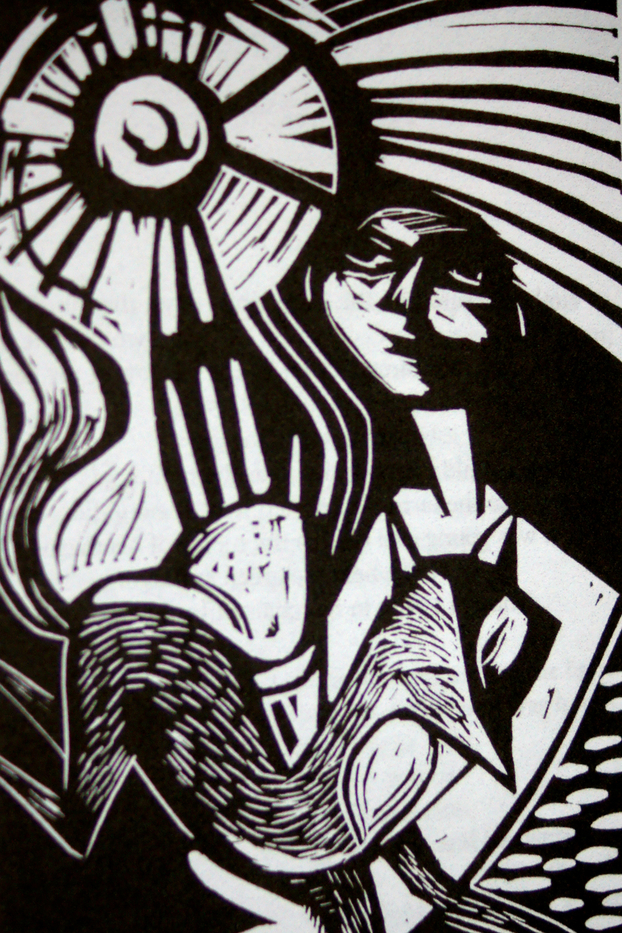
The book is illustrated throughout by bold black and white prints by Ruth Jen Evans. Their terse, evocative, narrative and emotional strength sits perfectly with the tone of this reflective and wise book.

September 8, 2024
“The great Native American writer N. Scott Momaday has written: ‘We are what we imagine. Our very existence consists in the imagination of ourselves. The greatest tragedy that can befall us is to go unimagined.’ It is the poets of Wales, above all, who have carried that burden of imagining a nation down the many centuries.”
What a privilege to get to read so many poignant poems from all the way back in the seventh century to today and M. Wynn Thomas does such a brilliant job at providing the context and history to each.
What a privilege to get to read so many poignant poems from all the way back in the seventh century to today and M. Wynn Thomas does such a brilliant job at providing the context and history to each.

September 7, 2024
The History of Wales in Twelve Poems
by M Wynn Thomas
A dozen poems mark the miles of Wales,
Fourteen centuries from first to last,
The ups and downs of winding valley trails,
The songs that bear the footprints of the past.
Each serves to launch a finely-wrought reflection
That charts unchosen twists and turns so various
Of coal and faith and slate and insurrection,
Of long uneasy nationhood precarious.
The history’s concise, precise, insightful,
The poetry a window on a world,
Ruth Jên Evans’ bold black prints delightful:
A saga’s in this slender tome unfurled.
A feat of narrative, this unstrained squeezing;
A handsome book in every manner pleasing.
by M Wynn Thomas
A dozen poems mark the miles of Wales,
Fourteen centuries from first to last,
The ups and downs of winding valley trails,
The songs that bear the footprints of the past.
Each serves to launch a finely-wrought reflection
That charts unchosen twists and turns so various
Of coal and faith and slate and insurrection,
Of long uneasy nationhood precarious.
The history’s concise, precise, insightful,
The poetry a window on a world,
Ruth Jên Evans’ bold black prints delightful:
A saga’s in this slender tome unfurled.
A feat of narrative, this unstrained squeezing;
A handsome book in every manner pleasing.

September 20, 2024
I struggled with the first half due to the huge timejumps between each poem and the abundance of names and historical events (a lot of which I had no previous context for). However, the second half of the book was brilliant: I really liked reading about the industrial past of Wales, and appreciated that the author took time to cover topics which usually go undiscussed, such as the unethical origin of some Welshmen's fortunes and the role played by women in the history of the nation.
I would recommend the book, if not for everything I've already said, because I really like the concept of explaining history through poetry.
I would recommend the book, if not for everything I've already said, because I really like the concept of explaining history through poetry.

June 19, 2022
Gorgeous linocut imagery and haunting poems about a fierce nation. Bitesized historical, cultural, religious and political explanations written in a higly digestible style so you feel like you came away not only richer by the poetry but by a glimpse of understanding into a rich historical tapestry. The passion of the author is without doubt and I came away wanting to read more Welsh poetry.
May 19, 2023
Though the connection between poem and mini-history lesson seems a bit tenuous at times, this lovely little book provides a strikingly good introduction to Welsh poetry and history, offering bite-sized tastes of two important aspects of Welsh identity--its language and its past.

May 23, 2024
Informative, beautiful, if not wordy little book, as honest as it is not quite hopeful (this book is not quite hopeful.) A brief history of Cymru presented here with twelve poems, as the title suggests, and very beautifully illustrated. I was thankful that the author did not shy away from discussion of slavery, xenophobia, and the like, and included many diverse truths about the past and present of Cymru. Also wonderful that we got poems presented to us both in the Language, as many were originally written, and in English. Worth the read.

January 14, 2022
Very enlightening and interesting collection of poems. The final poem and text was mind-opening and relatable.

November 30, 2023
I didn’t really like the poems or the history that much, which leaves me a bit lost on how to talk about this book.
It felt like the poems were selected because they contained a launching point the author wanted to talk about, not because they were particularly good.
The history tried to cover too much in broad strokes, so it ended up becoming a bit of a book of lists. Events and people would be referred to in passing, briefly summarised and then we’d move on. I don’t think I could tell you anything specific I learned from this book.
It has made me want to read more about Wales because this one just didn’t deliver for me.
It felt like the poems were selected because they contained a launching point the author wanted to talk about, not because they were particularly good.
The history tried to cover too much in broad strokes, so it ended up becoming a bit of a book of lists. Events and people would be referred to in passing, briefly summarised and then we’d move on. I don’t think I could tell you anything specific I learned from this book.
It has made me want to read more about Wales because this one just didn’t deliver for me.

July 15, 2026
I loved this book, for so many reasons, for its composition, its raison d’être, its conciseness, lucidity, charm, elegance, Professor M. Wynn Thomas’ choice of poems and the marvellous, surreal, illustrations, by Ruth Jên Evans, that accompany them. That’s just to start with, the words that flew uninterrupted into my head. I might find more as I go along!
The preamble on the frontispiece mentions “the continuing vibrancy” of Welsh poetry, and this is enlarged upon most movingly in the author’s preface. I hesitate to sum up his personal reasons for composing this work, because they are expressed with a delicacy that I would hate to tread upon in an inadequate sentence or two. But they are to do with the historical and political situation of Wales and the crucial role played by Welsh poetry in the declaration of a nation’s identity and value. The preface, to me, is as poetical in its concepts as the poems that follow.
As the book proper opened, the stark, black and white illustrations brought back from the dead the celebrated warriors commemorated in the Gododdin, a seventh-century lament for battle (I have been dipping in and out of Gillian Clarke’s magnificent version, and will someday manage to review it!). Three short pages of history follow the extract from Aneurin’s famous work, setting the pattern for the whole structure, and then we are treated to an old lullaby, evoking a mother and child in ordinary life, whose husband and father is no longer a warrior, but a huntsman. The author impressed me with his obvious care for the numberless souls who have passed unrecorded from our ken – this is a theme to which he returns as the book goes on.
After the elegies and laments composed over the end of the Welsh Princes (1282) and the consequent loss of Welsh independence, come poems that bear testimony to the changes and adaptations that Welsh people had to undergo under England’s rule. I didn’t expect to enjoy Trafferth mewn Tafarn (Trouble in the Tavern) by Dafydd ap Gwilym, but I did, as it played in a really humorous way with the cultural differences and prejudices that assailed the Welsh during the fourteenth century, and I learned from it, too, that taverns had come with the English, appearing to serve the needs of trade. Formerly Welsh people travelling had lodged at neighbouring castles, abbeys or monasteries.
By the sixteenth century, religious figures were influencing cultural aspects of the Welsh, and the Bible had been translated into Welsh as early as 1588! Welsh writing in English is demonstrated here in a religious poem by the seventeenth-century Henry Vaughan. Professor Thomas sees the intelligentsia of the eighteenth century as “laying the foundations for a new Welsh nationhood a century later” and a passionate poem by Ann Griffiths illustrates the ecstatic experience of religious reformation, mostly under the Methodists. With Methodism came widespread education, and a radicalism viewed as “dangerous” by England. The growing industrialisation of the eighteenth and nineteenth centuries engendered protests, strikes and a social and political dynamism that continued right up to the nineteen-eighties when Mrs Thatcher (I don’t call her ‘Lady’) closed the mines. A poem by D. Gwenallt Jones, “who had seen his father die when a crucible of white-hot metal spilled on his unprotected head” commemorates the industrial dead.
Dylan Thomas’ Fern Hill is offered as an elegy not just for lost childhood but for Wales and the modern (nuclear) age. Movingly, it’s followed by Gillian Clarke’s beautiful poem, “Blodeuwedd”, from the medieval tales of the Mabinogion, of a girl made of flowers who pays the price for lacking morality, responsibility, loyalty, respect, ultimately, humanity. The following pages are a tribute to the courageous and stalwart women of Wales, name upon name.
Last of all, and in this vein, is a poem by Menna Elfyn that puzzled me until I read Professor Thomas’s exposition. Siapau o Gymru”, (The Shapes from Wales) is subtitled, or the title translated here, as “The shapes she makes” (and I like that Wales is feminine!). The poem is indeed the geographical shape of Wales, in a drawing inside a poem, which is picked up by Ruth Jên Evans’ illustration, reminiscent of a woodcut, sending as a finale the shaping and reshaping of Wales and Welsh identity; absolutely what this book is about.
(Just editing this as I forgot to mention that the Welsh poems come with English translations!)
The preamble on the frontispiece mentions “the continuing vibrancy” of Welsh poetry, and this is enlarged upon most movingly in the author’s preface. I hesitate to sum up his personal reasons for composing this work, because they are expressed with a delicacy that I would hate to tread upon in an inadequate sentence or two. But they are to do with the historical and political situation of Wales and the crucial role played by Welsh poetry in the declaration of a nation’s identity and value. The preface, to me, is as poetical in its concepts as the poems that follow.
As the book proper opened, the stark, black and white illustrations brought back from the dead the celebrated warriors commemorated in the Gododdin, a seventh-century lament for battle (I have been dipping in and out of Gillian Clarke’s magnificent version, and will someday manage to review it!). Three short pages of history follow the extract from Aneurin’s famous work, setting the pattern for the whole structure, and then we are treated to an old lullaby, evoking a mother and child in ordinary life, whose husband and father is no longer a warrior, but a huntsman. The author impressed me with his obvious care for the numberless souls who have passed unrecorded from our ken – this is a theme to which he returns as the book goes on.
After the elegies and laments composed over the end of the Welsh Princes (1282) and the consequent loss of Welsh independence, come poems that bear testimony to the changes and adaptations that Welsh people had to undergo under England’s rule. I didn’t expect to enjoy Trafferth mewn Tafarn (Trouble in the Tavern) by Dafydd ap Gwilym, but I did, as it played in a really humorous way with the cultural differences and prejudices that assailed the Welsh during the fourteenth century, and I learned from it, too, that taverns had come with the English, appearing to serve the needs of trade. Formerly Welsh people travelling had lodged at neighbouring castles, abbeys or monasteries.
By the sixteenth century, religious figures were influencing cultural aspects of the Welsh, and the Bible had been translated into Welsh as early as 1588! Welsh writing in English is demonstrated here in a religious poem by the seventeenth-century Henry Vaughan. Professor Thomas sees the intelligentsia of the eighteenth century as “laying the foundations for a new Welsh nationhood a century later” and a passionate poem by Ann Griffiths illustrates the ecstatic experience of religious reformation, mostly under the Methodists. With Methodism came widespread education, and a radicalism viewed as “dangerous” by England. The growing industrialisation of the eighteenth and nineteenth centuries engendered protests, strikes and a social and political dynamism that continued right up to the nineteen-eighties when Mrs Thatcher (I don’t call her ‘Lady’) closed the mines. A poem by D. Gwenallt Jones, “who had seen his father die when a crucible of white-hot metal spilled on his unprotected head” commemorates the industrial dead.
Dylan Thomas’ Fern Hill is offered as an elegy not just for lost childhood but for Wales and the modern (nuclear) age. Movingly, it’s followed by Gillian Clarke’s beautiful poem, “Blodeuwedd”, from the medieval tales of the Mabinogion, of a girl made of flowers who pays the price for lacking morality, responsibility, loyalty, respect, ultimately, humanity. The following pages are a tribute to the courageous and stalwart women of Wales, name upon name.
Last of all, and in this vein, is a poem by Menna Elfyn that puzzled me until I read Professor Thomas’s exposition. Siapau o Gymru”, (The Shapes from Wales) is subtitled, or the title translated here, as “The shapes she makes” (and I like that Wales is feminine!). The poem is indeed the geographical shape of Wales, in a drawing inside a poem, which is picked up by Ruth Jên Evans’ illustration, reminiscent of a woodcut, sending as a finale the shaping and reshaping of Wales and Welsh identity; absolutely what this book is about.
(Just editing this as I forgot to mention that the Welsh poems come with English translations!)

August 16, 2024
The History of Wales Through Twelve Poems
Edited by M. Wynn Thomas
A Poetic Journey Through Welsh Identity
"The History of Wales Through Twelve Poems" is a masterful compilation that offers readers a unique perspective on Welsh history, culture, and identity. This anthology, curated by M. Wynn Thomas, takes us on a linguistic and cultural journey from ancient Briton to modern-day Wales, showcasing the enduring spirit of a nation through its poetry.
Structure and Presentation
The book's structure is both accessible and enlightening:
1. Each poem is presented in its original language, preserving its authentic voice and rhythm.
2. An English translation follows, allowing readers to appreciate the poem's meaning regardless of their familiarity with Welsh or Old Briton.
3. Each piece is accompanied by an illuminating essay, providing context and exploring the poem's significance within Welsh culture and history.
This thoughtful arrangement ensures that readers can engage with the material on multiple levels, from pure aesthetic appreciation to deep historical analysis.
Cultural and Historical Significance
The carefully selected poems serve as windows into different eras of Welsh history, collectively painting a vivid picture of Wales's struggles for independence and the preservation of its unique identity. By spanning such a broad historical range, the anthology demonstrates the continuity of Welsh cultural expression while also highlighting its evolution.
Highlight: "Dinogad's Jerkin"
One standout piece in the collection is "Dinogad's Jerkin," a medieval Welsh poem that exemplifies the anthology's strengths. Presented in both its original Old Briton and medieval Welsh forms, this poem showcases the linguistic heritage of Wales. Its inclusion speaks to the editor's keen eye for pieces that are not only historically significant but also possess enduring beauty and emotional resonance.
Overall Impression
This anthology is more than just a collection of poems; it's a carefully crafted journey through Welsh history and identity. The combination of original text, translation, and scholarly commentary creates a rich, multifaceted reading experience. It succeeds in being both academically rigorous and accessible to general readers interested in poetry, history, or Welsh culture.
The editor's selection of poems and the quality of the accompanying essays demonstrate a deep understanding and appreciation of Welsh literary heritage. This work stands as a testament to the power of poetry to encapsulate the spirit of a nation and its people across centuries.
Rating: 5/5 - Outstanding
"The History of Wales Through Twelve Poems" is an exceptional work that beautifully captures the essence of Welsh culture and history. It's a must-read for anyone interested in Welsh literature, Celtic history, or the power of poetry to preserve and transmit cultural identity.
Edited by M. Wynn Thomas
A Poetic Journey Through Welsh Identity
"The History of Wales Through Twelve Poems" is a masterful compilation that offers readers a unique perspective on Welsh history, culture, and identity. This anthology, curated by M. Wynn Thomas, takes us on a linguistic and cultural journey from ancient Briton to modern-day Wales, showcasing the enduring spirit of a nation through its poetry.
Structure and Presentation
The book's structure is both accessible and enlightening:
1. Each poem is presented in its original language, preserving its authentic voice and rhythm.
2. An English translation follows, allowing readers to appreciate the poem's meaning regardless of their familiarity with Welsh or Old Briton.
3. Each piece is accompanied by an illuminating essay, providing context and exploring the poem's significance within Welsh culture and history.
This thoughtful arrangement ensures that readers can engage with the material on multiple levels, from pure aesthetic appreciation to deep historical analysis.
Cultural and Historical Significance
The carefully selected poems serve as windows into different eras of Welsh history, collectively painting a vivid picture of Wales's struggles for independence and the preservation of its unique identity. By spanning such a broad historical range, the anthology demonstrates the continuity of Welsh cultural expression while also highlighting its evolution.
Highlight: "Dinogad's Jerkin"
One standout piece in the collection is "Dinogad's Jerkin," a medieval Welsh poem that exemplifies the anthology's strengths. Presented in both its original Old Briton and medieval Welsh forms, this poem showcases the linguistic heritage of Wales. Its inclusion speaks to the editor's keen eye for pieces that are not only historically significant but also possess enduring beauty and emotional resonance.
Overall Impression
This anthology is more than just a collection of poems; it's a carefully crafted journey through Welsh history and identity. The combination of original text, translation, and scholarly commentary creates a rich, multifaceted reading experience. It succeeds in being both academically rigorous and accessible to general readers interested in poetry, history, or Welsh culture.
The editor's selection of poems and the quality of the accompanying essays demonstrate a deep understanding and appreciation of Welsh literary heritage. This work stands as a testament to the power of poetry to encapsulate the spirit of a nation and its people across centuries.
Rating: 5/5 - Outstanding
"The History of Wales Through Twelve Poems" is an exceptional work that beautifully captures the essence of Welsh culture and history. It's a must-read for anyone interested in Welsh literature, Celtic history, or the power of poetry to preserve and transmit cultural identity.

April 14, 2026
This was a very fun book! The illustrations were amazing, and the poems very interesting. It's certainly not a book made for people who've never heard the word Mabinogion, but then again if you haven't I'm not sure you'd be picking this up.
The one thing I rather mind is how the translations were approached. As someone who doesn't speak Welsh (and I admit that may not make me the target audience, but best practice is always best practice and translation /is/ my job), I had a really hard time figuring out whether the translations were literal or free at first. It took me a while to be really sure, and when I was sure it made me feel alienated from the poems. There was, simply put, no way for me to hear about the words in them and their meaning, except whatever the author gave me. For some reason, they also weren't page left/page right with a language on each but one full translation after its poem? That's telling me you are indeed writing for people who can't compare the source to the translation. Then tell me they're not literal translations, or provide both! You can definitely call this a nitpick or very subjective, but it did bother me for the full length of the book that I was doing my very best to sound out those poems, and yet the only way to learn what those words meant were an external dictionary.
The one thing I rather mind is how the translations were approached. As someone who doesn't speak Welsh (and I admit that may not make me the target audience, but best practice is always best practice and translation /is/ my job), I had a really hard time figuring out whether the translations were literal or free at first. It took me a while to be really sure, and when I was sure it made me feel alienated from the poems. There was, simply put, no way for me to hear about the words in them and their meaning, except whatever the author gave me. For some reason, they also weren't page left/page right with a language on each but one full translation after its poem? That's telling me you are indeed writing for people who can't compare the source to the translation. Then tell me they're not literal translations, or provide both! You can definitely call this a nitpick or very subjective, but it did bother me for the full length of the book that I was doing my very best to sound out those poems, and yet the only way to learn what those words meant were an external dictionary.

July 10, 2026
Disappointingly unaccessible to the average reader, despite what the author professes in the introduction. The language used is more academic than reachable. Dare I say pretentious?
The poems themselves didn't seem to fit the title of The History of Wales in Twelve Poems, they were more like randomly selected poems by Welsh poets. I also didn't enjoy most of the translations.
The artwork alongside the poems, to me at least, didn't seem cohesive to the theme either. Too modern to match with ancient poetry and threw the vibe off.
All in all I found this book a mismatch of things. A disjointed, tedious book of poetry (when poetry should absolutely not be those things).
The poems themselves didn't seem to fit the title of The History of Wales in Twelve Poems, they were more like randomly selected poems by Welsh poets. I also didn't enjoy most of the translations.
The artwork alongside the poems, to me at least, didn't seem cohesive to the theme either. Too modern to match with ancient poetry and threw the vibe off.
All in all I found this book a mismatch of things. A disjointed, tedious book of poetry (when poetry should absolutely not be those things).

September 27, 2024
Great selection of poems that offer a jumping off point for Prof. Thomas’s musings on Welsh history. Learnt a lot reading this, and appreciated his insights into reasons behind the history (the rest of the story, you might say). His thesis that Wales has constantly been in survival mode for millennia is worth pondering and well supported. It is also demonstrated in the indefatigable resilience that exemplifies Wales and her people. This shows through in its poets as well as most other facets of Welsh culture and life.

November 4, 2025
A short book with a lot in it! I enjoyed the poems, but the accompanying chapter of history was even more interesting! After reading 1000s of pages on Welsh history, I can honestly say that I learned a lot from the less than hundred pages of text that WYN Thomas gives us here!
February 26, 2022
There are better books on Welsh history and Welsh poetry but this is an excellent primer. Read it and start digging.

July 2, 2022
A very good introduction to Welsh history and poems that reflect that. The lino-cut drawings are also good.
4.5 stars.
4.5 stars.

August 28, 2022
What a great way to, concisely, tell the history of a people and their country and culture. Loved the poems.

March 1, 2023
Very interesting reading. M Wynn Thomas tells th clear, concise story of Welsh history. Illustrations are perfect.

August 9, 2023
Beautiful and informative

June 29, 2025
Really enjoyed this insightful book.
December 22, 2025
A brief overview of cultural history. The poems don’t always obviously link. A knowledge of Welsh history would help.

July 26, 2022
Very interesting!
Displaying 1 - 23 of 23 reviews