UPDATED AUGUST 1, 2021When you hear "Write to Market," what do you think? Do you shudder at the thought of writing commercial drivel?Or do you see an impossible task because it's such a vague premise?Either way, I can help you.When I started out, I had no idea what people meant when they told me to "Write to Market."The truth is, it's a much simpler concept than you might think.In this comprehensive yet easy-to-consume guide, I will tell you what it means to write to market, and I will teach you how to do so in any genre.This will not only make your books easier to sell, but readers will find themselves enjoying your work more!***Kate Hall is a bestselling author who is known for her quick success and high earnings in the Paranormal Romance genre. In this guide, she shows how you, too, can write and correctly market books that readers love.
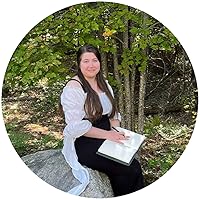
Kate Hall is a full-time author and part-time artist. She has been publishing paranormal romance books under the pen name Alexis Pierce since 2019, but she decided to give contemporary a try, and she’s using her real name this time. She lives on a farm with several horses, dogs, and cats, and she spends her spare time keeping her son from eating things he shouldn’t.
Kate does a great job of packaging her proven formula for success into a book that can easily be read in one sitting. She doesn't fluff with unnecessary language and endless anecdotes. She uses quick screenshots to illustrate concepts in action. She points directly to the pulse in the vein of the market and shows you how to tap into the flow like an interdimensional vampire MMC. Great job on this one, Kate.
At a tiny 26 pages (many of them barely half filled) this book simply doesnt have the space to offer much information. I reviewed Chris Fox's book of the same title, and at FIVE times the length it is still just an outline of the purposes and techniques behind writing to market in genre fiction. I feel cheated having purchased Kate Hall's book in a prepub sale. Just dont bother with this one.
I liked it, particularly the distinction of writing to market vs writing to a trend. It's pretty basic, though, and really, really short.
I'm not sure how I feel about some of the quotes in it regarding reviews, though. Particularly: "That's not always the case, but I've found that a lot of the people willing to 1-star a book without regard to the author are going to be impossible to please." I mean, yes, as an author I like to look at reviews to see if there is something everyone brings up that might make me think it's something I need to improve on, or something that particularly hit home, but I also know the review isn't written for ME. As a reader, my reviews are never meant for the author, but for the fellow reader. What kind of "regard" does this author think we do or don't have for the author of the books we review, or rather, that we choose to one star? And why should we have that regard? I don't know if it's what she meant, but it makes it sound like she thinks I should not rate a book one star just because it's rude. But maybe I'm reading too much into it.
Then she went on: "Just because someone left a 1-star review doesn't mean the book is bad or not worth reading, only that the book didn't meet that reader's expectations." And while this is good to remember, she immediately follows it up with "(Or, as I've seen with several Reverse Harem authors, the reader hate-reads the genre just to leave bad reviews, as they know there's no chance of them liking the book.)" Now, I know there ARE some people who hate read stuff. And I know there are some people who read multiple in an attempt to give it a chance but then the genre doesn't resonate with them after all. But just how often does this happen to this author that she has to bring it up like this? It feels like she's trying to make excuses for the many one start ratings on her books (I don't know if there are many, but now I am assuming there are and that the author is a bit bitter about them).
Also the assumption that 5 star reviews have nothing to give because the majority are "Omg, it was amazing!" and provide no insight on what they didn't like. The whole ratings/review section just felt off to me as both reader and writer, I don't know. I could see where she was coming from but it felt off.
Useful, but not enough information to make it worth the 2.99 price tag. The examples of covers was really useful, as well as the difference between evergreen tropes and trends. Fails a bit in telling you how to research beyond "read what you want to write." How do you find evergreen tropes? How long does something have to be around to be considered evergreen and not just a trend? Searching Amazon rankings is a good start, but how do you use that information? How do you find that balance between top ranking but oversaturated markets and markets so tiny there's no profit to be made?
Overall, I really liked the author's encouraging tone and concrete examples when given. Needs more meat on it's bones, however.
The second of Kate Hall’s books on self-publishing is another fast read, but that does not make it any less useful. In it, she shares her research strategies to determine what is in demand in the Amazon ebook market and preps the reader/potential author how to go about writing for what readers (ie “the market”) are wanting. She branches out a little further to discuss writing for trends, but ultimately advises against it unless a writer is quick to the trend and can produce work for it quickly. All in all, this was quick and informative. I look forward to her next book in this series.
Ms. Hall gives some insight tips on the "trade" of writing novels. Loved her first book in this self-publishing series, so decided to keep going. This one was okay. Condensed and to the point it felt short, I wish she expanded a little more on what kind of research to do. But, she did give us where to start, such as the Amazon top list. She also expanded on the "reading makes you a better writer" idea! Not only does she say read but that we should read books from our chosen genre and read it CRITICALLY, so notice how those authors make their narrative work. I just read for fun so this was a good tidbit to know before I start writing. Overall good book!
This book had fewer typos and placeholders and much more on-point content than Marketing Books for Free by the same author. I finished this one thinking, “Now that one might actually help someone learn how to write to market.”
Still, a round of edits to clean up the presentation would have been nice. And the inserted graphics were too small and hard to read to be of any use as examples.
Content: immoral genres mentioned (including LGBT and reverse harem)
I always enjoy Kates advice on writing, marketing and cover designs. This is a pocketbook sized guide on how to meet market expectations. How to find out what they are and how to get yours outlines, styles, tropes, and examples galore. I devoured it in one gulp. I feel I can now do some effective market research. Thank you Kate.
This book gave me some good insight into writing to market in different genres. I liked her ideas for researching one’s genre of choice, but I wish there were a section in the back or something similar to help readers of this book learn more about different genres’ tropes and themes.
This is an easy to read guide on writing to market. The author explains the difference between writing to market and writing for trends. She uses examples of her own work to explain how she's gone from near poverty to a full-time self-publishing author.
Simplest description I've read about writing to market.
I haven't understood the concept of writing to market and trends. This book explained everything in easy to understand language. Excellent information piece!
I devoured Kate's latest book as it is full of useful, actionable steps/ideas to write to the market and not to chase fads/trends. As I have been floundering in finding what niche I wanted to write in, Kate's book was incredibly useful.
I enjoyed this book. Even though it was long, I still learned something... It gave me a different perspective all in all. It's short, so if you grab it and dislike it, don't worry, it won't take away hours of your time.
Another book to keep me on my writing game! I’m learning so much from Kate and I really enjoy how easy it is to follow the advice in the book. I’m excited to write again!
Very good information and things to consider when writing or planning a book. Kate writes on subjects in a way that is informative and insightful. I have enjoyed all of them.
Quick read. Basically, know your tropes and the hero’s journey. Use them. Add unique flourishes (specific details about the setting and characters) to make it unique.