An up-close look at how porn permeates our culture
Pictures of half-naked girls and women can seem to litter almost every screen, billboard, and advertisement in America. Pole-dancing studios keep women fit. Men airdrop their dick pics to female passengers on planes and trains. To top it off, the last American President has bragged about grabbing women “by the pussy.”
This pornification of our society is what Bernadette Barton calls “raunch culture.” Barton explores what raunch culture is, why it matters, and how it is ruining America. She exposes how internet porn drives trends in programming, advertising, and social media, and makes its way onto our phones, into our fashion choices, and into our sex lives. From twerking and breast implants, to fake nails and push-up bras, she explores just how much we encounter raunch culture on a daily basis—porn is the new normal.
Drawing on interviews, television shows, movies, and social media, Barton argues that raunch culture matters not because it is sexy, but because it is sexist. She shows how young women are encouraged to be sexy like porn stars, and to be grateful for getting cat-called or receiving unsolicited dick pics. As politicians vote to restrict women’s access to birth control and abortion, The Pornification of America exposes the double standard we attach to women’s sexuality.
“The Pornification of America: How Raunch Culture is Ruing Our Society” (2021) is a highly interesting, informative, and fully illustrated book of the meaning of Raunch Culture, the widespread influence and how deeply ingrained Raunch Culture is in American society, and why it matters. This is the third book written by Dr. Bernadette Barton Ph.D., she is the Professor of Sociology and Director of Gender Studies at Morehead State University, KY.
The book is a lively narrative and features class discussions throughout the book based on interviews of students, mostly Millennial and Generation Z. Professor Barton is a popular lecturer that rarely hesitates to engage in controversial topics. It is notable that the book was written during the Trump administration, there were numerous bikini clad, thong wearing Trump supporters/MAGA with the sole purpose of “looking hot”. The “Bro Culture” encouraged women not only to “look hot” and “proudly display their bodies” to please men, but also to act like and fit in with men, and judge other women sometimes in a negative and harsh manner. Female students noted how porn had infiltrated their intimate relationships. Some women dismissed “porn sex” as unavoidable with a shrug; others ended relationships when their boyfriends acted out porn scenes that included slapping, spitting and choking. In his book: “Killer Triggers” Joe Kenda (2021) warned that choking must never be done and can lead to death. According to media analyst Gail Dines the choices for women in the porn nation are to be sexually appealing or invisible and “ashamed” of their bodies. Centered around patriarchy and “Toxic Masculinity” many young men felt entitled to act out in harmful and demeaning ways. The demoralizing examples of Donald Trump were far from honorable presidential behavior: hush payments to a porn actress, his wife Melania Trump appearing in the *“G.Q. Naked Supermodel Special” (G.Q. January 2000). Trump has also been accused of sexual misconduct and harassment by 24 women. He has appeared on the show of “Shock Jock Howard Stern” 39 times between 1993-2015.
Feminism can serve as a powerful force against Raunch Culture, according to Barton. With the Covid-19 pandemic people are examining the effects of inequality and injustice like never before. Feminist legislation— in all areas of climate change, employment, politics, health science, economic justice, human rights and more offer a positive change and renewed hope for all people across the globe. (3.5*GOOD) ** With thanks to New York University Press via NetGalley for the DDC for the purpose of review.
My thanks to the author, publisher and NetGalley for an ARC of this book in exchange for an honest review.
The gist of Bernadette Barton's position is that we are all a product of social brainwashing. These days, sex sells just about every commodity - even burgers!
In these sexually enlightened times, are we truly choosing to pursue, express or flaunt our sexuality as freely as social media would like us to believe, or are we mainly falling victim to a degenerate marketing scheme? Bernadette Barton makes a powerful case for the latter in this book.
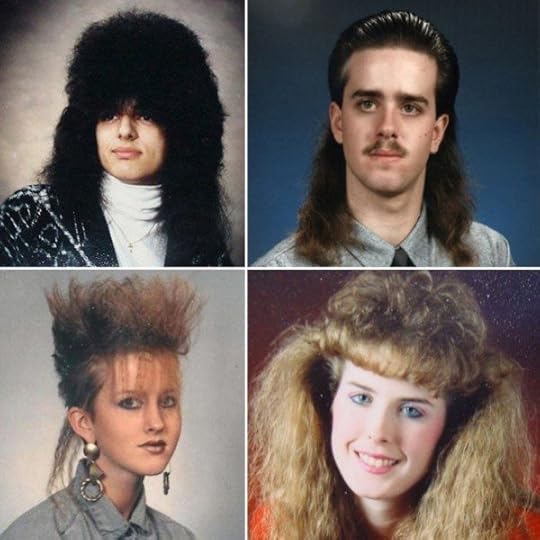
(Today's fads often become tomorrow's cringe-worthy yearbook photo faux pas!)
I truly believe we humans have messed ourselves up. We have become slaves to fads and fashion. We are addicted to labels and brands. No matter what the cost, we have to have the latest clothes, cars, phones, monster homes, bodies....
Everyone literally wants to be a millionaire and to be the star of their own on-line reality show. When someone tries to discuss the moral or psychological implications of "raunch culture," they are accused of being oppressively religious or judgmental.
. . . . . . . .
Ultimately, Barton is asking you to thine own self be true: make sure that the lifestyle and fashion choices you are making are not being dictated by the media or your peer group. Once again, we are exhorted to think before embracing widespread "norms." I'm rating this well-written and well-presented book a 4 out of 5.
3.5 Absolutely worth the read, but a little heavy on anecdote and hurt by a limited sample of interviews.
I'm not even sure what it says about me that my first reaction to this book was to bristle at the concept. As ridiculous as it seems in hindsight, it can be easy to overlook that there's a massive difference between our current ubiquitous raunch culture and a sex- and body-positive one. I learned so much from this and now it's impossible not to notice how much certain concepts and behaviors have crossed from violent, abusive porn into mainstream culture, whether that's in advertising and entertainment or dating.
I was bothered that the majority of interviewees giving their experiences were 18-26, tops. That's the demographic that was born into raunch culture everywhere since they've never known a time without constant internet and screens, but it makes the scope of this feel very narrow. A 19-year-old telling you how much they've learned from experience just feels a bit off. Not discounting it, but what does it say that all of the experiences they relate are also long familiar to me, a decade older than them? There's very little exploration of what this kind of treatment has meant over so much time. A few are older, but seems so limited when the effects of this are much further reaching than just those who've grown up with constant bombardment of raunch culture.
The author is a gender studies professor and it seems many interviewees were students or former ones, but it lessened my appreciation since it's framed so heavily through stories of people who haven't even had that much time to marinate in these experiences, if that makes sense. Give it at least ten more years and then tell me how awful it feels and how much you want to burn this shit down.
Real Rating: 3.25* of five, rounded down for what I felt were serious issues
There is no doubt in my mind that Dr. Barton is on to a very important strain (term used advisedly) in late-stage capitalism. Chanel Miller's Know My Name has opened many people's eyes to the awful consequences of "raunch culture." It's inarguable that #MeToo has blown the closet doors off way more abusers' safe havens. And let me be the first to say that Paris Hilton shakin' her moneymaker all over a Bentley to sell burgers to boys was a wake-up call for me because, well, yuck.
I am much more willing to listen to stories outside my experience than ever before in my life. It is liberating to hear trans men talking about their pregnancies...to learn of the empowerment young women are taking from the female role models who have done so very much more than those people were led to believe that they could...should even aspire to. It is joyous to learn that women evrywhere are just not listening to Old White Men in Authority with downcast eyes, that protests and awareness campaigns and lawsuits are growing apace with the dying convulsions of the old, bad days's bad law and worse policy. Our current Vice President is a woman in an administration that foregrounds women in more senior roles than ever, allowing the levers of power into better hands than they've been in in decades.
But there's another level of battle being fought against the old, bad ways: in the heads of young men raised with all the cultural reinforcement that their "natural rights" or "god-given authority" over women's bodies is being taken away rom them. The culture reinforces the idea of male supremacy by using female bodies as props, set dressing, and sex toys. This is somehow twisted, in a hideous Jekyll/Hyde-ing way, into a celebration of women's empowerment and sex-positivity.
Author Barton calls out this arrant nonsense. She establishes her own credentials as a sex-positive feminist social scientist. But here is where I become less gung-ho about the book: It does feel to me like the author is not far from sex-work shaming at many points. I consider this a problem because it is a perspective that can very easily and quickly descend into controlling women's bodies, this time by women, but in the same repressive and restrictive "it's for your own good!" way. Women are the agents in charge of their bodies. No one has the right to tell an adult woman what she needs to be doing with her own self.
I have to agree very heartily with Dr. Barton that "sex education" is a pathetic shambles because religious nuts (my term, not hers) have built guilt into the minds of people as a means of social control; as a result, parents aren't willing or able to inform their children about the mechanics of the acts, or to allow schools to fill this gap. Again, this is presented in purely heteronormative terms, which is a deeply irksome thing to me. Acknowledging the harm that non-existent to catastrophically bad sex education does to gender non-conforming or sexual minority kids wouldn't have been too terribly out of the brief....
Part of what makes me wonder if that exclusion and that control isn't the way things are headed is the demographic of the author's interview subjects of both genders. They are almost all between nineteen and twenty-five or -six. I am not complaining about some perceived "lack of experience or perspective" to be clear. I fully understand that the raunch culture under discussion has reached new heights of awful in their lifetimes. And there is no absence of older feminists in the book, just that the focus isn't so much shared as sharpened on the younger women as almost all the older women are brought into the anti-porn crusading that has been a hallmark of TERF days.
(The author doesn't like the term TERF. If the shoe fits, wear it; these folks are their own worst brand ambassadors and I think they need to be called out for their very closed-minded thinking everywhere. So I'm using it here. And that was a whole half-star off my rating.)
Online porn. What should we do about porn? Why is most cishet porn violent? (This is an area I know nothing about. I don't read about, think about, or watch straight people having sex voluntarily.) Why are there clouds? There has been porn since forever (go look at some Attic pottery from the 600s BCE) and I suspect there always will be. The author does not wish this to be the case, and builds a damning argument against the continued normalization of violent porn.
I don't think for a second that it's porn spreading e-bile (such an excellent term for the horrific "social" media abuse spewed at women/minorities/gender-nonconformists!); I myownself think it's down to rampant abuse of anonymity. Disinhibition due to the facelessness of online interaction. And I am also pretty convinced online porn consumption would go down a lot if anonymity was curtailed. But there's no reasonable way to invalidate or even diminish the power of the author's data-driven analysis; I just feel it's a case of stopping too soon, ending the hunt before the prize got bigger. There went a star.
So my rating of three and a quarter stars seems, well, mingy? There can be no modern work about feminism's many battles that excludes transgender people. That is a massive oversight. There should be no work of modern feminism that does not include members of the QUILTBAG community in its entirety, because that inclusive culture feminism works to create isn't inclusive unless we're at the table, too.
Also? Hillary lost because they cheated. But that was five years ago. I myownself am outraged that Elizabeth Warren isn't in the White House. She was, and is, the best person for the job. But she wasn't the nominee and she's working with the present Administration...I'm taking my cue from a gracious loser. Let's accept that misogyny and reactionary billionaires did Hillary dirt and work on the many, many, many problems in front of us now. That little excursion into Hillary hagiography was the last quarter-star off the five the book started with.
I would recommend the read despite my deep reservations because this is a stirring, clarifying presentation of a very under-debated topic. I would encourage you to read it in the light of its presentation of part of the story, in a particularly readable way for an academic book.
In my Grade 11 and 12 English class for adult learners, I always try to do at least a week on media literacy. We talk about bias and stereotypes, particularly as they relate to race, gender, and disability. One of my favourite activities regarding gender stereotypes involves examining ads and asking students to identify stereotypes present in those ads. It always provokes enlightening and interesting conversations from them. The hypersexualization of women as sex objects, and the positioning of men as sex subjects, is indisputable no matter where you turn. So I was definitely interested in reading The Pornification of America: How Raunch Culture Is Ruining Our Society (what a clickbait title) and appreciate the review copy from NetGalley/New York University Press.
I did go into this book with some reservations. The last time I read about raunch culture, I didn’t much enjoy the way the subject was evaluated and the conclusions drawn. Indeed, this book is in some ways a spiritual successor to that book,
Female Chauvinist Pigs
, by Ariel Levy—Barton mentions the book a couple of times in the introduction. Whereas that book was a journalist’s dive into raunch culture as a phenomenon, Barton’s focus as a gender studies professor is more sociological and attempts to bring more data to the party. In that sense, I like this book much better. Levy’s approach to the topic felt heavy-handed, whereas Barton approaches the topic with much more nuance. And of course, this book is as up to date as it can be, including some of the emboldening effects that the Trump presidency has had on raunch culture.
So I started to feel more comfortable and optimistic with this book’s approach to the subject. Let me be clear: raunch culture is absolutely a problem. I just find some analyses of the issue to be far too fraught with generalizations. For example, a lot of blame for raunch culture is (rightly) laid at the feet of porn (hence the title of this book). And I always get nervous when feminists start discussing porn in an entirely negative light, because then we’re veering into anti–sex work territory in general. So to my relief, Barton’s analysis is far more nuanced. She establishes herself as sex-positive out of the gate (and offers a great explanation for how raunch culture has co-opted the language of sex positivity without actually being sex positive, particularly for women). Her condemnation of the negative consequences of easier access to increasingly violent, absurd Internet porn is balanced with the acknowledgment that porn is not going way, and that some people use porn in healthy ways as part of their sex life. Barton says, “What we need in place of internet pornography, or at least alongside it, are more conversations about women’s sexual pleasure.” Yes, so much this!! Blanket condemnation and calls to ban porn disguise the issue. Unlike Levy, Barton acknowledges that “feminist porn” exists, but she makes the excellent point that you will never see it unless you seek it out—it is the structure of the porn industry, and the discoverability of it online, that is the problem. If porn were more centred on women’s pleasure, and if it weren’t relied upon for sex education because schools are too moralistic to talk about that stuff, then it would not be as large a contributing factor to raunch culture.
In a similar vein, Barton approaches numerous topics with sensitivity and an eye for teasing out the actual relationship between the topic and raunch culture. She does this through quoting from numerous interviews, citing studies, and supplying personal anecdotes from her teaching experience. As a result, the book builds up this overall picture of the ubiquity of raunch culture within American society. This isn’t just a porn problem or an advertising problem or a political problem: it’s everywhere.
In the final chapter, Barton tries to offer, if not solutions, than a framework that could help us dismantle raunch culture. I appreciate that she admits to the limitations of her work here. Confronting raunch culture is a difficult task and one that must be furiously intersectional and anti-capitalist to succeed (earlier in the book, Barton observes that raunch culture is closely tied to white people in particular, and it is likely an outgrowth of white supremacy’s hegemonic role in our society). This book is quite depressing at times with the picture Barton offers us, but it is also forthright and honest.
A couple of critiques before I go!
First, a correction: Barton says that Twitter employees created Tay, an AI bot released on Twitter that was supposed to learn from its interactions with Twitter users. In fact, Microsoft created (and subsequently … decommissioned) this ill-fated experiment. This error has no substantive impact on Barton’s analysis.
Second, Barton’s cozying up to radical feminism made me uncomfortable at points. It was one thing to say, “You know, the anti-pornography feminists had a point,” earlier on in the book—I understand and can appreciate that perspective. Much later, though, Barton proudly recounts a time she challenged a friend for using the term TERF (trans-exclusionary radical feminist) because she views it as besmirching radical feminism. Which … yeah. I get it, and I admit the term TERF isn’t great—not because it reflects poorly on radical feminism, but rather because if your feminism is trans-exclusionary, it ain’t feminism. This just seemed like a very unnecessary digression that caused me, as a trans person, to bridle. I am going to continue to “trash TERFs” all I like, thank you very much, because they literally do not want me to exist.
On a similar note, this book is quite cisnormative. Barton does interview a non-binary person. However, acknowledgment of how raunch culture affects trans people as a category is absent from this book. We are mentioned only a small handful of times, and usually in passing, such as this sentence from the conclusion: “Despite a loud and at times violent backlash, trans and non-binary people are changing the culture….” From this I can conclude, thankfully, that Barton is not herself a TERF and is quite supportive of trans people and willing to include us in this discussion. Rather, this feels more like an oversight—either unintentionally as a result of cis privilege, or intentionally out of the idea that, as a cis person herself, she shouldn’t be the one to speak on these issues. If it’s the latter (and I want to assume the best intentions), I wish at least some kind of disclaimer had been made to this effect—but more importantly, cis people need to stop “it’s not my place” as an excuse to erase and ignore us. Yes, it is true that cis researchers should not make trans issues their primary area of focus. But Barton could easily have interviewed more trans people, just to help round out her sample, for instance. Raunch culture affects me so much as a trans woman, because of its relationship to ideals of femininity and sexual expression, but my experiences are nowhere to be found here.
Anyway, I needed to bring that up, but I also don’t want you to think this is a deal-breaker for me. On the whole, The Pornification of America turned out better than I expected. I appreciate that there is a more academic look at raunch culture, updated for this decade, that we can refer to as we unpack and attempt to dismantle this aspect of our patriarchal, white supremacist society. Barton does good work here, even if I have some critiques of it. In particular, I recommend anyone who hasn’t read a lot about this issue, but wants to learn more, to dive into this. Its overview is thorough, thoughtful, and comprehensive.
Originally posted on Kara.Reviews, where you can easily browse all my reviews and subscribe to my newsletter.
Raunch culture is a self-explanatory term Bernadette Barton uses to describe the decline and fall of the USA in The Pornification of America. It means women are subservient and mere objects, men rule, and they are gauche, vile, rude, crude and cruel about it. Images of naked and near women are everywhere. And under the Trump administration, all this has become uncontroversial, normal, accepted and expected. It is the patriarchy gone wild.
It makes for a fast-paced, constantly evolving challenge of a book. There is much truth in it, and pulling it altogether makes for a consistent and dispiriting package that is American culture today.
Barton does first-hand research using her experience teaching gender issues at Morehead State University. She interviews women and men, many her own students, and extensively quotes their appreciation of the rather ugly world they inhabit and have grown up in. It is a world of unending ubiquitous porn, violent casual sex and bro culture where women can amuse men by trying to fit in, but they never really rate. They want to be bros. When it works, they are considered dudes. When they displease, they are bitches. The labels are assigned and changed at the whim of the men. Men rule at their fantasy-fueled whim. Women, offended, nonetheless dress and make themselves up for it, and routinely participate. Sadly, the alternatives are few for singles.
It has turned young women into wannabe dudes. They hang out with obnoxious men, and try to match them verbally, while dressing sluttishly and acting coquettishly. That is, if you consider that 40% of customers at strip clubs are now women, who often take off their own tops and sit in their miniskirts and stiletto stripper shoes, as coquettish. Barton says “I perceive raunch culture to be a big con, manipulating women into performing free sex work, into being naked and half-naked, gratis.” American women have become willing partners in their own downfall.
Why any self-respecting woman would dress like a stripper, learn to dance with a pole, swear like a Karen and submit to sexual abuse is what Barton explores. It is sadly pathetic. That it is so popular and uncontroversial is most sad.
She explores the new world of hookups - sex without dating, or what used to be called one night stands. Only today it is well-organized, a meat market where everything is free.
There is a chapter on the casual universality of naked or near naked women in advertising, from tv commercials to giant billboards and everything in between.
And there had to be a chapter on internet porn, a new outlet available to all, from toddlers to seniors. In her experience, it is all about violence, from spanking to spitting to choking, to beating. Basically anything to demean and cause pain. The modern man actually expects to dole it out to be a satisfactory partner, and the woman often expects to undergo it all, or what did she think she was getting into in the hookup scene anyway? Children simply grow up with it, sexting each other from pre-puberty on.
Barton finds that internet porn has dulled the senses something fearsome. There are men who think they must follow the script, and men who can’t reach orgasm unless they are watching porn while having sex with a woman. Porn, now freely available on mobile phones and seemingly innocent social media such as Instagram (a Facebook service), can be seen being mindlessly watched in public, on the streets, in the subways and in restaurants. It is eye candy that keeps men, and to an increasing extent women, from facing the world. It is another way of avoiding or substituting for a real relationship.
Barton adds tremendous color from the words of her interviewees. They have all had these experiences, and for many, this is the way of the world and they know of no other way. This rather shocking state of the union has changed the very nature of American life. It is part and parcel of living alone, as well as the permissiveness of foul language by everyone, and the media pushing to keep ahead of these trends, pushing them farther and faster. It is not so much a vicious circle as a race to the bottom.
There is also a chapter on the strange new tradition of dick pics. It seems men feel entitled to send women they don’t even know photos of their genitals in various states. Even when they do know them, the photos are usually unrequested, unexpected, and unwanted. Doesn’t seem to stop anyone. If it led to a new relationship, perhaps it could be considered worthwhile. But it doesn’t, and it isn’t. It’s just an aspect of the raunch culture where such activities are the new normal. It is meaningless to men and offensive to women. In today’s thinking, that’s a win-win.
Raunch culture is not just vile, it is fraudulent. It “cloaks itself in the language of female empowerment, but it is Orwellian doublespeak. Hypersexualization is not sexual positivity,” Barton says. In other words, this is not feminism rising, it the patriarchy ever stronger. These kinds of insights throughout the book alter the reader’s perception of the scattered parts.
There seems to be no quarter for sane relationships in Barton’s world. Even pastors refer to their wives as hot, or worse. Right in their sermons. “Raunch culture and conservative religiosity are two sides of the same coin, promoting the patriarchy, controlling women’s bodies,” she says. Evangelicals use raunch culture extensively, telling the flock that sex is greatly improved for true believers and anything is permissible inside a hetero marriage. This is attractive to men, giving them carte blanche over their women. “Conservative Christian and raunch cultures work well in unison because both systems position women as inferior to men, and both seek to control women’s sexual expression,” Barton says.
Along with the visual, there is the verbal. Swearing is no longer just commonplace, it is a necessary part of speech. Especially during sex. Most of her interviewees use four letter words throughout their answers to their professor, for example. Barton appears to simply accept this, not attempting to teach anything about communicating effectively. She is a voyeur of the swamp.
She calls what appears in social media e-bile. The constant berating of women, the denigration and objectification is now totally normal. Women are less than hoes, they are holes. Women self-objectify, in a process we used to call being self-conscious. This takes it a few steps further, abandoning all hope of standing tall and instead conforming to the submissive stance required.
That any of this true is depressing. That kids today grow up knowing all this and positioning themselves to participate accordingly is most unfortunate. It does not bode well for the future. This is a society in rapid decline.
The one chapter I did not appreciate was on Hillary Clinton. Barton is one of those still massively bitter that she was not elected president. Barton goes on and on about how perfectly qualified she was for the job (especially compared to Donald Trump), how she was treated unfairly, how could this happen, what is wrong with everyone, etc. We’ve seen this all before, in more appropriate contexts, and Barton adds nothing to the argument or to her own book with it.
She is especially critical of Trump calling Clinton names, accusing her of crimes and so on – because she is a woman. This is incorrect. Trump is like that period, even with Republican males who don’t toe his line. It was not (purely) because she is a woman, but simply because she is a Democrat. That’s all it took to unleash all the vileness he could muster. Any Democrat would have received it, regardless of race, creed or sex. Barton clearly let her feelings overtake her otherwise fair analysis throughout.
Of course Trump himself is the poster child for all that is wrong in this new relationship-free dystopia. His own wife, a former escort, has famously posed naked for magazines. The exalted image of the First Lady of the United States is out the window. The first couple lives in separate apartments, both in Washington and in New York. They famously have no pets and do as little as possible together. There is nothing normal about their family. His pussy-grabbing comments, gestures to his crotch and claims that women who accuse him of rape are not his type all set the tone for the violent hookup culture he presides over. It reminds me of my favorite New Yorker cartoon of this presidency. A mother is chastising her ten year old son, saying Young Man, “we do not use presidential language in this house.” What better description of the Trump decline and fall can there be?
But what of the blame? There are three candidates for Barton. Parents have never done their duty explaining sex or how to relate to someone else. “The talk” parents are supposed to give their adolescent children mostly never happens.
Schools in America have abandoned any kind of sex education, relying on parents to keep it inside the family and the home, which does not happen. “Porn has to stop being the de facto sex-ed,” says Kayla, one of the student interviewees.
And women should support each other better. There is not just safety in numbers, but close relationships among women give them reinforcement.
None of these factors is new, unlike, say, dick pics and internet porn. It means that the fault is purely negligence, allowing a crazy weed to grow wildly out of control. The three factors (parents, schools and other women) have the ability to rein it in again, but history shows that is shall we say, unlikely.
Barton’s final say is over feminism, which she counts on for support, comfort, reinforcement, growth, protection and promotion. But as I read, I couldn’t help thinking this applies to everything. For example, substituting the term labor union for feminism throughout gives exactly the same result. Humans need outside influences, second opinions, available allies and trusted relationships. Any kind of human relationship would help minimize the current state of decline. It’s really not an issue of feminism. It’s bigger than that.
Same for online porn. Barton doesn’t examine it this way, but since she says the overwhelming majority of those connected to the internet dote on porn, we should recognize it as highly valued in people’s lives. Then perhaps we can deal with it, promote a healthier version of it, minimize the crazier parts of it, and maybe even manipulate it to help users, instead of crippling them in real life. Just a thought.
Hers is not an optimistic analysis, but it is thorough and enlightening. For those of us who have managed to develop close relationships involving love, trust and respect, The Pornification of America will be a revelation. The slimy ads gracing our televisions and billboards are the just the tip of a gigantic iceberg that is sinking the very nature of American society.
Fascinating, eye-opening, informative. It's hard for me to not feel guilty as to how oblivious I was to some aspects of raunch culture before this book. The aspects that I did recognize were those that I would never have known how to talk about, so the assertion that we are ill-equipped to have these conversations must be somewhat true. And the harsh reality, as portrayed throughout the book, is disheartening. How can we really overcome the new incarnations of sexism? It starts with education, and however little one person can do, I know I'll be drawing on some of this content when I need to have these conversations with people.
4.5 stars rounded down for now. Damn it feels good to be validated.
"Pornification sells itself to consumers using the deceptive narrative of female empowerment. This wily frame positions those who critique sexualization as trying to police women's bodies and control women's sexuality. In my experience, when I teach and lecture on raunch culture, some women say, 'I like dressing up and looking sexy. Are you telling me I am bad?' Some men say, 'The ladies choose what they wear and I like seeing boobs.'" 🙃
"At the same time, the fact that some individuals sometimes enjoy wearing stripper shoes does not make raunch culture empowering for women. The complication here is that critiques of hypersexualization are structural, while arguments that women can dress sexy if they want to are singular, and both perspectives are valid. Raunch culture is sexist and women should get to pick what they wear."
What started as a feminist movement to empower females to have the same sexual options as males has turned into The Pornification of America.
Raunch culture is everywhere! It’s in advertising, movies, social media, and even music. This book attempts to explain how we got here and why this environment is so toxic to women.
The new sexual freedom of women was supposed to empower them to control their own lives. But now instead of being the perfect 1950s housewife, all women must be the porn bot of every man’s fantasies. Ever since the 2000s, there are impossibly high standards for female beauty (and sexiness) set by the surgically enhanced Kardashians and their Insta copycats. Who has the time and money to reach that level? And why does everyone want to look like twins? How boring is that?
The book looks ever deeper into raunch culture from Insta models performing free sex work to how the prevalence of violent porn is changing men’s sexual expectations to toxic masculinity like Trump’s “locker room talk” becoming pervasive. I agree with the author that once you hear about the “male gaze” you won’t be able to stop seeing it literally everywhere. The book occasionally may go a few steps too far. However, overall The Pornification of America is an eye-opening read. 4 stars!
Thanks to NYU Press and NetGalley for a copy in exchange for my honest review.
I don't think Barton takes some of her criticisms towards porn or femininity/self-objectification far enough but overall this is a really helpful and current look at raunch culture, porn, and sexual expectations. Her conclusions about pornography dictates raunch culture, and therefore what we find sexy (particularly in women). It is is a multi-billion industry and has more influence than people think, so it was great of her to bring that up. She's very hopeful in her optimistic, perhaps more so than I am, about eradicating or at least addressing raunch culture, particularly in younger generations. I'm hopeful, but maybe not optimistic at the moment given the huge push of the "empowerment" narrative towards certain lifestyle choices, including encouraging young women to get into the sex industry, mostly through camming. This book is really balanced and fair and not a bad place to start if you're looking for criticisms of pornography and the sexualization of our mainstream culture.
The Pornification of America is a provocative yet thought provoking journey about how ‘Raunch Culture’, a term coined by the author, has impacted our everyday lives. This oversexualization in media, the violence against women, how sexual assault gets silenced in politics, this author explores our obsession with sex and how raunch culture is becoming more wide spread.
I thought this book had really great points, a lot of the ideas presented vibed with me and my values. I could understand why raunch culture is toxic and why it needs to be spoken about more. The author brought up a really good point about being a sex positive feminist but still being outspoken about raunch culture and it made me really think about how raunch culture has affected my life.
My downfalls with this book is that it was not very well organized nor was it insanely accurate considering most of the data collected is from opinion. The main ideas of the chapters were skewed over many different sections of the book and yet when past ideas were referenced they had nothing to add to the idea at hand. Also, most of this book is full of opinions from straight people, a small sliver was left to anyone who identifies with the LGBTQIA+ and it makes me wonder how this book can claim to be ‘feminist’ when you are only supporting a fraction of the people who are at disadvantage because of the patriarchy. And finally, she had to defend the term TERF (trans-exclusive radical feminist) under the guise of this slanderous term to be demeaning to the roots of radical feminism and to this I say: The TERFs out there are falsely using the feminist movement in order to spread their transphobia and I would never consider them feminist in any circumstance, the reason the term TERF is used because it identifies these ‘false-feminist’ and how they have wrongfully used ‘radical feminism’ to spread hate. We should be focusing on how these literal trash humans have gotten away with being coined ‘radical feminist’ in the first place, not their feelings about being called TERFs.
Overall, this book had some really great ideas but the execution and word choices were subpar. I would like to see this as a revised work in the future and maybe a little more researched, (i.e how raunch culture can also affect those who identify other than straight).
This is an excellent analysis of the damage being done to *everyone* who is being raised in a pornographic culture. It's less statistical and academic and focuses more on the perspectives of a wide variety of people (different ages, races, and both sexes) who have both grown up in and watched this pornification happen.
In a world where women's sexual subjugation has been sold back to us as ~true empowerment,~ work like this is really important. While there aren't a ton of solutions offered (that's not the point of the book), it's good to show everyone that we're being gaslighted en masse about what's ~really good for us~ and what women are worth.
The only complaint I have is about the last chapter, which dives into liberal feminist garbage and actually calls women "TERFs" which is frustrating, not only because it's a slur, but because the author didn't bother to actually talk about that particular issue while maligning so-called "TERFs" as ~bad radical feminists~ (hint: the only way to be a feminist is to recognise biological sex).
Very well worth the read overall.
I received a copy of this book for free from NetGalley and NYU Press in exchange for an honest, voluntary review.
I read this book in preparation for talking about pornography and digital sexual activity with a group of parents and teens. This book was filled with a lot of eye opening information, and beyond that, some compelling reasons behind the stats, addictions and "raunch culture" we live in. At times the book was hard to read but that was simply because of the nature of the topic. I do wish that some more practical responses had been offered in the book, especially for those of us raising kids and students in this culture - but perhaps that was not the purpose of the book. Overall, well done!
As someone who grew up in a time when celebrity upskirt photos were considered fair game for publications, I thought I'd be more impressed by Bernadette Barton's THE PORNIFICATION OF AMERICA. I'm a huge fan of Ariel Levy's FEMALE CHAUVINIST PIGS, and this felt like a weaker, more introductory version of that despite coming out 15+ years later.
Barton starts strong with a discussion of raunch and by disambiguating between sexy and sexist. Unfortunately, she's overly reliant on personal interviews over citing hard research, and each issue is barely delved into with few solutions offered.
I think this book did a good job of making the case that pornography is having a huge negative influence on American culture. The author acknowledges the perspective of sex-positive feminism and the existence of non-sexist pornography geared towards the consensual sexual pleasure of both men and women. But the vast majority of the porn on the internet is at best objectifying women, and much of it glorifies sexual assault or even torture of women. Most of the porn promotes patriarchy and toxic masculinity and the idea that women should just be eye candy for the benefit of men's visual titillation.
This book doesn't even get into the ways that pornography exploits women or the prevalence of pornography on the internet without the consent of the woman. Nicholas Kristof has done some good reporting for the New York Times about that.
While sexist porn is nothing new, the incredibly easy accessibility of free porno videos on the internet is new, and it's having a big affect on the way people act in real life. Boys who learn about sex from internet porn are ignorant about the sexual desires of typical women and instead expect women to act the way the women act in pornography. Many men now expect women to want to engage in sex acts that are commonplace in pornography but that nearly all women would find unpleasant, painful, degrading, or abusive in real life.
Many women are also cultivating this type of sexiness to attract men and allow or encourage men to objectify them. Other men are so used to getting off to pornography that they are more excited by pornography than by having sex in real life with a woman who also wants to enjoy the experience. Girls spend an inordinate amount of time trying to cultivate an image of looking like a porn star, and then posting soft-porn images of themselves on social media platforms such as Instagram. Thus, many women objectify themselves for more "likes." The "girls gone wild" are deceiving themselves if they believe that they're being sex positive.
The chapter about "dick pics" demonstrated how many men have a total lack of empathy in their sexual interactions with women. The book points out that gay men do often enjoy sending dick pics to each other, but a lot of heterosexual men are just clueless about the fact that most women have no interest in getting a dick pic. Or it may be that many men have just come to believe that it is okay to be sexually abusive towards women, and they enjoy sending dick pics to women even though they know the women don't want to get them. Or it could be that the thought of a woman wanting to get a dick pic is so exciting to some men, they'll send 99 dick pics to women who don't want them just to find the 1 out of 100 that actually likes them. This book did not exactly solve the mystery of why men send dick pics to women.
Donald "Grab 'em by the pussy" Trump is cited as proof of the author's thesis. The serial adulterer's third wife modeled naked for GQ. By all appearances, their relationship is that she is sexy, and he pays her living expenses.
So why did the majority of white women vote for Trump in 2016 despite his obvious misogyny? This book concludes that "feminism is the solution," but feminism has been around for a while, and it does not appear to be convincing a lot of women.
As this book points out, the purveyors of pornography generally have a profit-motive and don't necessarily care about patriarchy or feminism. I think perhaps internet regulation might play more of a role in solving the problem the author is talking about than feminism, even though the author should most certainly continue teaching feminism in her classroom. The book made me think about the saying that sociology is the study of college sophomores. A lot of the information in the book comes from the author's own college students, and I don't think the author's students are a representative sample that can be used to gauge the effect of raunch culture on our whole society.
Overall, I though this was an interesting book, definitely worth reading, especially for anyone who believes pornography is not a big deal.
The Pornification of America: How Raunch Culture Is Ruining Our Society by Bernadette C. Barton is a missed opportunity about the oversexualization that is plaguing the media. When I went into this book, I was expecting one thing, but the content of this book was problematic and handled an important topic rather poorly. The writer had oversimplified matters and based most of her content around statements and interviews of a certain niche of people. Where I ended up finally putting the book down, there had been mostly interviews of white people of a certain age demographic (Millennial and Gen-Z) as well as people who were straight and/or cis. This was an uncomfortable aspect because it excluded so many individuals who are affected by the oversexualization of society. I felt like the writer had poorly researched some of the things she'd mentioned. In one statement she'd stated: Perhaps you've seen kindergartners twerking, or puzzled over the sexual violence portrayed in shows like American Horror Story. This is the "pornographication" of the culture once reserved for the sex industry filter into mainstream. For example, consider the following products, activities, and body modifications now commonly marketed: twerking, fake nails, breast implants, push-up bras, long dyed hair, smoky eye makeup, plump lips, Brazilian waxes, platform stiletto shoes (or "stripper shoes"), pole dancing classes for exercise, thongs, and hairless bodies. Okay, I'm only going to mention a few things about this; twerking is thought to have originated in West Africa, pole dancing is thought to have originated in India, dyed hair has been around for a long time with signs of Ancient Egyptians having used henna in their hair, false nails has origins dating back a long time as well, used as symbols of status, thong underwear as we know it was a 70s design, but other evidence of thong-like undergarments can be dated back to BC as a traditional Japanese undergarment favored by sumo wrestlers and divers - you see a pattern here? I felt like no research was done. The writer made comments that came off racially insensitive to me. There was a distinct anti-sex work feel to the narrative. There was a cis and heterosexual normative to the narrative. There were some comments that felt like they were bi/pan/ace erasure. The writer came of as anti-porn and also anti-sexy in a sense. The way the writer phased things made it feel like she felt like anything a person does (even if it's for themselves) was inherently playing into the patriarchy, whether it was consciously or subconsciously. The writer generalized women and what they like in the bedroom and considered certain acts as body punishing when there are people who enjoy certain acts. When I did a search of the book, no where is the term asexual mentioned, meaning an entire demographic was not given a voice on this matter. And the writer stated that she hated the word TERF because it undermines the message of radical feminism. The moment you start talking like that is the moment you come off as a TERF. While there is a lot I can say about this book and the content I'd read up to 27%, I'm ending it here because this book was just a major miss. I wish I could have given it a full read, but the undertones of the narrative was just too problematic, oversimplified and generalized for me to continue.
The Pornification of America: How Raunch Culture is Ruining Our Society by Dr. Bernadette Barton. In this book, Dr. Barton examines and the over-sexualization of women in today's society. She conducts many interviews with people ranging from eighteen to about forty five years-old from different backgrounds and shares their stories to further understand what the younger generations are up against. Dr. Barton looks at how society condones men's treatment towards women and how it has had lead to today's raunch culture, and how that raunch culture can lead to violence against women. The Pornification of America talks about multiple issues in today's society such as: unsolicited dick pics, sexualized advertisement, and Donald Trump's candidacy and how they contribute to raunch culture that we see in our every-day lives. It also talks about how internet pornography is seen everywhere in modern society and how it is toxic and sexist, even to the point of effecting some people's sex lives.
Dr. Barton made this book easy to read and intriguing with her interviews and points she makes. I never realized how accustomed we really are to raunch culture, at first I thought this book was going to be shamming sex workers or women who liked taking bikini pictures but this book doesn't do that. It looks at the bigger picture as you why women feel the need to do such things, not because they want to. Dr. Barton also mentions that instead of getting rid of sexist internet pornography, why not include pornography that surrounds women's pleasure and sex education that doesn't teach abstinence-only. If you are interested in exploring the modern day misogyny, I would definitely recommend this book. It was written during in 2020 and is up to date on plenty of norms found today and plenty of the interviews conducted were people in my age group, so I found this book to be very relatable as well.
I read The Pornification of America: How Raunch Culture is Ruining Our Society by Bernadette Barton. Her book explores how sexism has permeated through every aspect of our society. The level of sexism in our society has been driven to unprecedented levels through the heightened exposure that comes with Internet pornography. Her book discusses how the violent and graphic nature of gonzo porn has skewed male and female perceptions of sex, sexuality, and "hotness." Men have a sense of entitlement and superiority to women, while women learn that their value is based on how they are "hot," available, and ready and eager to please a man or men. The level of sexism is so deeply ingrained in society that young people seem oblivious, and in 2016 a large portion of Americans, including conservative evangelical Protestants, elected a man to be President of the United States despite his lack of qualifications, thrice divorced, adulterer, and his bragging about grabbing women by the pussy.
I chose this book, because I work with primarily high school and middle school students who are deeply affected by pornography as their only tool for exploring sex and sexuality. I thought that this book would be helpful to communicate with these students. The book illustrates feminist ideas about sex and sexuality, code of inarticulation, raunch culture promoting rape culture, and the constraints that bind both men and women to society's ideas of what it means to be a man or a woman by showing the interconnected relationships of these topics through research and interviews. The book gives a name to our overly sexualized society, and therefore a platform for which we can discuss and address the problems this hypersexualization creates for both men and women. I would highly recommend Dr. Barton's book to anyone.
The biggest problem is that this actually has no citations. It's exclusively anecdotes and opinions. The odd statement comes from other people's papers, but it's a single pulled quote here and there. Sometimes, the paper noted doesn't really talk about the same point as the author.. such bad academics...
It gets 2 stars only because I think the potential behind the book was so big. But the author spouted nonsense almost all the way through, sprinkled with little gems of information.
We got a lecture on how rooms full of women are pushing patriarchy on other women, as if female to female intercompetition doesn't exist. Describing crabs in a bucket.
Letting us know how her gender studies jargon will really make this book incomprehensible and unapproachable.
While she does support sex positivity (which is very pro porn, pro nude) but doesn't support "raunchy culture," she also doesn't support modesty and good morals.. Oh, and if you're a tweaking half dressed girl, you are simultaneously encouraged to be individual but are not an individual because choosing to be half naked in public was your choice but maybe you didn't make it.
And conservative views that do draw women away from self-damaging behavior. Christain, Muslims, Judiasm, bad bad bad.
Literally, everything was contradicted within pages, sometimes in the same paragraph or sentence.
Oh, and if you were interviewed, this author was hyper focused on your race and mentioned it at every possible point. I really wonder if she asked or assumed that all these people were white or mixed or black..
I've watched this happen to the country since the 1960's. I was only a child back then, and had nothing really to relate it to. But as the 70's came and went, I did have a background to the pornography and what it was doing to society. It has been interesting watching it grow with every decade. Not sure exactly how it all started, but I really miss some human decency these days. This book was very readable by the average person, it's not written for an academic audience, so I didn't really feel it needed as many footnotes (or endnotes!). I did worry about the culture shift back in the mid-80's of allowing young girls (pre and grade school) to wear makeup and dress like name scantily clad teen idols of choice here. Sexualization of children of children was really wrong, and I wondered about the parents who allowed it! Belly dancing was risque in the 60's and 70's, now it's a norm. Pole dancing is now the norm, too. Language had become more obscene in public. Clothing more casual and baring. Internet is a vast land of porn and no one seems to be thinking twice about posting porn of themselves. I have no idea how basic human self respect seems to have vanished in so many people. Now sure where it ends. But books is spot on in many instances. Needed to be written. Hope lots of people step up to right the wrong. Kudos Bernadette Barton! Well written. I received a Kindle arc from Netgalley in ezxchange for a fair review.
There’s a lot of thought-provoking stuff in these pages. I enjoyed having picture references when understanding definitions/examples of terms. I enjoyed this as a way to introduce topics like “pornified”, “bro privilege”, and “e-bile”, and as a rough history of things like dick pics and the modernization of pornography. I definitely could’ve used this perspective back in college when I happily accepted “bro privilege” without considering the ways I might’ve been perpetuating raunch culture by assimilating into it.
But from a critique point of view, meh. This is very much a product of an era, with a lot of influence from the 2016 election. I liked following the roadmap the author drew from raunch culture to Trump’s presidency, however I have to roll my eyes at any text that sincerely puts Hillary Clinton on a pedestal. From a strictly political perspective, this book gets a thumbs down from me.
My biggest issue however is that the author says feminism is the solution to raunch culture while barely brushing on intersectionality in her discussion of feminism. She even goes as far as to disparage the term “TERF” because she’s afraid it MIGHT create a negative view on “radical feminism” and she’s desperate to make this her solution. Trans women are left out of the discussion entirely, and while race is mentioned, the author’s interviews/anecdotes skewed HEAVILY white. The book fell very flat in this regard.
I would like to thank NetGalley for providing an advance copy of this book for review purposes. There are a lot of very solid points made within this book, and it is certainly an interesting dive into raunch culture for those not previously familiar with it, however, oftentimes things get bogged down with anecdotal evidence, and concepts are often structured poorly. There are a lot of interesting topics covered within the book, but so much of it seems to come from a very small group of interviews. And while a lot of her points are well made, there are a lot of sections that seem to imply that most of the actions women make are based on society telling them to do so, or trying to appeal more to men. Such as the section on Instagram that implied that women complementing each other's pictures or bodies were done in order to impress men. Additionally, the section on the male gaze felt like it could have been explained better. While I was already familiar with the term, she repeatedly mentioned how when teaching, this was the topic that she was able to convey the easiest, however, it seemed as though that got lost a bit within the change of format from in-person lecture to book.
Overall, it's an interesting book, and it's worth a read, but there are definitely some things that should be taken with a grain of salt.
In the book “Pornification of America” by Bernadette Barton the main idea would be about Rauch culture. Throughout this whole book, she gives many different topics that explain and illustrate the thought of how raunch culture is ruining our society. She digs deep to figure out what raunch culture is, why it matters, and to persuade others on why it is ruining America. Explaining how the male gaze allows men to look at women as play toys, and to use them for their pleasure. While also explaining how sex could ruin the way couples look at each other. In the end, she explains how these topics tend to create raunch culture and how she believes feminism is the solution to this situation. This book was very good to read, and I can say I learned a lot about what gender studies topics are all about. This book was a good guide to help me understand this course and I would recommend others to read this as well. The most valuable part I found about this book would have to be the experience. To be able to read other stories made me realize that I might not have had any personal experience but others around me do. It allowed me to think about what these topics are about and why they have become a big deal and our society, and this book was a great way to experience and learn these new topics. This is a really good book and I recommend it to all people that choose to read this book.
Pornification of America: How Raunch Culture is Ruining Our Society by Bernadette Barton is a deep dive into how over the last few decades sexuality has been pushed on our children at younger and younger ages. Soft-core porn is now mainstream in our culture and teaches that women are only for men’s pleasure or a hole to be used. Pornification discusses many facets of our society and how porn has invaded our culture. Such as how it became fine for men to send underage girls unsolicited dick pics, how porn affects what we percieve as ok, and how we have elected horrific men who are extreme mysoginists.
I chose Pornification because I was interested in the subject material and also already had the book since we had to buy uit for the class. The book relates to so much of what we have discussed this past semester but especially to our discussion of raunch culture. The book goes even deeper than our class was able to and covers such a broad range of issues that occompany it. It also discusses how raunch culture began.
I would definitely recommend this book to anyone that wants to learn more about raunch culture. Even if you don’t know much, you can still understand this book and learn so much from it. I will be reading it again because there is so much to learn.
Ms. Barton's highly readable and compelling new book, The Pornification of America: How Raunch Culture Is Ruining Our Society, makes a persuasive case that we are exposing ourselves, and especially America's youth, to pervasive demeaning and dehumanizing images and themes that are undermining our happiness and well-being in multiple ways. Drawing on extensive quotes from first person interviews underpinned by telling illustrations, Ms. Barton reveals what is in plain sight, but we rarely notice -- the increasing influence of "raunch culture" in shaping our views of both women and men, to the detriment of both. While the subject matter is inherently dark, the book is not overly so. Ms. Barton sweeps us along briskly, keeps us turning the pages, and tempers a devastating picture of the current reality with a hopeful message -- with understanding of what we are seeing, we will be armed to resist its messages and harms. If you liked Peggy Orenstein's most recent books ("Girls and Sex" and "Boys and Sex") this is a great follow-up to better understand the sources of the trends in youth culture that she depicts.
The book discusses raunch culture and its negative impact that is not often understood within society. The book gives examples of interviews that Bernadette Barton has had firsthand. It also provides images of ads and other photos that show this raunch culture and how relevant it is within our culture. Raunch culture is basically the idea that these stereotypes and standards of 'hotness' are valued over anything else that we can provide within our community. Toxic masculinity is the key factor behind this negative impact. Toxic masculinity can be understood as the objectification of women. Women are valued based on their appearance rather than their personality or anything of similar importance. Instead, toxic masculinity is the factor in the lessened women's roles in movies. The roles they do offer for women are often nude, focused on sexual desires, and targeted toward a male audience. All in all, the book discusses the reality of our culture and the views of women within media.
I highly recommend this read. It's extremely disturbing to finally put a name to this negative impact on our society but helpful in understanding what needs to change to do better.
Imagine eating a cake, but instead of a rich pastry you only get a bite of sour icing that crunches in a weird, sandy way. This book is all of that overly sugared icing without any real substance behind it.
The author's main argument is that America has become hypersexualized (what she calls "raunch culture"), and this culture is detrimental to women. The problem is she never really makes an argument for why raunch culture is so bad. She doesn't make any arguments at all, really. The vast majority of the book is "interviews" with her friends and students on how horribly sexualized women are today.
The most striking part of the book, however, was the author's tone. Her tone oscillated between anger and arrogance. Anger when she ranted about how awful society is, and arrogance when she explained her viewpoints. Even when I agreed with her overall points, I was put off by the harshness behind her words.
I don't know what I expected when I picked up this book, but I was hoping for something I could sink my intellectual teeth into. Sadly, my thirst for well sourced, in-depth arguments supported by robust data will have to be quenched elsewhere.
The Pornification of America by Bernadette Barton. This book encapsulated so much of what we learned this semester in our Gender Studies course. In this book we take a deep dive into feminism, the prominence of raunch culture in our day to day lives, the uncomfortable male gaze we see in videos/advertisments/etc., privilege specifically bro-privilege exhibited by females, among several other fascinating topics. I really enjoyed reading this book because it helped me get a better in depth understanding of the material we were learning in class, while engaging with the stories of real people cited in the text.
I would absolutely recommend this book for anyone who is curious about feminism. It is a really easy read, and truly inspiring. As a female in today’s society we face so much misogyny and we have learned to accept it, this book shows us how to break those barriers, educate others, and it empowers women to take a stand. If you ever have a chance to take a gender studies class (especially with Bernadette Barton) I highly recommend you take it, it will change your outlook for so many things.
I personally had Dr. Barton as a professor at Morehead State University. In Dr. Barton's book, she discussed some very difficult topics. One topic that really stuck out to me was the way Raunch Culture affects our society in a negative way. What also was amazing about the book was that she took students' experiences and discussed them in the book to get a further understanding of raunch culture. As a student currently, that is really important to me. Hook-up culture is big for students in college and Dr. Barton further explains how hook-up culture and raunch culture play a huge part together. I had questions left and right while reading this book, but they were always answered the further I read. She had many examples and facts to support her points.
I highly recommend everybody to read this book. You will be amazed by how much raunch culture you have witnessed you just weren't aware of it because you didn't know a term for it.
The basic summary of the book is an explanation regarding the origins and effects of raunch culture in todays society - the idea that ones appearance and sexiness is valued over everything else, to the detriment of gender equality, as can be seen in advertisements and porn. This is fueled by toxic masculinity, since men have objectified women to their physical appearances, often viewing women as a prize to be won. This can especially be seen in both incel communities and in alpha males, in which men use their ability to get women as a bragging point to other men, or on the other hand, men who struggle to find available women become bitter and blame women. I would recommend this book as it is interesting to read - I have never enjoyed a nonfiction book before, but I enjoyed reading this one.