It seems strange that the part of empirical research convinced me most rather than his methodology. The author makes great efforts to restore the whole progress. I have to say this book changed my view of the event. Under the special policy of Chinese culture propaganda, few people realize what happened in 1989 let alone why it happened. Therefore a lot people simply think it is a totally massacre created by government which enlarge the distrust between people and C.C.P. From mid-April to June 4th, many things happened, it was not easy to clarify the relationship among different students, government, intellectuals, citizens, different media and so on. however, though I agree with the dynamic operation of social structure matters much, the argument and analysis seems not related closely with theoretical framework.
Dingxin Zhao became a sociologist shortly after completing a PhD as an entymologist, and his natural science background shows in the rigor he brings to this study of Tiananmen. He's ruthless about only building falsifiable theories, and about showing how he falsified other angles, both on the facts and the causes of the events.
Every book on Tiananmen will try to tell you why things happened. "The Power of Tiananmen" is useful in that in every case, Zhao reviews the existing theories, and provides substantial and reasoned explanations of why the theory he's settled on is more trustworthy.
As a result of this rigor, these arguments have a wider kind of explanatory power that's hard to find in sociological works. This is incredible text on state-society relations and legitimation. The prose is gripping, and every chapter makes a major theoretical contribution.
There is no book item in Douban(a Chinese platform like Goodreads) of this book, BUT I could understand.
But this book is not about criticizing Chinese government, but analyzing issues from sociological perspective. It means that the book is objective, which helps me understand what happened during 1980s before and during that movement. As I grew up in China, I have witnessed what has that movement shaped Chinese political, economic, and ideological thoughts and actions. There is no doubt that China has experienced a huge success in economic development, however, for further development, what should we do, I think that there is not only about economic reform per se, but deeper system and even ideology 'reform'. It seems that we are in the crossroad like 1980s. Hope everything is gonna be okay.
The key argument is that "state legitimacy"—which was perceived differently by the government and society—shaped the movement. Furthermore, the book covers various other aspects of the movement, such as events leading up to it (e.g., the ethos of intellectuals in the 1980s, other protests prior to 1989), how the movement was mobilized by campus ecology, etc.
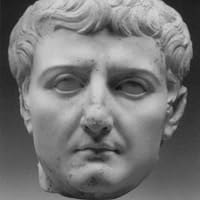
The students became overly radical. This was due to the "Tacitus Trap": students believed the government had lost its legitimacy (though state leaders disagreed). Consequently, the students did not trust the government at all, even when it sincerely wanted to compromise.
However, the author overlooked one thing. The state leaders were not merely a group of noble people who unfortunately believed in the wrong ideology. They repressed the movement not only to preserve the "fruits of the revolution" but also to preserve their own power and wealth. It seems the author was so intent on applying a theory (legitimacy and state-society relations) that he neglected their desire for power and wealth. However, this oversight does not affect the validity of the main argument in Chapter 7.
Questions related to the 1989 Movement I want to know but not explained (or not explained well) in the book:
1. The economic reform in the late 1980s failed. How did the state remedy the adverse effects of this failure in the 1990s (especially after 1992)?
2. How did the 1989 movement and democracy movements in other countries (Eastern Europe, USSR, Korea, Republic of China, etc.) influence one another? (i.e., the "international macro-climate" mentioned by Deng Xiaoping, or the "third wave of democracy"?)
3. Why didn’t workers and citizens (people other than students) participate more actively in the protests? For example, why didn’t they take part in hunger strikes? (Note: Although support from individual workers and citizens was weak, many government-owned institutions—including state-owned enterprises—supported the movement.)
4. How did people from other cities and the countryside react to the movement in Beijing? Students from other regions came to Beijing, but what about workers and peasants from other parts of the country?
5. What was the "afterlife" of the 1989 movement (e.g., what have the exiled student leaders done since then)?
6. What happened in the power struggles within the government in 1989?
7. What caused the severe inflation between 1987 and 1989?
A MUST Read for understanding the 1989 Beijing Movement. A lot of things happened from April to June. The movement was once almost close to the settlement of peaceful compromise. Why did the movement narrow the road? How did various "structured incidents" push the movement forward step by step, and finally Bloody tragedy. We should sincerely appreciate the passion and blood of the students, and we should calmly understand the complex logic of history. History repeats itself. A lot of similar scenarios happened in Hong Kong's recent turmoil 30 years later.
A very thorough chronological narrative of student movements in the late 1980s, and a convincing analysis of the build-up towards it. The author of the book mainly focused on the state-society relationship. I wish it could look into the reform and economic background slightly deeper, which I'm personally more interested in.