

What do you think?

Izuna
Izuna, Book 2: Yamibushi
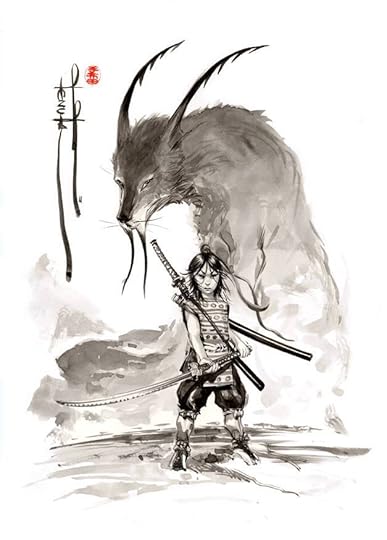
Since the dawn of time, the Izuna wolves have been entrusted as guardians against Japan's evil spirits. Set in the wondrous world of Legend of the Scarlet Blades.
From time immemorial, the spirits of nature created the Kamigakushi, a magical veil that hid them from the impure eyes of man. From that moment on, spirits and men could no longer gaze upon each other and lived as if belonging to separate worlds. One day, the Noggo appeared suddenly. No one knows how they came into being, but their harmful darkness began to infect the world of the Kami. That is why the sacred tree called Munemori created the Izuna, the only ones capable of battling the terrible scourge of the Noggo.
But the mysterious birth of a wolf cub in the shape of a young girl threatens to upset the delicate balance between the two worlds and plunge both sides into chaos.
From time immemorial, the spirits of nature created the Kamigakushi, a magical veil that hid them from the impure eyes of man. From that moment on, spirits and men could no longer gaze upon each other and lived as if belonging to separate worlds. One day, the Noggo appeared suddenly. No one knows how they came into being, but their harmful darkness began to infect the world of the Kami. That is why the sacred tree called Munemori created the Izuna, the only ones capable of battling the terrible scourge of the Noggo.
But the mysterious birth of a wolf cub in the shape of a young girl threatens to upset the delicate balance between the two worlds and plunge both sides into chaos.
48 pages, ebook
First published April 15, 2015
About the author
Saverio Tenuta
28 books12 followersDopo aver conseguito il diploma all'accademia di Belle Arti di Roma in pittura, iniziò a lavorare come grafico pubblicitario e incisore. Esordì come autore di fumetti nel 1992, collaborando con diversi editori, fra i quali Cierre per Arthur King, Casa Editrice Universo per Intrepido, RCS, Phoenix e altri. Con Phoenix pubblicò Cold Graze - risvegli di ghiaccio e Gli Incubi tecnologici di Saverio Tenuta. Lavorò anche negli Stati Uniti con Dolls per la Sirius, su testi di Lorenzo Bartoli, pubblicato successivamente anche in Italia, tratto dal libro Bambole edito da Fanucci. Collaborò poi anche con la Event Comics. Dal 2003 lavorò sia per il mercato italiano (ad esempio con uno speciale di Morrigan) che USA, per la DC Comics e con la rivista Heavy Metal. Nel 2006 iniziò la collaborazione con l'editore francese Les Homanoïdes Associés, per il quale pubblicò La Légende des Nuées Écarlates, in quattro volumi, e che verrà poi tradotta in italiano (La leggenda delle nubi scarlatte), in tedesco, in spagnolo e in inglese. Nel 2007 una sua storia venne pubblicata sulla rivista giapponese Mandala, edita da Kōdansha. Nel 1995 iniziò a insegnare fumetto e tecniche di disegno in scuole di settore e nel 2010 costituì il Daishō Studio, un atelier dove seguì i suoi allievi e sviluppò nuovi progetti di fumetto e illustrazione.
Ratings & Reviews
Friends & Following
Create a free account to discover what your friends think of this book!
Community Reviews
Displaying 1 - 15 of 15 reviews

May 1, 2022
Saverio Tenuta's Izuna, Vol 2: Yamibushi follows Aki and the Izuna wolves in a classic high stakes battle of good versus evil. The revelation of Aki's power and how it is meant to unite man and the spirit world could have been established better, with more details/context prior to the final conflict. Still, I am enjoying my foray into graphic novels and the world of mythical Japan created by the author. 3.25 stars
May 15, 2022
The art is very attractive, but the resolution of the conflict seems a bit rushed. Also, this story still borrows from Miyazaki's Mononoke Hime, but not as much as the first volume, so that is an improvement.

May 20, 2024
Pretty artwork and a puzzling beginning. Dreaming of a better future. But the Noggo have infected the world and Aki is really only dreaming! She has been dreaming for months.
In the meantime, with the veil between the worlds of the magical Kami and humans gone, an army of shadow warriors, the Yamibushi, was created and proceeded to kill all living things it encountered.
The army’s creator wants to defeat the Shōgun and, I guess, become Shōgun himself. There is more happening, but I don‘t want to spoil it.
I really like the direction the plot takes in this volume. The first volume was set-up, here we get some real story telling. And it nicely ties together storylines of the previous issue.
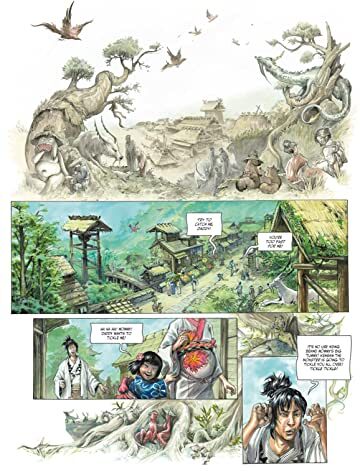
Some of the artwork in this is really excellent, for example the armour of the Yamibushi. The details are very well done in many of the panels. I also really liked the allover colour scheme.
Good one, I will continue!
🐺🐺🐺🐺🐺
In the meantime, with the veil between the worlds of the magical Kami and humans gone, an army of shadow warriors, the Yamibushi, was created and proceeded to kill all living things it encountered.
The army’s creator wants to defeat the Shōgun and, I guess, become Shōgun himself. There is more happening, but I don‘t want to spoil it.
I really like the direction the plot takes in this volume. The first volume was set-up, here we get some real story telling. And it nicely ties together storylines of the previous issue.
Some of the artwork in this is really excellent, for example the armour of the Yamibushi. The details are very well done in many of the panels. I also really liked the allover colour scheme.
Good one, I will continue!
🐺🐺🐺🐺🐺

February 8, 2018
This was great.

March 25, 2021
Opet hodnotim serii jako celek, protoze jednotlivy dily jsou fakt kratky.
Uz z obalky prvniho dilu ma clovek "Mononoke vibes", coz je v mym pripade plus, ale nemusite se bat, ze by to byla nejaka vykradacka Miyazakiho. Japonska mytologie je natolik obsahla, ze to neni ani potreba.
Pribeh o boji dobra se zlem, o prolinani sveta lidi a kami (nadprirozena), o zrade i obetovani. Cte se to fakt dobre a konecne sem se dockal pekny kresby.
Uz z obalky prvniho dilu ma clovek "Mononoke vibes", coz je v mym pripade plus, ale nemusite se bat, ze by to byla nejaka vykradacka Miyazakiho. Japonska mytologie je natolik obsahla, ze to neni ani potreba.
Pribeh o boji dobra se zlem, o prolinani sveta lidi a kami (nadprirozena), o zrade i obetovani. Cte se to fakt dobre a konecne sem se dockal pekny kresby.

February 15, 2020
Yamibushi apocalypse is averted but Aki playing hefty prize. While interim calm has returned, happy endings are still far away.

June 17, 2018
This just ended way too quickly. With everything in it, this feels as if the author had much more planned out and couldn't finish it, so it had to be crammed into this.
Killing the living root of the tree instead of taking it with them, Aki's reaction to humans giving births, the future Izunas will have no castes but be male, female and give birth because Aki saw a woman giving birth already showed that and everything later did nothing to change that. The predictable turning of the ghost against his master, the master suddenly telling the ghost to make less yamabushi or he will scatter his ashes to the river, the attack on the castle and all this all feels incredibly rushed. The ghost (yurei) in Kenta's body tates that humans and Kami will never again be victims or slaves of suffering and lies. Does he think he is a good guy suddenly? Would have been nice to establish that first. And in the end Aki is a black and white Izuna. Which I guess is a connection with the prior series by the author. Like I said, this is just too rushed.
Killing the living root of the tree instead of taking it with them, Aki's reaction to humans giving births, the future Izunas will have no castes but be male, female and give birth because Aki saw a woman giving birth already showed that and everything later did nothing to change that. The predictable turning of the ghost against his master, the master suddenly telling the ghost to make less yamabushi or he will scatter his ashes to the river, the attack on the castle and all this all feels incredibly rushed. The ghost (yurei) in Kenta's body tates that humans and Kami will never again be victims or slaves of suffering and lies. Does he think he is a good guy suddenly? Would have been nice to establish that first. And in the end Aki is a black and white Izuna. Which I guess is a connection with the prior series by the author. Like I said, this is just too rushed.

November 1, 2020
This second volume, also currently available on Kindle Unlimited, is as beautiful as the first. The story is more coherent, mainly because the world building has been done and this episode is a much simpler battle of good and evil. It is superbly done.

September 10, 2018
Ignoremos ese amor a primera vista y centrémonos en la historia.
¡Cuánta acción y cuántas sorpresas! Y sigo enamorada del dibujo. Me gustaría que esta serie fuese mucho más larga.
¡Cuánta acción y cuántas sorpresas! Y sigo enamorada del dibujo. Me gustaría que esta serie fuese mucho más larga.

August 31, 2020
Ça ne fait pas autant de temps depuis que j’ai lu le premier tome, mais apparement j’ai oublié (loupé ?) comment un personnage est devenue un fantôme ? Mais en considérant comment ce tome se déroule, ça ne me surprend pas. Le début commence dans un futur où Aki et Kenshin sont mariés avec une fille et ils attendent un deuxième enfant, mais on apprend vite que c’est un rêve (mais pas complètement… ?) et la suite demeure aussi confus.
Il y a bien trop dans ce livre, et pas assez de temps pour bien développer chaque fil de l’histoire. Entre le fantôme qui transforme des humains en monstres, la racine du Munemori, les attaques sur le village où sont Aki et Kenshin, les protections du moine autour du village, l’arrivée des izuna, le danger, l’amour naissant, les connaissances qui arrivent soudainement et les trahisons, il y a de quoi remplir au moins deux livres ici, pas un. Donc j’ai eu le sentiment de ne pas bien suivre l’histoire, et que les éléments de l’histoire ont été rassemblé à la hâte. Jusqu’au point que le climax/la fin n’était ni surprenant ni trop logique. Au moins les images et les dessins sont toujours de la même hauteur de qualité que dans le premier tome. Comme j’ai déjà emprunté les tomes 3 et 4 de la bibliothèque (en numérique), je vais les lire. Mais plutôt pour le plaisir de regarder les dessins que pour une histoire cohérente.
Il y a bien trop dans ce livre, et pas assez de temps pour bien développer chaque fil de l’histoire. Entre le fantôme qui transforme des humains en monstres, la racine du Munemori, les attaques sur le village où sont Aki et Kenshin, les protections du moine autour du village, l’arrivée des izuna, le danger, l’amour naissant, les connaissances qui arrivent soudainement et les trahisons, il y a de quoi remplir au moins deux livres ici, pas un. Donc j’ai eu le sentiment de ne pas bien suivre l’histoire, et que les éléments de l’histoire ont été rassemblé à la hâte. Jusqu’au point que le climax/la fin n’était ni surprenant ni trop logique. Au moins les images et les dessins sont toujours de la même hauteur de qualité que dans le premier tome. Comme j’ai déjà emprunté les tomes 3 et 4 de la bibliothèque (en numérique), je vais les lire. Mais plutôt pour le plaisir de regarder les dessins que pour une histoire cohérente.

August 17, 2025
And so on to the second part of the story. We now have a better understanding of what is going on - and to a lesser degree why but how this will be resolved I have no idea
The story does jump in time although this is explained but it does allow the world of man to move on - I guess to reflect the real world as compared to the spirit one that we left behind in the first book.
Again parts of the story feel like a fairy tale or fable and I think that adds to the beauty of the story the artwork certainly has an air to it that lends itself perfectly capturing the essence of the world it is set in.
The story does jump in time although this is explained but it does allow the world of man to move on - I guess to reflect the real world as compared to the spirit one that we left behind in the first book.
Again parts of the story feel like a fairy tale or fable and I think that adds to the beauty of the story the artwork certainly has an air to it that lends itself perfectly capturing the essence of the world it is set in.
May 19, 2021
It is more 3.5 than 4 stars.
Second volume has better pace than the first one but also feels too rushed because of many time skips. Few times I felt like i missed some inbetween issues.
The story itself is rather generic but it reads well.
Second volume has better pace than the first one but also feels too rushed because of many time skips. Few times I felt like i missed some inbetween issues.
The story itself is rather generic but it reads well.

February 13, 2022
I enjoy the rich detail in the drawings. It´s a very easy read but it does not feel shallow.
After so little time, I am already very invested in the characters and was very sad about the ending but also happy that the lovers in a way do get to be together.
After so little time, I am already very invested in the characters and was very sad about the ending but also happy that the lovers in a way do get to be together.
This entire review has been hidden because of spoilers.

April 6, 2021
It's very nice 👍🏻☺️.

January 7, 2025
Muy buena graficación, una historia que atrapa.
Displaying 1 - 15 of 15 reviews