Jump to ratings and reviews
Rate this book

The Normans in Sicily #2

Un reino al sol: La caída de la Sicilia normanda, 1130-1194

Rate this book
Un vívido relato de la época dorada de la Sicilia normanda.

El día de Navidad de 1130, Roger de Hauteville, descendiente del célebre Roberto Guiscardo, se convirtió en el primer rey de Sicilia. Su coronación dio inicio a una época dorada en que la isla se estableció como un crisol cosmopolita caracterizado por una gran tolerancia y cultura. Sin embargo, solo sesenta y cuatro años después, en 1194, el sol se puso en la Sicilia normanda.

En este volumen, John Julius Norwich nos presenta el relato de la época más feliz y gloriosa que ha vivido la isla italiana. Por estas páginas caminan grandes personajes como san Bernardo, un hombre lleno de magnetismo pero insufrible; los monarcas Guillermo el Malo y el Bueno; el bastardo rey Tancredo, así como el gran Ricardo Corazón de León, y nos adentramos en grandes momentos de la historia, como la Segunda Cruzada o los violentos cismas papales que atenazaron a la cristiandad.

Con su habitual erudición y una fina ironía, John Julius Norwich nos ofrece en esta obra, nacida de su fascinación por la isla italiana, la historia del auge y la caída del gran reino normando en Sicilia. Un reino al sol es un relato magistral de uno de los episodios más extraordinarios de la historia del Mediterráneo, una magnífica guía para el viajero y una obra maestra del oficio de historiador.

456 pages, Hardcover

First published January 1, 1976

19 people are currently reading
316 people want to read

About the author

John Julius Norwich

155 books674 followers
John Julius Norwich was an English historian, writer, and broadcaster known for his engaging books on European history and culture. The son of diplomat and politician Duff Cooper and socialite Lady Diana Manners, he received an elite education at Eton, Strasbourg, and Oxford, and served in the Foreign Service before dedicating himself to writing full-time.
He authored acclaimed works on Norman Sicily, Venice, Byzantium, the Mediterranean, and the Papacy, as well as popular anthologies like Christmas Crackers. He was also a familiar voice and face in British media, presenting numerous television documentaries and radio programs. A champion of cultural heritage, he supported causes such as the Venice in Peril Fund and the World Monuments Fund.
Norwich’s wide-ranging output, wit, and accessible style made him a beloved figure in historical writing.

Ratings & Reviews

What do you think?
Rate this book

Friends & Following

Create a free account to discover what your friends think of this book!

Community Reviews

5 stars
94 (47%)
4 stars
80 (40%)
3 stars
19 (9%)
2 stars
0 (0%)
1 star
3 (1%)
Displaying 1 - 21 of 21 reviews
Profile Image for Charles.
616 reviews118 followers
November 14, 2021
History of the Norman, Kingdom of Sicily’s foundation to its demise in the incorporation into the Holy Roman Empire.

description
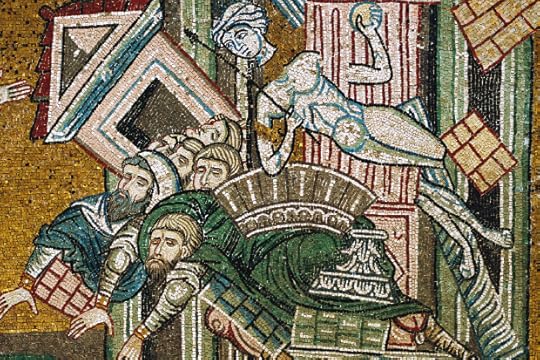
12th Century mosaic at the Cathedral of Monreale, Sicily (a 'classic' Norman-style Cathedral)

My dead tree, format, book was a modest 426-pages which included footnotes, appendices, maps, illustrations, Bibliography and an index. It had a UK 1970 copyright.

John Julius Norwich was a British historian and writer of popular nonfiction. He was the author of more than forty books. He passed in 2018. This was the second book in his The Normans in Sicily series. This was the second book I’ve read by the author, the first being The Normans in the South, 1016-1130 (my review).

Firstly, this was an intermediate-level text on the High Middle Ages in the central Mediterranean. It would be very helpful for a reader to already have a good background on early-Middle Ages in the Mediterranean to fully appreciate this book. Reading Norwich’s previous The Normans in the South, 1016-1130 is strongly recommended.

Secondly, I read this book as the second half of the omnibus, The Normans in Sicily: The Normans in the South 1016-1130 and The Kingdom in the Sun 1130-1194 which includes this book, and the The Normans in the South, 1016-1130 bound between two covers to make-up the author’s complete The Normans in Sicily series. Since the two (2), books of the series were published separately, years apart from the omnibus, but the narrative is continuous I thought the two books should be separately reviewed.

Finally, I could not help but compare and contrast this book with the earlier The Normans in the South, 1016-1130. Despite being on the same subject and published three (3) years apart, the books were somewhat differently written from each other.

Like the previous book, this was a well-written, history in the Old Skool. That is, it was the history of personalities, mostly men but sometimes women, events, diplomacy, and brief descriptions of the wars (the failure of diplomacy) over a period of 78-years during which the polyglot Kingdom of the Normans in southern Italy and the island of Sicily rose to great influence in the Mediterranean and then disappeared into the larger Holy Roman Empire.

The Norman kingdom was a multi-ethnic, kingdom of feudal Normans ruling over a mostly Lombard and minority Greek (ex-Byzantine) populace in southern Italy, and a Saracen (North African, Islamic), Greek and minority Latin (Lombard, Norman, northern and western European) population in Sicily. The throne was owned by the Norman de Hauteville dynasty. They had struggled their way to the top of the feudal Norman hierarchy that had seized control of Southern Italy from the legacy Lombard feudal aristocracy over about 120-years at the beginning of the High Middle Ages. They seized the island Sicily as their personal fief from its Saracen occupiers in the last 70-years of that longer internal, Italian Norman struggle. Five (5) Hauteville kings wore the crown over a period of about 80-years. (Life in the High Middle Ages was nasty, brutish, and short even for kings.) The diversity of the kingdoms population, and the initial light hand of the Hauteville kings brought great prosperity to the region, but required vigilance and aggressive, active management. The strength of the kingdom’s several cultures led to great wealth and political influence. However, creeping Orientalism and unfortunate deaths in the Hauteville leadership, resulted in their inability to contend with the: Norman Italian aristocracy, Popes, Byzantine Emperors, Holy Roman Emperors, who created political challenges and Saracen, Lombard, Greek and Latin populations of the kingdom which eventually devolved into ethnic strife. The kingdom was incorporated into the larger, Holy Roman Empire in what amounted to a coup resulting from an imprudent, Hauteville royal marriage and the unexpected, heir-less, death of the last Norman Sicilian king.

Norwich was a good writer. The narrative was very clear and factual. It’s very much in the bygone, British public school-style. Descriptions were well enough done. In this second book author showed a marked preference for: Norman-style, Romanesque architecture; art and geography. That the author also was a travel writer, was quite apparent, with lots of southern Italian and Sicilian sightseeing tips being included. This book also contained more political analysis than the previous book. However, I doubted that the lengthy analyses of the politics of the Byzantine throne and the Crusader States merited the number of pages used? In addition, the description of armed conflict was very much more abbreviated than the previous book. In general tenor, of the book swung more wildly been the poles of being between a popular and academic history than the previous book.

Use of maps was OK. However, they were all of too large a scale. A period map of North Africa or the central Mediterranean, which was a focus of the Sicilian Kingdom’s conquest would have been helpful. Note a map of the Central Med was included in the first book. Use of tables and charts, was restricted to only genealogies. (At no point did Norwich mention five (5) Sicilian kings in the narrative). The photographs provided were good. Although, the majority were either architectural of churches and cathedrals or of period art.

The book was written in the old-style of history that emphasizes personalities. Men and sometimes women drove the history. As mentioned in the previous book, along the way, the reader gains historical context. Norwich only includes the minimum amount of context. Without having read the previous book, a reader would be at a severe disadvantage. Despite, having a general knowledge of the period, and having read the previous book, many times I still found myself wondering, “Why did that ‘guy’ (Norman noble, Pope, Byzantine, Holy Roman, Saracen, Lombard, Latin) do that?”

Modern, general histories tend to expand beyond just personalities. Personalities are still important. Although, absent critical circumstances, men and women don’t change history by their lonesome. Its men and women, technologies, organizations and external events that effect history.

For example, the Sicilian Kingdom rose to influence by becoming a naval power. At one point it straddled the central Mediterranean and dominated its trade routes. In this book Norwich seems to have eschewed all things military. He briefly muses on the ethnic Viking origins of the Normans and their loss of the knowledge and skills of seafaring as they become frenchified in Normandy. Almost miraculously in a very short period of time, the Sicilian Normans became a sea power contending with: Saracen pirates, and Islamic North African, Venetian, Byzantine, Genoese, and Pisan sea power. The most successful Admirals of the Sicilian fleets were not Normans. They were either Greeks or Saracens from the Kingdom. Norwich lavishes many pages on these admirals, especially on how they were the product of the diversity of the Kingdom. However, he offers few insights into how the Normans developed the infrastructure, or doctrine to become so militarily successful at sea.

Another example, was the Papacy. The Latin Church in Western Europe was a pervasive influence. Southern Italy and Sicily were in a region under the direct influence of the Pope in Rome. (Norwich makes medieval, distance travel seem trivial in his narrative.) Norwich goes into great detail on individual Popes during the period. Schisms, when there was more than one Pope, are of particular interest. Part of which was the function (or dysfunction) of the papal court (curia) in electing a new, mostly short-lived, Pope. Never does he remark on why the Curia many times elected elderly Popes in this period with folks having short, lifespans. You would think that younger, more vigorous leadership would be selected? However, there was always odd additional context in the narrative. I was surprised to learn that, cardinals (Princes of the Church) did not have to be ordained priests. I suppose this supported their worldly lifestyle in the High Middle Ages?

Yet another example was the creeping Orientalism of the Sicilian court. Orientalism has become a pejorative term related to colonialism in the 50-years since this book was written. Norwich advances a vaguely racist thesis that the influence of the island of Sicily’s majority Saracen population had an adverse affect on the Norman court. The Norman Kings came to live like Sulṭāns. This wind blew both ways, the Saracen influence on the court provided a higher standard of living than found in Latin western Europe during the High Middle Ages. Also, it resulted in east/west trade that greatly enriched the kingdom beyond its size. However, Norman Kings became more removed from their western, particularly Norman vassals. Eunuchs served in high, court positions, antagonizing the Norman barons in Italy. The rise of the feudal Norman aristocracy in court over the majority, Sicilian Saracens was part of the kingdom's downfall. Also, the pleasures of the harem were a likely distraction?

A final example was the Holy Roman Empire. The Germany-based Empire had always loomed large over Italy. During the life of the Kingdom there was a jockeying of power between the: Papacy, Byzantine Empire, and the Holy Roman Empire in Italy. During the high-years of the kingdom, its relationship with the Holy Roman Empire became a higher stakes relationship. Norwich spends almost none of the narrative on the internal politics of the Holy Roman Empire. (The exercise was left to the student.) In particular Frederick Barbarossa (1122 - 1190) looms large over the narrative, but except for when he crossed the alps into Italy, “What went on in Germany, stayed in Germany.”

Note, Frederick Barbarossa’s grandson’s mother was the aunt of the last real king of Sicily, William II. William II died heir-less. Frederick II at the head of a large army 'inherited' the crown and incorporated the Norman kingdom into the larger Holy Roman Empire.

Norwich’s narrative was of personalities, events, and diplomacy. Like the previous book, this one was the story of Medieval Italian Celebrities. The personalities were all: nobles, generals, admirals, kings, queens, emperors, empresses, princes, princesses, popes, and court functionaries.

It’s easy to follow the thread of the five de Hauteville’s kings during the almost 70-year independent life of the kingdom. There was a succession of three-generations of Hauteville kings that reigned long enough to have effect on the kingdom: Roger II, William I, and William II. (The last two: Tancred and William II barely counted.) It reminded me of the Chinese proverb,
Wealth never lasts for three generations: First Generation creates the wealth, Second Generation grows the wealth, Third Generation spends the wealth.
Rodger II was setup to be king by his freebooter, Norman uncle Robert Guiscard and father Rodger I. Rodger II’s grandson (William II) lost the kingdom to Frederick Barbarossa’ grandson, Frederick II.

It was an interesting story. However, a lot of context on the medieval world was missing. Having spent a significant amount of time researching the High Middle Ages while reading the previous book was a big help. Although, there was a greater amount of analysis of the political events given than the previous book. I could have gone without the Sicilian Guidebook narrative. In the main, it was a story of a family that started out strong founded an unusual kingdom for its time, but lost everything by not being able to cope with the internal and geopolitics over three generations.
Profile Image for Benjie Deford.
19 reviews2 followers
July 21, 2013
This is probably my favorite era in the the Western Historical Canon. From 1040 or so until 1190 the Island of Sicily, once overrun by "Saracens" or rather better known to us as Muslims. Migrants came from the ruins of the Umayyad Caliphate or before during the expansion of that Caliphate; the Muslim presence had merely begun to become a self-administered region, still most regions were still rife with internecine wars, raids, battles and territorial disputes between the different Islamic held provinces. If united, they could have expanded indefinitely within the chaotic and just as internecine Christian regions of Southern Italy.
But then history made an abrupt about face and entered the Normans. Known quite widely as fierce warriors from Northern dominions which eventually conquered large tracks of France and all of England, i find their most intriguing era the Norman Sultanate of Siquilliya. For that is what it was. There are few books that deal well with this all but buried history of this largest Island in the Med. but this history is the tale of two historical realities that-- perhaps understandably-- have been allowed to be forgotten, for they show the idiocy of heterogeneous religious relations within shared communities as something impossible, at the same time showing that far from barbarians from the North and East (ie Normans and Muslims), compared to their Christian neighbors to the North (the Papal States, the Holy Roman Empire) or to the East (Byzantium or the remains of the Roman Empire) -- the Sultanate of Norman Sicily was a profound wonder, a jewel of multi-culturalism within a world where the word had not yet even been made yet. The Normans, especially Robert Guiscard, his brother Rogier I and the glorious Rogier II who ruled over the golden era of this sadly short lived era, were a dynamic, modern and fearless cultural people; by which I mean, they had no fear of Islamic people as a religion or a society much higher advanced than the - by then - crippled and hate filled Christian era of this time. While Rogier II held durbans of the Most accomplished Arabian and Islamic intellectuals 3 to 4 times a week whiling away the hours discussing poetry Arabic astrology and the numerous sciences, Christians fought over the schism between Byzantium and the Roman Kaposi they thought each other over the question of Jesus' divinity part divinity or full humanity and all the inter-squabbles within those questions. On top of that there was the schismatic Kaposi which occurred for over 80 years wherein there was not one but two popes and this went on for decade after decade one pope residing in Rome one pope outside it one being the antipope and one being the pope pope, And all of this is just the veneer of all the inter arguments wars and massacres mercenary fights character audition arguments over Who's suzerainty Came directly from God hurricanes, members, or a popes, or the Byzantine emperors. In fact so much division existed in Christianity that Sicily in it of itself with its homogeneity of priorities about what was important, its willingness to allow all to worship whom they wished as long as they upheld their earthly service to their King was a marked new way of identifying a people.
This is book two, wherein we see the full extent of Rogier's II reign (though not his childhood) and witness as he created a nation, unified under their pride in their King, their nation, and their individuality--- witnessed here through the auspices of Rogier raising in rank only those who had earned that place, owing no fellow Norman, Christian, or religious brother anything that had not earned thru ability. In truth, Rogier II spent most of his kingship fighting his southern Italian baronets who are almost all Norments, and there is a minimum if any at all rebellions from his Islamic subjects.
A Masterpiece Of writing a masterpiece of historical analysis and a masterpiece of narrative my only wish is that at times he could've written even more and gone on in to further detail about subjects that if not glossed over would've made each one of these books over 1000 pages long. I cannot wait to read the first.

*** I first came to know about the Norman Sultanate of Sicily through the wonderful book the "Sultan of Palermo" by Tariq Ali which records the friendship between the well known geographer Muhammad al-Idrisi and his patron and king Rogier II. Though written as a historical novel, and has its bits of narrative flourishes, Tariq's book contains multiple facts that are again found within Norwich's historical Opus, and leaves no doubt to at least one of Tariq's sources.
Benjie Deford
Profile Image for danny.
224 reviews44 followers
April 29, 2025
I loved my unexpected deep dive into Norman history and Medieval geopolitics and architecture! This book was picked up as a complement to my first trip to Sicily, but I was so drawn in by Norwich's writing and the very Game of Thrones like plotting that I kept reading it and finished it after I came back.

I am a fan of Norwich's style of writing pop history, and in particular his elaborate (and often snarky) descriptions, especially of buildings which you can still visit (I took one picture of a passage from the book held up against the artwork it depicted - Christ Pantocrator in the Cathedral of Cefalu - because it so enhanced my appreciation of being there.

My biggest criticism of the book is that it feels very much like a court history, with a huge focus on the ruling family and upper echelons of the Church (and Holy Roman, Byzantine empires, etc), with very little information on the social or economic life at the time. Given Norwich's interest in the ways that Greek, Norman, and Arab communities cohabitated in Sicily in this period, it feels like a real missed opportunity that the texture of communal life is rarely explored except when there is an uprising or outbreak of racial/ethnic violence.

I don't know how much of all this Norman history I will retain, but I did come away more interested in Sicily, more interested in the Medieval period, and curious to read more of Norwich's writing!
Profile Image for Nile.
92 reviews
January 5, 2022
I don't think there's much I could say about Part II that I didn't say about Part I, other than to reiterate that Norwich really does justice to the unique dynamic of the region by being genuinely enthusiastic about Sicily's religious and culturally different communities all, for a time at least, flourishing much like two plants may grow all the better for sharing soil, and blossom all the better.

Norwich the unexpected anti-colonialist springs forth, reiterating his belief as fact that a foreign army cannot succeed in occupying a distant foreign country. This was released in 1970, after all...

I'd love to have seen what sort of treatment he could have given to Iberia and - for all the military focus on Ghazis both Muslim and Christian (what is el Cid, on examination, other than a Christian Ghazi? See: articles I never got around to writing, lol), the amount of coexistence between religions over centuries gets next to no examination.

One mentioned moment that sticks out to me is the church founded by the great admiral/emir George, a Levantine Greek, serving a Norman Catholic, whose church was adorned with a mosaic of Mary and a prayer to her, written in his native Arabic. Beautiful.
Profile Image for Cristina.
72 reviews42 followers
October 6, 2020
Il libro si apre nello stesso punto in cui si era chiuso il precedente: Ruggero II è adesso il re di Sicilia e comanda su un'ampia porzione dell'Italia Meridionale, è un sovrano temuto, rispettato, cultore delle arti e delle letteratura, alla cui corte si avvicendano i più illustri personaggi della cultura e delle scienze dell'epoca. Insomma si è in un vero e proprio periodo dell'oro, in cui il regno normanno cerca di espandersi oltre i confini italiani lambendo le coste africane e l'impero bizantino, è il periodo in cui fiorisce la potenza navale siciliana sotto la guida del primo ammiraglio (forma latina per la parola araba emiro) Giorgio d'Antiochia. Uomini di stato e di guerra che però lasceranno soprattutto nella capitale del regno, Palermo, esempi straordinari di arte e architettura civile e religiosa: come la Cappella Palatina, la Martorana (o Santa Maria dell'Ammiraglio, così chiamata perché finanziata appunto dall'ammiraglio Giorgio d'Antiochia) o il Palazzo dei Normanni, la Zisa, la Cattedrale di Monreale. Trionfi di quella commistione artistica tra arte latina, occidentale e arte araba e orientale che porterà alla realizzazione di stupende decorazioni musive e lignee.
Ma non tutto quel che è oro luccica e presto, con la morte della grande figura trainante del regno, Ruggero II, iniziano a mostrarsi le prime crepe all'interno di un sistema che non si dimostrerà così perfetto come si credeva. Si succedono sul trono Guglielmo I detto il Malo, suo figlio Guglielmo II detto il Buono, anche se secondo il Norwich probabilmente i due soprannomi andrebbero invertiti e non a torto. Guglielmo II a cui si deve una riunione tra i normanni di Sicilia e quelli d'Inghilterra grazie al suo matrimonio con la principessa Giovanna (sorella del famoso Riccardo Cuor di Leone) sarà lo stesso che porterà a rovinosa fine la dominazione normanna in Italia, quando concederà la mano della zia Costanza d'Altavilla all'imperatore d'occidente Enrico VI che entrerà in possesso quasi senza colpo ferire dei possedimenti normanni; ma dalla coppia imperiale nascerà colui che ancora oggi è noto con il soprannome di Stupor Mundi: Federico II di Svevia che riuscirà a rinverdire i fasti della corte siciliana riportandola allo splendore conosciuto ai tempi del nonno Ruggero II.
In una narrazione che si conferma vincente e affascinante come quella del primo volume, si viene trasportati senza forzature in un mondo completamente diverso da quello attuale in cui si mescolano i fatti dei normanni in Italia con fatti storici talmente famosi da essere conosciuti da tutti, come le Crociate, e che ci fanno capire che nel passato come oggi la politica e in generale le questioni umane sono fatte di accordi, concessioni, rinunce e purtroppo a volte anche di voltafaccia e terribili tradimenti. La penna dell'autore si posa decisa ma non giudica anzi esamina attentamente i fatti e preferisce evitare giudizi affrettati e non veritieri. Unica pecca in questo secondo volume è sicuramente il banale e a volte eccessivamente caustico giudizio dato su quelle che non solo sono vere e proprie opere d'arte, come la Cattedrale di Palermo, ma sono testimonianze dei popoli e dei tempi che si sono succeduti e che come tali devono essere apprezzati senza cadere in facili (pre)giudizi di gusto personale.


Mia recensione: http://afoxamongthebooks.blogspot.it/...
Profile Image for Ryan.
164 reviews1 follower
March 27, 2015
The Kingdom in the Sun, 1130-1194
John Julius Norwich
Read it in Paper-Back at 426 including Biblio+Apendix+Maps

This is the second volume split from the original publication, 'The Normans in Sicily: The Normans in the South 1016-1130 and the Kingdom in the Sun 1130-1119. Norwich continues down the line of accomplished legitimacy. This volume follows the Kings of Sicily.

With the Normans now controlling Southern Italy with primary holdings in Sicily, the Kingdom of the Sun becomes an international player that is culturally diverse with Italian, Greek, and Muslim influences in Sicily. Working against the meddles of Byzantium, the constant intrigues of the Holy Roman Empire and the Papacy, Sicily finds itself in a precarious position. Despite some really great efforts things start to look bleak and a combination of a poorly thought out marriage and the rush of the Crusaders (and the problems both Richard and Phillip brought with them) for the third Crusade inevitably brought the Kingdom down. This second volume follows it all very well but does lose some of the magic that the Normans struggling for legitimacy brought in volume one.

Norwich is once again competent and descriptive in it all, dragging us once again into the confusion and chaos of the papacy and the Holy Roman Empire. Bringing along the same penchant and eye that a tourist can bring to the observation of old structures and places. The analysis is fair and he does a good job at not vilifying those that inevitably brought destruction down on the Kingdom of the Sun despite his biased interest in the Hautevilles.

This volume covers Roger(s), Tancred, and the William(s) of The House of Hauteville.

Highly recommended for anyone with an interest in Medieval Sicily but isn't as exciting as volume one, but perhaps that's personal interest. 3.5 rounding down for g-reads deficient 5-star scale.
31 reviews1 follower
March 13, 2020
A book that still holds its own after all these years.

Personally, I'm inclined to side with Jacqueline Alio's opinion about Margaret of Navarre, who married William I, and a few of Norwich's other ideas have likewise been revised by more recent scholarship.

But excessive criticism of his work is misplaced. When this book (and its prequel) came out, there was virtually NOTHING in print in English about the Norman Kingdom of Sicily.

This is excellent history, told very well.
Profile Image for Jeroen Van de Crommenacker.
748 reviews6 followers
December 16, 2018
Excellent! A great second instalment of the history of the Normans in Sicily. I found it in fact even better than the first book, as by now I was more at ease with the various players and found the story less confusing. It is a wonderful history and I also liked the frequent digressions into “travel guide style” descriptions of major monuments/ churches etc. It made me really want to visit!
Profile Image for Alex Helling.
225 reviews1 follower
October 4, 2022
John Julius Norwich’s The Kingdom in the Sun is a brilliant read about the Norman kingdom in Southern Italy and Sicily. It is for the most part a political history following a clear narrative structure, thus for example it covers the military campaigns but does not go into immense detail about how the Normans fought.

This is the second book of two. The first, The Normans in the South covers the Normans first coming to Southern Italy and their conquest. This book drops the reader into the action quite abruptly without much recap of what has gone before. It is therefore advisable, but not absolutely necessary, to have read the first book before this one.

While it is a political history and focused on the people in power – kings, barons, bishops, civil servants – it is as broad as such a history comes. We get all the possible political lenses; dynasty, international politics, the military actions, the constitutional, the religious, internal dissent, and the consequences of political stability in the flowering of scholarship, art and architecture.

What makes Norman Sicily so attractive from a modern standpoint is its tolerance and relative inclusivity. There were Latin Christians, Orthodox Christians, and Muslims all living side by side. And it was not simply tyrannical rule by one over the others; the Norman kings were of course Latin Christians but many of their most able administrators and therefore significant characters in this book were Orthodox or Muslim.

Norwich wears his biases on his sleeve. While many of these are biases I too have – such as for a multicultural and tolerant society – I tend to prefer history books be as even handed as possible. This is notable in his consideration of Norman architecture where for example Baroque and Rococo alterations to a church are “running the gauntlet of those simpering and marzipan madonnas that mark the real dark ages of European religious art” (p.456). Not even the Gothic meets approval as a church window is described as “Gothic now and ornate, with none of the rounded purity of Cefalù” which is Romanesque (p.676). It also extends to the narrative. For example Norwich believes William II should have dismissed the idea of his heir Constance marrying the heir of the Holy Roman Empire as this effectively hands away the independence of the kingdom (p.684). But this is a decidedly un-medieval and un-royal way of thinking where dynasty would have mattered far more. As a plus this bais does lead to the benefit of those colourfully opinionated descriptions, particularly on art and architecture.

It makes for a compelling read. And it should come as no surprise therefore that Norwich is excellent at spicing up the narrative with quotes such as Byzantine emperor Manuel on King Roger; “that dragon, threatening to shoot the flames of his anger higher than the crater of Etna”(p.492).

With the focus firmly on the narrative, and the political this is old school history – it is from 1970 – so it would not surprise me if there are areas that are a bit out of date. Norwich himself points out he is not an academic historian. Old school history it may be but this is old school history done at its very best and so still a book you wont regret reading.
Profile Image for Andrew Reece.
112 reviews7 followers
October 19, 2025
John Julius Norwich Captures The Brilliant Splendor Of The Short-Lived Norman Kingdom In The Sun.

"But when territories are acquired in regions where there are differences in language, culture, & laws, then great good fortune & much hard work are required to hold them."

This artfully-worded excerpt from Niccolò Machiavelli's 'Il Principe' is taken from the treatise's 3rd chapter, Principatio Compositio, & serves as the preface to the second part of John Julius Norwich's The Kingdom In The Sun, which is entitled, The Noonday Kingdom.

Originally published in 1970, this second volume of the Viscount Norwich's epic history of the Normans in Italy consists of 21 chapters that are split into 4 parts, with each part signifying a phase of the sun which corresponds to a respective period in the Kingdom's brief 63-year lifespan. The Kingdom In The Sun covers a much shorter span of years than its predecessor, The Normans In The South : 1016-1130, & as such it features a comparatively more cohesive narrative structure with a smaller cast of characters that renders it enjoyable to read & easy to follow. Another difference from the first volume is the author's decision to include his own eloquent descriptions of the prolific Norman artwork & architecture at specific points in the narrative, such as the Cefalù Cathedral & the breathtaking Byzantine-style murals at Monreale. All of these artistic renditions are incorporated well within the context of Norwich's main storyline, which is a testament to his skills as a writer & a historian.

The main narrative in The Kingdom In The Sun is anchored to the lives & reigns of the 5 Hauteville monarchs : Roger II de'Hauteville, William I 'the Bad', William II 'the Good', Tancred of Lecce, & briefly, William III. Supporting characters such as Pope Adrian IV, Holy Roman Emperor Frederick Barbarossa, Henry the Proud of Bavaria, Abu Abdullah Mohammed al-Edrisi, & Richard I Cœur de Lion add depth & dimension to Norwich's already-formidable history & ensure that his reader will be hopelessly enthralled, all the way up to the last page.

The Norman-controlled government of the Kingdom of Sicily was an intricate, multi-faceted tapestry woven from the fabric of 3 diverse cultures & was the product of decades of hard work & masterful statecraft on the part of Great Count Roger I de'Hauteville & his son, King Roger II. The primary institution was called the Curia Regis, & was effectively a more powerful iteration of a modern cabinet with vital judicial responsibilities, particularly in areas of civil law. King Roger II ruled via an ingenious amalgamation of ministries where, according to the Viscount Norwich, "The feudal system which prevailed in his mainland dominions belonged to Western Europe; the civil service that he had inherited from his father in Palermo & the Sicilian provinces was based largely on Arabic institutions; but the monarchy itself, as he conceived of it & personally embodied it, was Byzantine through & through." The divans were 2 separate land registries charged with the collection of customs duties, trade monopolies, & feudal holdings, & the camera was a Greek-staffed financial branch modeled after the 'fiscus' of the Roman Empire. The exotic titles adopted by Norman government officials included such ranks as seneschals, archons, logothetes, protonotarii, & protonobilissimi, many of which sound like something more akin to be found in the Free City of Volantis, in Essos, or at Minrathous, capital of the Tevinter Imperium, than they would from the bureaucracy of a short-lived South Italian kingdom ruled by Frenchmen, yet there it is.

The Byzantine Emperor Manuel I Comnenus' invasion of Apulia in 1154 is the subject of Chapter X, The Greek Offensive. It was an expedition led by 2 of Manuel's trusted lieutenants, Michael Palaeologos & John Ducas, who had both arrived on Italian soil ahead of the main force to enlist the aid of King William I's unruly mainland vassal, Robert de Bassonville, the Count of Loritello. The Greeks easily take control of Norman-held Bari, as the truculent citizens eagerly throw open their gates to the Byzantine army before destroying the Sicilian citadel at the center of the city. The Bariots would later have cause to regret their rash actions, however, when upon supplicating themselves before their liege lord after the Normans retake Bari in 1156, "William merely pointed to the pile of rubble where until recently the citadel had stood. "Just as you had no pity on my house," he said, "so now I shall have no pity on yours." He gave them two clear days in which to salvage their belongings; on the third day Bari was destroyed."

The convoluted assassination plot which was successfully carried out against King William I de'Hauteville's Emir of Emirs, Maio of Bari, ranks among the narrative's most dramatic portions & is the main topic of Chapter XII, 'Murder'. The 12th-century historian Hugo Falcandus' Liber De Regno Sicilie provides a sinister description of William the Bad's most trusted advisor & counsellor : "This Maio was a very monster; indeed, it would be impossible to find vermin more loathsome, more pernicious or more damaging to the Kingdom. His character was capable of any baseness, & his eloquence was equal to his character. Great was his facility for pretence or dissimulation at will." The lead conspirator was Matthew Bonnellus, a powerful member of the Norman aristocracy with fortified castles at Mistretta, in Sicily's Nebrodi Mountains, & at Caccano, where at the 'Salone della Congiura' Bonnellus was said to have plotted not only Maio's downfall but also that of his own liege lord, King William I. Matthew was viewed favorably by Maio, who looked upon him as a prospective son-in-law, but the handsome, ambitious aristocrat was playing a dangerous game by having an alleged affair with the beautiful Calabrian noblewoman & fellow conspirator, Countess Clementia of Catanzaro. The tempo & pacing of Norwich's writing in this chapter is simply brilliant---the reader will be treated to a tale of espionage & political intrigue fully equal to the epic struggle waged between the 'Greens' of Alicent Hightower & the 'Blacks' of Rhaenyra Targaryen in the Dance Of The Dragons.

John Julius Norwich's The Kingdom In The Sun : 1130-1194 is doubtless the most accessible, well-written, & highest-quality history of the Norman Kingdom of Sicily available on the market for the intelligent reader & history enthusiast alike. Though written over 50 years ago the Viscount's endearing signature composition style has stood the test of time, ensuring this exceptional written work will remain relevant & at the forefront of modern readers' minds for generations to come. The closing sentences in the book's introduction provide an appropriate description of the author's good intentions when writing it, so many years ago : "I hand over my typescript now with the same hope that I had when began : that these emotions may prove infectious, & that others may grow, as I have grown, to love--& to lament--that sad, superb, half-forgotten Kingdom, whose glory shone ever more golden as the sun went down."
Profile Image for Mikhail Belyaev.
160 reviews9 followers
July 8, 2018
Историческое исследование читается как роман.
Ключевая идея автора - рассмотреть историю Сицилии 12 века как пример "цветущего многообразия", относительно мирной жизни и сотрудничества латинских, греческих и мусульманских общин под властью нормандских королей, когда Сицилия была одним из самых просвещенных и могущественных государств средневековой Европы.
Не совсем понятно, почему автор считает переход короны от Отвилей к Штауфенам концом Сицилийской монархии. Многие исследователи согласятся, что в начале 13 века при короле-императоре Фридрихе Сицилия новый расцвет Сицилии будет сопоставим с временами Рожера II.
Profile Image for Pinko Palest.
961 reviews47 followers
July 12, 2019
disappointing. Sadly, I couldn't get hold of the first volume, which might have been more interesting. This one has many descriptions of buildings and their decorations (mainly churches and mosaics) which don't quite fit in with the rest of the history. Surprisingly dated in places (for example in the author's notions of states 'decaying'). Not much social history either. Finally, Norwich seems unable to grasp the basic fact that the Normans in Sicily were foreign conquerors, who had no business being there and lording it out over the locals
Profile Image for Ratratrat.
614 reviews8 followers
March 25, 2023
bellissimo libro che assieme all'altro che lo precede finalmente mi racconta nei dettagli la storia dei Normanni nel Sud, non solo in Sicilia, collegandoli con il resto dell'Europa ( e Asia e Africa) e facendoli vivere individualmente. Finalmente il Guiscardo, il Buono, il Malo, il Gran Conte non sono solo dei nomi
Profile Image for Michael Curtotti.
Author 12 books
November 26, 2022
John Julius Norwich is a great raconteur and the story he tells is of a brilliant and complex kingdom at the heart of the Mediterranean. He weaves together Norman, Arab and Sicilian history. Well worth reading if you love history and love a good story.
Profile Image for Rafa.
188 reviews3 followers
January 15, 2021
Magistral continuación de Los normandos en Sicilia, Norwich vuelve a hacer gala de una prosa ágil y agradable para introducirnos en uno de los reinos más curiosos de la Edad Media.
Profile Image for Jim Dudley.
136 reviews2 followers
May 18, 2021
This book has been written with such an evident passion that on completion you find yourself somehow bereft. Beautiful writing, brilliant subject, a completely immersive experience.
Profile Image for Vittore Luccio.
139 reviews
April 21, 2023
Un grande libro molto coinvolgente e scritto davvero bene. Le vicende narrate sono fondamentali anche per capire la situazione di oggi del nostro paese. Da leggere senza indugio.
562 reviews3 followers
March 2, 2024
Like volume I a superb narrative story of the sixty years of the Norman kingdom of Sicily.

Even more so than the first volume the author happily wears his bias openly. However still a good read.
Profile Image for Comes.
49 reviews3 followers
June 6, 2025
Well written. Notes and citations are only sometimes provided which is disappointing. The book is largely just a narrative history with some tangents on architecture in Southern Italy.
Profile Image for Xavier Ruiz Trullols.
161 reviews8 followers
May 2, 2024
John Julius Norwich's two-volume series on the Norman conquest and kingdom in southern Italy is a captivating narrative through a lesser-known yet incredibly significant chapter of history.

Norwich's books are not only informative but also immensely enjoyable to read. His engaging prose and attention to detail make the complex historical events accessible to a wide audience. Whether one is a history enthusiast or a traveler planning to explore Sicily, these volumes are indispensable companions, providing valuable insights into the Norman legacy in southern Italy.

In "The Normans in the South," Norwich expertly traces the rise of Norman power in the region, highlighting their evolution from humble pilgrims to formidable conquerors. By contextualizing their exploits, Norwich sheds light on the Norman role in shaping the political landscape of southern Italy.

In "The Kingdom in the Sun," Norwich delves deeper into the complexities of Norman rule, exploring their interactions with the diverse communities of southern Italy, including Muslims, Greeks, and Italians. This volume expertly navigates the intricate webs of diplomacy, warfare, and cultural exchange that characterized Norman governance in the region. Moreover, Norwich skillfully elucidates the Norman engagement in Mediterranean geopolitics, from conflicts with the Byzantine Empire to participation in the Crusades and expansion into Northern Africa. Through vivid storytelling and meticulous research, he brings to life a period of history marked by both triumphs and challenges, offering readers a comprehensive and engrossing narrative.
Displaying 1 - 21 of 21 reviews

Can't find what you're looking for?

Get help and learn more about the design.