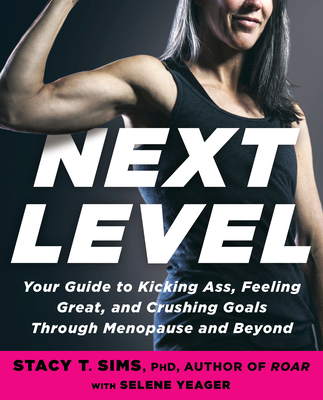
A comprehensive, physiology-based guide to peak performance for active women approaching or experiencing menopause—from the author of Roar, renowned exercise and nutrition scientist Dr. Stacy Sims
For active women, menopause hits hard. Overnight, your body doesn’t feel like the one you know and love anymore—you’re battling new symptoms, might be gaining weight, losing endurance and strength, and taking longer to bounce back from workouts that used to be easy. The things that have always kept you fit and healthy just seem to stop working the way they used to.
But menopause doesn’t have to be the end of you kicking ass at the gym, on the trail, in the saddle, or wherever you work out. Once you understand your physiology, you can work with it—not against it—to optimize your performance. That’s where Stacy Sims, PhD comes in. In Next Level, you’ll learn the underlying causes of menopause: the hormonal changes that are causing all the symptoms you’re feeling, and their impact on your wellness and performance. Then, what you really came for—what to do about it. Inside you’ll find science-backed advice about training, nutrition, sleep and recovery and supplements, as well as sample exercise routines, meal plans, macronutrient planning charts, and case studies from real women Stacy has coached through the transition. It’s the ultimate guide to navigating the Next Level.
didn't love how this was formatted as it felt repetitive at times. but love what Stacy Sims is doing for women's health and this was super informative. i'm about a decade + away from menopause but it's never too early to learn about our bodies and what is gonna happen to them!
I was hoping to gain some new insight into perimenopause and menopause. First of all, I don’t think I’m the target audience. This book is for female athletes heading into perimenopause and menopause, which I am not 😅
The format of this book has much to be desired. By taking time to format the book better, it would make it more accessible to folks with dsylexia or the vision impaired.
Honestly the book could have been summed up in the following: research HRT, research adaptogens (they name some favorites), focus on not gaining weight, lift heavy, do more cardio, keep up on your medical appointments, oh and absolutely positively make sure you don’t gain weight 🙄… wait make sure you fight weight gain.
What would have been refreshing is a more accurate view on health and what it takes to be healthy. Do you live in a walkable area, what are your healthcare options, how to you eat in a way that nourishes your body and stay away from all the horrible diet marketing and “healthy lifestyle” b.s. What about mental health and social connection? Or sources on positive aging?
I can lift heavy, do more cardio and eat mostly plants but this doesn’t account for loneliness or the RAGE that comes during perimenopause and menopause. How do I navigate this transition from adult to adultier adult? What about being excited to no longer have a period but grief over that phase of your life ending?
Maybe I was expecting too much. With a title like “Level Up” I was expecting to level up my whole life, not just my body.
This book is on my "random adds" list which basically means that before it went on a kindle sale, it was not on my radar. My random adds have varying degrees of success with what amounts to an impulse purchase. This one was a winner. Terrible title (IMO) but full of valuable information presented in a way that doesn't seem to talk down to the reader.
I am an aging middle-aged athlete (last 2-3 years not withstanding). I've been fairly active for my entire life. I've read a few books on aging but this one for me hit the sweet spot. I was familiar with Selene Yeager who is a professional cyclist/journalist around my age. I have found her writing to be insightful. Stacy Sims is a doctor and athlete who has both struggled with menopause as well as treated athletes. Though written in a way that allows her experiences with treating female athletes as well as her lived experiences, this is a book that in my view applies to most females.
Personally, I found it refreshing. This very accessible book goes into detail about what happens in menopause, why it happens and why you and your body are very different from what and when you learned most of your body knowledge. By body knowledge (my words not Sims or Yeager), I mean how we've learned to take care of ourselves in the past vs a post-menopausal body. Most of what we know is changed or changing. It also goes into some detail about mental adjustments, body image, and dispelling old paradigms like counting calories or too much attention to the scale. What is happening with our bodies is much more sophisticated than less calories in than out. Our bodies don't respond the same way they did pre-menopause. The old techniques are no longer as effective. I'm going to leave the more scientific analysis of what Sims advocates to the medical and science wonks.
What I can say is that her descriptions and recommended solutions were sound to this layperson and presented in a way that was convincing. She resisted the urge to just tell and not explain. She made clear the why she is advocating for different methods and why her way produces the desired outcomes. Including many exercises and nutritional information that would help build muscle and resist weight gain due to the body changes. In addition to the normal, "stay away from sugar", she advocates for more protien in the diet and more carbs, but the source of those carbs is fruit and veggies. She advocates for a shift in exercise to heavy lifting. Maintaining and building muscle. She also pays attention to mental and emotional changes associated with menopause and the impact on our fitness. For me, this book was great! Better than I expected.
4.5 Stars
Listened to the audiobook. Gina Daniels was excellent!
I am a nutritionist and also post menopausal and was interested to read this book. The author encourages 50 plus women to eat more protein than is the conventional wisdom in order to maintain muscle mass. This makes a lot of sense to me. She also encourages strength training and sports like walking, running, dancing and tennis to maintain bone density as well as muscle mass and strength. A number of exercises are included in this book. It would be an excellent overall resource for women over age 40 who want to be assertive in maintaining their health for a long life. I received a complimentary copy from the publisher via NetGalley.
Exercise physiologist Stacy Sims goes through the science of menopause and lays out a plan for active women to get through the changes of menopause. It's a well-written, practical guide that provides guidance for activities, nutrition, sleep, and mental health. Be prepared to lift heavy sh**! lol. I absolutely devoured this book. It's so nice to find a person who doesn't brush off older women. Loved it.
Ignore the title and cover picture - they may lead you astray. This book covers the latest science-based information about nutrition, exercise, and other health factors for perimenopause, menopause, and post menopause. Though the advice and research (through Stanford University) is couched for athletes, the information in here will help all women who are in or approaching these phases of their lives.
I first encountered the author through her interviews on YouTube and online, and I wanted to know more but hated to waste my money on a book only geared for athletes. I couldn't get the book any other way, though, so I ended up buying it, and I'm very happy to have it on my shelf! I know several other non-athlete women my age I will recommend this to, also.
It opens with a detailed look at our bodies and the changes they go through in these periods of life. I thought I was pretty well informed, but I learned a few new things, and it was good to have that refresher course. There's a chapter specifically on the symptoms women may experience, (including s little information for different ethnic backgrounds), and why they're occurring. Then the chapters move into the recommendations sections. The topics here are quite thorough, including hydration, adaptogens, stability, motivation, sleep, etc. But for many women the meat will be in the looks at nutrition, aerobics, and weight lifting.
As I said before, I'm not an athlete and I never have been But I've always been active, moderately strong, and healthy, until my 50s, that is. Then a combination of years of caregiving, immense stress, and body changes left me not really recognizing myself. I went to work researching health and fitness and implemented everything I could find that seemed science-based, and I had a little improvement. Until it stopped completely or gains even reversed. Reading this book I understand why so much of what I did only worked temporarily for me - it was almost all based on men. Even when you find advice for senior women it's often recycled advice from men, then just dressed up a bit.
My only complaint with this book is that I would have liked to see more emphasis on the research. Don't get me wring, studies are mentioned here. But there are more of them that could have been brought up, and they could have been detailed more. That would suit readers like me better, but maybe lose some others.
Reading this book has given me new hope that I can continue to improve my life, without deprivation or paying large sums to trainers who have no clue how my body works. I'm not going to go into the specific advice here, other than to say three things. Eat more food, especially protein. Practice a little short, very intense sprint training. Lift really heavy stuff. Then eat some more.
NB - As I've been reading this book I can't help wondering, how did we smart women ever allow someone to convince us that we could improve our health by denying our body what it naturally needs? Cutting calories, cutting fat, cutting healthy carbs, giving up fruit or eggs or who knows what, losing sleep to get up early and work out, spending hours on the treadmill instead of doing things we love. How did that sound like wisdom? Well, finally, there are smart researchers around the world looking at us, women, as people worthy of respect and sending a different message. I, for one, am ready to listen. I'm sure there will more information coming our way, but this book is a great place to start.
I am a medically induced menopausal woman so when I was sent this book to read and review, I hoped it would be informative and helpful. I’ve done loads of research over the years and while this did contain some of the same stuff, there was definitely some new things and a new way to approach the symptoms and the outlook. Women reach a certain age and are left to be put out to pasture if they don’t look like a Hollywood star and it’s hurting our self comfort but also that of the younger girls and women coming up behind us. This book looks at realistic ways to adjust your thinking on exercise, hydration, vitamins and even sleep so that you maximize their benefits. It is informative without being super preachy and I liked the pictures of the exercises. As someone who has been an athlete all her life and now finds myself slowed way down, this book is helpful in getting my Mojo back. Thanks to Rodale Books and NetGalley for this eArc in exchange for my review.
I wish I had read this book 10 years ago. For pre and post menopausal women, this book is a must read. Not only will you feel supported and understood, you will be given a new lease on life. This book not only gave me tools to work with, it shed light on many symptoms I personally suffer from, reinforcing my self image, beating myself up needlessly and useless negative body image. This book has opened a new positive chapter in my life. Thank you Dr. Stacy T. Sims. I’m forever grateful!
I found Next Level so helpful that I ended up purchasing the book so I could see all the exercises in print. I knew this book was about exercise but oddly didn’t pay to much attention until I started the book, and realized it was written for women going through menopause. It was like the Gods knew exactly what I needed and put this book right in front of me. Author Stacey Sims has written a book that touches on everything I personally needed to know, and I know I’m not alone with these questions. Recently I had blood work done because I sensed my hormones were off. I don’t have a Uterus so I can’t be warned by my lack of periods as an indicator menopause has started. My blood work came back and my OB said everything’s “normal”. I found this hard to believe so I sought out an integrative medicine doctor who confirmed the results were normal, but normal for someone in menopause. I was so angry that I wasn’t given an explanation, an offer of solutions, nothing! I gained 50 pounds, couldn’t sleep, and had the worse hot flashes, all of these symptoms when on for 9 months that didn’t need to happen. Like the book explains, many women including myself are afraid to take hormones because of what we are told. We think we need to starve ourselves in order to make a difference, and basically need to accept the fact were getting older. Next Level not only explains each “myth” but gives all the ways we can help ourselves feel better. The book lists diet trends you need to stay away from, gut health, the best exercises to help with the terrible weight gain ( especially belly fat), and how to improve our mood and sleep. I loved all the stories of women who were struggling and how the program helped them to take back the control of their bodies. Good food, SIT style of workouts ( sprint interval training) and whatever you feel comfortable with as far as hormone replacement, can really get you feeling back to normal. For me this book lifted my spirits and helped remind myself that I’m not alone. I don’t need to be ashamed of what my body is going through but I also want to do what I can to get it back to feeling good. I’ve got the hormone part down, now I’m going to focus on getting in shape and loosing all this weight, and being even better then I was before. I have gained so much knowledge and I’m actually excited to see what my body can do. I can’t thank Stacy enough for helping me, and I will definitely be telling friends to pick up a copy as well.
I thought this would about helping women through menopause but it was about female athletes - women who compete in Ironmans and marathons. I am very active but not looking to do an Ironman in my near future. Also, I felt this author was bragging more than helping. It was a “look at me - aren’t I amazing?!?!” Ugh. I want my money back. All I heard about was accomplishments and nothing to do with helping anyone.
hea raamat, aga olles lugenud Simsi eelmist trenniteemalist (Roar) ja hulka menopausiraamatuid ka, ma siit uut midagi teada ei saanud otseselt.
ikka seesama teada värk, et kõige olulisem on jõutrenn (suured raskused, vähe kordusi), lisada tuleb sprintintervalle ja plüomeetriat (isiklikult vihkan plüomeetriat kirglikult:S) ja kõige vähem tolku on pikkadest vastupidavustrennidest, mida on mõtet teha ainult siis, kui tõesti on soov vastupidavusaladel võistelda - aga isegi siis võiks nende asemel prioritiseerida puhkust, sh und, ja taastumist.
toitumise osas ka kõik juba kuuldud - valk, valk, valk, kui vähegi võimalik, siis päristoidust, mitte pulbrist (ei tea küll endiselt, kuidas see peaks võimalik olema sellistes kogustes; isegi oma sotsiaalmeedias õpetab Sims ikkagi tegema valgupulbriga hommikukohvi); süsivesikuid tuleb perimenopausis veidi piirata, aga ei tohi ära jätta; trenni eel ja järel tuleb süüa; trenni ajal tuleb juua; see jook ei peaks olema paljas vesi, aga piisab väga vähesest suhkrust (mitte suhkruasendajast!) ja soolast seal sees, et see aitaks hüdreerida. (sellest raamatust ma retsepti enam ei leidnud, aga vaatasin "Roarist" järele: poole liitri vee kohta teelusikatäis vahtrasiirupit ja näpuotsatäis soola, pole tänu väärt). ongi nagu enamvähem kõik ja pole just raketiteadus.
Thanks to NetGalley for the opportunity to read this advance copy in exchange for a fair review. Oh thank God. As a female of a certain age this book is so relatable I want to yell it out. Just recently I was telling a patron that I don't even talk to my doctor anymore about the symptoms of menopause. Since the dawn of time, women have been experiencing these symptoms, yet instead of solutions we are told to get over it, that it will pass, or its in our head. Millions and MILLIONS of women stare back at the doctor in disbelief and disgust at them (yes, we really do) and a system that refuses to find help, solutions, or literally anything except "wear less clothes or turn the heat in your house down" - well, thank you or the privilege of paying you for THAT stupid answer! Finally a book addressing the elephant in the room - while not a breakthrough, it gives a good solid playbook for what to try and why - and what to do if you've already tried everything else. Its a book for those of us who are exhausted of telling doctors what's happening only to see them gloss over and pat us on the head. 4* This review appears on Goodreads where I keep all book reviews.
The first thing I really love about this book is that it gives a much clearer explanation of what is going on biologically than most books I've read about menopause, which tend to content themselves with "your hormones go weird and then you get a bunch of symptoms." Which is fair enough. Do I really need to know that hot flashes are the result of estrogen no longer playing its accustomed roles in helping the hypothalamus regulate body temperature and encouraging vasodilation when your core temperature rises? Maybe not. But I like knowing such things. If you don't care, you can skim those parts of the book. There is still plenty of practical advice here.
The practical stuff starts with a discussion of the ins and outs of hormone therapy, which mostly boils down to "Talk with your doctor about your specific symptoms and what might alleviate them," but it gives you a lot of good information to start that talk with your doctor. Then there is some information about supplements, training, hydration, and nutrition.
The headline recommendations here are basically a) Eat more protein b) lift heavy sh*t and c) replace some of your long endurance cardio sessions with high-intensity interval training. Which - full disclosure - kind of confirms my biases. Sims's reference athletic older woman is clearly a runner, triathlete, cyclist, or maybe a crossfitter, but I think any athlete will find things they can apply here.
There is a lot more detail in the book. And also tons of citations and pointers to other sources of information. I can definitely see myself referring back to this book over time as I tweak my training and nutrition.
Is it a perfect book? Nah. I can quibble with a few things - Sims is a bit more gung ho on adaptogens like ashwaganda and schisandra than I think the data warrants, but that's something that definitely falls in the category of, "We have pretty good evidence that it won't do you harm, and some ambiguous evidence that it might do you some good, so give if you want to give it a shot, cool." Some of her recommendations on hydration clash a bit with what I've seen elsewhere - although, as she points out, the research behind those recommendations was mostly done on young men. And she is ever so slightly excessively scaremongery about artificial sweeteners and "processed foods". Not that encouraging people to eat more whole foods is a bad idea, but I'm just not convinced that the odd scoop of whey protein powder or the occasional diet soda in the context of a diet that also has plenty of whole foods is doing anyone any harm.
The philosophy behind ‘Next Level’ is to bring your health and training to the next level as you reach the next level of your life. This level is the second half of a woman’s (and people with a uterus’) life span and encompasses the peri and post menopausal transitions. It is a great book. Stacy Sims’ voice is positive and affirming. She doesn’t use the term hormone replacement therapy because we are not replacing hormones we are using a transitional therapy to help us even things out at a time when our hormones are at their most imbalanced. She explains female biology and our hormones to the reader. She then explains how and why adaptogens work, the medical options, and she explains what training needs to look like. Women (etc) need to do bursts of high intensity training - to reduce insulin sensitivity, balance hormones, boost mitochondrial function and more. We need to lift heavy - to boost our metabolic rate, for bone health and immune function and so much more. We need to jump - for power and strength and to help build bones. We need to focus on our core strength - for pelvic floor health. She suggests supplements that may be worth trying - vitamin D, Magnesium, DIIM, Creatine, Caffeine. And she covers the stuff that everyone else talks about - eating for gut health and focusing on sleep hygiene. I will refer to this book often it is a brilliant resource. I do hope that for the second edition they think about using an older model - perhaps a woman in her early fifties? I also worried about the model’s elbow alignment (slight hyperextension) in some of the foam rolling images - but this is my niggly perspective as a movement coach. Still a five star read.
This book was highly recommended. It's written in a very popular science style. It seems to have good information, but there were a few spots that seemed off and that made me a bit suspicious. I am suspicious about popular diet books in general because there is so much crap out there. I do think this one appears more on the up and up that most. It probably still relies on tenuous data in some sections - I'm looking at you supplements.
I also think this book is geared towards a more hard core athlete than me. All the examples of women unhappy with their bodies were much smaller with much lower body fat than me for sure. I was hoping to pick up some useful tips anyways. I already do HIIT a few times a week and have increased strength training a few months ago. So this book supports my strength training decisions (confirmation bias - ha). I might make me less scared of jumping exercises which I have been a avoiding for fear of injury and fear of peeing my pants. I'll try protein snack within a half hour of exercise as it seems easy enough.
Sooo...overall, an interesting book. I definitely feel like my body has changed in the last few years and I have been playing a mental guessing game of pandemic or menopause? I wish you could easily test yourself to see! As I said, I'm not the super athlete this book is targeted towards, but I do workout 45-90 minutes each day so maybe some of the things can apply.
Are you tired, sluggish, fighting weight gain or having hot flashes? Do you struggle on your daily run or in the gym? Are you in perimenopause or menopause? If you answered yes to any of these questions or if you are just interested in improving your eating, sleeping or exercise habits, Next Level is for you. Full of well researched information, Next Level will help you understand the affects of menopause on your body. Sleep habits, weight distribution, loss of muscle and depression are discussed here. Most of the solutions involve both medical and alternative medicine solutions. Next Level describes menopause as a positive change for the active woman. 5 stars.
Thank you to NetGalley, Rodale Books, Stacy T. Sims, PhD and Selene Yeager for this ARC.
There is some useful info in this book for active menopausal women, but generally, I found it a bit overwhelming. It sets the bar very high in terms of what you should aim for, and honestly, I just felt a bit defeated by it, like it's written for another type of woman that I am not (I am active and menopausal!). It's got a lot of quite wordy science, which bogged me down. Definitely, something to dip into but I wouldn't recommend trying to follow it word for word, and if you do - well done and are you human?
Motivational and informative (with some parts pertaining only to professional athletes). An excellently-written guide for women explaining the proper steps to prepare their bodies before, during, and after menopause. Every woman 35+ should read this book.
I completely skipped part one talking about what's happening in menopause/peri menopause, as I feel like I have a pretty good conceptual grasp of it and I didn't want to repeat the information. I really wanted to focus instead on the positive actions that I could take so I skipped to part two.
It feels like she is addressing elite athletes and not the average woman going through menopause. Her discussion of HIIT and then the even more intense SIT (Sprint Interval Training)workouts feel like there's something that should be obtainable, and SIT workout is definitely not for new athletes, and even HIIT is not great for new athletes.
She is disparaging of HRT and that you should try all these other strategies first, when really HRT should be your front line strategy.
As everyone says, we're supposed to lift heavier, but how am I supposed to do that in my home gym? For the convenience and cost, I am not going out to a gym. So I need solutions that are cost-effective for my home. I'm unique that I have weight sets that go up to 40 lbs, but I'm maxing out on my weights for squats already. What am I supposed to do if I'm supposed to constantly be lifting heavier? God forbid I do more sets because apparently that's terrible. I complain because she's not the only one who doesn't address this situation, I've yet to find a good solution.
The discussion about having to consume protein 30 to 60 minutes after working out, commonly called the "anabolic window" has been proven a myth. That if it does have a positive impact it's a fairly itsy bitsy one, and that your body is smart enough that the research shows anywhere from 6 hours to 24 hours post workout, you continue to have a higher absorption of protein.
I do intermittent fasting and I do not do it for weight loss. I do it for the metabolic health that it has on our microbiome. It was disappointing to read that section and it was all about the intermittent fasting is for weight loss, and that's simply not true. I like it because it gives my gut a chance to do some cleanup and not just constantly digesting food. I also would like people to cite the research that talks about fasting causes cortisol levels to rise. I have looked around and have been unable to find anything through medical research that addresses this concern. Although I hear it plenty, I'd still like to see the study myself. From what I can find, it seems like cortisol levels do rise but not abnormally or dangerously so, and come down after exercise. The cortisol is the trigger of the stress of exercise, and I'm not sure how fasting impacts that.
100% support the idea that women are not eating enough. Thanks patriarchy making us think that we always have to be tiny to have value.
And I quit it 50% because my notes are already too extensive. I'm obviously not receptive to her information and mostly just fear irritated and combative while reading it.
I've been reading more books regarding perimenopause and menopause transition. This one seemed promising as it was geared towards active women/women athletes, and I consider myself fairly athletic. I got less than expected from this book. There's a section at the end instructing you to track your protein/carb intake, the timing of your meals and your exercise. I wish this was a bigger section, with more example plans. Same with the training schedules. There are a couple example training schedules here and there in the book, but I wish there was more space dedicated to this. The author talks a lot about how supplements are bad, but then she goes on to recommend "adaptogens". Ok, those are supplements too, and mostly bullshit. There's actually a lot of bullshit in this book, especially in the "gut microbiome" chapter. There's a lot of made up syndromes named, with unmemorable abbreviations. She recommends getting enough sleep, which is obvious, but so funny when she overhauls a "busy doctor"'s schedule to include starting work an hour later. How will that doctor do that? As a doctor, my schedule is not that flexible to be able to magically come up with an extra hour in the morning. Oh! The section on hydration is so confusing. I still don't understand how come water is not a great hydration source. Sports drinks are not either, but apparently she wants you to have some among of salt and sugar in your "hydration liquid" which is basically a sports drink, but with less additives. Sounds yucky and also I don't see how hard/long I would have to work out for me to need something like that. I'm guessing she's talking about ultra marathon/iron man type hydration. Otherwise, good advice. Build in shorter and more intense interval training (both heavy strength training and high intensity sprints) and decrease overall training time, to let your body rest. Get enough protein with meals and around training sessions. Get sleep. Eat good food. I just wish she tied it together at the end with a nice training/meal plan, exercises listed.
I’ve heard lots of good things about this book; but I don’t think I’m the target audience and therefore won’t rate it. It’s for elite athletes and I’m more trying-to-not-be-a-couch-potato, work out 3-4 times per week material. I found the “makeovers” totally unhelpful because they’re just not realistic for my life. It started out good for me but then got a bit too much into the science part of things and my eyes glazed over. Basically HIIT is good, lift heavy (but then doesn’t give the how as it assumes you’re already into weight lifting), stay active, vague regarding hormone replacement therapy, and encourages adaptogens. The information regarding diet and weight was somewhat contradictory - ie don’t gain weight but be accepting of your new body. She said active women in menopause need 2000 calories and generally don’t eat enough but I’m certain that is not true for myself. Some good info but I didn’t love the book.
I can't stand when nonfiction books use exclamation points. It just comes off as overexcitable, childish and unprofessional; hence my low rating. Beyond that, this was a pretty decent look at what happens to your body during menopause, specifically how it affects your fitness. The book addresses what to do about the physical slowdown and muscle loss that comes with aging. It delves into the science behind what changing hormones do to your fitness and what nutrition and fitness approaches are best tailored towards addressing these setbacks.
However, I'm never sure how much actual science being presented in these books is correct. I'm not sure physical trainers are really scientists, no matter how much expert data might be behind their claims. It just always feels like they have an agenda (and I think this is a me problem).
Yeah! I loved this book. My husband keeps making fun of me because I keep telling him things about it. But it all makes so much sense! Do intervals twice a week. Recover on your recovery days. Do core. Lift heavy shit. Eat plants. Hydrate. Eat protein. Don’t restrict calories. Be strong not skinny. Even women who are midlife and aren’t active should read this book. I have to shout out my beloved Peloton and Hard Core on the Floor Facebook group- Nicole Gonzalez puts together the most thoughtful, comprehensive strength training program and I have followed it almost every day since spring 2021. I’m turning 45 this summer and I’m asking for 30 lb dumbbells for my birthday. The 20s aren’t heavy enough anymore!!!! I’m adding maca and tart cherry juice to my regimen because of this book.
Good and useful information about menopause and it’s impacts on fitness. While geared to endurance athletes, much useful info for more regular athletes like me. Basically, HIIT, plyometrics, and lifting heavy shit is the way to go. Eat enough good carbs and protein. Build in active recovery.
I checked this book out from the library. As a woman waiting (impatiently) to hit menopause and dealing with all the precursor "fun" I found this book incredibly helpful and enlightening. I resisted the urge to highlight and post it note the library's copy and ordered my own to keep as a constant reference and guide. Society does not pay attention to women as they age but I'm glad there is a resource like this out there to help us stay healthy and active.
As women at different stages of perimenopause, menopause or post menopause this book nails the information you need to know and how to counteract the effects. We have to treat fitness and nutrition differently as we age.
This is more tailored for women who are used to competing in running or bike races or are very Active Crossfitters but I think anyone can gain some insight from it. Though, you can easily get most of the information gleaned from quite a few sources these days. Lift Heavy should be your mantra. TBH I think all of the peri/meno books are just doing the best they can with the information available and there ain't much out there.