Jump to ratings and reviews
Rate this book

Rifqa

Rate this book
Rifqa is Mohammed El-Kurd’s debut collection of poetry, written in the tradition of Ghassan Kanfani’s Palestinian Resistance Literature. The book narrates the author’s own experience of dispossession in Sheikh Jarrah—an infamous neighborhood in Jerusalem, Palestine, whose population of refugees continues to live on the brink of homelessness at the hands of the Israeli government and US-based settler organizations. The book, named after the author’s late grandmother who was forced to flee from Haifa upon the genocidal establishment of Israel, makes the observation that home takeovers and demolitions across historical Palestine are not reminiscent of 1948 Nakba, but are in fact a continuation of it: a legalized, ideologically-driven practice of ethnic cleansing.

100 pages, Paperback

First published October 12, 2021

313 people are currently reading
13672 people want to read

About the author

Mohammed El-Kurd

5 books693 followers
MOHAMMED EL-KURD is an internationally touring and award-winning poet, writer, journalist, and organizer from Jerusalem, occupied Palestine.

In 2021, He was named as one of the 100 most influential people in the world by TIME Magazine.

He is best known for his role as a co-founder of the #SaveSheikhJarrah movement. His work has been featured in numerous international outlets and he has appeared repeatedly as a commentator on major TV networks.

Currently, El-Kurd serves as the first-ever Palestine Correspondent for The Nation. His first published essay in this role, "A Night with Palestine's Defenders of the Mountain," was shortlisted for the 2022 One World Media Print Award.

RIFQA, his debut collection of poetry, was published by Haymarket Books in October 2021 was later released in Italian by Fandango Libre. RIFQA was named “a masterpiece” by The New Arab and a “remarkable debut” by the Los Angeles Review of Books, it was one of Middle East Eye’s "Best Books of 2021" and was shortlisted for the 2022 Forward Prize for "Best First Collection."

El-Kurd holds an MFA in Creative Writing from Brooklyn College (CUNY) and a BFA in Writing from Atlanta’s Savannah College of Art & Design (SCAD).

He is the recipient of numerous honors and awards, including the Arab American Civil Council’s “Truth in Media” Award (2022), as well as the Cultural Freedom Fellowship from the Lannan Foundation (2023). He is currently a Civic Media Fellow at the Annenberg Innovation Lab at the University of Southern California.

El-Kurd has lectured and performed around the world including as the keynote for the 18th Annual Edward Said Memorial Lecture at Princeton University, at the Internazionale literary festival in Ferrara, Italy, and most recently at Adelaide Writers’ Week in Australia.

Ratings & Reviews

What do you think?
Rate this book

Friends & Following

Create a free account to discover what your friends think of this book!

Community Reviews

5 stars
3,102 (71%)
4 stars
1,008 (23%)
3 stars
211 (4%)
2 stars
22 (<1%)
1 star
12 (<1%)
Displaying 1 - 30 of 909 reviews
Profile Image for s.penkevich [hiatus-will return-miss you all].
1,573 reviews15k followers
March 24, 2024
I was born among poetry,’ writes poet Mohammed el-Kurd in his poem, ‘on the fiftieth anniversary. / The liberation chants outside the hospital room / told my mother / to push.’ This passage from the poem Born on Nakba Day channels the spirit Mohammed el-Kurd instills across the collection RIfqa as a voice of poetic activism born into the history of conflict. One where ‘Birth lasts longer than death./ In Palestine death is sudden,/instant,/constant,/ happens in between breaths.’ This moving debut collection takes the long history of violence and displacement against the Palestinian people and transforms it into direct prose that rings out as gorgeous as it is sharp. The title, Rifqa is an Arabic word that roughly translates to mean compassion, kindness, or companionship, but it is also the name of his grandmother and many of these poems revolve around the lessons in activism he learned from his grandmother and serve as a moving tribute to her. While ‘poems won’t build a house,’ and poems can’t stop a bomb, poetry can also speak out against injustice or give voice to struggles and Rifqa is a bold and beautiful collection that does just that.

In my brief twenty-two years of personhood, I have seen Palestine dwindle in size and spirit like a decaying loved one.
I refuse to wait in the wreck


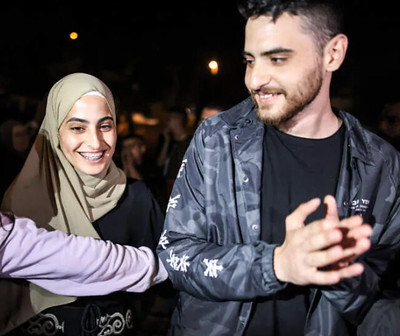
Mohammed el-Kurd and his sister, Muna el-Kurd, have become well known in recent years for their activism. While attending university in the US, Mohammed returned home in 2021 to protest the evictions of Palestinians in the occupied East Jerusalem neighborhood of Sheikh Jarrah. Both he and his sister were arrested and detained for several days by Isreali police. They began appearing on major news networks speaking out against oppression and ended up on the Time 100 Most Influential People list in 2021
Screenshot 2024-03-20 144713
Photo: Muna and Mohammed el-Kurd being released from prison in 2021

Much of his activism comes through in these poems and much of it pays homage to the life and legacy of his grandmother. ‘Despair without people tastes different than collective despair,’ he writes about the loss of his grandmother, and he discusses how much of his belief in speaking out and giving voice to a collective despair helps carry out her legacy. ‘Even in the face of eviction, monetary punishment, tens of trials, and threats of imprisonment, she persisted,’ he tells us, often returning to moments of his grandmother as a touchstone for strength and courage. It makes for a beautiful tribute.

What do you say to children for whom the Red Sea doesn’t part?

The trouble with words, we are shown, is that under oppression and colonialism language is often manipulated against those who are oppressed and framed in ways that uphold the oppressor’s perspective. ‘If you’re not careful,’ he warns, ‘the newspapers will have you hating the people who are being oppressed and loving the people who are
doing the oppressing.
’ Or, as he writes in the poem Context:

Violence is not children
taking on dragons.

For me, it has always been apologies.
Running to catastrophe with context, commissioning
compassion, turning
heroes into humans. This is a refuted revolution.


The context here, he tells us ‘Context: they want cats / declawed, they want knocked doors / unanswered.’ The issue of words being twisted against oneself has even found el-Kurd being canceled from speaking events (the news of this was actually how I discovered this collection), when his line saying the armed forces of Israel ‘harvest organs of the martyred, feed their warriors our own,’ was accused to being a literal accusation of cannibalism and not a metaphor. It makes me think of a recent poem by Noah Mazer, where the metaphor ‘the guerrilla moves among the people / as a fish swims through water’ has people condemning both the fish and the water as an indictment against those who condemn without nuance. ‘At a certain point, the metaphor tires. At a certain point, I’ll grab a brick’ he writes, stressing how poetry is one way of speaking out but that we cannot just stay forever in words which will be used against us anyways and must also take action. Or, similarly:

A woman tells him a pen is a sword. What’s a pen
to a rifle? Another fed him a sonnet. If Shakespeare
was from here he wouldn’t be writing.


This is a really moving work on a very violent and upsetting situation and the poetry rises to the occasion of ensuring the reader is not shielded from the severity by pretty metaphors and twisted language. He also reminds us that this has been going on for a long time, such as in the poem 1998/1948 her writes:

It’s the same killing
everywhere. Seventy-some years later
we haven’t lived a day.


Each poem culminates towards a feeling of frustration seeing the horrors that tear apart lives, families and even the landscape as Gaza has become the largest open air prison and continually shrinking as more and more displacements and violence occurs:

Years passed and the vines of the roses
were vines of grapes
vines of barbed wires,
ripping open the veins of this city.


Though these are not poems simply to bear witness—’I no longer feel the responsibility to give humans eyes for humanity’—but poems that demand action and accountability. He laughs off ideas like identity and tries to make the reader understand the trauma of the situation even down to details such as how if asked ‘where I’m from it’s not a one-word answer.’ It is a bold collection, but as his grandmother taught him: ‘if we don’t laugh, we cry.’ As he writes in This Is Why We Dance:

We have wounded feet but the rhythm remains,
no matter the adjectives on my shoulders.
This is why we dance:
Because screaming isn’t free.


Haunting, harrowing, and deeply moving, this is a brief but powerful collection of poems.


A soldier as old as a leaf born yesterday
pulls a trigger on a woman older than his heritage.
Two martyrs fall.
One martyr falls.
Here, every footstep is a grave,
every grandmother is a Jerusalem.
Profile Image for Lilyya ♡.
654 reviews3,731 followers
January 10, 2024
“𝐼𝑛 𝑃𝑎𝑙𝑒𝑠𝑡𝑖𝑛𝑒 𝑑𝑒𝑎𝑡ℎ 𝑖𝑠 𝑠𝑢𝑑𝑑𝑒𝑛,
𝑖𝑛𝑠𝑡𝑎𝑛𝑡,
𝑐𝑜𝑛𝑠𝑡𝑎𝑛𝑡,
ℎ𝑎𝑝𝑝𝑒𝑛𝑠 𝑖𝑛 𝑏𝑒𝑡𝑤𝑒𝑒𝑛 𝑏𝑟𝑒𝑎𝑡ℎ𝑠”


i could spend hours and hours transcripting every poignant phrasing or each elegiac poem printed in Rifqa, رفقة.

such as :
“𝐼𝑓 ℎ𝑒𝑎𝑟𝑖𝑛𝑔 𝑎𝑏𝑜𝑢𝑡 𝑎 𝑤𝑜𝑟𝑙𝑑 𝑜𝑡ℎ𝑒𝑟 𝑡ℎ𝑎𝑛 𝑦𝑜𝑢𝑟𝑠 𝑚𝑎𝑘𝑒𝑠 𝑦𝑜𝑢 𝑢𝑛𝑐𝑜𝑚𝑓𝑜𝑟𝑡𝑎𝑏𝑙𝑒,
𝑑𝑟𝑖𝑛𝑘 𝑡ℎ𝑒 𝑠𝑒𝑎,
𝑐𝑢𝑡 𝑜𝑓𝑓 𝑦𝑜𝑢𝑟 𝑒𝑎𝑟𝑠,
𝑏𝑙𝑜𝑤 𝑎𝑛𝑜𝑡ℎ𝑒𝑟 𝑏𝑢𝑏𝑏𝑙𝑒 𝑡𝑜 𝑏𝑢𝑏𝑏𝑙𝑒 𝑦𝑜𝑢𝑟 𝑏𝑢𝑏𝑏𝑙𝑒 𝑎𝑛𝑑 𝑡ℎ𝑒 𝑝𝑟𝑒𝑡𝑒𝑛𝑠𝑒.
𝐵𝑙𝑜𝑤 𝑢𝑝 𝑎𝑛𝑜𝑡ℎ𝑒𝑟 𝑡𝑜𝑤𝑛 𝑜𝑓 𝑏𝑜𝑑𝑖𝑒𝑠 𝑖𝑛 𝑡ℎ𝑒 𝑛𝑎𝑚𝑒 𝑜𝑓 𝑓𝑒𝑎𝑟.”


or :
“𝑊𝑒 𝑙𝑜𝑜𝑘𝑒𝑑 𝑢𝑝 𝑡𝑜 𝑡ℎ𝑒 𝑐𝑙𝑜𝑢𝑑𝑠, 𝑔𝑜𝑡 𝑢𝑝 𝑜𝑛 𝑐𝑙𝑜𝑢𝑑𝑠.
𝐻𝑒𝑟𝑒, 𝑤𝑒 𝑘𝑛𝑜𝑤 𝑡𝑤𝑜 𝑠𝑢𝑛𝑠: 𝑒𝑎𝑟𝑡ℎ’𝑠 𝑓𝑟𝑖𝑒𝑛𝑑 𝑎𝑛𝑑 𝑤ℎ𝑖𝑡𝑒 𝑝ℎ𝑜𝑠𝑝ℎ𝑜𝑟𝑢𝑠.
𝐻𝑒𝑟𝑒, 𝑤𝑒 𝑘𝑛𝑜𝑤 𝑡𝑤𝑜 𝑡ℎ𝑖𝑛𝑔𝑠: 𝑑𝑒𝑎𝑡ℎ 𝑎𝑛𝑑 𝑡ℎ𝑒 𝑓𝑒𝑤 𝑏𝑟𝑒𝑎𝑡ℎ𝑠 𝑏𝑒𝑓𝑜𝑟𝑒 𝑖𝑡.
𝑊ℎ𝑎𝑡 𝑑𝑜 𝑦𝑜𝑢 𝑠𝑎𝑦 𝑡𝑜 𝑐ℎ𝑖𝑙𝑑𝑟𝑒𝑛 𝑓𝑜𝑟 𝑤ℎ𝑜𝑚 𝑡ℎ𝑒 𝑅𝑒𝑑 𝑆𝑒𝑎 𝑑𝑜𝑒𝑠𝑛’𝑡 𝑝𝑎𝑟𝑡?”


the novel started with poems about Shikh Jarrah and it clotured with a heart wrenching one “𝗦𝗵𝗶𝗸𝗵 𝗝𝗮𝗿𝗿𝗮𝗵 𝗶𝘀 𝗯𝘂𝗿𝗻𝗶𝗻𝗴?” before looking at the the publication date i thought Rifqa was an agonizing SOS to what was happening in Shikh Jerrah a couple of years, or so ago. i remembered so vividly, the world turning again a blind eye. minimizing and dehumanizing the events of Shikh Jerrah’s Palestinian residents going through another Nakba. elderly people thrown from their houses like, Rifqa. teenagers and toddlers beaten and shot like, Jana. parents striped of their dignity in front of their children like, Mahmoud. but the author’s poems were about 2009’s Shikh Jerrah nakba. the story has been repeating itself again and again. throughout the years, throughout the decades, throughout the nakbas.
Profile Image for Sahar.
362 reviews200 followers
Read
December 2, 2021
A woman tells him a pen is a sword. What’s a pen
to a rifle? Another fed him a sonnet. If Shakespeare
was from here he wouldn’t be writing.
(Boy Sells Gum at Qalandiyah)

A poetically sardonic and lucid account of life under illegal occupation, Mohammed El-Kurd’s debut poetry collection is equal parts touching and infuriating. The work is named in memory of his late grandmother, Rifqa, a Haifa native displaced to Jerusalem during the Nakba. A poet herself, she resisted the occupation for 103 years, passing in 2020.

Now, I am no poet, nor do I read much poetry, so it took me a couple of reads to gather my thoughts on this work. By virtue of who the author is, I knew what to expect, though I must say I was thrown by some of the language in the poems. However, I’m largely putting this down to my lack of familiarity with poetry as a genre.

The writing is sharply observational, with the poems spanning different eras, lands, times, and people. The reader is provided with a firsthand, palpable account of the damaging effects of settler colonialism on the human psyche. El-Kurd’s poetry is a plea as much as it is a curse; the scathing critique of the genocidal settler colonial entity and the refutation of impassive international spectators leaves little room for the justification of inaction. The most pressing need of a colonised people is to put an end to the colonisation as soon as possible, and El-Kurd captures this urgency through recounting the atrocities committed against the Palestinian people pre-Nakba to date.

I enjoyed the symbolic nature of the writing and the occasional Qur’anic references, particularly verse 9 of surah yasin in the poem Smuggling Bethlehem. One thing that particularly stood out to me was this stanza in the poem Rifqa, which, to me, beautifully captured the contrast between the natural landscape/territory of Palestine and the rigid, inhuman infringement of the illegal occupation:

“Years passed and the vines of the roses
were vines of grapes
vines of barbed wires,
ripping open the veins of this city.”

This violent, abusive final verse is reminiscent of the endless bloodshed that accompanies colonisation.

My favourite poems from this collection are Rifqa, No Moses in Siege, Amal Hayati, and Smuggling Bethlehem.
Profile Image for jude⋆°. (IS EDITING REVIEWS).
472 reviews545 followers
August 7, 2024
“Birth lasts longer than death.
In Palestine death is sudden, instant, constant, happens in between breaths.”


Rifqa is poetry collection that explores Palestinian resilience and resistance against Israeli occupation. This was devastatingly beautiful. Every line in this book was a punch to the gut. Palestinians deserve to live in a liberated Palestine. Free Palestine 🇵🇸 !!!!
Profile Image for George Abraham.
32 reviews36 followers
July 31, 2021
The future of Palestinian poetics. Absolutely required reading in every sense of the word. Go pre-order this book now!!

Huge thanks to Haymarket for the ARC! Here is my blurb for RIFQA:

"At its heart, RIFQA is a call to build a better elsewhere for Palestinians, in & beyond language: an ars poetica beyonded into unity intifada, where Palestinians are loved into present tense. Beyond a failed imagination of poetry that’s more “theatre over thunder,” beyond a poetics where elegy is merely a symptom of border, Mohammed El-Kurd weaves the ancestors and Land into every breath of these poems. “Every grandmother is a Jerusalem,” El-Kurd reminds us, in jasmine-scented memory, in liminal space and punchline, in auto- and anti-biography. Here is poetry the whole of us can turn and return to - even in grief, even in contradiction. Liberating itself from respectability & other colonialist gazes weaponized against Palestinians, here is poetry insistent on truths we’ve carried for generations. JERUSALEM IS OURS. El-Kurd writes this with its whole chest, knowing our lives - the whole & future of us - depend on it."
Profile Image for Ava Cairns.
56 reviews52 followers
December 3, 2023
I believe it is absolutely possible to unequivocally condemn Hamas while also unequivocally condemning the oppression of Palestinian people.
"In my brief twenty-two years of personhood, I have seen Palestine dwindle in size and spirit like a decaying loved one.
I refuse to wait in the wreck.
"
"In truth I'm ashamed of my dreams.
There are those who dream of seeing the ocean,
Palestinian men who saw grave before gravel,
the coffin before the coast.
"
Profile Image for Imane .
42 reviews86 followers
December 18, 2022
the power of poetry!
FREE PALESTINE and F SETTLER COLONIALISM
Profile Image for Kate.
848 reviews116 followers
October 13, 2021
"I no longer feel the responsibility to give humans eyes for humanity."

This was so raw, both beautiful and tragic, horrifying in its reality, thought-provoking. Each word has its own carefully thought-out place here, an emotion attached to it. Each sentence has its punchline, and that punchline is like a punch to the gut.

It feels almost wrong to describe some of the lines as my "favourite" but I'd like to quote a few nonetheless:

"If you ask me where I’m from it’s not a one-word answer."

"This is why we dance: Because screaming isn’t free.
Please tell me: Why is anger–even anger–a luxury to me?"


"A soldier as old as a leaf born yesterday
pulls a trigger on a woman older than his heritage.
Two martyrs fall.
One martyr falls.
Here, every footstep is a grave,
every grandmother is a Jerusalem."


"Ramadan​ villages retired singing,
rifles sang instead,
announcing​ declaring
an anticipated empire on the ruins of another."


"Invaders ​came back once again, ​​
claimed the land
with ​​​fists and fire​ excuses​ beliefs
of the chosen and the promised
as if God is a real-estate agent."


"I cried—not for the house
but for the memories I could have had inside it."


"The nurse complained of the clouds.
If I were a stupid flower, I’d wither under the rain.
They asked her, What’s wrong with the flower?
not What’s wrong with the rain?"


"It’s the same killing
everywhere.
Seventy-some years later
we haven’t lived a day."


"I wish I were a landlord
to the tenants in my head. Wish I could
pimp my pain​​ and harden.
Grief the teacher ​and I never learn."
Profile Image for leah.
520 reviews3,387 followers
May 31, 2024
“this is why we dance,
because screaming isn’t free.
please tell me: why is anger - even anger –
a luxury to me?”


a moving poetry collection by a palestinian author, largely focusing on the occupation and ethnic cleansing of palestine. the afterword was also very powerful, introducing the author’s late grandmother rifqa whom this book is dedicated to and named after.
Profile Image for Paula Mota.
1,670 reviews567 followers
December 8, 2025
MULHER IDOSA ADORMECE NO MEU OMBRO
(…)
Mulher Idosa no autocarro levanta-se,
sacos de plástico cheios de 70 montanhas e um rio.
Ofereço-lhe ajuda. Ela está preocupada com a minha coluna.
É graças a mulheres como ela que tenho espinha dorsal.
(…) Saímos do autocarro, caminhando para a barreira militar.
Sob ocupação, ao caminhar sentimo-nos descalços.
Aqui, ao caminhar sentimos que tentamos correr na água

O soldado, louro e bronzeado, pede-lhe a licença.
A minha licença: estas rugas
mais velhas do que a existência do vosso país.
O meu sorriso é um sol.

O soldado, com sotaque e não judeu, pergunta-lhe o que está no saco.
Figos, cabrão. Que mais queres saber?
Recheei-os com tempestades
e bombas e baques
(…)

Já conhecia do livro “Vítimas Perfeitas” a história de Rifqa, a combativa avó de Mohammed El-Kurd, que morreu aos 103 anos.

A minha avó atravessou várias guerras e muito mais. Era mais velha do que a colonização sionista. Foi, por isso, saudada como o “ícone da resistência palestiniana” pelos hierosolimitas. Durante a Nakba de 1948, deixou a sua casa de Haifa meticulosamente limpa, sem saber que a estava a preparar para os seus colonizadores. Refugiada, atirada com os seus filhos de cidade em cidade, instalou-se finalmente em Jerusalém, apenas para ser confrontada com a Naksa e com o saque de Jerusalém e, nos seus últimos dias de vida, com a confiscação iminente da Cisjordânia.

Quando chegou a altura de recolher os seus poemas para os publicar, percebeu que o denominador comum era essa avó, apelidada de “árvore de jasmim da Palestina” e é assim que “Rifqa” surge para a homenagear e imortalizar.
Entre os meus preferidos encontra-se o tríptico "Três Mulheres", em que a terceira parte tão visceral me fez recordar “Acaso é Nascer” de Marta Pais de Oliveira.

TRÊS MULHERES
(…)
Gaza – mulher,
vive onde os buldózeres assentam em nuvens.
A cama de hospital é o entulho da sua casa,
nada restou do marido a não ser uma barba ensanguentada.
Nada à sua volta a não ser frigoríficos em árvores,
mobília conspurcada,
fragmentos de uma vida, desfigurada.
Ela agarra-se ao recife de cimento
como a um cobertor, como à salva de Maria.
Não há vida sem fazer força, não há vida sob cerco.
A língua dela é um minarete que canta o nome de Deus
numa oração furiosa.
Os mísseis, como a chuva, dizem-lhe para fazer força.
As suas coxas abrem-se, dando à luz um céu roxo,
destroçado e silencioso.
Ela lamenta-se,
chora a sua incapacidade de fazer outro luto.
Imagina o cordão umbilical,
uma forca.
Profile Image for Noel نوال .
776 reviews41 followers
November 2, 2021
"I was born among poetry
on the fiftieth anniversary.
The liberation chants outside the hospital room
told my mother
to push."
~Mohammed El-Kurd "Born on Nakba Day"

This collection of poetry wove its way deep into me and refused to let go. I can no sooner choose a favorite poem nor my top five favorite poems from the beautiful poems in Rifqa than pick my favorite leaf from the fallen autumn foliage of a forest. These poems embody resistance, exhaustion, undying love, heart ache, family, homeland, and everything unapologetically Palestinian. I've found myself thinking about Mohammed's words and replaying lines in my head letting them melt to further savor them. The bond that tied Mohammed and his grandmother Rifqa was extraordinarily beautiful and it emanated from the lines of the poems he wrote to honor her memory, her tenacity, her courage, and her deep love.
There are poetry collections that I love, and then there are poetry collections that I LOVE and buy physical copies of to keep on my shelf to revisit again and again. Rifqa made its place on that shelf next to Nizar Qabanni and Suheir Hammad before it was even published when Mohammed read his poem "No Moses in Siege" on Instagram live. Mohammed isn't just a poet, he's a great poet, and I cannot wait to read all of the future beautiful work he will put out into the world.
Profile Image for hamna.
847 reviews473 followers
January 16, 2022
i always meant to reread this after last year but never got around to it. i don’t think i’ll ever have the words to adequately describe how important this book is, to me, but also on a more proper scale, for the world.

”what do you say to children for whom the red sea doesn’t part?”

“i was born on the fiftieth anniversary of the nakba
to a mother who reaped olives
and figs
and other quranic verses,
watteeni wazzaytoon.
my name: a bomb in a white room,
a walking suspicion
in an airport,
choiceless politics.”

“she worked
until survival was a funny story to tell
on evenings with
what remains of the family.
1967–another nakba
another man-made catastrophe
names of places dispossessed
names on tombstones rewritten
sheikh jarrah became shimon ha’tsiddik
jerusalem / bride of the fantasy /
once more.”

“in jerusalem, every footstep is a grave. / here, every footstep is a grave, / every grandmother is a jerusalem.”

“i ask about the office
where opinion shapers
rhyme my country with its cancer,”

“american-accented settlers and police in our yard, / as they claimed our land as theirs by divine decree. / as if god were a real estate agent.”

“this is why we dance:
my father told me: “anger is a luxury we cannot afford.”
this is why we dance:
if i speak, i’m dangerous.
you open your mouth,
raise your eyebrows.
you point your fingers.
this is why we dance:
because screaming isn’t free.
please tell me:
why is anger–even anger–a luxury
to me?”

“i no longer feel the responsibility to give humans eyes for humanity.”
Profile Image for emma.
335 reviews295 followers
July 5, 2024
Mohammed El-Kurd’s debut poetry collection, Rifqa, is a remarkable contribution to Palestinian Resistance Literature, echoing the legacy of Ghassan Kanafani. Each poem recounts El-Kurd’s experiences of dispossession and dehumanisation in Sheikh Jarrah, a neighbourhood in Jerusalem, Palestine. This narrative of suffering under Israeli occupation is intertwined with powerful expressions of Palestinian resistance that will leave readers in awe of their strength and determination. While we should be aware of this anyway as our countries are complicit, the realisation of the Western world’s support in the occupation and ongoing genocide against Palestinians will further sicken you.

The collection is named after El-Kurd’s late grandmother, Rifqa, who was forced to flee Haifa during the genocidal establishment of Israel. This dedication to a woman who never witnessed a free Palestine will haunt you - and it should. The resilience of Palestinians, despite relentless attempts to silence them, shines through in their unwavering bravery to be heard, to live, and to reclaim their land and lives from the oppressive regimes that perpetuate their suffering. This courage is clear throughout the collection, making Rifqa an essential and powerful read.
Profile Image for Dagio_maya .
1,109 reviews350 followers
October 12, 2025
” Che si fa quando il tuo destino è predeterminato?


E’ vero: i palestinesi non sono l’unico popolo a soffrire per mano di una qualche sorta di governo colonialista.
E’ vero non solo lì accadono cose indicibili.
Ma quello che sta succedendo da più di settanta anni è uscito sempre più allo scoperto.
Le nostre armi sono la nostra voce, i nostri occhi, la nostra indignazione.

Mohammed El-Kurd pubblica questo testo nel 2021 ma queste pagine non hanno tempo:
sono ieri, sono oggi e –ahimé, ché ché se ne dica- sono domani.

Ricordi dolorosi che convergono in Rifqa, la nonna morta a centotre anni, il gelsomino alestinese, simbolo di Resitenza.
Le fu portata via la casa nel 1948 e di nuovo nel 2020.
Attorno alla sua figura, El-Kurd riempie pagine di ricordi che sia allargano a tutta la sua terra.

Lascio una traccia ma c’è un doloroso di più:

” Nessun dollaro è una coperta
nessuna colpa è una tavola
su cui servire pasti o
a cui
mettersi a discutere
della loro umanità.
Nessun suono né cenno del capo
può monetizzare la mia furia
quando sento brividi crepitare come fuochi
dalla mia camera da letto.
Nessuna poesia né post basta per trasformare
la tendopoli dove vivono in una tenda.
Nessuno di loro si è chinato a raccogliere le nostre preghiere per tesserne
una casa o un cappuccio.”

---------------------------
COSE CHE NON SAPEVO (da horror..)
Nel 2009, il giornalista svedese Donald Boström ha pubblicato un reportage fotografico dal titolo Our Sons Are Being Plundered for Their Organs (I nostri figli, depredati degli organi), in cui ha rivelato la ormai decennale usanza israeliana di restituire alle famiglie palestinesi i corpi dei figli privati degli organi – una pratica anche detta “necroviolenza”.
----------
G4S è un’agenzia di sicurezza privata dalla consolidata presenza nel governo israeliano. Garantisce aiuto nella gestione di carceri, centri di formazione della polizia, posti di blocco, insediamenti e basi militari. Sebbene da contratto dovrebbe solo fornire attrezzature e servizi alle prigioni, G4S si è resa la principale complice israeliana nell’incarcerazione di massa. Molti dei 500-700 bambini palestinesi arrestati, trattenuti e processati da “Israele” sono detenuti in strutture equipaggiate da G4S.
---------------
La skunk water (dall’inglese skunk, puzzola, e water, acqua) è un’arma maleodorante non letale impiegata dalle forze di difesa israeliane contro i civili palestinesi. È una mistura di acqua, lievito in polvere e lievito di birra che rilascia un persistente odore di fognatura e marciume. Sparata con cannoni ad acqua, scende a terra come una foschia gialla e impregna ogni cosa di un fetore che può durare giorni o, secondo alcune testimonianze, anni. Una lunga esposizione a quest’acqua contaminata può causare nausea, eruzioni cutanee, tosse e spossatezza.
---------
Il 16 luglio 2014, mentre giocavano a calcio
su una spiaggia a Gaza, quattro ragazzini fra i nove
e i quattordici anni sono stati uccisi da alcuni
proiettili provenienti da un’imbarcazione israeliana

Basta!
Profile Image for mara.
236 reviews637 followers
November 22, 2023
just gonna leave some quotes here for the tone deaf idiots and zionists

➤ "if hearing about a world other than yours makes you uncomfortable, drink the sea, cut off your ears, blow another bubble to bubble your bubble and the pretense. blow up another town of bodies in the name of fear."

➤ "my name: a bomb in a white room, a walking suspicion in an airport, choiceless politics."

➤ "in jerusalem, every footstep is a grave. every grandmother is a jerusalem."

➤ "here, we know two suns: earth's friend and white phosphorus. here, we know two things: death and the few breaths before it."
Profile Image for Tomasz.
682 reviews1,043 followers
Read
August 19, 2025
Nie czuję się kompetentny do oceniania poezji, zwłaszcza tak poruszającej, osobistej i mocno związanej z historią okupowanej Palestyny. „Rifka” poruszyła mnie nie tylko ogromem opisywanej niesprawiedliwości, lecz również wolą działania, wiarą w sens walki o zachowanie własnych korzeni, a przede wszystkim miłością do najbliższych, których życia od lat są systemowo niszczone przez kolonizatorów. Zostawiam ogromne serce, ale czułbym się źle sprowadzając tę książkę do oceny w formie gwiazdkowej.
Profile Image for Sam.
30 reviews
October 2, 2021
“I no longer feel the responsibility to give humans eyes for humanity.”
Profile Image for Edita.
1,589 reviews594 followers
November 25, 2023
I gulp metaphors without counting.
My poems become mosaics unintentionally,
messy rooms habitually.
[...]
I am but my love for my land, by the way,
I have chosen you, my homeland, in love and in
obedience
in secret and in
public
[...]
I am but my nostalgia,
my sick homesickness
Profile Image for Emily Coffee and Commentary.
607 reviews266 followers
December 19, 2023
https://www.instagram.com/p/C0ULKbVra...

Urgent, breathtaking, and haunting, Rifqa is a collection both of magic and doom, of defiance and honesty, resilience and anger. An unflinching look into Palestinian lives, from the first Nakba until present day, this collection is a force of its own, a collective cry to be seen, remembered. Essential, impactful, and burning bright, Rifqa is not just a name, a memory, a page, it is the life behind the words, the emotions in the action, the pride in a people that will never be silenced.
Profile Image for Hafs.
327 reviews31 followers
December 1, 2022
10/5 stars

"What do you say to the children for whom the Red sea won't part" is the quote that will haunt me for life I am sure. Please bury my heart in this book still beating.

Reread
Still a lovely experience. Will never get tired of it <3
Profile Image for Mennatallah | منةُ الله.
656 reviews
July 14, 2023
Here, we know two suns: earth’s friend and white phosphorus.
Here, we know two things: death and the few breaths before it.


ربنا ينصر اخواتنا في فلسطين ويحفظهم يارب 🤲
Profile Image for Gerhard.
1,311 reviews890 followers
January 16, 2024
The youth remind me with firework spectacle: decolonization is
not an abstract theory. See: The soldier with a stone in his fascist
face. The colonizer car in flames. Surveillance cameras smashed.
“Checkpoints” emptied out of their gatekeepers. I stand in awe of
the hail.

Review to follow.
Profile Image for Mus✨.
167 reviews26 followers
December 31, 2023
What a book !!!!

Rifqa is written by the prominent activist Mohammed El Kurd from Sheikh Jarrah, in the occupied Palestine. This is not a book that sets out to make the reader feel sorry for Palestinians but instead casts them as agents for their own liberation.

I learnt a lot from Mohammed,how his experiences mirror his beloved grandmother Rifqa who was older than the “state of Israel”. Brilliantly expressed, he easily transports the reader into the world of a Palestinian living under occupation. I especially loved the raw, emotional energy of the writing, Mohammed does not mince his words at all.

“Say evict & I’ll say theft”
In this I presumed the context that he was referring to where Half of the El-Kurd family home was taken over and stolen by Israeli settlers in 2009 and the recent attempts at evicting his family and others in his neighborhood.

The violences he writes about are not hypothetical but actual reality. In “No Moses in Siege,” he pays homage to Ahed, Zakaria, Mohamed, and Ismael Bakr, the four boys murdered by Israeli marine gunfire while they played soccer on a Gaza beach.

“Advocating for this book in one small way I have chosen to demonstrate my solidarity.”

Although only about 100 pages, it took me a while to read mainly because I would keep reading the beautiful writing, absorbing it all like a sponge. The footnotes were quite helpful in learning new information. So beautifully heartbreaking, at times I teared up while reading, went back to read and teared up again.
Displaying 1 - 30 of 909 reviews

Can't find what you're looking for?

Get help and learn more about the design.