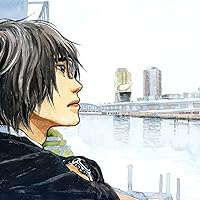
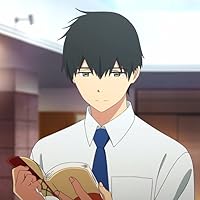
After the Valentine’s Day event and trip to the aquarium, Hachiman, Yukino, and Yui decide their next step to take. But suddenly the Service Club receives a huge request! Yukino must answer the call, even if she regrets her choice… Everyone has to grow up someday, and not every person you meet along the way will stay with you. But until that day comes, there is only the present. What is the answer that these three hold close to their hearts?
So, then, where are they going, and how much energy will they expend to get there?
Hikigaya, Yukinoshita, and Yuigahama have found themselves invested in one another to such a precarious extent that when one suffers the perils of an overextended youth, they all suffer. It wasn't always this way. Three minds. Three hearts. Three intuitions. They each had their own way of experiencing youth, fighting their way through its many thorny tendrils, and escaping with one or two hopes, or presumptions, for the future. But as readers learn through MY YOUTH ROMANTIC COMEDY. . .#12, the survival of like minds and like hearts begets the convergence of a likewise intuition. The novel focuses on these three teenagers' increasingly dependent emotional fortitude.
More specifically, the novel focuses on the wayfinding and crossroads of which Yukinoshita must navigate. Yukinoshita has a decision to make. Lots of decisions. Few of which will spell happiness for the intelligent young woman.
Readers already know her family's social and political prowess as businesspeople, politicians, and community influencers. Readers already know her sister, Haruno, fits into the mold of the marionette so inexplicably well because the woman's taste for what's new, changing, and energizing will never be sated. Readers already know Mrs. Yukinoshita, her mother, carries "final boss" level ego to the point at which girlish, youthful independence is viewed so tepidly, the woman treats it no more seriously than a fashion trend or a fad.
Does Yukinoshita wish to follow the family blueprint? Lead the family business with incisive grit? Become a shrewd socialite with a kind smile and a barbed tongue? She can. Absolutely. But it wouldn't be her decision. It wouldn't be her path. Even if she succeeded. Even if she applied all of her intelligence and tact, and met everyone's expectations, the Adult Yukinoshita at the end of that path wouldn't be legitimate. She wouldn't be real.
Independence rarely comes easy. And so, Yukinoshita, nearing her final year of high school, has a decision to make. Lots of decisions.
"Dreams, hobbies, clubs, or any of the possibilities that could have been born there would be cleanly melted down to be re-poured into the mold of the adult that society demanded" (p. 147).
MY YOUTH ROMANTIC COMEDY. . .#12 picks up precisely where the previous volume left off (and, notably, concludes in such a way that the following volume will likely do the same). Yukinoshita seeks emotional support from Hikigaya and Yuigahama. She wants to negotiate the cost of seeking her independence. But she fears the thudding swell of anxiety in her chest is more a harbinger of things to come than the clarion call of a cleansing truth.
Hikigaya understands. He acknowledges the once trivial silences that permeated the relationship between he and Yukinoshita and Yuigahama now carry more weight than he alone can bear.
"The time we'd spent together filled less than a year. Of that time, there'd been lots we'd remembered, more we'd forgotten, and much we'd pretended to forget" (p. 21).
And so, in that one year's time, they've muddled through a wild number of exploits, frustrations, games, stubbed toes, and genuine surprises. But they're friends now. And friends help friends in need. The question, however, for Hikigaya, is to what extent he'll venture to hold fast to this new reality to prevent it from spiraling beyond his control. Will he succumb to debating Haruno on the veracity of his interpersonal relationships? Will he set aside the heated nausea roiling in his gut and contrive a plan to rebut the venomous ferocity of Mrs. Yukinoshita's overzealous parenting?
Admittedly, these are somewhat rhetorical questions. But the novel goes through commendable lengths to show readers why these questions need to be asked as much as what the obvious and nonobvious consequences are for daring to respond to them. Yukino Yukinoshita can make a decision for herself. She can decide her future for herself. That's not what this is about. The real challenge is whether anyone will support her when she reaches her final threshold. And if that support fatefully arrives, who is to say the preexisting barriers to her independence will yield?
Hikigaya is less focused on but nevertheless mindful of how his dedication to Yukinoshita's sense of self necessarily overlaps with how he trusts, perceives, and engages the other young women in his life. The boy's humility is slow-dawning, almost agonizingly so, and his modestly successful bargaining of adolescent pathos feels freshly grievous for how long and raw it grinds on his heart.
In a surprising but serviceable departure from the standard narrative, the author of MY YOUTH ROMANTIC COMEDY. . .#12 introduces a handful of interludes, intercalary chapters, to showcase Yuigahama's feelings for Hikigaya. The interludes, however, match the muted tone of the overall novel. In short, they make good on the girl's dark note in the previous volume: "I'm not as nice as you think I am" (#11, p. 184). On the inside, Yuigahama is not an aster flower, eternally craning her neck to wherever the sun might shine. She's clever, yes. And she's resilient, yes. But she's also exhausted. Interminably exhausted.
Yuigahama weighs the truth and the fear of her affection for Hikigaya with Yukinoshita's affection for Hikigaya. But again, Yuigahama is a clever and resilient girl. She sees everything. She understands the type of relationship Hikigaya needs, and the sundered reality in which his identity best thrives. Yuigahama also understands, with deeper and deeper sadness, that what Hikigaya seeks is not what she is willing to give up.
Elsewhere, the interlocking uncertainties continue. Iroha Isshiki, the first-year student council president, is as annoying as ever. But beneath the girl's veneer of caustic ebullience, she chokes out a good idea or two. She's still "an ultra-cunning devilish imp" (p. 162) and a "bewitching little devil" (p. 184), for how she cajoles other students into helping her throw together a prom-style graduation celebration with only a month left in the school year. But she sobers up and drills into Hikigaya for his long-marinating and increasingly unpleasant Big-Sister turned Madonna-Whore complex. The cutesy and irate little girl aptly matures in real time.
And then there's little Komachi. Hikigaya-the-younger-sister completes her high-school entrance exams and it's a mad dash. There's a lot of bottling up of emotions, a lot of respectful nodding, a lot of pre-made breakfasts and promises of lunch-date celebrations. But in the end, with a hug and some tears, the splinter plot of the entrance exams lend the novel a pleasant breath of fresh air. Hikigaya admits he's too attached to his kid sister. He knows he has to let her go. But he also knows, in some funny little way, that no matter how much Komachi demands they "wean" themselves off of one another, a bit of support every now and then is a good thing.
MY YOUTH ROMANTIC COMEDY. . .#12 is a daunting read for way the author has dutifully structured the novel as what may be the rising action of the novel series' climax and denouement. The book is full of emotional conflict. Unresolved intellectual curiosity. Vague implications of resolution. Simplified assurances of a redoubled conflict. And more.
The prom-style event receives pushback. Will it be canceled? What will happen to the hard work of the student council? Of the Service Club?
Mrs. Yukinoshita is intent on berating Yukinoshita into doing what's best, even if it's not in the girl's personal, best interest. Will the young woman comply? What will happen to all of her hard work?
Yuigahama spies heroism in Hikigaya's latent, bull-nosed humility. Will she fight for it? She believes she's fooled others, fooled Hikigaya, into tending to the needs of others, because her own needs have already been met. But what if, in the end, Yuigahama's merely fooling herself? Alas, this deep and ancient pool of human pathos cares not whose toes tease its temperature.
And what about Haruno's shame? A woman who is "beautiful, enchanting, with an intoxicating ring to her voice, like it would haunt you till death," and yet, while "she never does show her true face, but she'll deliberately show you the cracks in the mask. I still don't know what her truth is," Hikigaya muses (p. 56, 58).
Among the unfurling flights of pity readers have discerned within the heart of Yukinoshita-the-elder-sister, from the previous volume to the current, the woman's sneering attitude toward emotional vulnerability remains at the dreadful vanguard. Haruno Yukinoshita hunts down, strangles into submission, and then gleefully toys with the intuitions of others; she is a marauder of the heart. But why? MY YOUTH ROMANTIC COMEDY. . .#12 offers a very narrow, but very probable glimpse as to the answer.
When Mrs. Yukinoshita talks down to her youngest daughter, Haruno asserts boredom and chitters away about the inevitability of such things. When Hikigaya proposes dependability in the face of vaunted social pressures, Haruno slaps him down with barking laughter and a snide comment on the frailty of youth. When Yukinoshita says she wants to talk about her future, from square one, Haruno swigs a bottle of champagne and pretends to be drunk, because the honesty of youth in search of independence leaves a bad taste in her mouth (Haruno: "Giving up and letting go is how you become an adult," p. 54).
Haruno's real shame, or her errant ferrying of intermittent shamelessness, one might argue, rests in her deliberate ushering of her younger sister into the hazards of adulthood. That is, forcing Yukinoshita to make or endure the same, or a greater, magnitude of personal sacrifice along the way. Haruno's gusto amounts to the cold, dry, venal ecstasy of driving a counterpart so earnestly toward success that failure amounts to a shrug of the shoulder, a flip of a coin, or a watered-down drink in a dim, lonely, smoky bar. Why? Because Haruno Yukinoshita is a bitter woman.
This was a great read. The service club gets asked to help plan a prom for the seniors of the High school. Meanwhile Komachi is trying to pass her enterance exams to get into big brother's high school.
There's a lot to think about with this one. Lot's of questions around where does helping someone become co-dependency. When does helping friends become an issue when they can't do stuff on their own. At the end of the novel there are questions that hopefully will be answered in the next volume.
They finally revealed the codependency structure that Yui, Yukino, and Hachiman share. I figured it would be Haruno exposing it, didn’t think she would fight back against her mother for Yukino tho. Yui basically got rejected 😶. I don’t feel much for her tbh
"Invisible, incognoscible, incomprensible e irreversible. No lo vas a ver. No lo vas a saber. Y a pesar de todo eso, una vez que hayas avanzado, ya no podrás dar marcha atrás". ---------- Yukinoshita Yukino desea tomar el control de su futuro. Y si eso implica volver a casa de sus padres para intentar tener una charla seria aun si su madre no la escucha de verdad… bueno. Y si eso implica pedir a Hikigaya y Yuigahama que sean solo testigos y desestabilizar esta relación codependiente que parece que tienen… bueno. Lástima que hacer lo que se quiere hacer nunca es tan fácil… Yuigahama Yui está intentando aferrarse a lo que hay, a lo que tiene. Y si eso implica ser egoísta y fingir, tan solo un poco, que no se da cuenta de ciertas cosas… bueno. Y si eso implica tratar de ocultar lo que siente a quienes más le importan… bueno. Lástima que los sentimientos no suelen ser algo que puedes controlar a tu antojo… Hikigaya Hachiman está tratando de cumplir con la petición de Yukino, y al principio es… posible: ¿No intervenir en conflictos familiares? bien, él puede cerrar la boca cuando le obligan a presenciar uno (en su mayor parte) ¿Y no ayudar cuando a Isshiki se le ocurre organizar un baile de graduación para los de tercér año y Yukinoshita dice que eso es algo en lo que quiere ser útil por su cuenta? de acuerdo, menos trabajo en su vida. E incluso si la astuta, astuta presidenta del StuCo lo convence para que revise algunos documentos y (sin decírselo) participe en un video promocional, esa es una ayuda menor. Sin importancia. En serio. No es como si, tras la difusión de dicho video, fuesen a surgir problemas con la asociación de padres, quienes son representados por la señora Yukinoshita. No es como si, tras una conversación llena de tensión en la que se deja bastante claro que el baile está a un paso de no realizarse, Yukino pidiera directamente a Hikigaya y a Yuigahama que la dejen resolver esto sola porque necesita ya no depender de ellos. Y definitivamente no es como si, tras hablar con Yukinoshita Haruno y que esta le causara un tremendo golpe emocional al afirmar que la relación que tiene con las chicas del Service Club es de codependencia, se enterara de que el evento antes mencionado ha sido cancelado. ...Oh, alto. Todo eso pasa, de hecho. Y Hikigaya busca una excusa para justificar que, pese a la petición de Yukino, está planeando intervenir de alguna manera…
It still feels like Wataru Watari is trying to fill in a page count with these later books, stories that only needed a few chapters get stretch into the entire novel, while at the same time never getting expanded upon, but its still enjoyable if a little slow. I am starting to see the conclusion of this story start to unfold, and I'm hopeful that the ending is pleasant one.
BUT, He really missed the opportunity to put Totsuka in a dress, come on man it was right there, it practically writes itself.
How i say I really didn't like it when Hachiman tried to make the party successful. When relationship between two people comes to halt before they becomes intimate person must forbid his relationships. Sorry, Hachiman, I really don't like you to accomplish a good relations with mother and sister before me. Hahahaha,lol.
After all this journey of 11 Volumes this one really pays off. We are in the final arc of the story and finally it's happening. All the turmoils of emotions are now going to be answered. We can see the characters growth in their every action they have done this with small steps but this time they are going for a big one .
Esto ya es el tramo final de la historia y se nota en este volumen la intención de que este arco abarque las problemáticas que se vienen cociendo desde hace mucho, aunque este volumen es una introducción, sienta bien las bases de lo que veremos en el clímax de la trama.