

What do you think?

Notti insonni
Ubriachi, attori, giocatori d’azzardo, «amore e alcol e tutti i vestiti sul pavimento». La musica di Billie Holiday nei night club, gli incontri erotici e le feste, le delusioni, le amicizie e «le persone che ho sepolto». Da un alberghetto bohémien di Manhattan, una giovane donna scappata dalla casa d’infanzia nel Kentucky osserva New York e il mondo, iniziando a diventare sé stessa attraverso i ricordi, le esperienze, gli incontri che gettano luce sul razzismo, il sessismo, le miserie e le grandezze dell’epoca. Quella giovane donna sarebbe diventata la più influente critica letteraria americana, un’intellettuale capace di plasmare la cultura del suo tempo. "Notti insonni", pubblicato per la prima volta nel 1979, è la storia della sua vita e la storia di un secolo, il Novecento. Un collage di romanzo, memoir, saggio, lettera, poesia e sogno. Un linguaggio in cui perdersi e, infine, ritrovarsi. Prefazione di Joan Didion, Postfazione di Claudia Durastanti.
173 pages, Hardcover
First published January 1, 1979
About the author
Elizabeth Hardwick
51 books222 followersElizabeth Hardwick was a formidable American literary critic, novelist, and short story writer who reshaped the landscape of American intellectual life. After earning degrees from the University of Kentucky and pursuing graduate studies at Columbia, she gained notoriety for her 1959 essay "The Decline of Book Reviewing." This scathing critique directly inspired her to co-found The New York Review of Books in 1963. A prolific essayist and novelist, her major works include the novel Sleepless Nights and influential criticism such as Seduction and Betrayal. Hardwick was a Fellow of the American Academy of Arts and Sciences and mentored a generation of writers at Barnard and Columbia. Her posthumously published collections continue to cement her legacy as one of the twentieth century’s most brilliant prose stylists.
Ratings & Reviews
Friends & Following
Create a free account to discover what your friends think of this book!
Community Reviews
Displaying 1 - 30 of 715 reviews
![Profile Image for s.penkevich [hiatus-will return-miss you all].](https://i.gr-assets.com/images/S/compressed.photo.goodreads.com/users/1735525095i/6431467._UX200_CR0,11,200,200_.jpg)
January 31, 2015
Novelists tell that piece of truth hidden at the bottom of every lie.
-Italo Calvino in an interview with The Paris Review
Memory is a sly kitten, darting to and fro through the living room of our mind, appearing in flashes here then there, never in an orderly fashion and rarely giving us a perfect still-frame to assess all the details. Elizabeth Hardwick’s astounding ‘novel’—or should modern times brand it with the now-popular ‘creative non-fiction’ label—Sleepless Nights is a brilliant blending of fact and fiction that assesses the ‘I’ at the heart of her story as it harnesses memory into language, language that blossoms and blooms on the page like the most gorgeous of gardens. Often paralleling her own life (‘a well-traveled and intensely insightful writer and teacher from Kentucky who married for a time with poet Robert Lowell’ may suffice as a brief biography for the uninitiated), Sleepless Nights takes dozens of brief reflections across the narrator’s timeline spent loving, losing and living to create a poetic mosaic of a life, wielding ‘fiction’ like a box of crayons to color in the black outlines of memory. ‘If only one knew what to remember or pretend to remember, writes Hardwick, ‘make a decision and what you want from the lost things will present itself.’ There is a truth in every fiction, and fiction in every truth. In a montage investigation of the ‘I’, Hardwick reveals that the self cannot be separated from the places and people that color their days, and that one person is in fact the collision of many others all believing in their self-isolation as they move from cradle to grave in the beautifully tragic story of what it is to be human, all delivered through an impressive blending of fact and fiction.
Alas, the heart is not a metaphor, or at least not always a metaphor.
Elizabeth Hardwick steals my heart with every page, every perfect poetic sentence. If Sleepless Nights is a mosaic, each tile is a perfect prose poem that captures the essence of existence in like the best of poets. Her descriptions are utterly serene in their use of language to penetrate right to heart of a person or a landscape.
While you are living, part of you has slipped away to the cemetery.
Hardwick chronicles her life, and the lives that have touched it across the slim 128 pgs. Sometimes cynical with repeated reference of our inevitable permanent address in the cemetery, Hardwick reminds us that we are spending our lives getting our affairs and finances in order only to be wiped out of physical existence to only carry on in the memories of others. Hardwick chronicles the trials and tribulations of those around her throughout ‘her’, immortalizing them in fiction, as much as she investigates the life of the narrator. It seems that the impact of her acquaintances are very much a defining aspect of her, as we are all influenced by those around us, not limited to those we hold most dear. It is the collective experience, the plural of human beings, that define existence and not just the isolated solitude of the singular. A refreshing aspect of the book is that the female is often characterized as the pillar of self-identification. Even the womanizers who leap from bed to bed must inevitably realize that their selfhood is defined by the women that they chase in order to identify as a ‘womanizer’:
Hardwick also probes the geographical settings through which she traverses, from her home in Kentucky to apartments in Europe, to extract the importance of place on identity. ‘The stain of place hangs on not as a birthright but as a sort of artifice, a bit of cosmetic,’ she writes, admitting that place plays a recognizable role but not one that should forever typecast us. Movement is also key to the novel, that one may uproot and take life into their own hands and not be forever a rotting root in the soil.
Sleepless Nights is a glorious achievement of prose that examines ‘the transformations of memory’ through its fractured meditation of a life lived. Fact and fiction intertwine towards a exquisite memoir that proves there is no rigid boundary between the two and examines the culmination of experience and how each individual moment in a life is equal and as poignant as the some of its parts. The novel is relatively plotless but, as Hardwick mentions in an interview with The Paris Review, ‘if I want a plot, I’ll watch Dallas'. This book shows the victory of ideas and writing over any necessity of plot and is as engaging and consuming as any of the latter. Hardwick is a master of language and each page waits with a shimmering gem of poetry to dazzle the soul. However, and in the spirit of LeVar Burton helped introduce me to the joys of reading at an early age, don’t just take my word for it. I strongly urge you to read this novel and bask in each perfectly formed sentence.
5/5
'The torment of personal relations. Nothing new there except in the disguise, and in the escape on the wings of adjectives. Sweet to be pierced by daggers at the end of paragraphs.'

-Italo Calvino in an interview with The Paris Review
Memory is a sly kitten, darting to and fro through the living room of our mind, appearing in flashes here then there, never in an orderly fashion and rarely giving us a perfect still-frame to assess all the details. Elizabeth Hardwick’s astounding ‘novel’—or should modern times brand it with the now-popular ‘creative non-fiction’ label—Sleepless Nights is a brilliant blending of fact and fiction that assesses the ‘I’ at the heart of her story as it harnesses memory into language, language that blossoms and blooms on the page like the most gorgeous of gardens. Often paralleling her own life (‘a well-traveled and intensely insightful writer and teacher from Kentucky who married for a time with poet Robert Lowell’ may suffice as a brief biography for the uninitiated), Sleepless Nights takes dozens of brief reflections across the narrator’s timeline spent loving, losing and living to create a poetic mosaic of a life, wielding ‘fiction’ like a box of crayons to color in the black outlines of memory. ‘If only one knew what to remember or pretend to remember, writes Hardwick, ‘make a decision and what you want from the lost things will present itself.’ There is a truth in every fiction, and fiction in every truth. In a montage investigation of the ‘I’, Hardwick reveals that the self cannot be separated from the places and people that color their days, and that one person is in fact the collision of many others all believing in their self-isolation as they move from cradle to grave in the beautifully tragic story of what it is to be human, all delivered through an impressive blending of fact and fiction.
Alas, the heart is not a metaphor, or at least not always a metaphor.
Elizabeth Hardwick steals my heart with every page, every perfect poetic sentence. If Sleepless Nights is a mosaic, each tile is a perfect prose poem that captures the essence of existence in like the best of poets. Her descriptions are utterly serene in their use of language to penetrate right to heart of a person or a landscape.
Winter came down upon them. The suicide season arrived early. The land, after a snowfall, would turn into a lunar stillness, satanic, brilliant. The tall trees, altered by the snow and ice, loomed up in the arctic landscape like ancient cataclysmic formations of malicious splendor. The little houses on the road...trembling there in the whiteness, might be settlements waiting for a doom that would come over them silently in the night.Sleepless Nights is the best of both the ‘novel’ and the ‘poem’, being both and neither at the same time. The brief, staccato-like vignettes culminate to a portrait of a life, but each individual moment breaths a lifetime of insight on its own. Hardwick delicately condenses a lifetime into each beautifully phrased sentence the way the most skilled of novelists reveal the landscape of a character’s nature through small details of mannerisms or anecdote.
Of course these things are not mine. I think they are usually spoken of as ours, that tea bag of a word that steeps in the conditional.So much revealed in so little space, the acknowledgement of a marriage, bringing the connotation of once-happy times and love, and the assumption of a divorce and all the confusion and awkwardness left in the wake of the downfall. Each passage, detailing time spent in Kentucky as a child, time spent in Holland, time spent with Billie Holiday, the lives of maids and the love affairs of friends, manages to construct a universe of ideas and meaning out of the minimal space of prose.
While you are living, part of you has slipped away to the cemetery.
Hardwick chronicles her life, and the lives that have touched it across the slim 128 pgs. Sometimes cynical with repeated reference of our inevitable permanent address in the cemetery, Hardwick reminds us that we are spending our lives getting our affairs and finances in order only to be wiped out of physical existence to only carry on in the memories of others. Hardwick chronicles the trials and tribulations of those around her throughout ‘her’, immortalizing them in fiction, as much as she investigates the life of the narrator. It seems that the impact of her acquaintances are very much a defining aspect of her, as we are all influenced by those around us, not limited to those we hold most dear. It is the collective experience, the plural of human beings, that define existence and not just the isolated solitude of the singular. A refreshing aspect of the book is that the female is often characterized as the pillar of self-identification. Even the womanizers who leap from bed to bed must inevitably realize that their selfhood is defined by the women that they chase in order to identify as a ‘womanizer’:
Some men define themselves by women although they appear to believe it is quite the opposite; to believe that it is she, rather than themselves, who is being filed away, tagged, named at last like a quivering cell under a microscope.However, even the ‘I’ must confess that ‘I have always, all of my life, been looking for help from a man.’ One cannot be a self without the mirror of others; the love, hate, companionship or just mere interaction with the rest of the human race is the experiment of selfhood from which we are able to analyze the date of our identity.
Hardwick also probes the geographical settings through which she traverses, from her home in Kentucky to apartments in Europe, to extract the importance of place on identity. ‘The stain of place hangs on not as a birthright but as a sort of artifice, a bit of cosmetic,’ she writes, admitting that place plays a recognizable role but not one that should forever typecast us. Movement is also key to the novel, that one may uproot and take life into their own hands and not be forever a rotting root in the soil.
What began as a green start may turn overnight into a desert filled with alarm, with impossibility. So move on. Try out a similar arrangement on Riverside Drive. But defiantly, as if to say: You cannot destroy a ruin.We have the ability to make a life for ourselves and must not be afraid of change, as change can lead to great growth or a lifting of burdens. One must not resign themselves to fate, but take fate into their own hands.
Sleepless Nights is a glorious achievement of prose that examines ‘the transformations of memory’ through its fractured meditation of a life lived. Fact and fiction intertwine towards a exquisite memoir that proves there is no rigid boundary between the two and examines the culmination of experience and how each individual moment in a life is equal and as poignant as the some of its parts. The novel is relatively plotless but, as Hardwick mentions in an interview with The Paris Review, ‘if I want a plot, I’ll watch Dallas'. This book shows the victory of ideas and writing over any necessity of plot and is as engaging and consuming as any of the latter. Hardwick is a master of language and each page waits with a shimmering gem of poetry to dazzle the soul. However, and in the spirit of LeVar Burton helped introduce me to the joys of reading at an early age, don’t just take my word for it. I strongly urge you to read this novel and bask in each perfectly formed sentence.
5/5
'The torment of personal relations. Nothing new there except in the disguise, and in the escape on the wings of adjectives. Sweet to be pierced by daggers at the end of paragraphs.'

June 5, 2021
MEDITAZIONE SU UNA VITA
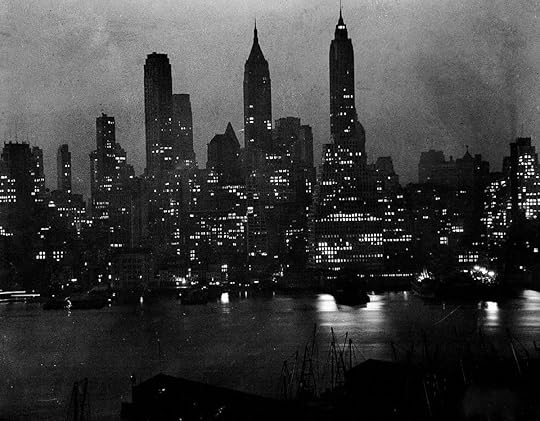
Memoir frammentato, slegato, slabbrato, composto da ritratti fugaci, schizzi, bozzetti, vignette, scenette, rievocazioni. E qualche lettera alla sua amica Mary McCarthy.
Un andirivieni senza un (apparente?) filo conduttore: se non quello di meditare sulla propria vita.
A volte ho avuto l’impressione di essere calato dentro una canzone di Lou Reed, altre volte la sensazione che se Elizabeth Hardwick avesse detto che ha visto cose che noi umani non potremmo immaginare, e cioè, navi da combattimento in fiamme al largo dei bastione di Orione blablabla, le avrei creduto senza fare una piega:
Sono gladiatrici, creature delle trincee, abituate alle strade di notte, alla durezza del meteo, al dolore delle pietre, e al prurito dello sporco. Una forza folle, una resistenza spregevole, ostilità e incubi si scontrano per un paio di secondi all’angolo…
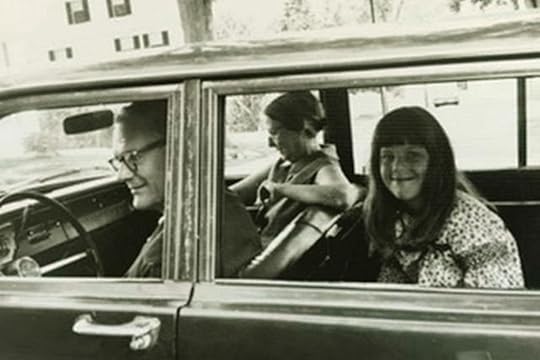
Elizabeth Hardwick, al volante suo marito Robert Lowell, dietro la figlia Harriet.
Elizabeth Hardwick (1916 – 2007) veniva dal sud degli Stati Uniti, dal Kentucky del Derby, e arrivò a New York per studiare alla Columbia. Il suo primo alloggio fu una casa albergo per sole donne, proprio come Esther, la protagonista in The Glass Jar. Nonostante dopo il lungo matrimonio abbia girato in lungo e in largo vivendo in Iowa, Boston, Maine, Amsterdam, Firenze, New York rimane la sua città, un luogo che lei indossa come se fosse il suo abito più perfetto, che vive come l’amore che non si lascia mai:
Questa è New York, con le sue tombe vicino alle sue banche.

Ma quello che ho letto di e su questo libro, a cominciare dalla prefazione della divina Didion, letta e riletta tre volte, e proseguendo con la postfazione della brava Claudia Durastanti, mi è piaciuto ben più di quanto ho letto in questo libro, che si è rivelato una lettura distratta, stentata, protratta, mi ha parlato solo a tratti, si è illuminata solo per attimi:
Il mio gatto marroncino e magro la fissa, con uno sguardo giallognolo e orientale molto simile al suo. Si guardano spesso in maniera profonda, proprio come due specchi collocati su due pareti perfettamente opposte.
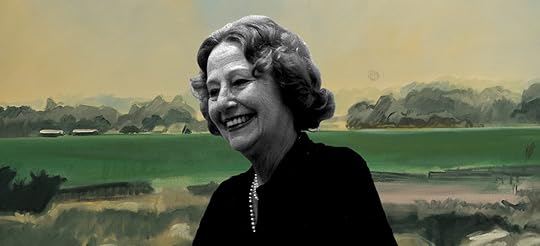
Elizabeth Hardwick: 27 luglio 2016, Lexington, Kentucky – 2 dicembre 2007, New York.
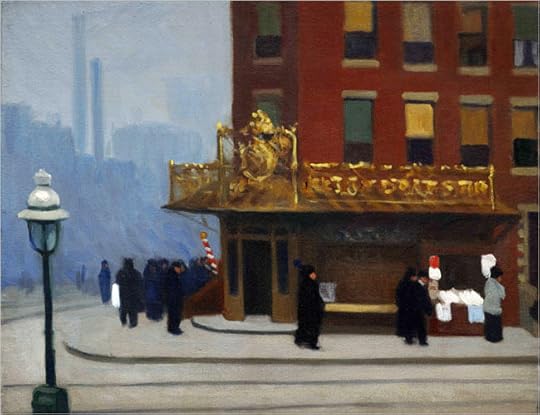
Memoir frammentato, slegato, slabbrato, composto da ritratti fugaci, schizzi, bozzetti, vignette, scenette, rievocazioni. E qualche lettera alla sua amica Mary McCarthy.
Un andirivieni senza un (apparente?) filo conduttore: se non quello di meditare sulla propria vita.
A volte ho avuto l’impressione di essere calato dentro una canzone di Lou Reed, altre volte la sensazione che se Elizabeth Hardwick avesse detto che ha visto cose che noi umani non potremmo immaginare, e cioè, navi da combattimento in fiamme al largo dei bastione di Orione blablabla, le avrei creduto senza fare una piega:
Sono gladiatrici, creature delle trincee, abituate alle strade di notte, alla durezza del meteo, al dolore delle pietre, e al prurito dello sporco. Una forza folle, una resistenza spregevole, ostilità e incubi si scontrano per un paio di secondi all’angolo…
Elizabeth Hardwick, al volante suo marito Robert Lowell, dietro la figlia Harriet.
Elizabeth Hardwick (1916 – 2007) veniva dal sud degli Stati Uniti, dal Kentucky del Derby, e arrivò a New York per studiare alla Columbia. Il suo primo alloggio fu una casa albergo per sole donne, proprio come Esther, la protagonista in The Glass Jar. Nonostante dopo il lungo matrimonio abbia girato in lungo e in largo vivendo in Iowa, Boston, Maine, Amsterdam, Firenze, New York rimane la sua città, un luogo che lei indossa come se fosse il suo abito più perfetto, che vive come l’amore che non si lascia mai:
Questa è New York, con le sue tombe vicino alle sue banche.
Ma quello che ho letto di e su questo libro, a cominciare dalla prefazione della divina Didion, letta e riletta tre volte, e proseguendo con la postfazione della brava Claudia Durastanti, mi è piaciuto ben più di quanto ho letto in questo libro, che si è rivelato una lettura distratta, stentata, protratta, mi ha parlato solo a tratti, si è illuminata solo per attimi:
Il mio gatto marroncino e magro la fissa, con uno sguardo giallognolo e orientale molto simile al suo. Si guardano spesso in maniera profonda, proprio come due specchi collocati su due pareti perfettamente opposte.
Elizabeth Hardwick: 27 luglio 2016, Lexington, Kentucky – 2 dicembre 2007, New York.

Read
May 12, 2021I have a quote from Joan Didion in my goodreads quote collection. It goes like this:
I write entirely to find out what I'm thinking, what I'm looking at, what I see and what it means. What I want and what I fear.
There's also a quote in my collection from Grace Paley: There is a long time in me between knowing and telling.
What Elizabeth Hardwick undertakes in Sleepless Nights strikes me as a combination of both those approaches. She writes as if the page is where her thinking happens and yet her sentences read as if they have taken a long time to mature in some back room of her mind.
I should say 'dark room of her mind' because it is implied that Sleepless Nights is composed of episodes of her life which the narrator revisits during the hours she lies awake in the dark, trying to choose what to remember and how to process it. If only one knew what to remember or pretend to remember. Make a decision and what you want from the lost things will present itself. You can take it down like a can from a shelf.
In the cans she takes down from the shelf are the various homes she's inhabited at different points in her life, plus the people she's known, and she opens them up in random order. Sometimes, it's as if there's a photo on the particular can she's chosen: Here I am with my hibiscus blooming in the bay window, or maybe the can has a date instead: It is a Friday night, October 1973. Whatever the label, the contents spill forth onto the page in advance of the reader's eye. Gradually we learn more and more about the person behind the words, and we see that the events of the narrator's life follow closely Elizabeth Hardwick's own life as if this were memoir, written from the vantage point of later middle age: the battered calendar of the past, the back-glancing flow of numbers…And yet the old pages of the days and weeks are splattered with the dark-brown rings of coffee cups and I find myself gratefully dissolved in the grounds as the water drips downward.
When it comes to the descriptions of other people, the writing becomes less autobiographical and more like fiction, though there is still present the careful processing method she applies to her personal memories. She recounts, for example, the experience of a woman who spent her life working as a cleaner in other people's houses and then distills the entire account into two perfect sentences: Ferocious battles with repetition, with the sloth of others, the crumbs and dust, the gathering of ashes, the adhesion of eggs, burnt pans and blackened ovens. At some point in the day, finally things in place, for a moment.
Speaking of perfect sentences, I have to mention that I read this book immediately after Brian Dillon's extended essay Suppose a Sentence because he devoted a chapter to Elizabeth Hardwick. That circumstance fits very well with another quote from my Goodreads quote collection, this time from Virginia Woolf: For books continue each other, in spite of our habit of judging them separately.
Elizabeth Hardwick's book continues Brian Dillon's perfectly—any one of her sentences could have figured in his book, and I found myself reading them all with his voice in my ear. It was a very rich experience.
I write entirely to find out what I'm thinking, what I'm looking at, what I see and what it means. What I want and what I fear.
There's also a quote in my collection from Grace Paley: There is a long time in me between knowing and telling.
What Elizabeth Hardwick undertakes in Sleepless Nights strikes me as a combination of both those approaches. She writes as if the page is where her thinking happens and yet her sentences read as if they have taken a long time to mature in some back room of her mind.
I should say 'dark room of her mind' because it is implied that Sleepless Nights is composed of episodes of her life which the narrator revisits during the hours she lies awake in the dark, trying to choose what to remember and how to process it. If only one knew what to remember or pretend to remember. Make a decision and what you want from the lost things will present itself. You can take it down like a can from a shelf.
In the cans she takes down from the shelf are the various homes she's inhabited at different points in her life, plus the people she's known, and she opens them up in random order. Sometimes, it's as if there's a photo on the particular can she's chosen: Here I am with my hibiscus blooming in the bay window, or maybe the can has a date instead: It is a Friday night, October 1973. Whatever the label, the contents spill forth onto the page in advance of the reader's eye. Gradually we learn more and more about the person behind the words, and we see that the events of the narrator's life follow closely Elizabeth Hardwick's own life as if this were memoir, written from the vantage point of later middle age: the battered calendar of the past, the back-glancing flow of numbers…And yet the old pages of the days and weeks are splattered with the dark-brown rings of coffee cups and I find myself gratefully dissolved in the grounds as the water drips downward.
When it comes to the descriptions of other people, the writing becomes less autobiographical and more like fiction, though there is still present the careful processing method she applies to her personal memories. She recounts, for example, the experience of a woman who spent her life working as a cleaner in other people's houses and then distills the entire account into two perfect sentences: Ferocious battles with repetition, with the sloth of others, the crumbs and dust, the gathering of ashes, the adhesion of eggs, burnt pans and blackened ovens. At some point in the day, finally things in place, for a moment.
Speaking of perfect sentences, I have to mention that I read this book immediately after Brian Dillon's extended essay Suppose a Sentence because he devoted a chapter to Elizabeth Hardwick. That circumstance fits very well with another quote from my Goodreads quote collection, this time from Virginia Woolf: For books continue each other, in spite of our habit of judging them separately.
Elizabeth Hardwick's book continues Brian Dillon's perfectly—any one of her sentences could have figured in his book, and I found myself reading them all with his voice in my ear. It was a very rich experience.

February 10, 2021
Elizabeth Hardwick’s short memoir/novel has pages about Billie Holiday, and jazz clubs, and more pages on some American Communists, and yes, we’re in New York, which is never ever dull, and plus, all my GR friends adore it – so, in the words of one beloved tv personality, what could possibly go wrong? But the prose so purple the Pope would think twice about wearing it and the mood is so doggedly gloomy that by page 50 I needed a ventilator.
I slept with Alex three times and remember each one perfectly. In all three he was agreeably intimidating, and intimidating in three ways….2. A seizure of spiritual discontent and a grave asceticism, mournfully impugning.
And later also about Alex
Worst of all was my ambivalence over what I took to be the inauthenticity of his Marxism.
So for those wishing to read about somebody’s ambivalence over somebody else’s inauthenticity, this is your book.
And now I feel I have been a bit unfair to Sleepless Nights. Let’s just open it at random… page 89…:
She drew on cigarettes as if they were opium, an addition to the opium within her, the narcotic of her boredom, that large, friendly intimate, so dear and faithful. An immaculate drug the boredom seemed to be, with its hazy drift of dreams, its passivity pure and rich as cream.
Uhhhhhh….. (slumps to the ground)
I slept with Alex three times and remember each one perfectly. In all three he was agreeably intimidating, and intimidating in three ways….2. A seizure of spiritual discontent and a grave asceticism, mournfully impugning.
And later also about Alex
Worst of all was my ambivalence over what I took to be the inauthenticity of his Marxism.
So for those wishing to read about somebody’s ambivalence over somebody else’s inauthenticity, this is your book.
And now I feel I have been a bit unfair to Sleepless Nights. Let’s just open it at random… page 89…:
She drew on cigarettes as if they were opium, an addition to the opium within her, the narcotic of her boredom, that large, friendly intimate, so dear and faithful. An immaculate drug the boredom seemed to be, with its hazy drift of dreams, its passivity pure and rich as cream.
Uhhhhhh….. (slumps to the ground)

July 6, 2014
I heard the sounds of sorrow and delight,
The manifold, soft chimes,
That fill the haunted chambers of the Night,
Like some old poet’s rhymes.
~ Henry Wadsworth Longfellow, Hymn to the Night
A book written in the form of life. So concluded Geoffrey O'Brien in the brilliant introduction to this distinguishing literary feat. To narrow down that observation a bit, I’ll say that this is a book written in the form of ‘Sleepless Nights’. You know the kind of nights that opens up the reluctantly closed doors of mind and heart and let everyone and everything enter without any bias. The things we once loved, the people we still hate and regrets we are no longer regrettable about comes rushing through those nights and mischievously replace the idea of a peaceful sleep. And when that happens, there’s a kind of rebellion on part of words to let themselves wander in any direction they feel like as if they are not going to be judged by the inquisitive stares of daytime verbs or adjectives.
Tell me, is it true that a bad artist suffers as greatly as a good one?
What can one say to that or numerous other thoughts like that one? A breakdown of that deceptively simple question gives us intense words like artist, suffering, good, bad and truth. And that’s what I kept doing while reading this mighty little novel. Here a woman has decided to live her life through the strength and weakness of her labyrinthine memory and what follows is capable of leaving a reader awed at the soft swirls of beautiful prose and baffled by the honesty of a daring voice. Hardwick writes from the middle ground that emerges between indifference and compassion and gives voice to the unheeded reflections around us. Reflections which are personal, poetic, critical and to some extent, incomprehensible.
Well, it’s a life. And some always hung about, as there is always someone in the evening leaning against the monument in the park.
To understand the Sleeplessness of these Nights in its entirety would mean to understand Elizabeth, which is quite impossible so one can take comfort in the fact that she has given us something which can be savored on a daily basis. Whenever you’ll open a random page at any random moment, there will be a wondrous sentence or two to send you on an unusual sojourn of a fragmented past or an invisible present. So I admit that I’m not finished reading it yet because like life, this book also goes on.
The manifold, soft chimes,
That fill the haunted chambers of the Night,
Like some old poet’s rhymes.
~ Henry Wadsworth Longfellow, Hymn to the Night
A book written in the form of life. So concluded Geoffrey O'Brien in the brilliant introduction to this distinguishing literary feat. To narrow down that observation a bit, I’ll say that this is a book written in the form of ‘Sleepless Nights’. You know the kind of nights that opens up the reluctantly closed doors of mind and heart and let everyone and everything enter without any bias. The things we once loved, the people we still hate and regrets we are no longer regrettable about comes rushing through those nights and mischievously replace the idea of a peaceful sleep. And when that happens, there’s a kind of rebellion on part of words to let themselves wander in any direction they feel like as if they are not going to be judged by the inquisitive stares of daytime verbs or adjectives.
Tell me, is it true that a bad artist suffers as greatly as a good one?
What can one say to that or numerous other thoughts like that one? A breakdown of that deceptively simple question gives us intense words like artist, suffering, good, bad and truth. And that’s what I kept doing while reading this mighty little novel. Here a woman has decided to live her life through the strength and weakness of her labyrinthine memory and what follows is capable of leaving a reader awed at the soft swirls of beautiful prose and baffled by the honesty of a daring voice. Hardwick writes from the middle ground that emerges between indifference and compassion and gives voice to the unheeded reflections around us. Reflections which are personal, poetic, critical and to some extent, incomprehensible.
Well, it’s a life. And some always hung about, as there is always someone in the evening leaning against the monument in the park.
To understand the Sleeplessness of these Nights in its entirety would mean to understand Elizabeth, which is quite impossible so one can take comfort in the fact that she has given us something which can be savored on a daily basis. Whenever you’ll open a random page at any random moment, there will be a wondrous sentence or two to send you on an unusual sojourn of a fragmented past or an invisible present. So I admit that I’m not finished reading it yet because like life, this book also goes on.

October 2, 2014
The missing link between Sebald and the Cheever diaries - beautifully observed vignettes (some of the descriptions are extraordinary) that ebb and flow into something of a memoirish novel, complete with subplots. I would add in David Markson as well. Hardwick is very well-read, and the book brims with quotes and readerly observations. Some sections are weaker than others and I ran out of steam a bit toward the end, but there is too much strength here (especially in Part 5 with Alex) to ignore.

June 11, 2019
Empecé entusiasmado la lectura de este álbum de fotos sin cronología comentado por una inteligente y aguda Elizabeth Hardwick. A menudo me ensimismaba con una frase («Cuando viajas, lo primero que descubres es que no existes»), una expresión («un aburrimiento azul y límpido»), un párrafo («Buscando lo fosilizado, buscando algo: personas y lugares densos y revestidos de una forma definitiva. Y en cambio, lo que hay son muchos pececillos, muchísimos, nadando libremente, temblando, atentos a escapar de la red»). Me gustaba su característica forma de terminar sus reflexiones o descripciones con frases categóricas que las resumían y las elevaban («Eros tiene mil amigos», «El cementerio espera que alguien lo profane»). Disfrutaba de los retratos que iba haciendo de esas personas con tendencia a «obedecer las leyes de la gravedad y a hundirse hacia el fondo, cayendo con la delicadeza y la lentitud de un cometa o rompiéndose violentamente, haciéndose añicos»: la hija del jardinero, amargada, loca de ira y con un profundo rencor «a la humillante imagen de las tijeras de podar de su padre en el seto»; la queridísima hija de un ferroviario y de una mujer grande, alta y trabajadora, que se convirtió en prostituta: «No busquemos los motivos»; la «rutilante, lúgubre y solitaria» Billie Holiday que «nunca cedió a la tentación de buscar alivio en la sensiblería»; las fiestas donde todos eran inteligentes y las mujeres con vidas que giraban «alrededor del amor y la decepción» lucían sus doctorados.
Sin embargo, pasado el ecuador de la novela, los retratos y los personajes retratados, con gratísimas excepciones, empezaron a interesarme menos, por lo que la densidad de su estilo me requería un esfuerzo que ya no era tan placenteramente recompensado. No sé qué ocurrió realmente, no sé qué encontré en la primera parte que no pude hallar en la segunda, quizás la libertad que desprendía un relato sin estructura, su singularidad, dejó de hacerme efecto o puede que echara en falta más perfiles de historias tan sugerentes y evocadoras como este:
Sin embargo, pasado el ecuador de la novela, los retratos y los personajes retratados, con gratísimas excepciones, empezaron a interesarme menos, por lo que la densidad de su estilo me requería un esfuerzo que ya no era tan placenteramente recompensado. No sé qué ocurrió realmente, no sé qué encontré en la primera parte que no pude hallar en la segunda, quizás la libertad que desprendía un relato sin estructura, su singularidad, dejó de hacerme efecto o puede que echara en falta más perfiles de historias tan sugerentes y evocadoras como este:
“A veces, cuando pienso en las personas desgraciadas a las que he conocido, tengo la impresión de que todo lo que les rodea se les parece. Las ventanas se duelen de las cortinas; las lámparas, de su pantalla de tela; la puerta, de su cerradura; el ataúd, de la capa de suciedad que lo ahoga.”O puede que en estas noches insomnes de la autora a mí terminara por entrarme sueño.

June 30, 2013
This is the sort of book that I would like to write one day. While I do enjoy works of great length, this is due more to my own mulling processes than any real dislike of shorter pieces. I prefer to read, ponder, read, ponder some more, allowing subconscious faculties to leisurely sample the intake over the course of days; when the book has finally ended and the review awaits, much of the thoughts are there to meet them. What I remember of the days before, I use; what I don't was fit to be filtered out. It makes for a far denser result.
His curiosity flamed over a word, an adjective, over the seductiveness of the fact that I was taking down a volume of Thomas Mann from the library shelves. Eros has a thousand friends.I previously compared this work to Rhys, Colette, Frame, for svelte and shining style that captures the soul in a few short shrifts, but the middle stands out for her casual relations with time. Others flit and weave and encircle like she does, but the barest trace of narrative remains, unlike Hardwick's enrapturement with persona and place and prose that forgoes any trace of linear plot beyond what vignettes fail to belie. It is as dense as Women and Men in a far more contemplative sense of the word, it is as succinct as the success of succulence, its thin handbook cover is as treacherous as a spiderweb, that common nuisance of deadly efficiency which pound for pound is stronger than steel. If all shorter works were of this style, a grasping at the complexity of crystalline growth set in the snow globe of memory, every shake eliciting the sort of multifarious perfection found only in the biology of closed systems, I'd have no use for the likes of War and Peace.
Many are flung down carelessly at birth and they experience the diminishment and sometimes the pleasant truculence of their random misplacement. Americans who are Germans, Germans who are Frenchmen, like Heine perhaps.There's an upper class bookish feel to it all, but of the transitional kind, as the variety of women encompassed by a matching variation of lengths can attest to. The poor are strong in dirt and drugs and grit without a trace of sentiment, the rich are parodied in their panderings and pride, the in-between delve into sex and politics in however a manner is their custom. Men appear, but as accessory to the fact, and whatever fascination they provoke is often a desire for transience, exhilarated and on edge. While male authors litter the references in a pleasing shape and heterosexuality's a definite thing, female solidarity runs the roost.
Some men define themselves by women although they appear to believe it is quite the opposite; to believe that it is she, rather than themselves, who is being filed away, tagged, named at last like a quivering cell under a microscope.Very New England, very Europe, the essence of the efforts of The Goldfinch and a smack of postmodernism to boot, judging by the indictments below. The dregs of dreams' remains, spun into existence incarnate with all its spans and gaps.
Time—that is something else. With the hesitant intellectual years fly by like the day; life is shortened by the yellowing incompletes. The "book"—a plaguing growth that does not itself grow, but attaches, hangs on, a tumorous companion made up of the deranged cells of learning, experience, thinking.

January 9, 2022

Hardwick had already been hovering over my To-Read list, but I finally picked this one when I read a reference to her in one of Ilse’s reviews. As I have recently read a book of essays, by Lydia Davis, I opted to pick one of Chadwick’s fictional works.
I loved the beginning and the overall premise. The memory of her life presented as the facing, in the current moment, of a collection of cans – cans which can be picked, examined, opened, or, undisturbed, be put back on the shelf. For her suggestion is that any continuity, any narrative, is then fictional – a fiction that we tissue as we live. The construing of a shape in someone’s life could be only possible when at night sleep does not arrive. Either the disconnected and shapeless memories, or the creative mind that invents causalities and imposes an order, would eventually take the upper hand. The Day or the Life would be restored then?
But then as I continued my read of this no-novel, the various stories of other people, the various opened cans, failed to raise my interest. There was order in these narrative microcapsules, but these were predictive or bland, and altogether they did not form a larder. They failure to cohere was suggestive of nothing much.
And this was a shame since I loved the writing – sharp as a can opener.

July 19, 2022
I was convinced to read this by a few reviews and-- being honest --the low page count, but it is exactly the kind of book I don't like: disjointed vignettes that read almost like stream-of-consciousness, no emotional connection to anyone including the narrator who writes in a dispassionate yet overly purple voice. It's got that "I'm trying to be poetic for my Creative Writing 101 class" vibe.

November 6, 2022
4.5
Nothing about this novel screams “novel,” but each sentence speaks volumes, and the last is a perfect culminating sentence. Within the book’s white spaces and between each numbered parts, the reader thinks.
It’s also a novel of forms, including “letters” to unidentified friends, presumably written on sleepless nights. At one juncture I wondered if Rachel Cusk might’ve been influenced by Hardwick.
Hardwick was a mentor to many, including the author of my last read, Gayl Jones. I didn’t know of their connection before starting this book and forgot about it while reading, until I came to the passage on Billie Holiday.
Prompted by my "eavesdropping" on a recent GR discussion between Fionnuala and Reem, I was reminded that Hardwick is included in Brian Dillon’s Suppose a Sentence. That’s not surprising at all. If anyone belongs in a book about sentences, Hardwick does.
Nothing about this novel screams “novel,” but each sentence speaks volumes, and the last is a perfect culminating sentence. Within the book’s white spaces and between each numbered parts, the reader thinks.
It’s also a novel of forms, including “letters” to unidentified friends, presumably written on sleepless nights. At one juncture I wondered if Rachel Cusk might’ve been influenced by Hardwick.
Hardwick was a mentor to many, including the author of my last read, Gayl Jones. I didn’t know of their connection before starting this book and forgot about it while reading, until I came to the passage on Billie Holiday.
Prompted by my "eavesdropping" on a recent GR discussion between Fionnuala and Reem, I was reminded that Hardwick is included in Brian Dillon’s Suppose a Sentence. That’s not surprising at all. If anyone belongs in a book about sentences, Hardwick does.

July 16, 2014
So this is some breathtakingly good writing. Distilled, focused and filled with some of the most unexpectedly perfect analogies/metaphors/similes I have read.
Aubrey, Brian and Garima have written wonderful reviews already, and there is much out there in the WWW to give you more details about this slim little novel. However, I find the best way to decide whether or not I want to read someone is to have a sampler, a taster.
So, with that in mind...
Read. Listen.
"Photographs of marriage. records of blood, decisions, sacraments observed. In my apartment, around us, in the old fading red-pine chest, in the mahogany desk, in the Swedish desk too, in the fumed oak blanket chest, in manila envelopes marked "trip to Europe" are my own photographs, three hundred or more, that bear witness to form; pictures in the drawer, in the old box, photographs that make one his own ancestor. Of others I have cared about, cared for years - not a trace, not a fingerprint. As it should be. Those who leave nothing behind cannot be missed for long. "
"How pleasant the rooms were, how comforting the distresses of New Yorkers, their insomnias filled with words, their patient exegesis of surprising terrors. Divorce, abandonment, the unacceptable and the unattainable, ennui filled with action, sad, tumultuous middle-age years shaken by crashings, uprootings, coups, desperate renewals. Weaknesses discovered, hidden forces unmasked, predictions, what will last and what is doomed, what will start and what will end. Work and love; the idle imagining the pleasure of the working ones. Those who work and their quizzical frowns which ask: When will something new come to me? After all I am a sort of success."
"Tickets, migrations, worries, property, debts, changes of name and changes back once more: these came about from reading many books. So, from Kentucky to New York, to Boston, to Maine, to Europe, carried along on a river of paragraphs and chapters, of blank verse, of little books translated from the Polish, large books from the Russian — all consumed in a sedentary sleeplessness. Is that sufficient — never mind that it is the truth. It certainly hasn’t the drama of: I saw the old, white-bearded frigate master on the dock and signed up for the journey. But after all, “I” am a woman."
"At our high school dances in the winter, small, cheap local events. We had our curls, red taffeta dresses, satin shoes with their new dye fading in the rain puddles; and most of all we were dressed in our ferocious hope for popularity. This was a hot blanket, an airless tent; gasping, grinning, we stood anxious-eyed, next to the piano, hovering about Fats Waller, who had come from Cincinnati for the occasion. Requests, insolent glances, drunken teen-agers, nodding teacher-chaperones: these we offered to the music, looking upon it, I suppose, as something inevitable, effortlessly pushing up from the common soil."
"I like to remember the patience of old spinsters, some that looked like sea captains with their clear blue eyes, hair of soft, snowy whiteness, dazzling cheerfulness. Solitary music teachers, themselves bred on toil, leading the young by way of pain and discipline to their own honorable impasse, teaching in that way the scales of disappointment."
"I am alone here in New York, no longer a we. Years, decades even, passed. Then one is out of the commonest of plurals, out of the strange partnership that begins as a flat, empty plain and soon turns into a town of rooms and garages, little grocery stores in the pantry, dress shops in the closets, and a bank with your names printed together for the transaction of business."
Aubrey, Brian and Garima have written wonderful reviews already, and there is much out there in the WWW to give you more details about this slim little novel. However, I find the best way to decide whether or not I want to read someone is to have a sampler, a taster.
So, with that in mind...
Read. Listen.
"Photographs of marriage. records of blood, decisions, sacraments observed. In my apartment, around us, in the old fading red-pine chest, in the mahogany desk, in the Swedish desk too, in the fumed oak blanket chest, in manila envelopes marked "trip to Europe" are my own photographs, three hundred or more, that bear witness to form; pictures in the drawer, in the old box, photographs that make one his own ancestor. Of others I have cared about, cared for years - not a trace, not a fingerprint. As it should be. Those who leave nothing behind cannot be missed for long. "
"How pleasant the rooms were, how comforting the distresses of New Yorkers, their insomnias filled with words, their patient exegesis of surprising terrors. Divorce, abandonment, the unacceptable and the unattainable, ennui filled with action, sad, tumultuous middle-age years shaken by crashings, uprootings, coups, desperate renewals. Weaknesses discovered, hidden forces unmasked, predictions, what will last and what is doomed, what will start and what will end. Work and love; the idle imagining the pleasure of the working ones. Those who work and their quizzical frowns which ask: When will something new come to me? After all I am a sort of success."
"Tickets, migrations, worries, property, debts, changes of name and changes back once more: these came about from reading many books. So, from Kentucky to New York, to Boston, to Maine, to Europe, carried along on a river of paragraphs and chapters, of blank verse, of little books translated from the Polish, large books from the Russian — all consumed in a sedentary sleeplessness. Is that sufficient — never mind that it is the truth. It certainly hasn’t the drama of: I saw the old, white-bearded frigate master on the dock and signed up for the journey. But after all, “I” am a woman."
"At our high school dances in the winter, small, cheap local events. We had our curls, red taffeta dresses, satin shoes with their new dye fading in the rain puddles; and most of all we were dressed in our ferocious hope for popularity. This was a hot blanket, an airless tent; gasping, grinning, we stood anxious-eyed, next to the piano, hovering about Fats Waller, who had come from Cincinnati for the occasion. Requests, insolent glances, drunken teen-agers, nodding teacher-chaperones: these we offered to the music, looking upon it, I suppose, as something inevitable, effortlessly pushing up from the common soil."
"I like to remember the patience of old spinsters, some that looked like sea captains with their clear blue eyes, hair of soft, snowy whiteness, dazzling cheerfulness. Solitary music teachers, themselves bred on toil, leading the young by way of pain and discipline to their own honorable impasse, teaching in that way the scales of disappointment."
"I am alone here in New York, no longer a we. Years, decades even, passed. Then one is out of the commonest of plurals, out of the strange partnership that begins as a flat, empty plain and soon turns into a town of rooms and garages, little grocery stores in the pantry, dress shops in the closets, and a bank with your names printed together for the transaction of business."

Read
July 1, 2014Sleepless Nights is the literary equivalent of a Gryphon: it has the head of a memoir, the body of a novel and the tail of an epistle. The constructs of what constitutes a novel do not apply. Trying to explain Hardwick's style, her talent, is like trying to answer the question "How long is a piece of string?" For example, here are two sentences taken from the last page of the novel:
Mother, the reading glasses and the assignation near the clammy faces, so gray, of the intense church ladies. And then a lifetime with its mounds of men climbing on and off.
There's poetic and haunted pinions keeping those words aloft. The entire novel is like this - I'm not certain I understood even half of what I read and how it related to the rest of the text, but does that matter? It just so happens that I'm traveling alone right now; last night I read about thirty pages of the book in a dark hotel room. I felt like I might have been missing too much of what I was reading, so I went back and started re-reading - this time speaking the words as I read them - and ended up scaring the holy bajesus out of myself. I can't tell you what happened, or why it had the impact it did, but Hardwick's prose spoken aloud felt like an incantation from a book of the occult. Was this what was intended by the title?
This is the only book I have reviewed without an accompanying star rating. That choice-and-click is arbitrary anyway, and of everything I've read this year, this is the book that should have an ink-dark sky, devoid of stars but filled with readers.
Are you ready for this?

July 12, 2017
A respectful three stars. Some really strong moments but overall it felt too privileged, a sense that grew and grew until it overwhelmed my appreciation of the strong, smart sentences, like they were too tasteful. As with Speedboat, which I read before this and very much preferred, too much of a good thing became -- by about three-fourths through -- not enough for me. A great few pages about Billie Holiday but that section seemed like the climax of my interest and the rest went downhill. Glad I read it -- a good book to read with brain scattered by mid-July heat -- but I'm not sure I'll remember it by the fall.

September 7, 2019
4.5 stars
This is a sort of autobiographical fiction: written in 1979 when Hardwick was 63. It is a series of vignettes linked together (sometimes very tenuously) by the author. It is a memoir, novel, letter, essay and as one reviewer says: a poetic chronicle. It is inventive and perceptive. There is originality and a complete lack of plot, more like a piece of music than a novel. Elizabeth, the protagonist of the novel is hardly seen. The fragmentary nature of the novel and the steady narrative voice has led many to argue that Hardwick is developing a female narrative mode as opposed to the usual masculine tropes. Hardwick also spoke about writing Sleepless Nights:
“Without using my own name I could not have written the book. I wanted to be free to reflect, to see in my own language, without disguise. I didn’t want to say I was a writer, either, and make up unwritten tomes for myself. Obviously the Elizabeth is writing the book and is therefore some kind of writer. Most of all, I wanted to accommodate my reading, to compare, without clumsy explanation, a New York woman to the old lady mentioned in Herzen’s memoirs, the one who blamed Napoleon for the death of her favorite cow. It is very difficult in fiction to create a narrator who is not oneself and yet one who must somehow express one’s ideas and feelings.”
Most of the recollections are about women, such as this one about her mother:
“round, soft curves, her hair twisted into limp curls at the temples, her weight on the stepladder washing windows, her roasts and potatoes and fat yeast rolls; and her patient breathing in the back room as she lay sleeping in a lumpy old feather bed.”
Many of the women here are adrift, but tend to link themselves to men of bad character and there is little contented romance here. There are lots of colours, mainly pastels. Some of the visitors are brief: we are introduced to a flatmate on one page and say goodbye on the next following death in a car crash. Billie Holiday makes a brief appearance and there is an absence of her ex-husband Robert Lowell. Hardwick’s descriptions of Holiday are powerful:
‘The sheer enormity of her vices. The outrageousness of them. For the grand destruction one must be worthy. Her ruthless talent and the opulent devastation. Onto the heaviest addiction to heroin, she piled up the rocks of her tomb with a prodigiousness of Scotch and brandy. She was never at any hour of the day or night free of these consumptions, never except when she was asleep.’
It is stylish, modern, and possibly even post-modern and is so New England that it almost feels European. It could have been set in Paris. There is a self-awareness and lightness of tone, but it is so well written and heartfelt:
‘Oh, M., when I think of the people I have buried, North and South. Yet, why is it that we cannot keep the note of irony, the jangle of carelessness at a distance? Sentence in which I have tried for a certain light tone – many of those have to do with events, upheavals, destructions that caused me to weep like a child.’
The sharp observations and minimalist description make for an easy read, but not always comfortable:
“A woman’s city, New York. The bag ladies sit in their rags, hugging their load of rubbish so closely it forms a part of their own bodies. Head, wrapped in an old piece of flannel, peers out from the rubbish of a spotted melon. Pitiful, swollen sores drip red next to the bag of tomatoes. One lady holds an empty perfume bottle with a knuckle on top of it indistinguishable from her finger. They and their rubbish a parasitic growth heavy with suffering; the broken glass screams, the broken veins weep; the toes ache along with the ache of the slashed boot. Have mercy on them, someone.”
All in all this a good novel.
This is a sort of autobiographical fiction: written in 1979 when Hardwick was 63. It is a series of vignettes linked together (sometimes very tenuously) by the author. It is a memoir, novel, letter, essay and as one reviewer says: a poetic chronicle. It is inventive and perceptive. There is originality and a complete lack of plot, more like a piece of music than a novel. Elizabeth, the protagonist of the novel is hardly seen. The fragmentary nature of the novel and the steady narrative voice has led many to argue that Hardwick is developing a female narrative mode as opposed to the usual masculine tropes. Hardwick also spoke about writing Sleepless Nights:
“Without using my own name I could not have written the book. I wanted to be free to reflect, to see in my own language, without disguise. I didn’t want to say I was a writer, either, and make up unwritten tomes for myself. Obviously the Elizabeth is writing the book and is therefore some kind of writer. Most of all, I wanted to accommodate my reading, to compare, without clumsy explanation, a New York woman to the old lady mentioned in Herzen’s memoirs, the one who blamed Napoleon for the death of her favorite cow. It is very difficult in fiction to create a narrator who is not oneself and yet one who must somehow express one’s ideas and feelings.”
Most of the recollections are about women, such as this one about her mother:
“round, soft curves, her hair twisted into limp curls at the temples, her weight on the stepladder washing windows, her roasts and potatoes and fat yeast rolls; and her patient breathing in the back room as she lay sleeping in a lumpy old feather bed.”
Many of the women here are adrift, but tend to link themselves to men of bad character and there is little contented romance here. There are lots of colours, mainly pastels. Some of the visitors are brief: we are introduced to a flatmate on one page and say goodbye on the next following death in a car crash. Billie Holiday makes a brief appearance and there is an absence of her ex-husband Robert Lowell. Hardwick’s descriptions of Holiday are powerful:
‘The sheer enormity of her vices. The outrageousness of them. For the grand destruction one must be worthy. Her ruthless talent and the opulent devastation. Onto the heaviest addiction to heroin, she piled up the rocks of her tomb with a prodigiousness of Scotch and brandy. She was never at any hour of the day or night free of these consumptions, never except when she was asleep.’
It is stylish, modern, and possibly even post-modern and is so New England that it almost feels European. It could have been set in Paris. There is a self-awareness and lightness of tone, but it is so well written and heartfelt:
‘Oh, M., when I think of the people I have buried, North and South. Yet, why is it that we cannot keep the note of irony, the jangle of carelessness at a distance? Sentence in which I have tried for a certain light tone – many of those have to do with events, upheavals, destructions that caused me to weep like a child.’
The sharp observations and minimalist description make for an easy read, but not always comfortable:
“A woman’s city, New York. The bag ladies sit in their rags, hugging their load of rubbish so closely it forms a part of their own bodies. Head, wrapped in an old piece of flannel, peers out from the rubbish of a spotted melon. Pitiful, swollen sores drip red next to the bag of tomatoes. One lady holds an empty perfume bottle with a knuckle on top of it indistinguishable from her finger. They and their rubbish a parasitic growth heavy with suffering; the broken glass screams, the broken veins weep; the toes ache along with the ache of the slashed boot. Have mercy on them, someone.”
All in all this a good novel.

April 1, 2021
There was something about the tone of this book that kept me from really gettting involved in it. There is a line where you know that the characters she is speaking of are not fictional, so it is more like a memoir. Yet she is not in it, so she just stays out of it, a narrator that is not involved really, not emotionally. At the same time she is very cold about everyone she speaks of, almost treating them as if they were caricatures. I do not know if this was the best book to start reading hardwick, it is not a book I enjoyed, she is so cold, and sometimes mean about everyone that crosses her path, it just seems unfair that she sees everyone through such negative eyes. When she mentions Billie Holliday, I just felt like telling her, who do you think you are speaking of Billie like that? But she basically does it to everyone who she encounters.
July 5, 2026
Written in a series of vignettes, partly autobiographical, partly fictional reminiscences as they flash out in sleepless nights about the places inhabited, places visited, mother, friends, maids, a prostitute neighbor (sad life), passers-by on the street, some cohereing into stories, others sprinkled disjointedly among vignettes, like flowing thoughts in sleepless nights, some in the form of letters usually addressed to M. (her friend Mary McCarthy?), others occasionally as quotes, (unattributed) stanzas, including those from her former husband Robert Lowell, referred to only obliquely but perhaps most powerfully toward the end, quoting Thomas Hardy’s last lines from the poem mourning the death of his wife, as Robert Lowell was also taken away from her life only two years before this work found its way to the readers… he was on his way to Hardwick’s apartment when he died of a heart attack in the taxicab (she took him on as a companion after he had deserted her after 21 years of marriage for another writer, only to come back to her for tender friendship, shortly before his sudden death - none of this is in this book as many had hoped for at the time of its publication (sensationalists?), just a hint in the quote from Hardy’s poem that instead spoke volumes).
Hardwick’s sentences are marvels, enigmatic, assosiative, sometimes using objects to tell the story, to express the feelings, mysterious and (perhaps) revealing like De Chiricco’s paintings.
I read a few one-star GR reviews, some expected it to be a conventional novel (no, it’s not), others disappointed with the lack of what might be called an accessible narrative style (no, it’s not)… disappointments arising from false expectations.
These quotes are from the first and last pages bookending this brilliantly unique work. If you are intrigued, read it, don’t wait, run. If not, then the book is not for you. No hard feelings, I’m sure would be Hardwick’s response. By all accounts, she had a generous heart.
From the opening chapter:
If only one knew what to remember or pretend to remember. Make a decision and what you want from the lost things will present itself. You can take it down like a can from a shelf. Perhaps. One can would be marked Rand Avenue in Kentucky and some would recall the address at least as true. Inside the can are the blackening porches of winter, the gas grates, the swarm. (A note about Kentucky: she was born there, then later lived New York City, Maine, Amsterdam… all of them featured later on)
and then toward the book’s end:
Oh, M., when I think of the people I have buried, North and South. Yet, why is it that we cannot keep the note of irony, the jangle of carelessness at a distance? Sentences in which I have tried for a certain light tone—many of those have to do with events, upheavals, destructions that caused me to weep like a child.
..O you could not know
That such swift fleeing
No soul foreseeing—
Not even I—would undo me so!
[…]The torment of personal relations. Nothing new there except in the disguise, and in the escape on the wings of adjectives. Sweet to be pierced by daggers at the end of paragraphs.
Sometimes I resent the glossary, the concordance of truth, many have about my real life, have like an extra pair of spectacles. I mean that such fact is to me a hindrance to memory.
Otherwise I love to be known by those I care for. Public assistance, beautiful phrase. Thus, I am always on the phone, always writing letters, always waking up to address myself to B. and D. and C.—those whom I dare not ring up until morning and yet must talk to throughout the night.
5 stars hands down
Hardwick’s sentences are marvels, enigmatic, assosiative, sometimes using objects to tell the story, to express the feelings, mysterious and (perhaps) revealing like De Chiricco’s paintings.
I read a few one-star GR reviews, some expected it to be a conventional novel (no, it’s not), others disappointed with the lack of what might be called an accessible narrative style (no, it’s not)… disappointments arising from false expectations.
These quotes are from the first and last pages bookending this brilliantly unique work. If you are intrigued, read it, don’t wait, run. If not, then the book is not for you. No hard feelings, I’m sure would be Hardwick’s response. By all accounts, she had a generous heart.
From the opening chapter:
If only one knew what to remember or pretend to remember. Make a decision and what you want from the lost things will present itself. You can take it down like a can from a shelf. Perhaps. One can would be marked Rand Avenue in Kentucky and some would recall the address at least as true. Inside the can are the blackening porches of winter, the gas grates, the swarm. (A note about Kentucky: she was born there, then later lived New York City, Maine, Amsterdam… all of them featured later on)
and then toward the book’s end:
Oh, M., when I think of the people I have buried, North and South. Yet, why is it that we cannot keep the note of irony, the jangle of carelessness at a distance? Sentences in which I have tried for a certain light tone—many of those have to do with events, upheavals, destructions that caused me to weep like a child.
..O you could not know
That such swift fleeing
No soul foreseeing—
Not even I—would undo me so!
[…]The torment of personal relations. Nothing new there except in the disguise, and in the escape on the wings of adjectives. Sweet to be pierced by daggers at the end of paragraphs.
Sometimes I resent the glossary, the concordance of truth, many have about my real life, have like an extra pair of spectacles. I mean that such fact is to me a hindrance to memory.
Otherwise I love to be known by those I care for. Public assistance, beautiful phrase. Thus, I am always on the phone, always writing letters, always waking up to address myself to B. and D. and C.—those whom I dare not ring up until morning and yet must talk to throughout the night.
5 stars hands down

July 9, 2022
Uneven collection of vignettes. I preferred the sections of the book set in NY City., particularly the ones set in the Billie Holiday era. Sometimes I would be impressed by a beautiful passage or striking situation, but then I would encounter something in which I had no interest, and my mind would wonder. I guess that I am just not a fan of the structure (or lack of structure) in this book. 3.5 stars

Read
November 14, 2024چرا این کتاب برای من انقدر نا مفهموم بود؟ اصلا نمیتونستم تمرکز کنم موقع خوندنش، فقط میخوندم که تموم شه...

February 1, 2021
A book I liked even as I sensed that I wasn’t quite grasping it, that it was slipping through my fingers. A fragmentary narrative of the difficult-to-categorise variety. Feels very 21st century somehow (read this instead of the hot hyped novels of February 2021). Occasionally a sentence would glint out at me like a jewel catching the light. Hardwick’s writing about Billie Holiday, especially, has stuck with me. Reminded me of a clutch of writers who all happen to be women, though I didn’t realise this until I listed them: Anna Kavan, Kathryn Davis, Fleur Jaeggy, Chris Kraus.
A few favourite lines:
TinyLetter | Linktree
A few favourite lines:
The spotlight shone down on the black, hushed circle in a café; the moon slowly slid through the clouds. Night—working, smiling, in makeup in long, silky dresses, singing over and over, again and again.
Louisa spends the entire day in a blue, limpid boredom. The caressing sting of it appears to be, for her, like the pleasure of lemon, or the coldness of salt water.
He was one of those men who acted as if he expected to be shouted at and would not know how to reply.
TinyLetter | Linktree

April 24, 2021
Sentences to die for; sublime stuff from a supreme, often uncanny intellect.
'In her white bedroom, next to the pure white bed that seemed to promise a rest under a mist of snowflakes, there was the wedding photograph of her parents, smiling down from a silver frame studded with amethysts. Mostly, Marie lived with her own curiously compelling deprivation, like a contemplative without the athletic vigor required for the consumption of cars, flowers and pictures, winter houses and summer houses, plates and tablecloths, batik and baskets, little things with their miracles of microscopic inlay or big, bold almost hideous wonders.'
'In her white bedroom, next to the pure white bed that seemed to promise a rest under a mist of snowflakes, there was the wedding photograph of her parents, smiling down from a silver frame studded with amethysts. Mostly, Marie lived with her own curiously compelling deprivation, like a contemplative without the athletic vigor required for the consumption of cars, flowers and pictures, winter houses and summer houses, plates and tablecloths, batik and baskets, little things with their miracles of microscopic inlay or big, bold almost hideous wonders.'

June 26, 2022
I considered writing this review at 3:32 am last night. I wanted to write a boring, pretentious paragraph about how the title aptly describes my life these days. But then, I'm tired of writing pretentious reviews. So I wonder how Hardwick wrote so many pretentious paragraphs that are not bullshitty but are definitely pointless and meandering, and not in a good way.
I've been told over and over again that Hardwick who was Susan Sontag's contemporary, was actually the better of the two. Sontag fondly refers to Hardwick as 'Lizzie' in her journals and seems to respect her in a way that she cannot easily extend to others. I can't deny that Hardwick's writing is beautiful. But I also cannot deny that this book was really annoying. It was sometimes wannabe-absurdist and at other times was trying to the emulate stream-of-consciousness style, such that it never could decide between the two and ultimately settled nowhere.
As pretentious and cliche as Sontag's writing can get, it has an undeniable clarity and a mark of confidence that I can't help admiring. Maybe I should read more of Hardwick's works too see why so many people think she's better than Sontag and why Sontag herself seemed to be so enamored. But for now, I am not impressed. Far from it. Sorry, Lizzie.
I've been told over and over again that Hardwick who was Susan Sontag's contemporary, was actually the better of the two. Sontag fondly refers to Hardwick as 'Lizzie' in her journals and seems to respect her in a way that she cannot easily extend to others. I can't deny that Hardwick's writing is beautiful. But I also cannot deny that this book was really annoying. It was sometimes wannabe-absurdist and at other times was trying to the emulate stream-of-consciousness style, such that it never could decide between the two and ultimately settled nowhere.
As pretentious and cliche as Sontag's writing can get, it has an undeniable clarity and a mark of confidence that I can't help admiring. Maybe I should read more of Hardwick's works too see why so many people think she's better than Sontag and why Sontag herself seemed to be so enamored. But for now, I am not impressed. Far from it. Sorry, Lizzie.

September 22, 2017
Sleepless Nights
I first read Elizabeth Hardwick's short novel "Sleepless Nights" (1979) on a long train trip early in the 1980s during a time of change for me. I was greatly moved by the book at the time. With another large change in the offing, I recently was moved to read the book again. It is a beautifully sad evocation of memory and loneliness and of loving one's life.
Born in Lexington, Kentucky, Hardwick (1916 -- 2007) became a New York intellectual who was a co-founder of the New York Review of Books. She is known for her sharp wit, her essays, and for this novel. Hardwick also endured a long, difficult marriage to the American poet, Robert Lowell. Although "Sleepless Nights" is partially autobiographical, it is unnecessary to know much about Hardwick in order to respond to her book.
Hardwick's novel is plotless. The story is told as a series of episodes disconnected in place and time with no underlying theme but memory. This was a deliberate decision on the author's part as Hardwick thought that the modern novel had to mirror modern life in its episodic, shifting character without the distraction of a contrived set of events. The book is told in the voice of an aged narrator, a "production of a broken old woman in a squalid nursing home", as she remembers or tries to remember events from her past. "Make a decision" she says, "and what you want from the lost things will present itself." A substantial part of the story is told in letters or other communications to the narrator's otherwise unidentified friend, M. The time frame of the story is from the 1930s to the early 1970s.
At the end of the book, the narrator offers a summary of her reflections as she remembers "the torment of personal relations", "the reading glasses and the assignation near the clammy faces, so gray, of the intense church ladies. And then a lifetime with its mound of men climbing on and off." The narrator concludes that "I love to be known by those I care for .... those whom I dare not ring up until morning and yet must talk to throughout the night."
Besides its lack of plot, "Sleepless Nights" is full of beautiful lyrically introspective writing. The writing is terse, reflective and poetical. The novel has sometimes been compared to a prose poem. It has a stream-of-conscious flow as the narrator recollects and tries to understand her experiences.
The book is at least as much about the people and places important to the narrator as it is about the narrator herself. While Hardwick was known for her ability to be sharp and caustic, the tone of "Sleepless Nights" is mellow and sad. Virtually all the characters experience sorrow and loss. Although there is a great deal of literary allusiveness in the book, the narrator's focus is not on her formidable intellect but is instead on love, sexuality, and attendant loneliness.
Much of the book is about down and out individuals: lonely men in Kentucky who take sexual advantage of the young narrator, prostitutes, bag women, cleaning ladies, and young lonely working women. Other characters include frustrated intellectuals, both male and female, who partake of the New York cocktail scene in the 1940s and 50s. An extended late chapter of the book describes the romantic adventures of a distinguished Dutch physician. The narrator describes a young gay man who was her roommate at Columbia at a sleazy hotel called the Hotel Schuyler, and who explored with her the jazz clubs of 1940s New York. The book includes an extended portrait of Billie Holiday. The narrator says of her:
"Somehow she had retrieved from darkness the miracle of pure style. That was it. Only a fool imagined that it was necessary to love a man, love anyone, love life. Her own people, those around her, feared her. And perhaps even she was ashamed of the heavy weight of her own spirit, one never tempted to the relief of sentimentality."
The scenes of the book shift from the Kentucky of the narrator's youth, to New York City, Maine, Amsterdam, Boston, Connecticut, and elsewhere.
"Sleepless Nights" is a sad, eloquent meditation by person on her life as seen in memory and on transience. Lyricism, reflection, and acceptance of experience, even when unhappy, can bring meaning to life. Hardwick's little book may well be remembered when other louder and longer American novels of the late 20th Century have been forgotten.
Robin Friedman
I first read Elizabeth Hardwick's short novel "Sleepless Nights" (1979) on a long train trip early in the 1980s during a time of change for me. I was greatly moved by the book at the time. With another large change in the offing, I recently was moved to read the book again. It is a beautifully sad evocation of memory and loneliness and of loving one's life.
Born in Lexington, Kentucky, Hardwick (1916 -- 2007) became a New York intellectual who was a co-founder of the New York Review of Books. She is known for her sharp wit, her essays, and for this novel. Hardwick also endured a long, difficult marriage to the American poet, Robert Lowell. Although "Sleepless Nights" is partially autobiographical, it is unnecessary to know much about Hardwick in order to respond to her book.
Hardwick's novel is plotless. The story is told as a series of episodes disconnected in place and time with no underlying theme but memory. This was a deliberate decision on the author's part as Hardwick thought that the modern novel had to mirror modern life in its episodic, shifting character without the distraction of a contrived set of events. The book is told in the voice of an aged narrator, a "production of a broken old woman in a squalid nursing home", as she remembers or tries to remember events from her past. "Make a decision" she says, "and what you want from the lost things will present itself." A substantial part of the story is told in letters or other communications to the narrator's otherwise unidentified friend, M. The time frame of the story is from the 1930s to the early 1970s.
At the end of the book, the narrator offers a summary of her reflections as she remembers "the torment of personal relations", "the reading glasses and the assignation near the clammy faces, so gray, of the intense church ladies. And then a lifetime with its mound of men climbing on and off." The narrator concludes that "I love to be known by those I care for .... those whom I dare not ring up until morning and yet must talk to throughout the night."
Besides its lack of plot, "Sleepless Nights" is full of beautiful lyrically introspective writing. The writing is terse, reflective and poetical. The novel has sometimes been compared to a prose poem. It has a stream-of-conscious flow as the narrator recollects and tries to understand her experiences.
The book is at least as much about the people and places important to the narrator as it is about the narrator herself. While Hardwick was known for her ability to be sharp and caustic, the tone of "Sleepless Nights" is mellow and sad. Virtually all the characters experience sorrow and loss. Although there is a great deal of literary allusiveness in the book, the narrator's focus is not on her formidable intellect but is instead on love, sexuality, and attendant loneliness.
Much of the book is about down and out individuals: lonely men in Kentucky who take sexual advantage of the young narrator, prostitutes, bag women, cleaning ladies, and young lonely working women. Other characters include frustrated intellectuals, both male and female, who partake of the New York cocktail scene in the 1940s and 50s. An extended late chapter of the book describes the romantic adventures of a distinguished Dutch physician. The narrator describes a young gay man who was her roommate at Columbia at a sleazy hotel called the Hotel Schuyler, and who explored with her the jazz clubs of 1940s New York. The book includes an extended portrait of Billie Holiday. The narrator says of her:
"Somehow she had retrieved from darkness the miracle of pure style. That was it. Only a fool imagined that it was necessary to love a man, love anyone, love life. Her own people, those around her, feared her. And perhaps even she was ashamed of the heavy weight of her own spirit, one never tempted to the relief of sentimentality."
The scenes of the book shift from the Kentucky of the narrator's youth, to New York City, Maine, Amsterdam, Boston, Connecticut, and elsewhere.
"Sleepless Nights" is a sad, eloquent meditation by person on her life as seen in memory and on transience. Lyricism, reflection, and acceptance of experience, even when unhappy, can bring meaning to life. Hardwick's little book may well be remembered when other louder and longer American novels of the late 20th Century have been forgotten.
Robin Friedman
March 16, 2020
a review of sorts, for this memoir of sorts.
• i often look at my past with enormous longing and a slight touch of pride. but it's seldom that I read something which engulfs me into such a wondrous melancholia that I find myself being evoked with every word my eyes embrace. i could only paint for you a picturesque view of what my inner feelings must have looked like while reading this magnificently written stream of consciousness - it would be like listening to jazz on those cold sleepless nights with the warmth and sweet bitterness of my collected mosaic of memories painting themselves before my eyes.
• i always used to give my past it's due and undue credits of my present. everything I am, I am a transformation of my past. whilst it's essence is true, yet it is a bit flawed at the same time. how many things i endured only for them to leave without a slight trace, without a single indention on my self. one might argue this on an existentialist level, yet i have now realised the innumerable little moments and things that make my present but fail to find their place in my past. of all the myriad of moments lived, how insignificant amount add up in this seemingly wide sphere of life. but even to regard this exercise of collecting moments utterly baseless would be untrue, for it's our innate humanness that doesn't know when to hold tightly, and when to let go.
• there are people who look for plots and storylines in books like these, but find themselves repulsed when they find such deep hollowness staring intently in their naked eyes. categorising sleepless nights into one form would be grave error, it is an amorphous, fragmented chronicle of time. it is a collection of memories, seemingly significant, yet their remembrance as unavailing as the ones lost in time.
• i often look at my past with enormous longing and a slight touch of pride. but it's seldom that I read something which engulfs me into such a wondrous melancholia that I find myself being evoked with every word my eyes embrace. i could only paint for you a picturesque view of what my inner feelings must have looked like while reading this magnificently written stream of consciousness - it would be like listening to jazz on those cold sleepless nights with the warmth and sweet bitterness of my collected mosaic of memories painting themselves before my eyes.
• i always used to give my past it's due and undue credits of my present. everything I am, I am a transformation of my past. whilst it's essence is true, yet it is a bit flawed at the same time. how many things i endured only for them to leave without a slight trace, without a single indention on my self. one might argue this on an existentialist level, yet i have now realised the innumerable little moments and things that make my present but fail to find their place in my past. of all the myriad of moments lived, how insignificant amount add up in this seemingly wide sphere of life. but even to regard this exercise of collecting moments utterly baseless would be untrue, for it's our innate humanness that doesn't know when to hold tightly, and when to let go.
• there are people who look for plots and storylines in books like these, but find themselves repulsed when they find such deep hollowness staring intently in their naked eyes. categorising sleepless nights into one form would be grave error, it is an amorphous, fragmented chronicle of time. it is a collection of memories, seemingly significant, yet their remembrance as unavailing as the ones lost in time.

April 24, 2020
Proust up all night in her rent-controlled New York City apartment, counting the passing taxis while waiting for the rumble of the garbage trucks that signal the first stirrings of dawn, running low on cigarettes while rereading old letters, slipping entire vanished worlds snugly inside a slim volume of 128 pages.

August 29, 2024
So many are children who from the day of their birth are growing up to be their parents. Look at the voting records, inherited like flat feet.
Was nearly late to work as I became lost in the prose, wanting to finish it but hoping it would last a little longer. Ms. Hardwick gave us a fictional distortion, a wayward look into the mirror while browsing a date book, yes, Maine was exceptional that summer but the poor wash lady--now she was a character. So it goes, haunting and yet delightful. There are glosses on Billie Holiday and wet summers in the Netherlands. There are sidelong views of a childhood Lexington and the flickers of menace and molestation.
Lowell is an unnamed imp occupying blind corners, his absence a lyric to Proteus, an advisor to domestic maters being inchoate. This is a lovely experiment, one which beckons even after the last page is turned.
Was nearly late to work as I became lost in the prose, wanting to finish it but hoping it would last a little longer. Ms. Hardwick gave us a fictional distortion, a wayward look into the mirror while browsing a date book, yes, Maine was exceptional that summer but the poor wash lady--now she was a character. So it goes, haunting and yet delightful. There are glosses on Billie Holiday and wet summers in the Netherlands. There are sidelong views of a childhood Lexington and the flickers of menace and molestation.
Lowell is an unnamed imp occupying blind corners, his absence a lyric to Proteus, an advisor to domestic maters being inchoate. This is a lovely experiment, one which beckons even after the last page is turned.

July 14, 2019
[3.5] Although only 128 pages, this "novel" took me almost a month to finish. It reads like a distilled writer’s notebook - exquisitely rendered thoughts, character studies and impressions written down for use in a novel or memoir. The prose is rich and lovely but it felt aimless.

January 6, 2016
“Tell me, is it true that a bad artist suffers as greatly as a good one? There were many performers at the Hotel Schuyler, but they gave no hint of suffering from the failure of their art. Perhaps the art had changed its name and came to their minds as something else – employment. ”
- Elizabeth Hardwick, Sleepless Nights
Sleepless Nights is one of those -far too rare- works of literature which unmercifully teases its audience with its non-normative, plotless, collage-like, amorphous storytelling. Part memoir, part fiction, its middle-aged author offers a revealing look into her (reliable or not?) experiences of a life richly lived, the cast of characters she encountered and her frankly stated observations associated with it.
As a result, it does not constitute a novel (Ceci n'est pas un roman wouldn't look half bad as a blurb) as such, but rather a playful mélange of literary genres, which at times makes for a slightly confusing reading experience (while not detracting from it).
However, an argument must be made this is exactly its intended effect. The reader is actively encouraged to re-read parts (or the whole ) and piece the various temporally and geographically disconnected narrative strands together. In the truest sense of the word, it is a constantly evolving work of fiction, depending on the reader's effort. I'm sure I personally haven't fully grasped all that is contained within, which is assuredly a positive.
One would almost be tempted to describe Sleepless Nights as Hardwick engaging in an exercise in stream of consciousness, but the prose is too well-considered, exact, and luxuriant for that. For such a seemingly innocuous looking book, it's unbelievably dense, powerful, and emotionally resonant. I'm keeping to a four star rating for now, but I easily see it climbing to a five on a second reading. Utmost recommendation.
- Elizabeth Hardwick, Sleepless Nights
Sleepless Nights is one of those -far too rare- works of literature which unmercifully teases its audience with its non-normative, plotless, collage-like, amorphous storytelling. Part memoir, part fiction, its middle-aged author offers a revealing look into her (reliable or not?) experiences of a life richly lived, the cast of characters she encountered and her frankly stated observations associated with it.
As a result, it does not constitute a novel (Ceci n'est pas un roman wouldn't look half bad as a blurb) as such, but rather a playful mélange of literary genres, which at times makes for a slightly confusing reading experience (while not detracting from it).
However, an argument must be made this is exactly its intended effect. The reader is actively encouraged to re-read parts (or the whole ) and piece the various temporally and geographically disconnected narrative strands together. In the truest sense of the word, it is a constantly evolving work of fiction, depending on the reader's effort. I'm sure I personally haven't fully grasped all that is contained within, which is assuredly a positive.
One would almost be tempted to describe Sleepless Nights as Hardwick engaging in an exercise in stream of consciousness, but the prose is too well-considered, exact, and luxuriant for that. For such a seemingly innocuous looking book, it's unbelievably dense, powerful, and emotionally resonant. I'm keeping to a four star rating for now, but I easily see it climbing to a five on a second reading. Utmost recommendation.

June 15, 2011
If this book were a work of art on canvas, it would be a collage by Romare Bearden -- its subjects layered in thick coats of paint, scraps of newspaper, bits of textured fabric, and torn photographs (particularly of eyes and ears). Or maybe it would be a quilt.
Here is a book unlike any that I've ever read before. No real story with plot, no timeline. It's more like reading random pages torn from a journal or sitting at a kitchen table flipping through pages of a friend's scrapbook in no particular order.
Part fiction and part autobiography (one guesses at the percentages), these are the memories of an aging women in a nursing home told through story, letters, quotes, literary passages and dreams of missed opportunities.
"If only one knew what to remember or pretend to remember. Make a decision and what you want from the lost things will present itself. You can take it down like a can from a shelf. Perhaps."
But, of course, the mind doesn't release our past in neat orderly fashion, so here we have slices of life shared in poetic, non-linear, stream of consciousness writings. Tales of travel, failed relationships, communists, cleaning ladies, lovers, befriending Billie Holiday -- "…she was glittering, somber, and solitary, although of course never alone, never" -- and New York.
All told in the most beautiful lyrical voice. On every page there are two, three, maybe four descriptions and truisms that will catch you suddenly and make you smile, sending your heart in cartwheels.
Here is a book unlike any that I've ever read before. No real story with plot, no timeline. It's more like reading random pages torn from a journal or sitting at a kitchen table flipping through pages of a friend's scrapbook in no particular order.
Part fiction and part autobiography (one guesses at the percentages), these are the memories of an aging women in a nursing home told through story, letters, quotes, literary passages and dreams of missed opportunities.
"If only one knew what to remember or pretend to remember. Make a decision and what you want from the lost things will present itself. You can take it down like a can from a shelf. Perhaps."
But, of course, the mind doesn't release our past in neat orderly fashion, so here we have slices of life shared in poetic, non-linear, stream of consciousness writings. Tales of travel, failed relationships, communists, cleaning ladies, lovers, befriending Billie Holiday -- "…she was glittering, somber, and solitary, although of course never alone, never" -- and New York.
All told in the most beautiful lyrical voice. On every page there are two, three, maybe four descriptions and truisms that will catch you suddenly and make you smile, sending your heart in cartwheels.
September 21, 2018
This book is beautifully written. The author has a way with words. But she really has nothing to say.
The chapters consist of descriptions of people she's known and places where she has lived or visited. There is no story, no plot, no connection between any of the people or situations. There is no one in the book who I would want to know. No one has any depth, it's all very superficial.
The literary language is the whole thing. She's just playing with language. If you like that kind of thing, you might like this book. To me, it's all boring and pretentious.
I guess the title is her attempt at an excuse. Oh, I couldn't sleep and was just writing stuff to pass the time. Well, some literary folks might consider that a brilliant reason to publish, but not me... This seems like material that belongs in a diary kept in a drawer.
The chapters consist of descriptions of people she's known and places where she has lived or visited. There is no story, no plot, no connection between any of the people or situations. There is no one in the book who I would want to know. No one has any depth, it's all very superficial.
The literary language is the whole thing. She's just playing with language. If you like that kind of thing, you might like this book. To me, it's all boring and pretentious.
I guess the title is her attempt at an excuse. Oh, I couldn't sleep and was just writing stuff to pass the time. Well, some literary folks might consider that a brilliant reason to publish, but not me... This seems like material that belongs in a diary kept in a drawer.
Displaying 1 - 30 of 715 reviews