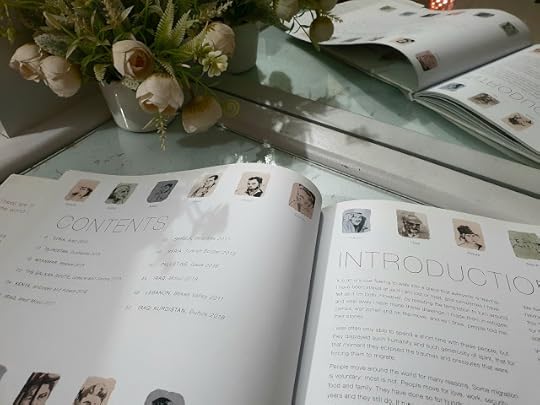
This is an interesting book showing the different types of migration that happen in the world. ‘Drawn Across Borders’ is a little bigger than A4 in size and is filled with thick matt pages of illustrations and text. The book is filled with quick sketches and paintings that the author has created while on his travels to places where people have been in migration such as Syria, Iraq and Palestine.
The book begins with a brief introduction explaining how the author, as a journalist, has had the opportunity to visit places like warn torn Syria, Iraq, etc. And how he has met various immigrants along the way and the stories behind their lives. I like how this book is presented with different forms of immigration including economic migration and not just all about the migration from war torn areas. The author speaks from his point of view, explaining some of the things he saw while going to these places and talking about the various people he met who shared their stories with him. Throughout his visits to these places, certain images of the places or people have been sketched by him and I do like the style of these sketches and paintings.
There are various tales from different parts of the world. Some of the most obvious examples of migration are those people moving from countries like Syria due to war, or Iraq as I’ve said, but what I found more fascinating was the forgotten stories of people who move for other reasons like for work, such as those in Kenya and I was especially fascinated by the story of the couple who were farmers but who now dig for oil instead. I had no idea ordinary small groups of people worked in the way described and it was interesting also to read how the author found certain places in some countries, like getting on a motorbike, and what people were doing there.
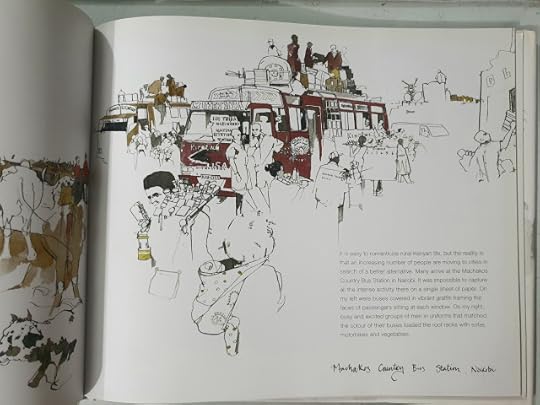
Each short section of the book features a different country, though some like Syria are re-visited in later chapters too. The text isn’t too difficult to read and you can get through this book quite quickly, but it’s the illustrations that accompany the book that are interesting to look at. Each double page or page has sketches by the author, some in what looks like pencil and others in watercolours too. There is a simplicity to the images, many of the people’s faces in the scenes are not seen and each picture feels unfinished, like it was sketched in a hurry before the author had to move on, which in a way represents the fleeting moments in the lives of the people he has sketched. I like some of the illustrations, certain faces are quite detailed and I like some of the detail in some images such as the Maasai man with his cows. Some of the images also have quite a dramatic impact on you when you look at them, like the boy in the hospital. But although the illustrations are interesting, I can’t help but feel like I would have liked some more colour in them, like their unfinished nature might work against interesting some children.
Overall this book is interesting, I found the stories of why the people are migrating fascinating and it was interesting to see the images that accompany the stories. This is definitely a good book for teens and older to read and I do think it would have a good impact on these ages. The book is actually aimed at children aged ten and above which I think may or may not be interesting for those who are younger based on how much they enjoy this subject or the impact of the pictures. Overall I do think it’s an interesting book for teens and older though, and a great, if brief, introduction to the lives of some of the reasons behind migration and the people who are a part of it.
-Thanks to Walker Books for a free copy.